This morning’s hymn is Sine Nomine, No. 641 from the English Hymnal, and is chosen in honour of those participating in today’s strike of some University staff.
Follow @telescoperHymn for the Day
Posted in Politics with tags November 30th, pensions, Politics, Ralph Vaughan Williams, Sine Nomine, strike on October 31, 2013 by telescoperThe Grand MPS School Away(half)day
Posted in Education with tags Department of Mathematics, Department of Physics & Astronomy, School of Mathematical and Physical Sciences, University of Sussex on October 30, 2013 by telescoperVery late posting a blog today because I’ve been busy all day, preparing for and then hosting an “Awayday” in the School of Mathematical and Physical Sciences (MPS) at the University of Sussex. Actually, it was only half a day, and it didn’t really going that far away either, but I hope we won’t be prosecuted under the Trades Description Act..
This event is something I started thinking about just as soon as I arrived in Sussex in February this year, and we’ve been preparing for it actively for quite a long time. The background to it is that the School has expanded dramatically over the last few years, especially in the Department of Physics & Astronomy. The Department of Mathematics has grown too, but at a more modest rate. Here, for example, is the annual intake of undergraduate students for our two departments over the last few years:
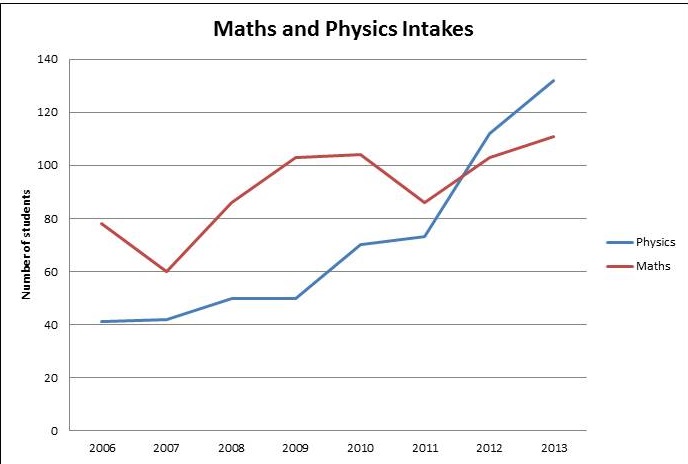
To cope with this growth in student numbers our complement of academic staff has increased by about 50%, from around 40 just a year ago to a present number of 60. We have also increased our research income considerably over the same period. I hasten to add that none of this is my doing – it’s all down to the hard work of staff who were doing their stuff brilliantly long before I arrived.
Of course it’s great to be Head of a School that is doing so well, but I am very conscious that we need to ensure we continue to provide a good experience for students during this period of growth and also to make sure that has we get bigger, all staff and students feel that they still have a voice in how the School is run. To that end we set up an event in which most members of the staff were invited – academics, administrative and technical support included – as well as our student reps. Kelly McBride, President of the Students Union, also came along. In all, over eighty people attended; there would have been more had we not scheduled it during the local schools’ half-term, which was the only available slot.
The event, held in the spacious Conference Centre in Bramber House, was mainly focussed on teaching and a large part of it involved staff forming groups to discuss various themes: lectures, small group teaching, assessment, feedback, and so on. Before that there were presentations from myself (giving some background, including information about the School’s budget and how our finances work as well as how we measure up in the dreaded League Tables), from our School Administrator talking about issues relating to our admirable office staff, and our Technical Services Supervisor giving a perspective on the challenges facing our technical support staff. Each group comprised a cross-section of the School and each was given a theme to discuss. We then reconvened en masse to share the results of each discussion.
I was a bit nervous beforehand as to how it would all work, especially as there has never been an event of this sort in MPS. I was more nervous before this event than I have been about anything for ages, actually. I wondered how engaged staff would feel and whether the event would turn out to be as inclusive as I’d intended, i.e. whether everyone would feel able to contribute on equal terms. In the end I think it worked out pretty well. In fact we ran over by about an hour, primarily because the discussion was so extensive.
It’s not for me to say whether the day was a success or not, but although there were some things that didn’t work so well overall I was quite satisfied. In particular I was impressed with the number of good practical suggestions that came forward in the final session. We’re going to be working hard to synthesize these comments into a form we can work into our plans for the future.
Most of the comments I heard from people who participated in this event after it finished were positive too. If anyone present happens to read this blog I’d be interested to hear their views through the comments.
Without anticpating the feedback too much, I’m pretty sure that, with a few tweaks (mainly to focus things a bit better with fewer “themes” for discussion), this will become a regular fixture in the MPS calendar. As we get used to such events we’ll probably get even more out of them. I also hope that other Schools of the University of Sussex might find this event a useful model for similar activities they could hold themselves.
I’d like to end with a public “thank you” to everyone who took part and made it so enjoyable and stimulating, to Oonagh and Steve for their input, to Catering and Conference Services for all their help (and yummy food) and above all to the inestimable Miss Lemon for the huge amount of work she put in to the preparations (especially the monopoly theme for the groups, which was inspired..).
Now, however, I am completely knackered and will be going home to have a glass bottle of wine to recover. Busy day tomorrow too. Toodle-pip!
Astronomy Look-alikes, No. 86
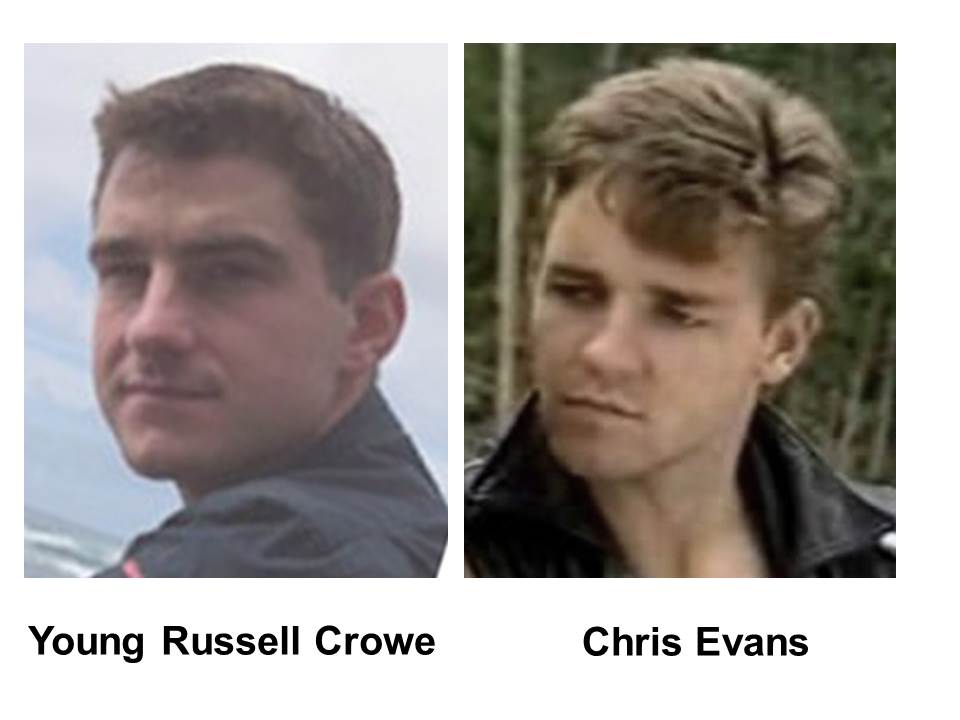
Posted in Astronomy Lookalikes with tags Chris Evans, Russell Crowe on October 29, 2013 by telescoperWhen UKATC astronomer Dr. Russell Crowe was younger, he bore a striking resemblance to hell-raising rough diamond Australian actor Chris Evans. Perhaps they share a common ancestry?
Astronomy Look-alikes, No. 85
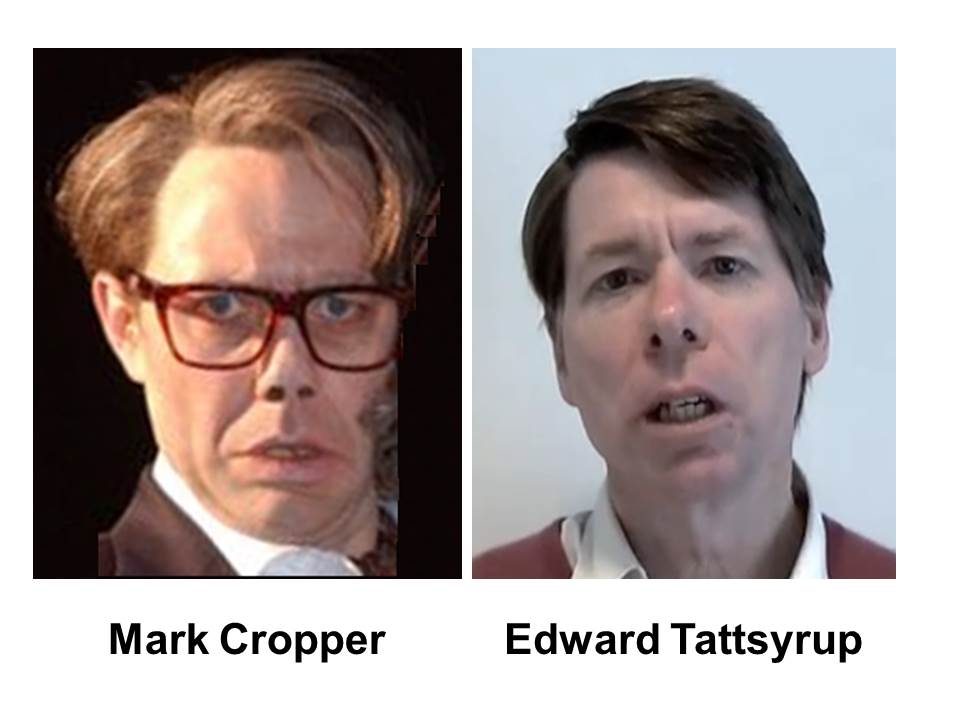
Posted in Astronomy Lookalikes with tags Edward Tattsyrup, Mark Cropper on October 29, 2013 by telescoperI wonder if anyone else has noticed that if Mark Cropper, sinister proprietor of the local shop in Royston Vasey, were to take off his glasses, he would look strangely like astronomer Prof. Edward Tattsyrup of the Mullard Space Science Laboratory. This is most unsettling. I wonder if, by any chance, they might be related?
Stormy Morning
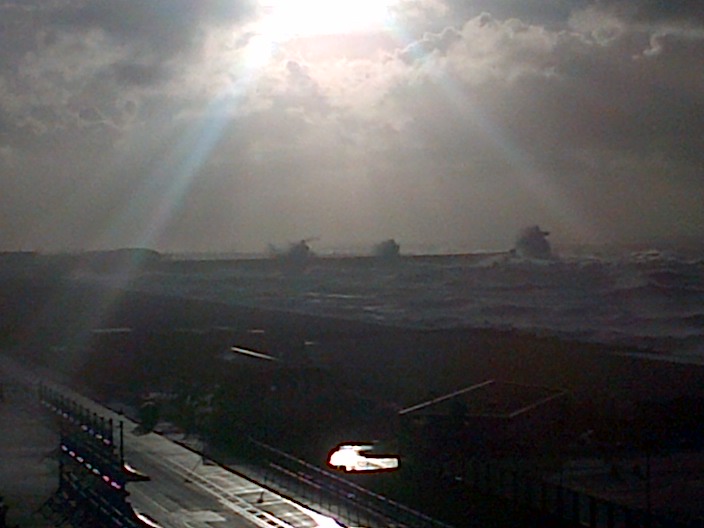
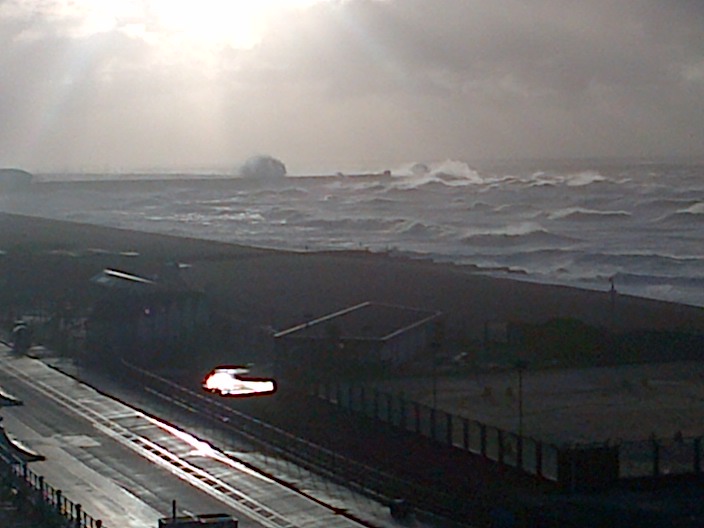
Posted in Brighton with tags Brighton, Storm on October 28, 2013 by telescoperAs expected, it was a stormy night last night, and it has been a stormy morning so far too. I was woken up a couple of times in the night by the sound of the wind and rain, but still managed to get a decent kip. When the radio alarm came on at the usual time, 6am, it was clear that I still had electricity so whatever had happened overnight couldn’t have been as bad as the storm of 1987!
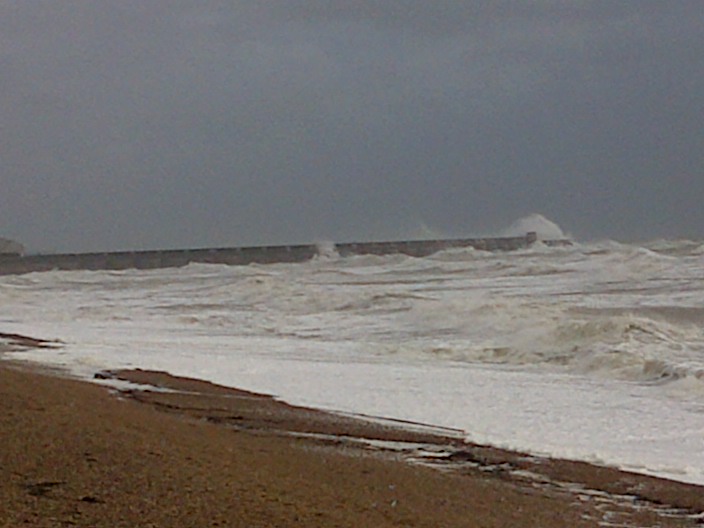
I saw a tweet before I left for work this morning advising folk to avoid Brighton seafront during the storm. That’s a bit difficult when you live on the seafront. Anyway, I did decide to take a short walk along the promenade before returning to my usual route to the bus stop. I managed to take this picture with my Blackberry, the view being eastwards towards Brighton Marina. It was quite difficult to get a picture directly into the sun, but it gives you an idea of the size of the waves crashing against the breakwater.
And another, with less sun and more waves…
I was pretty relieved when I got up to the Sussex University campus to find just a few small branches down. Very different from 1987! The wind is still strong, and blowing a lot of leaves about, but I think it’s going to be business as usual today. That’s a relief, because I’ve got rather a lot to do!
Follow @telescoperThe Gathering Storm
Posted in Biographical, History with tags 1987 Hurricane, Brighton, Great Storm of 1987, Michael Fish on October 27, 2013 by telescoperTwenty-six years ago I was living in Brighton as a graduate student at the University of Sussex. On October 16th 1987 (a Friday) I woke up to find the electricity had been cut off. Without breakfast, I left the house come up to campus, only t to find the street lined with fallen trees, smashed cars and houses with broken windows. This was the Great Storm of 1987 which, according to weather forecaster Michael Fish, was “not a hurricane” and I had slept through the whole thing…
I didn’t make it up to campus that Friday. The trains weren’t running because there was no electricity, power lines having been brought down by the storm, and even if there had been electricity the trains couldn’t have run because the tracks were blocked by fallen trees. When I did make it up to campus several days later the trees on the hills either side of the campus had been combed flat. It took years for them to recover. I hope they don’t suffer the same fate this time.
Here’s the infamous weather forecast broadcast on the Thursday evening
Another storm is forecast to arrive tomorrow; here is the Shipping Forecast for sea area Wight which, includes the town of Brighton and areas to the West.
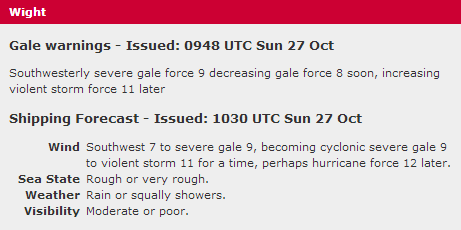
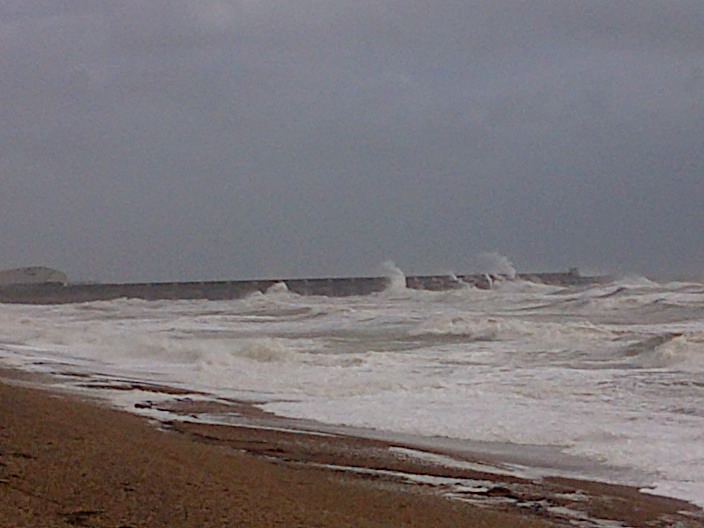
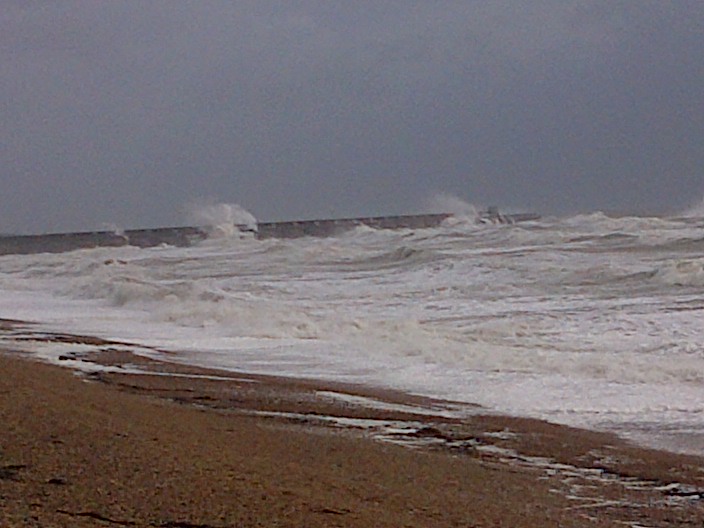
The adjacent sea area, Dover, to the East is just as bad. Evidently it’s not a good day to be messing about in boats. This lunchtime I took a walk along the beach at Brighton to see how bad it was. The wind direction was from the southwest and I estimated it was about force 7, based on the fact that it nearly blew me over when I turned into it. Not quite a gale, but getting there. A violent storm force 11 is bad enough, but there is a chance of hurricane force 12. That could cause damage on the scale of 1987. I’m now looking very nervously at the scaffolding covering several buildings in my street..
Here are some pictures I took with my phone looking towards the Marina.
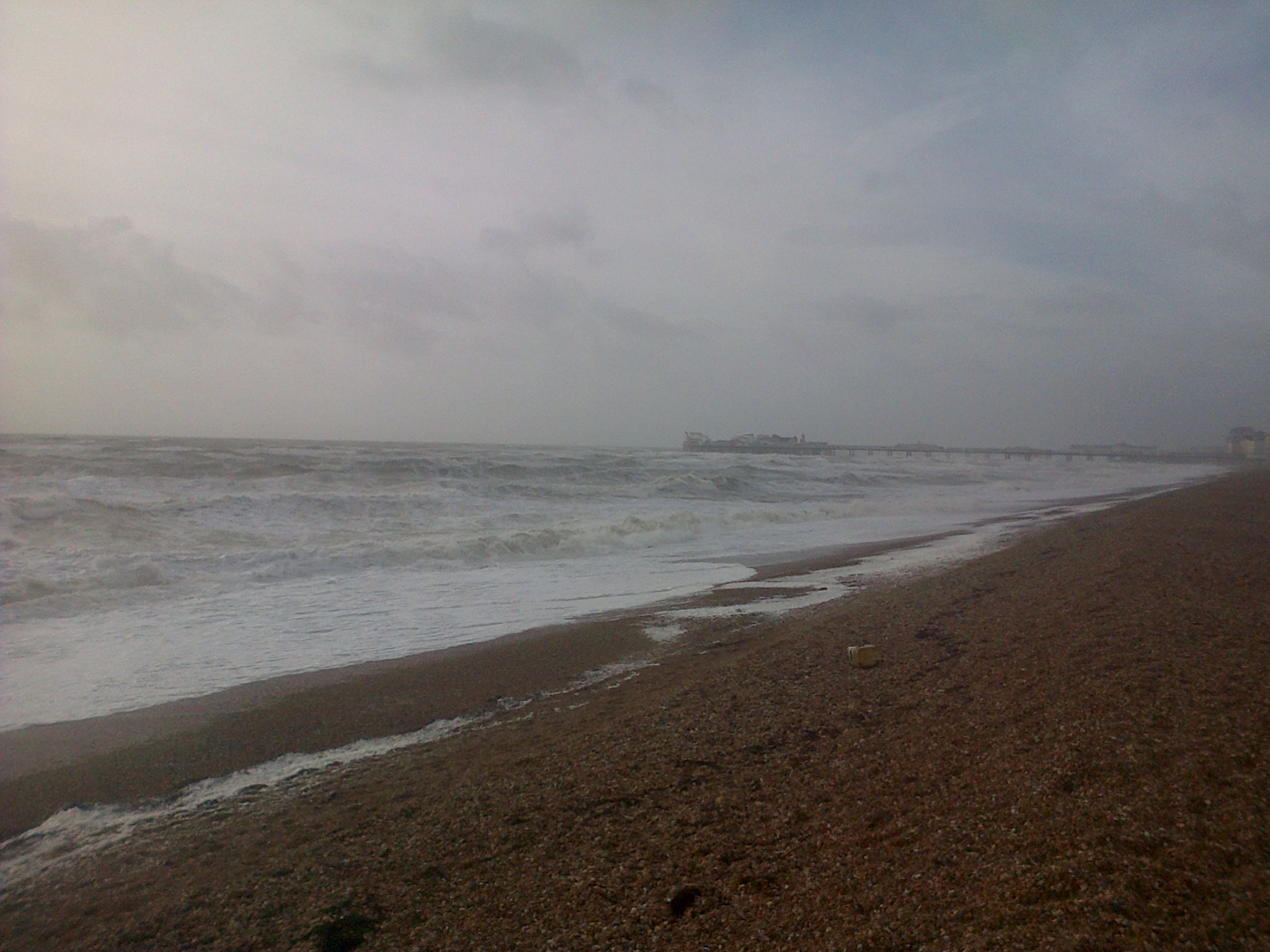
And here, in the opposite direction, is Brighton Pier. There was so much salt spray from the breaking waves that I found hard to keep the lens clear, but the Pier was still open for the usual amusements…
These are just the preliminaries, though. The bulk of the storm is yet to hit us. Something tells me we’re in for a stormy night!
Follow @telescoperBusy Busy Bee…
Posted in Uncategorized with tags Bee, Osmia Bicolor, University of Sussex on October 26, 2013 by telescoperI saw this the other day and thought I’d post it here because it’s so fascinating. I’ve seen a few of these little bees on the Falmer campus of the University of Sussex, actually, but didn’t know what they were and pay much attention to them. The species is Osmia bicolor, a beautiful solitary bee that inhabits chalk grassland and nests in old snail shells. This one is bringing pieces of grass to camouflage the shell in which she has nested; the video was filmed on the University of Sussex campus.
Follow @telescoperWe few, we happy few..
Posted in Film, Literature with tags Henry V, Laurence Olivier, Saint Crispin's Day, Shakespeare on October 25, 2013 by telescoperIn case you didn’t know, today is St Crispin’s Day. It’s also the anniversary of the Battle of Agincourt, which took place on this day in 1415, and which features in Shakespeare’s Henry V. Here is the famous St Crispin’s Day Speech, delivered in stirring style by Laurence Olivier, in the classic 1944 film.
And here is the orginal text, slightly different from the film version, Henry V in Act IV Scene iii 18-67. Scene: The English Camp:
WESTMORELAND. O that we now had here
But one ten thousand of those men in England
That do no work to-day!
KING. What’s he that wishes so?
My cousin Westmoreland? No, my fair cousin;
If we are mark’d to die, we are enow
To do our country loss; and if to live,
The fewer men, the greater share of honour.
God’s will! I pray thee, wish not one man more.
By Jove, I am not covetous for gold,
Nor care I who doth feed upon my cost;
It yearns me not if men my garments wear;
Such outward things dwell not in my desires.
But if it be a sin to covet honour,
I am the most offending soul alive.
No, faith, my coz, wish not a man from England.
God’s peace! I would not lose so great an honour
As one man more methinks would share from me
For the best hope I have. O, do not wish one more!
Rather proclaim it, Westmoreland, through my host,
That he which hath no stomach to this fight,
Let him depart; his passport shall be made,
And crowns for convoy put into his purse;
We would not die in that man’s company
That fears his fellowship to die with us.
This day is call’d the feast of Crispian.
He that outlives this day, and comes safe home,
Will stand a tip-toe when this day is nam’d,
And rouse him at the name of Crispian.
He that shall live this day, and see old age,
Will yearly on the vigil feast his neighbours,
And say “To-morrow is Saint Crispian.”
Then will he strip his sleeve and show his scars,
And say “These wounds I had on Crispian’s day.”
Old men forget; yet all shall be forgot,
But he’ll remember, with advantages,
What feats he did that day. Then shall our names,
Familiar in his mouth as household words-
Harry the King, Bedford and Exeter,
Warwick and Talbot, Salisbury and Gloucester-
Be in their flowing cups freshly rememb’red.
This story shall the good man teach his son;
And Crispin Crispian shall ne’er go by,
From this day to the ending of the world,
But we in it shall be remembered-
We few, we happy few, we band of brothers;
For he to-day that sheds his blood with me
Shall be my brother; be he ne’er so vile,
This day shall gentle his condition;
And gentlemen in England now-a-bed
Shall think themselves accurs’d they were not here,
And hold their manhoods cheap whiles any speaks
That fought with us upon Saint Crispin’s day.
Tension in Cosmology?
Posted in Astrohype, Bad Statistics, The Universe and Stuff with tags cosmological constant, Cosmology, Dark Energy, equation of state on October 24, 2013 by telescoperI noticed this abstract (of a paper by Rest et al.) on the arXiv the other day:
We present griz light curves of 146 spectroscopically confirmed Type Ia Supernovae (0.03<z<0.65) discovered during the first 1.5 years of the Pan-STARRS1 Medium Deep Survey. The Pan-STARRS1 natural photometric system is determined by a combination of on-site measurements of the instrument response function and observations of spectrophotometric standard stars. We have investigated spatial and time variations in the photometry, and we find that the systematic uncertainties in the photometric system are currently 1.2% without accounting for the uncertainty in the HST Calspec definition of the AB system. We discuss our efforts to minimize the systematic uncertainties in the photometry. A Hubble diagram is constructed with a subset of 112 SNe Ia (out of the 146) that pass our light curve quality cuts. The cosmological fit to 313 SNe Ia (112 PS1 SNe Ia + 201 low-z SNe Ia), using only SNe and assuming a constant dark energy equation of state and flatness, yields w = -1.015^{+0.319}_{-0.201}(Stat)+{0.164}_{-0.122}(Sys). When combined with BAO+CMB(Planck)+H0, the analysis yields \Omega_M = 0.277^{+0.010}_{-0.012} and w = -1.186^{+0.076}_{-0.065} including all identified systematics, as spelled out in the companion paper by Scolnic et al. (2013a). The value of w is inconsistent with the cosmological constant value of -1 at the 2.4 sigma level. This tension has been seen in other high-z SN surveys and endures after removing either the BAO or the H0 constraint. If we include WMAP9 CMB constraints instead of those from Planck, we find w = -1.142^{+0.076}_{-0.087}, which diminishes the discord to <2 sigma. We cannot conclude whether the tension with flat CDM is a feature of dark energy, new physics, or a combination of chance and systematic errors. The full Pan-STARRS1 supernova sample will be 3 times as large as this initial sample, which should provide more conclusive results.
The mysterious Pan-STARRS stands for the Panoramic Survey Telescope and Rapid Response System, a set of telescopes cameras and related computing hardware that monitors the sky from its base in Hawaii. One of the many things this system can do is detect and measure distant supernovae, hence the particular application to cosmology described in the paper. The abstract mentions a preliminary measurement of the parameter w, which for those of you who are not experts in cosmology is usually called the “equation of state” parameter for the dark energy component involved in the standard model. What it describes is the relationship between the pressure P and the energy density ρc2 of this mysterious stuff, via the relation P=wρc2. The particularly interesting case is w=-1 which corresponds to a cosmological constant term; see here for a technical discussion. However, we don’t know how to explain this dark energy from first principles so really w is a parameter that describes our ignorance of what is actually going on. In other words, the cosmological constant provides the simplest model of dark energy but even in that case we don’t know where it comes from so it might well be something different; estimating w from surveys can therefore tell us whether we’re on the right track or not.
The abstract explains that, within the errors, the Pan-STARRS data on their own are consistent with w=-1. More interestingly, though, combining the supernovae observations with others, the best-fit value of w shifts towards a value a bit less than -1 (although still with quite a large uncertainty). Incidentally value of w less than -1 is generally described as a “phantom” dark energy component. I’ve never really understood why…
So far estimates of cosmological parameters from different data sets have broadly agreed with each other, hence the application of the word “concordance” to the standard cosmological model. However, it does seem to be the case that supernova measurements do generally seem to push cosmological parameter estimates away from the comfort zone established by other types of observation. Could this apparent discordance be signalling that our ideas are wrong?
That’s the line pursued by a Scientific American article on this paper entitled “Leading Dark Energy Theory Incompatible with New Measurement”. This could be true, but I think it’s a bit early to be taking this line when there are still questions to be answered about the photometric accuracy of the Pan-Starrs survey. The headline I would have picked would be more like “New Measurement (Possibly) Incompatible With Other Measurements of Dark Energy”.
But that would have been boring…
Follow @telescoperPlanck and Being Human
Posted in The Universe and Stuff with tags Cosmic Microwave Background, Cosmology, European Space Agency, Planck Satellite on October 23, 2013 by telescoperOn Saturday 19th October the instruments and cooling systems on the European Space Agency’s Planck spacecraft were switched off, marking the end of the scientific part of the Planck mission, after about four years of mapping the cosmic microwave background. Later, a piece of software was uploaded that would prevent the spacecraft systems being accidentally switched on again after being switched off and the transmitter from causing interference with any future probes. Planck is already “parked” indefinitely in a what is called a “disposal” orbit, far from the Earth-Moon system, having been nudged off its perch at the 2nd Lagrangian Point (L2) in August by a complicated series of manoeuvres. On October 21st the spacecraft’s thrusters were fired to burn up the last of its fuel, an important aspect of rendering the spacecraft inert, as required by ESA’s space debris mitigation guidelines.
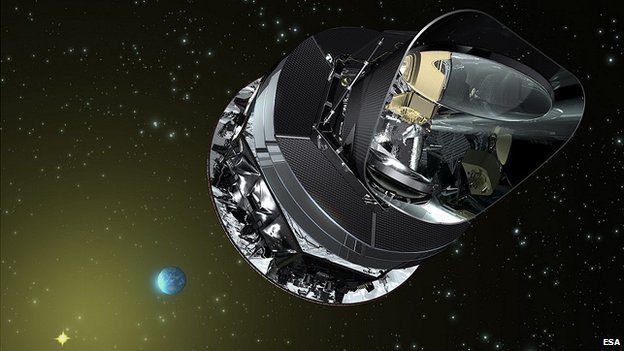
These preliminaries having been completed, today, at 12.00 GMT, a final instruction will be transmitted to the spacecraft to close it down permanently; thereafter Planck will circle the Sun as a silent memorial to the stunning success it achieved when active. I’m sure all those who worked on the Planck mission will pause as the final shutdown command is given and ponder the lonely future of the spacecraft that had supplied so much interesting data.
But although this will be the end of the Planck mission, it is by no means the end of the Planck Era. Vast amounts of data still need to be fully analysed and key science results are still in the pipeline, relating in particular to the polarization of the microwave background radiation. Moreover, the numerous maps, catalogues and other data products will be a priceless legacy to this generation, and no doubt many future generations, of scientists.
The fate of Planck illustrates two contrasting aspects of the human experience. On the one hand, there’s the fragility of our existence in a cosmos too vast for us to comprehend. Like the defunct spacecraft, our Earth too circles this little Sun of ours in a precarious orbit while the rest of the Universe – with its countless billion upon billion of other suns – carries on, oblivious to our very existence. Planck makes us painfully aware of our own insignificance.
But on the other hand there’s the sense of fulfillment, and even of joy, at finding things out. We may have puny monkey brains and many things are likely to remain forever beyond our mental grasp, but trying to figure things out is one of the things that defines us as human. Experiments like Planck (and, for that matter, the Large Hadron Collider) are not the wasteful extravagance some people claim them to be. We need them not just for the sake of science, but to remind us of our common humanity.
UPDATE: And now, from ESA, confirmation that Planck has received its last command. Goodbye, and enjoy your retirement!
Follow @telescoper

