La Bohème

Posted in Opera with tags , , , , , , , on September 9, 2012 by telescoper

Time rolls on and the end of the summer brings the beginning of the new Opera season in Cardiff, with  La Bohème  by Giacomo Puccini at Welsh National Opera. It seems like a thousand years since I last went to the Wales Millennium Centre but it was only May. Still, a lot has happened between then and now. It felt good to see the Wales Millennium Centre again, looking resplendent in the sunshine of a September evening. Life’s getting back to normal.
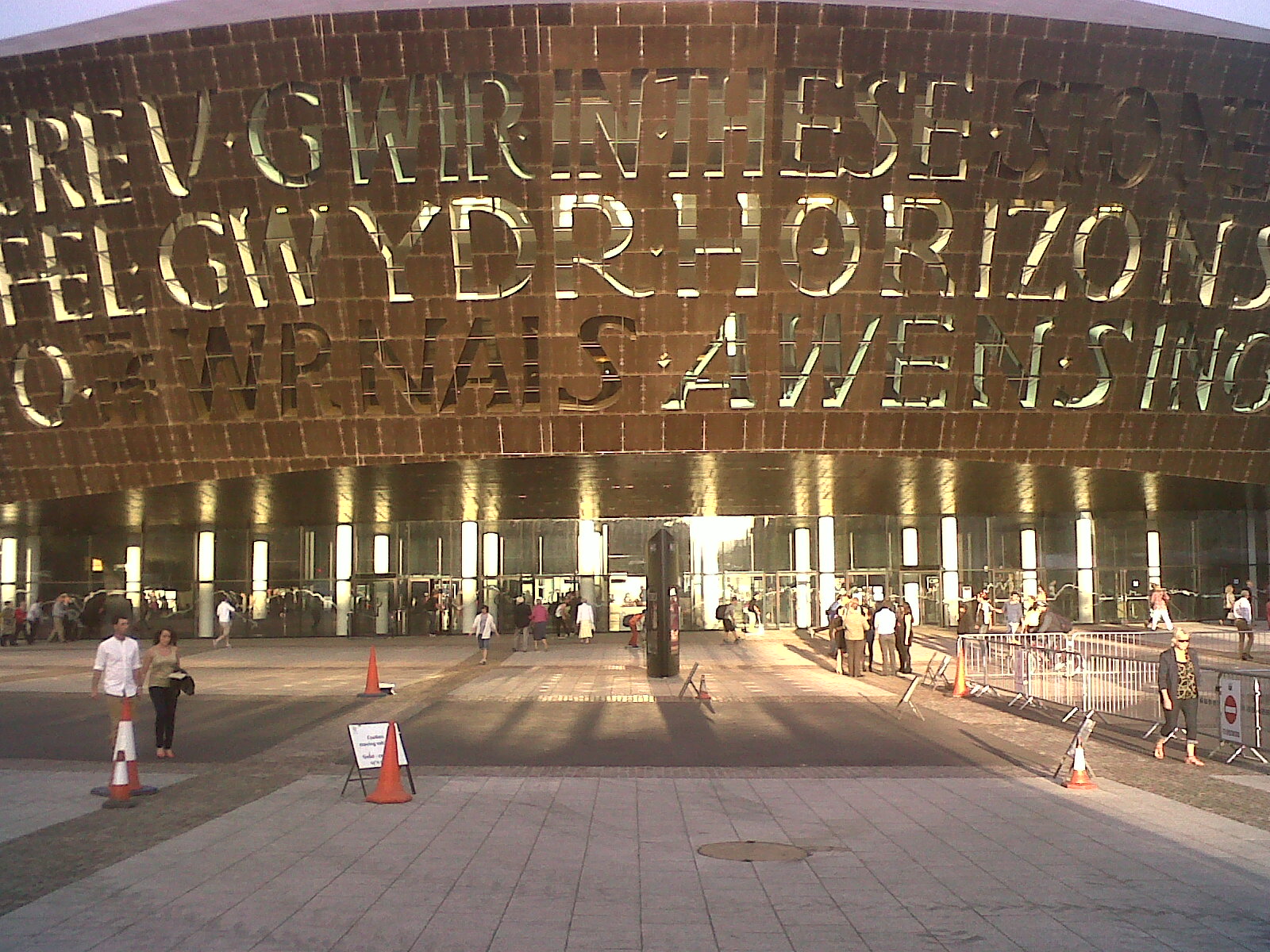
I confess that I still get butterflies in my stomach as I take my seat before a night at the Opera. I guess if that thrill ever disappears I’ll just stop going, but last night reminded me why I love the Opera so much. The performance was absolutely wonderful, perhaps the best I’ve seen at Cardiff since I moved here five years ago.


I suppose the story of La Bohème will be familiar to anyone with even a passing interest in Opera, but I’ll give a quick synopsis anyway.  It’s a boy-meets-girl love story, of course. The boy in this case is the poet Rodolfo (Alex Vicens) and the girl, actually named Lucia but known  as Mimi (Giselle Allen).  The setting is Paris around 1830, and the poet and his painter friend Marcello (David Kempster) are starving and freezing, as it is winter and they have no money.  Act I is set on Christmas Eve, but the two friends have nothing to eat and nowhere to go. Fortunately, their musician friend Schaunard (Daniel Grice) turns up with money and provisions. After various comings and goings everyone but Rodolfo leaves to spend Christmas Eve out on the town; Rodolfo has to finish a piece for a journal, and promises to join them when he is done. However, he is interrupted by the arrival of Mimi, who lives nearby and whose candle has gone out. It’s love at first sight…

The later stages of Act I are built around Rodolfo’s aria Che Gelida Manina (“your tiny hand is frozen”) and Mimi’s Mi Chiamano Mimi. These beautiful songs follow one another in quick succession, and are then rounded off with a wonderful duet O Soave Fanciulla  in a manner guaranteed to melt the stoniest of hearts. And, before you ask, yes I did cry. Just a little bit. I don’t think anyone noticed.

But it’s not just the ravishing music that makes this passage so special, it’s also Puccini’s gift as a story-teller: after the two arias by Rodolfo and Mimi, the audience knows everything they need to know about these characters. It’s a great example of why I think Puccini is a far greater writer of Opera than, say, Wagner. Puccini understood much better than Wagner how to vary  pace and colour  without allowing the story to bogged down, and he knew exactly how to use his big tunes to maximum dramatic effect (i.e. without excessive repetition). In fact, La Bohème is in four acts, but its running time is just about 2 hours and 15 minutes, packed full of gorgeous music and compelling drama. It’s a supreme example of Puccini’s artistry as a composer of Opera.

Anyway, back to the plot. Act II finds Rodolfo and Mimi joining in the party started by Marcello and his buddies. There’s a huge contrast here between the dingy garret in which Act I is set, as this is set in the Latin Quarter of gay Paris (with a few drag queens in this production thrown in to make the point). Marcello gets off with the object of his desire, the coquettish Musetta (Kate Valentine), and all seems well with the world as we go into the interval.

In Act III we find things have changed. Rodolfo’s love for Mimi has soured and, overcome by jealousy and suspicion, he has left her. Clearly unwell, Mimi wanders around looking for Rodolfo and he hears her coughing. They clearly still love each other, but find it difficult to live with each other. If Opera were Facebook they would both have “It’s complicated” on their status.

The last act finds us back in the garret, Rodolfo and Mimi having separated. But Mimi has been wandering the streets in the freezing cold and turns up, clearly gravely ill. Rodolfo’s friends quickly pawn some meagre possessions and Marcello and Musetta rush out to buy medicine and summon a doctor. They return with the medicine but, before the doctor arrives, Mimi dies.

Well, what did you expect in an Opera, a happy ending?

People say that this is a romantic opera but it’s a pretty bleak story when you think about it. The lovers’ happiness is brief and it all ends in despair and death in surroundings of poverty and squalor. That’s what Opera Verismo is all about.

I don’t give star ratings when I review Opera performances, but if I did this would get the highest grade. All the principals were marvellous. It was refreshing to see Rodolfo played by a tenor who not only looked the part (i.e. youthful and dashing rather than middle-aged and portly) but could also cope with the demands of the role. I thought Alex Vicens’ voice sounded a little thin at the start and was worried that he might have to force it during the big arias, but he warmed up magnificently. Kate Valentine was a very sexy Musetta. The other person who deserves a particular mention is Welsh baritone  David Kempster, who was absolutely superb as Marcello. His compelling stage presence matched by an exceptionally  fine voice. World class, I’d say…

And a word for the production. Annabel Arden’s design managed to bring fresh elements to what is basically a straightforward interpretation of the Opera. The visual effects, such as the animated snow,  were clever but not intrusive. There was no attempt to translate the action into a different period or location nor was there an attempt to preach about disease as a metaphor for moral failings. In this respect it’s very faithful to what I think Puccini’s intentions were, i.e. to let the audience make their own mind up about what message they want to take away. The only slight departure I spotted was that in Act I Mimi actually blows her own candle out deliberately in order to get Rodolfo to light it again. Methinks she’s a bit more forward than usual in this production.

This was the first performance of this run of La Bohème. If you love Opera and can get to Cardiff, then do go and see it. It’s very special.

By way of a postscript I couldn’t resist posting this, which I found on Youtube this morning. It’s a vintage recording of O Soave Fanciulla dating back to 1956 and featuring the great Jussi Björling as Rodolfo. He may be a bit old for the part, but listen to that voice! The greatest tenor of his generation, without question. And Renata Tebaldi as Mimi too…

What is your view of the 2014 Research Excellence Framework?

Posted in Uncategorized on September 8, 2012 by telescoper

There’s a poll on this blog post about attitudes to the REF, as well as some rumours about nefarious things going on in preparation for it. Please visit and vote as it has had few responses so far.

Anyone know whether the rumours about an Astronomy Group are true, and, if so, which it is?

To the left of centre's avatarTo the left of centre

I’ve had a number of discussions recently about the Research Excellence Framework (REF2014). I’ve yet to find anyone who has a positive view of REF2014. I’m certainly against REF2014 and think it is having a negative impact on how universities behave and think it is primarily driven by a desire to measure and quantify, even if it ultimately damages what is being assessed. However, I thought I would run a quick poll to get the views of others. Given how many typically read my posts, this will almost certainly not produce a statistically significant result.

View original post

Dovrei essere così fortunato

Posted in Opera with tags , , on September 8, 2012 by telescoper

Well, summer must be nearly over. Tonight is the Last Night of the Pimms Proms. More importantly, it’s the first night of the new season at Welsh National Opera, which I’ll be attending.  Of which more anon. However, I thought I’d warm up by posting this marvellous clip which looks behind the scenes at a famous recording of the rarely performed English version of the classic aria Dovrei essere così fortunato from the Opera Una Ragazza Australiana con le Natiche Belle conducted by Carl Davis. Enjoy.

To the Moon

Posted in Poetry, The Universe and Stuff with tags , , on September 8, 2012 by telescoper

Art thou pale for weariness
Of climbing heaven, and gazing on the earth,
Wandering companionless
Among the stars that have a different birth,—
And ever-changing, like a joyless eye
That finds no object worth its constancy?

by Percy Bysshe Shelley (1792-1822).

Is the internet making Susan Greenfield say silly things?

Posted in Uncategorized on September 7, 2012 by telescoper

Busy day today so I thought I’d reblog this nice piece. I wonder if Lady Gaga Baroness  Greenfield might have been using the internet too much?

genotripe's avatarGenotripe

“I didn’t say, and I’ve been misquoted universally, that [technology] rots the brain and it’s bad, I’ve never given value judgements, ever,”
Professor Susan Greenfield, 2011.

I’m writing this, my first ever blog entry, after having attended the talk that Professor Susan Greenfield gave as part of the 2012 British Science Festival in Aberdeen, entitled The 21st Century Mind. The topic that she was speaking about, the influence that our increasing use of computer technology might be having on the development and physiology of our brains, is one that she has presented in numerous television, radio and newspaper interviews and articles.

Her opinion (and it is just that) is that our use of screen-based media, such as social networking and video games, is having a detrimental effect on our behaviour. This is obviously a controversial area and also one that the popular press (especially the Daily Mail) is fond…

View original post 713 more words

And on the third day…

Posted in Science Politics, The Universe and Stuff with tags , , , on September 6, 2012 by telescoper

So here I am, brain the size of a planet, stuck in a corridor in Polaris House in  Swindon for while the rest of the Astronomy Grants Panel of the Science and Technology Facilities Council considers applications on which I have a conflict of interest. We’ve had two very busy days so far, hence no time to post yesterday, but we’re on track to get through the order of business by the end of today as scheduled. Now I’m at a bit of a loose end I’ve been catching up on emails and other stuff I have had to ignore for the past couple of days.

And now there’s even time for a brief blogette.

It’s a stressful business being on these panels, not just because it’s a lot of work but that everyone involved knows how important the outcome is, for science in general and in terms of the consequences of success or failure in obtaining funding for individual researchers.    Under the current system of “Consolidated Grants”, anyone unsuccessful in this round will effectively be locked out of STFC funding for 3 years. That seems very harsh to me. However, we have to work with the system we’ve got and make the best we can of it.

Anyway, bearing in mind that this is a personal blog and not an official mouthpiece for the AGP, if anyone out there has any comments about the system please feel free to vent your spleen via the comments box. As long as you keep it reasonably polite.

Astronomy Advice Please!

Posted in Science Politics, The Universe and Stuff with tags , , , on September 4, 2012 by telescoper

I’m up at the crack of dawn this morning in order to travel to Swindon for a meeting of the Astronomy Grants Panel of the Science and Technology Facilities Council. Three days in Swindon beckon.

Anyways, while I’m thinking STFC stuff let me put my community service hat on and remind astronomers that the Astronomy Advisory Panel (yes, there is one) is consulting, and the deadline for folks to fill in the consultation questionnaire is tomorrow (Wednesday 5th September 2012). Please upload your input forthwith.

As a prompt, you might like to have a look at this figure that shows the breakdown of STFC expenditure generally, and specifically within the astronomy programme.

Do these pie charts provide you with food for thought?

Insomnia

Posted in Poetry with tags , , on September 3, 2012 by telescoper

Now you hear what the house has to say.
Pipes clanking, water running in the dark,
the mortgaged walls shifting in discomfort,
and voices mounting in an endless drone
of small complaints like the sounds of a family
that year by year you’ve learned how to ignore.

But now you must listen to the things you own,
all that you’ve worked for these past years,
the murmur of property, of things in disrepair,
the moving parts about to come undone,
and twisting in the sheets remember all
the faces you could not bring yourself to love.

How many voices have escaped you until now,
the venting furnace, the floorboards underfoot,
the steady accusations of the clock
numbering the minutes no one will mark.
The terrible clarity this moment brings,
the useless insight, the unbroken dark.

by Dana Gioia (b. 1950).

A-level Chemistry Examination (Paper 2) from 1981

Posted in Education with tags , , , on September 2, 2012 by telescoper

A few days ago I posted Paper 1 of the Chemistry A-level examination I took way back in 1981. Judging by the blog stats, that seemed to attract a bit of interest so I thought I’d follow it up with Paper 2 which, in contrast to the multiple-choice style of Paper 1, consists of longer questions and perhaps gives a better idea of whether anything has changed between then and now.

Anyway, as usual,  any comments from people who’ve done A-level Chemistry more recently would be very welcome through the Comments Box, e.g. is there anything  in this paper that you wouldn’t expect to see nowadays? Is it easier, harder, or about the same as current A-level Chemistry papers?

The Return of Professor Who

Posted in Biographical, Music, Television, The Universe and Stuff with tags , , , , , on September 1, 2012 by telescoper

Since the new series of Doctor Who is to start this evening on BBC1, I thought I’d mark the occasion by posting this old blog item again:

–0–

As a Professor of Astrophysics I am often asked “Why on Earth did you take up such a crazy subject?”

I guess many astronomers, physicists and other scientists have to answer this sort of question. For many of them there is probably a romantic reason, such as seeing the rings of Saturn or the majesty of the Milky Way on a dark night. Others will probably have been inspired by TV documentary series such as The Sky at Night, Carl Sagan’s Cosmos or even Horizon which, believe it or not, actually used to be quite good but which is nowadays uniformly dire. Or it could have been something a bit more mundane but no less stimulating such as a very good science teacher at school.

When I’m asked this question I’d love to be able to put my hand on my heart and give an answer of that sort but the truth is really quite a long way from those possibilities. The thing that probably did more than anything else to get me interested in science was a Science Fiction TV series or rather not exactly the series but the opening titles.

The first episode of Doctor Who was broadcast in the year of my birth, so I don’t remember it at all, but I do remember the astonishing effect the credits had on my imagination when I saw later episodes as a small child. Here is the  opening title sequence as it appeared in the very first series featuring William Hartnell as the first Doctor.

To a younger audience it probably all seems quite tame, but I think there’s a haunting, unearthly beauty to the shapes conjured up by Bernard Lodge. Having virtually no budget for graphics, he experimented in a darkened studio with an old-fashioned TV camera and a piece of black card with Doctor Who written on it in white. He created the spooky kaleidoscopic patterns you see by simply pointing the camera so it could see into its own monitor, thus producing a sort of electronic hall of mirrors.

What is so fascinating to me is how a relatively simple underlying concept could produce a rich assortment of patterns, particularly how they seem to take on an almost organic aspect as they merge and transform. I’ve continued to be struck by the idea that complexity could be produced by relatively simple natural laws which is one of the essential features of astrophysics and cosmology. As a practical demonstration of the universality of physics this sequence takes some beating.

As well as these strange and wonderful images, the titles also featured a pioneering piece of electronic music. Officially the composer was Ron Grainer, but he wasn’t very interested in the commission and simply scribbled the theme down and left it to the BBC to turn it into something useable. In stepped the wonderful Delia Derbyshire, unsung heroine of the BBC Radiophonic Workshop who, with only the crudest electronic equipment available, turned it into a little masterpiece. Ethereal yet propulsive, the original theme from Doctor Who is definitely one of my absolute favourite pieces of music and I’m glad to see that Delia Derbyshire is now receiving the acclaim she deserves from serious music critics.

It’s ironic that I’ve now moved to Cardiff where new programmes of Doctor Who and its spin-off, the anagrammatic Torchwood, are made. One of the great things about the early episodes of Doctor Who was that the technology simply didn’t exist to do very good special effects. The scripts were consequently very careful to let the viewers’ imagination do all the work. That’s what made it so good. I’m pleased that the more recent incarnations of this show also don’t go overboard on the visuals. Perhaps thats a conscious attempt to appeal to people who saw the old ones as well as those too young to have done so. It’s just a pity the modern opening title music is so bad…

Anyway, I still love Doctor Who after all these years. It must sound daft to say that it inspired me to take up astrophysics, but it’s truer than any other explanation I can think of. Of course the career path is slightly different from a Timelord, but only slightly.

At any rate I think The Doctor is overdue for promotion. How about Professor Who?