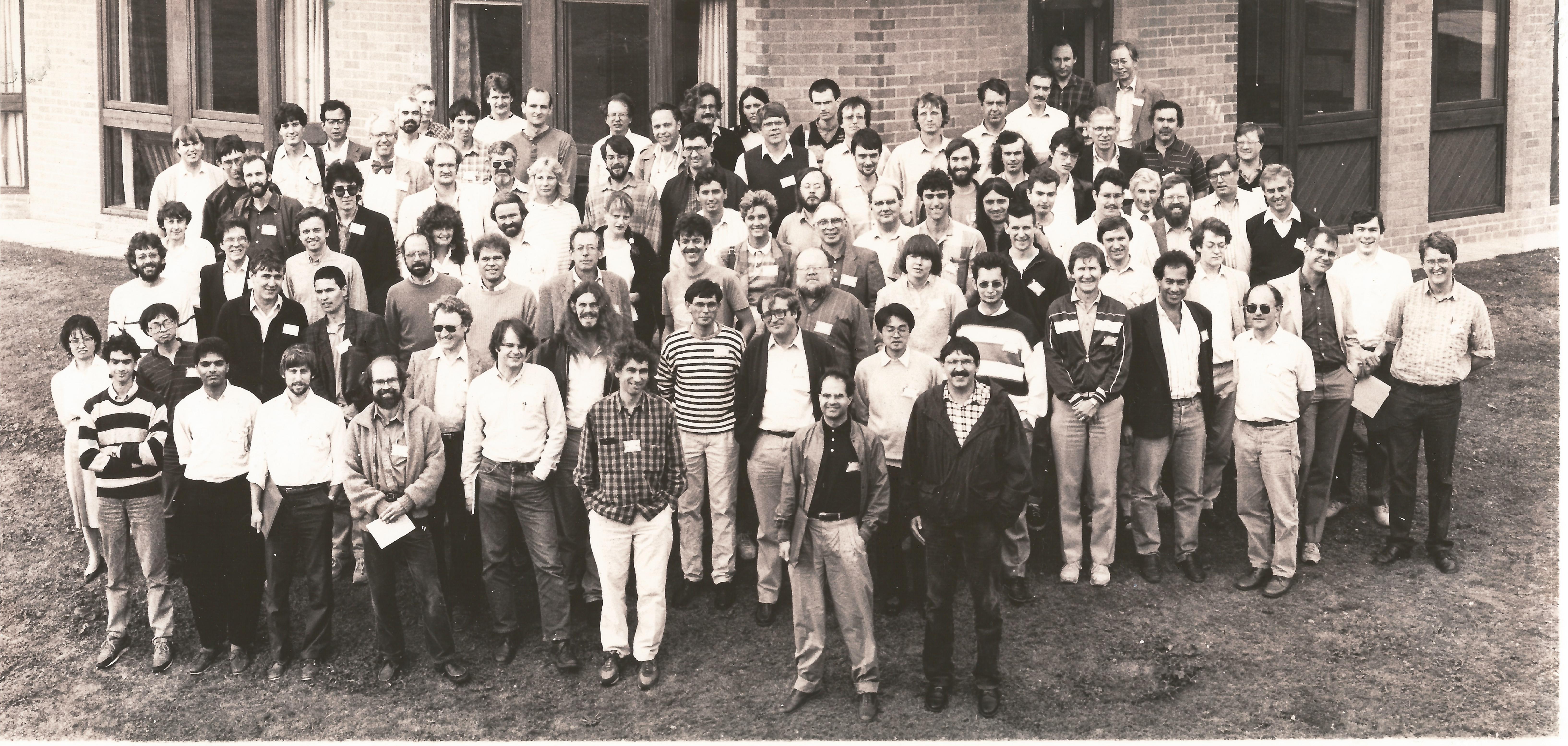
The Epoch of Galaxy Formation, Durham 1988.

Posted in Biographical, The Universe and Stuff with tags , , , on August 2, 2012 by telescoper

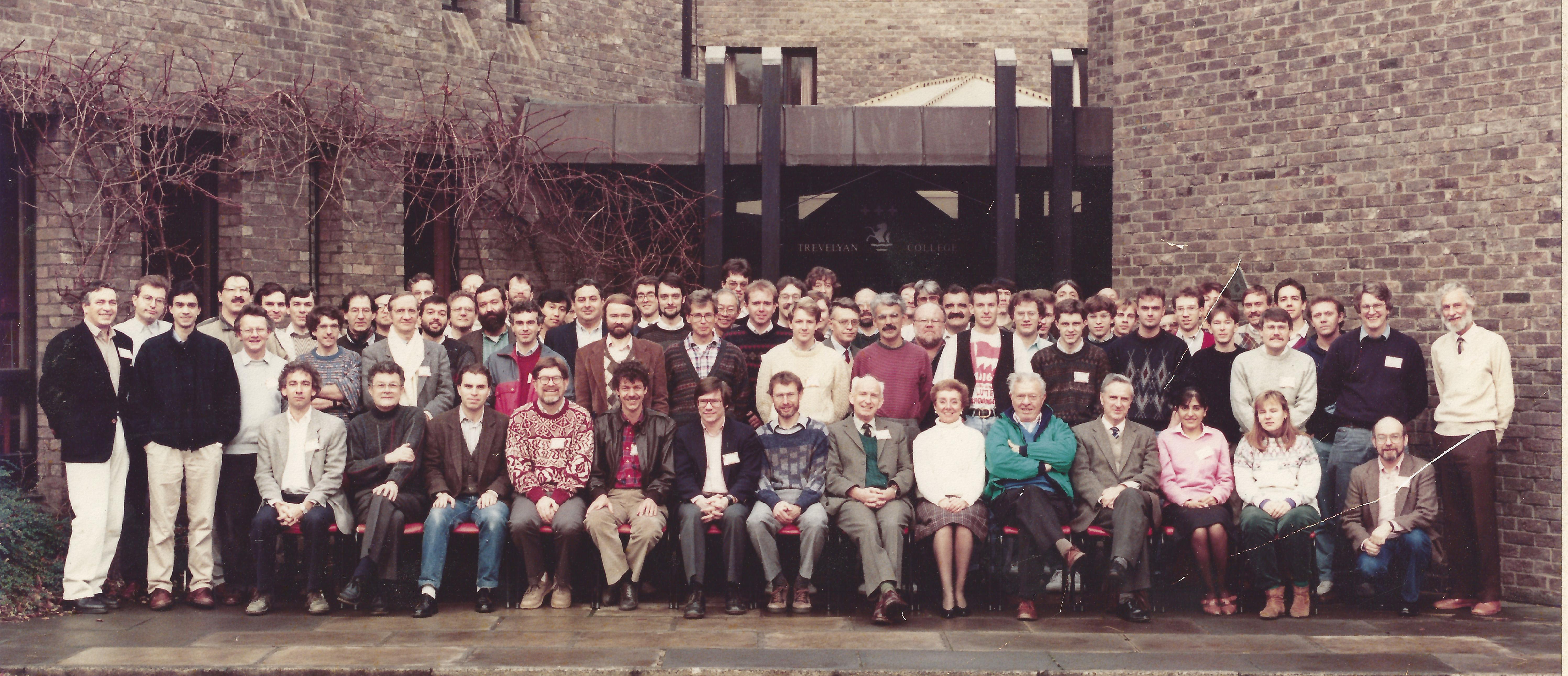
The previous old conference photograph I posted seemed to be quite popular, so I thought I’d try an even older vintage. This was also taken at Durham, but at a meeting entitled The Epoch of Galaxy Formation, which took place between July 18th and 22nd 1988. Appropriately enough, this one is in glorious monochrome. Spot any familiar faces?

The Low-down on the LHC Boson

Posted in Open Access, The Universe and Stuff with tags , , , , , , on August 2, 2012 by telescoper

Although it’s a little late I thought I’d just put up a brief post to draw your attention to the news that a couple of technical papers have appeared on the arXiv giving updated details of the recent discovery at the Large Hadron of a new scalar particle that could be the Higgs boson. I don’t think it’s yet absolutely proven that this is what the new particle is, which is why I’ve called it the “LHC boson” in the title.

The ATLAS paper reports the detection of a Higgs-like particle with a 5.9 sigma confidence level, up from the 5.0 sigma reported on July 4. Here’s the abstract:

A search for the Standard Model Higgs boson in proton-proton collisions with the ATLAS detector at the LHC is presented. The datasets used correspond to integrated luminosities of approximately 4.8 fb^-1 collected at sqrt(s) = 7 TeV in 2011 and 5.8 fb^-1 at sqrt(s) = 8 TeV in 2012. Individual searches in the channels H->ZZ^(*)->llll, H->gamma gamma and H->WW->e nu mu nu in the 8 TeV data are combined with previously published results of searches for H->ZZ^(*), WW^(*), bbbar and tau^+tau^- in the 7 TeV data and results from improved analyses of the H->ZZ^(*)->llll and H->gamma gamma channels in the 7 TeV data. Clear evidence for the production of a neutral boson with a measured mass of 126.0 +/- 0.4(stat) +/- 0.4(sys) GeV is presented. This observation, which has a significance of 5.9 standard deviations, corresponding to a background fluctuation probability of 1.7×10^-9, is compatible with the production and decay of the Standard Model Higgs boson.

The paper from CMS reinforces the discovery of a Higgs-like particle with a mass of 125 GeV at a 5-sigma level of confidence:

Results are presented from searches for the standard model Higgs boson in proton-proton collisions at sqrt(s)=7 and 8 TeV in the CMS experiment at the LHC, using data samples corresponding to integrated luminosities of up to 5.1 inverse femtobarns at 7 TeV and 5.3 inverse femtobarns at 8 TeV. The search is performed in five decay modes: gamma gamma, ZZ, WW, tau tau, and b b-bar. An excess of events is observed above the expected background, a local significance of 5.0 standard deviations, at a mass near 125 GeV, signalling the production of a new particle. The expected significance for a standard model Higgs boson of that mass is 5.8 standard deviations. The excess is most significant in the two decay modes with the best mass resolution, gamma gamma and ZZ; a fit to these signals gives a mass of 125.3 +/- 0.4 (stat.) +/- 0.5 (syst.) GeV. The decay to two photons indicates that the new particle is a boson with spin different from one.

I’ll refrain from commenting on the use of frequentist language in both these papers, but instead just comment that these extremely important papers are available for free on the arXiv. Open access, we call it.

PS. There’s an interesting blog post related to these papers, about citations in particle physics here.

Camera may have exposed a fossil…

Posted in The Universe and Stuff with tags , , , on August 1, 2012 by telescoper

Yesterday’s old photograph reminded me of this classic from Private Eye ages ago. It appeared originally in the Guardian (before it went all Helvetica). Sorry it’s a bit battered…

A Year without Columbo

Posted in Biographical, Columbo with tags , on August 1, 2012 by telescoper

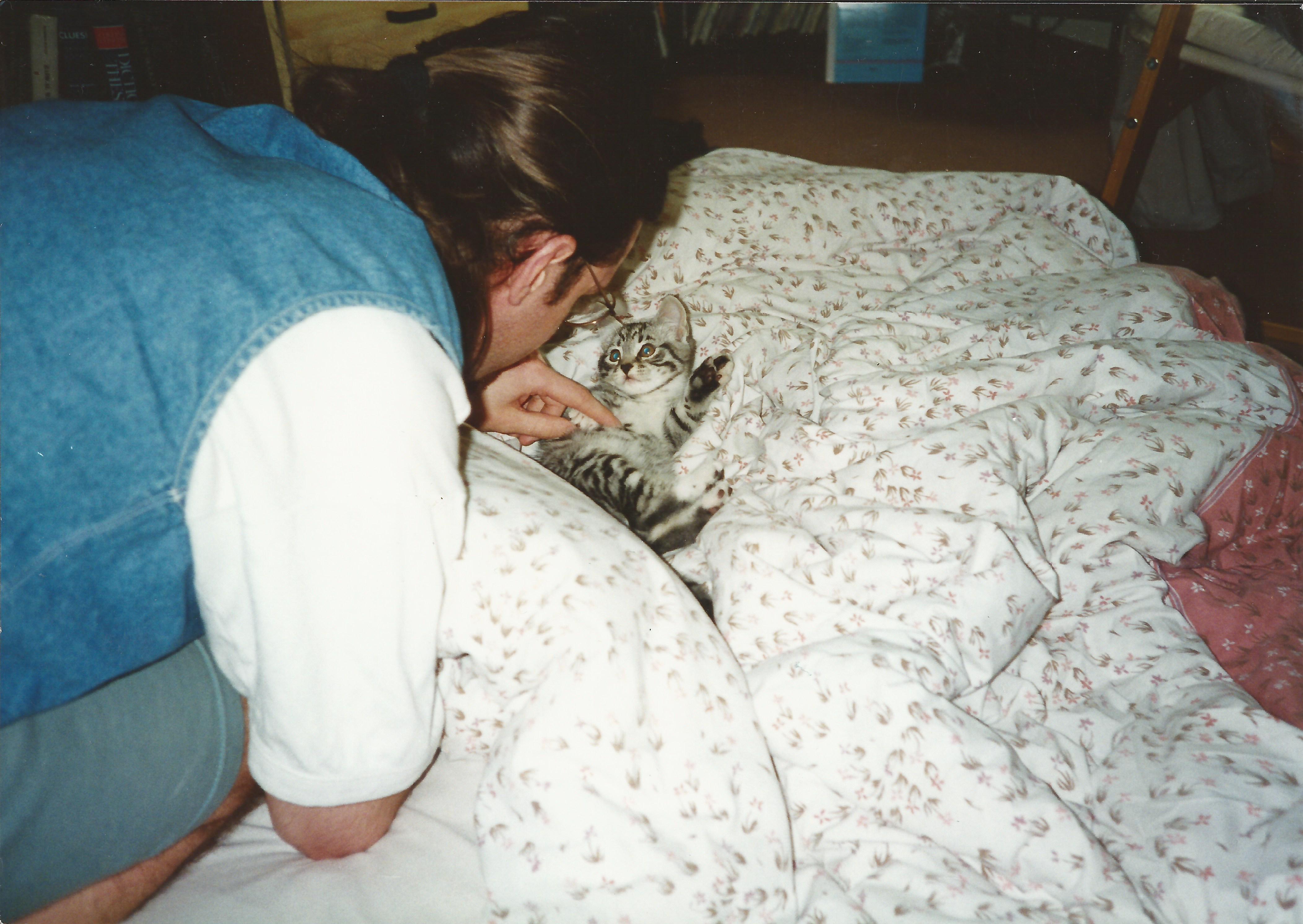
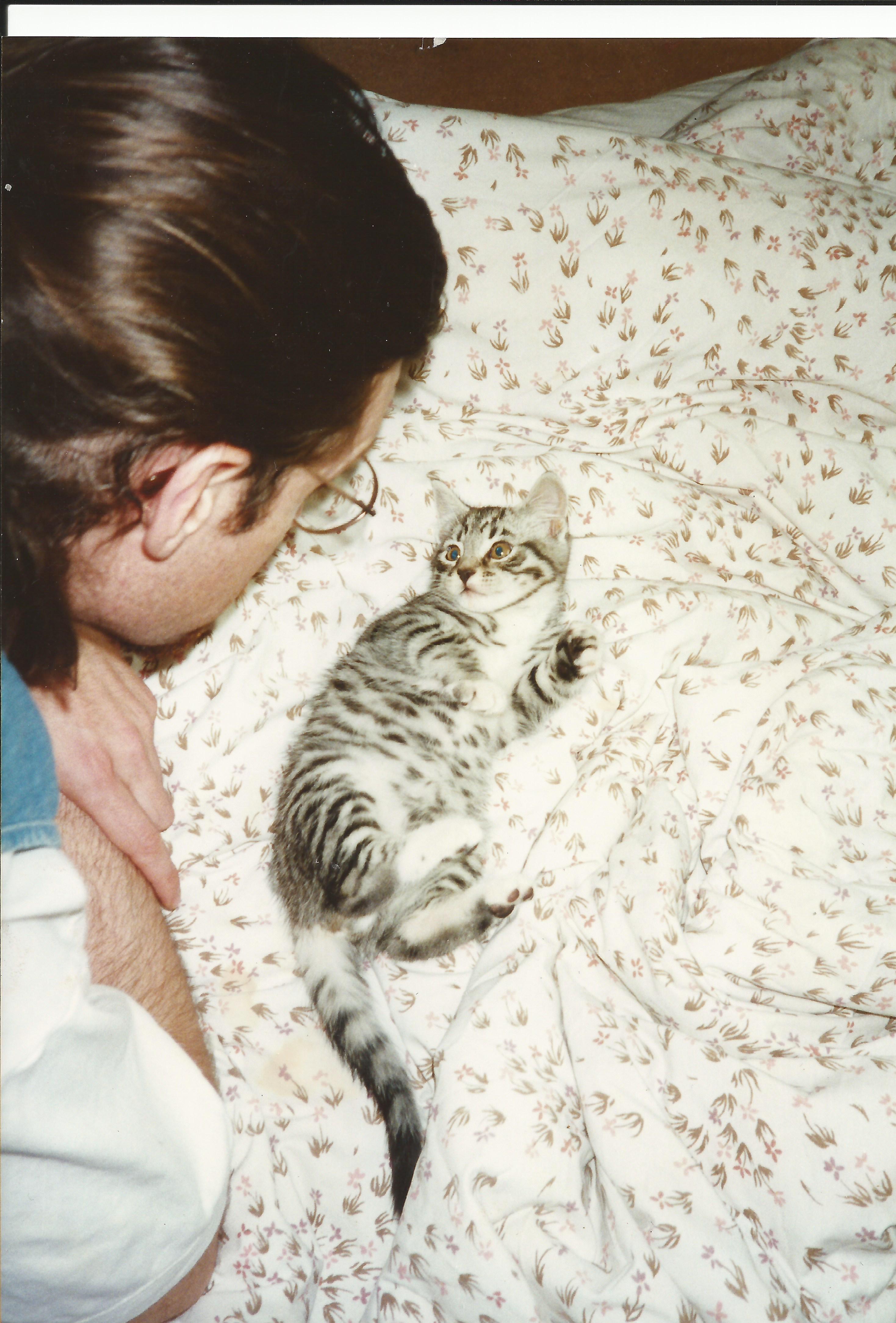
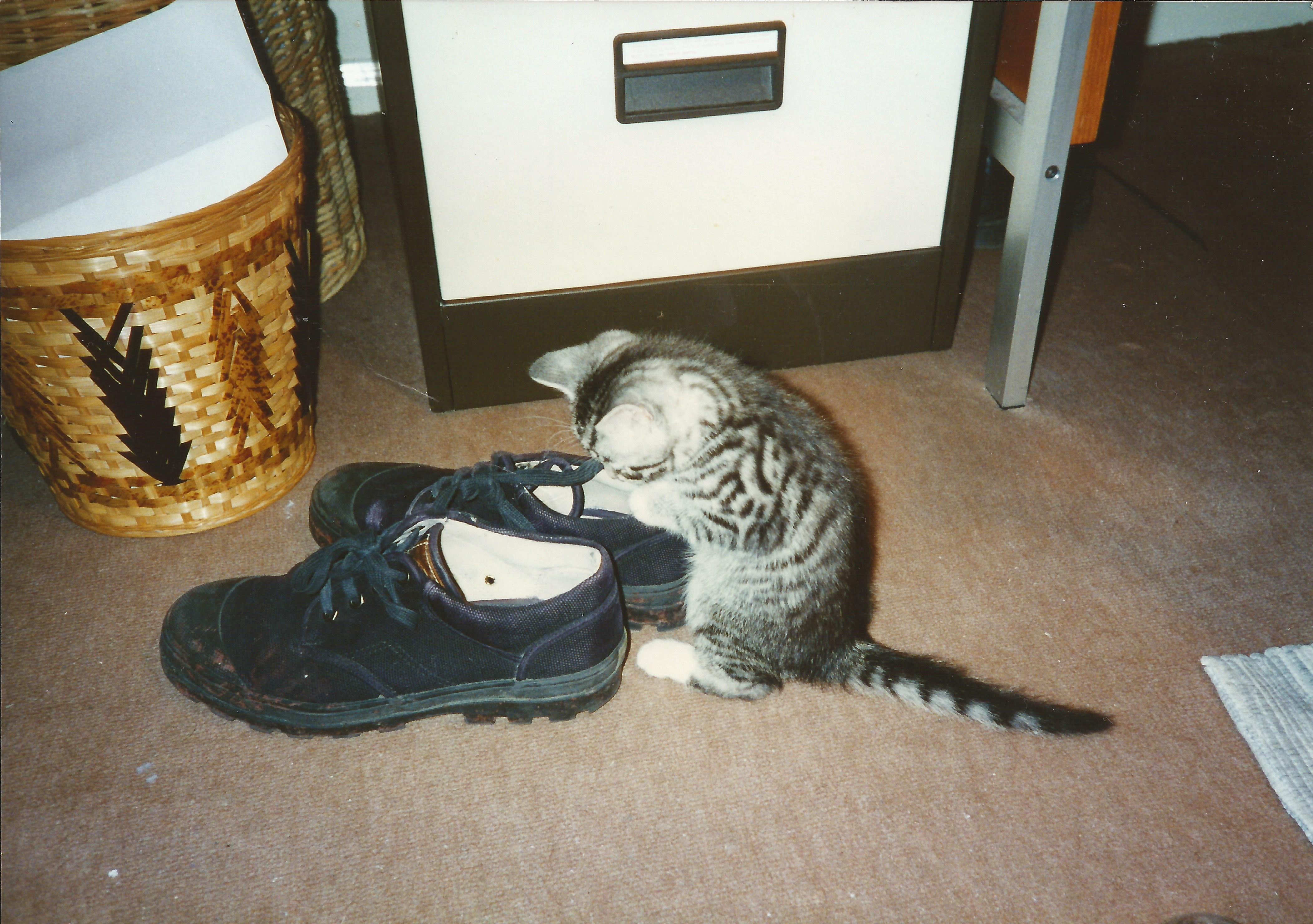
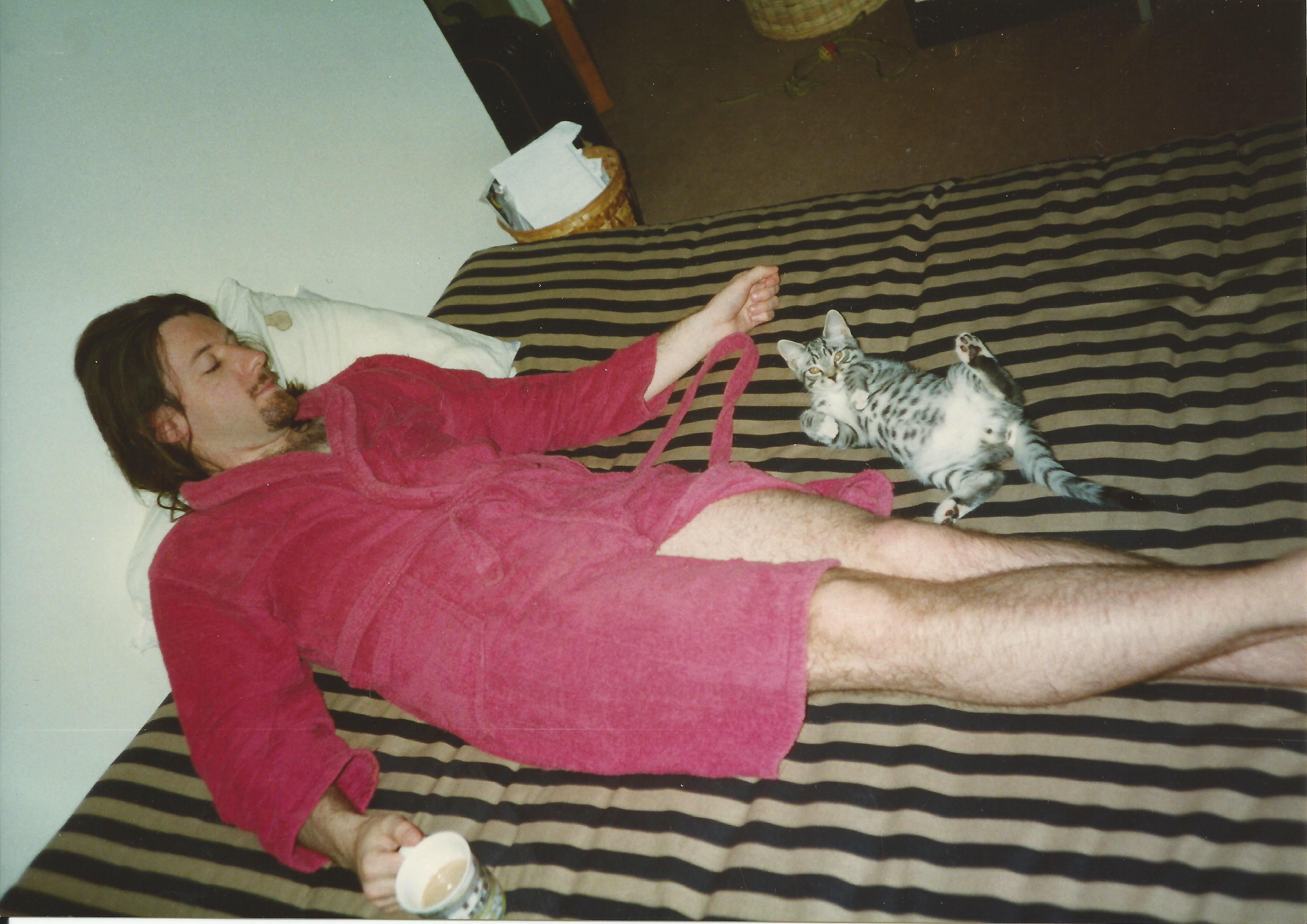
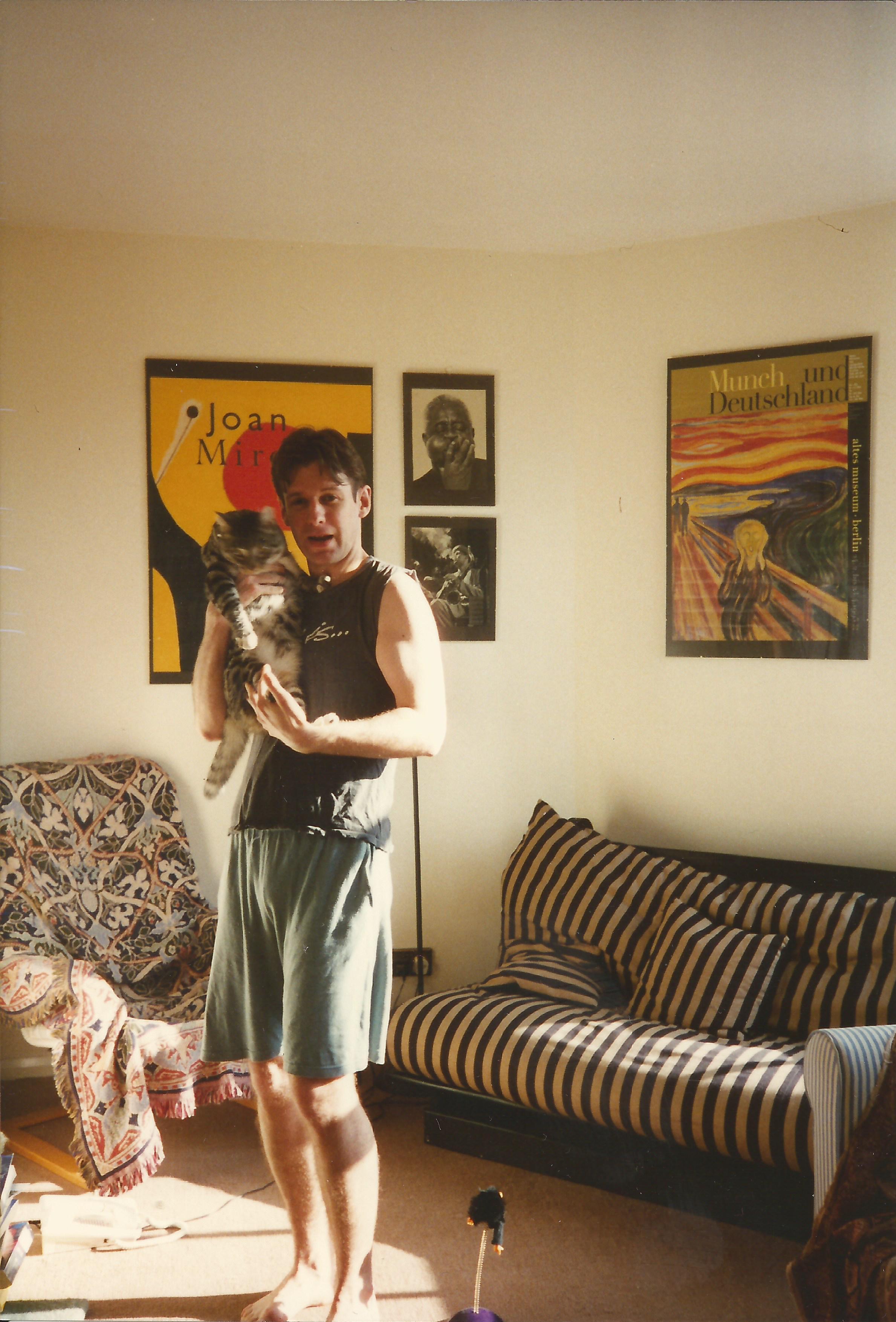
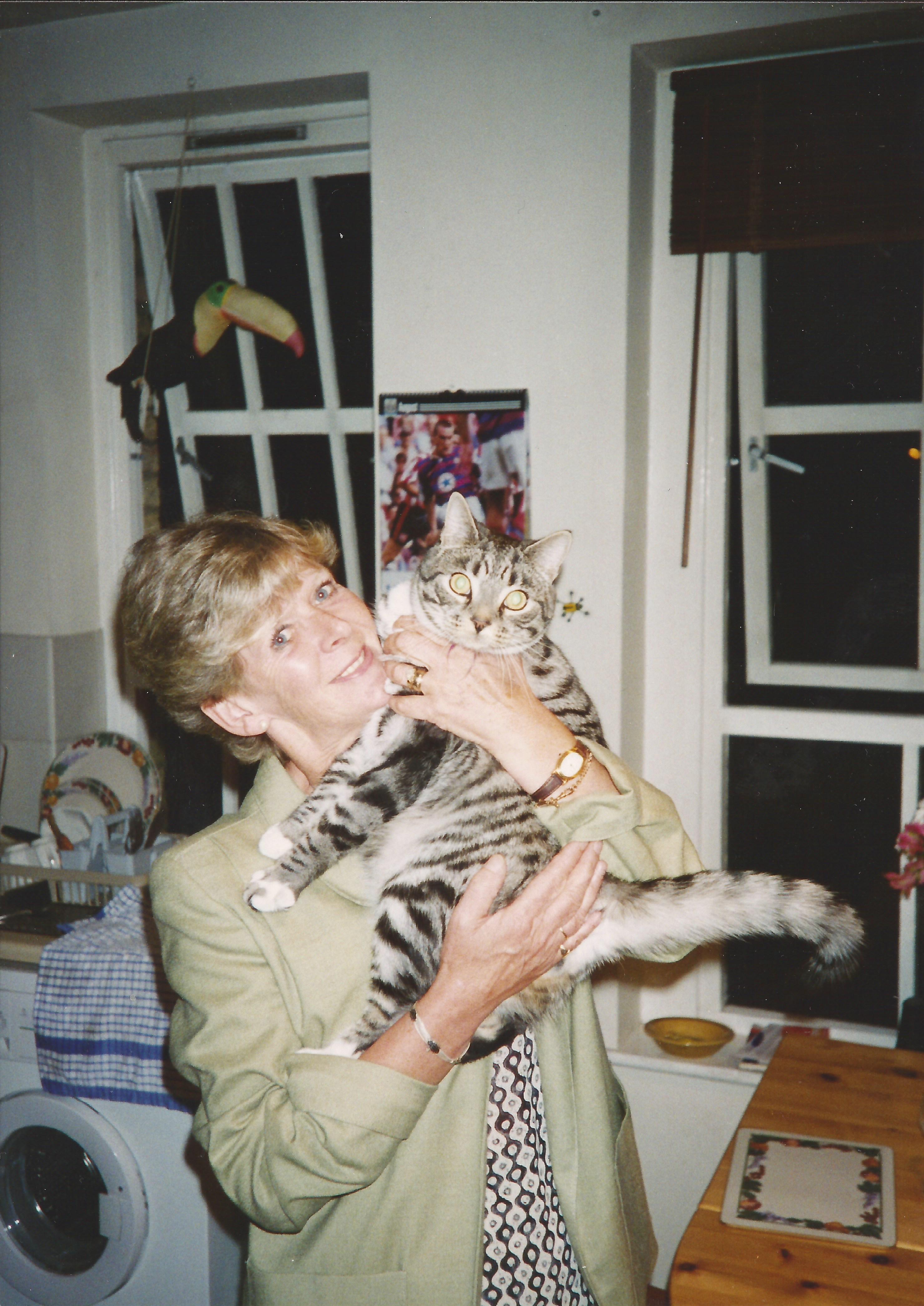
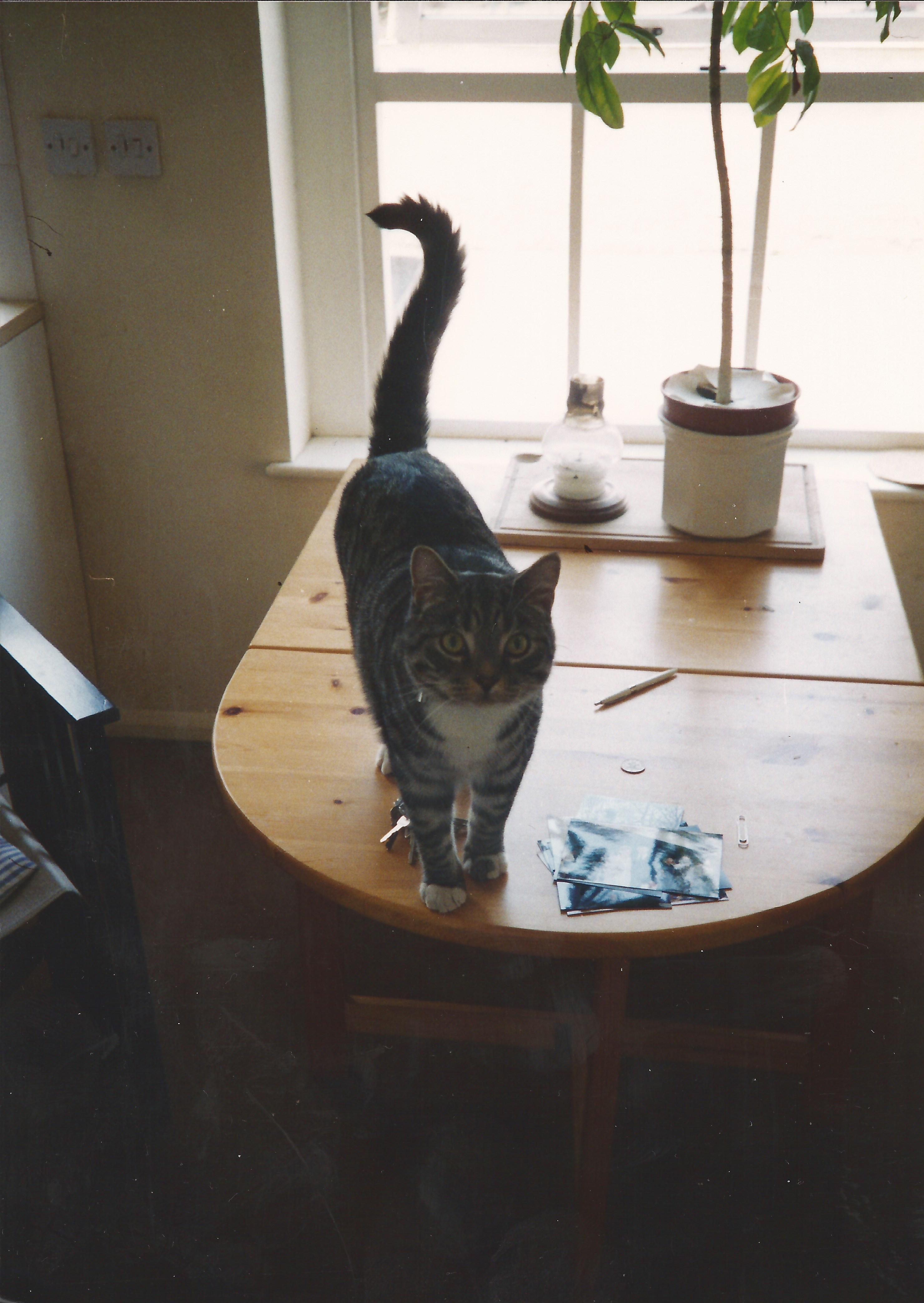
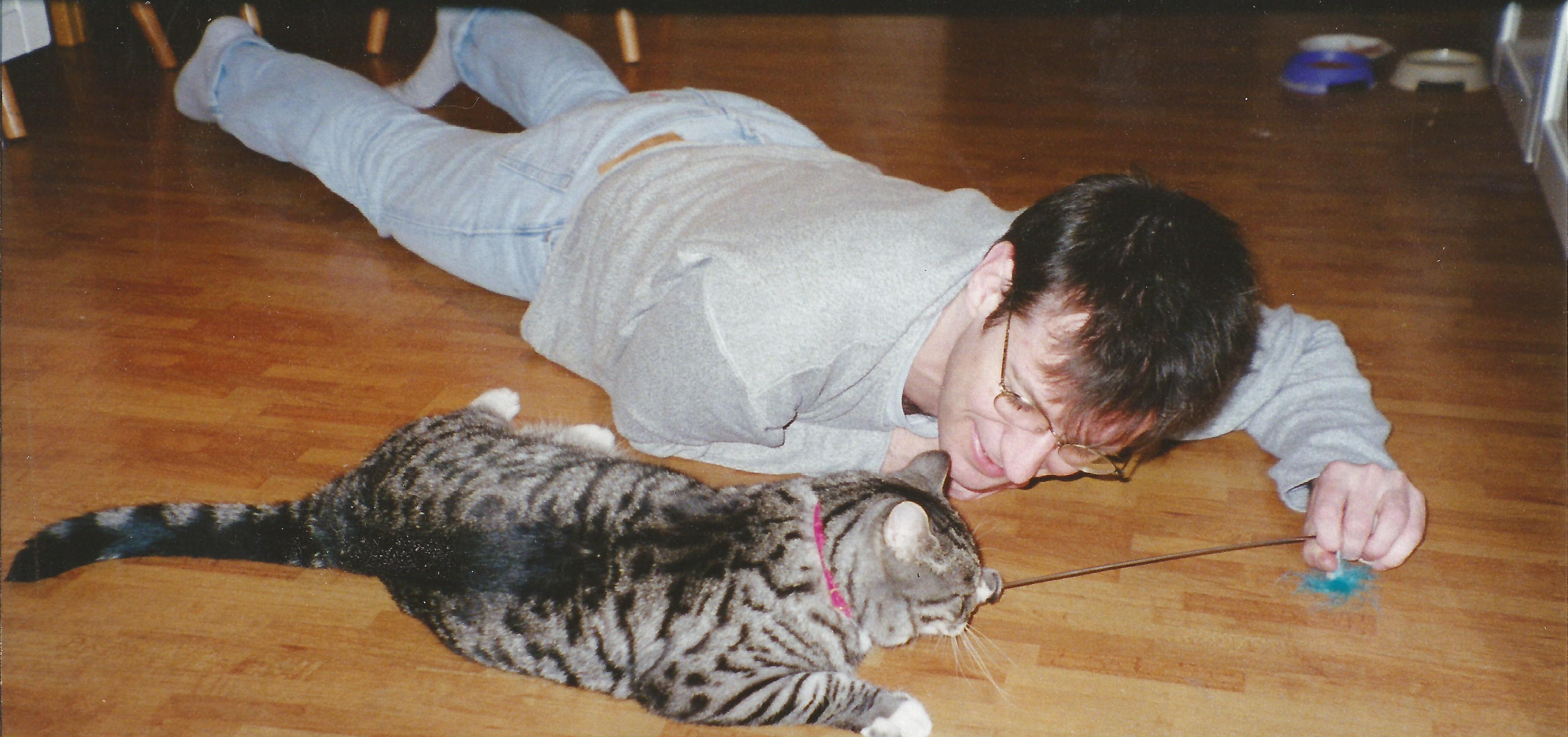
It’s a year to the day since my old feline friend Columbo passed away. I still miss him, and have indeed felt his absence as strongly as ever over the last few weeks. Still, going through photographs and other memorabilia recently has not been without its therapeutic value. Here are a few pictures over the years, showing how Columbo stayed with me through many changes of hairstyle! Most of the pictures were taken in my flat in Bethnal Green during the 90s; the last one in my house in Beeston, Nottingham. The antepenultimate picture shows Columbo with my mum…


Observational Tests of Inflation, Durham 1990.

Posted in Biographical, The Universe and Stuff with tags , , , on July 31, 2012 by telescoper

I came across this old picture in my office today and couldn’t resist posting it for nostalgia’s sake. It was taken at a NATO Advanced Research Workshop called Observational Tests of Inflation, which took placed in Durham in December 1990. You’ll probably need to click on the image to be able to recognize faces, but I should at least point out Sir Fred Hoyle in the turquoise jacket in the front row; I am behind in the red and white T-shirt and black waistcoat. In those days I was considered quite trendy, among cosmologists.

You can also see George Smoot, Simon White and Alan Guth sitting next to each other in the front row.

Wavy Gravy

Posted in Jazz with tags , , , , , on July 31, 2012 by telescoper

I was looking through my collection of old CDs last night and saw a track on Kenny Burrell’s classic album Midnight Blue with the title Wavy Gravy. I hadn’t noticed the name before, but thought it might do as a theme tune for my Cardiff colleagues who work on gravy waves  gravitational waves

Anyway, the album was recorded at the Van Gelder Studio, Englewood Cliffs, New Jersey on April 06-07, 1963, and originally released on Blue Note (4123). The complete personnel listing is: Kenny Burrell (guitar); Stanley Turrentine (tenor saxophone); Major Holley, Jr. (bass); Bill English (drums); Ray Barretto (congas).

The Origins of the Expanding Universe

Posted in Books, Talks and Reviews, The Universe and Stuff with tags , , , , on July 30, 2012 by telescoper

Not having much time to write anything particularly original, I thought I’d use this blog to advertise a forthcoming centenary celebration which I hope to attend and speak at, if my recovery goes to plan.  The text below is taken from the conference website for a meeting due to take place at the Lowell Observatory in Flagstaff, Arizona from September 13-15. I’m sure they won’t mind me borrowing it, as it helps promote the event.  Registration is open until 10th August…

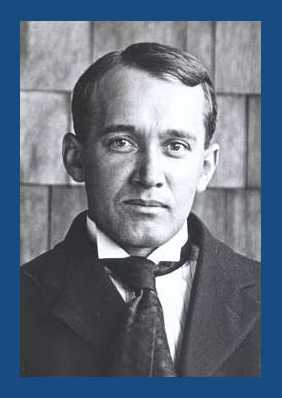
On September 17, 1912, Vesto Slipher obtained the first radial velocity of a “spiral nebula” – the Andromeda Galaxy. Using the 24-inch telescope at Lowell Observatory, he followed up with more Doppler shifts, and wrote a series of papers establishing that large velocities, usually in recession, are a general property of the spiral nebulae. Those early redshifts were recognized as remarkable by Slipher, and were critical to the discovery of what came eventually to be called the expanding Universe. Surprisingly, Slipher’s role in the story remains almost unknown to much of the astronomical community.

The nature, and especially the distance, of spiral nebulae was fiercely argued – most famously in the 1920 Shapley-Curtis debate. Hubble’s 1923 discovery of Cepheids in Andromeda, along with Henrietta Leavitt’s period-luminosity relation for Cepheids, led to a distance scale for the nebulae, enabling Lemaitre (1927) to derive a linear relation between velocity and distance (including a “Hubble constant” and, by 1931, a Primeval Atom theory).

Meanwhile, a new concept of space and time was formulated by Einstein, providing a new language in which to understand the large-scale Universe. By 1932, all the major actors had arrived on stage, and Universal expansion – the most general property of the Universe yet found – acquired a solid basis in observation and in the (relativistic) concept of space. “Space expands”… or does it? How did Lemaitre and Hubble interpret this concept? How do we interpret it? It continues to evolve today, with cosmic inflation and dark energy presenting new challenges still not fully assimilated.

This conference is in honor of Vesto Melvin Slipher and is timed to coincide with the 100th anniversary of the first measured Doppler shift in a Galaxy (then known as a Spiral-Nebula) on September 17, 1912:Slipher 1913 Lowell Obs 2, 56

We are bringing together astronomers and historians of science to explore the beginnings and trajectories of the subject, at the place where it began. 

Against Entropy

Posted in Poetry with tags , , on July 30, 2012 by telescoper

The worm drives helically through the wood
And does not know the dust left in the bore
Once made the table integral and good;
And suddenly the crystal hits the floor.
Electrons find their paths in subtle ways,
A massless eddy in a trail of smoke;
The names of lovers, light of other days
Perhaps you will not miss them. That’s the joke.
The universe winds down. That’s how it’s made.
But memory is everything to lose;
Although some of the colors have to fade,
Do not believe you’ll get the chance to choose.
Regret, by definition, comes too late;
Say what you mean. Bear witness. Iterate.

by John M. Ford (1957-2006)

The Fog on the Tyne

Posted in Biographical with tags , , , , , , , on July 29, 2012 by telescoper

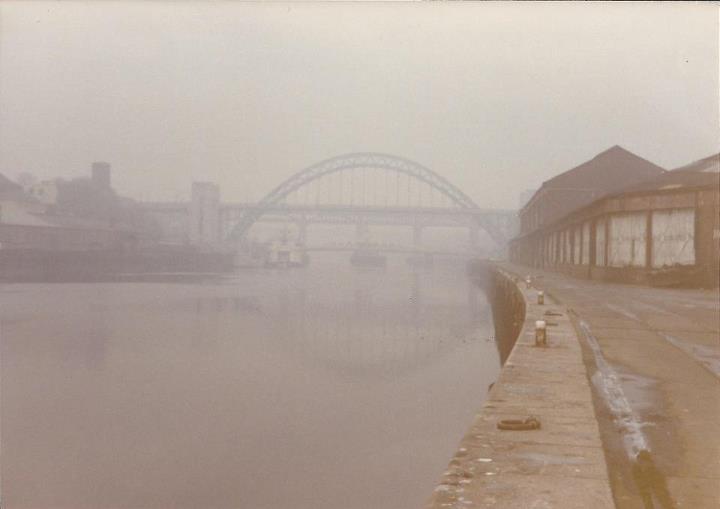
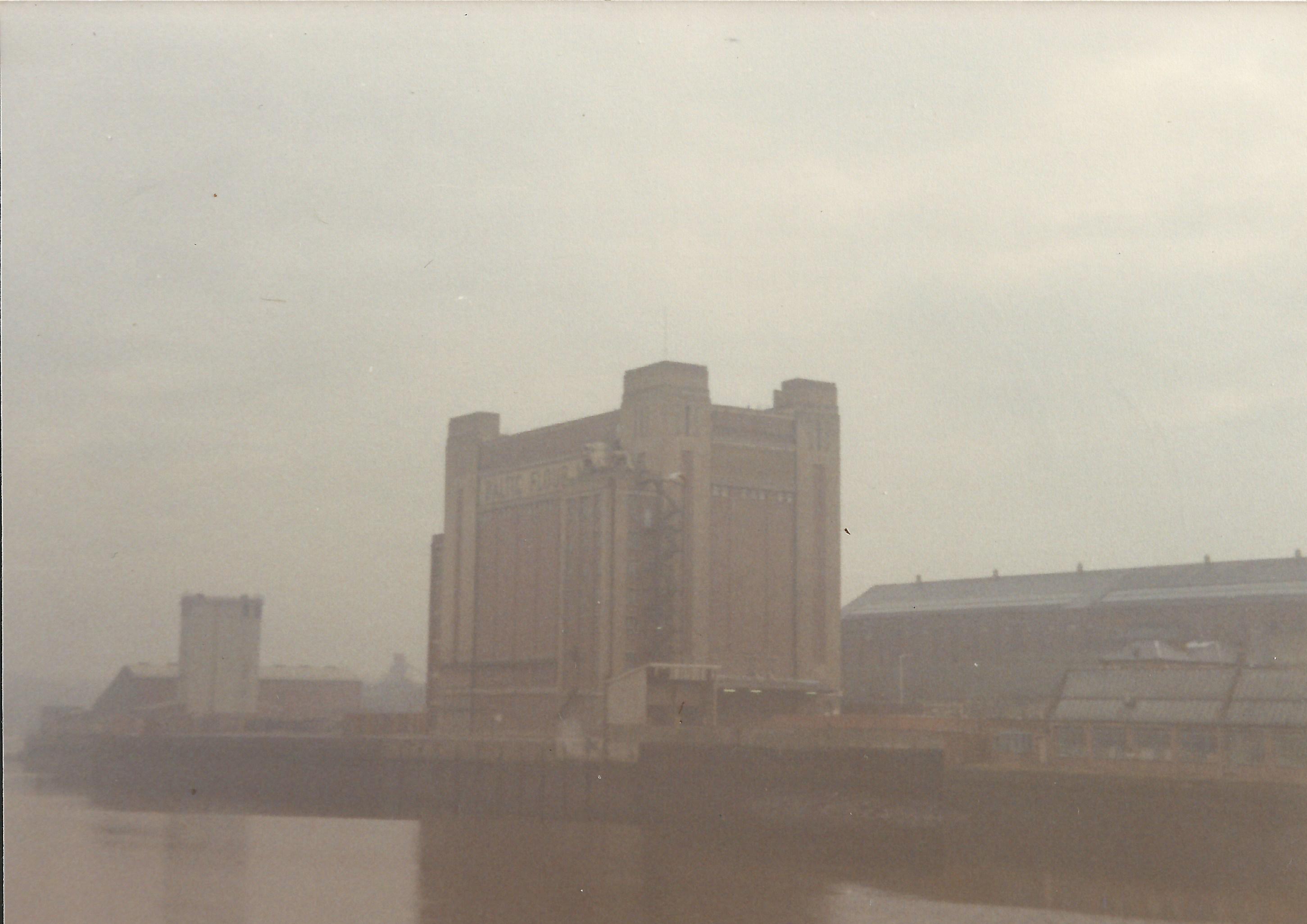
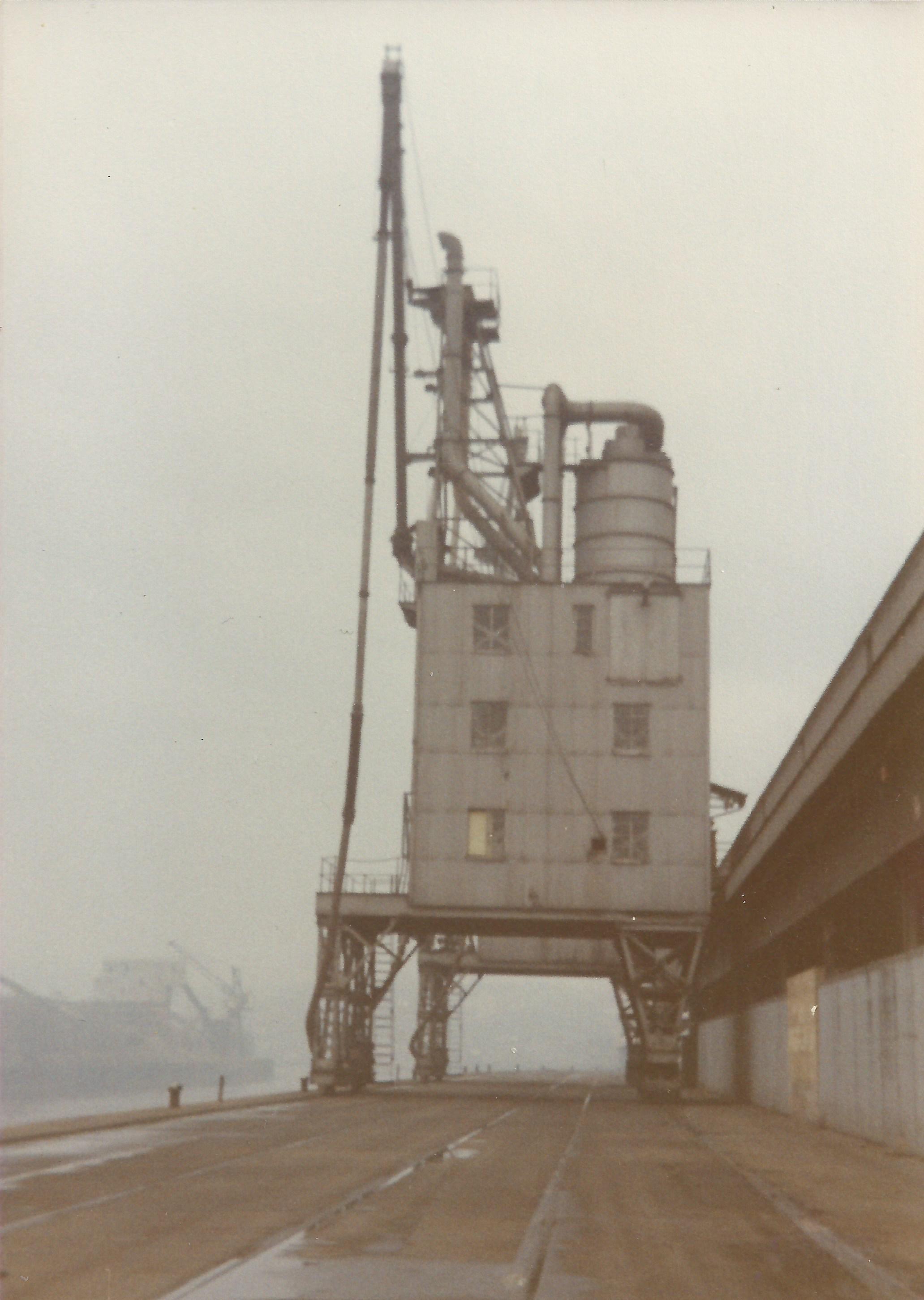
Recently I’ve been digging our boxes of old photographs, and boring all my Facebook friends by posting lots of scans I made from them. I seem to remember this particular batch came as a result of a stroll along the quayside of the River Tyne during one of the vacations when I was an undergraduate. I’m not very good at keeping records (or taking pictures for that matter) but at a guess I’d date them as 1984.

I’ve posted them partly because I think they’re quite atmospheric – there really was Fog on the Tyne that day – but also because the views they depict have long since vanished.

For example, there is now a new bridge – the beautiful Gateshead Millennium Bridge  – roughly at the position from which this first picture was taken. In the background (i.e. to the West) you can see the iconic Tyne Bridge and the Swing Bridge. Notice also that in those days the quayside to the right (on the Newcastle side) was virtually derelict; now it is buzzing with fancy cafés, bars and restaurants. In those days the Quayside was a rough and rather dangerous place, especially at night.

This one is of the Baltic Flour Mill, on the Gateshead side of the River Tyne, in the days when it was a disused flour mill. It’s now a famous art gallery and exhibition space, the Baltic Centre for Contemporary Art.

Next one shows a couple of trawlers tugs (see comments below). In fact there is a famous Fish Quay at North Shields further along towards the mouth of the Tyne; it dates back to the 13th Century.

And finally this contraption, which I assume is long gone. I never worked out what it was for. Any suggestions?

Opening Remarks

Posted in Politics, Sport with tags , , on July 28, 2012 by telescoper

I wasn’t intending to watch last night’s Opening Ceremony for the 2012 Olympics, but in the end I did. I found it unexpectedly wonderful, in a wild and rather surreal way, especially when it made a point of celebrating one of the things I think we British can be truly proud of, our National Health Service.

Somebody  posted on Twitter Danny Boyle’s introduction to the show from the programme. I can’t put it better than he did.

The irony, of course, is that the Olympic games aren’t really for everyone; they’re mainly for the benefit of the few multinational companies who’ve purchased the rights to sell their merchandise, including junk food,  at the events and to have large parts  of London closed down so they can ply their wares. And for the legions of corporate guests and other hangers-on who’ll fill their bellies over the next few weeks. Not far from the ceremony, Police used draconian tactics to stamp out a protest by a group of people who had the nerve to cycle in the Olympic lanes; 200 were arrested. The right to demonstrate is an essential part of a democracy, but it too has been sacrificed on the altar of commercialisation.

But I think the irony was deliberate. A Tory MP, Aidan Burley, moaned on twitter that the ceremony was full of “leftie multi-cultural crap”. People like him symbolize everything that is wrong with modern Britain. I think Danny Boyle conjured up something special last night, the image of a Britain that most of us, and especially our politicians, seem to have forgotten. Not one about greed, warmongering and xenophobia, but one of creativity, freedom, and generosity of spirit. It must have made members of our government very uncomfortable, especially because they paid for it.

And I should also add another thing I liked about it. It was very British. Not in an arrogant or pompous way. There was, after all, plenty of self-deprecating humour on display, especially Mr Bean’s appearance with the London Symphony Orchestra. In amongst the MacDonalds and Coca Cola logos, I find that very refreshing. I  do wonder how much of it was understood by foreign viewers, but that’s not the point. The world is more than a dreary retail park in which every shop sells the same tat. You don’t have to eat pork scratchings or drink warm beer if you don’t want to, but some of us over here rather like them.

I don’t care much about the actual games, and probably won’t watch much on TV, but I do hope the message of the opening ceremony isn’t forgotten.