I came across this little clip of the great Maria Callas on youtube, and couldn’t resist sharing it for the benefit of those (apparently many) people out there who think she was an overrated singer. I’m a devout Callas fan, but I also freely admit that many of the performances she recorded later in her career (especially in the 60s) weren’t all that good and it’s unfortunate that most of her famous performances were in an era when audio technology wasn’t really up to the task of recording live opera.
However, you can get an idea of how very special Maria Callas was in this little clip recorded live at La Scala in Milan in 1954. It’s a poor quality recording but her voice has a stunning radiance to it despite the distortions. This is the very end of the lengthy Act III “Mad Scene” from Donizetti‘s Opera Lucia di Lammermoor. It’s a tremendously demanding piece, which Callas sings with flawless technical accuracy and extraordinary expressive power leading up to a ringing top E♭ at the end. Her approach to the vocal gymnastics required by the bel canto repertoire was uniquely full-on and, without a safety net, the sense of danger surrounding these performances made them truly electrifying.
Only some of the music made it onto the recording, but there’s enough there to convince the doubters that this was a very special artist. And, listening to the applause at the end, the notoriously demanding audience at La Scala were clearly convinced too!
Incidentally, some argue that Callas’ voice was in decline after her substantial weight loss (she lost 80lbs between 1953 and 1954), but this was the slim Callas and her voice sounds pretty good to me!
Why do I make no poems? Good my friend Now is there silence through the summer woods, In whose green depths and lawny solitudes The light is dreaming; voicings clear ascend Now from no hollow where glad rivulets wend, But murmurings low of inarticulate moods, Softer than stir of unfledged cushat broods, Breathe, till o’er drowsed the heavy flower-heads bend. Now sleep the crystal and heart-charmed waves Round white, sunstricken rocks the noontide long, Or ‘mid the coolness of dim lighted caves Sway in a trance of vague deliciousness; And I,–I am too deep in joy’s excess For the imperfect impulse of a song.
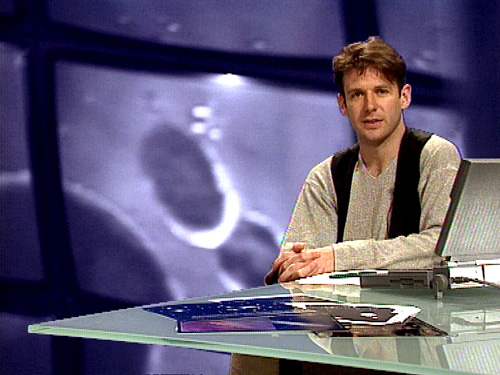
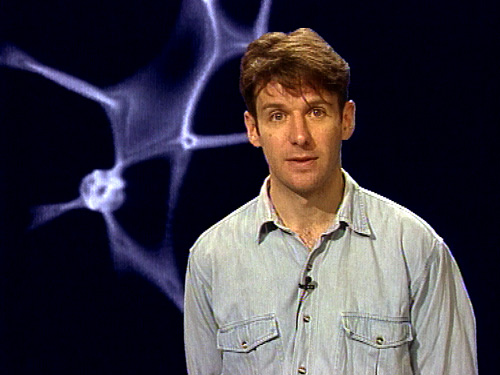
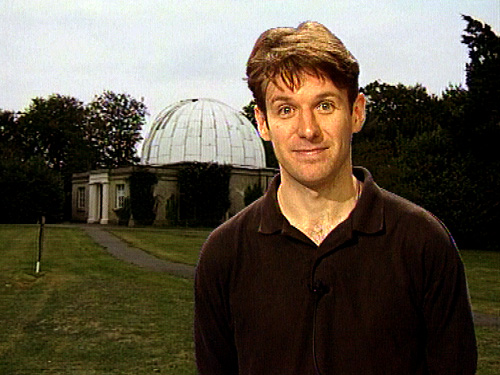
Looking for some old papers on my ancient laptop this afternoon I came across these pictures. I think they are stills taken from a series of video lectures I did a while ago (around 1996) called Topics of Modern Cosmology with a company called EUROPACE 2000. The course vanished without trace – although I still have the unedited footage in a box in my office – leaving only these relics of a bygone era:
For naturalism, fed on recent cosmological speculations, mankind is in a position similar to that of a set of people living on a frozen lake, surrounded by cliffs over which there is no escape, yet knowing that little by little the ice is melting, and the inevitable day drawing near when the last film of it will disappear, and to be drowned ignominiously will be the human creature’s portion. The merrier the skating, the warmer and more sparkling the sun by day, and the ruddier the bonfires at night, the more poignant the sadness with which one must take in the meaning of the total situation.
I’m not a big fan of bibliometricism …but this is definitely Quite Interesting. I wonder if my linking to it will increase its readership?
In the paper Effect of E-printing on Citation Rates in Astronomy and Physics we asked ourselves the question whether the introduction of the arXiv e-print repository had any influence on citation behavior. We found significant increases in citation rates for papers that appear as e-prints prior to being published in scholarly journals. This is just one example of how publication practices influence article metrics (citation rates, usage, obsolesc … Read More
Some interesting astronomy news emerged this evening relating to a paper published in 30th June issue of the journal Nature. The press release from the European Southern Observatory (ESO) is quite detailed, so I’ll refer you there for the minutiae, but in a nutshell:
A team of European astronomers has used ESO’s Very Large Telescope and a host of other telescopes to discover and study the most distant quasar found to date. This brilliant beacon, powered by a black hole with a mass two billion times that of the Sun, is by far the brightest object yet discovered in the early Universe.
and the interesting numbers are given here (with links from the press release):
The quasar that has just been found, named ULAS J1120+0641 [2], is seen as it was only 770 million years after the Big Bang (redshift 7.1, [3]). It took 12.9 billion years for its light to reach us.
Although more distant objects have been confirmed (such as a gamma-ray burst at redshift 8.2, eso0917, and a galaxy at redshift 8.6, eso1041), the newly discovered quasar is hundreds of times brighter than these. Amongst objects bright enough to be studied in detail, this is the most distant by a large margin.
When I was a lad, or at least a postdoc, the most distant objects known were quasars, although in those days the record holders had redshifts just over half that of the newly discovered one. Nowadays technology has improved so much that astronomers can detect “normal” galaxies at even higher redshifts but quasars remain interesting because of their extraordinary luminosity. The standard model for how a quasar can generate so much power involves a central black hole onto which matter falls, liberating vast amounts of gravitational energy.
You can understand how efficient this is by imagining a mass falling onto a black hole of Mass from a large distance to the horizon of the black hole, which is at the Schwarzschild radius . Since the gravitational potential energy at a radius is the energy involved in bringing a mass from infinity to the horizon is a staggering , i.e. half the rest mass energy of the infalling material. This is an overestimate for various reasons but it gives you an idea of how much energy is available if you can get gravity to do the work; doing the calculation properly still gives an answer much higher than the amount of energy that can be released by, e.g., nuclear reactions.
The point is, though, that black holes aren’t built in a day, so if you see one so far away that its light has taken most of the age of the Universe to reach us then it tells us that its black hole must have grown very quickly. This one seems to be a particularly massive one, which means it must have grown very quickly indeed. Through observations like this we learn something potentially very interesting about the relationship between galaxies and their central black holes, and how they both form and evolve.
On the lighter side, ESO have also produced the following animation which I suppose is quite illustrative, but what are the sound effects all about?
After yesterday’s examiners meeting at Queen Mary I downed a quick beer and took the tube to the West End in order to meet up with a couple of friends (Joao and Kim) to see last night’s production of Tosca at the Royal Opera House at Covent Garden.
Just over a year ago I posted about Welsh National Opera’s Tosca here in Cardiff, so I’ll refer you there for details about the plot synposis and background. Let me just say even though the WNO production was very good, it’s very difficult to match the special atmosphere of Covent Garden. It’s such a famous venue but at the same time is so intimate. I’d forgotten just how close you get to the stage. The prices were special prices too! Our tickets were £220 each and drinks in the two intervals were eye-wateringly expensive. But then you don’t go to Covent Garden for a cheap night out.
This was the only night that I could make it to this run, and as a result we actually saw the “second” cast: no Bryn Terfel, no Angela Gherghiou, and as it happens to Marcello Giordani either (owing to illness). In the performance we saw, Floria Tosca was Martina Serafin, Baron Scarpia was Juha Uusitalo, and making his Covent Garden debut as understudy thanks to Giordiani’s indisposition was was the young tenor Giancarlo Monsalve as Cavaradossi. I wasn’t too disappointed not to see Angela Gheorghiou, as I think she’s quite overrated, but I would have loved to have seen Bryn Terfel’s Scarpia. Perhaps some other time.
Anyway, it was a thoroughly enjoyable production if perhaps lacking that extra sparkle that the headline cast might have supplied. Serafin took a while to get going but from Act II onwards was very good, although she never quite managed to get across the fiery unpredictable side of her character’s persona. Uusitalo was a brutish Scarpia with a strong stage presence; the dashing Monsalve took his opportunity well and was warmly received by the full house.
I’ve often wondered how this Opera, which on the face of it is a straightforward melodrama, manages to work so well. I think part of its magic is that the characters, as is often the case with Puccini, are not quite what they seem. Tosca is the heroine but she’s far from Snow White. She’s jealous and temperamental and in many ways quite unattractive. In this production, after initially stabbing Scarpia in self-defence, she carries on stabbing him in a kind of bloodlust which is quite scary. Cavaradossi is the hero, but he’s not a particularly heroic hero because he crumbles under the strain of his imminent execution in Act III. And then there’s Scarpia, the baddy. I find him the most fascinating of all because, although he’s evil, there are flashes of loneliness and contrition. I think he’s monstrous because something in his past has made him monstrous. A prequel to Tosca based on Scarpia’s earlier biography would make a very interesting opera indeed..
I know it’s deeply unfair to make comparisons, but I thought nevertheless I’d include this clip of a live broadcast of Tosca from the same venue, way back in 1964, featuring perhaps the greatest Scarpia, Tito Gobbi, and perhaps the greatest Tosca, Maria Callas. I heard the composer Michael Berkeley talking about what a revelation it was to see Callas at Covent Garden in this role; he simply hadn’t imagined that acting in the opera could be so good. Even in black-and-white you can get idea of the mesmerising stage presence that was Maria Callas and what a fine actress she was. Here she is, with hatred burning in her eyes, plunging the knife into Scarpia, standing over him willing him to die, then realising what she has done, turning back into a frightened, vulnerable and remorseful woman then doing the best she can to pay respect to his dead body. Magnificent.
Yesterday was a busy day, involving me travelling to London in order to carry out my duties as external examiner for the MSc in Astrophysics in the School of Mathematical Sciences at Queen Mary, University of London. Every time I go to my old stomping ground on Mile End Road, the East End something seems to have changed, whether in the college or in the environs. This time was no exception, as they’ve finally finished the new entrance to the Mathematical Sciences Building:
You can’t see it all that well, but it’s decorated with Penrose Tiling (although it’s not specified who did the grouting). Inside there’s a spacious new foyer area – devoid of any possible teaching use, but probably a nice area for students to gather informally. Inside has a sort of 1960s retro feel, with bright yellow plastic floors and modernist soft furnishings. Austin Powers would probably feel at home there. The large lecture theatre has also been comprehensively refurbished and looks very nice, although its capacity has been reduced. Less emphasis on teaching facilities, more on “the student experience” I suppose.
I used to work at Queen Mary, in the Astronomy Unit; in this very building, in fact. I can’t help being a bit cynical about the new front entrance. There are so many other things wrong with the building – grubby concrete exterior, badly fitting windows and lavatories that don’t work, to name but a few – that I can’t really understand what made someone decide that what it really needed was a new garish plastic foyer. It’s up to Queen Mary to decide where to spend its money, of course, but I think it’s strange.
Other, bigger, news about the Astronomy Unit which I learned yesterday is that this summer, at long last, it’s moving from the School of Mathematical Sciences to merge with the Physics department in order to form a new School of Physics & Astronomy. In fact, when I was there there were astronomers in Physics (mainly instrumental and observational) and in Mathematical Sciences (mainly theoretical, including myself). Some years ago most of the instrumentation people moved from the School of Physics here to Cardiff, where they are still. The remaining astronomers moved to Mathematical Sciences. Now they’re moving back to Physics along with those currently in Maths. Oh what a tangled web.
For the time being the Astronomy Unit will stay in their existing offices but will eventually move in with Physics once that building is refurbished. I guess the main thing that will change immediately is that various astronomers will have new letterheads and will have to start teaching physics courses instead of mathematics.
Feelings about the move among the staff appear to be rather mixed, but I wish them well in their new School and with their plans to build up Physics & Astronomy in the future.
Posted in Columbo with tags cats, Columbo on June 28, 2011 by telescoper
Up bright and early this morning as I have to spend the day in the Big Smoke on external examining duty, after which I’m going to see Tosca at Covent Garden. Anyway, just time for a quick snap of Columbo while I drink my coffee. I’m a little concerned about him. Yesterday he was sick in his basket, which may be a side-effect of his new arthritis medication, so I’ve stopped giving it to him. I’ll try again with a small dose in a day or two and if he gets ill again I’ll just throw the stuff away. I hope it’s nothing worse than a dicky tummy.
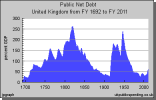
Andy Lawrence on cuts to Astronomy in Utrecht, the importance of rocking the boat, and a realistic perspective of the debt crisis; see also an old post of mine here that uses the same figure to make a similar point: the cuts are based on politics, not economics ….
As you may have heard, the University of Utrecht has taken the extraordinary decision to completely shut down its Astronomical Institute SIU by 2014. You can read about in a blog post written last week by Sarah Kendrew, and there is also a press statement issued by the SIU. This is the scariest astro-disaster since the INAF panic. Utrecht is a significant fraction of Dutch astronomy; it is one out of five universities in the NOVA alliance , alt … Read More
The views presented here are personal and not necessarily those of my employer (or anyone else for that matter).
Feel free to comment on any of the posts on this blog but comments may be moderated; anonymous comments and any considered by me to be vexatious and/or abusive and/or defamatory will not be accepted. I do not necessarily endorse, support, sanction, encourage, verify or agree with the opinions or statements of any information or other content in the comments on this site and do not in any way guarantee their accuracy or reliability.

 falling onto a black hole of Mass
  from a large distance to the horizon of the black hole, which is at the Schwarzschild radius
  . Since the gravitational potential energy at a radius
  is
is  the energy involved in bringing a mass
  , i.e. half the rest mass energy of the infalling material. This is an overestimate for various reasons but it gives you an idea of how much energy is available if you can get gravity to do the work; doing the calculation properly still gives an answer much higher than the amount of energy that can be released by, e.g., nuclear reactions.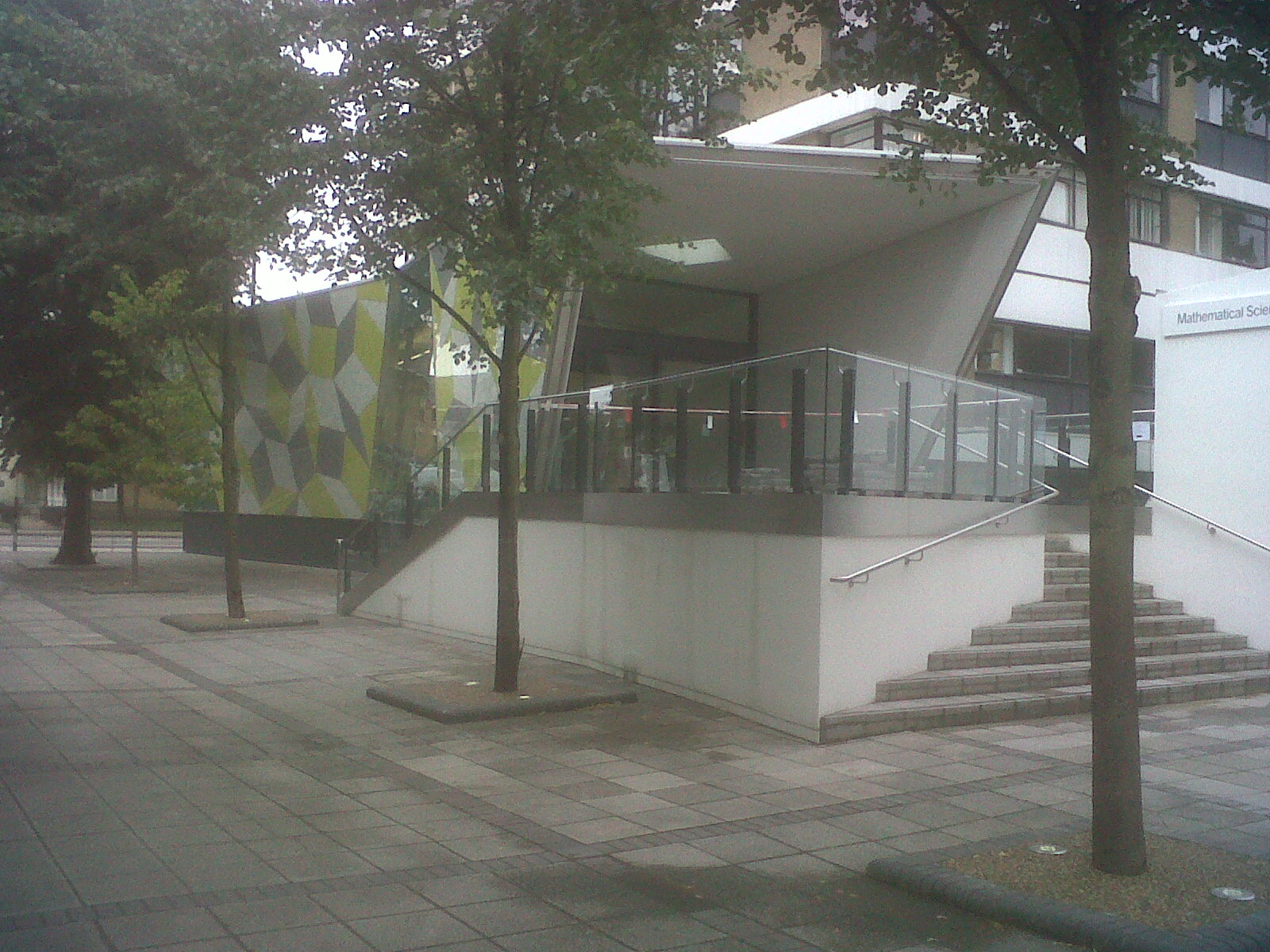


 In the Dark