The joy of viXra

Posted in The Universe and Stuff with tags , , , , , on May 19, 2011 by telescoper

From time to time on this blog I post rants about the state of scientific publishing, open access, the importance of the arXiv for astronomy and cosmology, and so on.

This morning, however, I discovered an “alternative” side to the whole business of online science, a site by the name of viXra. Most readers will probably be familiar with this site already – many no doubt publish there, in fact – but I have to say that it’s completely new to me. I urge you to check it out.

The structure and layout of viXra is almost identical to the arXiv, but the content is a bit … er … different. Naturally, I went straight for the section that mirrors astro-ph on the arXiv. The viXra version of astro-ph so far contains only 88 publications, but among them are papers of such outstanding quality that I’m sure this remarkable collection will grow very quickly when like-minded authors around the world find out about it.

I thought I’d post my favourite as an example. Initially, I was going to go with one entitled Ball Lightning, Micro Comets, Sprite-Fireballs and X-Ray/gamma Flashes According to Quantum FFF Theory, with the abstract

FUNCTION FOLLOWS FORM in Quantum FFF THEORY. The FORM and MICROSTRUCTURE of elementary particles, is supposed to be the origin of FUNCTIONAL differences between Higgs- Graviton- Photon- and Fermion particles. As a consequence, a NEW splitting, accelerating and pairing MASSLESS BLACK HOLE, able to convert vacuum energy (ZPE) into real energy by entropy decrease, seems to be able to explain quick Galaxy- and Star formation, down to Sunspots, (Micro) Comets, Lightning bolts, Sprite Fireballs and Ball Lightning.

I decided against this one, however, because of the tendency to burst inexplicably into upper case every now and again, which I found rather alarming.

I was also forced to reject this one, The Structuring Force of the Natural World, on the grounds that (a) it’s in Chinese so I can’t read it and (b) I don’t know what a “basket graph” is. Otherwise I’m sure its a splendid piece of work.

The assumption that the mass distribution of spiral galaxies is rational was suggested 11 years ago. The rationality means that on any spiral galaxy disk plane there exists a special net of orthogonal curves. The ratio of mass density at one side of a curve (from the net) to the one at the other side is constant along the curve. Such curve is called a proportion curve. Such net of curves is called an orthogonal net of proportion curves. I also suggested that the arms and rings are the disturbance to the rational structure. To achieve the minimal disturbance, the disturbing waves trace the orthogonal or non-orthogonal proportion curves. I proved 6 years ago that exponential disks and dual-handle structures are rational. Recently, I have also proved that rational structure satisfies a cubic algebraic equation. Based on these results, this paper ultimately demonstrates visually what the orthogonal net of proportion curves looks like if the superposition of a disk and dual-handle structures is still rational. That is, based on the natural solution of the equation, the rate of variance along the ‘radial’ direction of the logarithmic mass density is obtained. Its image is called the ‘basket graph’. The myth of galaxy structure will possibly be resolved based the further study of ‘basket graphs’.

In the end I decided to go for this impressive article, A Cantorian Superfluid Vortex and the Quantization of Planetary Motion

This article suggests a preliminary version of a Cantorian superfluid vortex hypothesis as a plausible model of nonlinear cosmology. Though some parts of the proposed theory resemble several elements of what have been proposed by Consoli (2000, 2002), Gibson (1999), Nottale (1996, 1997, 2001, 2002a), and Winterberg (2002b), it seems such a Cantorian superfluid vortex model instead of superfluid or vortex theory alone has never been proposed before. Implications of the proposed theory will be discussed subsequently, including prediction of some new outer planets in solar system beyond Pluto orbit. Therefore further observational data is recommended to falsify or verify these predictions. If the proposed hypothesis corresponds to the observed facts, then it could be used to solve certain unsolved problems, such as gravitation instability, clustering, vorticity and void formation in galaxies, and the distribution of planet orbits both in solar system and also exoplanets.

I’m not an expert on the “Cantorian superfluid vortex theory”, but I suspect the author may well be correct in saying that it has not previously been proposed as an explanation for the planetary orbits…

Share/Bookmark

Der Abschied

Posted in Music with tags , , , , , , on May 18, 2011 by telescoper

A little dickie bird (or, more accurately, quite a large one with impressive plumage) emailed me to point out that today, 18th May 2011, is the 100th anniversary of the death of Gustav Mahler. I couldn’t let the date go unmarked, so thought I’d post something here. I couldn’t decide which of two bits to put up, so decided to go with them both.

Although it’s long (and I don’t really like posting segments of things) it seemed appropriate to offer Der Abschied (“The Farewell”), the last movement from Das Lied von der Erde. I picked this version, featuring the legendary mezzo soprano Christa Ludwig.

Incidentally, Das Lied von der Erde is a symphony and it was written by Mahler after the 8th Symphony. However, it isn’t the 9th Symphony, which is a different work, or indeed the 10th which was unfinished at Mahler’s death and which I heard here in Cardiff recently.

If you haven’t got time to listen to all of that one, try this remarkable recording instead. It’s Urlicht, one of the songs from Das Knaben Wunderhorn which appears in Mahler’s 2nd Symphony (“The Resurrection”), sung by the late Maureen Forrester (contralto) and conducted by none other than a (very young) Glenn Gould.

Share/Bookmark

Cute Physics Problem

Posted in Cute Problems, The Universe and Stuff with tags , on May 17, 2011 by telescoper

I heard this nice physics problem today so I thought I’d try it out on here. You will probably be able to find the answer on the net somewhere but please try to figure it out yourself before doing so!

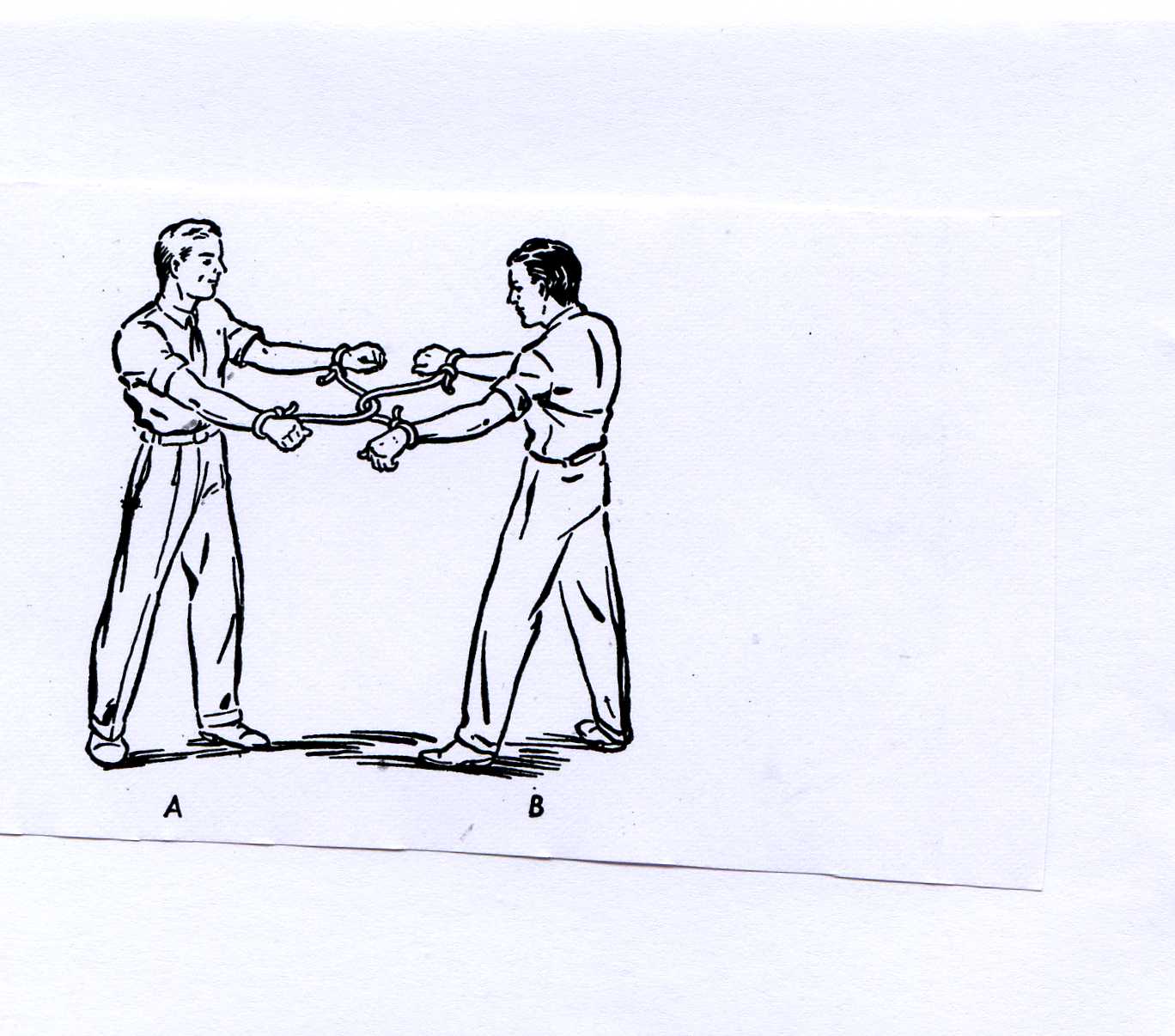
There are two identical chambers, A and B containing identical metal balls which begin the experiment at the same temperature. Apart from the balls, each chamber is a perfect vacuum and has thermally conducting walls at a lower temperature than the ball it contains.

In A the ball is resting on the floor, which is made of material which is a perfect thermal insulator.

In B the ball is hanging from the ceiling by a piece of light inextensible string, not touching the floor. Both the string and the ceiling are also made of perfectly insulating material.

Which ball cools down faster?

Please put your answer through the poll here. When enough people have voted, I’ll tell you the answer…

Share/Bookmark

Rainbow over Cardiff

Posted in Uncategorized with tags , , , , , on May 17, 2011 by telescoper

Nice to see the Rainbow Flag  flying at the Cardiff City Council building this morning..

This is in recognition that today, May 17th, is International Day Against Homophobia, or IDAHO for short. Please remember that although attitudes in the UK are much more enlightened than they were only a few years ago, homophobic violence still happens with distressing frequency. And in places such as Uganda, where a bill has been tabled calling for homosexual acts to be punished by the death penalty, matters are even worse…

If you’re wondering why May 17th was chosen for this, then I can tell you that it’s to commemorate May 17th 1990, which is when the World Health Organisation removed homosexuality from its list of “mental illnesses”.

Share/Bookmark

Old Boy Network

Posted in Columbo with tags , on May 17, 2011 by telescoper

It’s only after spending what seems like weeks catching up after my short holiday that I realise I’ve forgotten to post the update that probably most people care about, i.e. my old moggy Columbo.

Well, although he’s not getting any younger he’s still doing OK. I had to make use of the services of a petsitter while I was away (both at NAM and then on holidays). It turns out the lady who usually comes wasn’t available all the time so I had two different people coming to the house at various times. His support network is becoming extensive.

He is of course pretty old now – he was 17 in March – and he’s showing quite a few signs of age. He has been suffering from arthritis in his legs for a while, but the medication seems at least to have stopped it getting worse. He still has a bit of a struggle sometimes getting up and lying down but the discomfort obviously doesn’t last too long. If it gets to the point where he’s in pain all the time then I’ll have to think very hard about what to do.

Despite this ailment (and his continuing diabetes) he still seems happy enough to potter about in the garden in between lengthy snoozes, more often than not on my bed. He’s also still got a healthy appetite. The only times he’s ever been off his food have been when he was really ill, so as long as he’s eating I reckon he’s basically OK. That’s why I don’t mind him cadging for snacks, as is his wont..

Columbo’s basically a friendly old chap and there are occasions when he clearly enjoys having other people around. At other times, though, increasingly frequent now, he clearly prefers his own company and goes off on his own somewhere. I know him well enough not to bother him when he’s in that mood. Actually, Columbo and I are pretty similar in that craving for solitude. We old boys like to keep ourselves to ourselves.

Share/Bookmark

If it ain’t open, it ain’t science

Posted in Open Access, Science Politics, The Universe and Stuff with tags , , , , , , on May 16, 2011 by telescoper

Last Friday (13th March) the Royal Society launched a study into “openness in science”, as part of which they are inviting submisions from individuals and organizations. According to the Royal Society website

Science has always been about open debate. But incidents such as the UEA email leaks have prompted the Royal Society to look at how open science really is.  With the advent of the Internet, the public now expect a greater degree of transparency. The impact of science on people’s lives, and the implications of scientific assessments for society and the economy are now so great that  people won’t just believe scientists when they say “trust me, I’m an expert.” It is not just scientists who want to be able to see inside scientific datasets, to see how robust they are and ask difficult questions about their implications. Science has to adapt.”

I think this is a timely and important study which at the very least will reveal how different the attitude to this issue is between different science disciplines. On one extreme we have fields like astronomy, where the practice of making all data publically available is increasingly common and where most scientific publications are available free of charge through the arXiv. On the other there are fields where experimental data are generally regarded as the private property of the scientists involved in collecting the measurements or doing the experiments.

I have quite a simple view on this, which is that the default should be that  data resulting from publically funded research should be in the public domain. I accept that this will not always be possible owing to  ethical issues, such as when human subjects are involved, but that should be the default position.I have two reasons for thinking this way. One is that it’s public money that funds us, so we have a moral responsibility to be as open as possible with the public. The other is that the scientific method only works when analyses can be fully scrutinized and, if necessary, replicated by other researchers. In other words, to seek to prevent one’s data becoming freely available is profoundly unscientific.

I’m actually both surprised and depressed at the reluctance of some scientists to make their data available for scrutiny by other scientists, let alone members of the general public. I can give an example of  my own experience of an encounter with a brick wall when trying to find out more about the statistics behind a study in the field of neuroscience. Other branches of physics are also way behind astronomy and cosmology in opening up their research.

If scientists are reluctant to share their data with other scientists it’s very difficult to believe they will be happy to put it all in the public domain. But I think they should. And I don’t mean just chucking terabytes of complicated unsorted data onto a website in such a way that it’s impossible in practice to make use of. I mean fully documented, carefully maintained databases with both raw data, analysis tools and data products. An exemplar is the excellent LAMBDA site which is a repository for data arising for research into the Cosmic Microwave Background.

I’ve ranted before (and will no doubt do so again) about the extremely negative effect the academic publishing industry has on the dissemination of results. At out latest Board of Studies meeting, the prospect of further cuts to our library budget was raised and the suggestion made that we might have to cancel some of our journal subscriptions. I, and most of my astronomy colleagues, frankly don’t really care if we cancel astronomy journals. All our relevant papers can be found on the arXiv and/or via the NASA/ADS system. My physics colleagues, on the other hand, are still in hock to the old-fashioned and ruinously expensive academic journal racket.

One of the questions the Royal Society study will ask is:

How do we make information more accessible and who will pay to do it?

I’m willing to hazard a guess that if we worked out how much universities and research laboratories are spending on pointless journal subscriptions, then we’d find that it’s more than enough to pay for the construction and maintenance of  sufficient  open access repositories.  The current system of publishing could easily be scrapped, and replaced by something radically different, but it won’t be easy to change to a new approach more suited to the era of the internet.  For example, at present  we are forced to  publish in “proper journals” for the purposes of research assessments, so that academic publishers wield immense power over university researchers. These vested interests will be difficult to overthrow, but I think there’s a growing realization that they are actively preventing science adjusting properly to the digital age.

Anyway, whether or not you agree with me, I hope you’ll agree that the Royal Society study is an important one so please take a look and contribute if you can.

Share/Bookmark

Mr PC

Posted in Jazz with tags , , on May 16, 2011 by telescoper

I came across this just now and it completely blew me away so I thought I’d share it  here. It’s a solo version of the John Coltrane tune Mr PC  by the amazing (British-born) bassist Dave Holland. Words totally unnecessary. Wow will do.

Share/Bookmark

Ba-dum Ching!

Posted in Music with tags , , , , on May 15, 2011 by telescoper

One of the good things about having a blog is the chance to bore the entire internet with your own peculiar obsessions. As regular readers of In the Dark will be aware, one of my fascinations is the origin and evolution of words and phrases. This morning I had an interesting exchange on Twitter with neuroscientist and comedian extraordinaire Dean Burnett, which revolved around the word “rimshot”…and a similar word with quite different meaning which I won’t repeat in polite company.

Ever wondered what the name is for  the (often ironic) drum effect often used in cabaret or night club acts to puncuate a joke, like this?

Well, the answer is “rimshot”.

Or at least that’s the word that’s pretty universally used by comedians.

Curiously, though, if you are a percussionist rather than a comedian then a rimshot is something quite different. My father was a drummer so I had a lot of relevant terminology (flams, paradiddles, chokes, you name it) drummed into me when I was a kid. Technically, in fact, a rimshot is a single sound created by hitting the head of the drum and the rim at the same time with a drumstick. It’s an effect probably used more frequently in jazz than in other forms of music, and a good example can be heard on Miles Davis classic Summertime on which the excellent Philly Joe Jones applies a rimshot to every 4th beat of the bar. The clicking sound is something similar to that produced by claves. Nothing much to do with the word as used by comedians, then…

The word used by drummers for what comedians call a rimshot  is actually a sting. That’s certainly what my Dad always called it anyway. He often had to play in Working Mens’ Clubs and didn’t really like being on with comedians, most of whom were terrible and also told extremely blue jokes. In fact, I’m pretty sure he only ever used a sting in the ironic sense, when the gag was exceptionally poor.

There are many possible variants of the sting but the basic “ba-doom ching” is this:

which involves a tom-tom, closely followed by a kick on the bass drum, then a short pause followed by the bass drum and snare played together at the same time as a choked cymbal crash. Some stings are more elaborate than this, and a sting can indeed involve a rimshot, but most I’ve heard don’t.

Of course it’s not at all unusual for one word to have different meanings in different fields, so I’m not arguing that “rimshot” is wrong, but it’s interesting (at least to me) to wonder how when and why this divergence of meaning happened..

Incidentally, at the risk of boring you all even further, I’d add that the comedian’s rimshot has also evolved via a metonymic shift to refer not only to the sound the drummer makes but also to the joke that provoked it. In other words, an exceptionally good (or, more likely, bad)  gag is often itself referred to as a rimshot.

And with that, my time’s up. You’ve been a lovely audience. Thank you, and goodnight.

Ba-Dum Ching!

P.S. If you’re ever in need of a rimjob rimshot, you can get one here.

Share/Bookmark

Infinity or not Infinity?

Posted in The Universe and Stuff with tags , , , , , , on May 14, 2011 by telescoper

Most of us – whether scientists or not – have an uncomfortable time coping with the concept of infinity. Physicists have had a particularly difficult relationship with the notion of boundlessness, as various kinds of pesky infinities keep cropping up in calculations. In most cases this this symptomatic of deficiencies in the theoretical foundations of the subject. Think of the ‘ultraviolet catastrophe‘ of classical statistical mechanics, in which the electromagnetic radiation produced by a black body at a finite temperature is calculated to be infinitely intense at infinitely short wavelengths; this signalled the failure of classical statistical mechanics and ushered in the era of quantum mechanics about a hundred years ago. Quantum field theories have other forms of pathological behaviour, with mathematical components of the theory tending to run out of control to infinity unless they are healed using the technique of renormalization. The general theory of relativity predicts that singularities in which physical properties become infinite occur in the centre of black holes and in the Big Bang that kicked our Universe into existence. But even these are regarded as indications that we are missing a piece of the puzzle, rather than implying that somehow infinity is a part of nature itself.

The exception to this rule is the field of cosmology. Somehow it seems natural at least to consider the possibility that our cosmos might be infinite, either in extent or duration, or both, or perhaps even be a multiverse comprising an infinite collection of sub-universes. If the Universe is defined as everything that exists, why should it necessarily be finite? Why should there be some underlying principle that restricts it to a size our human brains can cope with?

On the other hand, there are cosmologists who won’t allow infinity into their view of the Universe. A prominent example is George Ellis, a strong critic of the multiverse idea in particular, who frequently quotes David Hilbert

The final result then is: nowhere is the infinite realized; it is neither present in nature nor admissible as a foundation in our rational thinking—a remarkable harmony between being and thought

But to every Hilbert there’s an equal and opposite Leibniz

I am so in favor of the actual infinite that instead of admitting that Nature abhors it, as is commonly said, I hold that Nature makes frequent use of it everywhere, in order to show more effectively the perfections of its Author.

You see that it’s an argument with quite a long pedigree!

When I was at the National Astronomy Meeting in Llandudno a few weeks ago, I attended an excellent plenary session that featured this year’s Gerald Whitrow Lecture, by Alex Vilenkin, entitled The Principle of Mediocrity. This was a talk based on some ideas from his book Many Worlds in One: The Search for Other Universese, in which he discusses some of the consequences of the so-called eternal inflation scenario, which leads to a variation of the multiverse idea in which the universe comprises an infinite collection of causally-disconnected “bubbles” with different laws of low-energy physics applying in each. Indeed, in Vilenkin’s vision, all possible configurations of all possible things are realised somewhere in this ensemble of mini-universes. An infinite number of National Astronomy Meetings, each with the same or different programmes, an infinite number of Vilenkins, etc etc.

One of the features of this scenario is that it brings the anthropic principle into play as a potential “explanation” for the apparent fine-tuning of our Universe that enables life to be sustained within it. We can only live in a domain wherein the laws of physics are compatible with life so it should be no surprise that’s what we find. There is an infinity of dead universes, but we don’t live there.

I’m not going to go on about the anthropic principle here, although it’s a subject that’s quite fun to write or, better still, give a talk about, especially if you enjoy winding people up! What I did want to say mention, though, is that Vilenkin correctly pointed out that three ingredients are needed to make this work:

  1. An infinite ensemble of realizations
  2. A discretizer
  3. A randomizer

Item 2 involves some sort of principle that ensures that the number of possible states of the system we’re talking about  is not infinite. A very simple example from  quantum physics might be the two spin states of an electron, up (↑) or down(↓). No “in-between” states are allowed, according to our tried-and-tested theories of quantum physics, so the state space is discrete.  In the more general context required for cosmology, the states are the allowed “laws of physics” ( i.e. possible  false vacuum configurations). The space of possible states is very much larger here, of course, and the theory that makes it discrete much less secure. In string theory, the number of false vacua is estimated at 10500. That’s certainly a very big number, but it’s not infinite so will do the job needed.

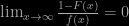
Item 3 requires a process that realizes every possible configuration across the ensemble in a “random” fashion. The word “random” is a bit problematic for me because I don’t really know what it’s supposed to mean. It’s a word that far too many scientists are content to hide behind, in my opinion. In this context, however, “random” really means that the assigning of states to elements in the ensemble must be ergodic, meaning that it must visit the entire state space with some probability. This is the kind of process that’s needed if an infinite collection of monkeys is indeed to type the (large but finite) complete works of shakespeare. It’s not enough that there be an infinite number and that the works of shakespeare be finite. The process of typing must also be ergodic.

Now it’s by no means obvious that monkeys would type ergodically. If, for example, they always hit two adjoining keys at the same time then the process would not be ergodic. Likewise it is by no means clear to me that the process of realizing the ensemble is ergodic. In fact I’m not even sure that there’s any process at all that “realizes” the string landscape. There’s a long and dangerous road from the (hypothetical) ensembles that exist even in standard quantum field theory to an actually existing “random” collection of observed things…

More generally, the mere fact that a mathematical solution of an equation can be derived does not mean that that equation describes anything that actually exists in nature. In this respect I agree with Alfred North Whitehead:

There is no more common error than to assume that, because prolonged and accurate mathematical calculations have been made, the application of the result to some fact of nature is absolutely certain.

It’s a quote I think some string theorists might benefit from reading!

Items 1, 2 and 3 are all needed to ensure that each particular configuration of the system is actually realized in nature. If we had an infinite number of realizations but with either infinite number of possible configurations or a non-ergodic selection mechanism then there’s no guarantee each possibility would actually happen. The success of this explanation consequently rests on quite stringent assumptions.

I’m a sceptic about this whole scheme for many reasons. First, I’m uncomfortable with infinity – that’s what you get for working with George Ellis, I guess. Second, and more importantly, I don’t understand string theory and am in any case unsure of the ontological status of the string landscape. Finally, although a large number of prominent cosmologists have waved their hands with commendable vigour, I have never seen anything even approaching a rigorous proof that eternal inflation does lead to realized infinity of  false vacua. If such a thing exists, I’d really like to hear about!

Share/Bookmark

Solvay 1927 – A Film Clip (via Manjit Kumar’s Random Walks)

Posted in Uncategorized on May 14, 2011 by telescoper

Fascinating footage of famous physicists…

..including Einstein and Bohr, seen in 1927.

Solvay 1927 - A Film Clip If you want to see extremely rare footage of some of the participants leaving the fifth Solvay conference held in Brussels in October 1927, its available here. Shot by the American Irving Langmuir, its just under 3 minutes long and shows Einstein, Bohr, Schrodinger, Heisenberg, Pauli, Born, de Broglie, Dirac and others after a day discussing quantum mechanics. The commentary is provided by Nancy Thorndike Greenspan, the author of an excellent bio … Read More

via Manjit Kumar’s Random Walks