Archive for astronomy

The Stitch-up Continues…

Posted in Science Politics with tags , , , , on April 1, 2010 by telescoper

Interesting news from the Science and Technology Facilities Council (STFC). Following the retirement of Professor Mike Edmonds from his post of Professor of Astronomy at Cardiff University – enabling yours truly to take his office! – he decided to resign his position on STFC Council. Yesterday, STFC announced that he would be replaced on its highest-level governing body, not with one person but with three, taking the membership of the Council to 12.

The new trio consists of  Mr Will Whitehorn (President of Virgin Galactic), Dr Michael Healy (President of the navigation business division of Astrium), and Mrs Gill Ball (Finance Director at the University of Birmingham). Given the catastrophic shambles of STFC’s current financial situation, the last appointment seems to make good sense. On the other hand, what on Earth is going on with the first two?

The new UK Space Agency came into existence today, 1st April 2010 – no joke. This is supposed to take overall control of all our national space activity, including commercial ventures as well as those parts (such as the subscription to the European Space Agency and funding for space instrumentation) previously under the control of STFC. Since space has now been hived off into another organisation altogether, why does  STFC now have  two commercial space gurus added to its Council?  The only explanation I can think of is that the STFC Executive is going to focus even further on space exploration rather than on basic research. These appointments were made by the Science Minister, Lord Drayson, who was the driving force behind the creation of the new UK Space Agency and they strongly suggest that he wants the emphasis within STFC to move in the direction of space exploration, to the likely detriment of the rest of science.  The implications for the future of observational astronomy and particle physics are deeply worrying.

Even more worryingly for those of us involved in basic research, note that one of the few scientists on Council has been replaced by three people whose interests lie elsewhere. In fact the number of independent scientists on Council has thus been reduced from 5 to 4. You can draw your own conclusions about what this means for the future of pure science in the rump of STFC…

Other interesting news this week is that the government has conjured up £100 million for the Diamond Light Source. I don’t want for one moment to give the impression that in the slightest bit negative about this facility or the new investment in it. It is immensely valuable for research across a  wide spectrum of scientific disciplines, and I was very glad to hear of the new investment. The extra funds will enable it to increase the number of beamlines from 10 to 32 which will represent a huge increase in its productivity.

But, while the cash injection for the Diamond Light Source is clearly to be applauded, it does provide a contrast with other areas within STFC’s remit  whose research budgets have been pared to the bone. In the last grant round, for example, one-third of all the astronomy rolling grants (6 out of 18)  up for renewal this year have been axed, and the others cut back severely. All the evidence suggests that there is no interest in reversing  the cuts in the STFC management, and that they will actually get very much worse over the next few years.

Since STFC blundered into financial meltdown in 2007, there have been two main theories as to what happened; remember that this was before the Credit Crunch took hold, so the black hole in STFC’s initial budget was nothing to do with the subsequent recession. One was that the STFC Management made a mess of their submission to the Comprehensive Spending Review and that it was all down to ineptitude. The other theory is that there was a definite plan at a high political level – probably in the Treasury – to rein back expenditure on fundamental research in favour of more “applied” disciplines. The shortfall in STFC’s finances was thus manufactured to achieve precisely what it has achieved. Depending on which of these theories you believe (if either), then the STFC Chief Executive is cast either as a bumbling incompetent or as a willing stooge of the Whitehall mandarins (although to be fair the two are not mutually exclusive).  The more the sorry saga of STFC pans out, the more I believe it was all a deliberate stitch-up. I think the most recent developments corroborate my view in depressingly convincing fashion.

STFC came into the world in 2007 with an estimated budget shortfall of £80 million. Had the £100 million I mentioned above appeared sooner, and had it gone into STFC’s general budget rather than being, as it is, ring-fenced for the Diamond Light Source then the carnage inflicted on science research could have been avoided. Instead, STFC squeezed its research grant line until the pips squeaked. Now that they’ve done this job, and got away with relatively little organized opposition from the scientific community, suddenly the money appears. It looks to me like the budget deficit was engineered to achieve precisely the outcome that has occurred.

I predict that after the election, the STFC budget will be slashed once more and that astronomy and particle physics research will again bear the brunt as STFC increasingly focusses on space exploration. The exodus of talented scientists from Britain that has already started and is sure to accelerate over the next year or two will take decades to reverse. It’s time for those responsible to come clean.

Planck and the Cold Galaxy

Posted in The Universe and Stuff with tags , , , , , , on March 17, 2010 by telescoper

Just a quick post to show a cool result from Planck which has just been released by the European Space Agency (ESA). It will be a while before any real cosmological results are available, but in the meantime here are a couple of glimpses into the stuff we cosmologists think of as foreground contamination but which are of course of great interest in themselves to other kinds of astronomers.

The beautiful image above (courtesy of ESA and the HFI Consortium) covers a portion of the sky about 55 degrees across. It is a three-colour combination constructed from Planck’s two shortest wavelength channels (540 and 350 micrometres, corresponding to frequencies of 545 and 857 GHz respectively), and an image at 100 micrometres obtained with the Infrared Astronomical Satellite (IRAS). This combination effectively traces the dust temperature: reddish tones correspond to temperatures as cold as 12 degrees above absolute zero, and whitish tones to significantly warmer ones (a few tens of degrees above absolute zero) in regions where massive stars are currently forming. Overall, the image shows local dust structures within 500 light years of the Sun.

Our top man in the HFI Consortium,  Professor Peter Ade, is quoted as saying

..the HFI is living up to our most optimistic pre-flight expectations.  The wealth of the data is seen in these beautiful multicolour images exposing previously unseen detail in the cold dust components of our galaxy.  There is much to be learned from detailed interpretation of the data which will significantly enhance our understanding of the star formation processes and galactic morphology.

This Planck image was obtained during the first Planck all-sky survey which began in mid-August 2009. By mid-March 2010 more than 98% of the sky has been observed by Planck. Because of the way Planck scans the sky 100% sky coverage for the first survey will take until late-May 2010.

Other new results and a more detailed discussion of this one can be found here and here.

Education and Careers

Posted in Science Politics with tags , , , , , on March 16, 2010 by telescoper

The piece I posted a few days ago about the effect of recent cuts in Astronomy funding by the Science and Technology Facilities Council (STFC) has generated quite a lot of comment so I thought I’d try to open up the debate by adding a few comments of my own. I’ve made some of them before and I know many of my colleagues disagree entirely with them, but I think they might prove useful in stimulating some further dialogue.

Of course the backdrop to this discussion is the decision by STFC to impose heavy cuts on the funding it sets aside for the “exploitation” of astronomical facilities. This funding, primarily in the form of research grants awarded to University groups, is used among other things to support early career researchers as postdoctoral research assistants on short-term contracts. Although its own advisory panels were unanimous in placing such funding the highest priority in the recent consultation exercise, STFC Executive  nevertheless decided to impose additional cuts this year. This decision, made very late in the cycle of grant awards, has led to many groups having their budgets slashed from 1st April 2010. Many young researchers facing a very uncertain future, with many of them facing redundancy in a few months.

The fallout from STFC’s financial collapse  has brought to a head a crisis that has been brewing for several years, but in my view it is symptomatic of wider problems within UK science as a whole. There are many problems, but I think the biggest problem with astronomy in particular is that we drastically overproduce PhDs. Even in times of plenty there were too many people competing for too few postdoctoral positions. Now that STFC has decided it wants to cut the number of working astronomers by more than 25% this looming problem has become a full-scale disaster. Many of the most talented scientists in the UK are certain to leave for greener pastures and few will ever return.

The argument I’ve heard over and over again is that training so many people to the level of a PhD in astronomy is good because the skills acquired will benefit the wider economy as those that fail to find a job as a postdoctoral researcher move into other areas, such as finance or industry.

I am not convinced by this argument. I think what we’re doing is producing large number of highly intelligent yet extremely disgruntled scientists who feel – quite rightly – that they’ve been duped into taking on a PhD when they are unlikely to be able to make use of it in their future careers unless they go abroad.

What we’re also doing is deluding ourselves about the quality of a PhD. The UK system produces too many PhDs who are not sufficiently experienced or skilled to take the next step onto a postdoctoral position. Of course there are exceptions, but generally speaking we produce too many PhDs too few of whom have any realistic chance of making a career in science research. The reason for this is that despite the introduction of 4-year degrees in subjects like physics, the UK undergraduate degree is not fit for the purpose of training a scientific researcher.

You may find that harsh, and maybe it is, but I think it’s true.

What I think the UK economy does require is more science graduates (including more physicists) rather than more science post-graduates. I believe we need a radical overhaul in the entire system of science education from undergraduate  through to postdoctoral level.

I have said it before and I’ll no doubt say again that I think we need something similar to what the Bologna process is designed to achieve. This essentially means a 3-year Bachelors degree, followed (for some) by a two-year Masters, then for a subset of them a 3 year PhD.

I think the structure of funding for university courses needs to change in order that we produce more graduates with BSc degrees. Passage from that qualification to a MSc should be highly selective, so fewer such degrees would be awarded. The final selection to a PhD should be more selective still. I’m sure the influx of MSc graduates this system would generate into the wider economy would produce a greater benefit to society as large than the current system, and at a lesser cost.

I’d suggest that in the particular case of astronomy we should be producing about half the PhDs nationally that we do at present.

What about the next step, the postdoctoral research assistantship or fellowship? I hope that STFC can be persuaded to reverse its recent savage cuts in the budget that supports such positions but the government and STFC Executive are showing no inclination to change their position. The current situation for PDRAs is grim. The number of positions available is small and funding for these is insecure.

My first suggestion will probably lead in time to a reduction in the number of  people competing for postdoctoral positions but will not in itself make a career in science seem more attractive.

I think the government also needs to guarantee the stability of  research grant funding over a longer timescale than the current 3-year cycle. Rolling grants used to do this, to some extent anyway, but these have for all practical purposes been abandoned by STFC. I think we need ring-fenced protection for grant funding to be installed at a high level of the Research Council structure to prevent individual research councils playing God with the careers of junior scientists.

I don’t in fact have a problem with the principle that scientists should serve apprenticeships in the form of fixed-term contracts as postdoctoral researchers. What is wrong is that the instability of current funding makes survival in the current system a lottery.

And finally, though it doesn’t really fit with my other comments, I have some advice for young scientists. Your best chance of securing a permanent job in the long run is by being good, not by being shy. Put yourself about. Get involved in teaching – you’ll almost certainly need to do it in a future career, so embrace it. Do outreach work. Work hard at your research. Believe in yourself.

If you don’t, nobody else will.

Life Cycles

Posted in Biographical, Science Politics with tags , , , , , on March 13, 2010 by telescoper

This was a strange Saturday. Usually I don’t do very much on the weekend, except for a bit of shopping, tidying up, and of course the crosswords. Today, however, was one of our undergraduate Open Days wherein prospective students visit the department (usually with their adoring parents) in order to have a look around, learn about our research, and meet some of the staff that will be teaching them if and when they come here.  Our usual Open Days are Thursdays, but some people find it very difficult to get here on a weekday – parents working, school commitments, etc – so we have a few Saturdays too. Since I live within walking distance of the department I don’t mind taking part.

Bizarrely, my job today was to act as a tour guide around the experimental physics labs. I must be one of the least qualified people in the School to do that, as I’m a theoretical astrophysicist. As it happens, we had two groups to show around today and the other guide was Ant Whitworth, also a theoretical astrophysicist (though one who works on star formation, not cosmology like I do). Ours not to reason why. I got a free lunch out of it anyway, and also managed to find most of the places I was supposed to take the visitors to, most of which I’ve never seen before!

Anyway, it was nice to meet and chat with so many young people interested in physics. I hope to see at least some of them in October. Funding will be very tight this year for new undergraduates and although we’ve asked the University to increase our quota to take more students in, we haven’t so far been allowed to do so. I think that is the situation around much of England too, so I think some might not find a place at their chosen institution. I hope there aren’t too many disappointments when the A-level results come out.

The recruitment of undergraduates for next year is part of the cycle of academic life. We’re currently doing the same thing with postgraduates, although fewer people are involved in that case. The end of term comes up next week, then it’s the Easter break. Soon after that we’ll be back into examinations. Some will be graduating this year and we’ll have to say goodbye to them as they make their way into the big wide world. Others will leave for the summer and return to continue their studies next year.

The cycle of academic life is embedded within that of the seasons too. Today was a beautiful spring day in Cardiff. We’ve had sunny weather for a week or so already, but yesterday and today were the first days mild enough in temperature to be called spring. Yesterday evening as I walked home I noticed it wasn’t dark at 6pm, a sign that the days are getting longer. Soon I’ll be able to walk home through Bute Park,  which I can’t do at present because the gate on the east side is closed at sunset. I did, however, go back that way this afternoon after the Open Day activities were over.

There’s a lot of construction work going on, associated with Cardiff City Council’s plan to turn Bute Park into Bute Lorry Park, and one has to complete an obstacle course to get into it on foot these days. Still, once away from the affected areas the rest of the Park is shaping up again for spring and summer and there was quite a crowd there today, just quietly enjoying it for it’s own sake. You know, like a Park should be. I’m not looking forward to having to dodge juggernauts on the way, which is what is what the future seems to have in store.

Apart from the seasons and the cycle of academic life, I also thought on the way home about another cycle that is about to unfold. A General Election is due to be held this year. It seems like yesterday that I cast my vote in the last one, while I was living in Nottingham. Now the politicians are gearing up for the interminable months of electioneering that inevitably presage such events. I’m not at all sure at this point who I’m going to vote for. I’m disillusioned with the main parties and skeptical of the alternatives.

I heard last night on Twitter of a story that Lord Mandelson has promised that “The Science Budget will be spared from cuts”. That’s interesting because we’ve already suffered plenty. Perhaps the word “further” was accidentally omitted. Not that I believe him anyway. Why should I? It’s obviously just electioneering. Science Minister Lord Drayson also recently announced on Twitter that under the next Labour government, the UK will be the best place in the world to do science. I don’t believe that either, although I do have a little more faith in Drayson than I do in Mandelson.

I think the deep cuts already made to fundamental physics have in any case guaranteed the exodus of a huge number of talented scientists. And that’s emphatically not the result of the recession. It’s the result of deliberate government policy, sustained since 2007. I won’t believe New Labour’s claims about science until they own up and reverse the damage they have done, which I don’t think they’re going to do.

I have to admit that I am very fearful not just for the future of astronomy in the UK, but for the UK as a whole. Although people talk about the country being out of recession, the fact remains that we’re teetering on the brink of insolvency. I have a deep-seated feeling  that this election is critical. Very difficult decisions will have to be made over the next two to three years, and if we get them wrong, we could be propelled into a catastrophic decline. The trouble is, I don’t trust any political party to deliver a coherent plan for the recovery. The more I think about it, the more my optimism ebbs away. I hope I’m proved wrong.

Now after all that I haven’t done the Guardian crossword yet! Where’s my pen?

Astronomy with Knobs on

Posted in The Universe and Stuff with tags , , , on March 12, 2010 by telescoper

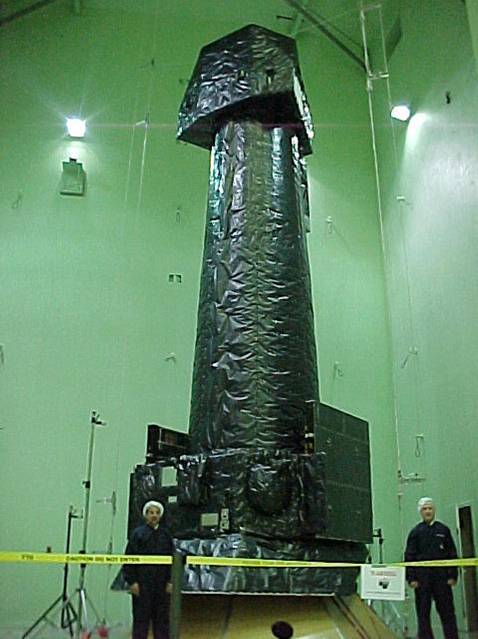
I just saw a splendidly smutty blog post which contains graphic examples of astronomical objects in the form of male genital organs. Since this appears to be an entirely suitable topic for a Friday afternoon blog post, here is my suggestion of  a contribution to her gallery. It’s the X-rated X-ray satellite XMM Newton which, as you can see, has a disturbingly phallic appearance.

I wonder if astropixie might be able to make room for this one?

Taken for Granted

Posted in Science Politics with tags , , , , on March 10, 2010 by telescoper

It’s been a couple of weeks since the Astronomy group in the School of Physics & Astronomy at Cardiff University was informed of the result of its recent application to the Science and Technology Facilities Council (STFC) for a continuation of its rolling grant. I haven’t been able to post anything about it because it has led to some difficult personal situations and we didn’t want anyone to hear about it other than face to face from relevant members of the department.

In case you weren’t aware, a rolling grant covers a 5-year but a group holding one has to apply for renewal every three years at which point the programme of research is reviewed by a panel of experts. If this review is positive a new 5-year grant is awarded and the two years remaining on the old grant or cancelled. In the case of a negative review, however, there is two years’ grace until the funding is terminated, giving the applicants the chance to try again next time.

At least that’s what used to happen.

The previous Cardiff Astronomy roller supported 6 postdoctoral research assistants (PDRAs) as well as providing other funds for travel, equipment, infrastructure and other staff time. This time we requested an increase, primarily in order to enable us to exploit the wonderful data coming from the Herschel observatory. I joined Cardiff after the last review so I wasn’t included in the existing  funding package. However, I did succeed in getting a standard grant in last year’s grant round which provides support for a 3-year period. This time, I applied to have this grant subsumed into the rolling programme when it completes in 2012. I requested an extension to the 3-years to tide this over until the next rolling grant and bring me into phase with the rest of the group.

That was the idea, anyway. STFC is extremely short of money, so despite what we felt was a strong case for supporting our Herschel work we weren’t particularly optimistic of a good outcome, especially since  additional cuts to research grants were announced last December.  In fact the rolling grant application went in last year, but the process is extremely lengthy. Three of us had to go to Swindon last October to present the case to the grants panel. The panel had apparently completed its work by December, but when new cuts were announced they had to revisit their decisions. That’s why we were only informed at the end of February of the level of support that we would get from April 1st this year.

In fact we received two announcements, one detailing what we would have got had the panel’s original recommendations been followed, then another showing the result of the additional 15% cut decided in December. In the first we were cut from 6 PDRAs to 5, but in the second an additional position was cut leaving us with 4 surviving from the previous grant. Moreover, STFC has basically abandoned the rolling grant concept entirely, and refused us permission to let the previous grant roll out. We had no choice but to accept the new grant, which means that we have insufficient funds from 1st April 2010 to honour contracts already issued to two scientists. Not a pleasant situation to be presented with. We’ve managed to find a way of coping to the extent that nobody will be made redundant in the short-term, but it’s still a time of great uncertainty for those involved.

For my own part, the circumstances are a bit better. The panel did award me an extension of my grant to enable me to merge my research with the rest of the programme by the next review date. They also – unexpectedly, I must admit – gave me a small uplift in my existing funding. I’ll be OK, at least for another 3 years.

Overall, we’re disappointed. The outcome wasn’t as good as we’d hoped but, then again, it wasn’t as bad as we’d feared. Taking into account the standard grant I hold, we’ve gone down from 7 PDRAs to 5. I’ve heard rumours of much more drastic cuts elsewhere, and I’m sure other departments are feeling the pain much more than we are right now. I don’t have a clear picture of what has happened nationally, so I’d be grateful for any information people might be prepared to divulge through the comments box as long as you don’t betray any confidences!

The whole business of securing grant funding can be deeply frustrating, and sometimes the  decisions seem bewildering. However, I’ve been on these panels before and I know how hard it is, so I’m never tempted to whinge. In fact, I’m going to be joining the panel again for this round. Not that I’m looking forward to it very much!

However, I can’t resist ending with a comment about the current management of STFC. It really seems quite absurd to be cutting grant funding at precisely the time that Herschel and Planck are starting to deliver huge quantities of exquisite data.  I say that as a scientist of course, not a civil servant. However, the prevailing mentality at STFC – instigated by the Treasury – seems to be that science part of their remit is much less important than the technology and the facilities. Although the Science Minister Lord Drayson recently announced a proposal that purports to fix some of STFC’s difficulties, this seems more than likely to keep grant funding at a miserably low level for the indefinite future. The STFC management’s readiness to rewrite the rules governing rolling grants, cut funding at absurdly short notice, and raid the grant budget in order to solve problems elsewhere has convinced me that there will be no improvement until there are people at the top that recognize that it’s science that matters, that science is done by people, and that the way to manage those people is not to treat them the way they are doing now.

Especially if they want people to provide free advice to their panels…

To look at a star by glances..

Posted in Literature, The Universe and Stuff with tags , , , , , on March 9, 2010 by telescoper

I’ve blogged before about my love of classic detective stories and about the intriguing historical connections between astronomy and forensic science. However, I recently finished reading a book that gave me a few more items to hang on that line of thought so I thought I’d do a quick post about them today.

I picked up a copy of The Suspicions of Mr Whicher by Kate Summerscale when I saw it in a stack of discounted books in Tesco a few monthsa go. I thought it might be mildly diverting, so I bought it. It turned out to be a fascinating read. I won’t spoil it by telling too much about the story, but it is basically an investigation into the circumstances surrounding a real-life murder that happened on 30th June 1860. The case involved a truly shocking crime, the brutal slaying of a young boy, but it also offers great insights into the history of the Criminal Investigation Division (CID) of the Metropolitan Police, which was based at Scotland Yard from about 1842 onwards. Mr Jack Whicher was the Yard’s most celebrated detective at the time, but this crime went unsolved until, about five years later, the perpetrator walked into a police station and confessed to the murder.

In telling the story, Kate Summerscale touches on a lot of fascinating social history. For example, I had never realised that in the early days of the CID people were strongly opposed to the idea that plain clothes policemen might be snooping about so all detectives were required to wear their uniforms even when off duty! It’s also fascinating to note that the rise of the true-life detective coincided with the rise of the detective story in popular fiction.

Edgar Allan Poe’s short story The Murders in the Rue Morgue, generally accepted to have been the first real detective story, was first published in 1841. Even in this first example of the genre, we find a clear parallel being drawn with astronomy by the detective Dupin:

Thus there is such a thing as being too profound. Truth is not always in a well. In fact, as regards the more important knowledge, I do believe that she is invariably superficial. The depth lies in the valleys where we seek her, and not upon the mountain-tops where she is found. The modes and sources of this kind of error are well typified in the contemplation of the heavenly bodies. To look at a star by glances–to view it in a side-long way, by turning toward it the exterior portions of the retina (more susceptible of feeble impressions of light than the interior), is to behold the star distinctly–is to have the best appreciation of its lustre–a lustre which grows dim just in proportion as we turn our vision fully upon it. A greater number of rays actually fall upon the eye in the latter case, but in the former, there is the more refined capacity for comprehension. By undue profundity we perplex and enfeeble thought; and it is possible to make even Venus herself vanish from the firmament by a scrutiny too sustained, too concentrated, or too direct.

No less a figure than Charles Dickens also had thoughts along these lines. In 1850 in a short article called A Detective House Party, he compared detectives with the astronomers Urbain Leverrier and John Couch Adams who in 1846 had simultaneously discovered the planet Neptune. Dickens died in 1870 leaving his own detective story The Mystery of Edwin Drood still unfinished but his good friend Wilkie Collins did a great deal to establish the literary genre of detective fiction with The Moonstone and The Woman in White. Indeed, in the mid-19th Century the idea of detection seems to have imprinted itself on fields as diverse as natural history and journalism as well as astronomy.

The point that strikes me is that astronomy and criminal investigations are primarily observational rather than experimental. One has one Universe and one scene of the crime. In both disciplines the task is to reconstruct what happened from what is seen and what is not.

The detective instinct, brightened by genius, marked unerringly the place of that missing planet which no eye had seen, and whose only register was found in the calculations of astronomy.

I use metaphors like this quite often in popular lectures, and they seem to go down quite well. On the other hand, I’ve often had my leg pulled for admitting to watching TV programmes like CSI: Crime Scene Investigation. Admittedly, the characterisation is very weak and the plots often ridiculously far-fetched. However, these stories do at least attempt to portray something of what the scientific method is about. And that’s something that not many so-called science programmes bother to do these days.

The Management

Posted in Finance, Science Politics with tags , , , , , on January 24, 2010 by telescoper

After my little trip to Denmark last week, it’s now time to settle into the routine of academic life. Teaching starts tomorrow, and I’m actually quite looking forward to it. I find teaching very rewarding, in a way that’s quite different from research, to the extent that I would hate to see further separation between the two in British universities. Call me old-fashioned.

Inevitably, though, it’s been research that’s been occupying my mind for the past few days. I’ve posted a couple of times recently about the ongoing review of the way astronomy and particle physics research are funded here in the United Kingdom (see here and here). The Science Minister, Lord Drayson, seems keen to find a way to stop research grants  being massacred by overruns elsewhere in the Science and Technology Facilities Council (STFC). His aim appears to be come up with a plan before the end of February to find a way of preventing the situation from getting any worse for science. No doubt the idea of a dedicated British Space Agency will also be thrown into pot, so that the bit of STFC’s current portfolio that deals with space things will probably be hived off elsewhere.

The major question that is occupying the minds of scientists – but perhaps not those of the bureaucrats – is whether the research grants currently dispensed by STFC will continue to be held by whatever STFC morphs into or whether they should go elsewhere, probably to EPSRC.  I sense a predisposition towards the former possibility among many of my colleagues. I recognize that the EPSRC route is not without its problems, but I fear that if we remain with STFC then not only is there a very strong probability that recent history will repeat itself but that the damage done by the current STFC structure will be irreparable.

Behind all this is the issue of why STFC is in such a mess in the first place. When it came into being in 2007, it was immediately saddled with an £80 million operating deficit. Why? There are two theories. One is that it was a mistake, resulting from inept STFC management. The other is that the creation of STFC presented various grey eminences that inhabit the superstructure of British science politics represented by RCUK  with an opportunity to slash expenditure on “useless” science (i.e. particle physics and astronomy) without having to go through the tedious rigmarole of public consultation. I don’t know which of these is the truth but, given the choice, I’d put my money on the latter.

Note the behaviour of STFC’s Chief Executive after the yawning gap was discovered in his organization’s finances. If it was a result of management incompetence then he should have been fired. If he was stitched up by RCUK then the only honorable thing to do for someone with the best interests of science at heart was to resign in protest. Neither of these things happened. This leads me to the interpretation that Professor Mason was a willing participant in the game, a  point of view that is supported by his performance at the Town Meeting in December 2007 where the STFC’s delivery plan was presented to an audience of scientists. The document containing the delivery plan is notable for its upbeat and self-congratulatory tone containing no hints of the financial catastrophe engulfing the organization. It was clearly designed to say exactly what the Chief Executive’s political masters wanted it to say. The gross dishonesty of this publication was revealed by Professor Mason’s presentation, wherein he told us scientists something rather closer to the truth, that STFC was facing financial oblivion. It was an appaling performance.

After a botched and panicky initial attempt to cut science projects, and a public dressing down by the House of Commons select committee, it took another two years for its latest Programmatic Review to emerge. Once again, though, the management of STFC put an absurdly glowing light on the wreckage of UK astronomy, nuclear and particle physics; calling it “Investing in the Future” and making light of the devastating cull of research grants and projects that it is proposing. The message that I glean from all this is that STFC’s problems stem from deliberate policy at a high level, probably at the Treasury, and carried out enthusiastically by a hierarchy of yes-men who will do whatever they are told regardless of what it means for science. Some of these creatures may have started out as scientists, but they’ve definitely gone native when lured into the Whitehall jungle.

Of course the public purse is limited. We have to decide how much to spend on different bits of science. Astronomy or particle physics (or any other discipline, for that matter) has to make its case. Somehow a balance must be struck between all the competing demands for cash. Maybe Britain does have too many astronomers. Or too many particle physicists. Who knows?  My point is: who decides? This kind of thing is too important to be settled behind closed doors by  individuals who lap up whatever their masters feed them like mother’s milk.

The STFC debacle  is just one manifestation of the rampant managerialism that is strangling British civil society. Gone are the days when scientists knew best about science, doctors knew best about medicine and teachers knew best about education. Now we’re all subservient to managers who think they know best about everything. Things are no better at EPSRC, an organization notorious  for its top-down structure, mania for meaningless initiatives, and wholehearted endorsement of the ill-considered impact agenda. What I am saying is that the Haldane principle is dead and buried.

While I was in Copenhagen last week attending the inauguration of the Discovery Center I was struck by the differences between how research is funded in Denmark and in the United Kingdom. This new initiative in particle physics and cosmology is funded as a rolling programme by the Danish National Research Foundation (Danmarks Grundforskningsfond). Way back in 1991, Denmark part-privatised its pension system and a large chunk of the resulting cash was invested in scientific research. The organization funds programmes across an entire range of disciplines (including arts and humanities)  for periods of10 years (or, more precisely, 5 years with an extension to 10 after satisfactory performance; most get extended). The primary criterion for funding these programmes is scientific excellence and the vast bulk of the funds goes to funding PhD students and postdoctoral researchers at Danish universities.

A representative of the foundation (whose name I have regrettably forgotten) spoke at the official inauguration of the Discovery Center to describe the parent organization’s philosophy. In a nutshell his message was: “You’re the scientists. You know about science. We don’t. We’re here to help you hire the best people, then get out of your way. Excellence is what we want to fund, wherever it lies. That’s our only agenda.” As it happens, two out of the nine programmes funded in the last round, including the Discovery Center, were in particle physics.

Of course I was jealous. I was also struck by how similar this organization sounds to the suggestion I made in a blog post before christmas. Of course Denmark is a much smaller country than Britain and it has  a very different economic structure. I’m not saying we could simply copy what the Danes have done without any modification. But the  real reason why such an organization could never get set up in Britain, is that The Management would never allow it…

Herschel News

Posted in The Universe and Stuff with tags , , , , on January 17, 2010 by telescoper

I’ve been a bit slow to mention recent news about the European Space Agency‘s Herschel mission so this is by way of a quick update.

The first thing is to remind you that there was a big meeting of Herschel scientists in Madrid just before Christmas, which was attended by quite a number of Cardiff astronomers. It also happened to coincide with  less happy events. The purpose of this meeting was to share the preliminary results from the Science Demonstration Phase of Herschel’s operations. I did a quick post about some of the results, but didn’t have time to cover everything, which I still don’t. However, the complete set of presentations is now available online and I’d encourage you to sample some of the amazing results. Matt Griffin gave a nice overview of the key results at the RAS Ordinary Meeting just over a week ago.

You may recall that the Herschel telescope is fitted with three instruments:

  • The Photodetector Array Camera and Spectrometer (PACS)
  • The Spectral and Photometric Imaging REceiver (SPIRE)
  • The Heterodyne Instrument for the Far Infrared (HIFI)

The last of these instruments is basically a high-resolution spectrometer which, among other things will be great for detecting spectral lines from molecules, including good old H2O. In fact here’s a nice example of a water line seen in a comet

The problem is that HIFI has actually been switched off for quite a while – 160 days in fact – after a fault developed in its power supply. There is a backup power-supply, of course, but the engineers didn’t want to switch it over until they had figured out what had gone wrong, which took quite a while.  However, last Thursday, the HIFI instrument was switched back on and is now working fine. The full story can be found here. It was also covered quite a bit in the general media, including  the BBC.

While HIFI was offline, the calibration and verification of PACS and SPIRE went ahead at a good speed and now HIFI will have to catch up which has meant a bit of juggling around with schedules but, other than that, it’s all systems go…

Finally, I’ll just point out in case you didn’t know or have forgotten, that the Herschel Mission has its own wordpress blog, which is regularly updated  and is well worth checking out.

Log Space

Posted in The Universe and Stuff with tags , , , on January 13, 2010 by telescoper

This is probably going to test the graphical limits of this blog to breaking point, but I thought it would be fun to put here nevertheless. This picture is a map showing the cosmos on a logarithmic scale, all the way out from the Earth’s centre to the edge of the observed Universe with the cosmological bit at the top (naturally). 

I wouldn’t mind a pound for every time this has found itself on someone’s office wall over the years!

It was made about five years ago by a group of astronomers at Princeton and if you follow the link you can find more explanation of how it was put together, as well as various versions of the plot in different formats and resolutions, so please follow it if you can’t see the picture very well here.
