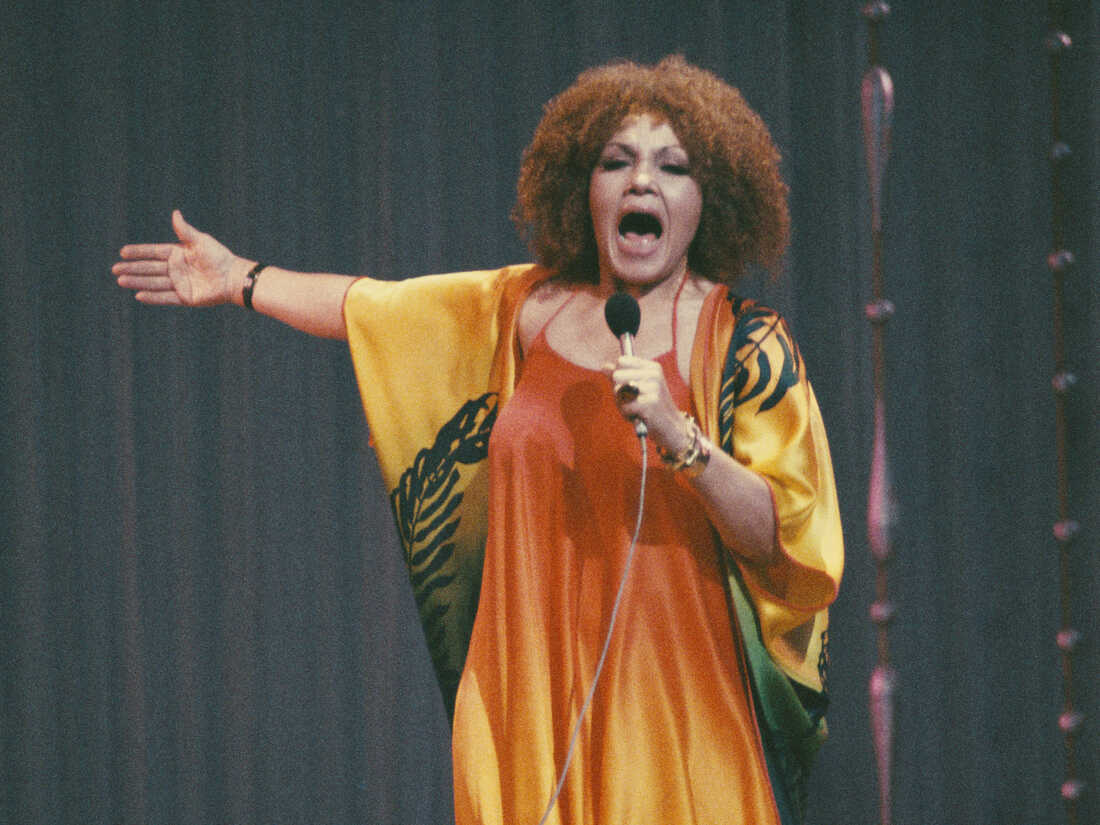
I just heard the very sad news of the death at the age of 97 of that great jazz singer, Cleo Laine. Although stylistically related to Sarah Vaughan, her voice was instantly recognisable. It always struck me that most British jazz singers would adopt an American accent when performing, but Cleo Laine always kept a very crisp diction and sounded very English…
I think it’s her musical and personal partnership with John Dankworth (who passed away in 2010) for which she will be known best. He hired Cleo Laine as a singer for his small band in 1951; they married in 1958 and remained together for over 50 years, until separated by John’s death.
I think it is appropriate to use this lovely version of George Gershwin’s great tune Lady be Good (with lyircs by his brother Ira) as a tribute. It’s always good to end on a high note. John Dankworth takes a back seat – as he often did when Cleo was singing – but the band is in great form. Unfortunately there is no personnel listing, apart from John Dankworth. The small band you see and hear here was drawn from his larger orchestra and many of the musicians therein doubled on different instruments. The vibes player, for example, could be Alan Branscombe, who also played piano. Or he could be the pianist. The trumpeter could very well be a young Kenny Wheeler.
Anyway, if you didn’t realise what a terrific vocalist Cleo Laine was, then pin back your lugholes around 2 minutes in where she demonstrates a range and level of vocal ontrol that would put many opera singers to shame.
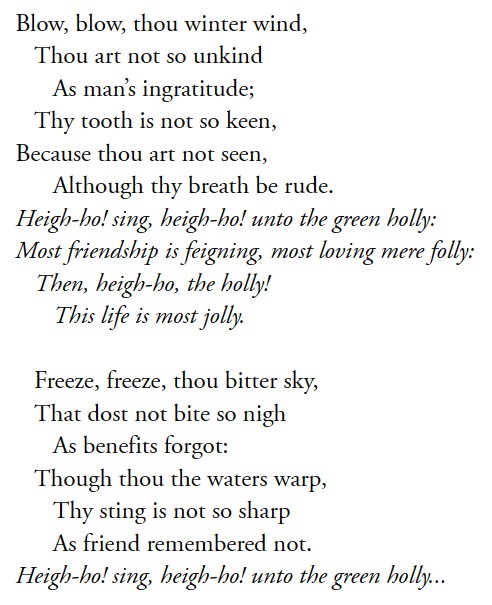
With gale force winds, torrential rain and hailstones, the weather is pulling out all the stops today; so here, from the album Shakespeare and all that Jazz by Cleo Laine with a band led by John Dankworth, here is a lovely version of the song Blow, Blow, Thou Winter Wind from As You Like It by William Shakespeare
I always loved how Cleo Laine sang Jazz without trying to put on an American accent!
And here are the words, if you want to sing along at home:
I awoke this morning to news of the death of Sir John Dankworth (on Saturday 6th February) at the age of 82. I won’t write a long post about him today as the newspapers and television have been filled with glowing detailed tributes that do greater justice to his many achievements than I could possibly do. However, there is a special place in my heart for Jazz musicians, do I couldn’t let this sad event pass without paying a small tribute here.
John Dankworth was born in 1927 and started playing Jazz clarinet as a teenager in the 1940s, largely inspired by Benny Goodman. However, he soon came under the spell of Charlie Parker who was leading the way towards a new, “modern” kind of Jazz called bebop. In the early 1950s, the British jazz scene was split in two hostile camps, the traditionalists (exemplified at that time by Humphrey Lyttelton‘s band) and the modernists (exemplified by the lovely band that John Dankworth put together in 1952). The mutual loathing of the fans of these two kinds of music often erupted in the form of pitched battles which prefigured the fights between “mods” and “rockers” in the 1960s. You can find a fine example of John Dankworth with his 7-piece band (vintage 1950) here, playing a Charlie Parker tune called Marmaduke and showing the Parker influence clearly during his alto sax solo.
As I’ve often mentioned on this blog, my Dad played the drums with various jazz bands over the years but was firmly rooted in the traditionalist camp. I remember him telling me how furious he and his friends were when Humphrey Lyttelton’s marvellous trombonist Keith Christie defected to John Dankworth’s band in the 50s. It was like a Newcastle player signing for Sunderland. However, despite this treason, even diehard traddies like my Dad never had personal animosity towards John Dankworth, who was universally admired for his technical playing ability, encyclopedic knowledge of music and, above all, kindly and warm personality. But then musicians rarely think the same way that their fans do. Humph was a great admirer of John Dankworth’s music as, incidentally, was Benny Goodman of Charlie Parker’s…
Everyone who got to meet John Dankworth – which I did only once, and only very briefly – immediately came to the conclusion that he was a class act. A few days ago I quipped about how few remaining National Treasures we have in Britain. How could I have forgotten John Dankworth? Now he’s gone too.
He broke up his small group around 1952 or so to concentrate on running a big band, which gave him the opportunity to develop his talents as an arranger. During the 60s and 70s he became a prolific writer of TV and film music, including the original theme tune for Tomorrow’s World. However, it’s his partnership with Cleo Laine that I guess people will remember best. He hired her as a singer for his small band in 1951. . They married in 1958 and remained together for over 50 years, until separated by John’s death. She was (and is) a feisty lady, but you could tell whenever you saw them together at any time that John loved her very much.
Anyway, let’s go out on a high note with this lovely version of George Gershwin’s great tune Lady be Good. John Dankworth takes a back seat – as he often did when Cleo was singing – but the band is in great form. And if you didn’t realise what a terrific vocalist Cleo Laine was, then pin back your lugholes around 2 minutes in where she demonstrates a range and level of control that would put many opera singers to shame.
The views presented here are personal and not necessarily those of my employer (or anyone else for that matter).
Feel free to comment on any of the posts on this blog but comments may be moderated; anonymous comments and any considered by me to be vexatious and/or abusive and/or defamatory will not be accepted. I do not necessarily endorse, support, sanction, encourage, verify or agree with the opinions or statements of any information or other content in the comments on this site and do not in any way guarantee their accuracy or reliability.

 In the Dark