Archive for David Kempster

WNO Peter Grimes

Posted in Cardiff, Opera with tags , , , , , , on April 6, 2025 by telescoper

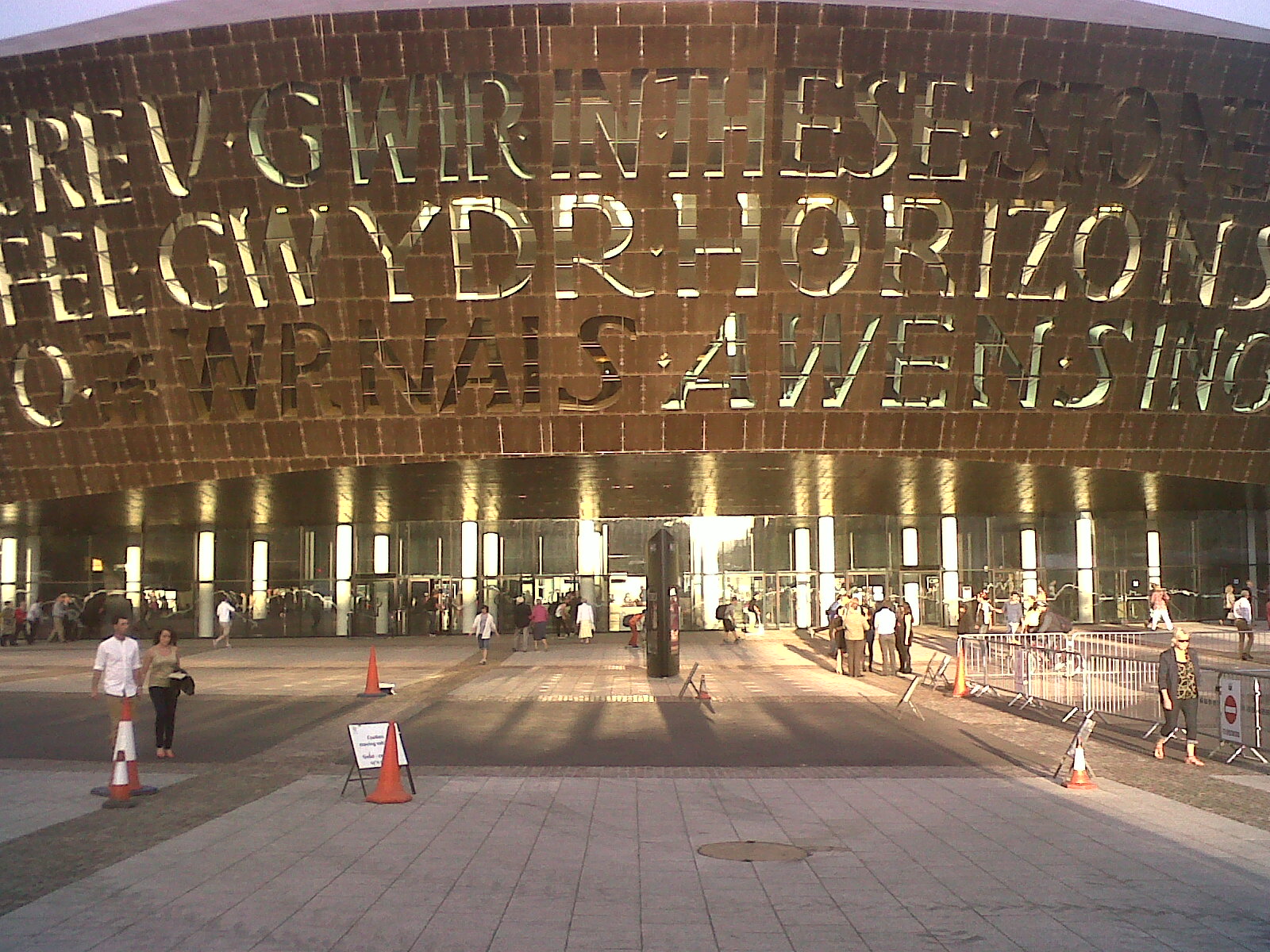
The reason for my flying visit to Cardiff this weekend was to visit the Wales Millennium Centre to catch the opening night of Welsh National Opera’s new production of the Opera Peter Grimes by Benjamin Britten. It was a full house and, being a premiere, there was a fair sprinkling of media types among the crowd. There will no doubt be many reviews but I don’t mind adding to the verbage. I’ve seen this Opera several times and it is one of my favourites in the entire repertoire.
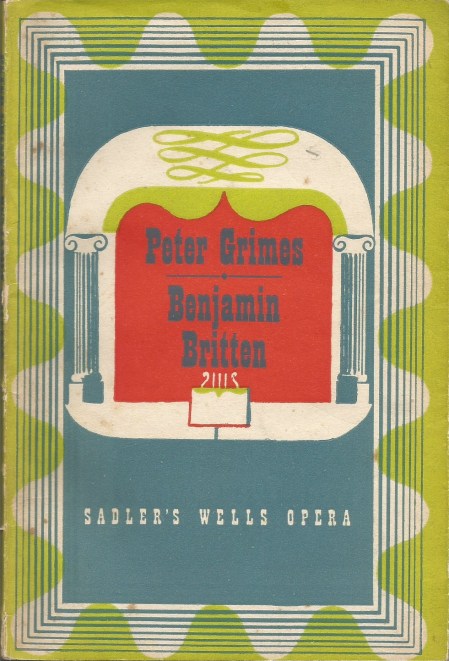
Peter Grimes premiered at Sadler’s Wells in London on 7th June 1945 almost 80 years ago. I wasn’t there – I’m not that old – but I do have an original programme from that season (left), bought in a second-hand bookshop. Perhaps surprisingly, given the grim subject matter and the intense music it was an immediate hit with audiences. Its popularity has not wained. Welsh National Opera gave its first performance in 1946, but is currently facing an uncertain future.

I’ve often heard Peter Grimes described as one of the greatest operas written in English. Well, as far as I’m concerned you can drop “written in English” from that sentence and it’s still true. I think it it’s a masterpiece, fit to rank alongside any by any composer. Searching through the back catalogue on this blog, however, I didn’t find any reviews of it, so the times I’ve seen it must have been before I started blogging back in 2008. I saw an excellent production by Opera North in Nottingham many moons ago, and also remember one at Covent Garden which stuck in my memory for its impressive staging.

Based on a character from the narrative poem The Borough by George Crabbe, the story revolves around the eponymous Peter Grimes, a fisherman, and the inhabitants of a small coastal village in Suffolk. Grimes is by no means a sympathetic character: he is an outcast with no social skills and is prone to fits of violent temper. The Opera begins witha Prologue in which Grimes is in court after the death of his apprentice; he is acquitted of any wrongdoing but the folk of the Borough – apart from the schoolteacher Ellen Orford and retired naval Captain Balstrode – still regard him as guilty. Against all advice, Grimes takes on another apprentice (John) whom he is subsequently suspected of mistreating. When the second boy dies (in accidental circumstances), Grimes flees with the crowd in pursuit. At the end he is given no choice but to take to his boat, sail it out to sea and sink it, taking his own life.

For me the key to the success of this Opera is its treatment of the character of Peter Grimes. In the original poem, Crabbe depicts Grimes is a monstrous figure rather like a pantomime villain. Britten is much more sympathetic: Grimes is misunderstood, a misft who as never been socialised; he just doesn’t know the rules that he should conform to. That’s his tragedy. Britten’s Grimes is not a villain. He’s not a hero either. At one point, shockingly, he even lashes out at Ellen Orford a lady who has shown him nothing but kindness. There’s good and bad in Grimes, like there is in all people. Who of us can say that we don’t share some of the faults of Peter Grimes? And if he’s bad what made him bad? Was he himself abused as a child? Could a little kindness along the way have made him better adjusted?

The Opera not just about Grimes, though. We get a vivid insight into the life of an isolated seaside community: the gossiping hypocrisy of the “good people” of the Borough, the debauchery of the landlady and her two “nieces” who cater to the needs of their male visitors, but above all the importance of the sea in their lives – stressed by Britten’s wonderful interludes describing dawn over the town, moonlight over the sea, and a raging storm. It also sheds light on the common practice of “buying” apprentices from the workhouse, essentially a means of slave labour, a systematic abuse far worse than anything Grimes ever does!

Anyway, to last night’s performance. In short, it was magnificent. The cast was very strong indeed: Nicky Spence shone in the role of Peter Grimes (tenor). Britten wrote the part to suit the characteristics of the voice of his partner, Peter Pears, and it doesn’t suit all tenor voices: the superb arioso When the Great Bear and Pleiades, for example, has dizzying head tones that challenges some singers. Ellen Orford was the excellent Sally Matthews (soprano) and Balstrode was the admirable baritone David Kempster.

I’ll mention three particularly memorable moments, near the end of the opera. The first is after the apprentice John has died; the gorgeous sea interlude Moonlight, which serves as a prelude to the third and final act, is played while the grieving Grimes cradles the lifeless corpse of the boy. The second is when Grimes is on the run, with the chorus calling his name and baying for blood. In fear of his life, he breaks down and is reduced to repeating his own name to himself. I’ve always found that scene unbearably moving and it was that way again last night. Finally, at the very end, the bodies of the two dead apprentices appear, one sprawled on a rock, the other standing eerily in the suspended boat which is tipped up vertically above the stage. When Grimes accepts Balstrode’s advice to drown himself, the two boys come to life; they exchange smiles, hold hands and walk off into the distance. It’s the only time Grimes looks happy in the whole performance. Only in death can he find his peace.

The staging is very spare but cleverly done. The basic set consists of a wet beach sloping up towards the rear above which from time to time a small fishing boat appears, suspended by wires, in a variety of attitudes. Otherwise there is little in the way of scenery. The clever part of this is the use of the dancers of Dance Ensemble Dawns. All the boys’ roles were in fact played by female dancers, including John the second apprentice, a non-speaking role played with great pathos by Maya Marsh whose use of body language was extraordinarily effective. Not only did they portray the boys of the village, often to be found generally misbehaving and taunting Peter Grimes, they also use their movements do evoke the storm in an extraordinarily compelling way. Not content with that they came on from time to time, in stylised fashion, to move scenery and props. The inn, for example, is conjured up by two simple props: a door frame and a window frame, held up by members of the ensemble for other members of the cast to walk or lean through. In all these contributions, the dancers were brilliant.

The simplicity of the staging probably reflects the financial crisis currently engulfing Welsh National Opera. They probably just didn’t have the money to pay for a elaborate sets, but it’s a testament to the skill and creativity of the designers that they were able to pull a triumph out of a financial disaster. I was sitting in the Circle so could see very well into the orchestra pit, where all the musicians of the Orchestra of Welsh National Opera were all wearing “SAVE OUR WNO” t-shirts. They played their hearts out. The WNO Chorus has always been excellent every time I’ve seen them, and last night was no exception.
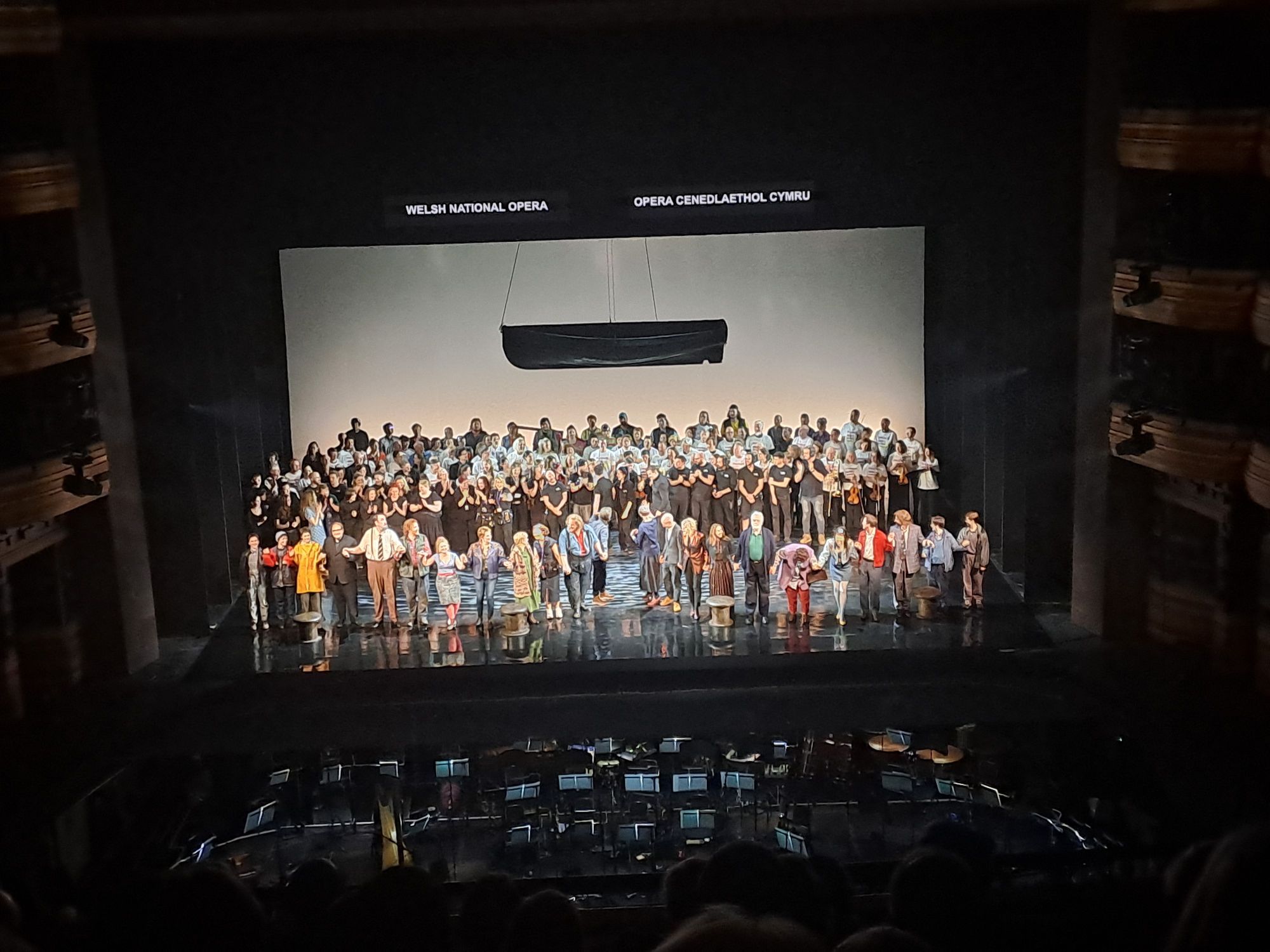
At the end of the opera, the cast, chorus and dancers were joined on stage not only by the entire orchestra (including instruments, where possible) and many members of the technical team. I’ve never seen that happen before! There were speeches by the co-directors of WNO expressing their determination to carry on through the financial turbulence that threatens to drown them. Welsh National Opera is a wonderful part of the artistic and cultural scene not only in Wales but across the rest of the UK and beyond. It just cannot be allowed to wither.

P.S. Last night’s performance was recorded for later broadcast on BBC Radio 3.
Cav/Pag and WNO

Posted in Opera with tags , , , , , on June 7, 2016 by telescoper

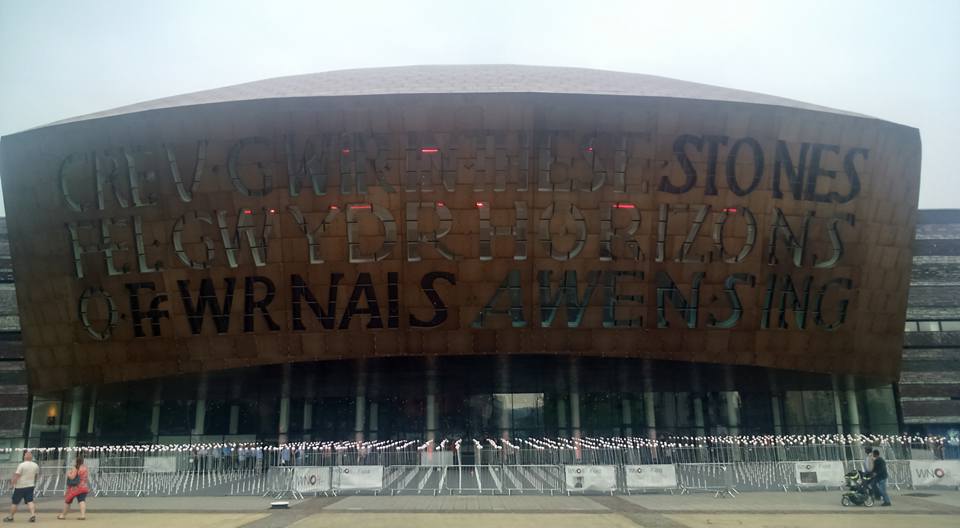
Well, I’m back in Brighton after a short break either side of my nth birthday (where n→∞). As is traditional on such occasions I spent the evening of the day in question at the Wales Millennium Centre for a night at the Opera:

WNO

On the bill for Saturday night were Cavalleria Rusticana and Pagliacci, two short operas written (respectively) by Pietro Mascagni and Ruggero Leoncavallo. Both works are in the verismo tradition of late 19th Century Italian opera and have central themes of love, jealousy, betrayal revenge and murder. So idea fare for a birthday treat!

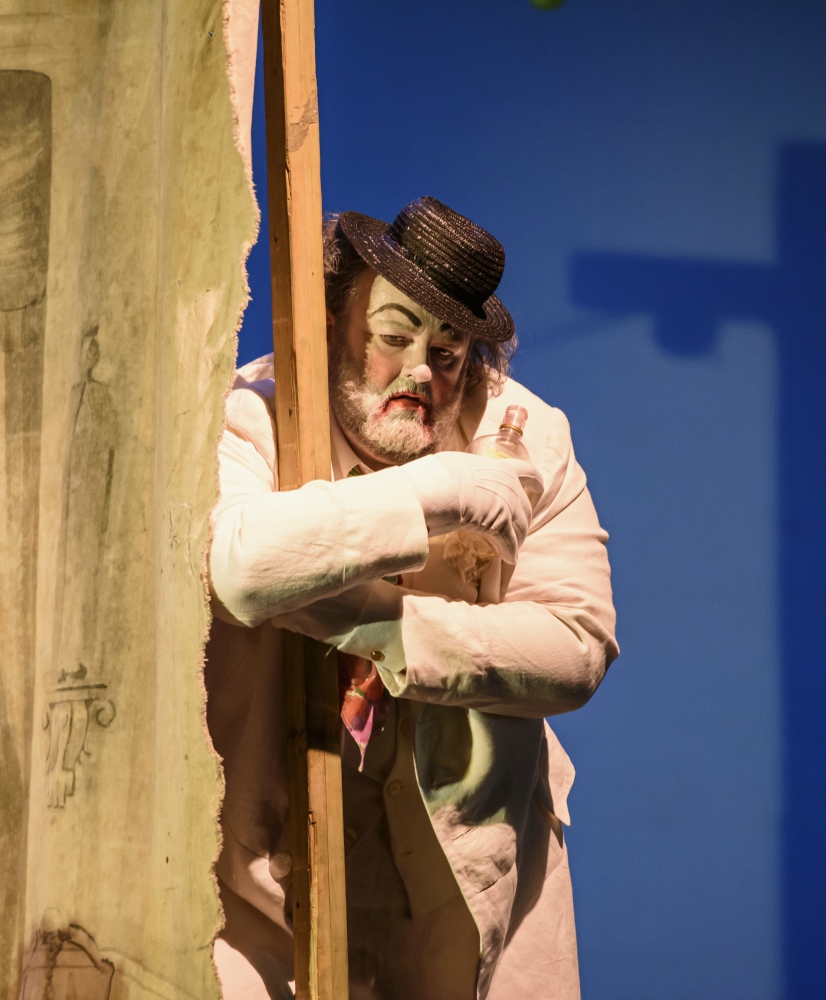
The “Cav/Pag” package is quite a familiar pairing to opera goers. They weren’t actually written to be performed together, though it is believed that Leoncavallo wrote his piece Pagliacci in response to the success of Cavalleria Rusticana. The compositional style and orchestration are not dissimilar and often the principals are played by the same singers. The latter was the case with Saturday’s production, at least in terms of the two male roles: Gwyn Hughes Jones (shown below as Canio in Pagliacci; he also sang Turiddu in Cavalleria Rusticana) sang both tenor parts, while David Kempster (baritone) played Alfio (Cav) and Tonio (Pag). Both were excellent throughout.

Pagliacci.GwynHughesJones(Canio).Photocredit-BillCooper1244a

These two productions of this combo differ very much in their look and feel. Cavalleria Rusticana is beautifully staged, in a conventional 19th Century rural Italian setting. The lighting is particularly impressive: the opening looks like a scene from a painting by a Grand Master. The excellent chorus of Welsh National Opera is very much to the fore, especially in the famous Easter Hymn, and the principal soprano Camilla Roberts sang the role of Santuzza with great depth of expression. Carlo Rizzi conducted the Orchestra of Welsh National Opera.

Pagliacci is given a more modern setting – costumes were generally around the 1950s – but still set in Italy. The set is much plainer and the lighting harsher. The chorus has less to do in terms of singing, but provides colour and movement to the drama. Although the two male principals were good I felt the cast overall was weaker. Meeta Raval (Nedda) sang her part well enough, and got some good laughs in the moments of comedy, but she didn’t have the emotional depth needed to make her part really come alive. Gyula Nagy (as Nedda’s lover Silvio) also sang well enough, but really needs to take some acting lessons..

The big set-piece in Pagliacci is Vesti La Giubba, a powerfully emotional tenor ara which never fails to move. Enrico Caruso’s version of this was the hit record of its day.

Although there were some shortcomings it was still a very enjoyable evening of music drama. Indeed it was the last night in Cardiff for this season, Welsh National Opera’s 70th. The company’s debut when it gave its first performance – as an amateur organisation – on 15th April 1946, was a double bill of Cavalleria Rustica and Pagliacci

I’d therefore like to end by wishing Welsh National Opera a very happy birthday and send my deepest thanks for providing me with so many hours of pleasure through their performance. Long may they continue!


La Bohème

Posted in Opera with tags , , , , , , , on September 9, 2012 by telescoper

Time rolls on and the end of the summer brings the beginning of the new Opera season in Cardiff, with  La Bohème  by Giacomo Puccini at Welsh National Opera. It seems like a thousand years since I last went to the Wales Millennium Centre but it was only May. Still, a lot has happened between then and now. It felt good to see the Wales Millennium Centre again, looking resplendent in the sunshine of a September evening. Life’s getting back to normal.

I confess that I still get butterflies in my stomach as I take my seat before a night at the Opera. I guess if that thrill ever disappears I’ll just stop going, but last night reminded me why I love the Opera so much. The performance was absolutely wonderful, perhaps the best I’ve seen at Cardiff since I moved here five years ago.


I suppose the story of La Bohème will be familiar to anyone with even a passing interest in Opera, but I’ll give a quick synopsis anyway.  It’s a boy-meets-girl love story, of course. The boy in this case is the poet Rodolfo (Alex Vicens) and the girl, actually named Lucia but known  as Mimi (Giselle Allen).  The setting is Paris around 1830, and the poet and his painter friend Marcello (David Kempster) are starving and freezing, as it is winter and they have no money.  Act I is set on Christmas Eve, but the two friends have nothing to eat and nowhere to go. Fortunately, their musician friend Schaunard (Daniel Grice) turns up with money and provisions. After various comings and goings everyone but Rodolfo leaves to spend Christmas Eve out on the town; Rodolfo has to finish a piece for a journal, and promises to join them when he is done. However, he is interrupted by the arrival of Mimi, who lives nearby and whose candle has gone out. It’s love at first sight…

The later stages of Act I are built around Rodolfo’s aria Che Gelida Manina (“your tiny hand is frozen”) and Mimi’s Mi Chiamano Mimi. These beautiful songs follow one another in quick succession, and are then rounded off with a wonderful duet O Soave Fanciulla  in a manner guaranteed to melt the stoniest of hearts. And, before you ask, yes I did cry. Just a little bit. I don’t think anyone noticed.

But it’s not just the ravishing music that makes this passage so special, it’s also Puccini’s gift as a story-teller: after the two arias by Rodolfo and Mimi, the audience knows everything they need to know about these characters. It’s a great example of why I think Puccini is a far greater writer of Opera than, say, Wagner. Puccini understood much better than Wagner how to vary  pace and colour  without allowing the story to bogged down, and he knew exactly how to use his big tunes to maximum dramatic effect (i.e. without excessive repetition). In fact, La Bohème is in four acts, but its running time is just about 2 hours and 15 minutes, packed full of gorgeous music and compelling drama. It’s a supreme example of Puccini’s artistry as a composer of Opera.

Anyway, back to the plot. Act II finds Rodolfo and Mimi joining in the party started by Marcello and his buddies. There’s a huge contrast here between the dingy garret in which Act I is set, as this is set in the Latin Quarter of gay Paris (with a few drag queens in this production thrown in to make the point). Marcello gets off with the object of his desire, the coquettish Musetta (Kate Valentine), and all seems well with the world as we go into the interval.

In Act III we find things have changed. Rodolfo’s love for Mimi has soured and, overcome by jealousy and suspicion, he has left her. Clearly unwell, Mimi wanders around looking for Rodolfo and he hears her coughing. They clearly still love each other, but find it difficult to live with each other. If Opera were Facebook they would both have “It’s complicated” on their status.

The last act finds us back in the garret, Rodolfo and Mimi having separated. But Mimi has been wandering the streets in the freezing cold and turns up, clearly gravely ill. Rodolfo’s friends quickly pawn some meagre possessions and Marcello and Musetta rush out to buy medicine and summon a doctor. They return with the medicine but, before the doctor arrives, Mimi dies.

Well, what did you expect in an Opera, a happy ending?

People say that this is a romantic opera but it’s a pretty bleak story when you think about it. The lovers’ happiness is brief and it all ends in despair and death in surroundings of poverty and squalor. That’s what Opera Verismo is all about.

I don’t give star ratings when I review Opera performances, but if I did this would get the highest grade. All the principals were marvellous. It was refreshing to see Rodolfo played by a tenor who not only looked the part (i.e. youthful and dashing rather than middle-aged and portly) but could also cope with the demands of the role. I thought Alex Vicens’ voice sounded a little thin at the start and was worried that he might have to force it during the big arias, but he warmed up magnificently. Kate Valentine was a very sexy Musetta. The other person who deserves a particular mention is Welsh baritone  David Kempster, who was absolutely superb as Marcello. His compelling stage presence matched by an exceptionally  fine voice. World class, I’d say…

And a word for the production. Annabel Arden’s design managed to bring fresh elements to what is basically a straightforward interpretation of the Opera. The visual effects, such as the animated snow,  were clever but not intrusive. There was no attempt to translate the action into a different period or location nor was there an attempt to preach about disease as a metaphor for moral failings. In this respect it’s very faithful to what I think Puccini’s intentions were, i.e. to let the audience make their own mind up about what message they want to take away. The only slight departure I spotted was that in Act I Mimi actually blows her own candle out deliberately in order to get Rodolfo to light it again. Methinks she’s a bit more forward than usual in this production.

This was the first performance of this run of La Bohème. If you love Opera and can get to Cardiff, then do go and see it. It’s very special.

By way of a postscript I couldn’t resist posting this, which I found on Youtube this morning. It’s a vintage recording of O Soave Fanciulla dating back to 1956 and featuring the great Jussi Björling as Rodolfo. He may be a bit old for the part, but listen to that voice! The greatest tenor of his generation, without question. And Renata Tebaldi as Mimi too…