Archive for Department of Physics

Back to Teaching and Coping with GenAI

Posted in Artificial Intelligence, Education, mathematics, Maynooth with tags , , , , on September 21, 2025 by telescoper

Summer is well and truly over: it’s a chilly day in Maynooth; the Autumnal Equinox takes place tomorrow; and tomorrow I return to teaching at Maynooth University. So begins my antepenultimate academic year as a university teacher.

I’ve often remarked how the academic year at Maynooth is largely defined by the astronomical phenomena of the equinoxes and solstices. This year demonstrates this perfectly: Semester 1 lectures for undergraduates begin tomorrow (22nd September), the day of the Autumnal equinox; they end on Friday 19th December with the Winter Solstice on 21st. The half-term study break coincides with Samhain, a cross-quarter day. It’s all refreshingly pagan.

This time last year, having been away on sabbatical the year before, I was preparing to teach two new modules. I have those two again this year so this year should be a bit easiest than last year. I still have to get everything sorted out, though, including setting up my Moodle pages and preparing the materials, which is what I’ve been doing today.

The timetable for my Engineering Mathematics (EE206 Differential Equations and Transform Methods) module has not changed, so my first lectures on that (a double session) are not until Tuesday. I’m also doing MP469 Differential Equations and Complex Analysis for 4th Year Mathematical Physics students again, but the lecture times for that have changed. That is because, as a consequence of the merger of the Departments of Theoretical Physics and Experimental Physics to form a single Department of Physics, times have been coordinated as far as possible to ensure that Physics students can have flexibility in their choice of theoretical or experimental-based modules. The Engineering Mathematics module has not changed because the times for those lectures are such as to fit with the needs of the Department of Engineering, rather than Physics.

The upshot of all this is that my first lecture of the new term is for MP469, tomorrow afternoon at 2pm and my second is also MP469, at 11am on Tuesday. This means that I have three hours of lectures on Tuesdays this term, but at least that makes it possible to have a day without teaching (Wednesday).

You will notice that both the modules I am teaching this term are mathematical in nature. I have been concerned about the integrity of the coursework element of these modules in the light of improvements in Generative AI. Only a couple of years ago GenAI could not solve the sort of problems I set for homework, but now it generally can – especially for EE206. I don’t altogether object to people applying artificial intelligence to solve mathematical problems, but the issue is that it does make mistakes. Moreover, instead of saying “sorry I can’t solve that problem” it will generally present a superficially plausible but incorrect solution. Although students will probably use GenAI for problem-solving, I think it is important that they learn to do such problems themselves, otherwise they won’t know whether the solution coughed up by the algorithm is correct or not. That way lies disaster.

The only way to learn mathematics is by doing it. If students get GenAI to do the mathematics for them, then they won’t learn it. In the past we have given marks for coursework (usually 20% of the module mark) mainly to encourage students to do them. Students who don’t bother to do these exercises generally do badly in the final exam (80%).

For these reasons I am moving the assessment from weekly homework sheets – which could be tackled with AI – to supervised in-class tests for which students can use notes on paper, but not laptops or phones, just like they would in the final examination. I will of course give examples for the students to have a go at themselves, and I will give feedback on their attempts, but they will not contribute to the module score. Another advantage of this approach is that students won’t have to do so much work against deadlines outside of class.

Anyway, that’s the approach I am going to try. I’d be interested to hear what others are doing to deal with GenAI. The Comments Box is at your disposal.

P.S. There is a rumour circulating that The Rapture will occur on Tuesday 23rd September, but it is as yet unclear whether this will happen before, during, or after the lectures I am due to give on that day.

De Valera Connections

Posted in History, mathematics, Maynooth, Television with tags , , , , on September 11, 2025 by telescoper

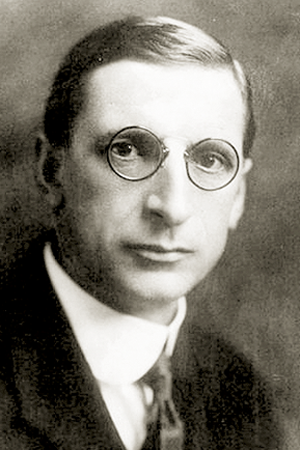
On September 4th, when I posted a piece about the forthcoming Presidential Election in Ireland, I forgot to mention that just two days earlier was the 50th anniversary of the funeral of Éamon de Valera, founder of Fianna Fáil (one of the two largest political parties in Ireland) and architect of the Irish constitution, who died on 29th August 1975 at the age of 92. Here’s some coverage at the time by (British) Movietone News, the commentary is rather generous to him:

De Valera (nickname `Dev’) is an enigmatic figure, who was a Commandant in the Irish Republican Army during the 1916 Easter Rising, but despite being captured he somehow evaded execution by the British. There’s no evidence, incidentally, that he escaped the firing squad because he was born in America. Dev subsequently became Taoiseach (Prime Minister) and then President (Head of State) of the Irish Republic.

Eamon de Valera, photographed sometime during the 1920s.

There’s no question in my mind that de Valera is the most significant Irish politician of the 20th Century, which is not to say I fid him an agreeable figure at all and his legacy isn’t particularly positive. Nevertheless, his funeral was perhaps as significant event for the Irish as that of Winston Churchill had been for the British just a decade earlier.

Over the past couple of weeks RTÉ television broadcast a two-part documentary called Dev: Rise and Rule; the second part was on last night. It is quite nicely made, but disappointingly superficial and lacking in any real historical insight. The suggestion that it would “decode” Dev was unfulfilled. This is a pity because RTÉ often does good documentaries.

Anyway, this gives me an excuse to mention again, Dev’s connection with Maynooth. De Valera was a mathematics graduate, and for a short time (1912-13) he was Head of the Department of Mathematics and Mathematical Physics at St Patrick’s College, Maynooth, which was then a recognised college of the National University of Ireland. The Department became incorporated in Maynooth University when it was created in 1997. Mathematical Physics is no longer a part of the Mathematics Department at Maynooth, having first become a Department in its own right, then changing its name to the Department of Theoretical Physics and then, just last year, being subsumed within a new Department of Physics.

De Valera missed out on a Professorship in Mathematical Physics at University College Cork in 1913. He joined the the Irish Volunteers, when it was established the same year. And the rest is history. I wonder how differently things would have turned out had he got the job in Cork?

2024 in Retrospect

Posted in Barcelona, Biographical, Cardiff, Maynooth with tags , , , , , on December 31, 2024 by telescoper
What we call the beginning is often the end
And to make an end is to make a beginning.
The end is where we start from.

T. S. Eliot, from Little Gidding, the last of the Four Quartets.

I wasn’t really planning on posting a retrospective of the year 2024, but the rain is pouring down outside so I’ve decided to use up a bit of time before going out in the hope that the rain stops.

The past year has been very busy with significant life events. One particular highlight has to be a wonderful once-in-a-lifetime trip to Sydney in February. I don’t know if I’ll ever get the chance to visit Australia again, but if I do I’ll take it! Shortly after returning from that trip I went back to Barcelona until the summer, leaving briefly for visits to Rome (Euclid Consortium Meeting), Valencia (Department Colloquium), Newcastle (to do a PhD examination) and Oxford (to give the inaugural Pride talk at the Department of Physics).

Unfortunately, at that point my laptop gave up the ghost so I had to come back to Maynooth a little earlier than planned to salvage what was on it and get a new one. And so ended my sabbatical. I’d like to take the opportunity again to thank everyone at the Universities of Barcelona and Sydney for making me feel so welcome and, of course, to Maynooth for granting me a full-year sabbatical in the first place.

As well as giving me some time for my own research, the year saw significant progress with the Open Journal of Astrophysics, both in terms of numbers of papers published (120 in 2024) but also some much-needed work on automation and an increase in the size of the Editorial Board. It’s hard to predict what will happen in 2025, but I’m glad that a significant number of members of the astrophysics community seem to be regarding OJAp as a viable avenue for communicating their results.

I will also mention – for those that care – that the Open Journal of Astrophysics is now listed in Scopus, but all the numbers they have published about the journal are inaccurate. I have spent months trying to get them to correct the figures but, although they have admitted errors, they have failed to do so. My next step will be to take legal action against Scopus (which is based in The Netherlands) under the Dutch Civil Code.

The big event workwise at Maynooth was the merger of the Departments of Theoretical Physics and Experimental Physics into a single Department of Physics. So far this has been largely paper exercise. What will result from it in the long term remains to be seen. I was given two new modules to teach last Semester and have another new one next Semester (as well as one I’ve done before). Although this made for a heavy workload, it wasn’t as bad as what happened after the only other sabbatical I’ve had in my career. I got a one Semester sabbatical when I was at Nottingham, but the Department simply moved my first-semester teaching to the second semester in addition to what had already been allocated for the second, so I had a double teaching load when I got back!

There has been a significant change in my personal circumstances too. During 2024 I finally completed the sale of my former home in Pontcanna, Cardiff. I had intended to do this years ago, but the pandemic and subsequent workload issues made it difficult to travel and sort this matter out. In the meantime bought my house in Maynooth with a mortage so I owned two properties, one of which was empty for much of the time. After much stopping and starting, and being badly let down by more than one prospective buyer, the Cardiff house is now sold. I now feel much less delocalised. I also felt very rich when the proceeds hit my bank account, but only briefly. I used a big chunk to pay off my mortgage and put the rest into fixed-term investments for retirement.

Anyway, writing about Sydney reminded me that there are parts of the world in which it is 2025 already, so let me end with a “Happy New Year” and a few interesting numerological facts about the number 2025:

P.S. It’s still raining.

P.P.S. Athbhliain faoi shéan agus faoi mhaise daoibh! 

A New Department of Physics

Posted in Biographical, Education, Maynooth with tags , , , on September 2, 2024 by telescoper

My first official day back at work after a year-long sabbatical coincides with the first official day of a new Department of Physics at Maynooth University:

I knew this was happening, of course, and it should have happened years ago. Having two separate Physics Departments at Maynooth was not just an oddity. It required the relatively small number of academic staff across the Departments to undertake a huge amount of duplication in teaching thereby wasting resources and increasing workloads. Even combined together, the total complement of 15 academic staff means that we’re still a very small Department.

There are, therefore, potential benefits in this merger but they will take time to accrue. At the moment it only exists on paper, and staff in the two ex-Departments will have to work out what to do next in terms of coordinating teaching and research. In my opinion this all should have been planned and agreed before going ahead, but here we are. We just have to make the best of the situation presented to us by The Management.

For the time being the New Department is just the two Old Departments in a single wrapper. We were already located side-by-side in the same building, the Science Building so there are no large-scale relocations of staff, at least not yet. All existing courses remain the same as before, too. That’s just as well, really, as we start teaching in three weeks!

That’s not to say that nothing has changed. The number of postgraduate and postdoctoral researchers in the Department of Theoretical Physics has been growing and there was consequently a drastic shortage of office space. My return from sabbatical has involved me being granted an elevated status in the new Department: I’ve been moved upstairs out of the old Theoretical Physics Department to an office in the old Experimental Physics Department.

Here’s a question, though. My contract of employment says that I am employed in the Department of Theoretical Physics. Since that Department no longer exists, do I need a new contract or have I been made redundant?

P.S. I wrote this blog at home before going to the office as this blog remains banned on Maynooth University campus.