On September 4th, when I posted a piece about the forthcoming Presidential Election in Ireland, I forgot to mention that just two days earlier was the 50th anniversary of the funeral of Éamon de Valera, founder of Fianna Fáil (one of the two largest political parties in Ireland) and architect of the Irish constitution, who died on 29th August 1975 at the age of 92. Here’s some coverage at the time by (British) Movietone News, the commentary is rather generous to him:
De Valera (nickname `Dev’) is an enigmatic figure, who was a Commandant in the Irish Republican Army during the 1916 Easter Rising, but despite being captured he somehow evaded execution by the British. There’s no evidence, incidentally, that he escaped the firing squad because he was born in America. Dev subsequently became Taoiseach (Prime Minister) and then President (Head of State) of the Irish Republic.
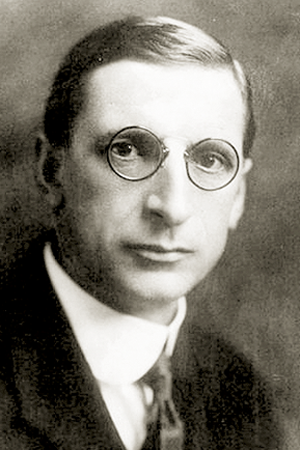
There’s no question in my mind that de Valera is the most significant Irish politician of the 20th Century, which is not to say I fid him an agreeable figure at all and his legacy isn’t particularly positive. Nevertheless, his funeral was perhaps as significant event for the Irish as that of Winston Churchill had been for the British just a decade earlier.
Over the past couple of weeks RTÉ television broadcast a two-part documentary called Dev: Rise and Rule; the second part was on last night. It is quite nicely made, but disappointingly superficial and lacking in any real historical insight. The suggestion that it would “decode” Dev was unfulfilled. This is a pity because RTÉ often does good documentaries.
Anyway, this gives me an excuse to mention again, Dev’s connection with Maynooth. De Valera was a mathematics graduate, and for a short time (1912-13) he was Head of the Department of Mathematics and Mathematical Physics at St Patrick’s College, Maynooth, which was then a recognised college of the National University of Ireland. The Department became incorporated in Maynooth University when it was created in 1997. Mathematical Physics is no longer a part of the Mathematics Department at Maynooth, having first become a Department in its own right, then changing its name to the Department of Theoretical Physics and then, just last year, being subsumed within a new Department of Physics.
De Valera missed out on a Professorship in Mathematical Physics at University College Cork in 1913. He joined the the Irish Volunteers, when it was established the same year. And the rest is history. I wonder how differently things would have turned out had he got the job in Cork?


 In the Dark
