Archive for Equality and Diversity

Farewell to the ECDC!

Posted in Biographical, Euclid, Harassment Bullying etc with tags , , , , on July 2, 2024 by telescoper

It was officially announced at last year’s Euclid Consortium Meeting in Copenhagen that I had been appointed to the role of Chair of the Euclid Consortium Diversity Committee (ECDC). Following the tradition, a similar announcement was made at the Rome meeting this year that from 1st July there would be a new Chair in the form of Helmut Dannerbauer, who is based at the Instituto de Astrofísicas de Canarias on Tenerife. There are still a few loose ends to tie up, not helped by my computer problems, but I’m gradually winding up my activity on the ECDC and handing things over to Helmut.

As I pointed out in my post last year, I was in the final year of my stint on the ECDC when I was made Chair so it was always envisaged that I would serve for only one year. I only agreed to do it, in fact, because I had my sabbatical coming up. I definitely wouldn’t have been able to do the job alongside a full teaching and other workload and didn’t even consider continuing after my sabbatical was over.

Instead of trying to describe the role and activities of the ECDC generally, I will direct you to the information given on the brand new Euclid Consortium website which is a one-stop shop for everything to do with Euclid. You can find specific information about Equity, Diversity and Conduct there and/or on the ECDC’s own public website here from which I’ve taken a screengrab of the nice banner:

Just for information, the Euclid Consortium has about 2600 members so it really is a very large organization. It is also very international, with many people working in countries they were not born in and whose language is not their first. It is the aim of the ECDC to encourage a positive and inclusive environment within it for the benefit of everyone in it. The diversity in Euclid has many dimensions, including gender, nationality, ethnicity, and career stage as well as type of work; Euclid comprises specialists in instrumentation, software engineering, observational astronomy and theory to name but a few. The aim of the ECDC is to try to make sure everyone can work together in an inclusive environment.

It has been good to see over the few years some policies have been implemented to allow a greater diversity among leadership roles in the Euclid Consortium, especially by having a planned programme of rotating chairs and coordinators. I think this and other inititiatives are making a difference.

Euclid was launched a year ago yesterday, and the past twelve months have involved a huge amount of hard work by everyone concerned and not a little tension in some parts. The stress will continue as we head towards DR1, the first main Data Release, in 2026. The Euclid Consortium has a Code of Conduct to remind members to behave professionally towards their fellow workers at all times.

I’d like to wish all the new members of the ECDC, and those continuing, all the best in the future. I’d also like to extend personal thanks to those members who are leaving this year, especially Marc, Florence and Chiara. We have had regular telecons virtually every fortnight for the last year and I’ve enjoyed everyone’s contribution to the discussions.

Calling out Entitlement

Posted in Harassment Bullying etc, Science Politics with tags , , , on July 4, 2023 by telescoper

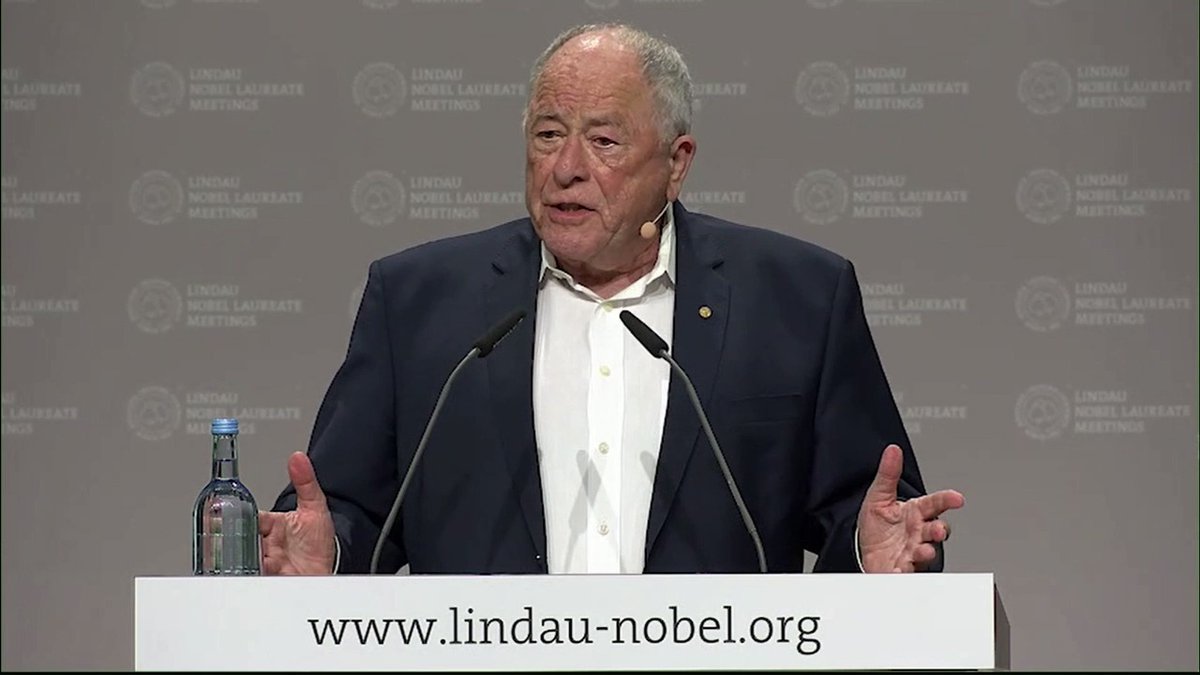
Looking around for topical material beyond Euclid to include in tomorrow’s plenary presentation at the National Astronomy Meeting in Cardiff in the session on Equality, Diversity and Inclusion in Astronomy and Geophysics I came across a story about Nobel Laureate Kurt Wüthrich.

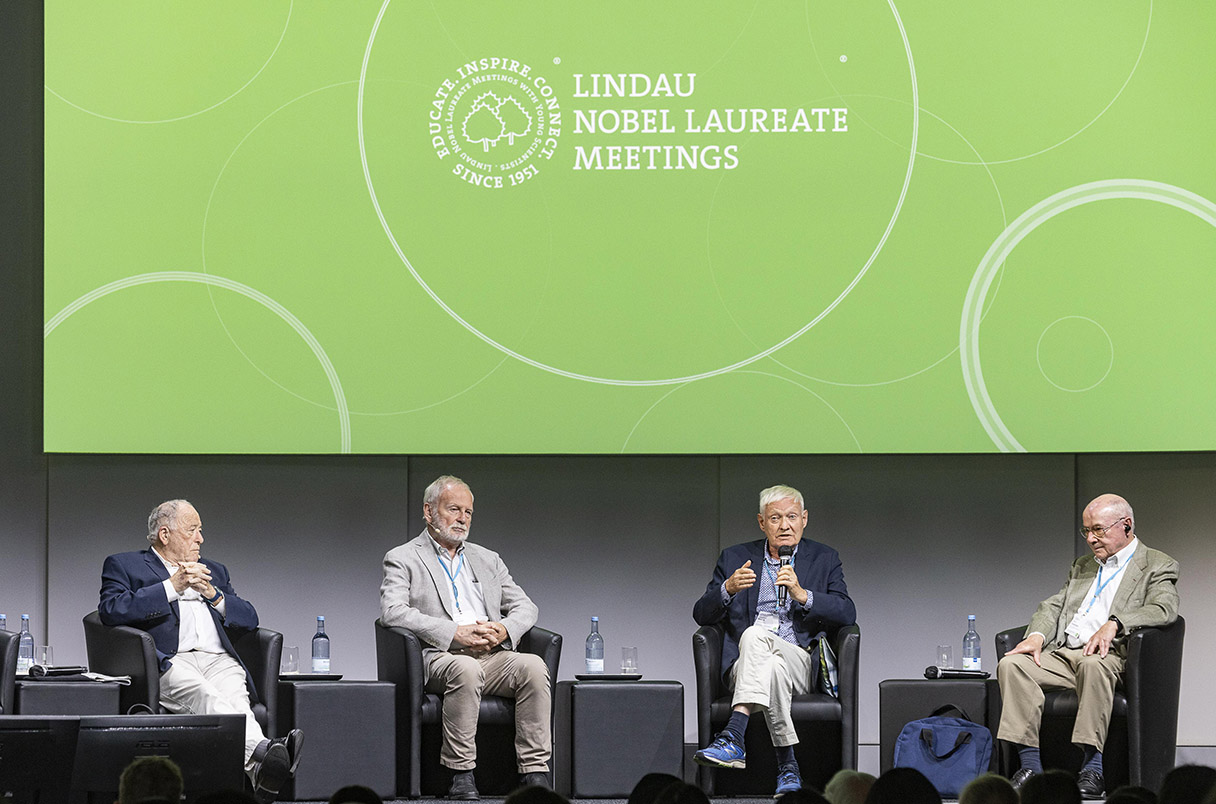
Professor Kurt Wüthrich gave a talk at the Lindau Meeting last week during which he claimed there was anti-male discrimination in modern science. I have uncovered further relevant evidence. Here is a picture of four old white men from the same meeting being discriminated against by being forced to participate in a panel consisting entirely of old white men:

Setting aside Kurt Wüthrich’s ridiculously elevated sense of entitlement, the really serious issue is that it was a (female) early career researcher that called him out. One point that I want to make tomorrow is that those of us who are old white men have a vitally important role to play in calling out this sort of nonsense. More generally, whatever your scientific status it is important for you to ask yourself “what can I do to make the research environment as good as possible for people who are not like me?”.

Euclid Diversity Matters

Posted in Biographical, Euclid, Harassment Bullying etc with tags , , , , , on June 22, 2023 by telescoper

It was officially announced at the Euclid Consortium Meeting in Copenhagen this morning that I have been appointed to the role of Chair of the Euclid Consortium Diversity Committee (ECDC). This has been in the pipeline for a while, but I have refrained from saying anything publicly until the appointment was endorsed by the Euclid Consortium Lead (ECL) and Euclid Consortium Board (ECB) which has now happened.

The previous Chair, Prof. Mathilde Jauzac, is stepping down because her term on the ECDC has come to an end. I’ve been a member of the ECDC for three years during which time Mathilde has done a brilliant job as Chair and she’ll be a very difficult act to follow in this role. There was a standing ovation in the room this morning when Mathilde finished delivering her final ECDC report. It will be down to me to deliver next year’s report, at the 2024 Euclid Consortium Meeting, which will be in Rome.

Instead of trying to describe the role and activities of the ECDC generally, I will direct you to the information given on the brand new Euclid Consortium website which is a one-stop shop for everything to do with Euclid. You can find specific information about Equity, Diversity and Conduct there and/or on the ECDC’s own public website here from which I’ve taken a screengrab of the nice banner:

Just for information, the Euclid Consortium has about 2700 members so it really is a very large organization, and it is the aim of the ECDC to encourage a positive and inclusive environment within it for the benefit of everyone in it.

I’m looking forward to this role for the next year. I have only one year left of my term left on the ECDC so I will almost certainly be Chair for one year only. As regular readers of this blog – both of them – will know, I am on sabbatical next year which means I should have time to take on this responsibility, which I wouldn’t be able to do if I had my full teaching and admin load.

Equality, Diversity and Euclid

Posted in Euclid, The Universe and Stuff with tags , , on June 7, 2019 by telescoper

So here I am, back in my hotel, after the second pleasant wine and food reception of the week – this time hosted by the University of Helsinki. I have to leave early tomorrow morning to get back to Maynooth so I’m not among those going for dinner afterwards.

It’s been a very satisfying meeting, in terms of scientific content, organization and even the weather which has been warm and sunny throughout.

That said I feel obliged to mention one less than satisfactory episode which happened this afternoon. Euclid is a very large consortium working on a complex mission. That requires certain management structures to be put in place, including how to deal with the many scientific publications that will hopefully result from the Euclid mission to be as fair as possible to everyone working on the various projects as well as ensuring the scientific quality of resulting papers.

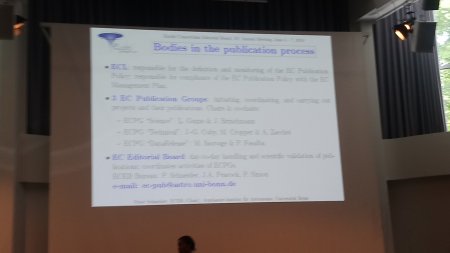
This afternoon a very distinguished senior member of the Euclid Consortium presented an overview of the publication policy on behalf of the Editorial Board which included this slide:

Not knowing all the names I didn’t think twice about the various panels until at the end of the talk a member of the audience pointed out that none of the individuals named are female.

I wasn’t alone in being surprised that such a situation had arisen, especially since Euclid has a Diversity Committee. But what made matters worse was the apparently dismissive response of the speaker, which caused a sharp intake of breath around the auditorium, and left many with the impression that the Consortium needs to look at whether unconscious or other bias might have been involved in the selection of these members. The impression given may have been inadvertent but appearances matter, and I know I’m not the only person who was troubled by what went on this afternoon. I sincerely hope the Diversity Committee looks into this issue as soon as possible.

UPDATE: 21st June 2019. I understand that this issue has been looked into in depth by the Euclid Consortium and active measures are being taken to improve the gender balance in future, which is a very positive outcome.

From Brighton Pride to Sussex Pride

Posted in Biographical, Brighton, LGBTQ+ with tags , , , , , , , , on July 31, 2014 by telescoper

Brighton Pride is coming up this weekend. I heard some people on the train the other day saying that they didn’t think such events were needed any more because “gays have everything they need, especially in Brighton”. Although I was tempted, I didn’t interrupt, though I did disagree. Things have indeed changed a lot over the last twenty years, but they could easily change back if we get complacent and Brighton has its fair share of intolerance and bigotry still.

I was myself beaten up on Brighton’s seafront many years ago, during my previous existence at the University of Sussex as a PhD student and a postdoctoral researcher. There was no doubt why I was attacked: the four young men who surrounded me and punched and kicked me to the ground were shouting just one word over and over again, “faggot”. It’s still a word I hate to hear used, even if purportedly in jest. That event left me with deep psychological scars that contributed to a breakdown I had as recently as two years ago.

Thirty or so years after my encounter with the queerbashers, attitudes have definitely changed, and so has the law. Certain types of criminal offence are now officially recognized as hate crimes: the list treats sexual orientation as equivalent to race, gender, religious belief and disability in such matters. The Police are now obliged to treat these with due seriousness, and penalties for those found guilty of crimes exacerbated by homophobia are consequently more severe. All Police forces now have special units for dealing with them; here is an example.

These changes are mirrored in other aspects of life too. For example, employment law relating to discrimination or harassment in the workplace now puts sexual orientation on the same footing as race, gender, disability and religious belief. In many universities in the UK, staff have been required to attend training in Equality and Diversity matters not only to raise awareness of the legal framework under which we all have to work, but also to promote a sensitivity to these issues in order to improve the working environment for both staff and students. Now we have equal marriage too.

This training isn’t about over-zealous busybodies. Under the law, employers have a vicarious liability for the conduct of their staff with regard to harassment and discrimination. This means that a University can be sued if, for example, one of its employees commits harassment, and it can be shown that it did not make appropriate efforts to ensure its staff did not engage in such activities.

Of course not everyone approves of these changes. Some staff  have refused point-blank to attend Equality and Diversity training, even though it’s compulsory. Others attend grudgingly, muttering about “political correctness gone mad”. You may think all this is a bit heavy handed, but I can tell you it makes a real difference to the lives of people who, without this legal protection, would be victimised, harassed or discriminated against.  It is, also, the law.

I think the efforts that have been made to improve the legal situation have been (at least partly) responsible for the changes in society’s attitudes over the last twenty years, which have been extremely positive. I’m old enough to remember very different times. That’s not to say that there’s no bigotry any more. Even in this day and age, violent crimes against gay men are still disturbingly common and police attitudes not always helpful even though many police forces do now have Lesbian and Gay teams, something that was just unthinkable 25 years ago.

Although relatively few universities appear in the list of gay-friendly employers compiled by the campaigning organisation Stonewall,  my experience generally, having worked in a number of UK universities (Sussex, Queen Mary, Nottingham and Cardiff), is that they are  generally friendly and comfortable places for an openly gay person to work. So much so, in fact, that there’s no real need to make a big deal of one’s sexual identity. It doesn’t really have much to do with the way you do your work – certainly not if it’s astrophysics – and work-related social events are, as a rule, very inclusive.

However, even in the supposedly enlightened environment of a University there do remain islands of bigotry, and not just about gay or lesbian or bisexual or transgender staff.  Sexism is a major problem, at least in science subjects, and will probably remain so until the gender balance improves, which it slowly doing, despite the actions of certain professors who actively block attempts to encourage more female applicants to permanent positions. Universities still do not seem to me to treat sexual orientation with the same seriousness as, say, race or gender discrimination. I’ve had plenty of experiences to back that up.

I recently took part in an interesting meeting involving various staff from the University of Sussex with a representative of Stonewall. The topic was how we could work with Stonewall to make it more gay-friendly. If I remember correctly, there are 78 UK Universities currently taking part in Stonewall’s programmes. It is a matter of some  embarrassment to me that the University of Sussex is not among them. Perhaps the attitude is that because there is such a large and visible gay population in Brighton it’s not necessary for the University of Sussex to take any steps in this direction. I disagree, and am absolutely convinced that there are many Lesbian, Gay, Bisexual or Transgender members of the University of Sussex staff who would love to see some action taken to make their workplace just a little bit friendlier and more inclusive, even if that just amounts to acknowledging their existence.  There is a visible and active LBGT student society on campus, but no such entity exists for staff – an absence that is truly glaring. I don’t even think the University has any idea what fraction of its staff identify themselves as LGBT.

No doubt there’ll be many members of the University of Sussex staff on the Pride Parade on Saturday and at the various parties being held around Brighton afterwards. Perhaps it’s time to start some sort of network so that for staff at the University of Sussex, Pride doesn’t just come once a year…?

If you’re interested in this idea please let me know, either through the comments box or by email.

The F-word

Posted in Biographical with tags , , , , , , , on January 31, 2010 by telescoper

Once upon a time, a young man was walking home, alone, from a nightclub on Brighton’s seafront towards the house he shared with some friends. It was a warm summer night or, rather, morning, as it was about 3am. As he crossed King’s Road and began to walk up Preston Street, a group of four youths appeared from the direction of the West Pier, ran across the road and attacked him. He fought back, hitting one of them on the nose and drawing blood, but was soon overpowered and fell to the ground under a rain of fists. He was repeatedly kicked while he lay on the road, and soon lapsed into unconsciousness while the onslaught continued.

To this day he can’t remember how long this went on for, nor can he remember anything at all about the people who eventually came to his assistance. But he can remember the word that was being shouted continually as he was systematically beaten. The word was FAGGOT.

This happened in the 1980s, and the young man was me. At the time I was a postgraduate student at the University of Sussex, and I had just spent the evening at the Zap Club (now sadly defunct). On Wednesdays, this establishment played host to  Club Shame, a gay one-nighter that was extremely popular and well-known around the town. Unfortunately, this made people leaving it in the early hours of the morning easy targets for the many queerbashers who got their kicks beating up gay men for no other reason than that they were gay.

I was actually one of the lucky ones. Apparently, shortly after I fell to the ground and passed out, a group of passers-by chased off the youths who had attacked me, helped me to my feet, and helped me get home.  The commotion when I arrived woke up a couple of my friends who cleaned me up, and gave me a glass of whisky. I was rattled, angry at the gratuitous violence visited on me by complete strangers, and frustrated by the clear demonstration of my own inability to defend myself.   I had a black eye, a fat lip and a lot of bruises but there turned out to be no lasting physical damage. Although I don’t like to admit it, I  have quite a few psychological scars that have stayed with me ever since. I don’t even tell many  people about this episode because my weakness embarrasses me. Still, at least I didn’t end up dead, like poor Jody Dobrowski.

Neither I nor any of the friends (also gay) who helped me ever even thought about reporting the incident to the Police. The Brighton police at that time were notorious for dismissing complaints of gay-bashing despite the fact it was an endemic problem. People I knew who had reported such incidents usually found themselves being investigated rather than their assailants. In those days the law did not recognize homophobic offences as hate crimes. Far from it, in fact. Attacking a gay person was, if anything, considered to be a mitigating circumstance. This attitude was fuelled by a number of high-profile cases (including a number of murders) where gay-bashers had been acquitted or charged with lesser offences after claiming their victim had provoked them.

Now fast-forward about 20 years. Attitudes have definitely changed, and so has the law. Certain types of criminal offence are now officially recognized as hate crimes: the list treats sexual orientation as equivalent to race, gender, religious belief and disability in such matters. The Police are now obliged to treat these with due seriousness, and penalties for those found guilty of crimes exacerbated by homophobia are consequently more severe. All Police forces now have special units for dealing with them; here is an example.

These changes are mirrored in other aspects of life too. For example, employment law relating to discrimination or harassment in the workplace now puts sexual orientation on the same footing as race, gender, disability and religious belief. In many universities in the UK, staff have been required to attend training in Equality and Diversity matters not only to raise awareness of the legal framework under which we all have to work, but also to promote a sensitivity to these issues in order to improve the working environment for both staff and students.

This training isn’t about over-zealous busybodies. Under the law, employers have a vicarious liability for the conduct of their staff with regard to harassment and discrimination. This means that a University can be sued if, for example, one of its employees commits harassment, and it can be shown that it did not make appropriate efforts to ensure its staff did not engage in such activities.

Of course not everyone approves of these changes. Some staff  have refused point-blank to attend Equality and Diversity training, even though it’s compulsory. Others attend grudgingly, muttering about “political correctness gone mad”. You may think all this is a bit heavy handed, but I can tell you it makes a real difference to the lives of people who, without this legal protection, would be victimised, harassed or discriminated against.  It is, also, the law.

I think the efforts that have been made to improve the legal situation have been (at least partly) responsible for the changes in society’s attitudes over the last twenty years, which have been extremely positive. I’m old enough to remember very different times. That’s not to say that there’s no bigotry any more. Even in this day and age, violent crimes against gay men are still disturbingly common and Police attitudes not always helpful.

Somewhat closer to home, a recent story in the Times Higher pointed out that relatively few universities have made it onto the list of gay-friendly employers compiled by the campaigning organisation Stonewall. My experience generally, having worked in a number of UK universities (Sussex, Queen Mary, Nottingham and Cardiff), is that they are  friendly and comfortable places for an openly gay person to work. So much so, in fact, that there’s no real need to make a big deal of one’s sexual identity. It doesn’t really have much to do with the way you do your work – certainly not if it’s astrophysics – and work-related social events are, as a rule, very inclusive.

However, even in the supposedly enlightened environment of a University there do remain islands of bigotry, and not just about gay and lesbian staff.  Sexism is a major problem, at least in science subjects, and will probably remain so until the gender balance improves, which it slowly doing, despite the actions of certain professors who actively block attempts to encourage more female applicants to permanent positions.

I also agree with the main point made by the Times Higher article which is that, despite what the law says, universities still do not seem to me to treat sexual orientation with the same seriousness as, say, race or gender discrimination. Fairly predictably, the online version of the article attracted some nasty comments of a homophobic nature which were subsequently removed according to the terms and conditions of the website.

Recent experiences of my own (relating to this blog) seemed relevant so I passed them onto the Times Higher after reading this story. I didn’t think they would consider it important enough to publish, as in the grand scheme of things it involved a relatively minor offence, so I was a bit surprised to find a full story in this week’s edition. It caught me on the hop a bit because I wasn’t even told they were going to run it at all, let alone straight away and I didn’t get the chance to see the final copy. Thankfully, it’s quite accurate, matter-of-fact, and avoids sensationalism.

I’m not going to put all the details here, because as far as I’m concerned it’s all over and there’s nothing to be gained by going over it again. The relevance to the earlier Times Higher story is clear, however. In a nutshell, I made a complaint about a comment on this blog, involving offensively homophobic language, to the University of Nottingham, the employer of the person who made it. I was not asked to give evidence to the subsequent “investigation”, was not told how it was conducted or how it arrived at its decision, and was not even informed of its outcome for months after it had been completed, and only then after I made repeated requests. My subsequent requests for information about the conduct of the investigation were refused. The University of Nottingham also refused to confirm whether the culprit had ever attended Equality and Diversity training.

What was it I had objected to? It was the F-word – FAGGOT, universally recognized as grossly offensive and, as I’ve explained, one about which my I also have my own particular reasons for objecting to. I was appalled that a former colleague could use that word in a manner that seemed (and still seems) to me to have been calculated to be offensive, subsequent “apologies” notwithstanding. The “investigation”, however, disagreed and accepted the defence that it was meant as a joke. I wonder what they would have decided if I’d been black and had been called a “n****r”?

At the time, I asked for advice on what to do about this. Stonewall encouraged me to report it to the Police, on grounds of criminal harassment. This seemed to me to be excessive, since it had resulted in no physical harm or loss by me and would use up a lot of police time to little effect and a lot of embarassment to others at Nottingham that this had (and has) nothing to do with. A gay-friendly solicitor in Cardiff explained how I could pursue a civil case against the individual and/or employer but that it would be very expensive and damages, if awarded at all, would probably be very small. In the end, therefore, I decided to take the advice of our Equality and Diversity Officer in Cardiff  and reported it instead to the University of Nottingham to deal with internally. What a waste of time that was.

I’m sure there will be some readers of this post who think I over-reacted to the comment in question, and that I’ve blown this matter out of all proportion; this indeed seems to be the prevailing view among the comments on the Times Higher thread. You’re all entitled to your opinion, of course. I fully admit that, for reasons that should now be obvious, I am unable to respond particularly rationally to being called a faggot. But then I don’t see why, in this day and age,  I should be expected to. Things are supposed to have moved on, in case you didn’t know. Anyway, I  don’t think I over-reacted and, in this case, I happen to think it’s my opinion that counts. That’s what the law says too, as a matter of fact.

I’m not claiming to be whiter than white. I am fully aware that I’ve made comments on this blog that have offended some people of whom I am very fond. I’m very sorry that I’ve caused offence in this way. I also admit some of my jokes are a bit off-colour. I tend to be direct in my criticism of those I think deserve it. I think I know how to take a joke too; growing up as  gay teenager in 1970s Newcastle gave me quite a thick skin. I can take forthright criticism too – I should; I’ve had plenty of practice! But I will not accept being called a faggot. Everyone has their limits, and that is mine.

If you don’t like it then, frankly, you can F-off.