Archive for gravitational waves

LIGO, Leaks and NGC 4993

Posted in Open Access, The Universe and Stuff with tags , , , , on August 23, 2017 by telescoper

No matter what the official policy may be, the more people there are in a collaboration the more likely it is that someone will let their excitement get to their head and start leaking news and starting rumours either directly or indirectly via social media. And so it came to pass last Friday that the following tweet appeared:

I didn’t comment on the time as I thought it might be unreliable – as it indeed it still may be – but now New Scientist has amplified the signal I feel I can’t really be blamed for mentioning it here.

The rumours going round identify the optical counterpart as being in the galaxy NGC 4993 , a red band image of which, from the Second Digitized Sky Survey (DSS2) is shown below:
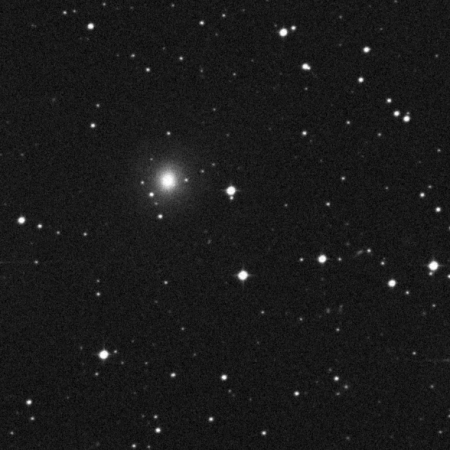
NGC 4993 is the fuzzy blob slightly above and to the left of the centre of the image. It’s a fairly nondescript lenticular galaxy in a group that can be found in the constellation of Hydra. It lies in the constellation of Hydra, was actually first discovered by William Herschel and it is about 10 arcmin across on the sky. It’s quite nearby, as these things go, with a distance of about 124 million light years (i.e. 40 Mpc or so) and is about 14th magnitude.

If there is an optical counterpart to a gravitational wave event coming from this galaxy then that suggests it may be a coalescence of neutron stars. The black hole mergers that appear to be responsible to the three existing gravitational wave signals that are claimed to have been detected are not expected to release optical light. Confirmation of this interpretation can be found by where the Hubble Space Telescope was pointed yesterday:
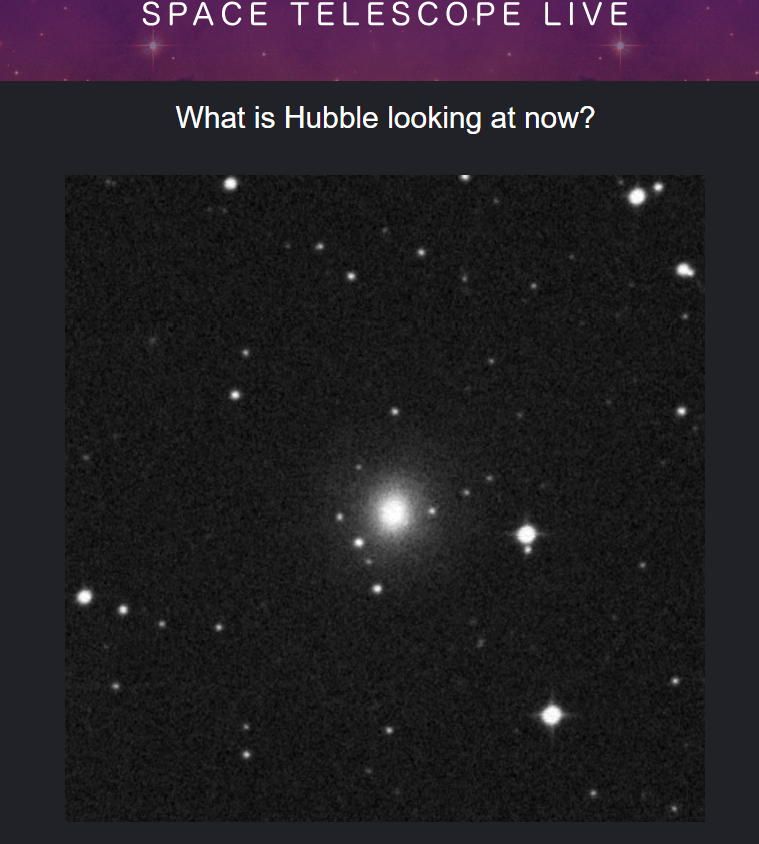
Look familiar? HST was, in fact, observing a `BNS-Merger’ (which is short for `Binary Neutron Star’)…

BNS

If this rumour is true then it’s obviously exciting, but there are questions to be asked. Chief among these is how sure is the identification of the counterpart? A transient optical source in NGC4993 may have been observed at the same time as a gravitational wave signal was detected,  but the ability of LIGO to resolve positions on the sky is very poor. On the other hand, the European VIRGO experiment joined Advanced LIGO for the ongoing `O2′ observing run (which ends in a couple of days). Although VIRGO is less sensitive than LIGO having a third detector does improve the localization of the source – assuming, of course, that it detects a signal. Even in that case it certainly won’t be possible to pinpoint the GW source to within 10 arc minutes, which is the precision needed to place it definitely within NGC 4993.

Anyway, we wait and see what, if anything, has been found. If it is a claimed detection then I hope that LIGO and VIRGO will release sufficient data to enable the analysis to be checked and verified. That’s what most of the respondents to my poll seem to hope too!

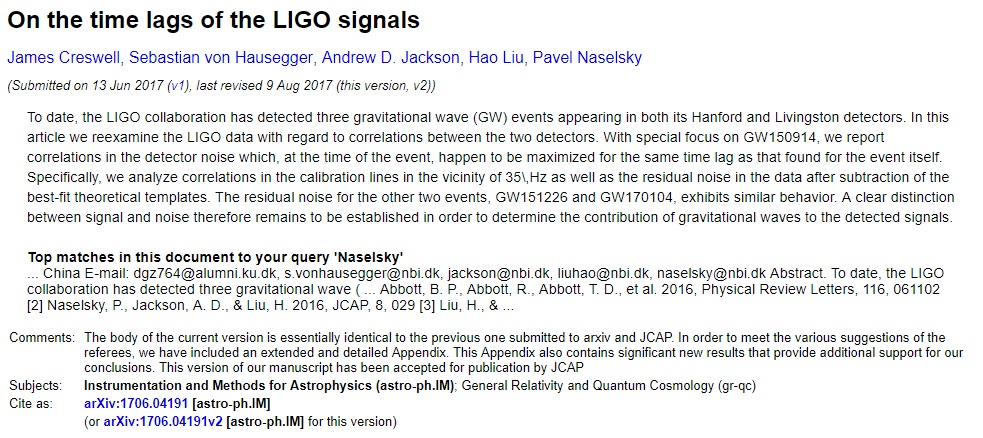
On the Time Lags of the LIGO signals

Posted in Bad Statistics, The Universe and Stuff with tags , , , on August 10, 2017 by telescoper

It seems that a lot of rumours are flying around on social media and elsewhere about the discussions that have been going on here in Copenhagen between members of the Niels Bohr Institute and of the LIGO scientific collaboration concerning matters arising from the `Danish Paper‘.  The most prominent among these appears to be the LIGO team and the Danish team have agreed on everything and that the Danish authors have conceded that they were mistaken in their claims. I have even been told that my recent blog posts gave the impression that this was the case. I’m not sure how, as all I’ve said is that the discussions reached agreement on some matters. I did not say what matters or whose position had changed.

I feel, therefore, that some clarification is necessary. Since I am a member of neither party to this controversy I have to tread carefully, and there are some things which I feel I should not discuss at all. I was invited to participate in the discussions as a neutral observer as a courtesy and I certainly don’t want to betray any confidences. On one thing, however, I can be perfectly clear. The Danish team (Cresswell et al.) have not retracted their claims and they reject the suggestion that their paper was wrong.

To reinforce this, I draw your attention to the fact that a revised version of `The Danish Paper’ has now been accepted for publication (in the Journal of Cosmology and Astroparticle Physics) and that this paper is now available on the arXiv. The referees raised a large number of queries, and in response to them all the revised version is almost double the length of the original.

Here is the arXiv entry page:

The main body of the paper has not been significantly modified and their main result – of an unexplained 7ms correlation in the background signal (referred to in the abstract as `noise’) – has not “gone away”. If you want to understand more, read the paper!

I’m sure there will be much more discussion of this and I will comment as appropriate when appropriate. In the meantime this remains very much a live issue.

P.S. In the interest of full disclosure I should mention that I did read over part of the revised version of the Danish paper and made some suggestions with regard to style and flow. I therefore have a mention in the acknowledgments of the final version. I was warned that I might expect some trouble for agreeing to be associated with the paper in this way but, as  Sam Spade says in The Maltese Falcon `I don’t mind a reasonable amount of trouble’…

LIGO and Open Science

Posted in Open Access, Science Politics, The Universe and Stuff with tags , , , , on August 8, 2017 by telescoper

I’ve just come from another meeting here at the Niels Bohr Institute between some members of the LIGO Scientific Collaboration and the authors of the `Danish Paper‘. As with the other one I attended last week it was both interesting and informative. I’m not going to divulge any of the details of the discussion, but I anticipate further developments that will put some of them into the public domain fairly soon and will comment on them as and when that happens.

I think an important aspect of the way science works is that when a given individual or group publishes a result, it should be possible for others to reproduce it (or not as the case may be). In normal-sized laboratory physics it suffices to explain the experimental set-up in the published paper in sufficient detail for another individual or group to build an equivalent replica experiment if they want to check the results. In `Big Science’, e.g. with LIGO or the Large Hadron Collider, it is not practically possible for other groups to build their own copy, so the best that can be done is to release the data coming from the experiment. A basic problem with reproducibility obviously arises when this does not happen.

In astrophysics and cosmology, results in scientific papers are often based on very complicated analyses of large data sets. This is also the case for gravitational wave experiments. Fortunately in astrophysics these days researchers are generally pretty good at sharing their data, but there are a few exceptions in that field. Particle physicists, by contrast, generally treat all their data as proprietary.

Even allowing open access to data doesn’t always solve the reproducibility problem. Often extensive numerical codes are needed to process the measurements and extract meaningful output. Without access to these pipeline codes it is impossible for a third party to check the path from input to output without writing their own version, assuming that there is sufficient information to do that in the first place. That researchers should publish their software as well as their results is quite a controversial suggestion, but I think it’s the best practice for science. In any case there are often intermediate stages between `raw’ data and scientific results, as well as ancillary data products of various kinds. I think these should all be made public. Doing that could well entail a great deal of effort, but I think in the long run that it is worth it.

I’m not saying that scientific collaborations should not have a proprietary period, just that this period should end when a result is announced, and that any such announcement should be accompanied by a release of the data products and software needed to subject the analysis to independent verification.

Now, if you are interested in trying to reproduce the analysis of data from the first detection of gravitational waves by LIGO, you can go here, where you can not only download the data but also find a helpful tutorial on how to analyse it.

This seems at first sight to be fully in the spirit of open science, but if you visit that page you will find this disclaimer:


In other words, one can’t check the LIGO data analysis because not all the data and tools necessary to do that are not publicly available.  I know for a fact that this is the case because of the meetings going on here at NBI!

Given that the detection of gravitational waves is one of the most important breakthroughs ever made in physics, I think this is a matter of considerable regret. I also find it difficult to understand the reasoning that led the LIGO consortium to think it was a good plan only to go part of the way towards open science, by releasing only part of the information needed to reproduce the processing of the LIGO signals and their subsequent statistical analysis. There may be good reasons that I know nothing about, but at the moment it seems to me to me to represent a wasted opportunity.

I know I’m an extremist when it comes to open science, and there are probably many who disagree with me, so I thought I’d do a mini-poll on this issue:

Any other comments welcome through the box below!

Astronomical and Other Events this Week

Posted in Biographical, The Universe and Stuff with tags , , , , , on July 4, 2017 by telescoper

This week sees the 2017 National Astronomy Meeting which is taking place in Hull (which, for those of you unfamiliar with British geography, is in the Midlands). I usually try to attend this annual event but this year haven’t been able to make it owing to other commitments. I’m particularly sad about this because I’ll miss seeing two old friends (Nick Kaiser and Marek Kukula) being presented with their RAS medals. Moreover, one of the pieces of astronomical research announced at this meeting that has been making headlines features my office mate and fellow resident of Pontcanna, Dr Emily Drabek-Maunder.

Anyway, to keep up with what’s going on at NAM2017 you can follow announcements on twitter:

This week also sees a meeting in Cambridge on Gravity and Black Holes to celebrate the 75th birthday of Stephen Hawking, which goes on until tomorrow (Wednesday 5th). This conference also looks like a very good one, covering a much wider range of topics than its title perhaps suggests. Stephen’s birthday was actually in January, but I hope it’s not too late to wish him many happy returns!

Finally, though not a conference as such, there’s annual Royal Society Summer Science exhibition going on in London this week too. This is a showcase for a wealth of scientific research including, this year, an exhibit about gravitational waves called Listening to Einstein’s Universe. There’s even a promotional video featuring some of my colleagues at Cardiff University (along with many others):

Anyway, if you’re in London and at a loose end and interested in science and that, do pop into the Royal Society and have a look. The Summer Science Exhibition is always well worth a visit!


The ‘Danish Paper’ and How Science Works

Posted in The Universe and Stuff with tags , on June 27, 2017 by telescoper

I’m off work today but couldn’t resist posting a very quick update on the controversial claims of inconsistencies in the recent detection of gravitational waves by LIGO.

If you’re following the story you will know that it started with a paper on the arXiv by Cresswell et al.,  a group mainly based in Denmark, which is why the paper is now frequently referred to as ‘The Danish Paper’ although its authors actually come from all round the world.

Well the same group have now  written a rejoinder to the LIGO critique of their analysis. They’re clearly sticking to their guns, at least on their claim that the residuals left after removing the gravitational wave events from the two time series are correlated, which they should not be if they are simply noise.

Hopefully the public airing this controversy had received will lead to other independent groups downloading and analysing the data, which is all in the public domain, and we’ll eventually arrive at the truth.

Contrary to the opinion of one of my Cardiff colleagues I think this is how science works and, importantly, how it should be seen to work. Science  is a process of investigation, and it doesn’t come to an end when  results have been published in refereed journals. 

 The more the public see how science really works – warts and all – the better they will understand its strengths as well as its limitations.

Whatever the eventual outcome of this discussion I think we will find that the ‘Danish Paper’ has helped advance our understanding, and for that the authors deserve a great deal of credit.


LISA gets the go-ahead!

Posted in The Universe and Stuff with tags , , , , , on June 21, 2017 by telescoper

Just taking a short break from examining duties to pass on the news that the European Space Agency has selected the Laser Interferometric Space Experiment (LISA) – a gravitational wave experiment in space – for its large mission L3. This follows the detection of gravitational waves using the ground-based experiment Advanced LIGO and the success of a space-based technology demonstrator mission called Lisa Pathfinder.

LISA consists of a flotilla of three spacecraft in orbit around the Sun forming the arms of an interferometer with baselines of the order of 2.5 million kilometres, much longer than the ~1km arms of Advanced LIGO. These larger dimensions make LISA much more sensitive to long-period signals. Each of the LISA spacecraft contains two telescopes, two lasers and two test masses, arranged in two optical assemblies pointed at the other two spacecraft. This forms Michelson-like interferometers, each centred on one of the spacecraft, with the platinum-gold test masses defining the ends of the arms.

Here’s an artist’s impression of LISA:

This is excellent news for the gravitational waves community, especially since LISA was threatened with the chop when NASA pulled out a few years ago. Space experiments are huge projects – and LISA is more complicated than most – so it will take some time before it actually happens. At the moment, LISA is pencilled in for launch in 2034…

Questioning LIGO

Posted in The Universe and Stuff with tags , on June 17, 2017 by telescoper

Well. Cat, meet pigeons..

A paper appeared on the arXiv this week with the following abstract:

To date, the LIGO collaboration has detected three gravitational wave (GW) events appearing in both its Hanford and Livingston detectors. In this article we reexamine the LIGO data with regard to correlations between the two detectors. With special focus on GW150914, we report correlations in the detector noise which, at the time of the event, happen to be maximized for the same time lag as that found for the event itself. Specifically, we analyze correlations in the calibration lines in the vicinity of 35 Hz as well as the residual noise in the data after subtraction of the best-fit theoretical templates. The residual noise for the two more recent events, GW151226 and GW170104, exhibits equivalent behavior with respect to each of their time lags. A clear distinction between signal and noise therefore remains to be established in order to determine the contribution of gravitational waves to the detected signals.

I’m going to tread carefully here because (a) I have a number of colleagues at Cardiff who are directly involved in the analysis of LIGO data; (b) one of the authors of the new paper (Panel Naselsky) is a longstanding collaborator of mine; and (c) the new paper has not yet been refereed.

In fact I’m planning to visit Copenhagen in July/August and will catch up with Pavel and the other authors then.

Whether or not the points raised in the new paper are correct – and I am firmly agnostic, having not done the analysis myself – I think it’s entirely reasonable of the authors to subject the LIGO data to independent analysis. That’s how science is supposed to work; the relevant data are in the public domain now. 

No doubt the LIGO consortium will respond officially in due course. Of course, if anyone would like to comment unofficially then they are free to do so through the box below.

Update: Here is a fairly detailed rebuttal post.

Simulation of the binary black-hole coalescence GW170104

Posted in The Universe and Stuff with tags , , , on June 2, 2017 by telescoper

Via the Cardiff University news website, I found this video of a computer simulation of the binary black-hole coalescence that gave rise to the gravitational wave event GW170104 whose detection was announced yesterday, so I thought I’d share it here.

Here’s the  blurb accompanying the video:

The video shows a numerical simulation of a binary black-hole coalescence with masses and spins consistent with the GW170104 observation. The strength of the gravitational wave is indicated by elevation as well as color, with blue indicating weak fields and yellow indicating strong fields. We rescale the amplitude of the gravitational wave during the simulation to show the signal during the entire animation not only close to merger, where it is strongest. The sizes of the black holes are increased by a factor of two to improve visibility. The bottom panel in the video shows the gravitational waveform starting at frequency of 25Hz. The fade in of the video corresponds to a frequency of about 30Hz.

© Numerical-relativistic simulation: S. Ossokine, A. Buonanno (Max Planck Institute for Gravitational Physics) and the Simulating eXtreme Spacetimes project; scientific visualization: T. Dietrich (Max Planck Institute for Gravitational Physics), R. Haas (NCSA).

The colour scheme gives me a headache, and there’s no sountrack, but it’s quite instructive nonetheless.


New Astronomy at the New Year (GW170104)

Posted in The Universe and Stuff with tags , on June 1, 2017 by telescoper

The inside story of the detection of gravitational wave event announced earlier today..

Shane L. Larson's avatarWrite Science

by Shane L. Larson

Newton’s portrait.

January 4 holds a special place in the hearts of scientists — it is Isaac Newton’s birthday (*). Newton stood at the crossroads that led to modern science, and astronomy in particular. He was the first person to build a workable reflecting telescope, a design that now bears his name and for the past 4 centuries has been the dominant type of telescope used by amateurs and professionals alike. Newtonian telescopes have revealed much about the Cosmos to our wondering minds. Newton was also responsible for the first formulation of a physical law that describes the working of gravity, called the Universal Law of Gravitation. Today we use the Universal Law to launch satellites, send astronauts into orbit, convert the force of your feet on the bathroom scale into your “weight“, and a thousand other applications.  There is much to celebrate…

View original post 1,623 more words

Newsflash: another LIGO detection!

Posted in The Universe and Stuff with tags , , , on June 1, 2017 by telescoper

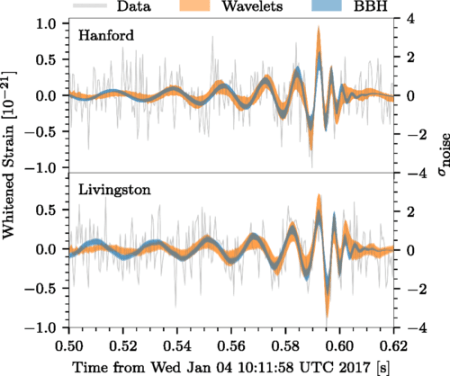
I’ve just heard the news that  LIGO has just announced the detection of another gravitational-wave signal, which has been given the identifier GW170104; it was detected on 4th January 2017.

The event was the merger of a black-hole binary system a redshift z=0.2, which is a proper distance of about 800 Mpc in the standard cosmological model, the most distant event yet detected. There are also tantalising hints that at least one of the black holes had spin opposite the orbital angular momentum, which implies it may have originated in a globular cluster. For more details please see the refereed paper.

If you’d rather just look at the plot here is the evidence for the event, in the form of coincident signals at the two components of LIGO:

 
LIGO

I reckon there’s a good chance of seeing members of the Cardiff University Gravitational Physics group celebrating in the pub later this evening!

It’s also a reasonable inference given the rate of detection of these events so far that we’re going to see many more in the very near future!