Archive for Harassment

Non-Disclosure Agreements in the UK

Posted in Harassment Bullying etc with tags , , , , , , , on July 13, 2025 by telescoper

About a year ago, I posted an item about a change to Employment Law in Ireland that effectively bans the use of Non-Disclosure Agreements (NDAs) in situations involving allegations of discrimination, victimisation, harassment and sexual harassment. When I posted this, the change had not come into force, but it has now. I think this is a very good move.

There aren’t many reasons to praise the current UK Government, but it seems they are proposing something similar, through an Amendment to the Employment Rights Bill, although the change has not yet come into effect and will not do so until the Bill becomes an Act.

The legislation will state that an employer shall not enter an NDA with an employee where the employee has made allegations of discrimination, harassment or sexual harassment. In my experience, NDAs are currently the default in such cases. I know of many examples in the UK where such legal instruments have been used to prevent victims of harassment from speaking publicly about their experiences, thus enabling harassers to move elsewhere without anyone knowing what they had done. This ploy is also seen by Management as a way of preventing reputational damage, although it does not seem to me to be a good way of doing that, as the truth has a way of coming out anyway and the effect of hiding the misconduct when it does causes more reputational damage than the harassment itself.

This reminds me of things I wrote a while ago in connection with a case at Leiden University where the Management decided not to name a professor involved in such a case (who was subsequently identified as Tim de Zeeuw). I thought this was a nonsense, for at least two reasons. The first is that I think people who have behaved in such a way should be named as a matter of principle, so that potential collaborators and future employers know what they have done. In previous posts on this topic I had defended confidentiality (e.g. hereduring an investigation, but I still think that once it has been decided that a disciplinary offences have been committed there should be full disclosure.

The second is that failing to identify the individual concerned led to a proliferation of rumours inside and outside Leiden (none of which I am prepared to repeat here). As a result, the finger of suspicion was pointed at the wrong people until the name of the abusive Professor was revealed. That made for a very difficult working environment for everyone concerned.

Of course the new law, when passed, will only apply to cases in the United Kingdom. In Astronomy, as in many other parts of academia, there is a great deal of international mobility. The new legislation would not prevent someone who has engaged in such misconduct in, for example, The Netherlands, applying for a job in the UK without this coming to light. One could hope that other countries follow suit, but the wheels of the legislature are not known to turn quickly in any country that I know of.

I can sense many Human Resources departments getting very nervous, as the proposed change will render a major component of their modus operandi unlawful. Who knows, it may even encourage them to start tackling the culture of harassment that they have so far been content to hide.

Finally, I think it’s an important question whether or not this legislation is retroactive. If it is, and past NDAs are declared null and void then it will blow open many cases. I can imagine rather a lot of institutions and individuals getting rather nervous at the prospect of their previously concealed misconduct coming out in the open.

P.S. In related news, online voting for the Chancellorship of Cambridge University opened last week. It’s a transferable vote system. I put my first choice for Wyn Evans.

Banning Non-Disclosure Agreements in Sexual Harassment Cases

Posted in Harassment Bullying etc with tags , , , , , on July 24, 2024 by telescoper

This morning I saw a news item that describes a new law in Ireland that would ban the use of Non-Disclosure Agreements (NDAs) in sexual harassment cases. The law is being considered by Cabinet today but, with the summer recess imminent, the earliest the legislation can be passed through the Oireachtas is in the autumn, after the Dáil returns. That is unless a General Election intervenes.

The legislation will amend the Employment Equality Act to state that an employer shall not enter an NDA with an employee where the employee has made allegations of discrimination, harassment or sexual harassment.

Such agreements have been used quite frequently to prevent victims of harassment from speaking publicly about their experiences thus enabling harassers to move elsewhere without anyone knowing what they had done. This ploy is also seen by Management as a way of preventing reputational damage, although it does not seem to me to be a good way of doing that as the truth has a way of coming out anyway and the effect of hiding the misconduct when it does causes more reputational damage than the harassment itself.

This reminds me of things I wrote a while ago in connection with a case at Leiden University where the Management decided not to name a professor involved in such a case (who was subsequently identified as Tim de Zeeuw). I thought this was a nonsense, for at least two reasons. The first is that I think someone who has behaved in such a way should be named as a matter of principle, so that potential collaborators and future employers know what he has done. In previous posts on this topic I had defended confidentiality (e.g. here) during an investigation, but I still think that once it has been decided that a disciplinary offences have been committed there should be full disclosure.

The second is that failing to identify the individual concerned led to a proliferation of rumours inside and outside Leiden (none of which I am prepared to repeat here). As a result, the finger of suspicion was pointed at the wrong people until the name of the abusive Professor is revealed. That made for a very difficult working environment for everyone concerned.

Of course the new law, when passed, will only apply to cases in Ireland. In Astronomy, as in many other parts of academia, there is a great deal of international mobility. The new legislation would not prevent someone who has engaged in such misconduct in, for example, the United Kingdom applying for a job in Ireland without this coming to light. One could hope that other countries follow suit, but the wheels of the legislature are known to turn quickly in any country that I know of.

Finally, I think it’s an important question whether or not this legislation is retroactive. If it is, and past NDAs are declared null and void then it will blow open many cases. I can imagine rather a lot of people getting rather nervous at this prospect…

Bullying and Harassment in Astronomy – The Report

Posted in Harassment Bullying etc, LGBTQ+ with tags , , , , , on May 19, 2024 by telescoper

As I advertised a few days ago, The Royal Astronomical Society has now released its report on Bullying and Harassment in Astronomy. You can download the full report (40 pages, PDF) here. I recommend you to read it as the statistics are stark. Here are a couple of graphical summaries from the RAS Website:

Note the greater prevalence of bullying and harassment directed towards LGBT astronomers.

The recommendations include the introduction of more effective bullying and harassment policies, procedures and safeguards to protect all colleagues, to support students, and to ensure that everyone can achieve their potential and work in a safe and satisfying environment, regardless of their background.

Noble sentiments, but the Royal Astronomical Society can do little itself to change policies, as it is not in the position of employer (except for its own staff in Burlington House) and there is no incentive for the universities and research institutions who employ most astronomers to comply. That will only happen if serious sanctions are imposed for mishandling bullying and harassment cases.

My view – born out by experience – is that it can’t be left to individual institutions to deal with this problem. In case after case, instead of dealing properly with bullying and harassment, senior managers have protected the perpetrators and silenced the victims. Reputation management, they call it. What is needed to start with is a system of independent adjudication, as recommended, for example, by the 21 Group.

This problem is neither confined to astronomy nor to the United Kingdom, and at least part of it is due to the ever-increasing cult of managerialism that places institutional branding ahead of positive workplace culture, paying at most lip-service to the latter.

Direct Action from Brazil

Posted in Harassment Bullying etc with tags , , , on June 29, 2023 by telescoper

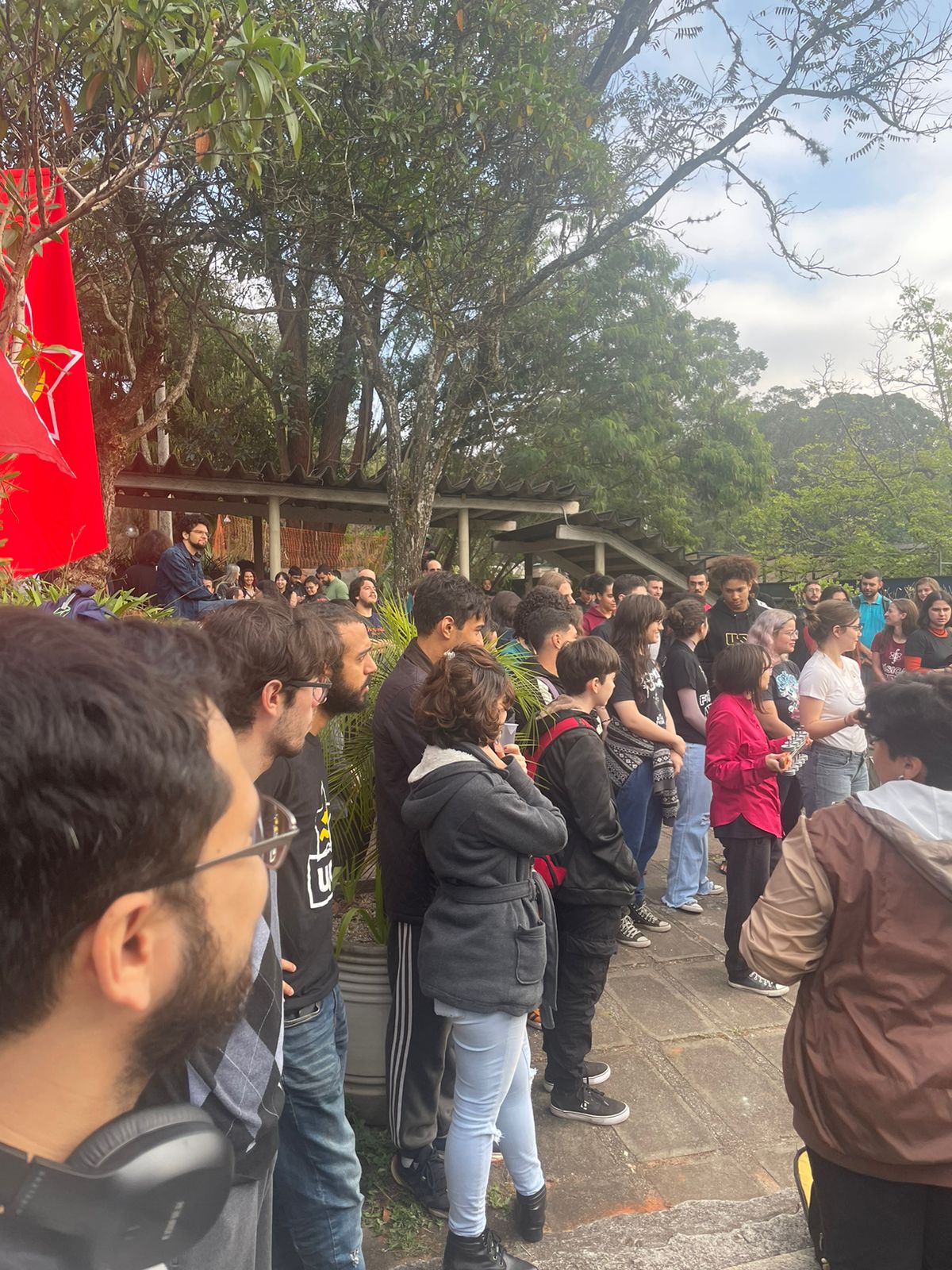
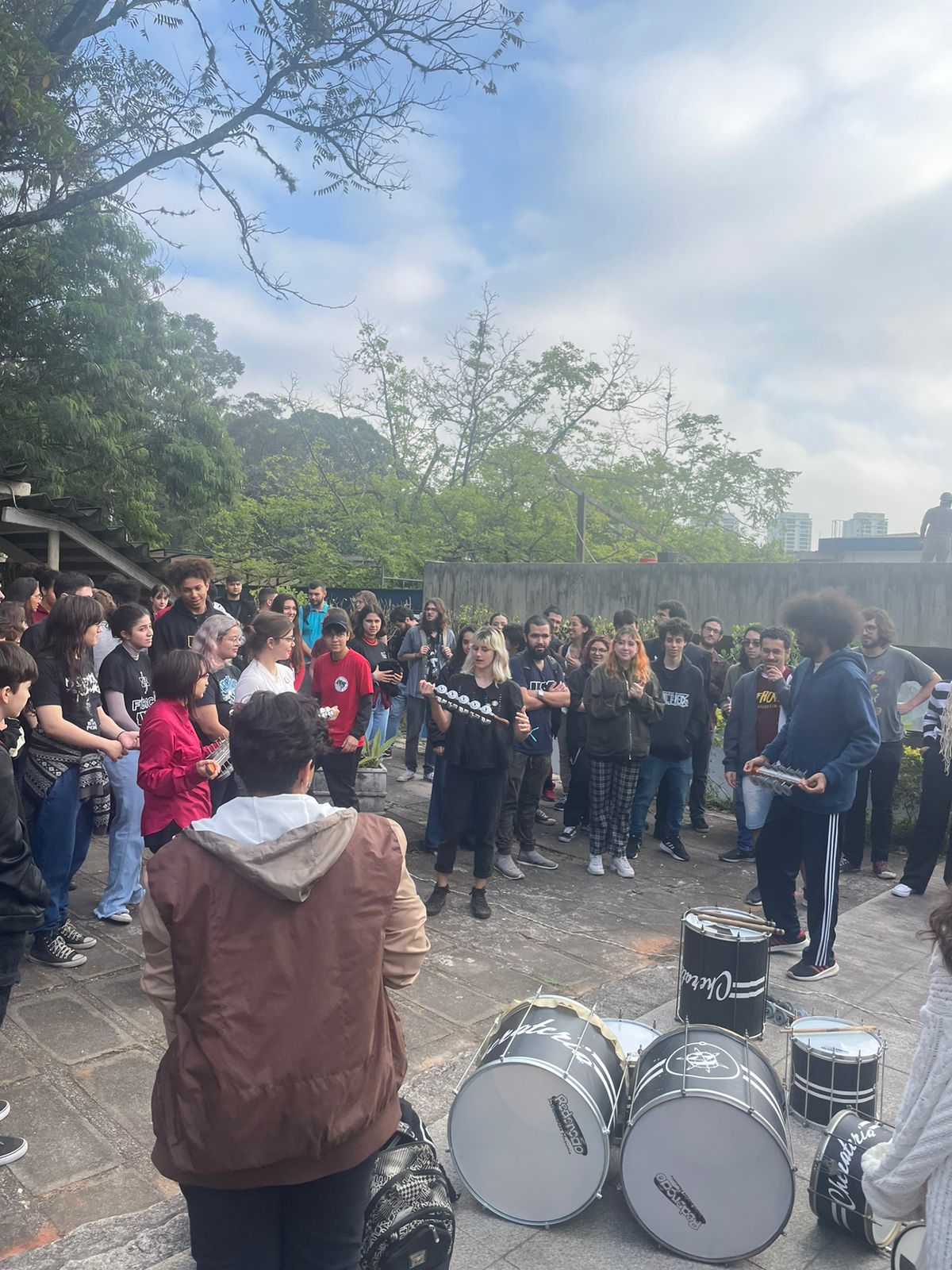
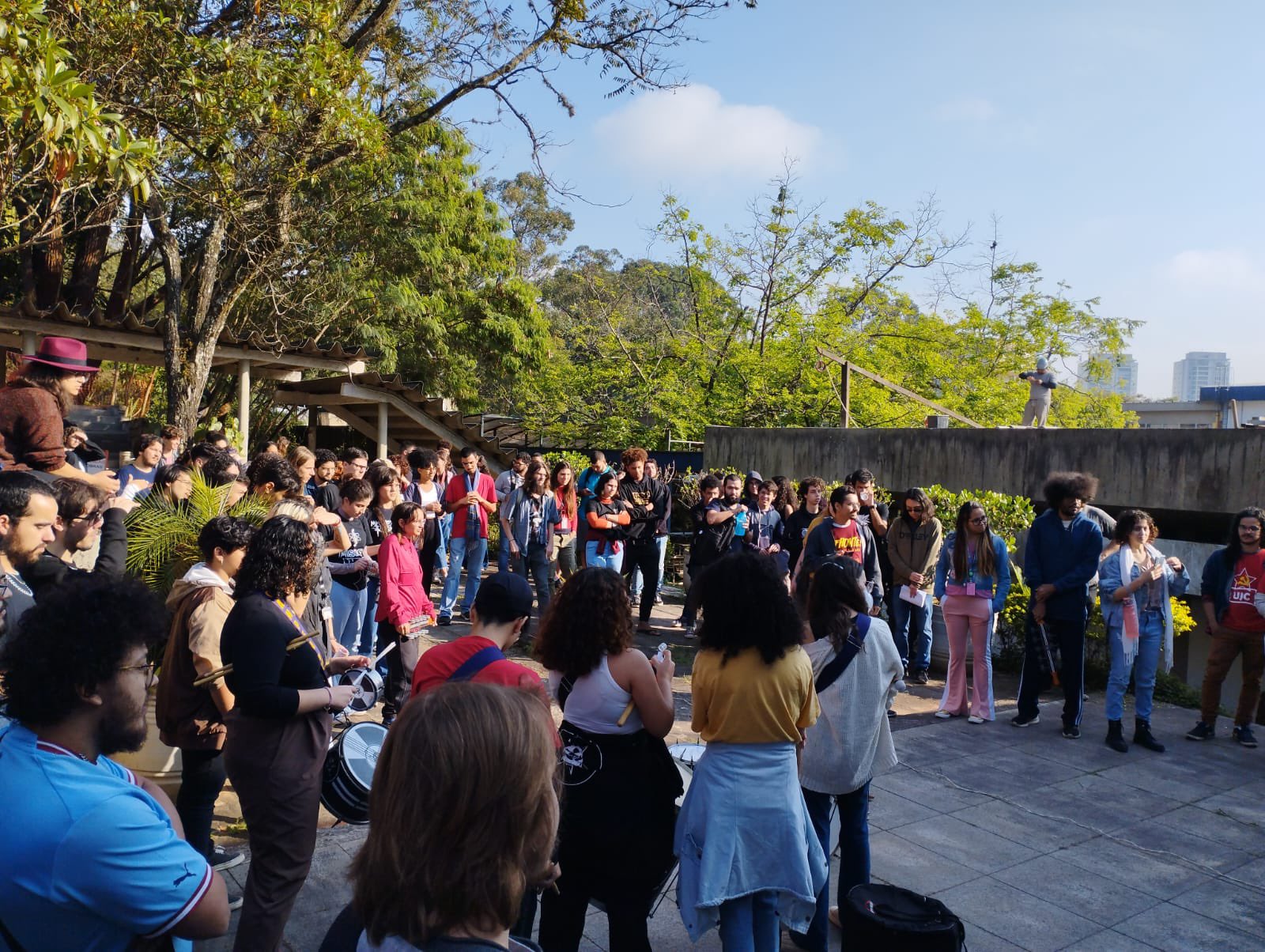
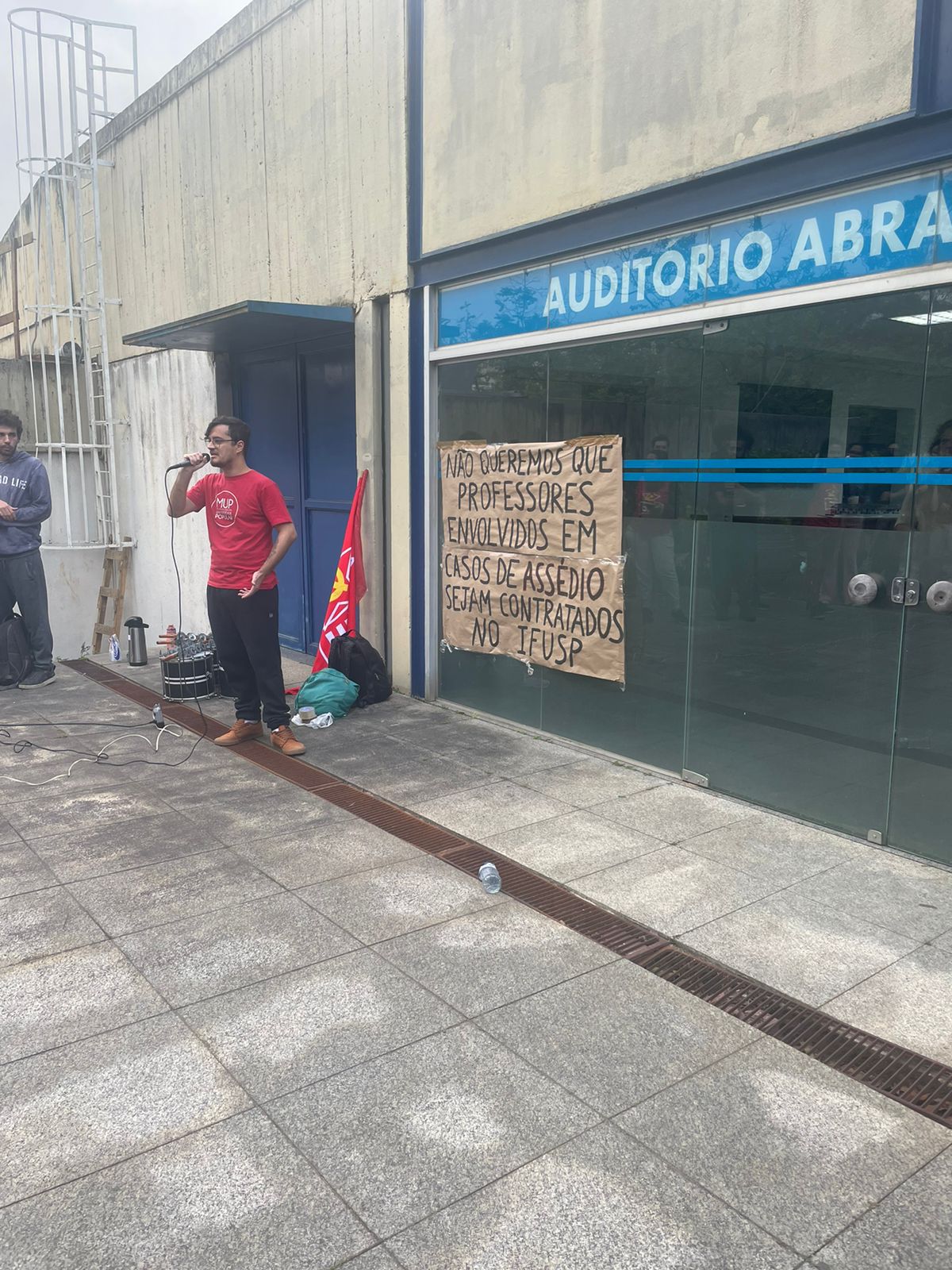
This blog gets traffic from all round the world, but not often that much from Brazil. When I checked the stats this morning, however, I noticed there were quite a few hits from that direction. It’s been a very busy day, though and, though I vaguely wondered why, I was too busy today to think much about it. This evening, however, I learnt the reason. It seems that there was a demonstration by about 100 students and staff at the University of São Paulo against the appointment of a person to a faculty position in the Physics Department. Here is a poster:

“We don’t want professors involved in harassment cases at the University of São Paulo Physics Institute”

Here are some other pictures from the protest:

I understand that the demonstration resulted in the appointment of the person concerned being delayed until the “harassment case” is investigated. This seems to demonstrate that Direct Action, as they call this sort of thing, certainly seems to be a more effective approach to these matters than official procedures that rarely achieve anything.

The Christopher Backhouse Case

Posted in Harassment Bullying etc with tags , , on October 13, 2022 by telescoper

I want to thank everyone who has contacted me about the Christopher Backhouse harassment case I blogged about yesterday. Based on what I’ve been told, the details revealed in the Guardian article – which are bad enough – are just the tip of the iceberg. I can’t say any more in case there are further legal developments.

I saw this reaction from Erica Smith yesterday.

This experience must have been absolutely dreadful for her and I sincerely hope yesterday’s announcement allows her to bring some closure to the matter. Many would have given up given the lack of action from the police, but Erica Smith had the courage to pursue a civil action getting a sub poena that led to the identity of her harasser being revealed.

Some of the people who have contacted me are people involved with DUNE. Although the harassment went on for years, none of them knew anything about the case until very recently. They are all very disturbed that this was going on in their midst for so long.

I am not a lawyer but it remains a mystery to me why Dr Backhouse has not faced a criminal prosecution. This seems to have enabled him to simply walk away from all the trouble he has caused?

I have been told that because the online harassment was anonymous – because Backhouse used proxy servers – the US Police could not pursue the matter. However, now Backhouse’s cover has been blown and the evidence is clear, shouldn’t the matter now be referred to the UK Police for him to be prosecuted there, or even extradicted to the USA to stand trial there?

In England & Wales Some crimes of harassment are dealt with summarily (i.e. by a Magistrates’ Court) which means the maximum custodial sentence on conviction is six months. However, more serious offences can be tried in the High Court and according to the Sentencing Council guidelines much longer sentences are possible for more serious offences. I’m no in favour of sending people to prison unless it’s absolutely necessary, but the harassment alone seems to me to warrant it in this case.

Anyway, my purpose in writing this post was really to point out that however strongly I feel about this there is little I myself can do of a practical nature, except encourage people who have further information on this case to take it to the proper authorities and urge others in similar situations to be inspired by the example of Erica Smith.

Update: some further information clarifying some matters related to this case is available on this Twitter thread

The Christopher Backhouse Harassment Case

Posted in Harassment Bullying etc with tags , , , , on October 12, 2022 by telescoper

I hardly know what to say about the harassment case involving Christopher Backhouse, a former researcher at University College London covered in today’s Guardian, except that everyone should be aware of just what a shocking case it is. The opening paragraph of the Guardian story gives a taste:

A former academic at University College London must pay almost £50,000 in damages to a former colleague after falsely portraying her as a sex worker on social media as part of a months-long campaign of harassment.

I don’t know Backhouse personally, but he is (or was) apparently a Royal Society Research Fellow working on the DUNE experiment, an underground neutrino physics experiment.

The whole story is very disturbing, not least because the harassment went on for so long. One strange aspect of this case is that the victim of Backhouse’s campaign of harassment, Erica Smith, had to pursue a civil action against him to put an end to his behaviour. One would have imagined that a criminal case would have been more appropriate. I for one think he should be in prison; the description presented in the Guardian article seems to constitute harassment as defined under the Public Order Act 1986 and the Protection from Harassment Act 1997. If such an offence is committed with intent to cause harassment, alarm or distress, the offender can be given 6 months’ imprisonment or a hefty fine. Why has Backhouse not been prosecuted?

The article ends with

A UCL spokesperson said Backhouse was no longer employed by the university.

I’m glad at least of that, but I wonder what UCL did during the “campaign of harassment” carried out by Christopher Backhouse and whether he left voluntarily or was sacked. I wonder what they have done to help Erica Smith put her life back together after this horrific episode. Does UCL have a vicarious liability?

This case on its own raises grave questions about the way harassment cases are handled in the Department of Physics & Astronomy at UCL but this is far from the first such case there that has gone public; see e.g. here.

UCL clearly has a lot of work to do to put its house in order.

In more general terms, I’ll repeat what I have said in earlier posts on this issue:

Failure to act strongly when such behaviour is proven just sends out the message that the institution doesn’t take sexual harassment seriously. In my view, confidentiality is needed during an investigation – to protect both sides and indeed the person doing the investigation – but if the conclusion is that misconduct has taken place, it should be acknowledged publicly. Justice has to be seen to be done. Sexual assault, of course, is another matter entirely – that should go straight to the police to deal with.

I’ve talked about protocols and procedures, but these can only ever apply a sticking-plaster solution to a problem which is extremely deeply rooted in the culture of many science departments and research teams across the world. These tend to be very hierarchical, with power and influence concentrated in the hands of relatively few, usually male, individuals. A complaint about harassment generally has to go up through the management structure and therefore risks being blocked at a number of stages for a number of reasons. This sort of structure reinforces the idea that students and postdocs are at the bottom of the heap and discourages them from even attempting to pursue a case against someone at the top.

We are obviously very far indeed from eliminating harassment or the conditions that allow it to continue but although cases like this are very painful, I think they at least demonstrate that we are beginning to see the extent of the problem, and how the measures taken to deal with it are inadequate. We have to work much harder to stop this sort of thing from happening in the first place.

Caltech astrophysics and harassment: Lessons learned

Posted in Harassment Bullying etc with tags , , on August 13, 2019 by telescoper

This is a lengthy but important post about the recent episodes of harassment at Caltech centred around Christian Ott. I’ve blogged in relation to this myself a few times; see here. It’s not a comfortable read, which is precisely why you should read it.

One of the worst things about the way institutions handle investigations into harassment and related disciplinary matters is that the system does not include any provisions to bring closure to the victims. Indeed, victims are sometimes not even informed as to the outcome of the investigation.

You can make your own mind up about the behaviour of Caltech as an institution. All I’ll say is that far more people were affected than I was previously aware of.

cjhandmer's avatarCasey Handmer's blog

Caltech astrophysics and harassment: Lessons learned

Casey Handmer 2019

What is this?

In the wake of major catastrophes, it is common practice for organizations to publish a “Lessons Learned” report to help prevent future occurrences. The largest public catastrophe in which I’ve ever been involved occurred in the Caltech astrophysics department between 2010 and 2019. Former Caltech professor and internationally disgraced astrophysicist Christian Ott harmed, harassed, and abused numerous students, postdocs, and research fellows. Despite thousands of hours of investigation, no public “findings” or “lessons learned” report has ever been made available. This document is my attempt to fill this need.

Why?

It has been historically conventional to conceal this sort of institutional malpractice, with the effect that the hard-learned lessons are forgotten and that harassment, particularly of underrepresented minorities, is still common. The intent of this document is to undermine the traditional assumption that abused students will graduate or…

View original post 11,100 more words

Christian Ott’s Resignation

Posted in Harassment Bullying etc with tags , , , on August 2, 2017 by telescoper

I heard this morning an unconfirmed report that Christian Ott, the Caltech Professor who had previously been suspended for harassing two female students, and required to attend “rehabilitation”, had finally resigned from his position. Now I have found confirmation in the form of a news item and the following statement (from this source):

Ott

Ott was due to return from his suspension this summer, but instead he will remain off campus and leave the institution for good at the end of December this year.

When I posted about this episode last year, I wrote:

The first thing to say is that I find it very hard to believe that Ott will ever be able to return to his workplace after the revelations of his behaviour even if he does attend “rehabilitative training”. I very much doubt that the faculty or students would want him back. It surprises me that Caltech could even imagine that this is a realistic possibility.

It was never going to work, for all kinds of reasons, and Caltech should have realised that ages ago. I don’t, incidentally, think it’s fair to say his presence on campus would have been `divisive’. I think opinions at Caltech were pretty much united, based on the people I know there: they didn’t want him back.

It remains to be seen what Christian Ott does. I am not familiar with his work but he is, by all accounts, a talented scientist so he may well find a position at another institution. If he does, I hope, for his and for his future colleagues’ sake, that he has learned his lesson.

But it is not Christian Ott’s future that is the most important consideration. The two individuals involved in the case have had to put up with behaviour that simply shouldn’t have happened, and which should have been dealt with much more decisively before so much damage was done to the lives and careers of the young women involved.

This is a depressing story in many ways, but it seems clear to me likely that the Caltech management were afraid to dismiss Ott fearing a lawsuit and associated reputational damage. Unlike the equivalent posts in the UK, positions like Ott’s are fully tenured in the USA so a dismissal can potentially be challenged on a number of legal grounds, especially if such procedures that were in place were not properly followed. Of course it may also be that the procedures were inadequate anyway, which makes litigation even more likely to be successful. If these were the considerations that influenced Caltech’s decision, then I hope they now realise that they would in the long run have been far better advised to do the right thing, and weather any short-term storm.

The only proper reaction now for Caltech to this sorry business is to undertake a complete overhaul of the way it deals with harassment and related forms of misconduct. If done properly that might also help heal the scars this case has left. Not that Caltech is far from being the only institution with a problem in this regard…

The Dangerous Myth of the “Great Man of Science”

Posted in Science Politics with tags , , , , on October 18, 2015 by telescoper

I’ve waited quite a while before writing anything substantial about the Geoff Marcy case, partly because I was too angry to reflect properly and partly because this is something impossible to write about with raising some very unpleasant ghosts. The scandalous behaviour of Geoff Marcy – whose repeated sexual harassment of a number of female members of his Department went unchallenged by the University of California at Berkeley for fifteen years – resulted in a  slap on the wrist and a “don’t do it again” from the authorities followed by a badly misjudged email from the Head of the Department of Astronomy (where Marcy worked) which includes the following statement:

Of course, this is hardest for Geoff in this moment. For those who are willing and able, he certainly can use any understanding or support they can offer (this wouldn’t include endorsement of the mistakes he acknowledges in an open letter on his website). I ask that those who have the room for it (now or later), hear him out and judge whether there is room for redemption in all that will transpire.

No. It just isn’t “hardest for Geoff”. It’s hardest for the women he harassed, some of whom had to wait 15 years for some semblance of justice. This comment displays a lack of compassion for Marcy’s victims. This not only compounds an already disgraceful episode, but also gives a very clear indication of an attitude that explains why nothing was done earlier. It’s hard to believe that nobody knew what Marcy was up to, but it seems he had powerful friends to protect him.

Subsequently, however, a majority of faculty in the Astronomy Department composed a strongly worded statement concluding that Marcy could no longer perform the functions of a faculty member. I suspect it was that, rather than the feeble actions of the University authorities that persuaded Marcy finally to resign. He should, of course, have been sacked forthwith. He has now gone, but the fallout from this episode will last a very long time. Hopefully out of the debris some good will emerge, not just for Astronomy at Berkeley – because this problem is by no means unique to that place – but for science as a whole. I’d love to believe that Geoff Marcy is an isolated example, but I’m afraid that just isn’t the case.

I think it’s important not to let this case slip from our collective memory before lessons can be learned – hot topics grow cold so quickly these days. So many things are desperately wrong about this case that it’s impossible to comment on all of them, so I’ll just pick up on a few and make some personal comments and hopefully some suggestions. I’m focussing on sexual harassment because of the Marcy case, but what I say applies equally to other forms of harassment (e.g. racially motivated or homophobic) and bullying in the workplace.

The first issue I want to raise is that of procedure. I wish harassment and bullying didn’t happen, but sadly they do. If all members of a University department (staff and students) are to work together in an atmosphere of dignity and mutual respect then there has to be some sort of code of conduct and a process for dealing with behaviour that is unacceptable under the code. But it is not enough for these to exist. Staff and students also have to be aware of their existence and also to believe that the disciplinary process will be enforced rigorously. I have no doubt that UCB has a code of conduct, but the process of enforcing it failed lamentably. It’s not hard to see why given the attitude of the Department Chair.

In my opinion as soon as an allegation of sexual harassment is made it should always be given to an independent person to investigate. By “independent” I mean from outside the Department concerned and preferably someone who has no direct personal knowledge of the individuals involved. That would at a stroke prevent pals of the perpetrator from closing ranks. This is what we do in my own institution, in fact. I’m not saying that there are no instances of sexual harassment here but I really don’t believe anything would be allowed to go on as long here as it did at UCB.

A properly enforced disciplinary procedure shouldn’t just protect the person making the complaint; it needs also to protect innocent individuals from malicious allegations. It must also realise that people do make mistakes. Who can say that they have never made any inappropriate remark in jest that may have inadvertently caused offence? I certainly can’t. Likewise it is possible simply to misread a situation, to misinterpret a remark or body language, or to take a straightforward comment as a flirtation of some sort. We’re all humans and we can’t read each other’s minds. I don’t think such errors need to go to a full disciplinary hearing; an informal warning should do for a first offence, as long as there is an apology. Repeated offences are a different matter. A first offence of sexual harassment of the kind committed by Geoff Marcy should at the very least have received a final written warning, followed by summary dismissal for any further offence. Any difference in seniority must also be taken into account. All cases of harassment are unacceptable but harassment of a student by a senior Professor takes “unacceptable” to an extreme.

Failure to act strongly when such behaviour is proven just sends out the message that the institution doesn’t take sexual harassment seriously. Confidentiality is needed during an investigation – to protect both sides – but if the conclusion is that misconduct has taken place, it must be ackowledged publicly. Justice has to be seen to be done. Sexual assault, of course, is another matter entirely – that should go straight to the police to deal with.

So far I’ve just talked about protocols and procedures, but these can only ever apply a sticking-plaster solution to a problem which is extremely deeply rooted in the culture of many science departments and research teams across the world. These tend to be very hierarchical, with power and influence concentrated in the hands of relatively few, usually male, individuals. A complaint about harassment generally has to go up through the management structure and therefore risks being blocked at a number of stages for a number of reasons. This sort of structure reinforces the idea that students and postdocs are at the bottom of the heap and discourages them from even attempting to pursue a case against someone at the top.

This hierarchy of power suits those – usually men – who style themselves as “Great Scientists”. These individuals generally flourish at the head of a team of students and postdocs, but take as much as credit as they can for themselves, often actively hindering the career prospects of junior collaborators. They usually bring in large amounts of grant funding or other awards and possibly even the prospect of a Nobel Prize. In this way they convince their employers that they are indispensible to their institution, which encourages the bosses to turn a blind eye to their transgressions. They may be flawed humans but they are perceived to be great scientists. They are untouchable. Power corrupts, but it’s also too easily acquired by those who are corrupt already.

In reality the only reason why such people may appear indispensible is that they have made themselves so by neglecting (or abusing) their responsibilities to junior staff and students by (for example) not allowing them opportunities to pursue their own research. I’ve many stories of this type of controlling behaviour, which usually results in postdocs and students being discarded or forced out of research for lack of wider experience.

The fact of the matter is that the “Great Man of Science” is a myth, and a dangerous one at that. I’m not saying that there are no great scientists (male or female). I am saying that the elevated status awarded to some eminent individuals is deeply unhealthy and can lead to abuse of power, as recent events have revealed all too clearly.  They are also an increasingly distorted reflection of how science actually works, which is more often than not through collaborations of equal but complementary efforts.

The unhealthy power structures I’ve discussed will not be easy to dismantle entirely, but there are simple things that can be done to make a start. “Flatter”, more democratic, structures not only mitigate this problem but are also probably more efficient by, for example, eliminating the single-point failures that plague hierarchical organisational arrangements. On the other hand, turkeys don’t vote for Christmas and the existing arrangements clearly suit those who benefit from them. If things are to change at all, however, we’ll have to start by recognising that there’s a problem.

P.S. For the record I’ll just state that I’m obviously not a “Great Man of Science”. Nor am I a great scientist. I’m not a great manager of people either. But I like to think that I’ve done my job as Head of School sufficiently well that I now consider myself entirely dispensible!

From Brighton Pride to Sussex Pride

Posted in Biographical, Brighton, LGBTQ+ with tags , , , , , , , , on July 31, 2014 by telescoper

Brighton Pride is coming up this weekend. I heard some people on the train the other day saying that they didn’t think such events were needed any more because “gays have everything they need, especially in Brighton”. Although I was tempted, I didn’t interrupt, though I did disagree. Things have indeed changed a lot over the last twenty years, but they could easily change back if we get complacent and Brighton has its fair share of intolerance and bigotry still.

I was myself beaten up on Brighton’s seafront many years ago, during my previous existence at the University of Sussex as a PhD student and a postdoctoral researcher. There was no doubt why I was attacked: the four young men who surrounded me and punched and kicked me to the ground were shouting just one word over and over again, “faggot”. It’s still a word I hate to hear used, even if purportedly in jest. That event left me with deep psychological scars that contributed to a breakdown I had as recently as two years ago.

Thirty or so years after my encounter with the queerbashers, attitudes have definitely changed, and so has the law. Certain types of criminal offence are now officially recognized as hate crimes: the list treats sexual orientation as equivalent to race, gender, religious belief and disability in such matters. The Police are now obliged to treat these with due seriousness, and penalties for those found guilty of crimes exacerbated by homophobia are consequently more severe. All Police forces now have special units for dealing with them; here is an example.

These changes are mirrored in other aspects of life too. For example, employment law relating to discrimination or harassment in the workplace now puts sexual orientation on the same footing as race, gender, disability and religious belief. In many universities in the UK, staff have been required to attend training in Equality and Diversity matters not only to raise awareness of the legal framework under which we all have to work, but also to promote a sensitivity to these issues in order to improve the working environment for both staff and students. Now we have equal marriage too.

This training isn’t about over-zealous busybodies. Under the law, employers have a vicarious liability for the conduct of their staff with regard to harassment and discrimination. This means that a University can be sued if, for example, one of its employees commits harassment, and it can be shown that it did not make appropriate efforts to ensure its staff did not engage in such activities.

Of course not everyone approves of these changes. Some staff  have refused point-blank to attend Equality and Diversity training, even though it’s compulsory. Others attend grudgingly, muttering about “political correctness gone mad”. You may think all this is a bit heavy handed, but I can tell you it makes a real difference to the lives of people who, without this legal protection, would be victimised, harassed or discriminated against.  It is, also, the law.

I think the efforts that have been made to improve the legal situation have been (at least partly) responsible for the changes in society’s attitudes over the last twenty years, which have been extremely positive. I’m old enough to remember very different times. That’s not to say that there’s no bigotry any more. Even in this day and age, violent crimes against gay men are still disturbingly common and police attitudes not always helpful even though many police forces do now have Lesbian and Gay teams, something that was just unthinkable 25 years ago.

Although relatively few universities appear in the list of gay-friendly employers compiled by the campaigning organisation Stonewall,  my experience generally, having worked in a number of UK universities (Sussex, Queen Mary, Nottingham and Cardiff), is that they are  generally friendly and comfortable places for an openly gay person to work. So much so, in fact, that there’s no real need to make a big deal of one’s sexual identity. It doesn’t really have much to do with the way you do your work – certainly not if it’s astrophysics – and work-related social events are, as a rule, very inclusive.

However, even in the supposedly enlightened environment of a University there do remain islands of bigotry, and not just about gay or lesbian or bisexual or transgender staff.  Sexism is a major problem, at least in science subjects, and will probably remain so until the gender balance improves, which it slowly doing, despite the actions of certain professors who actively block attempts to encourage more female applicants to permanent positions. Universities still do not seem to me to treat sexual orientation with the same seriousness as, say, race or gender discrimination. I’ve had plenty of experiences to back that up.

I recently took part in an interesting meeting involving various staff from the University of Sussex with a representative of Stonewall. The topic was how we could work with Stonewall to make it more gay-friendly. If I remember correctly, there are 78 UK Universities currently taking part in Stonewall’s programmes. It is a matter of some  embarrassment to me that the University of Sussex is not among them. Perhaps the attitude is that because there is such a large and visible gay population in Brighton it’s not necessary for the University of Sussex to take any steps in this direction. I disagree, and am absolutely convinced that there are many Lesbian, Gay, Bisexual or Transgender members of the University of Sussex staff who would love to see some action taken to make their workplace just a little bit friendlier and more inclusive, even if that just amounts to acknowledging their existence.  There is a visible and active LBGT student society on campus, but no such entity exists for staff – an absence that is truly glaring. I don’t even think the University has any idea what fraction of its staff identify themselves as LGBT.

No doubt there’ll be many members of the University of Sussex staff on the Pride Parade on Saturday and at the various parties being held around Brighton afterwards. Perhaps it’s time to start some sort of network so that for staff at the University of Sussex, Pride doesn’t just come once a year…?

If you’re interested in this idea please let me know, either through the comments box or by email.