Archive for ireland

Grubb Parsons: the Irish Connection

Posted in History, The Universe and Stuff with tags , , , , , , , , on April 15, 2019 by telescoper

The other day I stumbled across an interesting article that discusses, among other things, the famous telescope and optical instrument manufacturing company, Grubb Parsons. The piece is a few years old but I didn’t see it when it came out. It’s well worth a read.

Grubb Parsons was still a famous company when I was at school, but it closed down in 1985. The main works were in Heaton, in Newcastle Upon Tyne, not far from where I was born; my father went to Heaton Grammar School.

Grubb Parsons made a huge number of extremely important astronomical telescopes, including the Isaac Newton Telescope, pictured above at the works in Heaton.

Interestingly, the names ‘Grubb’ and ‘Parsons’ both have strong Irish connections.

Howard Grubb was born in Dublin in 1844 and in 1864 he joined the optical instruments company set up there by his father Thomas Grubb. When his father died in 1878 Howard Grubb took over the Grubb Telescope Company and consolidated its reputation for manufacturing high quality optical components and devices. He was knighted in 1887.

Back in 1845 Thomas Grubb had helped build the famous ‘Leviathan‘ telescope for William Parsons, 3rd Earl of Rosse at Birr Castle in County Offaly.

Charles Algernon Parsons, who took over the Grubb Telescope Company after it was liquidated in 1925, and relocated it to Tyneside, was the youngest son of William Parsons ( just as Howard Grubb was the youngest son of Thomas). He no doubt kept the name Grubb in the company name because of its associated reputation.

Parsons had a wide range of business interests besides telescopes, mainly in the marine heavy engineering sector, especially steam turbines. When I was a lad, ‘C A Parsons & Company’ was still one of the biggest employers on Tyneside. It still exists but as part of Siemens and is a much smaller operation than in its heyday.

One final connection is that Sir Howard Grubb and Sir Charles Algernon Parsons both passed away in the same year, 1931.

Spring Equinox in the Ancient Irish Calendar | 20 March 2019

Posted in Uncategorized with tags , , , on March 20, 2019 by telescoper

I’m sharing this interesting post with a quick reminder that the Vernal Equinox in the Northern Hemisphere occurs today, 20th March 2019, at 21:58 GMT.

A Grand Slam Weekend

Posted in Biographical, Cardiff, Rugby with tags , , , on March 19, 2019 by telescoper

Well, here I am sitting in Cardiff Airport yet again waiting for a flight back to Dublin so I reckon it’s time to break my self-imposed blogging silence.

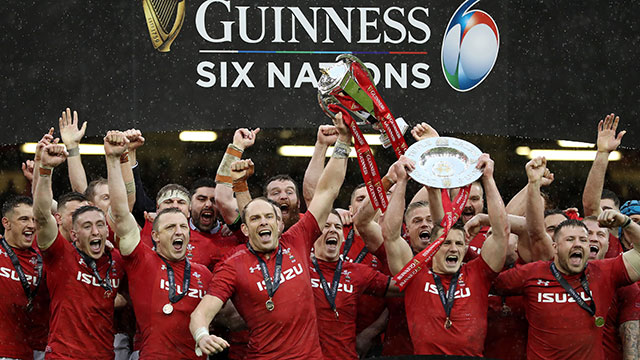
I had an enjoyable little break, the highlight of which was the rugby on Saturday between Wales and Ireland. I actually managed to get a ticket for the game, though I am not at liberty to divulge how I got it. I was a long way back from the pitch, practically in the rafters of the Principality Stadium, but the view wasn’t bad. Sadly, I forgot to charge my phone up overnight before the match and by the time I made it to my seat the battery had died, so I have no pictures of the event to share.

I had expected Wales to win, but hadn’t expected such a one-side match. After scoring after just over a minute, Wales controlled the game. Instead of the intense atmosphere I’d been anticipating, the mood in the crowd was more like that you might find at a cricket match while the home side is steadily accumulating runs against ineffective bowling. When the Ireland fightback hadn’t materialized by the fourth quarter of the game, the celebrations started and the singing grew louder in the steadily falling rain. At least Ireland got a consolation try at the end, but if truth be told they didn’t really turn up for the match.

I got absolutely drenched walking back to the Cardiff residence, but it was worth it for the privilege of seeing a Grand Slam unfold live. I only caught the second half of the final match of this year’s Six Nations, the Calcutta Cup match between Scotland and England, on the radio. This seems to have been the most exciting of the tournament, ending in a 38-38 draw after England had been 31-0 up! Greatest comeback since Lazarus!

But all credit again to Wales for their Grand Slam, a great achievement by any standards. It’s revenge what happened ten years ago, when I was in Cardiff (though not in the ground) for a Grand Slam decider between Wales and Ireland, a frantic and exciting match which Ireland won. Not so much excitement this time, but a far happier crowd of Welsh supporters!

So that’s the St Patrick’s Bank Holiday Weekend over with and I’m now heading back to Ireland. This week, or what’s left of it, is `Study Week’ which means there are no lectures. We have finished six weeks of teaching this term at Maynooth, and there are six more after Study Week but there is another week off looming for Easter. As it happens, I’m attending a small conference in London on Thursday and Friday (of which more soon) so I’m just back in the office tomorrow before flying off again for two days in the capital of Poundland.

A Boost for Data Science in Ireland

Posted in Cardiff, Maynooth with tags , , , , , on March 11, 2019 by telescoper

Regular readers of this blog (both of them) will know that before I moved to Maynooth University I worked (part-time) in the Data Innovation Research Institute at Cardiff University, during which time we were very happy to be awarded a Centre for Doctoral Training by the Science & Technology Facilities Council (STFC), shared across Cardiff, Swansea and Bristol, as part of a big investment in this area by the UK government.

Now Science Foundation Ireland has announced a similar programme in Ireland: on Tuesday 5th March, Minister for Business, Enterprise, and Innovation, Heather Humphreys TD, and Minister of State for Training, Skills, Innovation, Research and Development, John Halligan TD, announced investment of over €100 million in six new SFI Centres for Research Training in the fields of ICT and data analytics. I’m very pleased to hear that Maynooth University is involved in two of these; there’s a news item on the University web pages here.

One of the new SFI Centres for Research Training, in Foundations of Data Science, is a joint initiative of Maynooth University, University College Dublin and the University of Limerick, with the support of Skillnet Ireland underpinning its industry and enterprise engagement. This Centre was awarded a total of €21 million, including industry and university contributions to train 139 PhD students towards a world-class foundational understanding of Applied Mathematics, Statistics, and Machine Learning. This represents the largest ever investment in mathematical sciences research in Ireland. The Maynooth involvement is based around the famous Hamilton Institute.

I’m not involved in this initiative myself, at least part of the reason for which is that I didn’t even know about the scheme until the results were announced, but I do hope there will be opportunities for my future PhD students working in `Big Data’ problems in cosmology to benefit from some of the training opportunities it provides.

A much wider issue is that companies based in Ireland have reported difficulties in filling vacancies with candidates sufficiently well trained in data science so hopefully this will help close the skills gap here.

“No Erasmus please, we’re British..”

Posted in Education, Maynooth with tags , , , on February 28, 2019 by telescoper

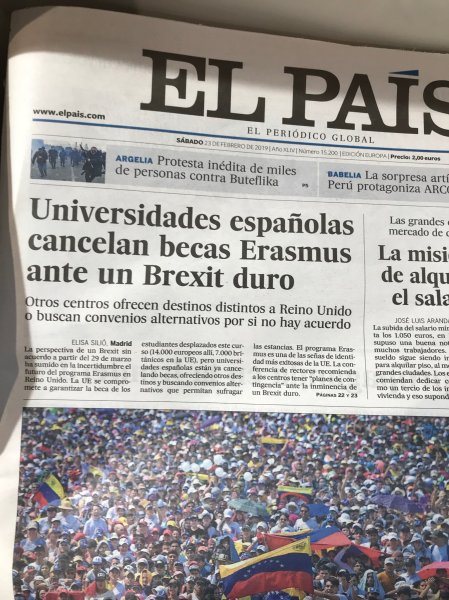
As the ongoing Brexit fiasco systematically trashes Britain’s international reputation, the consequences for the UK University sector are becoming increasingly obvious. In particular, the realization that Britain now defines itself exclusively by its xenophobia has led to a decision by Spain to remove the UK from the list of potential destinations for students under the Erasmus scheme. I’m sure other nations will soon make the same decision.

The European Union has agreed to honour Erasmus grants this year to UK students wish to study at European universities under Erasmus regardless of whether there is a Withdrawal Agreement between the UK and EU, but this is unlikely to be anything other than a stop-gap. It’s very sad to think that British students will be denied access to the Erasmus scheme in future, along with losing all the other benefits of Freedom of Movement.

Every cloud has a silver lining, though. Irish universities are more than happy to accept Erasmus students, and the one I work in (Maynooth) has a very active involvement in the scheme. So if you’re a student based in the EU, and want to study at an English-speaking university, why not apply to study in Ireland?

The Centenary of the First Dáil

Posted in History with tags , , , , , , , , , on January 21, 2019 by telescoper

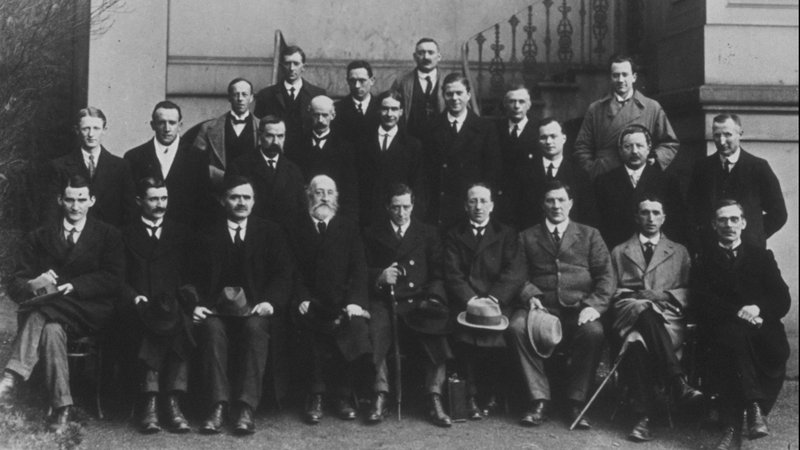
As I mentioned at the weekend, today marks the centenary of the historic first meeting of the Dáil Éireann, at the Mansion House in Dublin on (Tuesday) 21st January 1919. The picture above shows the 27 Teachtaí Dála (TDs) present. The event is being commemorated this afternoon.

I’m summarizing the events surrounding the First Dáil largely because I didn’t learn anything about this at School. Despite Ireland being such a close neighbour, Ireland’s history is only covered in cursory fashion in the British education system.

The background to the First Dáil is provided by the General Election which took place in November 1918 and which led to a landslide victory for Sinn Féin who won 73 seats, and turned the electoral map of Ireland very green, though Unionists held 22 seats in Ulster.

In accordance with its policy of abstentionism, the Sinn Féin MPs refused to take their seats in Westminster and instead decided to form a provisional government in Ireland. In fact 35 of the successful candidates for the General Election were actually in prison, mostly because of their roles in the 1916 Easter Rising and the Ulster Unionists refused to participate, so the First Dáil comprised only 27 members as seen in the picture. It was chaired by Sean T. O’Kelly; Cathal Brugha was elected Speaker (Ceann Comhairle).

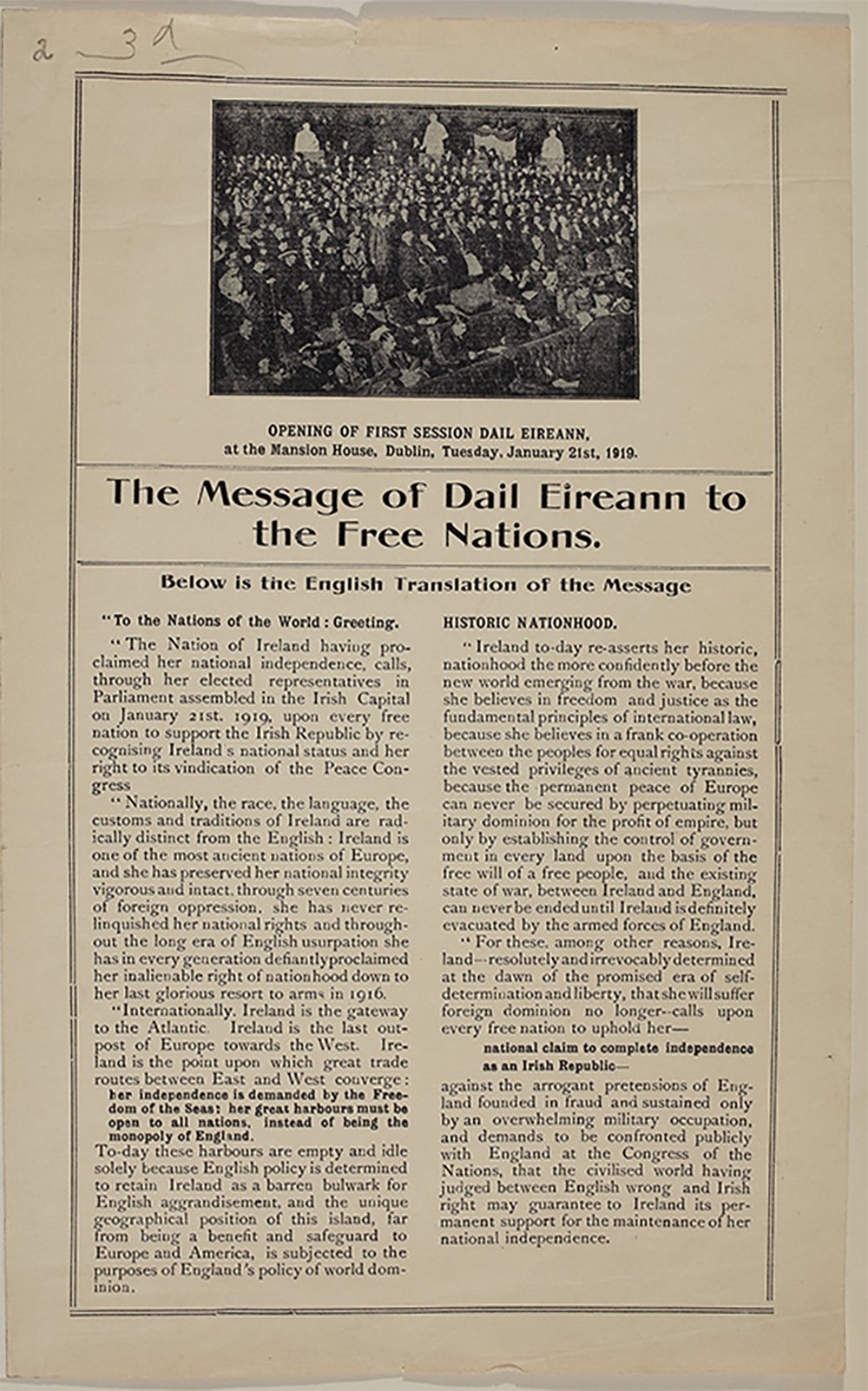
As part of this meeting, the adoption and the ritual of ‘the Turning of the Seal’ establishing the Sovereignty of the Irish Republic was begun. The First Dáil published The Declaration of Irish Independence.

It also approved a Democratic Programme, based on the 1916 Proclamation of the Irish Republic, and read and adopted a Message to the Free Nations of the World in Irish, English and French:

On the same day as the first meeting of the Dáil (though the timing appears not to have been deliberate), two members of Royal Irish Constabulary were shot dead by volunteers of the Irish Republication Army in an ambush at Soloheadbeg, Co Tipperary. The IRA squad made off with explosives and detonators intended for use in mining. This is generally regarded as the first incident in the Irish War of Independence. The war largely consisted of a guerrilla campaign by the IRA countered by increasingly vicious reprisals by British forces, especially the infamous Black and Tans who quickly became notorious for their brutality and indiscipline.

Following the outbreak of the War of Independence, the British Government decided to suppress the Dáil, and in September 1919 it was prohibited. The Dáil continued to meet in secret, however, and Ministers carried out their duties as best they could.

The War of Independence lasted until the summer of 1921, when it was ended by a truce and the negotiation of the Anglo-Irish Treaty. That, in turn, triggered another cycle of violence with the breakout of the Irish Civil War in 1922 between pro-Treaty and anti-Treaty forces and the eventual partition of Ireland into the independent Republic and Northern Ireland which remained part of the United Kingdom.

We and They

Posted in Biographical, Literature, Politics with tags , , , , , , on November 25, 2018 by telescoper

All good people agree,
And all good people say,
All nice people, like Us, are We
And every one else is They.

(from `We and They‘, by Rudyard Kipling.)

A few days ago one of my colleagues here in Maynooth mentioned that he found it amusing that, although I’ve been living and working here in Ireland for less than a year, I have already taken to referring to the British as `They’ rather than `We’. He went on to point out that he noticed this transformation from First Person to Third Person some months ago.

I hadn’t realised that I was doing this, but I suppose it is a reflection of the fact that I have accepted that I will almost certainly be spending the rest of my working life in Ireland, and will probably end my days here too. It has taken relatively little time of observing Britain from the other side of the Irish Sea to recognize that it is changing into something grotesque and horrible. I want no part of what it is becoming, a squalid xenophobic rathole run by crooks, liars, and narrow-minded bigots. My new home is far from perfect, but it’s a damn sight better than Brexit Britain.

About a year ago I wrote (from Cardiff) about my reasons for moving to Maynooth. Here is a quote:

Because I’ve lived here all my life I thought I would find it difficult to leave Britain. I was quite traumatised by the Brexit referendum, as one would be by the death of a close relative, but it made me re-examine my life. There is a time when you have to move on, and that’s what I’m doing. I’m done here.

I haven’t changed my mind.

Not that I now consider myself fully Irish. Passport and citizenship notwithstanding, I still feel like a foreigner here and probably always will. I lived for over fifty years in Britain and do not have sufficient experience of Ireland to feel really part of it. Yet. That may come. But to appropriate the phrase Theresa May used in her Lancaster House speech last year I am proud to be for the time being, and perhaps forever, a `Citizen of Nowhere’. I don’t mind that, and a little bit of autobiography that might explain why I see things the way I do.

I was born in Wallsend (on Tyneside) in the North East of England. My parents were both born just before World War II started, also in the area where I was born. Of my four grandparents, one was born in England, one in Northern Ireland, one in Scotland, and one in Wales. I always smile when I had to put my nationality on a form, because I always put `United Kingdom’. Of course being born in England makes me English too, but I find that less defining than `UK’ or `British’ or even `Geordie’, and now of course there’s the Irish dimension. To be honest, my ancestry means that I generally find the whole concept of nationality fundamentally silly. I find nationalism silly too, except for those occasions – regrettably frequent nowadays – when nationalism takes on the guise of xenophobia. Then it is truly sinister. Nationalism is a tool by which unscrupulous individuals whip up hatred for political gain, regardless of the economic or social consequences. This is what lies behind Brexit.

Anyway, talking about Theresa May, it appears that the Prime Minister has written a letter to the British public asking for them to support her `deal’. I find it very curious that she has done this when, without another referendum or a General Election, the British public is denied any way of either expressing or withholding such support. Is this an admission that there will have to be another vote?

It appears from her letter that the PM is particularly happy about one aspect of the deal:

We will take back control of our borders, by putting an end to the free movement of people once and for all.

Apart from the fact that the UK always had control of its borders anyway, I find it absolutely astonishing that any politician could brag about removing from its own citizens the right to free movement across 27 countries. Freedom of movement was and is one of the great benefits of the European Union. Outside the EU, Theresa May’s `hostile environment’ in which all foreigners are viewed with suspicion and contempt will become even more hostile. It is just a matter of time before the unlawful deportations that the Home Office have inflicted on members of the Windrush generation will begin happening to Europeans currently living in the United Kingdom.

Towards the end of her awful letter, there is this:

We will then begin a new chapter in our national life. I want that to be a moment of renewal and reconciliation for our whole country. It must mark the point when we put aside the labels of ‘Leave’ and ‘Remain’ for good and we come together again as one people.

Excuse me, but the time for reconciliation was in the immediate aftermath of the 2016 Referendum result. Instead, Mrs May went out of her way to insult, denigrate and marginalize everyone who voted Remain; she never apologized for the `Citizens of Nowhere’ jibe and her pals in the right-wing added other pejoratives like ‘saboteur’ and ‘enemy of the people’. Like so many other things she says and does, Mrs May’s letter is so phony it is painful.

Worse, the Prime Minister has continued to insult European citizens working in the UK by accusing them of `jumping the queue’. It seems that the Prime Minister just can’t stop her deep-seated xenophobia showing itself from time to time. It’s her defining characteristic, and it is sure to be the defining characteristic of post-Brexit Britain.
Women-only Professorships in Ireland

Posted in Education, Politics with tags , , , , on November 16, 2018 by telescoper

Earlier this week the Irish Government made an announcement that has ruffled a few feathers: it aims to create a number of new senior positions at Professor level in Irish Universities that are open only to female candidates. I don’t know the details of how this scheme will work, but I understand that the positions will be targeted at subject (and perhaps geographical) areas in which there is a demonstrable gender imbalance and the scheme will cost about €6M.

Reactions to this among people I know have been very varied, so it seems a good topic on which to have a  simplistically binary poll:

For the record, I should state that I am broadly in favour of the idea, but I’d like to know more about how these positions will be allocated to institutions, how they will be advertised and how the recruitment will be done. I’ll also add that my main worry about this initiative is that it might distract attention away from the need for Irish higher education institutions to have much better promotion procedures; see, e.g. here. There are plenty of female lecturers in Irish universities, but they seem to face ridiculous difficulties getting promoted to Professorships.


Presidential Election Time

Posted in Politics with tags , , , , on September 29, 2018 by telescoper

This week the deadline passed for nominations of candidates for the post of President of Ireland (Uachtarán na hÉireann). The rather peculiar nomination process has left voters with a choice of six, including the incumbent Michael D Higgins. As a relative newcomer to Ireland, even I know that the post of President doesn’t have any real power associated with it and is largely ceremonial. Surprisingly, some of the people who put themselves forward didn’t seem to understand that but, fortunately, some of the more obvious fruitcakes who put themselves forward failed to get nominated. On the other hand, three of the candidates are businessmen best known for having appeared on the Irish version of the TV show Dragon’s Den. There’s ample evidence that the products of reality TV shows do not make good presidents.

The election takes place precisely four weeks from now, on Friday 26th October 2018, and the term of the presidency is 7 years – the last such election took place in 2011.

Naturally, given the vital importance of the office of the Presidency and the need to treat the forthcoming election with the appropriate gravitas, my first thought was to look at the betting odds on Paddy Power. Here is the full SP:

  1. Michael D. Higgins (Incumbent) 1/5
  2. Sean Gallagher  5/1
  3. Gavin Duffy 14/1
  4. Joan Freeman 25/1
  5. Liadh Ni Riada  33/1
  6. Peter Casey 66/1

Obviously Michael D Higgins is a strong favourite. I think he’s carried out his duties in a very dignified and diligent way for seven years, so he will probably get my vote. Candidates 2, 3 and 6 are the Dragon’s Den people. Joan Freeman is a  journalist by trade (and an Independent member of the Seanad Éireann) and Liadh Ni Riada is the official candidate of Sinn Féin. Neither of the two biggest parties in the Dáil Éireann, Fine Gael and Fianna Fianna Fáil, nominated a candidate, preferring to back the incumbent.

It seems likely that Michael D. Higgins will win and serve another seven years, but it’s hard to be confident about anything in politics these days so we’ll just have to wait and see..


Newsflash: Ireland and ESO

Posted in Science Politics, The Universe and Stuff with tags , , on September 26, 2018 by telescoper

Some good news was waiting for me when I got back to the office after my lecture just now, namely that Astronomy in Ireland will shortly receive an enormous boost, as the Republic has joined the European Southern Observatory (ESO).

For those of you not in the know, ESO is an intergovernmental astronomy organisation and is the world’s most productive astronomical observatory. Founded in 1962, its headquarters are in Garching (near Munich, Germany), and it currently has 15 member states. On October 1st, Ireland will become the 16th. Its main work is conducted using a variety of large optical and radio telescopes which are all located in the southern hemisphere, notably at Paranal in Chile.

ESO’s VLT telescopes at Paranal (in the Andes Mountains).

The official press release includes the following:

We are delighted to welcome Ireland as the newest member of our organisation” stated ESO’s Director General, Xavier Barcons. “Ireland’s mature and thriving astronomical community will add to the broad variety of expertise in the ESO Member States, strengthening ESO’s position at the forefront of global astronomy. Irish astronomers will gain access to a suite of the world’s most advanced ground-based astronomical telescopes and will have the opportunity to be part of the construction of the next generation of ESO instruments in partnership with other ESO Member States. We are also very much looking forward to working with Irish industrial partners to build and operate ESO’s state-of-the-art telescopes.

It was probably the industrial opportunities afforded by ESO membership that persuaded the Irish government to stump up the subscription fee, but this decision is also extremely positive news for the relatively small but vibrant community in Ireland working on observational astronomy which I’m sure will make the most of the chance to do ever more exciting research using these facilities.