I’ve been meaning to post about for some time about the use of telescopes all around the world that reside in observatories on lands previously and/or presently occupied by indigenous peoples. The creation of these astronomical facilities has been accompanied by neglect (and sometimes violent displacement) of tribal communities native to the land on which they now stand. Though we exploit native lands for science, the astronomical community makes little reference to the people who are directly impacted by the advancement of astronomy through colonialism of this sort.
I know I’m not alone in thinking that, at the very least as a community we should do much more to acknowledge our use of astronomical facilities built on land that in many cases was basically “stolen” by colonial settlers. There was a talk about this issue at the recent Euclid Consortium Meeting in Copenhagen, and it came up at the National Astronomy Meeting in Cardiff in the context of the broad issue of the decolonization of astronomy.
Anyway, just for a start I have included here a small gallery of images of modern astronomical observatories of various kinds, with captions giving the names not of the observatory, but of the indigenous peoples upon whose land it is built:


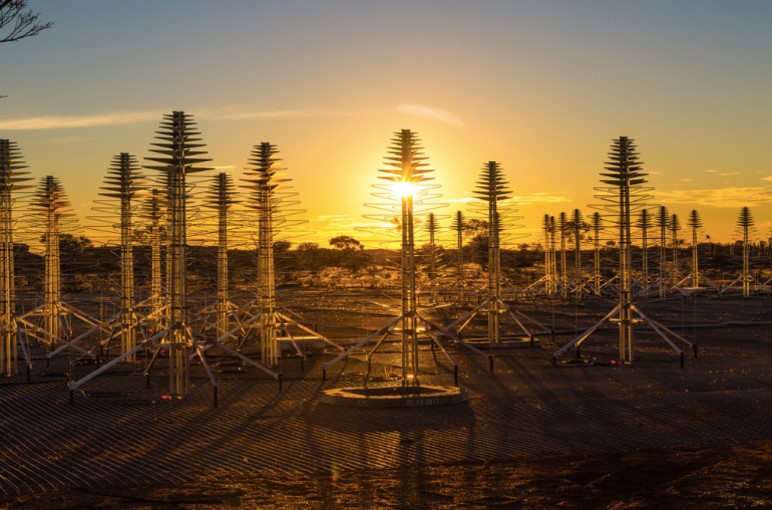


There are many more than these, but hopefully you get the point. The question is: what to do about it?

 In the Dark