Archive for National Concert Hall

Mozart and Bruckner at the National Concert Hall

Posted in Biographical, Music, Uncategorized with tags , , , , , , , on December 6, 2025 by telescoper

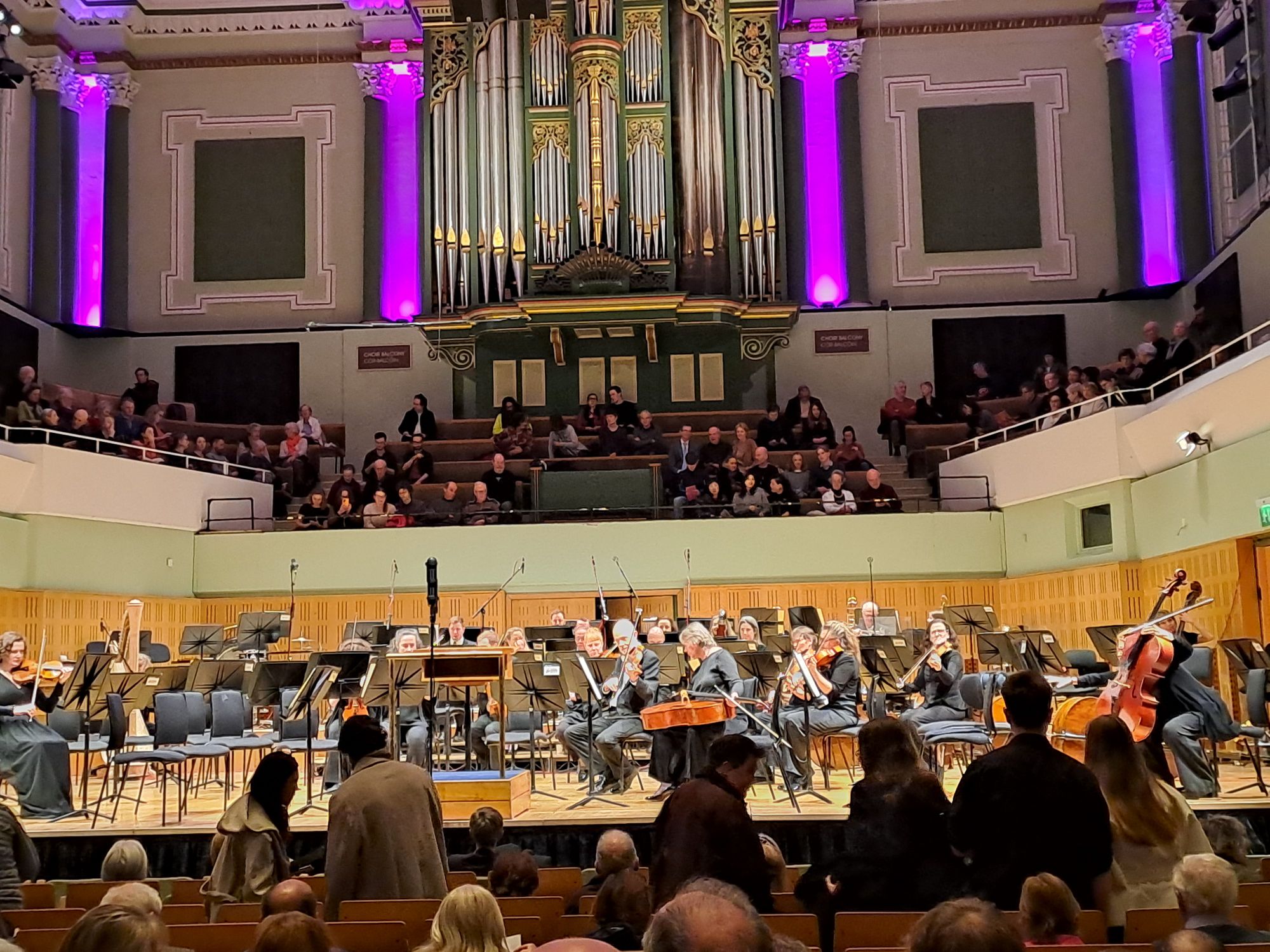
I was worried I might have to miss last night’s concert by National Symphony Orchestra Ireland conducted by Anja Bihlmaier at the National Concert Hall. I bought the ticket some weeks ago and was looking forward to it, but I had been a bit unwell earlier in the week and didn’t want to go only to cough all the way through, possibly infecting others on the way. By Friday afternoon, however, I felt a lot better and took the decision to go for it. I’m very glad I did because I enjoyed the music enormously and didn’t cough or sneeze once!

There were only two items on the menu, another pairing of Mozart and Bruckner.

In the first half we heard the Piano Concerto No. 15 by Wolfgang Amadeus Mozart played by Boris Giltberg. This piece was written in 1784 when the composer had reached the ripe old age of 28. It’s an enjoyable and entertaining piece, not perhaps as profound as some of the later piano concertos (Mozart wrote 27 altogether), but well worth listening to. It’s also regarded as one of the most difficult to play, though Boris Giltberg made it look easy enough and was clearly enjoying himself while he played it as I’m sure did the composer when he performed it for the first time in Vienna. The three movements follow a standard fast-slow-fast pattern; the last being a sprightly Rondo, part of which features in the soundtrack of an episode of Inspector Morse: Who Killed Harry Field?

After generous applause, Giltberg returned to the stage to play a very solo encore piece. I didn’t recognize it, but someone I know who was there told me it was by Robert Schumann but didn’t know the name. When I got home I spent a good half-hour going through recordings until I finally identified it as the Arabeske in C Major. Anyway, it was a very nice way to send us into the wine break.

After the interval we had Anton Bruckner‘s monumental Symphony No. 9, which was unfinished at Bruckner’s death in 1896. Insufficient material was recovered after the composer’s death to enable a reconstruction of the missing 4th movement, so this work is generally performed in its incomplete state with only three movements. Even so, it’s an immense work in both length and ambition, lasting over an hour in performance and calling for a large orchestra.

The majestic first movement (marked FeierlichMisterioso; solemn & mysterious) with its soaring themes and thunderous climaxes always puts me in mind of a mountaineering expedition, with wonderful vistas to experience but with danger lurking at every step. At times it’s rapturously beautiful, at times terrifying. It’s not actually about mountaineering, of course – Bruckner meant this symphony to be an expression of his religious faith, which, in the latter years of his life must have been pretty shaky if the music is anything to go by.

The second movement (Scherzo) is all juddering rhythms, jagged themes and harsh dissonances reminiscent (to me) of Shostakovich. It alternates between menacing, playful and cryptic; the frenzied animation of central Trio section is especially disconcerting.

The last movement  (Adagio)  begins restlessly, with an unaccompanied violin theme and then becomes more obviously religious in character in various passages of hymn-like quality, still punctuated by stark crescendi. In this movement Bruckner doffs his cap in the direction of Richard Wagner,  especially when the four Wagner tubas appear, and the movement reaches yet another climax with the brass bellowing out the initial violin theme. This dies away and the movement comes to an unresolved, poignant conclusion. With a long pause in silence as if to say “that’s all he wrote”, the concert came to an end.

Although I’ve loved this work for many years I’ve only ever heard it once before in concert.  The live performance definitely adds other dimensions you will miss on a recording and I enjoyed it enormously. For one thing you can see how hard the musicians – especially the cellos and basses – have to work. The sight of a large symphony orchestra working together to produce amazing sounds is quite something.

The National Symphony Orchestra Ireland may not be the Berlin Philharmonic but I was generally very impressed, there was split note in the brass section near the end, but this was a minor blemish. The performance was very warmly received by the audience. The NCH wasn’t full, but it was quite a good attendance.

That’s not quite the end of my concert-going for 2025. I’m off to Messiah next week. Well, you have to, don’t you? It’s Christmas..

Ravel, Dessner and Beethoven at the National Concert Hall

Posted in Music with tags , , , , , , , , , on November 8, 2025 by telescoper

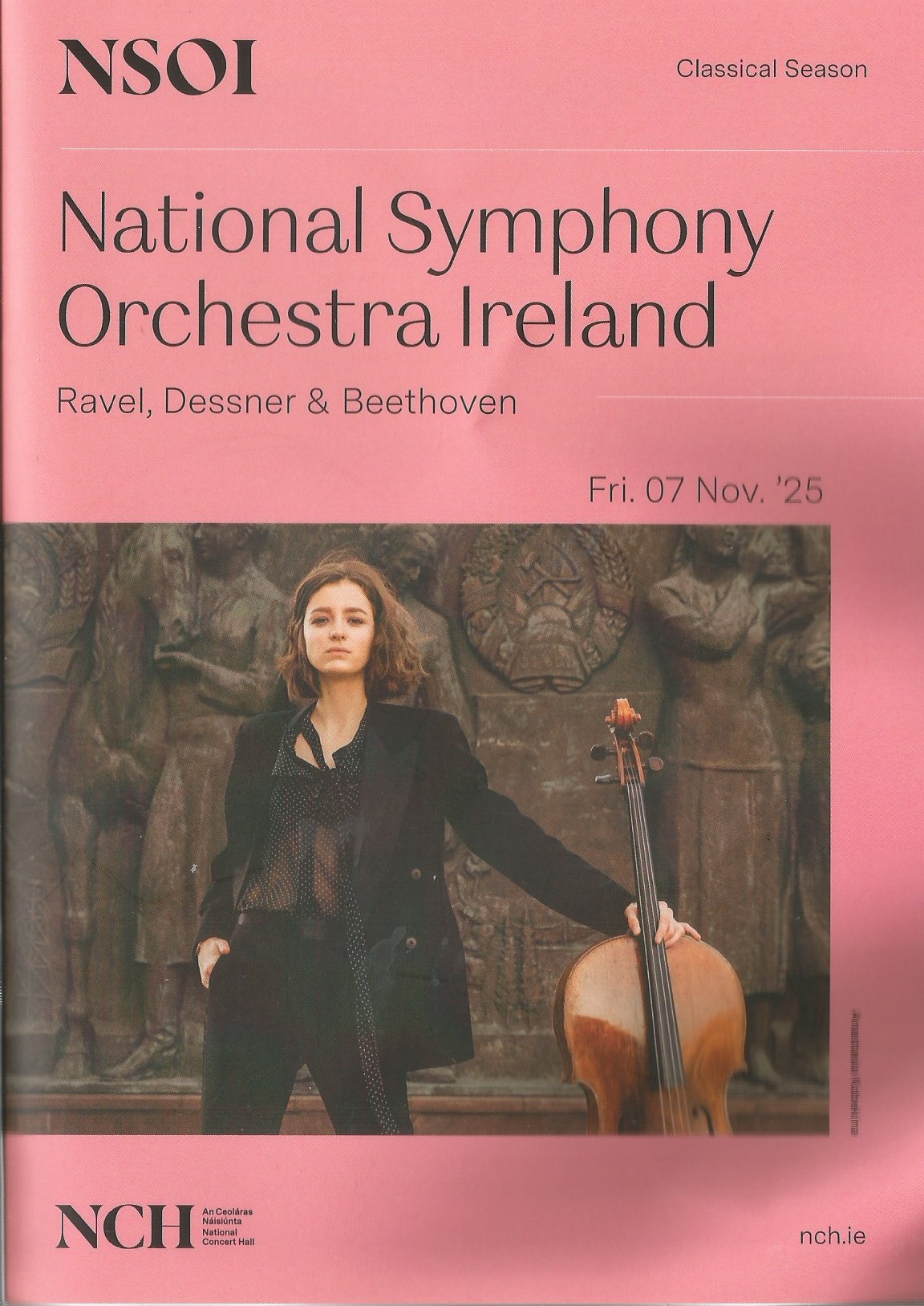
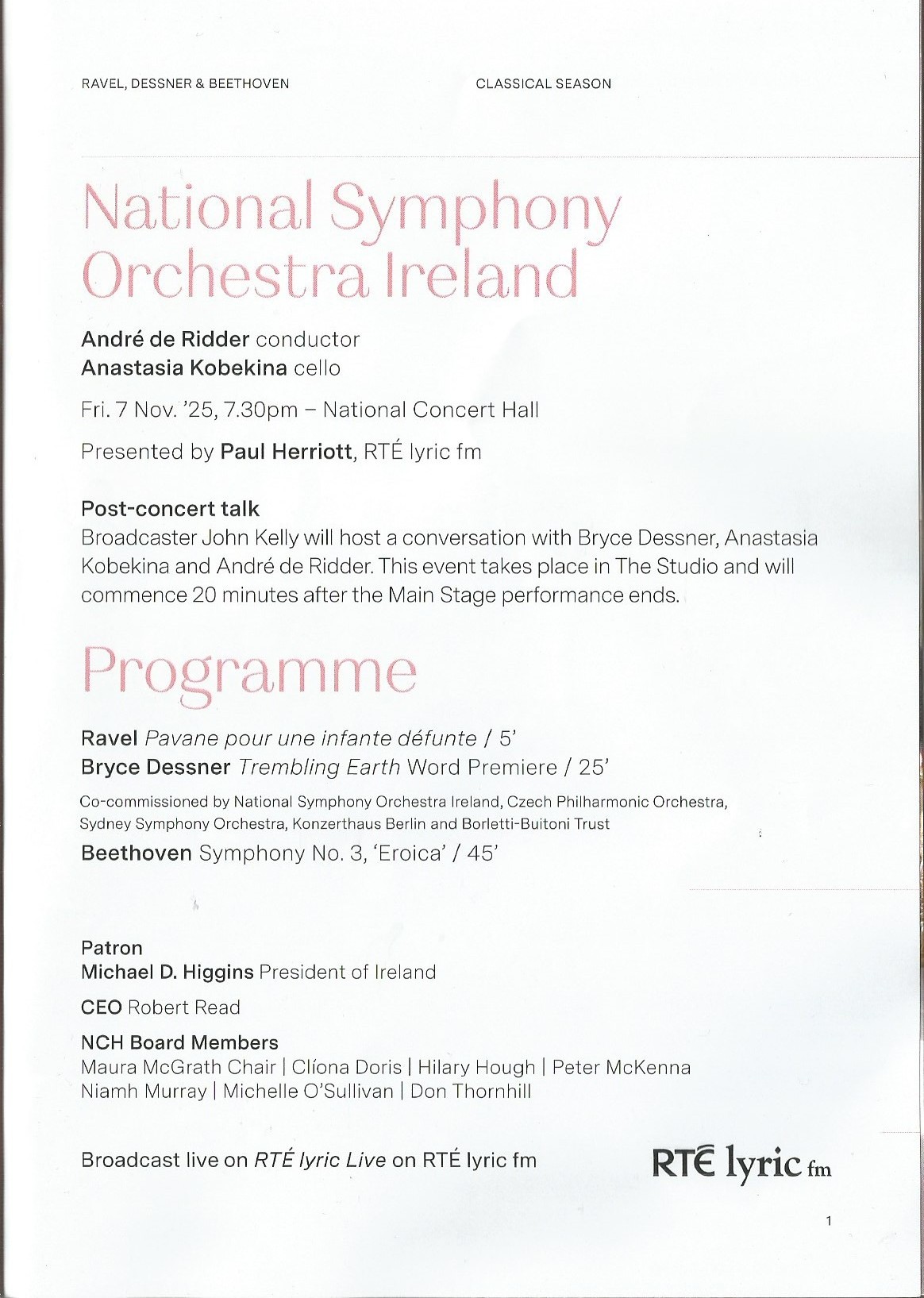
Yesterday evening I made my way through a rather rainy Dublin to the National Concert Hall for a very enjoyable concert by the National Symphony Orchestra Ireland conducted this time by André de Ridder. Incidentally, the Orchestra has been searching for a new Principal Conductor for some time and as now made an appointment in the form of Alexander Shelley, but he won’t take up the baton until September 2026 so until then there will continue to be a number of guest conductors and, it has to be said, a rather piecemeal programme.

Last night’s performance followed a very typical programme for a concert of classical music: a short piece as an appetiser (often an overture or similar), an instrumental concerto featuring a guest soloist, then a wine break, followed by a full symphony or some other large work. They don’t all follow that format, but many do. I always like it when at least one of the pieces is something I’ve never heard before. That was the case last night.

We started with the orchestral version of Pavane pour une infante défunte, played very well but, as always seems to be the case, rather too slowly for my tastes. That particular piece was on the menu at NCH in March this year and I made the same complaint then. I like the piece a lot, but I wish orchestras wouldn’t take it at a funeral pace!

Next one up was the world premiere of a brand new composition by Bryce Dessner called Trembling Earth. This is a cello concerto and it was written for Russian cellist Anastasia Kobekina. One never knows what to expect from a world premiere but this turned out to tremendous. It’s not a cello concerto of the traditional style – divided into movements – but is in a series of sections, with the cello introducing each theme which is then taken up by the orchestra followed by another, and so on. The texture varies from tough and sinewy to soft and lyrical and the solo passages require great virtuosity, some thing Anastasia Kobekina definitely has.

The composition was apparently inspired by a set of landscapes by Norwegian artist Edvard Munch, so I suppose each section might relate to a particular painting. The sections are very varied, with one based on the theme of Dido’s Lament (When I am laid in Earth...) by Henry Purcell, another with very distinct echoes of Ravel, and another showing more than a nod to Philip Glass in its ostinato sections. At the end of the piece, which is about 25 minutes long, there were immediate cheers and a standing ovation, and the composer came on stage to receive the accolades. “Prediction is very difficult”, said Niels Bohr, “especially about the future”, but I think this work will quickly establish itself in the repertoire. I’d love to hear it again.

The concert would have been worth it just for that one piece, but after the interval we came back for the main course, The Symphony No. 3 in E♭ major (“Eroica”)  Ludwig van Beethoven. I’ve blogged about a number of different performances of different Beethoven symphonies over the years, so I’m quite surprised to discover that I’ve never written about this one. It’s hard to know what to say about it really,, except that it’s a magnificent work in its own right as well as being historically important. Before this one, which was published in 1806, symphonies (including not only Beethoven’s First and Second, but those of Mozart, Haydn and others) were much shorter (typically around 20 minutes) and much more constrained in form. This composition – which shares some elements with Mozart’s Symphony No. 39 and was apparently inspired by it – ushered in the era of the epic symphony that culminated with the likes of Mahler and Bruckner. The duration performance we heard last night was about 45 minutes. The first movement, in sonata form, is especially complex.

An interesting point about last night’s performance was the arrangement of the orchestra on stage. From the point of view of the Conductor, the first violins were on the far left (as usual), the cellos and basses were to the front and left, violas to the front and right, and second violins on the far right. I am not sure of the reason for this departure from tradition – second violins are usually adjacent to the firsts, with the cellos and basses on the right – but it was interesting how different it sounded compared to the usual layout.

This superb concert provided a great finish to a very tiring week. Thanks to the NCH for putting on such a wonderful programme. As an added bonus, the rain had stopped by the time it was over so I didn’t get drenched on my way home.

McTee, Mozart & Strauss at the National Concert Hall

Posted in Music with tags , , , , , , , , on September 13, 2025 by telescoper

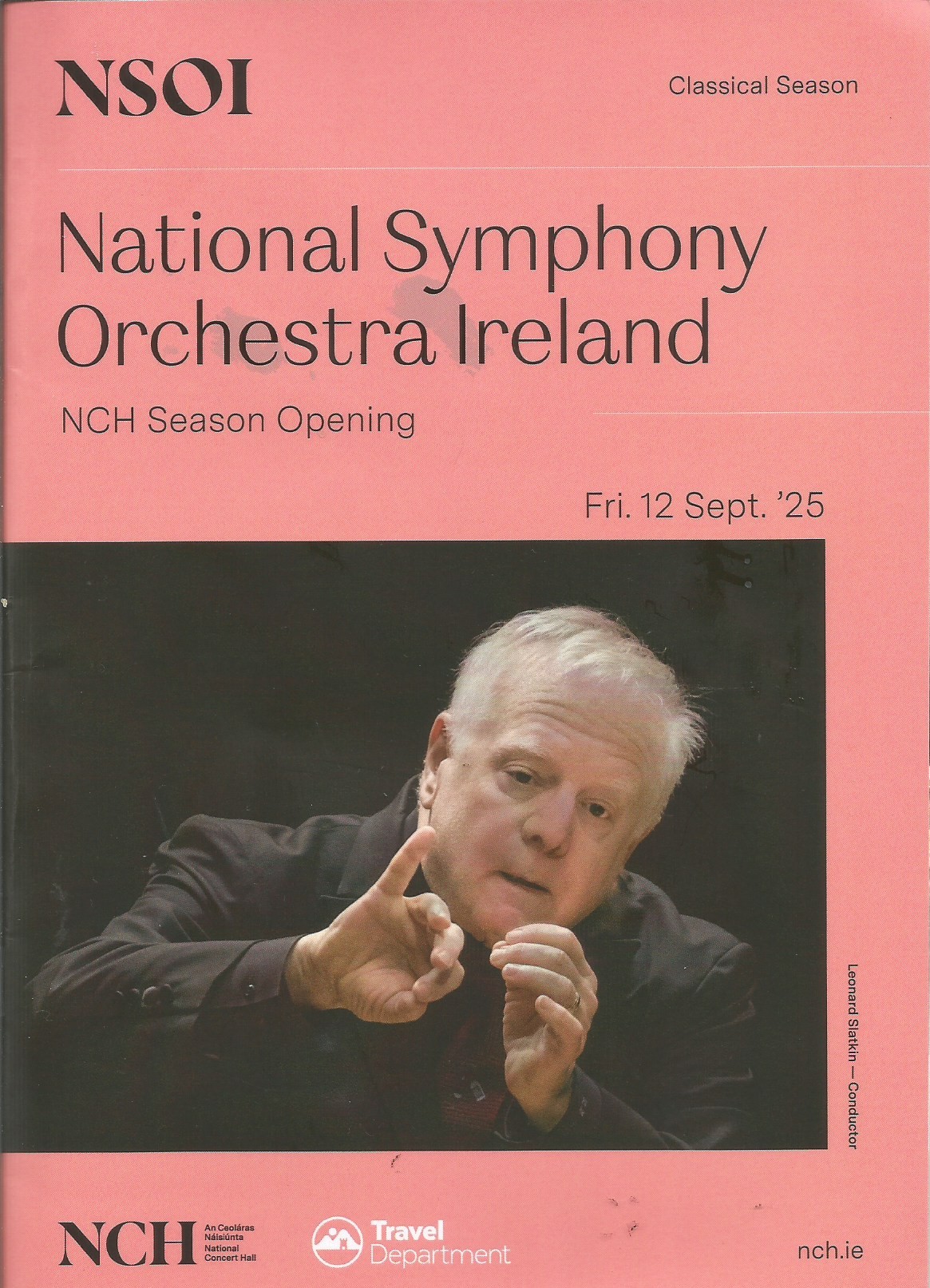
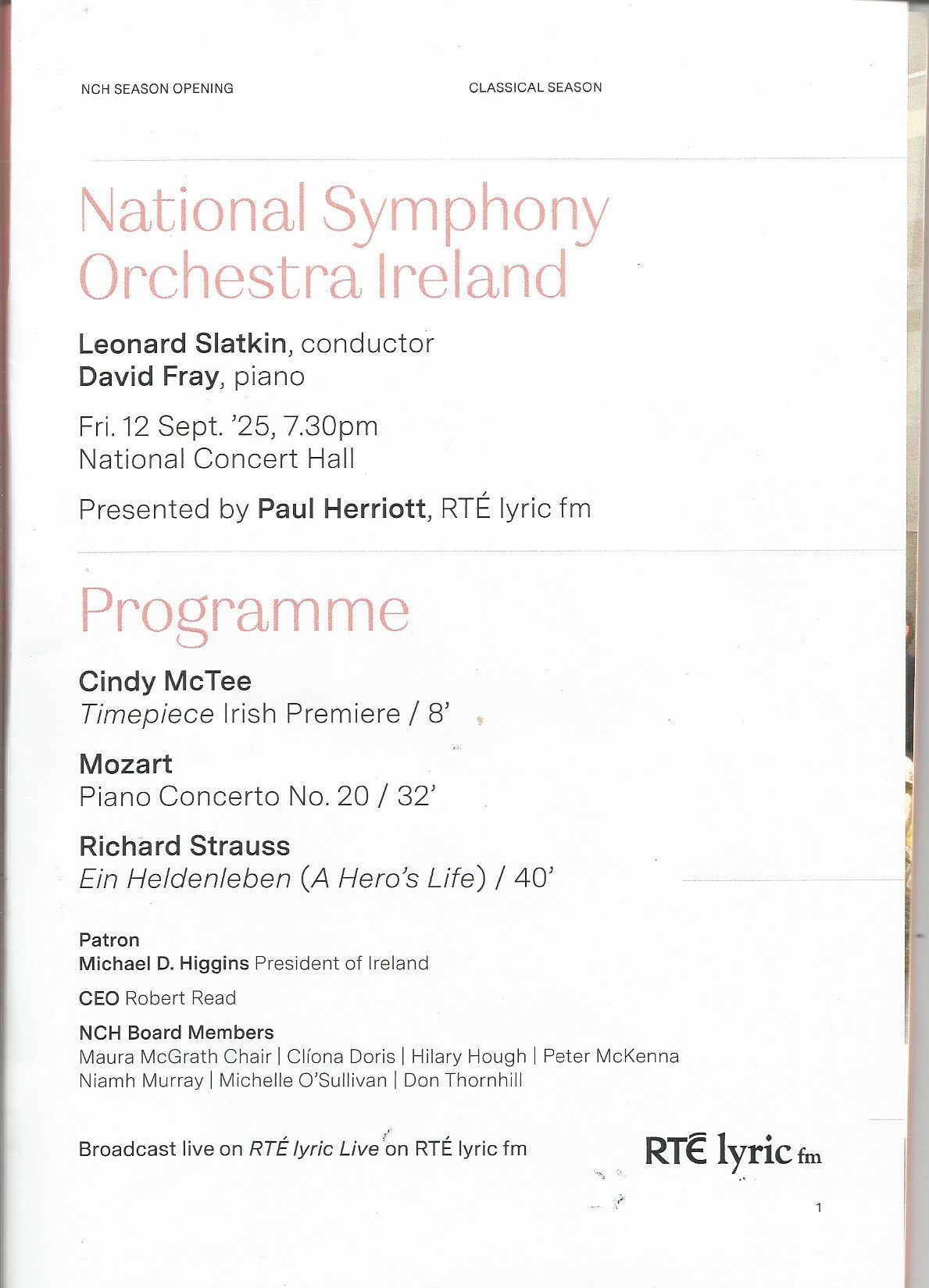
As it was foretold, last night I went to the National Concert Hall in Dublin for the opening performance of the new season by the National Symphony Orchestra Ireland, this time under the baton of veteran conductor Leonard Slatkin.

The appetiser for this concert was Timepiece by American composer Cindy Mctee. It’s a short piece, quite new to me before last night, with a slowish introduction leading into a very energetic main body of the work. This piece brought out some fine playing by the orchestra, especially the percussion section. You can read more about this intriguing and enjoyable composition in the composer’s own words here. She was in the audience last night, and came up on stage at the end of the performance to receive the plaudits.

Next we had a very familiar piece: the Piano Concerto No. 20 in D Minor by Wolfgang Amadeus Mozart, with David Fray at the piano. Mozart apparently composed this in a rush to meet the deadline of its first performance, but it doesn’t seem that way. The three movements (marked Allegro, Romanza and Allegro Assai) are very different in mood: the first (which is quite long) is brooding and rather Sturmy and Drangy, while the second is much gentler; both these movements feature memorable tunes; the third is much more pyrotechnical, with a very propulsive start and some virtuosic cadenzas. I think the last was played the best. David Fray is a curious performer to watch: he sat in the same sort of chair as the members of the orchestra – one with a back – rather than the usual stool, and had a very unusual posture. He slouched, in fact; he often turned round to look at the musicians behind him too. Anyway, he played very well indeed and for an encore he gave us some Bach (a solo piano arrangement of Air on the G String), which was lovely.

After the wine break we came back for a performance of Ein Heldenleben (“A Hero’s Life”) by Richard Strauss. I had never heard this piece in full before last night, and I have to say I didn’t like it much. There are some very nice passages in it, and there was some excellent playing by the brass and solo violin by NSOI leader Elaine Clark, but overall I found it a rather aimless reworking of some of Strauss’s other tone poems (some of which are actually very good). It’s also far too long for what it has to say.

The “Hero” of the title is of course meant to be the composer himself, which says something of the high regard in which Strauss held himself. At times the piece is tediously bombastic. The composer was 34 when he wrote this piece; about the same age that Mozart was when he died. I don’t think had he lived the latter would have written a self-indulgent piece like this crowing about his own achievements, which were far greater than those of the former.

Still, at least I can now say I’ve heard Ein Heldenleben

P.S. For those of you wondering: no, the President of Ireland did not attend this concert.

Season Finale at the National Concert Hall

Posted in Biographical, Music with tags , , , , on May 31, 2025 by telescoper

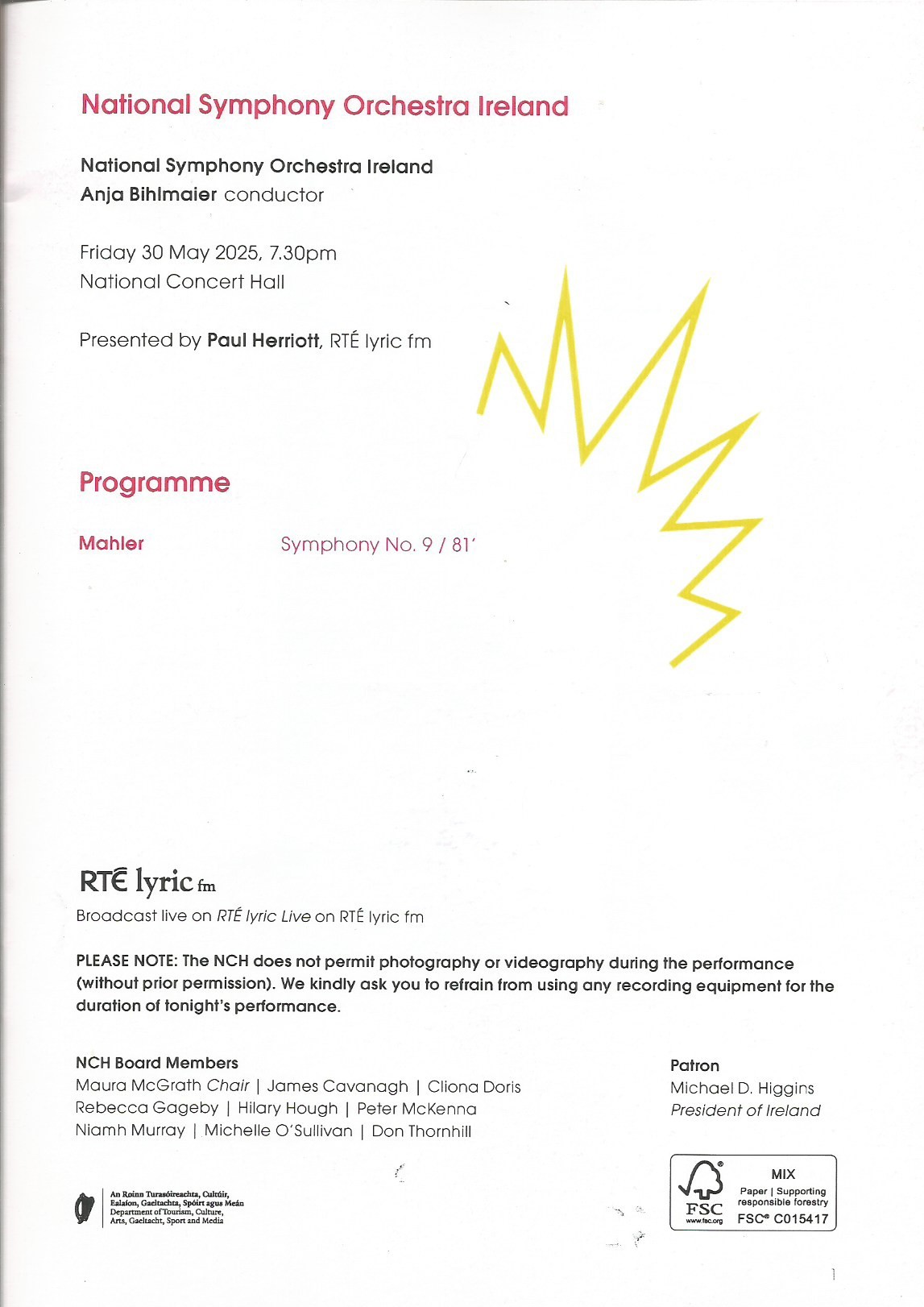
It was very nice to be able to put the marking of examinations behind me and travel into Dublin last night for the final concert of the season at the National Concert Hall in Dublin. It seems the former NSO is now to be called the NSOI, the National Symphony Orchestra Ireland, no doubt for some sort of corporate branding reason. Anyway, last night they were under the direction of guest conductor Anja Bihlmaier for a performance of the Symphony No. 9 by Gustav Mahler.

Looking back through my previous posts about Mahler I see that I haven’t previously written anything about his 9th Symphony. I am pretty sure that last night was the first time I’ve heard it live, although I have it on CD. Mahler wrote it between 1908 and 1909, immediately after finishing Das Lied von der Erde which is a symphony in all but name and which should really be his 9th. He was a very superstitious man, however, and he was worried about the Curse of the 9th, so it wasn’t given a number. After the acual 9th Symphony he went on to compose another, his 10th (though really the 11th), though he didn’t quite finish it before his death in 1911. I hope this clarifies the situation.

The 9th Symphony is a substantial piece last about 80 minutes in performance. That’s far from his longest, but it does justify it being performed on its own. The structure is unusual, with two very long slow movements either side of a pair of shorter movements, a scherzo and a rondo. The former is constructed from dance-like segments, and much of it is in 3/4 time; it reminded me a little of Ravel’s La Valse, which starts out like a standard waltz but disintegrates into a nightmarish parody of that form. The rondo described as “Rondo-Burleske” is very fragmented, grotesque and at times raucous, and also very modern-sounding. It has been described as “ferocious outburst of fiendish laughter at the futility of everything”. I think the final adagio movement is the best, and it brought out the best of the NSOI. The long sweeping passages played by only the strings, with the cellos and double-basses providing deep foundations to Mahler’s sumptuously textured harmonies. Absolutely gorgeous.

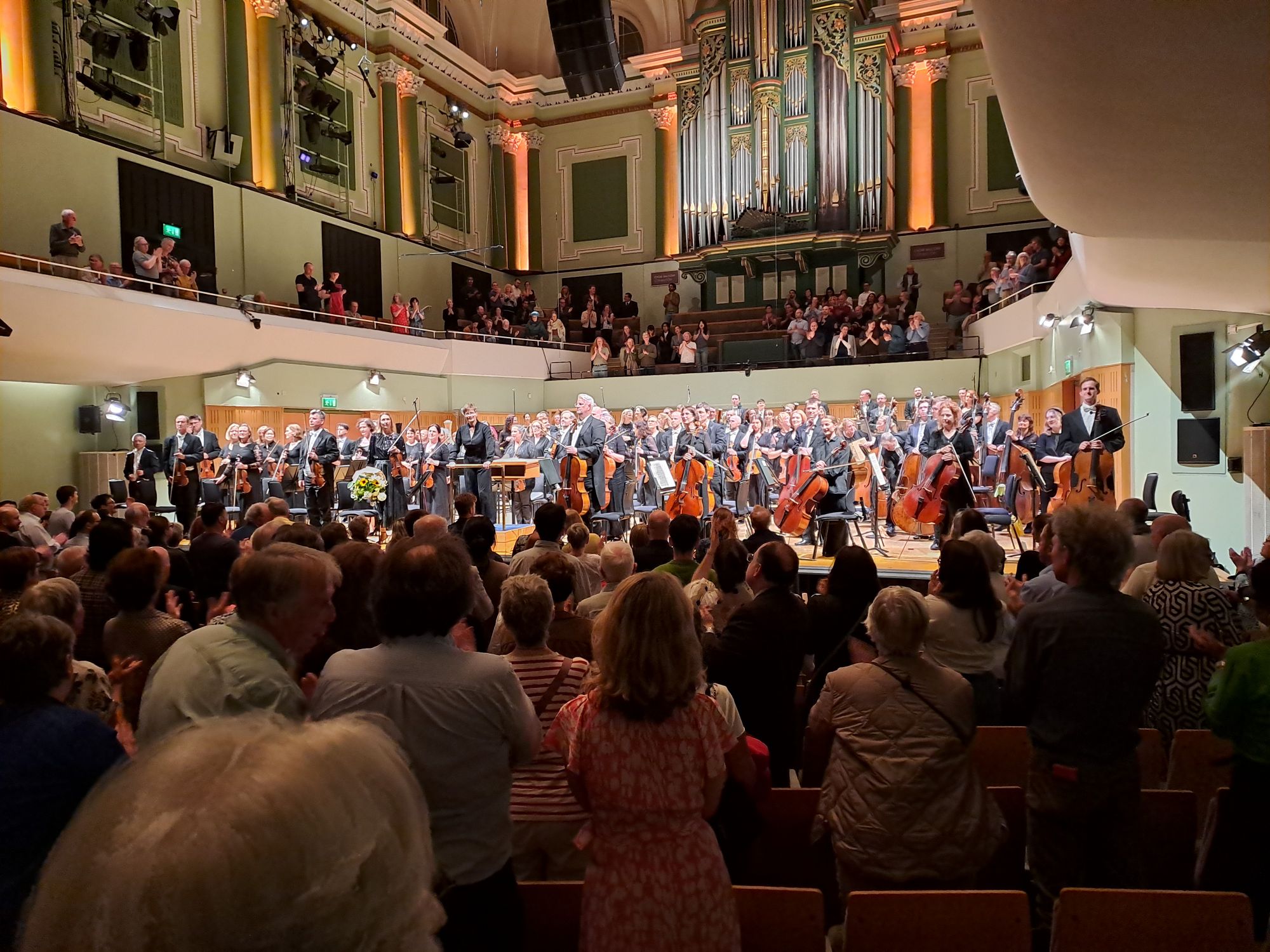
The Symphony ends very quietly indeed. Anja Bihlmaier kept her baton in hand for quite a long time before putting it down and letting the applause start. A little silence at the end of a piece of music is a very good thing: it allows the members of the audience a brief moment to reflect on what they have heard. It irks me when people starting clapping and shouting before the sound has even died away.

Anyway, when it was over, the applause was tumultuous. I’ve already mentioned the string sections, but ll the members of the NSOI contributed with outstanding contributions from the woodwinds and brass too.

There being only one item on the menu there was no wine break, but not having an interval meant that I had time to have a drink at the end before heading back to Pearse station to get the train back to Maynooth. In the old days the NCH used to treat the audience to a free prosecco after the season finale, but not any more. I had to buy my own.

Well, this season may be over, but the booklet for next season is already out. I had a look through it on the train home. I plan to resume my Friday-night concert-going at the NCH in September, but there will be more music before then.

Shostakovich 50 at the National Concert Hall

Posted in Uncategorized with tags , , , , , , , , on May 10, 2025 by telescoper

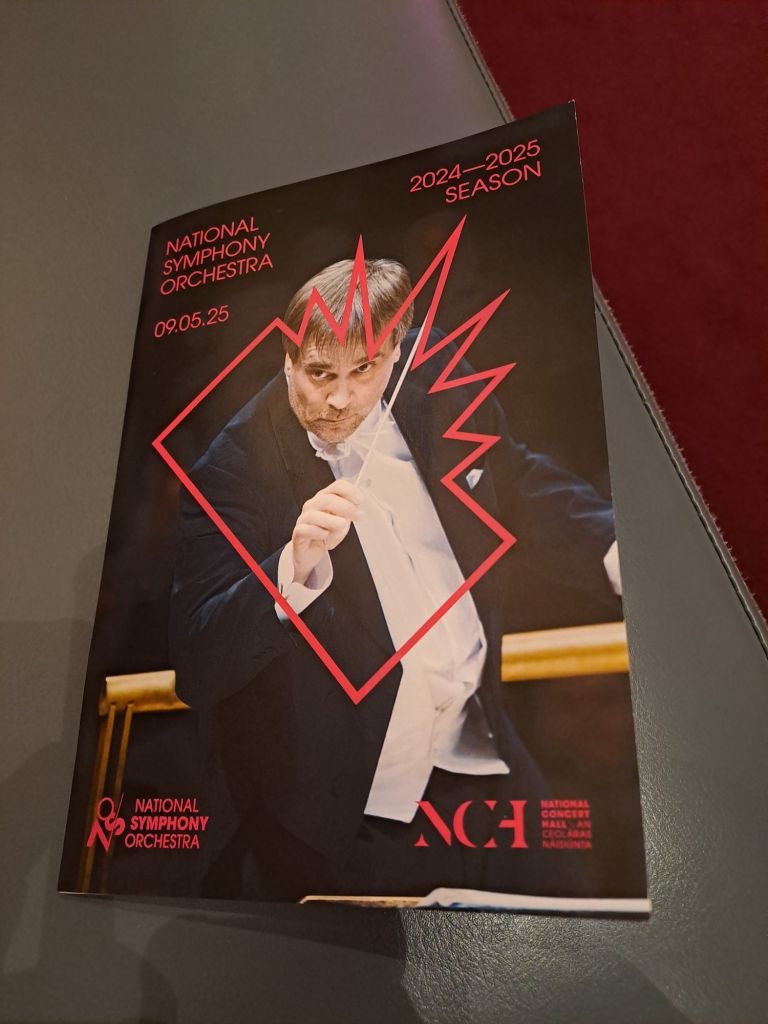
Last night’s concert at the National Concert Hall in Dublin was billed Shostakovich 50 because 2025 marks the 50th anniversity of the death in 1975 of Dmitri Shostakovich, whose First Symphony was performed after the interval, by the National Symphony Orchestra under the direction of guest conductor John Storgårds. As you can see, though, the programme was quite varied and no fewer than three other composers were represented.

The first piece was The Oceanides, tone poem by Jean Sibelius intended to evoke the sea nymphs of Greek mythology. It’s quite a short piece – only eleven minutes in performance – but full of movement, suggesting the ebb-and-flow of the sea and its different moods, from tranquil to stormy. Its place on the programme made it a good workout for the orchestra and a wonderful starter to whet their appetite of the audience for the rest of the menu.

After that appetizer we had a performance of the Rhapsody on a Theme by Paganini by Sergei Rachmaninov with soloist Yukine Kuroki at the piano. This piece comprises a set of 24 variations on a them from one of Paganini’s caprices for solo violin. The Rhapsody on a theme of Paganini is piece full of contrasts: sometimes pyrotechnical, sometimes lyrical. My favourite section is the 18th variation, in which a lovely romantic melody emerges and is picked up by the whole orchestra in a manner that’s very characteristic of Rachmaninov. This tune is just an inversion of the theme transposed into a different  key and slowed down.

The Rachmaninov alone was worth the cost of the ticket. I was amazed how pianist Yukine Kuroki coped with the technical challenges of this work but also how she managed to generate so much power for a person of such slight build. Rachmaninov himself was quite a large man who had hands like shovels, so his work often places difficult demands on a soloist. Not last night, though, as Yukine Kuroki not only played with great accomplishment but also clearly enjoyed herself. In the passages during which the piano was not playing she was bouncing up and down and tapping her feet waiting for her cue. It was lovely to watch as well as to listen to. I’ll also mention that she was wearing a gorgeous one-shoulder dress with a vivid red colour.

After the wine break interval we returned for a piece that was new to me, the Symphony No. 3 ‘White Interment’ by Ukrainian composer Victoria Vita Polyova. This is described a symphony, but it doesn’t have the traditional structure in terms of movements. It has instead a rather static structure, consisting of thematic blocks based on a poem Now always snows. It’s a sombre and rather minimalist piece, with little of the development you would expect from a true symphony, but the sound world it creates is layered in interesting ways. I enjoyed the performance.

And finally we have the Symphony No. 1 by Dmitri Shostakovich which I don’t think I had heard in concert before. The most astonishing thing about this work was that he wrote it as a graduation piece for the St Petersburg Conservatory. Its first performance was in 1926, when the composer was only 19. It is a substanial work over four movements (the last two played without interruption) and there are passages within it in which you can see that he had already found much of the distinct voice that he used in his later compositions. This piece isn’t really reminiscent of any other composers, either.

The performance was excellent, with particularly strong work by the woodwinds and brass. It was very well received by the NCH audience which is always very generous with its applause.

After the Lectures

Posted in Biographical, Education, Maynooth, Music with tags , , on May 9, 2025 by telescoper

Today has been such a busy day that I’ve only got time for a quick post. This morning was spent preparing and delivering a revision lecture, and this afternoon preparing and delivering a Departmental Colloquium.  That done I headed straight for the railway station to get the train into Dublin and thence by foot to the National Concert Hall.

So here I am, sipping a glass of nicely chilled white wine as I wait for tonight’s performance. I’ll post a review tomorrow but, until then, Cheers!

Debussy, McNeff & Rachmaninov at the NCH

Posted in Uncategorized with tags , , , , , , , , on February 1, 2025 by telescoper

Last night was my first trip of the year to the National Concert Hall in Dublin. I had planned to go on 17th January but by the time I got around to buying a ticket it was sold out. Fortunately, it was broadcast live on the radio and is still available on the RTÉ Player. I had a ticket for last Friday’s concert but bottled out of going because of transport worries about Storm Éowyn. That concert went ahead, apparently, but wasn’t broadcast so I missed it. Last night was third time lucky, and I’m very glad I got there!

The conductor of the National Symphony Orchestra for last night’s performance was Columbian-born Lina González-Granados in what I believe to have been her first appearance with the NSO. I certainly hope she comes back as she was very good indeed. I think the members of the orchestra enjoyed themselves as much as the audience!

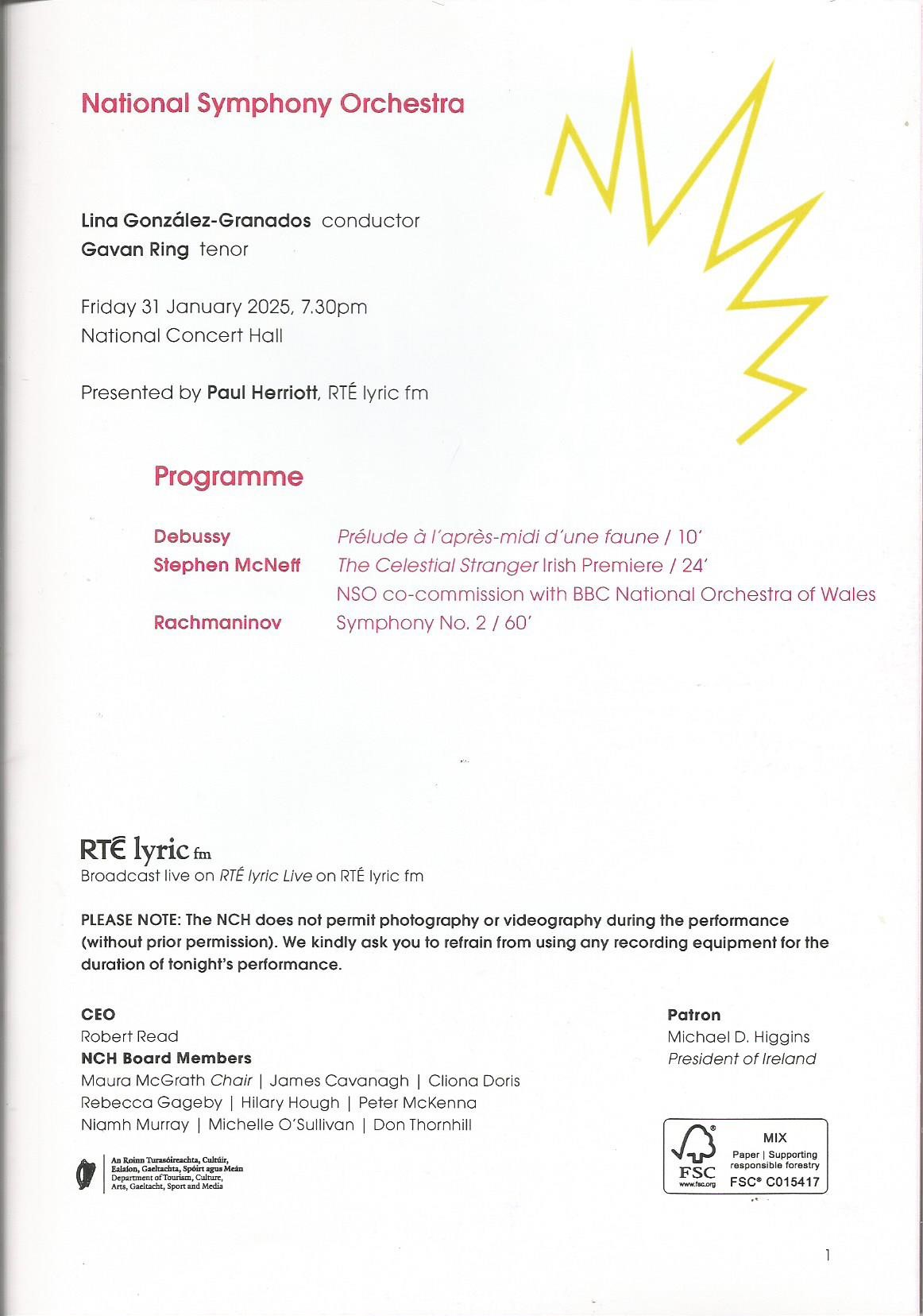
As you can see from the programme, the concert opened with a very familiar piece, Prélude à l’après-midi d’un faune by Claude Debussy, which was performed with all the shimmering sensuality it demands. Some very lush playing by the strings on this one, and lovely work by the woodwinds made it sound very fresh although I’ve heard it many times.

After that tenor Gavan Ring joined the orchestra to perform the Irish Premiere of The Celestial Stranger, a song cycle composed by Belfast born composer Stephen McNeff. This consists of settings of five poems, two by Thomas Traherne (including the one that gives its name to the collection, a remarkable work that I will post in its entirety later on). The next poem is by Walt Whitman and is titled As The Time Draws Nigh in the programme, but is not the well-known Whitman poem of that title but seems to have been adapted from various texts, including Years of the Modern. After that is a famous poem by Dylan Thomas, The hand that signed the paper and the cycle concludes with an adaptation of Farewell to Thee, written by Liliʻuokalani (former monarch of Hawaii). It’s a varied collection but there is a narrative behind the choice: a visitor from outerspace (the Celestial Stranger) arrives on Earth and reacts joyfully to begin with. As time goes on, however, he finds out more about war and and death and finally takes his leave.

The music is as varied as the choice of verse. I felt some influence of Britten in the first piece, but the rest is very different. Gavan Ring was in fine voice and the orchestra responded very well to the very different demands of this work compared to the first.

After the interval it was time for the main course of the evening, Rachmaninov’s Second Symphony. It’s a remarkable work because it’s not only a “proper” symphony in its construction and development but also the best part of an hour of one glorious melody after another. It’s a gorgeous work altogether, but the third movement (Adagio) is especially beautiful. I love the way Rachmaninov starts this movement one of his big romantic tunes, but then hides it while passages develop through a solo  clarinet and strings. You know the tune is coming back though, and when it does the emotional impact brought the audience to a collective swoon. This is romantic music in all senses of the word, just the ticket for a cole January evening. It was a very fine performance, not least because you could see how much both conductor and orchestra were enjoying themselves. Hats off to Lina González-Granados who had just the right balance of control and expressiveness. She look quite exhauasted at the end, actually. She had worked hard to earn her standing ovation.

Mozart & Bruckner at the National Concert Hall

Posted in Music with tags , , , , , , on December 7, 2024 by telescoper

It was a dark and stormy night but I braved the inclement weather to travel to the National Concert Hall in Dublin for what will be my last concert of 2024. It look like being a nearly full house when I booked my ticket, but in the end there were quite a few empty seats perhaps because various groups decided not to make a journey owing to Storm Darragh. My own travels went without a hitch and in fact I even managed to walk from Connolly to the NCH before the performance and back to Pearse after it without getting rained on.

Anyway, there were two items on the menu: Violin Concerto No. 5 in A Major by Wolfgang Amadeus Mozart, with soloist Stefan Jackiw, and the Symphony No. 7 in E Major by Anton Bruckner. The National Symphony Orchestra was conducted by Hans Graf.

Mozart wrote at least five violin concertos, and he was at most 20 when he wrote the last of the five that are known. During last night’s performance I was thinking a lot about all I had failed to achieve by the age of twenty! Influenced by his father Leopold, the violin was Mozart’s first instrument, but he later moved on and preferred to play keyboard instruments. Perhaps he wanted to escape from his father’s domination, which might explain why he didn’t write any more pieces for solo violin in the rest of his (short) life.

The 5th Violin Concerto is sometimes called “The Turkish” though there isn’t much of a Turkish influence in the music. Whatever the name, it is a very enjoyable piece in three movements, played quite beautifully last night by Stefan Jackiw and by the pared-down NSO. The soloist got a very warm ovation and responded with a solo encore in the form of a largo movement from a Bach violin sonata.

After the wine break we returned to find the stage much fuller with a large brass section and extra strings added to the smaller forces required for the Mozart. Bruckner’s Seventh Symphony is a huge and varied work lasting over an hour in performance. The radiant first movement, with its noble melody soaring over shimmering violin tremolos is very reminiscent of Wagner, as is much of the rest of the Symphony (especially in terms of the orchestration). Bruckner famously idolized Wagner and this composition is at least partly a tribute to his musical hero. It is said that Bruckner had a premonition of Wagner’s death in 1883 and the cymbal crash during the second (slow) movement symbolizes the moment that he found out that his premonition had come true. That whole movement (marked Sehr feierlich und sehr langsam; very solemn and very slow) is very moving: sombre though not excessively mournful. The third movement Scherzo is marked Sehr Schnell (very fast) but I found the tempo last night vigorous, but not epecially fast. I was expecting something a bit wilder. The last movement actually sounded to me more like Mahler than Wagner, with a resounding climax.

The Seventh is probably Bruckner’s best known and most performed Symphony. It was certainly a big hit for him when it was first performed in 1884. The composer was born in 1824 and last nigtht’s concert was billed as Bruckner 200. I think the 7th was a good choice to mark the occasion and the performance, with superb playing by the brass section (including the Wagner tuben), and the orchestra very well marshalled by Hans Graf, was a fitting tribute.

My next trip to the NCH won’t be until January, but I’m already looking forward to the Leningrad Symphony after the Christmas break!

Tara Erraught at the National Concert Hall

Posted in Music with tags , , , , , , , , , , on November 2, 2024 by telescoper

Last night’s concert at the National Concert Hall featured star mezzo-soprano Tara Erraught (who is from Mullingar, in County Westmeath, and is artist-in-residence at the National Concert Hall for this season. She was accompanied by the National Symphony Orchestra directed by Laurence Cummings. You can tell how much I like Tara Erraught by the fact I went to the concert despite there being a harpsichord involved in some of the pieces; fortunately it was pointed away from the audience so we couldn’t hear it.

Before the concert, I was trying to remember when I heard her sing before. A look at my back catalogue revealed that it was this concert at which she sang a Mahler song-cycle. Last night’s performance comprised very different material, all from the 18th Century. There were three vocal pieces: a cantata in four sections by a name quite new to me, Marianna Martines, also known as Marianne von Martinez; a concert aria by Joseph Haydn; and by far the most exciting piece, Mozart’s wonderful Exsultate Jubilate. Tara Erraught was in fine voice throughout but I was particularly impressed with the precision of her articulation of the ornamented phrases in the last work. The audience loved it too.

The concert was all about Tara Erraught, however. The first half included Symphony No. 25 by Joseph Haydn, a funny little work only 13 minutes long and lacking the usual slow movement that seemed to me like it wasn’t really finished. It’s certainly not among Haydn’s best symphonies, anyway. It was a bit unfair on Haydn to have Mozart’s Symphony No. 41 “Jupiter” on the same menu as that it is one of the great symphonies by any composer. It did however demonstrate very powerfully how much the symphonic form had evolved in the twenty-odd years separating the two compositions (which incidentally are both in the same key of C Major). The Jupiter symphony is not only brim full of ideas, but the themes are woven into a much richer fabric. I might add that it was very well played by the NSO in a performance that was forceful and energetic without being too bombastic.

Puccini 100 at the National Concert Hall

Posted in Music with tags , , , , , , , , on October 26, 2024 by telescoper

Last night’s Concert at the National Concert Hall in Dublin was billed as Puccini 100 as it was primarily intended to mark the centenary of the death of Giacomo Puccini. Guest conductor Carlo Rizzi had a long association with Welsh National Opera and is well-versed in Puccini’s operatic repertoire but this concert featured a rare treasure in the form of the Messa di Gloria, a large-scale work for choir, two soloists and orchestra Puccini wrote as a graduation piece when he was still a music student in Milan. Contrary to what you might infer from the title, it’s actually a full setting of the Latin Mass. Although written when the composer was only 20, the piece was never officially published until 1952, long after Puccini’s death. He did, however, recycle some pieces from it during his career as a composer of operas, chiefly in Manon Lescaut.

Before the Messa..

Although I’m a fan of Puccini’s operas I had never heard the Messa before and didn’t really know what to expect. It was turned out to be quite a revelation. As you might have anticipated it does sound more “operatic” than you might expect of a religious work and that dramatic certainly heightens the impact of the performance. I’m told that the National Symphony Chorus worked like crazy last week in rehearsals for this concert, and it certainly showed. The choir sounded absolutely amazing. Congratulations to choral director David Young! The two soloists were Welsh tenor Gwyn Hughes Jones and South African bass-baritone Simon Shibambu, both of whom were in fine voice. I particularly enjoyed the duet between them in the final Agnus Dei that brings the piece to a surprisingly gentle conclusion.

I really enjoy concerts that feature compositions I’ve never heard before, and this was a great example of that. I’m really glad that the Messa was chosen to mark Puccini 100. I must get a recording of it…

But the Puccini was only half the concert. Before the wine break we heard a very nice orchestral overture in C Major by Fanny Mendelssohn and then the evergreen 4th Symphony (“The Italian”) written by her kid brother, Felix, as a celebration of the time he spent in Italy on a Grand Tour. It was interesting to hear the two pieces played together as there is so much in common between the styles of composition, but so many subtle differences in voice. It’s a great pity that the sexism of the day prevented Fanny Mendelssohn from fulfilling her potential as a composer.