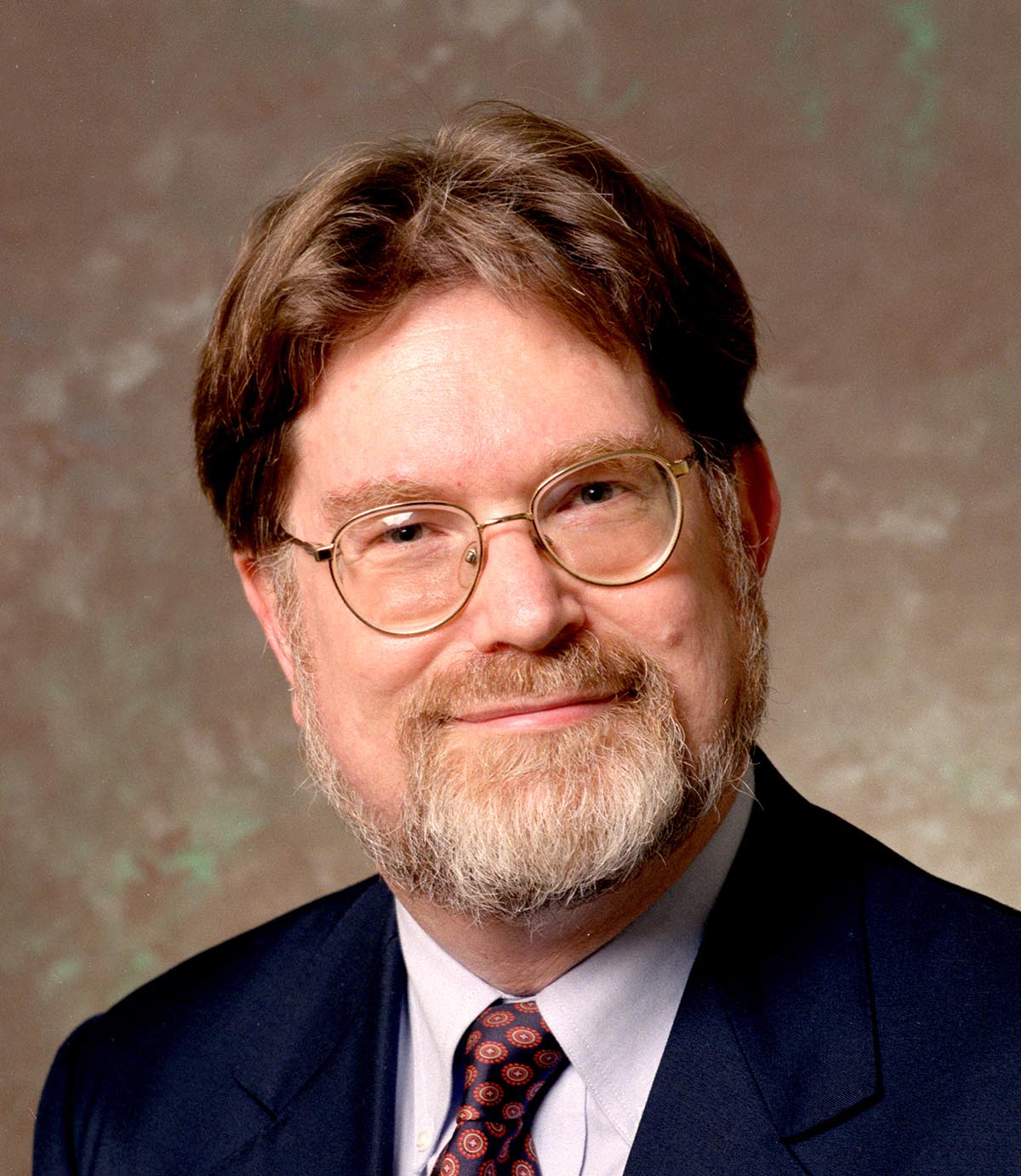
I’m very sad to have to report the death, at the age of 80, of eminent cosmologist George Smoot, who passed away at his home in Paris on 18th September. The news has been reported in France, where George had been living in recent years, but doesn’t seem to have been covered in the international media yet. I thought I would just record some personal relfections and reminiscences here, rather than try to pre-empt the official biographies.
George Smoot was an experimental astrophysicist who is best known for his research in observational cosmology, particularly on the cosmic microwave background. In 2006, jointly with John Mather, he was awarded the Nobel Prize for Physics for measurements made by the COBE satellite that, without exaggeration, ushered in a new era of cosmology. George led the paper Structure in the COBE Differential Microwave Radiometer First-Year Maps that reported the first detection of variations in temperature of the cosmic microwave background across the sky predicted by theories of cosmological structure formation.
I was fortunate enough to meet George many times over the years and to get to know him quite well. The first time was at a meeting in Durham for which this was the conference photo:
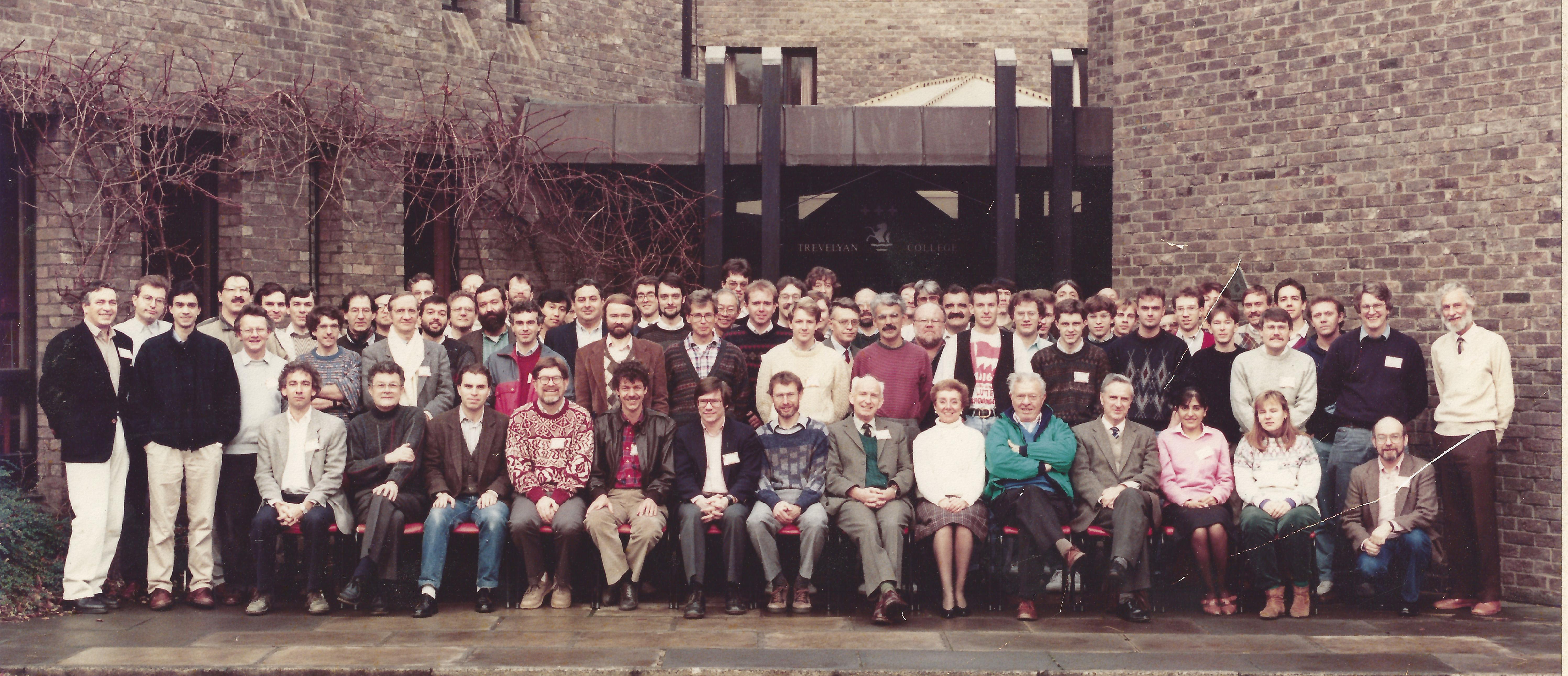
George is just to the left of centre in the front row with the red-and-white sweater.
What I remember about that meeting is that I gave a contributed talk there (a short one, because I was a mere postdoc at the time). Some time after that, George Smoot gave an invited talk during the course of which he mentioned (positively) the work I had spoken about. I was gobsmacked to have my little contribution recognized by someone so eminent, and it did wonders for my scientific self-confidence. I got the chance to have a conversation with George in person some time later at that meeting and found him very good value: he was both interesting and amusing to talk to. He was someone who took mentorship seriously, and didn’t confine it to those people he was working with directly.
Over the years I met George regularly at scientific meetings, including numerous times at the (then) Daniel Chalonge schools in Sicily and in Paris where we often chatted about science and other things over coffee breaks and dinner. I always found him hugely knowledgeable about many things, but he also had an almost child-like curiosity about things he didn’t previously know. He didn’t quite jump up and down with excitement when he learnt something interesting, but almost. He could also be very direct when disagreeing, which meant that some people found him a bit abrasive. He fell out with other members of the COBE time when he threw away the agreed protocol for the announcement of results in 1992. That caused a lot of bad feeling at the time, but it seems that by the time the Nobel Prize was awarded, some degree of reconciliation had been achieved. I was lucky enough to attend the Prize Ceremonies and at the ball afterwards chatted with both George and John Mather who seemed on very amiable terms then.
Anyway, in the early noughties George invited me to spend some time at the Lawrence Berkeley Laboratory, a visit that I enjoyed enormously. He was a very generous and thougtful host and I was looked after very well. One day at LBL he asked me if the hotel was OK. I replied that it was, but one thing I didn’t like about staying in a hotel was that I liked to cook and that was impossible in a hotel room. I thought nothing more of that conversation until the end of the day when George appeared and asked me if I wanted to “do dinner” at his house that evening. I answered in the affirmative so he drove me to his house, which was very fancy, set into the hillside overlooking Berkeley – like the sort of place I imagine a film star would live – and had a very large and well-provisioned kitchen.
It soon became clear that I’d misunderstood the invitation, in that “do dinner” didn’t mean “eat dinner” but “make dinner”. Although I was slightly taken aback I set about finding what he had in the refrigerator and on the shelves. There being a plentiful supply of spices, I decided to make a tandoori-style dish of chicken baked with yoghurt, with a couple of side dishes, none of which took long to cook. When everything was getting ready I wanted to add some lemon juice but couldn’t find any lemons in the fridge. I asked George if he had any lemons, at which point he showed me into the garden where he had several lemon trees in full fruit. I’ve never lived anywhere that this would be possible! I think he enjoyed the dinner because he paid me back a few days later with a dinner at Chez Panisse. He was quite the bon viveur.
(After that short visit, I was planning to spend a sabbatical year in Berkeley in 2005, but the United States Embassy in London put paid to that idea and I went to CITA in Toronto instead.)
The last encounters I had with George were online; he was in the audience when I gave talks in the Chalonge-de Vega series organized by Norma Sanchez in 2021 (here and here). I think he had already moved to Paris by that time. The first of these talks was about open access publishing in astrophysics; George subsequently co-authored a paper in the Open Journal of Astrophysics.
My favourite quote from George came during a discussion we had at Berkeley when I suggested that some methods used for studying the cosmic microwave background could be applied to the distribution of galaxies. His response was “Galaxies are shit”. To avoid offending my friends who work on galaxies, what he meant by that was that he thought galaxies were too messy for any statistical measurements to sufficiently reliable to compete with the CMB. I think he would have preferred a universe in which all galaxies were identical, like electrons.
I’m sure many others will have their own personal reflections on their interactions with George Smoot, but he also had a huge influence on many people who never met him personally, through his enormous contributions to astrophysics and cosmology. We will no doubt read many professionally-written official obituaries in days to come, but all I can say in a personal blog post is that he was a character, a very original thinker, a fine scientist, and a very nice man. Along with many others, I will miss him enormously.
Rest in Peace, George Fitzgerald Smoot III (1945-2025) .
Update: Here is an `In Memoriam’ piece from from the Berkeley Lab.

 In the Dark