The only things left to do now are (a) to train the members of the Editorial Board on how to handle the workflow through the journal site and (b) to open up for submission of new papers. Both these steps should be trivial so we’re definitely entering the final stages of this project. There is an event at Maynooth University Library next Tuesday afternoon at which I am doing a talk about Open Science. This will represent the official launch of the Open Journal of Astrophysics.
All we will need then is for people to submit some papers!
Those of you who have been following my recent updates on progress with The Open Journal of Astrophysics may be interested to hear about `Plan S’, which is a proposal by 11 European Nations to give the public free access to publicly funded science. The 11 countries involved in this initiative are: France, Italy, Austria, Ireland, Luxembourg, the Netherlands, Norway, Poland, Slovenia, Sweden, and the UK. Since the plan will not come into effect until 1st January 2020, which is after the UK leaves the EU it is by no means clear whether the UK will actually be involved in ERC initiatives after that. Norway is not in the EU but is associated to the ERC. It is unlikely that the UK will have a similar status after Brexit.
Anyway, these 11 countries have formed `cOAlition S’ – the `OA’ is for `Open Access’ – to carry out the plan, which can be found here.
Here is a summary:
You can read more about it here. I have not yet looked at the details of what will be regarded as `compliant’ in terms of Open Access but if the the Open Journal of Astrophysics is not fully compliant as it stands, I expect it can be made so (although we are a genuinely international journal not limited to the 11 countries involved in Plan S).
Anyway, although I support Plan S in general terms what I sincerely hope will not happen with this initiative is that researchers and their institutions get mugged into paying an extortionate `Gold’ Open Access Article Processing Charge (APC) which is simply a means for the academic publishing industry to maintain its inflated profit margins at the expense of actual research. The Open Journal of Astrophysics is Green rather than Gold. In fact the cost of maintaining and running the platform is about $1000 per annum, and the marginal cost for processing each paper is $10 or actually $11 if you count registering published articles with CrossRef (though we do not incur that cost if the article is rejected). In effect running the entire journal costs less than a typical APC for Gold Open Access for one physics paper. Those costs will be born by my institution, Maynooth University. The UK was conned into going down this route some years ago by the publishing lobby, and I hope the other cOAlition S partners do not fall for the same scam.
As I’m working on the Open Journal of Astrophysics project quite a lot these days I’m probably going to be boring a lot of people with updates, but there you go.
First astro.theog.org is now transferred to the new platform here. It doesn’t look like much now but there is a lot sitting behind the front page and we will get the new site up and running when we’ve got various administrative things approved.
Another thing I forgot to mention in yesterday’s post concerns the SAO/NASA Astrophysics Data System which (for the uninitiated) is a Digital Library portal for researchers in astronomy and physics, operated by the Smithsonian Astrophysical Observatory (SAO) under a NASA grant. The ADS maintains three bibliographic databases containing more than 14.0 million records covering publications in Astronomy and Astrophysics, Physics, and (of course) the arXiv e-prints. In addition to maintaining its bibliographic corpus, the ADS tracks citations and other information, which means that it is an important tool for evaluating publication impact.
One of the issues that we’ve had with the handful of papers published so far by the Open Journal of Astrophysics is that, because it is an overlay journal, the primary location of the papers published is on the arXiv, alongside other content that has not been refereed. Up until recently searching ADS for `All bibliographic sources’ would return OJA papers, but `All refereed articles’ would not. I’m glad to say that with the help of the ADS team, this issue has now been resolved and OJA papers now show up as refereed articles, as demonstrated by this example:
I know that this was a particular worry for early career researchers who might have been deterred from submitting to the Open Journal of Astrophysics by the fear that their publications would not look like refereed publications. They need worry no longer!
Incidentally, that image also shows that citations are tracked through the CROSSREF system, in which OJA papers are registered when published and issued with a DOI. All this happens behind the scenes from the point of view of an author, but it involves a lot of interesting machinery! A discussion on facebook the other day led to an academic publisher stating that one of the greatest costs of running a journal was registering publications for citation tracking. In fact it costs a maximum of $1 per article (see here). The industry is relying on academics not understanding how cheap things actually are.
It’s nice to see that my recent post on the Open Journal of Astrophysics has been attracting some interest. The project is developing rather swiftly right now and it seems the main problems we have to deal with are administrative rather than technical. Fingers crossed anyway.
I thought I’d do a follow-up re-iterating a request in that recent post. As you will be aware, the Open Journal of Astrophysics is an arXiv overlay journal. We apply a simple criterion to decide whether a paper is on a suitable topic for publication, namely that if it it is suitable for the astro-ph section of the arXiv then it is suitable for the Open Journal of Astrophysics. This section of the arXiv, which is rather broad,is divided thuswise:
astro-ph.GA – Astrophysics of Galaxies.
Phenomena pertaining to galaxies or the Milky Way. Star clusters, HII regions and planetary nebulae, the interstellar medium, atomic and molecular clouds, dust. Stellar populations. Galactic structure, formation, dynamics. Galactic nuclei, bulges, disks, halo. Active Galactic Nuclei, supermassive black holes, quasars. Gravitational lens systems. The Milky Way and its contents
astro-ph.CO – Cosmology and Nongalactic Astrophysics.
Phenomenology of early universe, cosmic microwave background, cosmological parameters, primordial element abundances, extragalactic distance scale, large-scale structure of the universe. Groups, superclusters, voids, intergalactic medium. Particle astrophysics: dark energy, dark matter, baryogenesis, leptogenesis, inflationary models, reheating, monopoles, WIMPs, cosmic strings, primordial black holes, cosmological gravitational radiation
astro-ph.EP – Earth and Planetary Astrophysics.
Interplanetary medium, planetary physics, planetary astrobiology, extrasolar planets, comets, asteroids, meteorites. Structure and formation of the solar system
astro-ph.HE – High Energy Astrophysical Phenomena.
Cosmic ray production, acceleration, propagation, detection. Gamma ray astronomy and bursts, X-rays, charged particles, supernovae and other explosive phenomena, stellar remnants and accretion systems, jets, microquasars, neutron stars, pulsars, black holes
astro-ph.IM – Instrumentation and Methods for Astrophysics.
Detector and telescope design, experiment proposals. Laboratory Astrophysics. Methods for data analysis, statistical methods. Software, database design
astro-ph.SR – Solar and Stellar Astrophysics.
White dwarfs, brown dwarfs, cataclysmic variables. Star formation and protostellar systems, stellar astrobiology, binary and multiple systems of stars, stellar evolution and structure, coronas. Central stars of planetary nebulae. Helioseismology, solar neutrinos, production and detection of gravitational radiation from stellar systems.
The expertise of the current Editorial Board is concentrated in the area of (2), and a bit of (5), but we would really like to add some editors from different areas (i.e. 1, 3, 4 and 6). We would therefore really appreciate volunteers from other areas of astrophysics (especially stars/exoplanets, etc). If you’re interested please let me know. Please also circulate this call as widely as possible among your colleagues so we can recruit the necessary expertise. The journal is entirely free (both to publish in and to read) and we can’t afford to pay a fee, but there is of course the prestige of being in at the start of a publishing revolution of cosmic proportions!
If you join the Editorial Board we will invite you to an online training session to show you how the platform works.
Thank you in advance for your interest in this project, and I look forward to hearing from you.
The observant among you will have noticed that the website for the Open Journal of Astrophysics is currently offline. This emphatically does not mean that this project is dead so
In fact we’re in the process of moving the journal to a new platform (at the same web address) and the new site will be up and running as soon as we have completed the transfer, have tested the new configuration and done a few administrative things. All papers already published on the old site will be transferred to the new one and their DOI will remain unchanged. In fact the old site is still available, but at a secret location.
I’ll be blogging in a bit more detail about the new-look Open Journal of Astrophysics in due course, but in the mean time I’ll just make a few points.
First and foremost, if you don’t know what this project is about it is an idea I first floated over five years ago, shortly before I moved to Sussex. Although we got a website together and published a few papers, for one reason or another I didn’t have time to iron out some remaining bugs and the project stalled. However, after my move to Maynooth University I’ve been delighted to receive the support of the Maynooth University Library team and we’re now moving ahead. I know there have been a few false dawns on this project – for which I apologize – so I won’t announce the full re-opening until I’m absolutely sure everything works.
Second, and actually most importantly, the Editorial Board for the Open Journal of Astrophysics is looking for new members. We already have several distinguished editors, but the expertise we currently have is concentrated (not surprisingly) in cosmology, and we would really appreciate volunteers from other areas of astrophysics (especially stars/exoplanets, etc). If you’re interested please let me know.
Third, although the platform will look a little different (i.e. better) the overall philosophy of the Open Journal will remain as it always was, a fully `Green’ Open Access Journal, as defined by the following points:
There will be no charge for accessing or downloading OJA papers (i.e. no subscription fee).
There will be no charge for submitting, reviewing or publishing OJA papers (i.e. no `article processing charge’).
The OJA is a peer-reviewed journal; all papers accepted for publication will be assigned a DOI and registered with Crossref for citation tracking purposes.
The OJA is an arXiv overlay journal, so paper submitted to it must first be submitted to the arXiv.
Finally, I will mention that I was motivated to post this update by a piece by George Monbiot in todays’s Guardian. I don’t agree with everything Monbiot says, but he is dead right about this:
In the great majority of cases, the research reported has been funded by taxpayers. Most of the work involved in writing the papers, reviewing and editing them is carried out at public expense by people at universities. Yet this public asset has been captured, packaged and sold back to us for phenomenal fees. Those who pay most are publicly funded libraries. Taxpayers must shell out twice: first for the research, then to see the work they have sponsored. There might be legal justifications for this practice. There are no ethical justifications.
I’ve said as much myself on this blog. My point is that the academic publishing industry is not going to change of its own volition. If the Academic Journal Racket is to be rumbled, it is we (by which I mean academics and our institutions) who have to take control. Sitting on our hands while we get systematically fleeced is not an option. One way to do this is for institutions and organizations to themselves become Open Access publishers, which is precisely what my current institution is doing: Maynooth University will be the official publisher of the Open Journal of Astrophysics (and hopefully many more similar journals in the future).
I’ve just come from another meeting here at the Niels Bohr Institute between some members of the LIGO Scientific Collaboration and the authors of the `Danish Paper‘. As with the other one I attended last week it was both interesting and informative. I’m not going to divulge any of the details of the discussion, but I anticipate further developments that will put some of them into the public domain fairly soon and will comment on them as and when that happens.
I think an important aspect of the way science works is that when a given individual or group publishes a result, it should be possible for others to reproduce it (or not as the case may be). In normal-sized laboratory physics it suffices to explain the experimental set-up in the published paper in sufficient detail for another individual or group to build an equivalent replica experiment if they want to check the results. In `Big Science’, e.g. with LIGO or the Large Hadron Collider, it is not practically possible for other groups to build their own copy, so the best that can be done is to release the data coming from the experiment. A basic problem with reproducibility obviously arises when this does not happen.
In astrophysics and cosmology, results in scientific papers are often based on very complicated analyses of large data sets. This is also the case for gravitational wave experiments. Fortunately in astrophysics these days researchers are generally pretty good at sharing their data, but there are a few exceptions in that field. Particle physicists, by contrast, generally treat all their data as proprietary.
Even allowing open access to data doesn’t always solve the reproducibility problem. Often extensive numerical codes are needed to process the measurements and extract meaningful output. Without access to these pipeline codes it is impossible for a third party to check the path from input to output without writing their own version, assuming that there is sufficient information to do that in the first place. That researchers should publish their software as well as their results is quite a controversial suggestion, but I think it’s the best practice for science. In any case there are often intermediate stages between `raw’ data and scientific results, as well as ancillary data products of various kinds. I think these should all be made public. Doing that could well entail a great deal of effort, but I think in the long run that it is worth it.
I’m not saying that scientific collaborations should not have a proprietary period, just that this period should end when a result is announced, and that any such announcement should be accompanied by a release of the data products and software needed to subject the analysis to independent verification.
Now, if you are interested in trying to reproduce the analysis of data from the first detection of gravitational waves by LIGO, you can go here, where you can not only download the data but also find a helpful tutorial on how to analyse it.
This seems at first sight to be fully in the spirit of open science, but if you visit that page you will find this disclaimer:
In other words, one can’t check the LIGO data analysis because not all the data and tools necessary to do that are not publicly available. I know for a fact that this is the case because of the meetings going on here at NBI!
Given that the detection of gravitational waves is one of the most important breakthroughs ever made in physics, I think this is a matter of considerable regret. I also find it difficult to understand the reasoning that led the LIGO consortium to think it was a good plan only to go part of the way towards open science, by releasing only part of the information needed to reproduce the processing of the LIGO signals and their subsequent statistical analysis. There may be good reasons that I know nothing about, but at the moment it seems to me to me to represent a wasted opportunity.
I know I’m an extremist when it comes to open science, and there are probably many who disagree with me, so I thought I’d do a mini-poll on this issue:
To summarise the report coming out of the meeting, here is a quotation from the draft communique, which states that they
…welcome open access to scientific publications as the option by default for publishing the results of publicly-funded research..
They also plan to
To remove financial and legal barriers, and to take the necessary steps for successful implementation in all scientific domains.
In a nutshell, the proposal is a move to abandon the traditional journal subscription model and embrace freely-available scientific research by 2020.
This is definitely a very good move. My only worry is that those involved seem not to have been able to make a decision on whether to go for the Green or Gold Open Access Model. The latter route has, in my opinion, been grossly abused by profiteering academic publishers who charge eye-watering “processing fees” for open access. I hope this initiative by the EU is not hijacked by vested interests as was the case with the UK’s Finch Report.
There’s clearly a lot more to be done before this proposal can be implemented, but it’s a very positive development the EU which will benefit science, both in the UK and across the continent, hugely. The European Union’s enthusiastic embrace of the principles of open access to scientific research is just one more to add to the list of reasons to remain.
I’ve been away at yet another Awayday today so only have time for a brief post before I go home and vegetate. I felt obliged, however, to draw the attention of my readership to the fact that there’s something sinister afoot in the world of academic publishing. It seems that the notoriously exploitative academic publishing company Elsevier has acquired the Social Science Research Network (SSRN), which is the leading social science and humanities repository and online community. The SSRN currently allows readers free access more than 500,000 academic papers for free but that is highly likely to change under Elsevier whose previous practice has always been to squeeze the academic community for every penny it can get. In particular, Elsevier has a reputation for cracking down on academic papers for which it owns licences, so these recent acquisitions look like very bad news.
SSRN announced today that it has changed ownership. SSRN is joining Mendeley and Elsevier to coordinate our development and delivery of new products and services, and we look forward to our new access to data, products, and additional resources that this change facilitates.
Like SSRN, Mendeley and Elsevier are focused on creating tools that enhance researcher workflow and productivity. SSRN has been at the forefront of on-line sharing of working papers. We are committed to continue our innovation and this change will enable that to happen more quickly. SSRN will benefit from access to the vast new data and resources available, including Mendeley’s reference management and personal library management tools, their new researcher profile capabilities, and social networking features. Importantly, we will also have new access for SSRN members to authoritative performance measurement tools such as those powered by Scopus and Newsflo (a global media tracking tool). In addition, SSRN, Mendeley and Elsevier together can cooperatively build bridges to close the divide between the previously separate worlds and workflows of working papers and published papers.
We realize that this change may create some concerns about the intentions of a legacy publisher acquiring an open-access working paper repository. I shared this concern. But after much discussion about this matter and others in determining if Mendeley and Elsevier would be a good home for SSRN, I am convinced that they would be good stewards of our mission. And our copyright policies are not in conflict — our policy has always been to host only papers that do not infringe on copyrights. I expect we will have some conflicts as we align our interests, but I believe those will be surmountable.
Until recently I was convinced that the SSRN community was best served being a stand-alone entity. But in evaluating our future in the evolving landscape, I came to believe that SSRN would benefit from being more interconnected and with the resources available from a larger organization. For example, there is scale in systems administration and security, and SSRN can provide more value to users with access to more data and resources.
On a personal note, it has been an honor to be involved over the past 25 years in the founding and growth of the SSRN website and the incredible community of authors, researchers and institutions that has made this all possible. I consider it one of my great accomplishments in life. The community would not have been successful without the commitment of so many of you who have contributed in so many ways. I am proud of the community we have created, and I invite you to continue your involvement and support in this effort.
The staff at SSRN are all staying (including Gregg Gordon, CEO and myself), the Rochester office is still in place, it will still be free to upload and download papers, and we remain committed to “Tomorrow’s Research Today”. I look forward to and am committed to a successful transition and to another great 25 years for the SSRN community that rivals the first.
Michael C. Jensen
Founder & Chairman, SSRN
It sounds like they made him an offer he couldn’t refuse…
I don’t think Elsevier’s involvement in this is likely to prove beneficial to anything other than their own profits. Elsevier is one of the biggest problems in academic publishing and can never be part of the solution.
My main concern, however, is that some day Elsevier might launch a hostile takeover bid for the arXiv, which would be a major setback to the physics community’s efforts to promote the free exchange of scientific papers. That must be resisted at all costs. How did the academic community allow its publishing culture to be hijacked by such companies?
As I prepare to return to Sussex for the new term, I find that Nature News & Comment has published a piece on a pet project I’ve blogged about on a number of occasions, The Open Journal of Astrophysics.
There are a couple of sceptical comments quoted in the piece, which is fair enough. Such views are not at all unexpected. This is a new venture and there are bound to be people who prefer to stick to the established publishing channels. I and the others involved in the Open Journal think traditional journals have long since had their day. We’ll just have to see how many others agree!
“We are entering a new era in publications”, said Koen Becking, chairman of the Executive Board of Tilburg University in October. On behalf of the Dutch universities, he and his colleague Gerard Meijer negotiate with scientific publishers about an open access policy. They managed to achieve agreements with some publishers, but not with the biggest one, Elsevier. Today, they start their plan to boycott Elsevier.
The views presented here are personal and not necessarily those of my employer (or anyone else for that matter).
Feel free to comment on any of the posts on this blog but comments may be moderated; anonymous comments and any considered by me to be vexatious and/or abusive and/or defamatory will not be accepted. I do not necessarily endorse, support, sanction, encourage, verify or agree with the opinions or statements of any information or other content in the comments on this site and do not in any way guarantee their accuracy or reliability.
 The only things left to do now are (a) to train the members of the Editorial Board on how to handle the workflow through the journal site and (b) to open up for submission of new papers. Both these steps should be trivial so we’re definitely entering the final stages of this project. There is an event at Maynooth University Library next Tuesday afternoon at which I am doing a talk about Open Science. This will represent the official launch of the Open Journal of Astrophysics.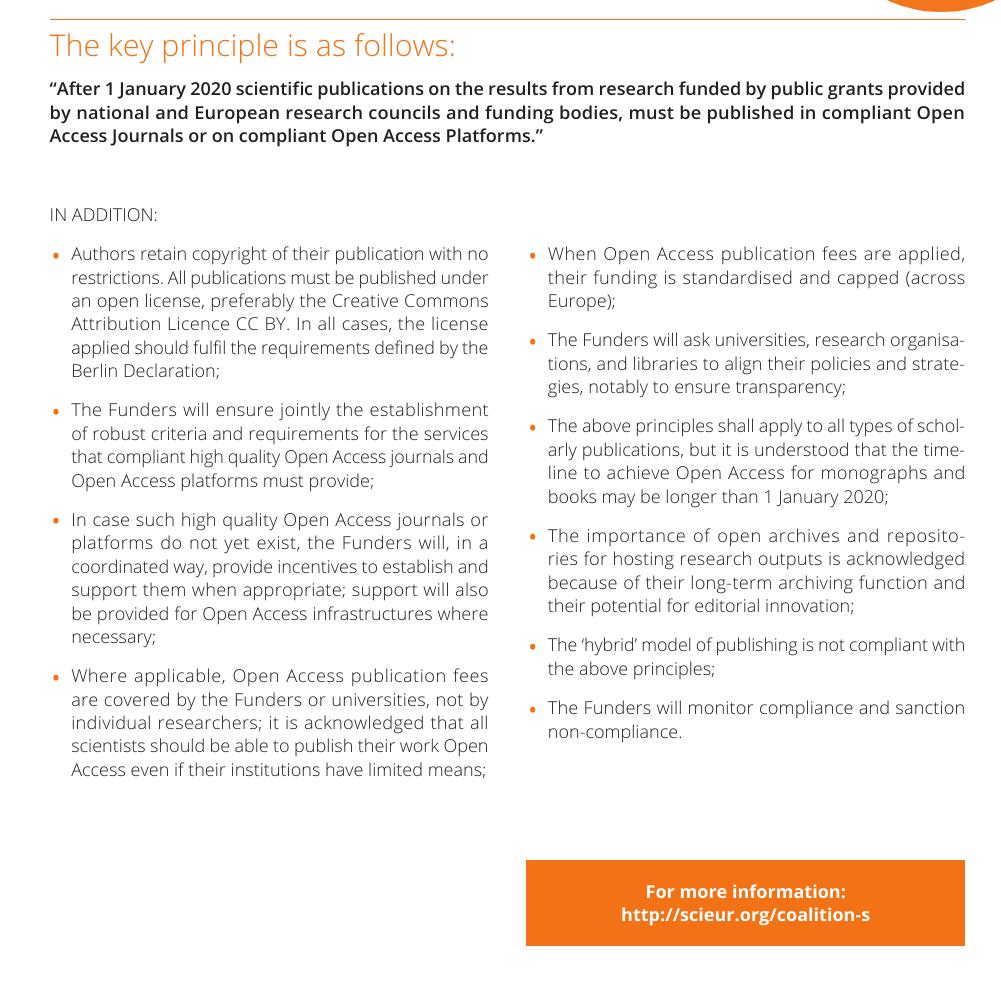


 In the Dark