Archive for Particle Physics

Can you make a neutral pion from two photons?

Posted in The Universe and Stuff with tags , , , on November 10, 2025 by telescoper

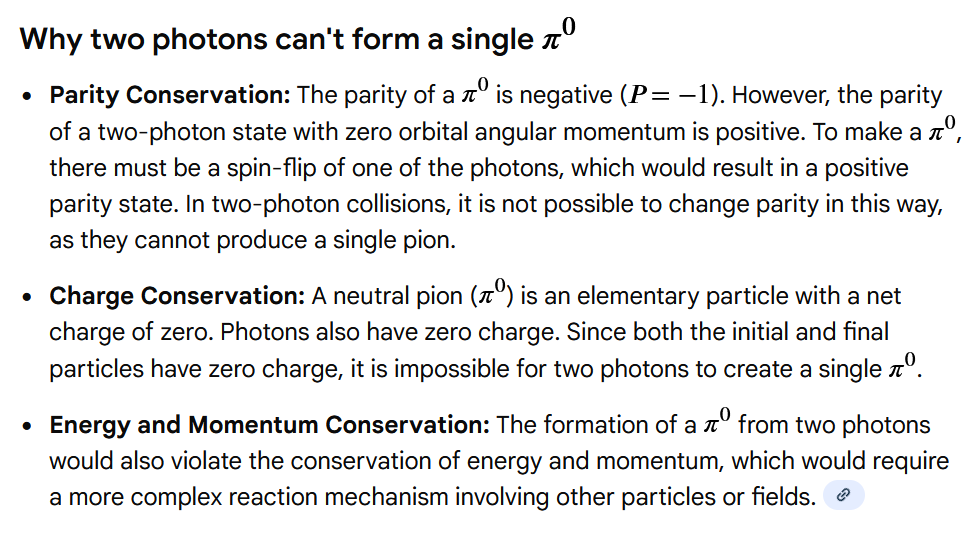
A neutral pion can decay into two photons. It is therefore not unreasonable to ask the question whether the reverse process – the creation of a neutral pion by colliding two photons – is physically possible and, if not, why not? It is perhaps less reasonable to ask an AI bot these questions. One of my colleagues did just that and found it said “no”, giving  the following three answers to the “why not?” question:

I particularly like the second one.

Would anyone like to offer a correct answer through the comments box?

Ireland in CERN!

Posted in Science Politics, The Universe and Stuff with tags , , , , , , , , on October 22, 2025 by telescoper
Photo by Pietro Battistoni on Pexels.com

I saw the news today that the Republic of Ireland is now officially an associate member state of the Conseil Européen pour la Recherche Nucléaire, better known as CERN. This has been in the pipeline for a while: I blogged about it here, for example. But today’s the day that Ireland formally joined.

I think this is a very good move for Irish physics, and indeed for Ireland generally. I will, however, repeat a worry that I have expressed previously. There is an important point about CERN membership, however, which I hope is not sidelined. The case for joining CERN made at political levels was largely about the return in terms of the potential in contracts to technology companies based in Ireland from instrumentation and other infrastructure investments. This was also the case for Ireland’s membership of the European Southern Observatory (ESO), which Ireland joined 7 years ago. The same thing is true for involvement in the European Space Agency, which Ireland joined in 1975. These benefits are of course real and valuable and it is entirely right that arguments should involve them.

Looking at CERN membership from a purely scientific point of view, however, the return to Ireland will be negligible unless there is a funding to support scientific exploitation of the facility. That would include funding for academic staff time, and for postgraduate and postdoctoral researchers to build up an active community as well as, e.g., computing facilities. This need not be expensive even relative to the modest cost of associate membership (approximately  €1.9M). I would estimate a figure of around half that would be needed to support CERN-based science. I am given to understand that some funds have been made available as part of the joining arrangements, but I don’t know the details.

As I have mentioned before, Ireland’s membership of ESO provides a cautionary tale. The Irish astronomical community was very happy about the decision to join ESO, but that decision was not accompanied by significant funding to exploit the telescopes. Few astronomers have therefore been able to benefit from ESO membership. While there are other benefits of course, the return to science has been extremely limited. The phrase “to spoil a ship for a ha’porth of tar” springs to mind.

Although Ireland joined ESA almost fifty years ago, the same issue applies there. ESA member countries pay into a mandatory science programme which includes, for example, Euclid. However, the Irish Government did not put any resources on the table to allow full participation in the Euclid Consortium. There is Irish involvement in other ESA projects (such as JWST) but this is somewhat piecemeal. There is no funding programme in Ireland dedicated to the scientific exploitation of ESA projects.

Under current arrangements the best bet in Ireland for funding for ESA, ESO or CERN exploitation is via the European Research Council, but to get a grant from that one has to compete with much better developed communities in those areas.

The recent merger of Science Foundation Ireland and the Irish Research Council to form a single entity called Research Ireland could provide an opportunity to correct this shortfall in funding for science exploitation. The reorganization won’t do anything on its own, however: the overall level of public sector research funding will have to increase dramatically from its current level, well below the OECD average. The recent Budget in Ireland for 2026 does include an allocation of €426 million for research under the National Development Plan, but how much of this will find its way into basic research generally and CERN science in particular?

The magnetic moment of the muon revisited

Posted in The Universe and Stuff with tags , , , , on June 10, 2025 by telescoper

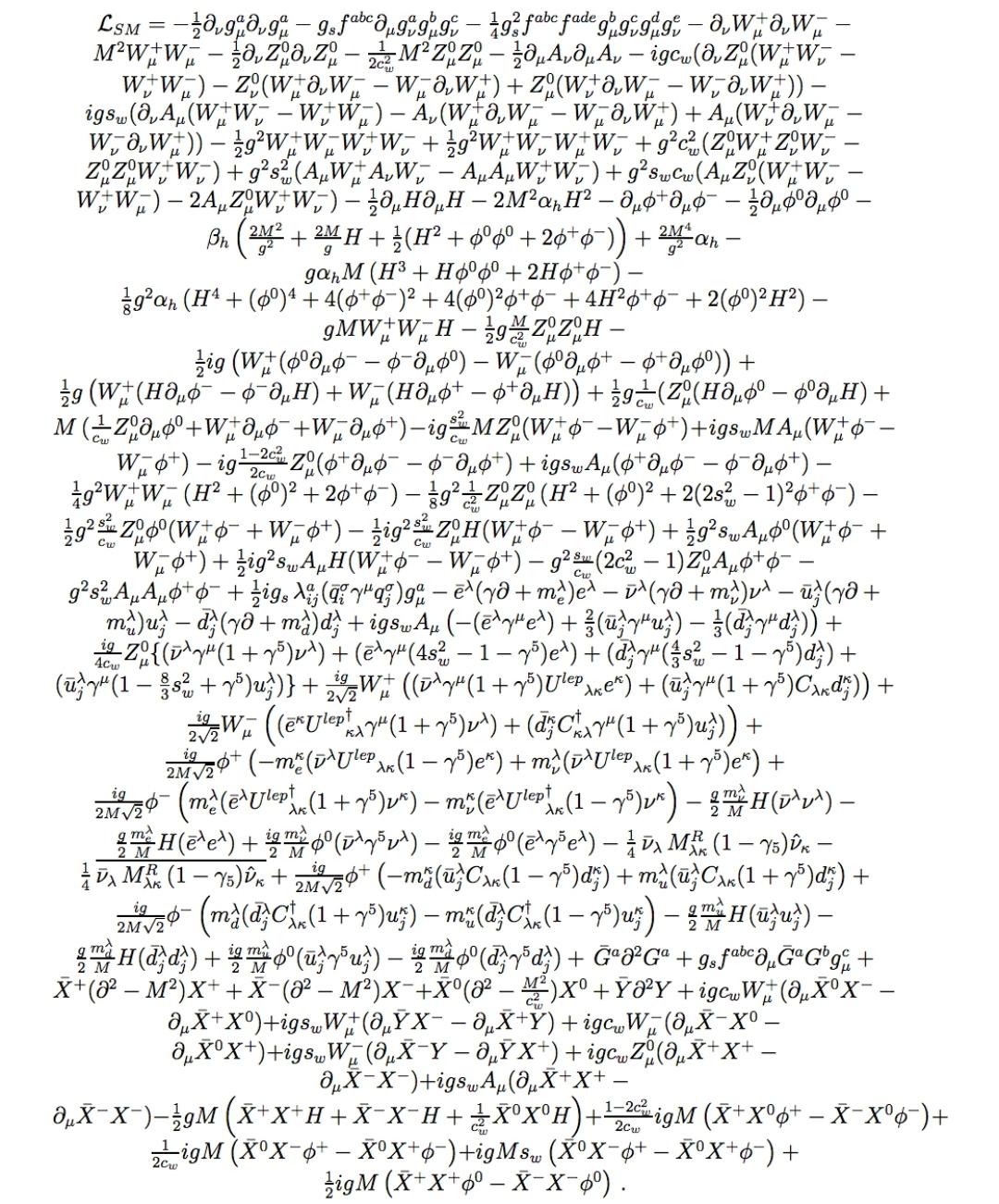
A couple of years ago I posted an item about a measurement of the anomalous magnetic moment of the muon, a quantity usually known as (g-2). At the time this appeared to be in conflict with the predictions of the standard model (SM)of particle physics but the general opinion among experts was that the problem was likely to lie with the calculations rather than the experiment.

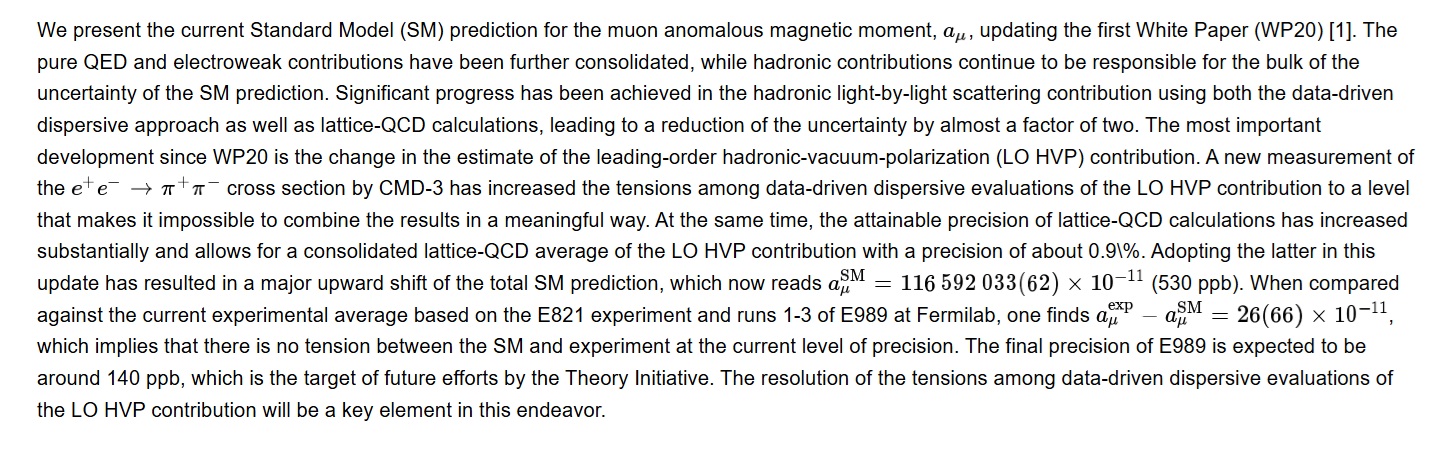
Well, catching up on things I missed during examination marking season, I refer you to a substantial paper (188 pages long) that appeared on arXiv on 27th May 2025, with the abstract:

If this is too small to read I direct yourself to the salient point, namely that “there is no tension between the SM and experiment at the current level of precision”.

It seems the Standard Model survives to fight another day…

Last Remarks

Posted in Biographical, Education, Euclid, Maynooth, The Universe and Stuff, Uncategorized with tags , , on May 11, 2025 by telescoper

On Friday (9th May), the last day of undergraduate teaching at Maynooth, I gave the last lecture in my module on Particle Physics. I actually finished the syllabus on Tuesday (6th) so the final one was more a revision class than a lecture. I used it to go through some past examination questions and (try to) answer some general points raised by the class.

What surprised me about this lecture was that, as has usually been the case, there was more-or-less a full attendance. Examinations in Maynooth start on Friday (May 16th), but the Particle Physics examination is not until May 27th, near the end of the examination period. I therefore expected that many students would be concentrating on their revision for their other modules, which have exams earlier in the season or finishing their projects (which are due in before the exams start). There were one or two absences, but most came anyway. In fact there was even an extra student, one of our MSc students. When I saw him at the back of the lecture hall I asked, jokingly, why he had come. He replied “I haven’t got anything better to do”. I wasn’t sure how to interpret that!

That lecture was at 11am. Later that day, at 3pm, I gave a Departmental colloquium (which had quite a big audience). The title was Euclid: The Story So Far and the abstract was

The European Space Agency’s Euclid satellite was launched on 1st July 2023 and, after instrument calibration and performance verification, the main cosmological survey is now well under way. In this talk I will explain the main science goals of Euclid, give a brief summary of progress so far, showcase some of the science results already obtained, and set out the time line for future developments, including the main data releases and cosmological analysis.

The audience for these talks is very mixed: experimental and theoretical physics staff, postgraduates and even some undergraduate students (including some who were in my lecture earlier) so it was quite a general talk rather than one I might give to an specialist astrophysics audience. If you’re interested you can find the slides here.

Having a quick cup of tea after the end of the talk and before I headed off to catch the train, I talked briefly with a student who is taking his final examinations at Maynooth this year. He told me that I had actually given the first lecture he attended when he had just started his first year and the colloquium was the last talk he would attend at Maynooth. That would be the case for quite a few students in the audience, I suppose, but it won’t be true for any in future: I am no longer teaching any modules taken by first year students, and I’ll be retired when the current first year students graduate…

Beautiful Equations

Posted in Biographical, mathematics, The Universe and Stuff with tags , , , , on February 25, 2025 by telescoper

I did a lecture today about the Dirac Equation (which is almost 100 years old, having been first presented in 1928). You might think this is a difficult topic to lecture on, but it’s really a piece of cake:

This reminds me that a a while ago I posted about an interesting article on the BBC website that discussed the way mathematicians’ brains appear to perceive “beauty”. A (slightly) more technical version of the story can be found here. According to functional magnetic resonance imaging studies, it seems that beautiful equations excite the same sort of brain activity as beautiful music or art.

The question of why we think equations are beautiful is one that has come up a number of times on this blog. I suspect the answer is a slightly different one for theoretical physicists compared with pure mathematicians. Anyway, I thought it might be fun to invite people offer suggestions through the comments box as to the most beautiful equation along with a brief description of why.

I should set the ball rolling myself, and I will do so with the Dirac Equation:

dirac_equation

This equation is certainly the most beautiful thing I’ve ever come across in theoretical physics, though I don’t find it easy to articulate precisely why. I think it’s partly because it is such a wonderfully compact fusion of two historic achievements in physics – special relativity and quantum mechanics – but also partly because of the great leaps of the imagination that were needed along the journey to derive it and my consequent admiration for the intellectual struggle involved. I feel it is therefore as much an emotional response to the achievement of another human being – such as one feels when hearing great music or looking at great art – as it is a rational response to the mathematical structure involved. But it’s not just that, of course. The Dirac Equation paved the way to many further developments in particle physics. It seems to encapsulate so much about the behaviour of elementary particles in so few symbols. Some of its beauty derives from its compactness- it uses up less chalk in a mathematical physics lecture.

Anyway, feel free to suggest formulae or equations, preferably with a brief explanation of why you think they’re so beautiful.

P.S. Paul Dirac was my (academic) great-grandfather.

Particle Physics Masterclass at Maynooth

Posted in Education, Maynooth, The Universe and Stuff with tags , , on February 23, 2025 by telescoper

Last week’s announcement about Ireland joining CERN reminded me that I should have advertised the annual Particle Physics Masterclass at Maynooth University long before now, not least because I’m actually teaching particle physics this year. My only excuse is that I’m old and forgetful. Anyway, better late than never; there’s still almost a week until the registration closes.

Since 2012 the Department of Theoretical Physics hosted the International Particle Physics Masterclasses for secondary school students each spring (except for 2020 when it was cancelled due to Covid-19 restrictions).  Now the Department of Theoretical Physics is no more, having been incorporated last year into the Department of Physics, but the Particle Physics Masterclasses continue; the next event will be on Tuesday 18 March 2025.

These Masterclasses give secondary school students the opportunity to discover the world of quarks and leptons for themselves, by performing measurements on real data from CERN, meeting active particle physics researchers and linking up with like-minded students from other countries.  We will join thousands of other secondary school students at more than 100 universities and laboratories around Europe and worldwide in a programme stretching over four weeks.

Physics at the most fundamental level – the smallest and most basic building blocks of matter – is an exotic world.  But a few introductory talks and working with data from CERN will give the students insight into the fundamental particles of matter and the forces between them, as well as what went on during the Big Bang.

In the morning the students are introduced to particle physics, experiments and detectors in lectures given by active particle physics researchers.  After an early lunch, they work on their own with data from the ALICE detector at CERN. Afterwards they participate in a video conference with students from other countries and moderators at CERN, where they discuss and compare their results.  For more information on the masterclasses, see the International Masterclasses web site.

You can find more information about the event here and you can register here. Hurry up though as the deadline for registration is the end of this month, i.e. this Friday, February 28th!

Back to Teaching

Posted in Biographical, Education, Maynooth, The Universe and Stuff with tags , , , on February 4, 2025 by telescoper

After yesterday’s holiday it was back to teaching full-time this morning with the first lecture of my module on Particle Physics. I just about managed to get everything ready in time for the teaching session at 1pm which, because it was an introductory lecture with lots of pictures, I decided to do via powerpoint rather than my usual chalk-and-talk. That didn’t get off to a very good start because the podium PC in my room had decided to do a Windows update just before I started and I had to wait for that to finish before I could show my slides. I suppose that happened because this was the first day of teaching after a lengthy break so nobody had used the room recently.

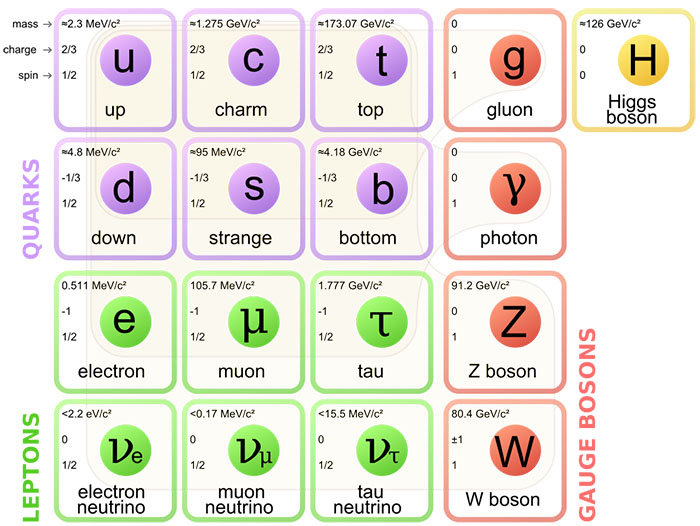
Most of the lecture was devoted to introducing natural units, which I intend to use throughout the module, like I have on previous occasions I have taught this sort of material for reasons I explained here. The last time I taught particle physics was some 15 years ago, so I had to update some things, especially the picture of the components of the standard model to include the Higgs. After extensive research (by which I mean looking at wikipedia) I found the above; the Higgs is on the right. Unfortunately the particle masses – which reveal themselves if you click on the image above – are not given in natural units, but have pesky factors of c-squared in them. You can’t have everything.

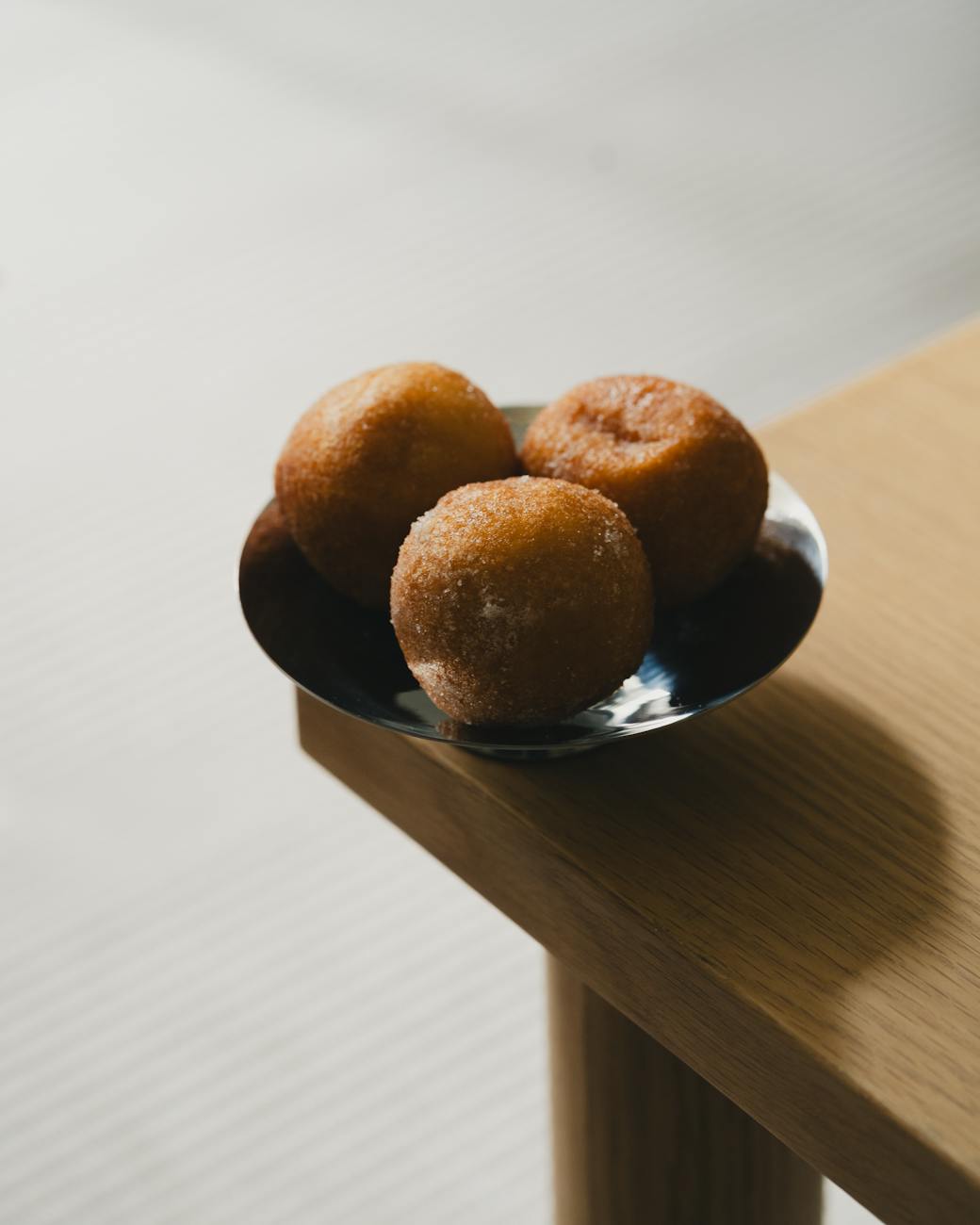
The bit I’m looking forward to most is doing the Dirac Equation which, years ago when I was at Sussex, was once the subject of a cake:

That particular cake was a lemon drizzle cake which unfortunately is not one of the flavours represented in the standard model.

R.I.P. Tsung-Dao Lee (1926-2024)

Posted in R.I.P., The Universe and Stuff with tags , , , on August 5, 2024 by telescoper

T.D.1.jpg_copyI’ve just heard the sad news of the death at the age of 97 of TD Lee (shown left) who, together with CN Yang, won the Nobel Prize for Physics in 1957 for his work on parity violation in particle physics. I always find it difficult on occasions like this to find ways of describing the work of people of such eminence in fields other than my own, but in this case it turns out I have a personal connection of a sort. Way back in 2006 when I was at Nottingham, the University decided to award Prof. Lee an honorary degree and I was chosen to deliver the oration at the graduation ceremony before spending some time chatting to him with some students. I remember that it was a very hot day and I was wilting under the graduation robes, but he took it all in his stride despite being 80 years old. Anyway, here is the text that I prepared for that occasion, which I hope will serve as a fitting obituary.


PROFESSOR TSUNG-DAO LEE

ORATION DELIVERED BY PROFESSOR PETER COLES

ON MONDAY 17 JULY 2006

Chancellor, Vice-Chancellor, Ladies and Gentlemen, it is both a pleasure and a privilege to present Professor Tsung-Dao Lee for the award of an honorary degree.  Professor Lee is a distinguished theoretical physicist whose work over many years has been characterized, in the words of Dr J Robert Oppenheimer, by “a remarkable freshness, versatility and style.”

Tsung-Dao Lee was born in Shanghai and educated at Suzhou University Middle School in Shanghai.  Fleeing the Japanese invasion, he left Shanghai in 1941.  His education was interrupted by war.  In 1945 he entered the National Southwest University in Kunming as a sophomore.  He was soon recognized as an outstanding young scientist and in 1946 was awarded a Chinese Government Scholarship enabling him to start a PhD in Physics under Professor Enrico Fermi at the University of Chicago.  He gained his doctorate in physics in 1950 with a thesis on the Hydrogen Content of White Dwarf Stars, and subsequently served as a research associate at the Yerkes Astronomical Observatory of the University of Chicago in Williams Bay, Wisconsin.

Astronomy is a science that concerns the very large, but it was in the physics of the very small that Professor Lee was to do his most famous work.  After one year as a research associate and lecturer at the University of California in Berkeley, he became a fellow of the Institute of Advanced Study in Princeton and, in 1953, he accepted an assistant professorship position at Columbia University in New York.  Two and a half years later, he became the youngest full professor in the history of Columbia University.  During this time he often collaborated with Chen Ning Yang whom he had known as a fellow student in Chicago.  In 1956 they co-authored a paper whose impact was both immediate and profound.  Only a year later, Lee and Yang were jointly awarded the Nobel Prize in Physics.  Professor Lee was thirty-one at the time and was the second youngest scientist ever to receive this distinction.  (The youngest was Sir Lawrence Bragg who shared the Physics Prize with his father in 1915, at the age of twenty-five; Werner Heisenberg was 31 when his Nobel Prize was announced, in 1932, but he did not receive the prize until the following year.)

It is usually difficult to explain the ideas of theoretical physics to non-experts.  The mathematical language is inaccessible to those without specialist training.  But some of the greatest achievements in this field are so bold and so original that they appear, at least with hindsight, to be astonishingly simple.  The work of Lee and Yang on parity violation in elementary particle interactions is an outstanding example.

Subatomic particles interact with each other in very complicated ways.  In high energy collisions, particles can be scattered, destroyed or transformed into other particles.  But governing these changes are universal rules involving things that never change.  The existence of these conservation laws is a manifestation of the symmetries possessed by the mathematical theory of particle interactions.

Lee and Yang focussed on a particular attribute called parity, which relates to the “handedness” of a particle and symmetry with respect to mirror reflections.  Physicists had previously assumed that the laws of nature do not distinguish between left- and right-handed states: a left-handed object when seen in a mirror should be indistinguishable from a right-handed one.  This symmetry suggests that parity should be conserved in particle interactions, as it is in many other physical processes.  Unfortunately this chain of thought led to a puzzling deadlock in our understanding of the so-called weak nuclear interaction.  Lee and Yang made the revolutionary suggestion that parity is not conserved in weak interactions and consequently that the laws of nature must have a built-in handedness.  A year later their theory was tested experimentally and found to be correct.  Their penetrating insight led to a radical overhaul of the theory of weak interactions and to many further discoveries.  Physicists around the world said “Of course!  Why didn’t I think of that?”

This classic “Eureka moment” happened half a century ago, but Professor Lee has since made a host of equally distinguished contributions to fields as diverse as astrophysics, statistical mechanics, field theory and turbulence.  He was made Enrico Fermi Professor at Columbia in 1964 and University Professor there in 1984.  With typical energy and enthusiasm he took up the post of director of the RIKEN Research Center at Brookhaven National Laboratories in 1998.  He has played a prominent role in the advancement of science in China, including roles as director of physics institutes in Beijing and Zhejiang.

Professor Lee has received numerous awards and honours from around the world, including the Albert Einstein Award in Science, the Bude Medal, the Galileo Galilei Medal, the Order of Merit, Grande Ufficiale of Italy, the Science for Peace Prize, the China National-International Cooperation Award, the New York City Science Award, the Pope Joannes Paulis Medal, Il Ministero dell’Interno Medal of the Government of Italy and the New York Academy of Sciences Award.  His recognition even extends beyond this world, for in 1997 Small Planet 3443 was named in his honour.

Chancellor, Vice-Chancellor, to you and to the whole congregation I present Professor Tsung-Dao Lee as eminently worthy to receive the degree of Doctor of Science, honoris causa.

R.I.P. Peter Higgs (1929-2024)

Posted in Barcelona, Maynooth, R.I.P., The Universe and Stuff with tags , , , , , on April 9, 2024 by telescoper

I was very sad this afternoon to hear of the death of theoretical physicist Peter Higgs, on Monday 8th April 2024, at the age of 94. I never met Peter Higgs but I know how greatly liked and respected he was (see, e.g. here) and that he leaves an important legacy as a physicist, particularly the work that led to the award of the 2013 Nobel Prize for Physics (jointly with François Englert) . Condolences to his family, friends and colleagues.

You can read the very nice Guardian obituary here; there are many others published in media from elsewhere in the world (including Ireland and Barcelona).

I’ll add two extremely slight connections. One is that Peter Higgs visited Maynooth University in 2012, not long before his Nobel Prize was announced. The other is that he was born in the Elswick area of Newcastle upon Tyne, not far from Benwell, where I grew up.

R. I. P. Steven Weinberg (1933-2021)

Posted in Biographical, The Universe and Stuff with tags , , , on July 24, 2021 by telescoper

I just heard this morning via Twitter of the death at the age of 88 of the physicist Steven Weinberg. The news media don’t seem to have caught on yet but I’ll add links to appropriate tributes when they do.

UPDATE: You will find an appreciation from UT Austin here and an Associated Press article here.

Steven Weinberg is probably most famous in physics circles for his work on electroweak unification, together with Seldon Glashow and Abdus Salam, for which he jointly won the Nobel Prize for Physics in 1979. He did many other things besides, of course, and his influence is felt across huge swathes of particle physics, quantum field theory and cosmology. As well as a researcher he was a prolific writer, both of technical books – his Gravitational and Cosmology is a classic text on the principles and applications of the general theory of relativity – but also of works for the general public. He was an author of rare elegance and lucidity with some wonderful turns of phrase and a beautifully articulated secular view of the human condition. For example

If there is no point in the universe that we discover by the methods of science, there is a point that we can give the universe by the way we live, by loving each other, by discovering things about nature, by creating works of art. And that—in a way, although we are not the stars in a cosmic drama, if the only drama we’re starring in is one that we are making up as we go along, it is not entirely ignoble that faced with this unloving, impersonal universe we make a little island of warmth and love and science and art for ourselves. That’s not an entirely despicable role for us to play.

I bought Weinberg’s popular book The First Three Minutes about 40 years ago, and I still have a copy today. It’s no exaggeration to say that this book played a major part in my decision to continue a career in theoretical physics. I know I’m not the only physicist of my generation (or others) for whom this is the case. Although I never met Steven Weinberg in person, he was definitely an inspiration and he will be greatly missed.

Rest in peace, Steven Weinberg (1933-2021).