Archive for Poetry

Vitae Summa Brevis Spem Nos Vetat Incohare Longam

Posted in Poetry with tags , , on August 6, 2016 by telescoper

The title of this poem by Ernest Dowson, Vitae Summa Brevis Spem Nos Vetat Incohare Longam, can be translated from my half-remembered schoolboy Latin as something like “the brief span of Life forbids us from conceiving an enduring hope”. It’s a quotation from one of the Odes of Horace (Book I, Ode 4, line 15):

They are not long, the weeping and the laughter,
Love and desire and hate:
I think they have no portion in us after
We pass the gate.

They are not long, the days of wine and roses:
Out of a misty dream
Our path emerges for a while, then closes
Within a dream.

by Ernest Dowson (1867-1900)

Leaving Party

Posted in Poetry with tags , , , , on July 20, 2016 by telescoper

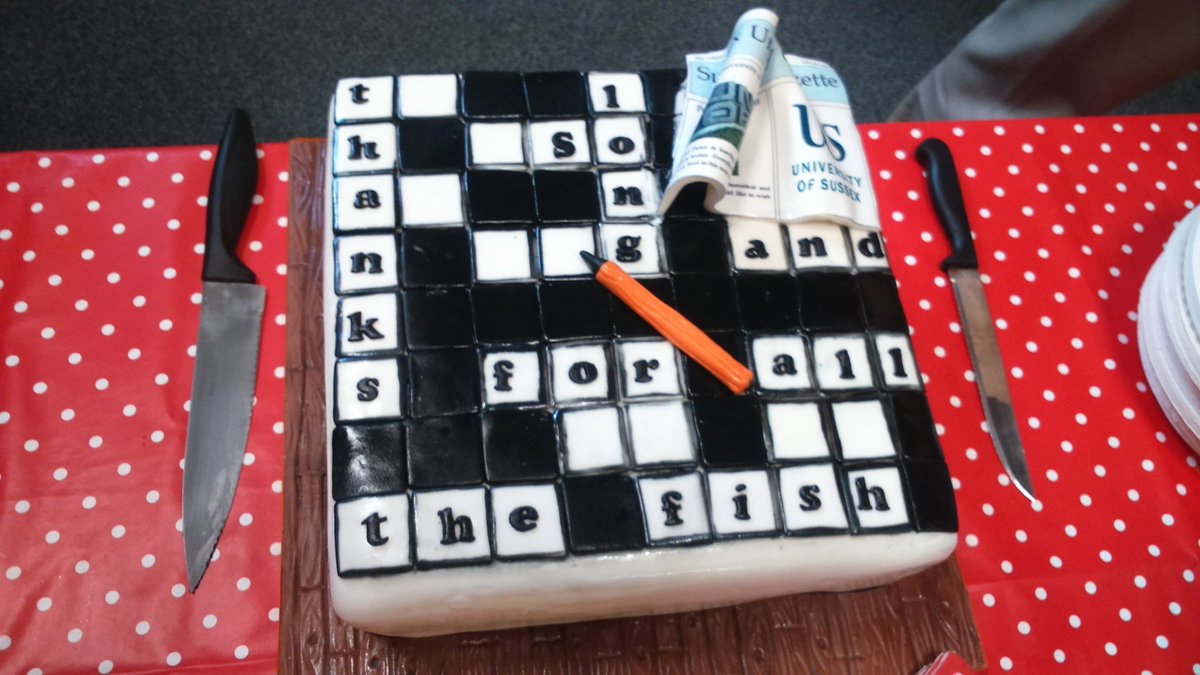
As regular readers of this blog (Sid and Doris Bonkers) will know, I’m about to leave my current job as Head of School of Mathematical and Physical Sciences at the University of Sussex. Although I don’t actually finish here until the end of the month, there was a small gathering in the School this afternoon to celebrate the fact that I am leaving. Here is the cake:

Cake_leave

This was accompanied by Prosecco, opened in dangerously explosive fashion by Philip Harris, who will be taking over as Acting Head of School after my departure. As such he will be responsible for Health and Safety in the School. I hope he fills in a risk assessment before attempting to open any further bottles of bubbly! I got a lovely gift of a pair of champagne flutes, although I haven’t managed to play any music on them yet.

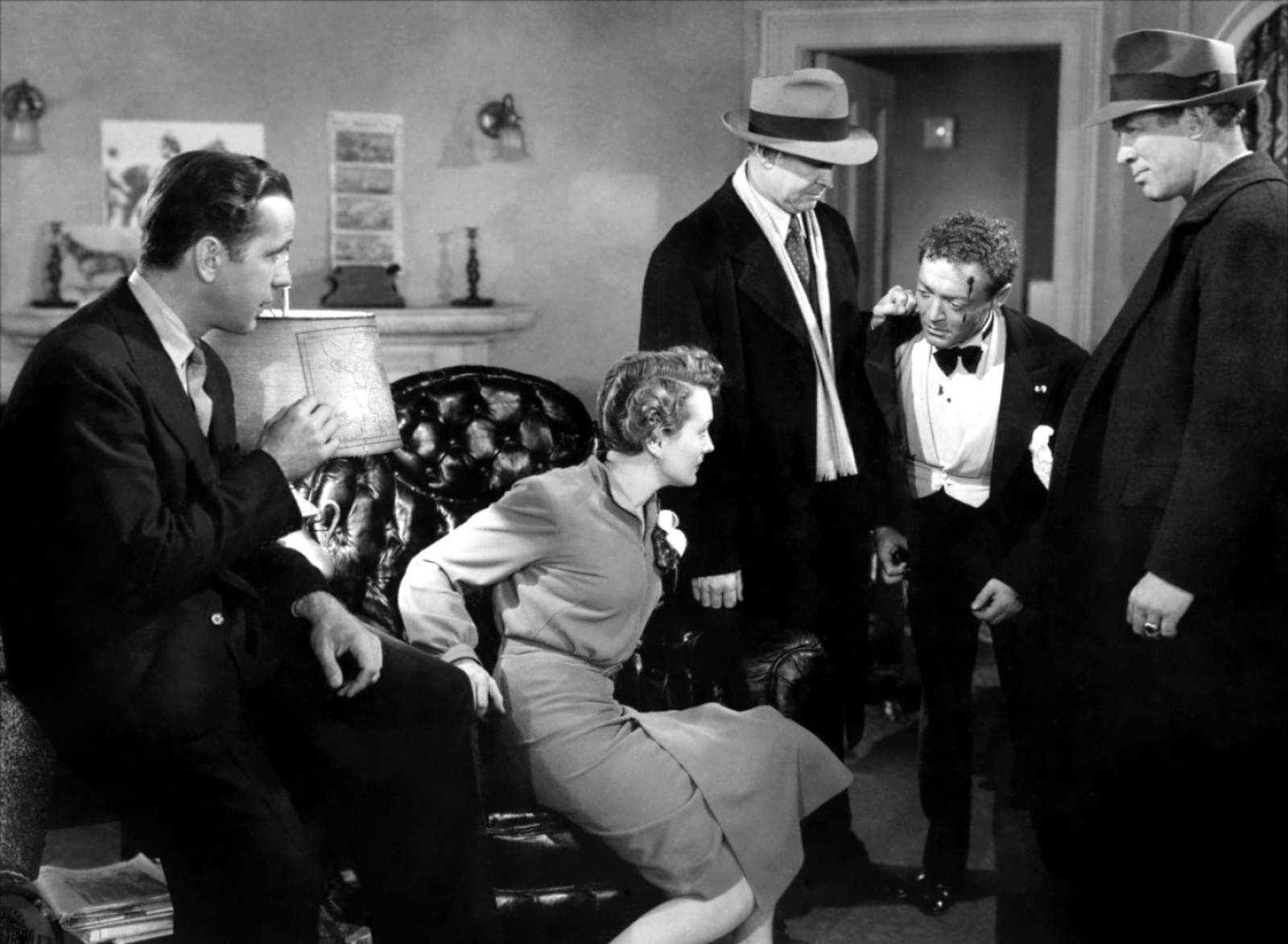
I’ve also been inundated with gifts by Dorothy Lamb, my Head of Schools Coordinator. Dorothy arranged a special treat for me this morning, in the form of a private screening (in the Attenborough Centre) of my favourite film, The Maltese Falcon. I’ve seen this film dozens of times on TV or on DVD but never in the cinema, so this was a very nice thought. Here’s a still from the movie, which reminds me for some reason of the Senior Management Group:

Maltese-Falcon-Tell-the-Truth-1941

At this afternoon’s cake and wine party, Dorothy also read out a poem what she wrote, which I reproduce here (including a preamble) in the hope that literary agents and talent-spotters might be reading this blog:

Those of you who read Peter’s blog will know that he regularly posts poems by Stevie Smith, Emily Dickinson, Wordsworth and others, plus occasionally his own work. The last time I wrote a poem was when I was about 8 years old and it was published in ‘The Brownie’ so I thought it fitting that, frighteningly, almost half a century on, I should pen another.

To Peter Coles, aged 53 and almost one sixth
Known for a passion for the cryptic,
Let’s hope his departure is not apocalyptic.
A northern gent in whom we trust,
An honest man, some say robust;
A wealth of knowledge, awesome talent
And, as a boss, sublime, transparent.
With Coltrane, Cohen and Humphrey Bogart
He is not backward in going forward.
With diphthongs, datives, gerunds and such
Though untrepanned, he’ll give the heads up.
A Newcastle lad up at Cambridge
Prosecco chilling in the fridge,
He truly does explain things clearly
Though I’m still ignorant of quantum theory.
He always seems to stay clear sighted
Except when it comes to Newcastle United.
A crossword never left unsolved,
An over never left unbowled,
The poems of the good and great,
The Miss Lemon drizzle cake he ate;
And every due respect he paid
To his trusted Midlands maid.
And so we say farewell to Peter,
Though this poem has the strangest meter,
Whilst lexicons fill every space,
An emptiness will take his place,
A smile of sadness on my face.


Emily Dickinson’s Desk

Posted in History, Poetry with tags , on July 15, 2016 by telescoper

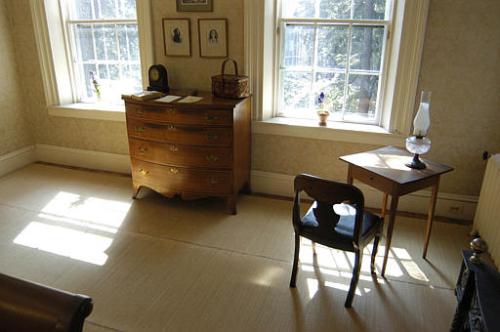
Here’s a fascinating post about the poet Emily Dickinson. Apparently she wrote all her poems sitting at that little square table!

malcolmguite's avatarMalcolm Guite

Emily's desk Emily’s Desk

Whilst I was speaking at a CS Lewis conference in Amherst I had the opportunity to visit Emily Dickinson’s house, now beautifully preserved as the Emily Dickinson Museum. And so I came to stand in that ‘mighty room’ where all the poems were written, and there, plain and simple and strangely, paradoxically, small was her little desk: a small square writing table.  I was filled with wonder at how much had flowed from so small a space, but then I thought about Dickinson’s characteristically concentrated and terse verse forms; those compact and concentrated little quatrains with the emphatic dashes linking and yet binding in the energy of her phrases, and it seemed to me the smallness of the desk was itself part of the form of the poetry, part of her gift.

Anyway the whole experience stirred me on to this: (as always you can hear…

View original post 88 more words

How They Brought the Good News from Ghent to Aix

Posted in Poetry with tags , , on July 13, 2016 by telescoper

I.
I sprang to the stirrup, and Joris, and he;
I galloped, Dirck galloped, we galloped all three;
‘Good speed!’ cried the watch, as the gate-bolts undrew;
‘peed!’ echoed the wall to us galloping through;
Behind shut the postern, the lights sank to rest,
And into the midnight we galloped abreast.

II.
Not a word to each other; we kept the great pace
Neck by neck, stride by stride, never changing our place;
I turned in my saddle and made its girths tight,
Then shortened each stirrup, and set the pique right,
Rebuckled the cheek-strap, chained slacker the bit,
Nor galloped less steadily Roland a whit.

III.
‘Twas moonset at starting; but while we drew near
Lokeren, the cocks crew and twilight dawned clear;
At Boom, a great yellow star came out to see;
At Dffeld,’twas morning as plain as could be;
And from Mecheln church-steeple we heard the half-chime,
So, Joris broke silence with, ‘Yet there is time!’

IV.
At Aershot, up leaped of a sudden the sun,
And against him the cattle stood black every one,
To stare thro’ the mist at us galloping past,
And I saw my stout galloper Roland at last,
With resolute shoulders, each hutting away
The haze, as some bluff river headland its spray:

V.
And his low head and crest, just one sharp ear bent back
For my voice, and the other pricked out on his track;
And one eye’s black intelligence,—ever that glance
O’er its white edge at me, his own master, askance!
And the thick heavy spume-flakes which aye and anon
His fierce lips shook upwards in galloping on.

VI.
By Hasselt, Dirck groaned; and cried Joris, ‘Stay spur!
‘Your Roos galloped bravely, the fault’s not in her,
‘We’ll remember at Aix’—for one heard the quick wheeze
Of her chest, saw the stretched neck and staggering knees,
And sunk tail, and horrible heave of the flank,
As down on her haunches she shuddered and sank.

VII.
So, we were left galloping, Joris and I,
Past Looz and past Tongres, no cloud in the sky;
The broad sun above laughed a pitiless laugh,
‘Neath our feet broke the brittle bright stubble like chaff;
Till over by Dalhem a dome-spire sprang white,
And ‘Gallop,’ gasped Joris, ‘for Aix is in sight!’

VIII.
‘How they’ll greet us!’—and all in a moment his roan
Rolled neck and croup over, lay dead as a stone;
And there was my Roland to bear the whole weight
Of the news which alone could save Aix from her fate,
With his nostrils like pits full of blood to the brim,
And with circles of red for his eye-sockets’ rim.

IX.
Then I cast loose my buffcoat, each holster let fall,
Shook off both my jack-boots, let go belt and all,
Stood up in the stirrup, leaned, patted his ear,
Called my Roland his pet-name, my horse without peer;
Clapped my hands, laughed and sang, any noise, bad or good,
Till at length into Aix Roland galloped and stood.

X.
And all I remember is—friends flocking round
As I sat with his head ‘twixt my knees on the ground;
And no voice but was praising this Roland of mine,
As I poured down his throat our last measure of wine,
Which (the burgesses voted by common consent)
Was no more than his due who brought good news from Ghent

by Robert Browning (1812-1889)


Afterwards, by Thomas Hardy

Posted in Poetry with tags , , , on May 3, 2016 by telescoper

When the Present has latched its postern behind my tremulous stay,
And the May month flaps its glad green leaves like wings,
Delicate-filmed as new-spun silk, will the neighbours say,
“He was a man who used to notice such things”?

If it be in the dusk when, like an eyelid’s soundless blink,
The dewfall-hawk comes crossing the shades to alight
Upon the wind-warped upland thorn, a gazer may think,
“To him this must have been a familiar sight.”

If I pass during some nocturnal blackness, mothy and warm,
When the hedgehog travels furtively over the lawn,
One may say, “He strove that such innocent creatures should come to no harm,
But he could do little for them; and now he is gone.”

If, when hearing that I have been stilled at last, they stand at the door,
Watching the full-starred heavens that winter sees,
Will this thought rise on those who will meet my face no more,
“He was one who had an eye for such mysteries”?

And will any say when my bell of quittance is heard in the gloom,
And a crossing breeze cuts a pause in its outrollings,
Till they rise again, as they were a new bell’s boom,
“He hears it not now, but used to notice such things”?

by Thomas Hardy (1840-1928).


Child of Europe

Posted in Poetry with tags , , on April 14, 2016 by telescoper

The poet Czeslaw Milosz was the winner of the Nobel Prize for Literature in 1980. He was born in Lithuania, in 1911, to a family of Polish origin.  He experienced at first hand the suffering caused by the Nazi terror and genocide, the war, and later, Stalinist tyranny.  His Nobel Prize citation states that he ” with uncompromising clear-sightedness voices man’s exposed condition in a world of severe conflicts”. This example of his poetry, written (I believe) in Poland in 1945, is a particularly powerful example.

1

We, whose lungs fill with the sweetness of day,

Who in May admire trees flowering,
Are better than those who perished.

We, who taste of exotic dishes,
And enjoy fully the delights of love,
Are better than those who were buried.

We, from the fiery furnaces, from behind barbed wires
On which the winds of endless Autumns howled,
We, who remember battles where the wounded air roared in paroxysms of pain,
We, saved by our own cunning and knowledge.

By sending others to the more exposed positions,
Urging them loudly to fight on,
Ourselves withdrawing in certainty of the cause lost.

Having the choice of our own death and that of a friend,
We chose his, coldly thinking: let it be done quickly.

We sealed gas chamber doors, stole bread,
Knowing the next day would be harder to bear than the day before.

As befits human beings, we explored good and evil.
Our malignant wisdom has no like on this planet.

Accept it as proven that we are better than they,
The gullible, hot-blooded weaklings, careless with their lives.

2

Treasure your legacy of skills, child of Europe,
Inheritor of gothic cathedrals, of baroque churches,
Of synagogues filled with the wailing of a wronged people.
Successor of Descartes, Spinoza, inheritor of the word “honor,”
posthumous child of Leonidas,
Treasure the skills acquired in the hour of terror.

You have a clever mind which sees instantly
The good and bad of any situation.
You have an elegant, skeptical mind which enjoys pleasures
Quite unknown to primitive races.

Guided by this mind you cannot fail to see
The soundness of the advice we give you:
Let the sweetness of day fill your lungs.
For this we have strict but wise rules.

3

There can be no question of force triumphant.
We live in the age of victorious justice.

Do not mention force, or you will be accused
Of upholding fallen doctrines in secret.

He who has power, has it by historical logic.
Respectfully bow to that logic.

Let your lips, proposing a hypothesis,
Not know about the hand faking the experiment.

Let your hand, faking the experiment,
Not know about the lips proposing a hypothesis.

Learn to predict a fire with unerring precision.

Then burn the house down to fulfill the prediction.

4

Grow your tree of falsehood from a small grain of truth.
Do not follow those who lie in contempt of reality.

Let your lie be even more logical than the truth itself,
So the weary travelers may find repose in the lie.

After the Day of the Lie gather in select circles,
Shaking with laughter when our real deeds are mentioned.

Dispensing flattery called: perspicacious thinking.
Dispensing flattery called: a great talent.

We, the last who can still draw joy from cynicism.
We, whose cunning is not unlike despair.

A new, humorless generation is now arising,
It takes in deadly earnest all we received with laughter.

5

Let your words speak not through their meanings,
But through them against whom they are used.

Fashion your weapon from ambiguous words.
Consign clear words to lexical limbo.

Judge no words before the clerks have checked
In their card index by whom they were spoken.

The voice of passion is better that the voice of reason.
The passionless cannot change history.

6

Love no country: countries soon disappear.
Love no city: cities are soon rubble.

Throw away keepsakes, or from your desk
A choking, poisonous fume will exude.

Do not love people: people soon perish.
Or they are wronged and call for your help.

Do not gaze into the pools of the past.
Their corroded surface will mirror
A face different from the one you expected.

7

He who invokes history is always secure.
The dead will not rise to witness against him.

You can accuse them of any deed you like.
Their reply will always be silence.

Their empty faces swim out of the deep dark.
You can fill them with any features desired.

Proud of dominion over people long vanished,
Change the past into your own, better likeness.

8

The laughter born of the love of truth
Is now the laughter of the enemies of the people.

Gone is the age of satire. We no longer need mock
The senile tyrant with false courtly phrases.

Stern as befits the servants of a cause,
We will permit ourselves only sycophantic humor.

Tight-lipped, guided by reasons only,
Cautiously let us step into the era of the unchained fire.

by Czeslaw Milosz (1911-2004).
Far Out

Posted in Poetry with tags , , on March 14, 2016 by telescoper

Beyond the dark cartoons
Are darker spaces where
Small cloudy nests of stars
Seem to float on air.

These have no proper names:
Men out alone at night
Never look up at them
For guidance or delight,

For such evasive dust
Can make so little clear:
Much less is known than not,
More far than near.

by Philip Larkin (1922-85)


Geometry, by Rita Dove

Posted in Poetry with tags , , on February 23, 2016 by telescoper

I prove a theorem and the house expands:
the windows jerk free to hover near the ceiling,
the ceiling floats away with a sigh.

As the walls clear themselves of everything
but transparency, the scent of carnations
leaves with them. I am out in the open

and above the windows have hinged into butterflies,
sunlight glinting where they’ve intersected.
They are going to some point true and unproven.

by Rita Dove


Luminary, by R.S. Thomas

Posted in Poetry with tags , , , on February 14, 2016 by telescoper

My luminary,
my morning and evening
star. My light at noon
when there is no sun
and the sky lowers. My balance
of joy in a world
that has gone off joy’s
standard. Yours the face
that young I recognised
as though I had known you
of old. Come, my eyes
said, out into the morning
of a world whose dew
waits for your footprint.
Before a green altar
with the thrush for priest
I took those gossamer
vows that neither the Church
could stale nor the Machine
tarnish, that with the years
have grown hard as flint,
lighter than platinum
on our ringless fingers.

by R.S. Thomas (1913-2000)


The Owl

Posted in Poetry with tags , , on February 7, 2016 by telescoper

Downhill I came, hungry, and yet not starved,
Cold, yet had heat within me that was proof
Against the north wind; tired, yet so that rest
Had seemed the sweetest thing under a roof. 

Then at the inn I had food, fire, and rest,
Knowing how hungry, cold, and tired was I.
All of the night was quite barred out except
An owl’s cry, a most melancholy cry. 

Shaken out long and clear upon the hill
No merry note, nor cause of merriment,
But one telling me plain what I escaped
And others could not, that night, as in I went. 

And salted was my food, and my repose,
Salted and sobered too, by the bird’s voice
Speaking for all who lay under the stars,
Soldiers and poor, unable to rejoice.

by Edward Thomas (1878-1917)