Archive for Poetry

Absence – Edwin Morgan

Posted in Poetry with tags , , on January 22, 2025 by telescoper
My shadow --
I woke to a wind swirling the curtains light and dark
and the birds twittering on the roofs, I lay cold
in the early light in my room high over London.
What fear was it that made the wind sound like a fire
so that I got up and looked out half-asleep
at the calm rows of street-lights fading far below?
Without fire
Only the wind blew.
But in the dream I woke from, you
came running through the traffic, tugging me, clinging
to my elbow, your eyes spoke
what I could not grasp --
Nothing, if you were here!

The wind of the early quiet
merges slowly now with a thousand rolling wheels.
The lights are out, the air is loud.
It is an ordinary January day.
My shadow, do you hear the streets?
Are you at my heels? Are you here?
And I throw back the sheets.

by Edwin Morgan (1920-2010)

Twelfth Night – Louis MacNeice

Posted in Maynooth, Poetry with tags , , , on January 6, 2025 by telescoper
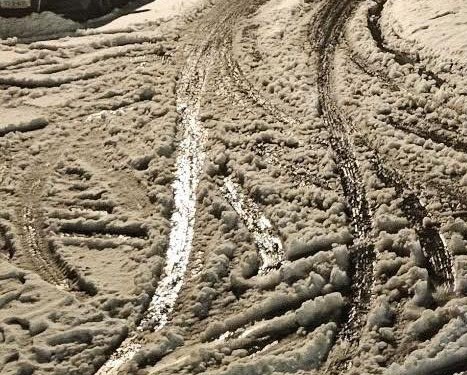
Snow-happy hicks of a boy’s world –
O crunch of bull’s-eyes in the mouth,
O crunch of frost beneath the foot –
If time would only remain furled
In white, and thaw were not for certain
And snow would but stay put, stay put!

When the pillar-box wore a white bonnet –
O harmony of roof and hedge,
O parity of sight and thought –
And each flake had your number on it
And lives were round for not a number
But equalled nought, but equalled nought!

But now the sphinx must change her shape –
O track that reappears through slush,
O broken riddle, burst grenade –
And lives must be pulled out like tape
To measure something not themselves,
Things not given but made, but made.

For now the time of gifts is gone –
O boys that grow, O snows that melt,
O bathos that the years must fill –
Here is dull earth to build upon
Undecorated; we have reached
Twelfth Night or what you will … you will.

by Louis MacNeice (1907-1963)

Letter in November – Sylvia Plath

Posted in Poetry with tags , , , , , on November 15, 2024 by telescoper
Love, the world
Suddenly turns, turns color. The streetlight
Splits through the rat's tail
Pods of the laburnum at nine in the morning.
It is the Arctic,

This little black
Circle, with its tawn silk grasses - babies hair.
There is a green in the air,
Soft, delectable.
It cushions me lovingly.

I am flushed and warm.
I think I may be enormous,
I am so stupidly happy,
My Wellingtons
Squelching and squelching through the beautiful red.

This is my property.
Two times a day
I pace it, sniffing
The barbarous holly with its viridian
Scallops, pure iron,

And the wall of the odd corpses.
I love them.
I love them like history.
The apples are golden,
Imagine it ----

My seventy trees
Holding their gold-ruddy balls
In a thick gray death-soup,
Their million
Gold leaves metal and breathless.

O love, O celibate.
Nobody but me
Walks the waist high wet.
The irreplaceable
Golds bleed and deepen, the mouths of Thermopylae.

by Silvia Plath (1932-1963)

Close of Play

Posted in Cricket, Poetry with tags , , , , , , on September 29, 2024 by telescoper

Today saw the end of this year’s County Championship cricket season, which I take to be definition of the official end of summer.  It seems to have come very late this year, and the weather not particularly clement for the last day.

I like county cricket, and hope to be able to see more when I retire and have the time, but I haven’t followed many games this year. I was away for much of the season and a bit busy to pay too much attention for the rest. I still keep an eye on how Glamorgan are doing, though, because of the time I spent living in Cardiff. In fact they won their last game against Gloucestershire yesterday to finish 6th  in the 2nd Division. The match had been affected by rain but both captains decided to try to make a game of it by each forfeiting an innings after Glamorgan declared their first innings 381/4with the best part of two days to play. Gloucestershire never looked like reaching that total and were bowled out for 189. The other Championship game between these two teams, in June, ended in a remarkable tie as Glamorgan were bowled out for 592 needing 593 to win. Of course the great success of the year for Glamorgan was winning the One Day Trophy, beating Somerset in a final deferred by a day and truncated by rain.

Elsewhere in the County Championship, Surrey won the 1st Division while Lancashire and Kent were relegated. Sussex won the 2nd division title and they and Yorkshire were promoted to Division 1 for next season. With Lancs and Yorks in different divisions, there wasn’t be a Roses match this summer, and there won’t be one next season either!

Anyway, as I’ve done before,  it seems apt to mark the end of the County Championship with one of the classic cricket poems, Close of Play  by Thomas Moult.

How shall we live, now that the summer’s ended,
And bat and ball (too soon!) are put aside,
And all our cricket deeds and dreams have blended —
The hit for six, the champion bowled for none,
The match we planned to win and never won? …
Only in Green-winged memory they abide.

How shall we live, who love our loveliest game
With such bright ardour that when stumps are drawn
We talk into the twilight, always the same
Old talk with laughter round off each tale —
Laughter of friends across a pint of ale
In the blue shade of the pavilion.

For the last time a batsman is out, the day
Like the drained glass and the dear sundown field
is empty; what instead of Summer’s play
Can occupy these darkling months ere spring
Hails willows once again the crowned king?
How shall we live so life may not be chilled?

Well, what’s a crimson hearth for, and the lamp
Of winter nights, and these plump yellow books
That cherish Wisden’s soul and bear his stamp —
And bat and ball (too soon!) are put aside,
Time’s ever changing, unalterable score-board,
Thick-clustered with a thousand names adored:
Half the game’s magic in their very looks!

And when we’ve learnt those almanacs by heart,
And shared with Nyren … Cardus ….the distant thrill
That cannot fade since they have had their part,
We’ll trudge wet streets through fog and mire
And praise our heroes by the club-room fire:
O do not doubt the game will hold us still!



Requiem for the Croppies – Seamus Heaney

Posted in History, Poetry with tags , , , , , , , , on August 26, 2024 by telescoper

“The Croppy Boy”, a monument in Tralee, County Kerry. Created by Kglavin, CC BY-SA 3.0 <http://creativecommons.org/licenses/by-sa/3.0/&gt; via Wikimedia Commons

The pockets of our greatcoats full of barley…
No kitchens on the run, no striking camp…
We moved quick and sudden in our own country.
The priest lay behind ditches with the tramp.
A people hardly marching… on the hike…
We found new tactics happening each day:
We’d cut through reins and rider with the pike
And stampede cattle into infantry,
Then retreat through hedges where cavalry must be thrown.
Until… on Vinegar Hill… the final conclave.
Terraced thousands died, shaking scythes at cannon.
The hillside blushed, soaked in our broken wave.
They buried us without shroud or coffin
And in August… the barley grew up out of our grave.

by Seamus Heaney (1939-2013)

This poem is about the Battle of Vinegar Hill which took place outside Enniscorthy in County Wexford on 21st June 1798. It was part of the Rebellion of the United Irishmen. The term “croppy” refers to the short cropped hair worn by the rebels, most of whom went into battle carrying only pikes against the artillery and muskets of the crown forces. The battle was a heavy defeat for the United Irishmen over a thousand of whom were killed in what Heaney calls the “final conclave” where the last hopes for the rebellion to succeed were finally crushed. The poem’s final line depicts the barley in the pockets of dead rebels growing through the soil used to bury them, suggesting that the dream of independence would live on.

The Scale of Intensity – Don Paterson

Posted in Poetry with tags , , , on July 30, 2024 by telescoper

1) Not felt. Smoke still rises vertically. In sensitive individuals, déjà vu, mild amnesia. Sea like a mirror.

2) Detected by persons at rest or favourably placed, i.e. in upper floors, hammocks, cathedrals, etc. Leaves rustle.

3) Light sleepers wake. Glasses chink. Hairpins, paperclips display slight magnetic properties. Irritability. Vibration like passing of light trucks.

4) Small bells ring. Small increase in surface tension and viscosity of certain liquids. Domestic violence. Furniture overturned.

5) Heavy sleepers wake. Public demonstrations. Large flags fly. Vibration like passing of heavy trucks.

6) Large bells ring. Bookburning. Aurora visible in daylight hours. Unprovoked assaults on strangers. Glassware broken. Loose tiles fly from roof.

7) Weak chimneys broken off at roofline. Waves on small ponds, water turbid with mud. Unprovoked assaults on neighbors. Large static charges built up on windows, mirrors, television screens.

8) Perceptible increase in weight of stationary objects: books, cups, pens heavy to lift. Fall of stucco and some masonry. Systemic rape of women and young girls. Sand craters. Cracks in wet ground.

9) Small trees uprooted. Bathwater drains in reverse vortex. Wholesale slaughter of religious and ethnic minorities. Conspicuous cracks in ground. Damage to reservoirs and underground pipelines.

10) Large trees uprooted. Measurable tide in puddles, teacups, etc. Torture and rape of small children. Irreparable damage to foundations. Rails bend. Sand shifts horizontally on beaches.

11) Standing impossible. Widespread self-mutilation. Corposant visible on pylons, lampposts, metal railings. Most bridges destroyed.

12) Damage total. Movement of hour hand perceptible. Large rack masses displaced. Sea white.

by Don Paterson (b. 1963)

Black Rook in Rainy Weather – Sylvia Plath

Posted in Poetry with tags , , , on April 26, 2024 by telescoper

On the stiff twig up there
Hunches a wet black rook
Arranging and rearranging its feathers in the rain-
I do not expect a miracle
Or an accident

To set the sight on fire
In my eye, nor seek
Any more in the desultory weather some design,
But let spotted leaves fall as they fall
Without ceremony, or portent.

Although, I admit, I desire,
Occasionally, some backtalk
From the mute sky, I can’t honestly complain:
A certain minor light may still
Lean incandescent

Out of kitchen table or chair
As if a celestial burning took
Possession of the most obtuse objects now and then —
Thus hallowing an interval
Otherwise inconsequent

By bestowing largesse, honor
One might say love. At any rate, I now walk
Wary (for it could happen
Even in this dull, ruinous landscape); sceptical
Yet politic, ignorant

Of whatever angel any choose to flare
Suddenly at my elbow. I only know that a rook
Ordering its black feathers can so shine
As to seize my senses, haul
My eyelids up, and grant

A brief respite from fear
Of total neutrality. With luck,
Trekking stubborn through this season
Of fatigue, I shall
Patch together a content

Of sorts. Miracles occur.
If you care to call those spasmodic
Tricks of radiance
Miracles. The wait’s begun again,
The long wait for the angel,

For that rare, random descent.

by Silvia Plath (1932-63)

Two Poems by Sir Thomas Wyatt

Posted in History, Poetry with tags , , , , , , , on April 3, 2024 by telescoper

Another character who appears in Hilary Mantel’s novel Wolf Hall is Sir Thomas Wyatt (1503-1542) who was a diplomat and member of the Court of Henry VIII, as well as being a fine poet. I thought I would post two of his famous poems.

The first is a sonnet, written some time in the 1530s, is ostensibly a (loose) translation of Petrarch’s Una Candida Cerva and thus one of the first examples of a Petrarchan Sonnet written in English. That makes it interesting in its own right, but many people think that it is actually about Anne Boleyn. The use of hunting as a metaphor for courtly love was widespread and, despite being married, Wyatt seems to have had his eye on Anne Boleyn. As far as is known, however, they didn’t have a sexual relationship. Wyatt wisely backed off when he realized he was competing with Henry VIII (thinly disguised as “Caesar”) in the penultimate line; Noli me tangere means “do not touch me” in Latin.

Whoso list to hunt, I know where is an hind,
But as for me, hélas, I may no more.
The vain travail hath wearied me so sore,
I am of them that farthest cometh behind.
Yet may I by no means my wearied mind
Draw from the deer, but as she fleeth afore
Fainting I follow. I leave off therefore,
Sithens in a net I seek to hold the wind.
Who list her hunt, I put him out of doubt,
As well as I may spend his time in vain.
And graven with diamonds in letters plain
There is written, her fair neck round about:
Noli me tangere, for Caesar’s I am,
And wild for to hold, though I seem tame.

Wyatt was in fact confined to the Tower of London in 1536 on suspicion of having committed adultery with Anne Boleyn; adultery with the King’s wife was considered treason, a capital offence. While in the Tower, where he witnessed executions, possibly including that of Anne Boleyn herself and others accused of treason with her, he wrote this other famous poem

Who list his wealth and ease retain,
Himself let him unknown contain.
Press not too fast in at that gate
Where the return stands by disdain,
For sure, circa Regna tonat.

The high mountains are blasted oft
When the low valley is mild and soft.
Fortune with Health stands at debate.
The fall is grievous from aloft.
And sure, circa Regna tonat.

These bloody days have broken my heart.
My lust, my youth did them depart,
And blind desire of estate.
Who hastes to climb seeks to revert.
Of truth, circa Regna tonat.

The bell tower showed me such sight
That in my head sticks day and night.
There did I learn out of a grate,
For all favour, glory, or might,
That yet circa Regna tonat.

By proof, I say, there did I learn:
Wit helpeth not defence too yerne,
Of innocency to plead or prate.
Bear low, therefore, give God the stern,
For sure, circa Regna tonat.

The repeated Latin phrase circa Regna tonat is usually translated “Thunder rolls around the Throne”, a reference to the dangerous temperament of the King.

Wyatt was not executed in 1536, but released after the intervention of none other than Thomas Cromwell. It seems he had a habit of sailing rather close to the wind, and was in and out of trouble with the King, being charged again with treason in 1541 and again released. He died, apparently of natural causes, in 1541, at the age of 39.

Good Friday – Edwin Morgan

Posted in Poetry with tags , , on March 29, 2024 by telescoper

by Edwin Morgan (1920-2010)

Lullaby – W.H. Auden

Posted in Poetry with tags , , , , on March 22, 2024 by telescoper

Lay your sleeping head, my love,
Human on my faithless arm;
Time and fevers burn away
Individual beauty from
Thoughtful children, and the grave
Proves the child ephemeral:
But in my arms till break of day
Let the living creature lie,
Mortal, guilty, but to me
The entirely beautiful.

Soul and body have no bounds:
To lovers as they lie upon
Her tolerant enchanted slope
In their ordinary swoon,
Grave the vision Venus sends
Of supernatural sympathy,
Universal love and hope;
While an abstract insight wakes
Among the glaciers and the rocks
The hermit’s carnal ecstasy.

Certainty, fidelity
On the stroke of midnight pass
Like vibrations of a bell,
And fashionable madmen raise
Their pedantic boring cry:
Every farthing of the cost,
All the dreaded cards foretell,
Shall be paid, but from this night
Not a whisper, not a thought,
Not a kiss nor look be lost.

Beauty, midnight, vision dies:
Let the winds of dawn that blow
Softly round your dreaming head
Such a day of welcome show
Eye and knocking heart may bless,
Find the mortal world enough;
Noons of dryness find you fed
By the involuntary powers,
Nights of insult let you pass
Watched by every human love.

by Wystan Hugh Auden (1907-1973)