
by Edwin Morgan (1920-2010)
by Edwin Morgan (1920-2010)
Lay your sleeping head, my love,
Human on my faithless arm;
Time and fevers burn away
Individual beauty from
Thoughtful children, and the grave
Proves the child ephemeral:
But in my arms till break of day
Let the living creature lie,
Mortal, guilty, but to me
The entirely beautiful.
Soul and body have no bounds:
To lovers as they lie upon
Her tolerant enchanted slope
In their ordinary swoon,
Grave the vision Venus sends
Of supernatural sympathy,
Universal love and hope;
While an abstract insight wakes
Among the glaciers and the rocks
The hermit’s carnal ecstasy.
Certainty, fidelity
On the stroke of midnight pass
Like vibrations of a bell,
And fashionable madmen raise
Their pedantic boring cry:
Every farthing of the cost,
All the dreaded cards foretell,
Shall be paid, but from this night
Not a whisper, not a thought,
Not a kiss nor look be lost.
Beauty, midnight, vision dies:
Let the winds of dawn that blow
Softly round your dreaming head
Such a day of welcome show
Eye and knocking heart may bless,
Find the mortal world enough;
Noons of dryness find you fed
By the involuntary powers,
Nights of insult let you pass
Watched by every human love.
by Wystan Hugh Auden (1907-1973)
It’s St David’s Day today, so although I’m still Down Under and far from any daffodils, I wish you all a big

Gratuitous Picture of some Daffodils near the Maynooth University Library.
It has become a bit of a St David’s Day tradition on this this blog to post a piece of verse by the great Welsh poet R.S. Thomas. This is The Bright Field.
I have seen the sun break through
to illuminate a small field
for a while, and gone my way
and forgotten it. But that was the pearl
of great price, the one field that had
treasure in it. I realize now
that I must give all that I have
to possess it. Life is not hurrying
on to a receding future, nor hankering after
an imagined past. It is the turning
aside like Moses to the miracle
of the lit bush, to a brightness
that seemed as transitory as your youth
once, but is the eternity that awaits you.

Victoria Park, Sydney
She sits in the park. Her clothes are out of date.
Two children whine and bicker, tug her skirt.
A third draws aimless patterns in the dirt
Someone she loved once passed by – too late
to feign indifference to that casual nod.
“How nice” et cetera. “Time holds great surprises.”
From his neat head unquestionably rises
a small balloon…”but for the grace of God…”
They stand a while in flickering light, rehearsing
the children’s names and birthdays. “It’s so sweet
to hear their chatter, watch them grow and thrive, ”
she says to his departing smile. Then, nursing
the youngest child, sits staring at her feet.
To the wind she says, “They have eaten me alive.”
by Gwen Harwood (1920-1995)
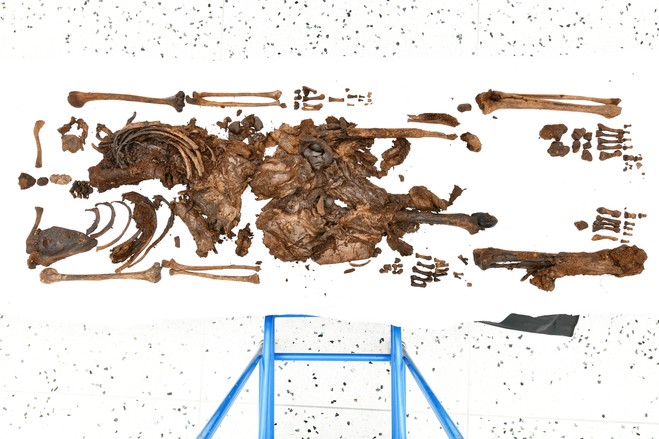
There was an interesting news item last week concerning the discovery of human remains in a peat bog in Bellaghy, County Derry. Radio-carbon dating has established that these remains are about 2,000 years old, so this was a person who lived in the Iron Age; a post-mortem has revealed it to be a teenage boy of around 15 years old. No cause of death has yet been established, but it is generally thought that these bog bodies were people who were executed as a punishment, or perhaps sacrificed for some ritual purpose.
These are neither the oldest nor the best-preserved such remains to be found in Ireland; the oldest belong to Cashel Man, who died, about 4,000 years ago, in the early Bronze Age. Nevertheless, the anaerobic conditions of the bog have slowed decomposition so much that not only bones, but some skin, hair and even parts of internal organs survive. This find is therefore important, not least because it should be possible to obtain detailed information about the DNA of this individual. Understanding of Ireland’s prehistoric past has been upended in recent years by DNA discoveries. What will Bellaghy Boy tell us? And how many more bog bodies are waiting to be found?
Another fascinating aspect of this story is that the location of the remains is very close to the house where the poet Seamus Heaney lived. Heaney wrote a number of poems about bog bodies and it’s ironic that there was one waiting to be found so close to his home.
Anyway, this gives me an excuse to post a vaguely relevant poem by Heaney called Bogland which, appropriately for the title of this blog, comes from a collection called Door into the Dark.
We are prepared: we build our houses squat,
Sink walls in rock and roof them with good slate.
This wizened earth has never troubled us
With hay, so, as you see, there are no stacks
Or stooks that can be lost. Nor are there trees
Which might prove company when it blows full
Blast: you know what I mean – leaves and branches
Can raise a tragic chorus in a gale
So that you listen to the thing you fear
Forgetting that it pummels your house too.
But there are no trees, no natural shelter.
You might think that the sea is company,
Exploding comfortably down on the cliffs
But no: when it begins, the flung spray hits
The very windows, spits like a tame cat
Turned savage. We just sit tight while wind dives
And strafes invisibly. Space is a salvo,
We are bombarded with the empty air.
Strange, it is a huge nothing that we fear.
by Seamus Heaney (1939-2013)
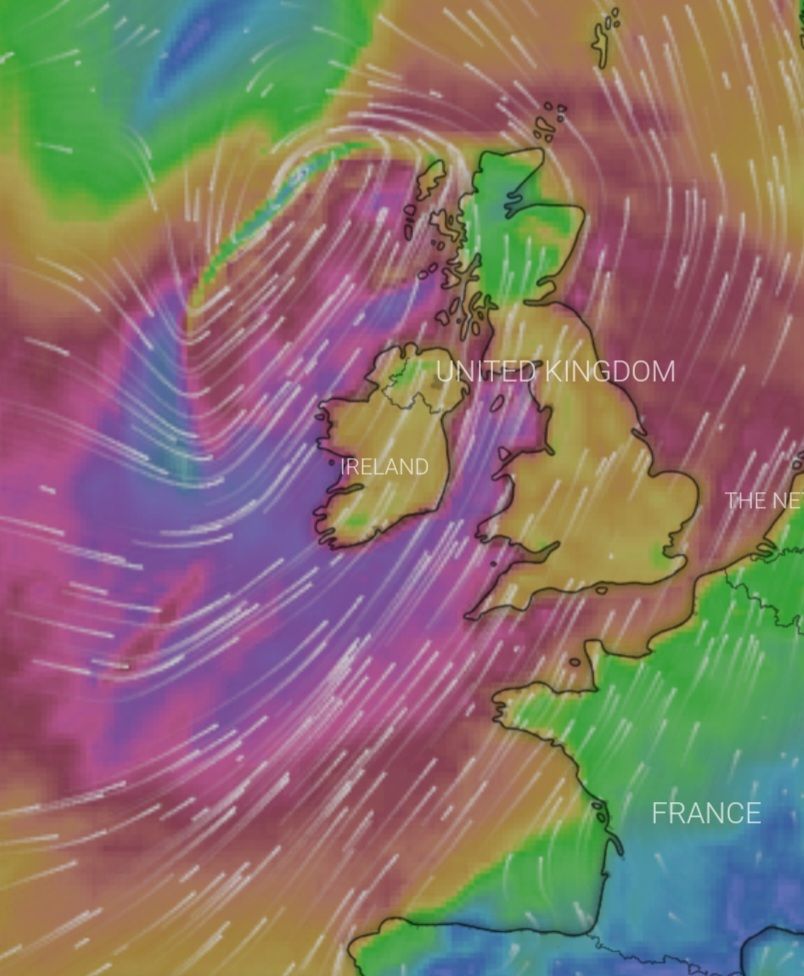
Storm Isha passed overnight, bringing down many trees and leaving many thousands of households without power.
I posted a poem by American poet Louise Glück when she won the 2020 Nobel Prize for Literature (“for her unmistakable poetic voice that with austere beauty makes individual existence universal”). I was sad to read that she passed away just a few days ago at the age of 80. By way of a small tribute here is another poem of hers I like very much. It is called Telescope.
There is a moment after you move your eye away
when you forget where you are
because you’ve been living, it seems,
somewhere else, in the silence of the night sky.
You’ve stopped being here in the world.
You’re in a different place,
a place where human life has no meaning.
You’re not a creature in a body.
You exist as the stars exist,
participating in their stillness, their immensity.
Then you’re in the world again.
At night, on a cold hill,
taking the telescope apart.
You realize afterward
not that the image is false
but the relation is false.
You see again how far away
each thing is from every other thing.
R.I.P. Louise Glück (1943-2023)
I’ve been writing far too many R.I.P. posts recently, but I had to say something to mark the passing of Glenda Jackson who has died at the age of 87. Glenda Jackson had an illustrious acting career during which she won many awards (including two Oscars) and then turned her hand to politics; she was a Labour Member of Parliament from 1992 to 2015.
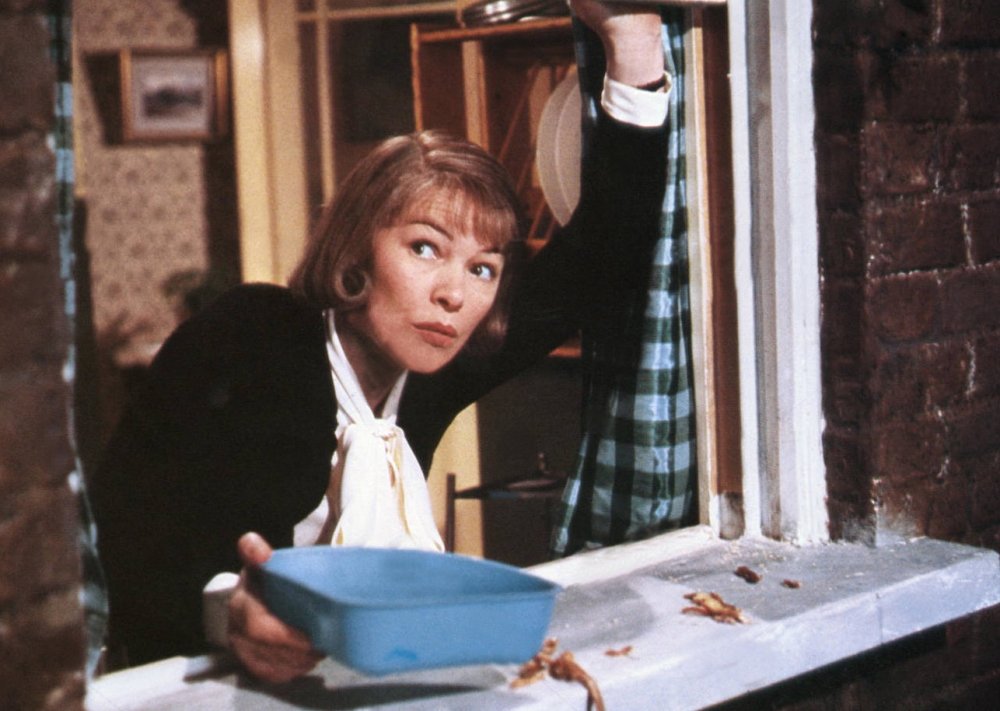
The role in which I remember Glenda Jackson best was in the film Stevie (1978) in which she played the poet Stevie Smith, whose poetry I have admired greatly for its dark yet whimsical tone since I was introduced to it while at school. The originality of her voice is the reason I’ve posted some of her poems on this blog from time to time.
Stevie Smith, who died in 1971, made a number of radio broadcasts and, without really trying to impersonate her, I think Glenda Jackson captured perfectly her quirky mixture of wit and melancholia. It was a marvelous performance in what I think is a neglected film masterpiece.
Rest in peace, Glenda Jackson (1936-2023)
When I blogged last week about English Paper 2 of the 2023 Leaving Certificate, I mentioned that one of the poets that came up was Paula Meehan. I wasn’t at all familiar with her work before then I looked around for some examples, and found some lovely poems. I’m not surprised the students were glad she came up this year. She has a very distinctive and powerful sense of imagery and a wry sense of humour, as exemplified by this witty but poignant poem, which takes an unusual perspective of the Easter Rising 2016. Inspired by the epigram which is quoted from the Irish Architectural Archive, it is a meditation on what is commemorated and what is not.
–0–
6 of our waterfowl were killed or shot, 7 of the garden seats broken and about 300 shrubs destroyed.
Park Superintendent in his report on the damage to St. Stephen’s Green, during the Easter Rising 1916
Time slides slowly down the sash window
puddling in light on oaken boards. The Green
is a great lung, exhaling like breath on the pane
the seasons’ turn, sunset and moonset, the ebb and flow
of stars. And once made mirror to smoke and fire,
a Republic’s destiny in a Countess’ stride,
the bloodprice both summons and antidote to pride.
When we’ve licked the wounds of history, wounds of war,
we’ll salute the stretcher bearer, the nurse in white,
the ones who pick up the pieces, who endure,
who live at the edge, and die there and are known
by this archival footnote read by fading light;
fragile as a breathmark on the windowpane or the gesture
of commemorating heroes in bronze and stone.
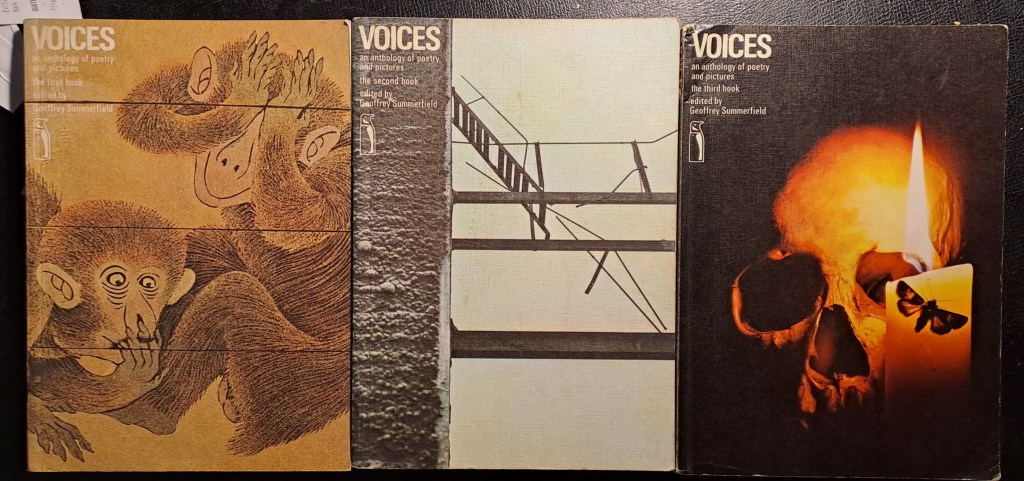
Not long ago I did a post about an anthology of Poems I studied at school many years ago. I bought that second-hand at the same time as I bought the three volumes shown above, Books 1-3 of Voices (edited by Geoffrey Summerfield). I seem to remember that we studied these at an earlier stage of 11+ education, probably in consecutive years before O-level. I remember the covers quite well, especially the rather spooky picture on Book 3.
They’re quite interesting books, each of which contains an eclectic collection of poems, including traditional rhymes and there is even some music at the back to accompany some of the verses that work as songs.
Anyone else remember these books?

 In the Dark