Archive for Tate Modern

Out and About in London

Posted in Biographical, Art, LGBTQ+ with tags , , , , , , , , , on July 3, 2026 by telescoper

I spent today in London, wandering about and visiting various locations I haven’t seen for a while, including the Science Museum (near where I’m staying) and Tate Modern (not near where I’m staying). The Science Museum has changed quite a bit since my last visit there many moons ago, but it still reminded me of Toby Esterhase’s description in Smiley’s People:

In the Science Museum, top floor. All those airplanes. Lot of kiddies eating crisps.

There was indeed a lot of kiddies, this being peak season for school trips, and the aeroplanes are still there. On the way from the Science Museum to Tate Modern, I bumped into some members of the union Unite from the Institute of Cancer Research who were at outside South Kensington tube station protesting about pay and conditions, and promised to send a message of solidarity on social media, which I hereby do.

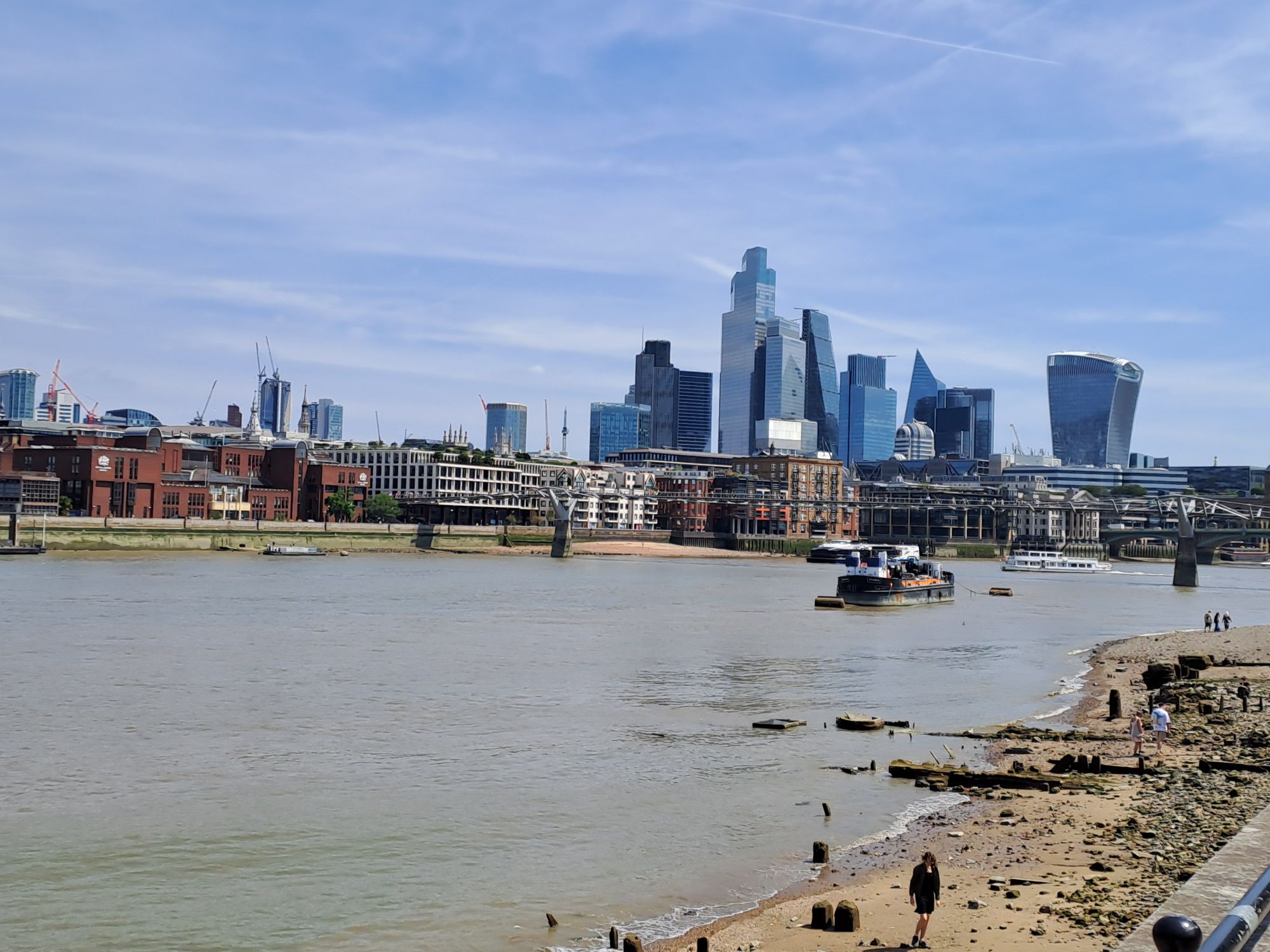
Tate Modern was really good, if also busy with a lot of kiddies. I particularly enjoyed The Tanks, in one of which there is an eerily lit exhibition of Giacometti scupltures and another an installation by Nora Chipaumire called Gadzi, which includes sculpted and audio elements between which you can sit or move around. One of the interesting things about installations like this is watching what other people do: some were sitting on the large loudspeakers playing the music, others moving around to experience changes in the sonic experience.
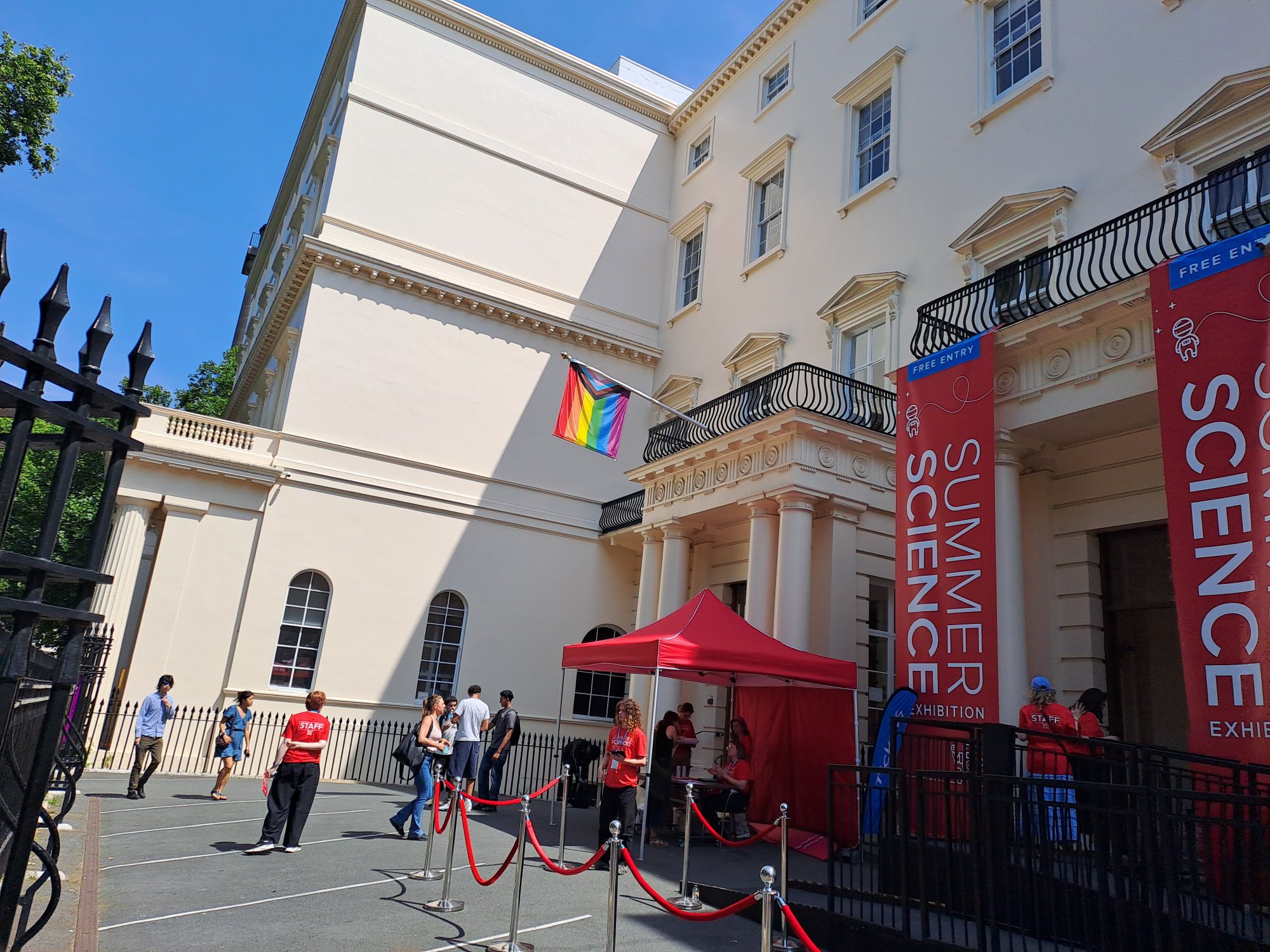
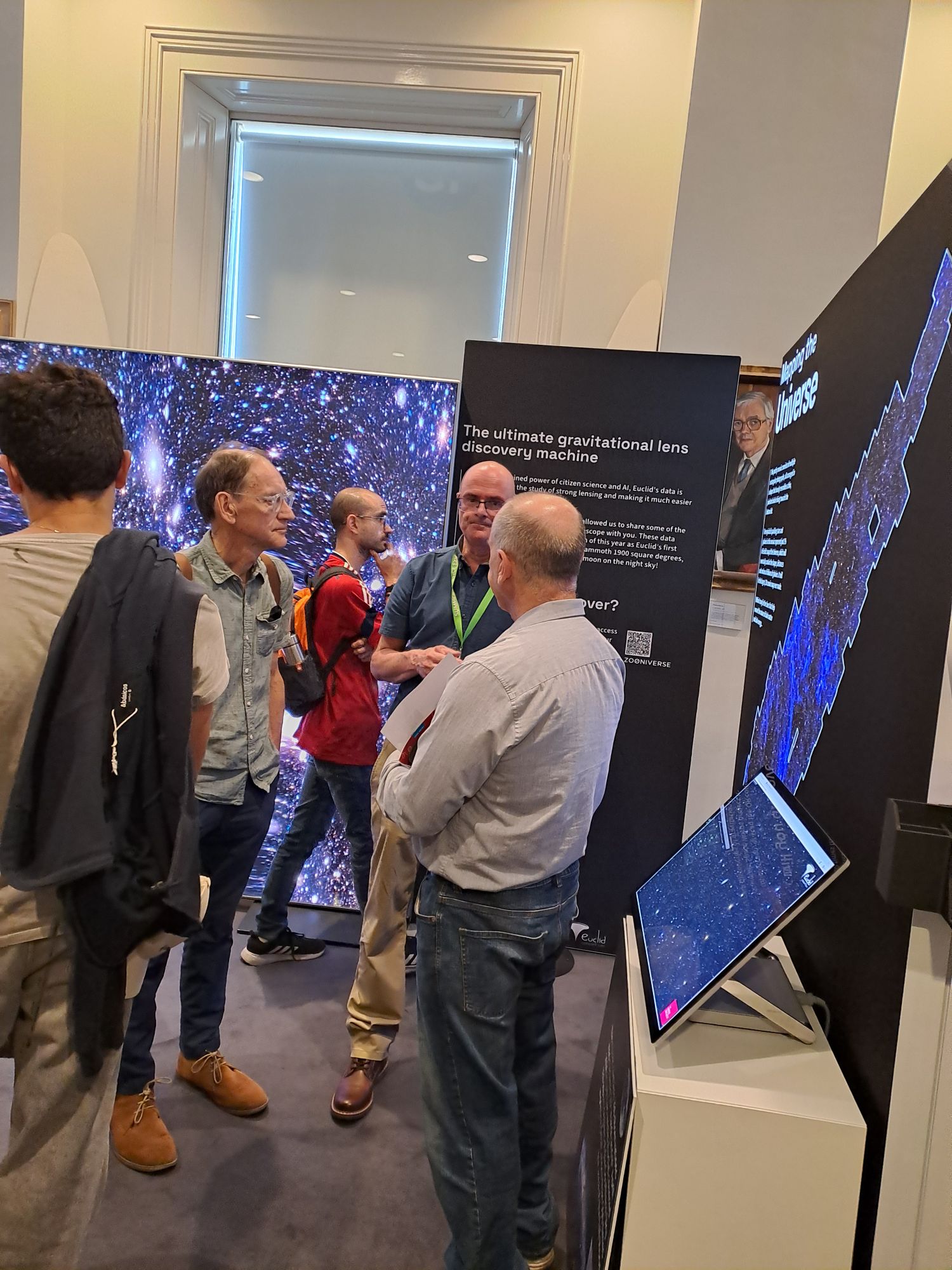
After Tate Modern I dropped in at the HQ of the Elon Musk Appreciation Society Royal Society in Carlton House Terrace. This is the time of year for the annual Summer Science Exhbition. Note the Pride Progress flag flying outside. Inside was another lot of kiddies but quite a few adults too. Out of the thirteen exhibits, three were directly relevant to my own science area: one from the Simons Observatory, one from Durham University about galaxy formation simulations, and also one from Euclid. Here is Andy Taylor from Edinburgh at the latter, explaining B-modes to visitors:
The Pride Progress flag reminds me to explain, as if you hadn’t realized, that tomorrow (4th July) is the day of the Pride in London parade. Having a meeting to attend this week and another thing to do in London next week, it proved impossible to resist staying over the weekend. Now I’ll have to finish this blog as I have to meet a certain person off the train who is coincidentally flying in especially tonight to stay with me for this very special weekend.

P.S. It was very warm today, and set to get even warmer going into next week…

Olafur Eliasson: Space, Art and Little Sun

Posted in Art with tags , , , on July 13, 2012 by telescoper

I recently found a report about a new project by Olafur Eliasson at Tate Modern called Little Sun which seems very intriguing to me. Basically the Little Suns in question are solar-powered LED lamps, with a running time of about 5 hours. Similar, I suppose to the things some of us have in our gardens that charge up during the day and light up at night. Anyway,  the idea is that on Saturday evenings from 28 July to 23 September  the lights at Tate Modern will be switched off, and each visitor given a Little Sun so they can wander around and see the exhibits in the dark. I can imagine that this will a fascinating experience, changing as it will the usual relationship between the viewer and the viewed, and the space enclosing them both. During the day there will also be a gallery open on the building’s third floor, where visitors can learn about solar power, global energy problems, light and its importance to life, as well as create light graffiti, as demonstrated on the little video here:

I’m not sure I’ll the chance to see Little Sun but I hope this encourages at least a few of you to check it out.

I also found this talk by Olafur Eliasson at TEDX some time ago, called Playing with Space and Light. A while ago was invited one of the gatherings of artists and scientists he mentions at the beginning, and found it absolutely fascinating…

Munch at Tate Modern

Posted in Art, Biographical with tags , , , , , on July 8, 2012 by telescoper

On Friday I had the morning off from my stint at the Royal Society Summer Exhibition I mentioned a few days ago, so I took the short walk from my hotel to Tate Modern to see an exhibition of art by Edvard Munch called Edvard Munch: The Modern Eye.  Before seeing the collection, which is housed on the second floor of Tate Modern, I took a picture of the view from the balcony looking across the Thames from Bankside towards St Paul’s.

Not inappropriate weather for this exhibition!

Everyone knows Munch by his famous work The Screamwhich isn’t part of this exhibition. I don’t regret this omission it allows the visitor to focus on his lesser-known works, some of which I think are even more powerful than The Scream which, incidentally, I have seen when it was part of an exhibition of Munch’s work in Berlin in 1995. In fact I bought a poster of that exhibition, the design of which includes a copy of The Scream; it is hanging in my study as I write this.

The gallery’s booklet describes Munch’s paintings as

..profoundly introspective, unflinchingly depicting his experience of ageing, emotional turmoil, sickness and bodily decay.

Indeed. Some of the works are so powerful as to be almost unbearable to look at. I’ll just mention a few that struck me in particular.

One room is filled with a number of almost identical paintings entitled Weeping Woman, in which a naked female figure stands bowed and sobbing within a dreary claustrophobic room. The repetition of this theme across many canvases seems almost compulsive, and they’re painted with crude almost frantic strokes.

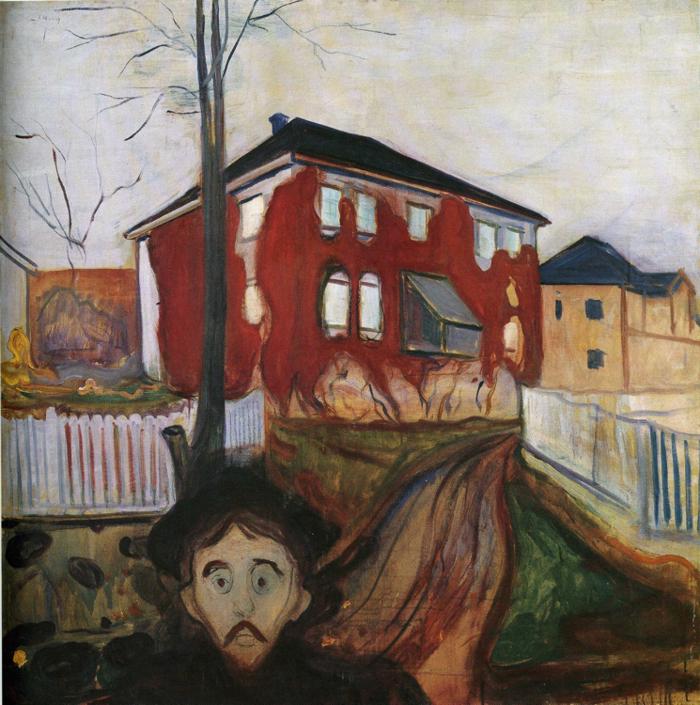
This is a painting called Red Virginia Creeper, a plant that grows on my house in fact, but which in this case has transformed into a dripping bloodstain behind the crudely drawn but obviously bewildered figure in the foreground.

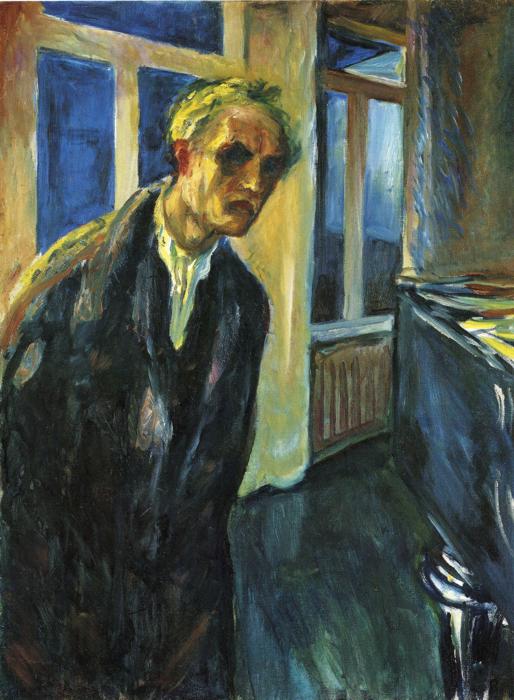
But the most powerful works by Munch were made later in his life. He was born in 1863 (100 years before me) and suffered a complete nervous breakdown in 1908. Here is a self-portrait called The Night Wanderer, showing himself as a gaunt insomniac figure wandering around a darkened house:

Then, right at the end of the exhibition, is his most moving work of all. Self Portrait between Clock and Bed, painted near the end of his life – he died in 1944 – shows a lonely old man standing between the clock, symbolising the remorseless passage of time, and the bed in which he no doubt expected to die.

This exhibition is not exactly a comfortable experience, filled as it is with images of alienation, despair and inner torment, but it was a “must-see” for me as Munch is such an important artist. Groups of schoolchildren were being led around the exhibition while I was there. Most of them giggled. I wonder how long it will be before they understand that the world really can be exactly as Munch painted it?

Anyway, I headed back across the river to the Royal Society to do the afternoon shift at the Herschel Telescope stand, which included playing with an infra-red camera to show the visitors young and old how it detects body heat, and taking pictures of them in the near infra-red as souvenirs. To show that the Munch collection hadn’t affected me too much, I took one of myself.