Archive for University of Sussex

First Among Equals

Posted in Brighton, Education with tags , , , , on August 13, 2013 by telescoper

Well, it’s been a pretty good day so far. I had a very interesting meeting in London this morning about something that will be out in open (geddit?) very soon but which I won’t blog about until the appropriate time. Instead I’ll just mention the news just out that the Department of Physics & Astronomy in the School of Mathematical and Physical Sciences at the University of Sussex finished in (joint ) 1st place in the 2013 National Student Survey (NSS). The full subject-level tables are not yet published – or at least I’ve been unable to find them – so I don’t know who we’re equal with, but I will update this post when I receive this information.

Looking through the detailed breakdown of the results, one figure leapt out at me. The fraction of Physics & Astronomy students at the University of Sussex who expressed overall satisfaction (in response to Question 22) was an amazing

images

Obviously it will be difficult to improve on this figure in future (!), but in fact we have already been planning to introduce a number of changes to our courses to boost our scores on other questions. That’s not to say that the result is due to one result: we also scored 100% on Q3 (“the staff are enthusiastic about what they are teaching”), Q4 (“the course is intellectually stimulating”), Q15 (“the course is well-organized and is running smoothly”) and Q18 (“I have been able to access specialised equipment, facilities or rooms when I needed to”).

You can say what you like about the NSS, but it certainly keeps us on our toes. The tables generally show continued improvement in NSS scores across the sector, which I think demonstrates that all Higher Education Institutions do make the effort to respond to student feedback.  That’s where the NSS has real value, as opposed to just being part of yet another league table. The survey also shows that in fact most UK Physics and Astronomy departments are extremely good and the differences between them are actually rather small. Maintaining our high ranking therefore won’t be easy, but we’re certainly going to give it a go for next year, and our influx of new staff will certainly help. Hopefully next year we’ll be out in front on our own again!

On behalf of everyone in the Department of  Physics & Astronomy, I’d like to thank the students who participated in the NSS for this enthusiastic endorsement!

The Expanding University

Posted in Biographical, Education, The Universe and Stuff with tags , , , on August 10, 2013 by telescoper

Well, I’m a bit busy today – despite the fact that it’s a weekend – so I’m just going to take the opportunity post here  a news item from my employer which has already been posted on the University of Sussex website. 

–o–

The School of Mathematical and Physical Sciences (MPS) will have 63 academics at the start of the 2013-14 academic year – an increase of 58 per cent from February, when only 40 were in post.

The expansion follows a very successful few years for the School, during which the number of students starting degrees in Physics and Astronomy at Sussex has grown almost threefold.

The department has also climbed to 5th in The Times Good University Guide 2013 and Mathematics was ranked in the top 10 for academic support in the 2012 National Student Survey (NSS).

From September, Physics and Astronomy will have 40 academics, up from 25 in February. There are 12 new posts as well as three replacements, including the arrival in February of Professor Peter Coles, who replaced the late Professor David Axon as Head of School.

Mathematics is increasing from 15 academics to 23, with five of these arrivals being new positions. In particular, three new professors will join the Department this year.

Professor Coles says that overseeing this expansion has been his main focus since returning to Sussex. He says: “When I arrived, plans were already under way to get new people in and I knew this had to be my priority in my first few months as Head of MPS.

“We had an incredibly high calibre of applicants for all the posts and, in many cases, have been able to appoint more than one person. For one of the posts in Astronomy, the shortlist was so strong that we have actually appointed four excellent academics in that area. We couldn’t miss that opportunity.

“Our three  new chairs in Mathematics are joining us from Denmark, Greece and Italy, bolstering the School’s international outlook.

“We have been strategic in our appointments to encourage growth into new areas for us, such as probability and stochastic modelling on the Mathematics side, and materials-based experimental research on the Physics side. We anticipate further strategic expansion in these areas in the near future.

“These appointments also represent a step towards more interdisciplinarity and better crossover between the two departments within the School, and indeed with other schools such as Life Sciences, developing still further the University’s traditional strength in interdisciplinary research.

“And, most importantly of all, students in MPS will benefit from more study choices and smaller class sizes.”

A Sussex Alumna

Posted in Biographical, Television, The Universe and Stuff with tags , , , , on August 9, 2013 by telescoper

I had a very nice meeting this morning with Sir Harry Kroto, who is back in the UK for the summer. We chatted about a number of exciting things going on at Sussex University and beyond, in the middle of which I remembered a film featuring my former  PhD Student from Nottingham days, Emma King. The film was part of a series about young scientists made by the Vega Science Trust (which Harry set up) and it was originally broadcast on BBC 2 as part of The Learning Zone.

Emma is a graduate of the Department of Physics & Astronomy at Sussex University. As an undergraduate at the University of Sussex she made history when she became the first woman to win the top prize at the Science, Engineering and Technology Student of the Year award despite tests at school which showed that Emma was not only slightly dyslexic, but that also had very poor arithmetic skills and she says “a nearly non-existent visual memory.” None of that stopped her completing her PhD thesis (on magnetic fields in cosmology) in 2006.

p.s. After completing her PhD, Emma changed career and now runs this outdoor event venue.

Game, Set and Maths & Physics

Posted in Sport with tags , , , , , on July 18, 2013 by telescoper

One of my fellow Heads of School at the University of Sussex yesterday pointed out to me a fact that I’d somehow missed for all these years which prompted me to make a quick post about it. Here’s a short video showing the Wimbledon Ladies’ Singles Final in 1977.

Although I’m not really a fan of tennis I remember watching this match, between Virginia Wade and Betty Stove, on the telly. I particularly remember the priceless commentary of the great Dan Maskell who at one point remarked “Miss Stove seems to have gone off the boil…”

Anyway, the reason for posting this clip as that the winner of this match, and thus of the Ladies Singles Championship in 1977 was Virginia Wade. A lot of fuss was made at the time because “Ginny” is British and her victory took place in the year of the Queen’s Silver jubilee. Please note all those who think Andy Murray is the first British Champion since before the Second World War.

More relevantly, given my current job, I learned yesterday that in 1966 Virginia Wade graduated from the University of Sussex with a degree in Mathematics and Physics…..

Lectured Out

Posted in Biographical, Education with tags , , , , , on July 10, 2013 by telescoper

Just time for a quick post today because I’m quite knackered. Both my lectures for the Summer School I’m attending were this morning, and each was 90 minutes long – though there was a 30 minute coffee break between the two. The students therefore had to out up with me droning on most of the morning so were probably sick of the sight of me by lunchtime although they were quite polite about it. MOst of the participants went off on an excursion after lunch, but I decided to stay behind and take a siesta. I’m definitely too old for hiking in this heat.

The conference organizers told me that ninety minute lectures are apparently quite normal in Germany. I’m not sure why. I don’t think students can concentrate for that length of time, and it’s a definite strain on the lecturer too. I find even an hour lecture quite tiring, actually, but that’s more the effect of expending nervous energy walking backwards and forwards trying frantically to tell if anyone is understanding what I’m talking about. I usually enjoy lecturing actually, but it’s definitely stressful at the time. Now that I’m Head of School I won’t get to do as much teaching in the future as I did in the past. I suppose I’ll miss that “contact” with students, but I don’t think their education will suffer at all as a consequence of not being taught by me!

This is graduation week at the University of Sussex; finalists from the School of Mathematical and Physical Sciences actually graduate tomorrow. In normal circumstances I would be there to read out the names as the graduands parade across the stage, but I committed to attend this Summer School long before I’d even been appointed to my job as Head of MPS so felt I shouldn’t leave the organizers in the lurch. The Deputy Head of School will therefore do the honours at tomorrow’s ceremony. I haven’t been there long enough to get to know the graduating class very well, so it’s quite fitting that he’s looking after them on the big day. In other words, I don’t think I’ll be missed. I also see that final year students from the School of Physics & Astronomy at Cardiff University will be graduating next Monday (15th July). I’ve known some of them for almost four years so feel a bit sad that I left before they finished, but I’m sure I won’t be missed on that occasion either. I bet most of them have already forgotten I was ever there!

Anyway, on the off chance that any graduating students from either Sussex or Cardiff happen to read this, I hope you enjoy the graduation ceremony and associated celebrations and wish you well as you embark on the next stage of life’s journey.

Can a University be Democratic?

Posted in Education, Politics with tags , , , on July 6, 2013 by telescoper

Today I thought I’d pick up on a topic I mentioned in last week’s post about Simon Fanshawe, about University governance.

The Royal Charter which formed the University of Sussex way back in 1961 includes the following clauses:

1.         By this Charter there shall be constituted and founded a University by the name of ‘The University of Sussex’ (‘the University’).

2.         In this Charter: ‘Council’ means the Council of the University; ‘Regulations’ except when otherwise required by the context, means Regulations made pursuant to this Charter or the Statutes. ‘Statutes’ means the Statutes of the University set out in the Schedule.

3.         The objects of the University shall be to advance learning and knowledge by teaching and research to the benefit of the wider community.

7.         There shall be a Council of the University which shall be the governing body of the University and shall have the custody and use of the Common Seal and shall be responsible for the revenue and property of the University, its conduct and activities, and shall exercise all the University’s powers.

8          There shall be a Senate of the University which shall, subject to the general control and approval of the Council, be responsible for academic standards and the direction and regulation of academic matters.

9.         There shall be a Students’ Union of the University.

This makes it quite clear that  the Senate (on which I happen to sit) is specifically meant to focus on academic matters; see below for a comment on this.  The role of the Student’s Union is not specified at all in this document, although it should be said that there are student members of Senate and Council too.

The reason for including this in a blog post is that it demonstrates an organization formed in this way has to strike a difficult balance between, on the one hand, listening to staff and students when it comes to forming policy and, on the other, having an efficient and effective executive that can implement those policies. There are about 16,000 people working and studying at the University of Sussex (c. 13,000 students and c. 3,000 staff), most of whom are highly intelligent and independent-minded so there’s bound to be a divergence of opinion on almost any topic under discussion. Even if it were possible for everyone to get involved in the University’s governance, it’s inevitable that decisions will be made that run counter to some of the input.

Difficult balances that have to be struck in the governance of any organization, whether religious, administrative, commercial or educational. The Council of the University of Sussex is its supreme governing body and everyone who works here is in some way accountable to it. In turn, Council is accountable to its “stakeholders”, not just funding authorities and students, but the wider world; its Charter states that

The objects of the University shall be to advance learning and knowledge by teaching and research to the benefit of the wider community.

In a nutshell, a University is not a democracy. It can’t be, not unless “democracy” is defined in a very limited way. A university can employ some democratic structures, and may (for many reasons) desire to include as many people as possible in its governance, but in the end this is limited by the need for effective and efficient management. We can – and do – debate where this balance should lie, but anyone who has ever worked in a University will agree that if it were allowed to be run “democratically” by some of academic collective then the result would be a complete shambles. Democracy has to be balanced by the rule of law.

Similar issues apply further down the pecking order. Since I took over as Head of Mathematical and Physical Sciences here earlier this year, I have had a wide range of responsibilities for the School, including its finances, academic matters, and even health and safety. I’m not an autocrat, so I try to do things as democratically as possible within the constraints I have to work, but this democracy is necessarily limited. I like to keep staff informed about and involved in decisions, but I sometimes have to make decisions without any consultation at all. This can be because such a quick decision is required that there is no time to consult widely, or because there is some issue to do with confidentiality which means that it can’t be discussed in an open forum (including, e.g., email). More often, though, it is just because they pay me to be Head of School and its my job to take responsibility so staff working in the School can get on with what they are supposed to do without being inundated with requests for input from me on trivial things.

On the other hand there are things in  MPS that are extremely  democratic compared with other places I’ve worked. We have a  Joint Committee which gives students direct input into various aspects of School life. In particular, the School has ceded part of its building to form Student Spaces and given students a budget to manage them (i.e. choose furniture, equipment, etc). These are extremely popular and no doubt contribute a great deal to our healthy position in the National Student Satisfaction (NSS) Survey. I think it’s great to have students involved in this way, but we have to remember that students are not the only stakeholders in a University; we also have obligations to other bodies whose requirements may run counter to the wishes of the student body.

Anyway, these ramblings are given a bit of topicality by an item in the Times Higher recently about two student representatives on the University of Sussex Senate who resigned in protest against alleged lack of consultation by the University management. I was at the Senate meeting when they resigned, as well as the previous one where there was a lengthy discussion at which they and others were given an extremely good hearing despite the fact that the matter concerned was not to do with academic so wasn’t strictly speaking in the remit of Senate anyway.

Eventually Senate voted and the two students concerned were on the losing side. I’m sad that they subsequently decided to resign from Senate, although to be absolutely factual both were due to be replaced next academic year anyway so it was a pretty empty gesture.

The point is that democracy isn’t just about being given the chance to express your own views. It’s also about acknowledging that others might feel very differently and accepting the decision when it turns out that you lost the argument.

Slow Progress for Female Physics Professors

Posted in Biographical, The Universe and Stuff with tags , , , , on July 1, 2013 by telescoper

One of the more pleasant jobs I have to do these days is to congratulate staff in the School of Mathematical and Physical Sciences at the University of Sussex when they get promoted, whether it be to Senior Lecturer, Reader or Professor. There has been quite a crop of promotions at all levels in the School recently, owing to the excellent contributions made by so many people to teaching, research and other aspects of the work we do.

One of the successful promotion candidates in the latest round was the Head of our Experimental Particle Physics group, Antonella de Santo, whose promotion to Professor of Physics makes her the first ever female Professor of Physics at the University of Sussex. I’m rather embarrassed to admit that, actually, as the University has existed for 51 years, but at least I can say better late then never!

Anyway, Antonella’s well-deserved success prompted me to look into the statistics of female physics & astronomy professors. I’ve already posted about how the proportion of female undergraduates studying physics as been stuck at around the 20% mark for a decade despite strenuous efforts to widen participation. A recent (2012) study by the Institute of Physics contains a wealth of statistical information about staff in Physics departments, which I encourage people to read if they’re interested in the overall issue with equality and diversity in physics. Here I’ll just pull out the figure (based on a 2010 survey) that out of a total of 650 Professors of Physics (and/or Astronomy) in the UK, just 5.5% were female. At that date about 20 physics departments had no female professors at all; that would have included Sussex, of course.

Another University, Liverpool, also recently appointed its first female Professor of Physics in the person of Tara Shears, another particle physicist. The current  Head of the  Department of Physics at Imperial Collge is Joanna Haigh, (who I thought was the first to occupy such a position until corrected by the comment below) so there are signs that career prospects are improving for female physicists, but progress is painfully slow. The first ever female Professor of Physics in the United Kingdom was Daphne Jackson, a nuclear physicist, who took up her Chair at the University of Surrey way back in 1971. It’s interesting to note that when Daphne Jackson studied physics as an undergraduate at Imperial College she was one of only two women among the 88 undergraduates in her year.

I don’t personally think that there’s a significant gender bias when it comes to the consideration of promotion cases at the University of Sussex (or at any other institution I’ve worked at), but there’s plenty of anecdotal evidence that women are much more reluctant than men to put themselves forward for consideration at any level. I hope that recent successes in MPS, such as Antonella’s Professorship and Readerships for astronomer Kathy Romer and mathematician Vanessa Styles, will provide the necessary encouragement.

A Bit of Simon Fanshawe

Posted in Biographical, Brighton, Politics with tags , , , , on June 30, 2013 by telescoper

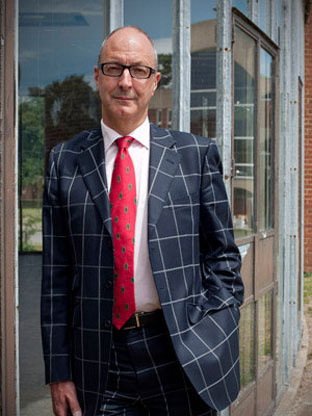
27On Friday I attended a very interesting event on the University of Sussex campus. This was arranged to mark the forthcoming end of the term of office of the current Chair of Council of the University of Sussex, Simon Fanshawe (left). Simon Fanshawe OBE is, of course,  a well-known radio and TV broadcaster, award-winning comedian and co-founder of the campaigning organization Stonewall. He also has an interesting taste in suits, and provided evidence of that in his outfit on Friday. But enough of matters sartorial. Simon has been Chair of Council for six years, and served as a member of Council for as many years before that, so really has contributed a huge amount to the University over that period. I think it’s safe to say that he has had a much higher profile in his role as Chair than most of his counterparts in other UK universities, so the idea of having a special event in his honour was thoroughly well justified.

First we had a series of three short lectures by Sussex on various issues relating to equality and diversity and how their relate to power and governance. More specifically these were talks about female islamic religious leaders, the nature of political corruption and attitudes to it in different countries, and a particularly fascinating talk by Robert Livingston that touched on many things, including how facial features seem to correlate with success in leadership positions.

After that there was a wine reception and a nice dinner with lots of stimulating conversation. For some reason a major topic on my table was bell-ringing, and why English church bells sound so different from those in continental Europe. I wrote some stuff about that years ago, while I was teaching probability, and may blog about it in future. Everyone else seemed to head home via taxi after dinner, but I wobbled off to the bus stop and got the trusty No. 23 back to Kemptown.

Anyway, I may post later on about some things that popped into my mind as a result of the talks and the subsequent discussion and conversation but for the time being I’ll just mention a very tenuous link with Simon Fanshawe that involves taking a little trip down memory lane. The picture below was taken in either 1988 or 1989 (I’m not very good at dates). It shows me and my partner at the time, Roger, preparing to act as volunteer waiters at a fund-raising dinner (somewhere in Lewes if I remember correctly) organized by the Communist Party of Great Britain:

Marxism_today

I wasn’t involved very much in campus politics when I was a graduate student at Sussex (from 1985 to 1988) or a postdoctoral researcher (1988-90) because I found most of it depressingly puerile and short-sighted, that being especially true of the sizable lunatic fringe which also had a disagreeable taste for mindless vandalism. Sadly, times haven’t changed in that respect. I did, however, during that time become an avid reader of magazine called Marxism Today which I thought contained the most incisive political writing of the time and which therefore prompted me to join the CPGB, and eventually became Branch Secretary until I left for London in 1990. Incidentally the Cee-Pee-Gee-Bee decided to dissolve itself as a political party in 1991 and became a sort of leftist think-tank called Democratic Left.

Anyway, the point about that photograph is that the after-dinner speaker on that occasion was none other than Simon Fanshawe, although I doubt if he remembers!

Punch and Judy meet Quantum Technology

Posted in The Universe and Stuff with tags , , , , , , on June 28, 2013 by telescoper

It’s an Open Day here on campus, and there’s quite a crowd of potential students and parents gathering in the School of Mathematical and Physical Sciences here at the University of Sussex to find out a bit more about the School in advance of making decisions about where to apply next year.

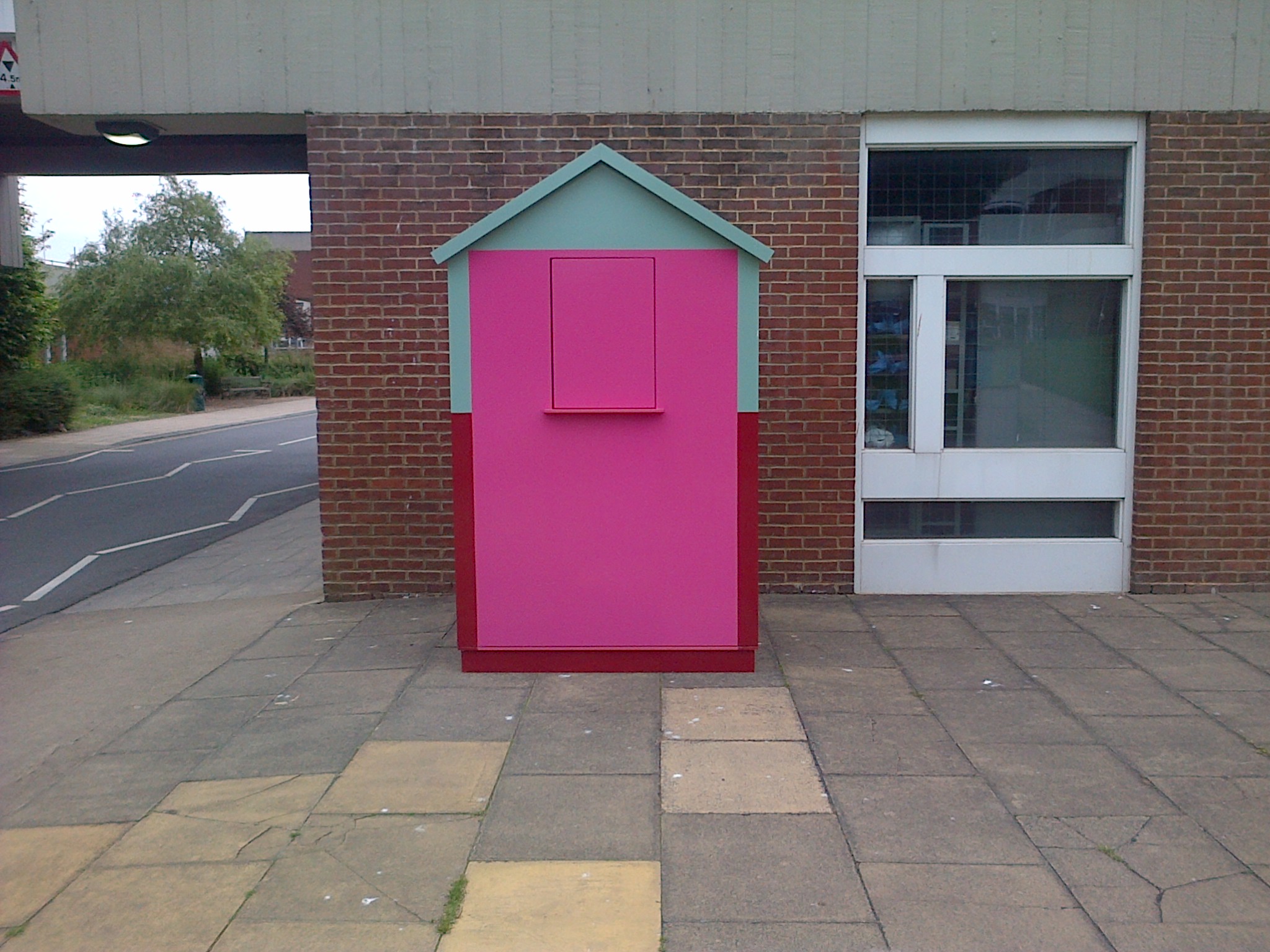
I noticed the other day that quite a few of these have appeared on campus over the last few days:

IMG-20130627-00139

Apparently they’re information points manned by various helpers to help visitors find their way around the place. When I first saw this one, I thought it was a Punch and Judy box, so assumed that there was some sort of conference of Punch and Judy performers going on. That wouldn’t be inappropriate for a University campus, actually, because the traditional name for a Punch & Judy puppeteer is a “Professor”. Not a lot of people know that.

Anyway, none of that is really relevant to what I wanted to post today. I stumbled across this video featuring Winfried Hensinger (one of my colleagues from the Department of Physics & Astronomy within the School of Mathematical and Physical Sciences). I thought it would be fun to share it here, just to give an idea of some of the work that’s going on here outside my own speciality of astrophysics. I hope this will complement the real open day with a mini virtual open day on the blog.

Winfried is Reader in Quantum, Atomic and Optical Physics at the University of Sussex and he works in the group we generally call “AMO” (Atomic, Molecular and Optical). In this TEDX lecture he talks about the future of quantum computers and the role the team he is part of, at Sussex University, plays as they develop large scale quantum computers using ions cooled to extremely low temperatures using lasers. Enjoy!

And the nominations are…

Posted in Biographical, Sport with tags , on June 24, 2013 by telescoper

Last Thursday I had the pleasure of handing out an award. I even got to say “and the nominations are…” before reading out the name of the lucky winner. This was all part of a little event to celebrate “Commit to Get Fit“, a challenge run by Sussexsport which involved staff from all over the University embarking on a range of physical activities and which ran throughout May.

Anyway, staff taking part were encouraged to keep a blog about their experiences using the University’s SPLASH resource and it was my duty to present a prize on behalf of the jury. There turned out to be over 200 individual posts, which meant a lot of work reading them in the days leading up to the ceremony. As it happened, the prize for the best blog series was actually awarded to Gemma Farrell from the School of Mathematical and Physical Sciences (MPS), of which I happen to be Head. But it wasn’t a fix. Oh no…

Here’s me presenting the treasured brown envelope to Gemma.

2710.item

Anyway, the whole CTGF campaign seems to have gone off pretty well. Maybe I’ll even take part myself next year, as opposed to sitting on my backside reading blog posts…