Archive for University of Sussex

Leaving Party

Posted in Poetry with tags , , , , on July 20, 2016 by telescoper

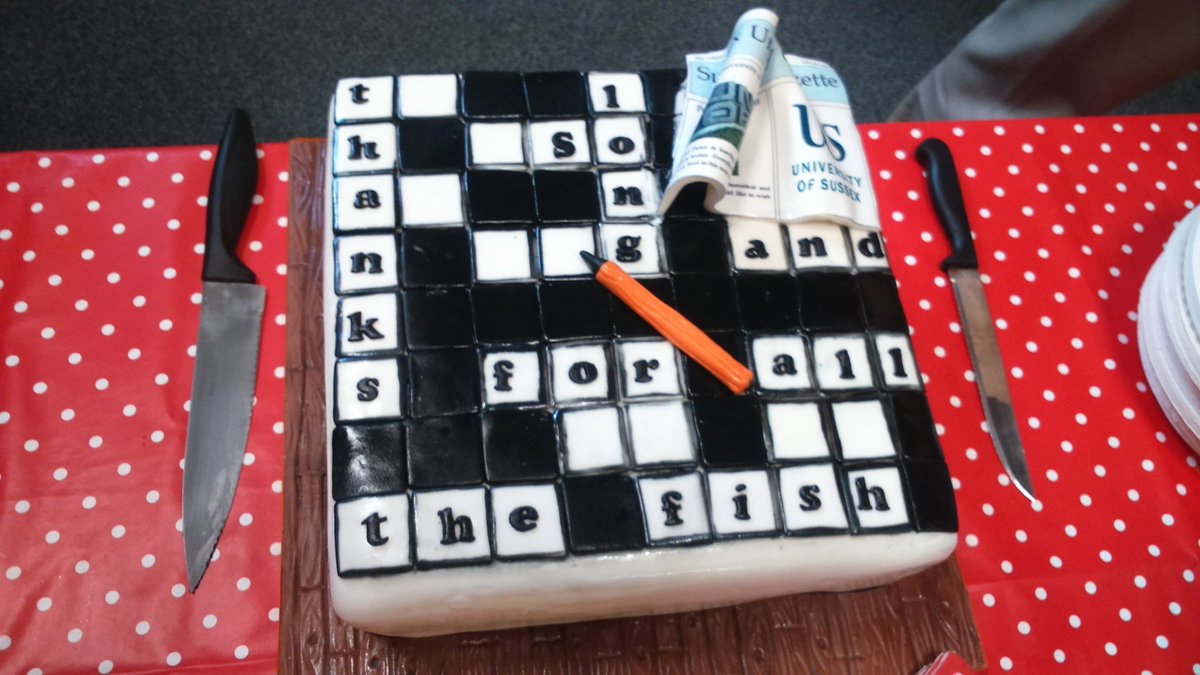
As regular readers of this blog (Sid and Doris Bonkers) will know, I’m about to leave my current job as Head of School of Mathematical and Physical Sciences at the University of Sussex. Although I don’t actually finish here until the end of the month, there was a small gathering in the School this afternoon to celebrate the fact that I am leaving. Here is the cake:

Cake_leave

This was accompanied by Prosecco, opened in dangerously explosive fashion by Philip Harris, who will be taking over as Acting Head of School after my departure. As such he will be responsible for Health and Safety in the School. I hope he fills in a risk assessment before attempting to open any further bottles of bubbly! I got a lovely gift of a pair of champagne flutes, although I haven’t managed to play any music on them yet.

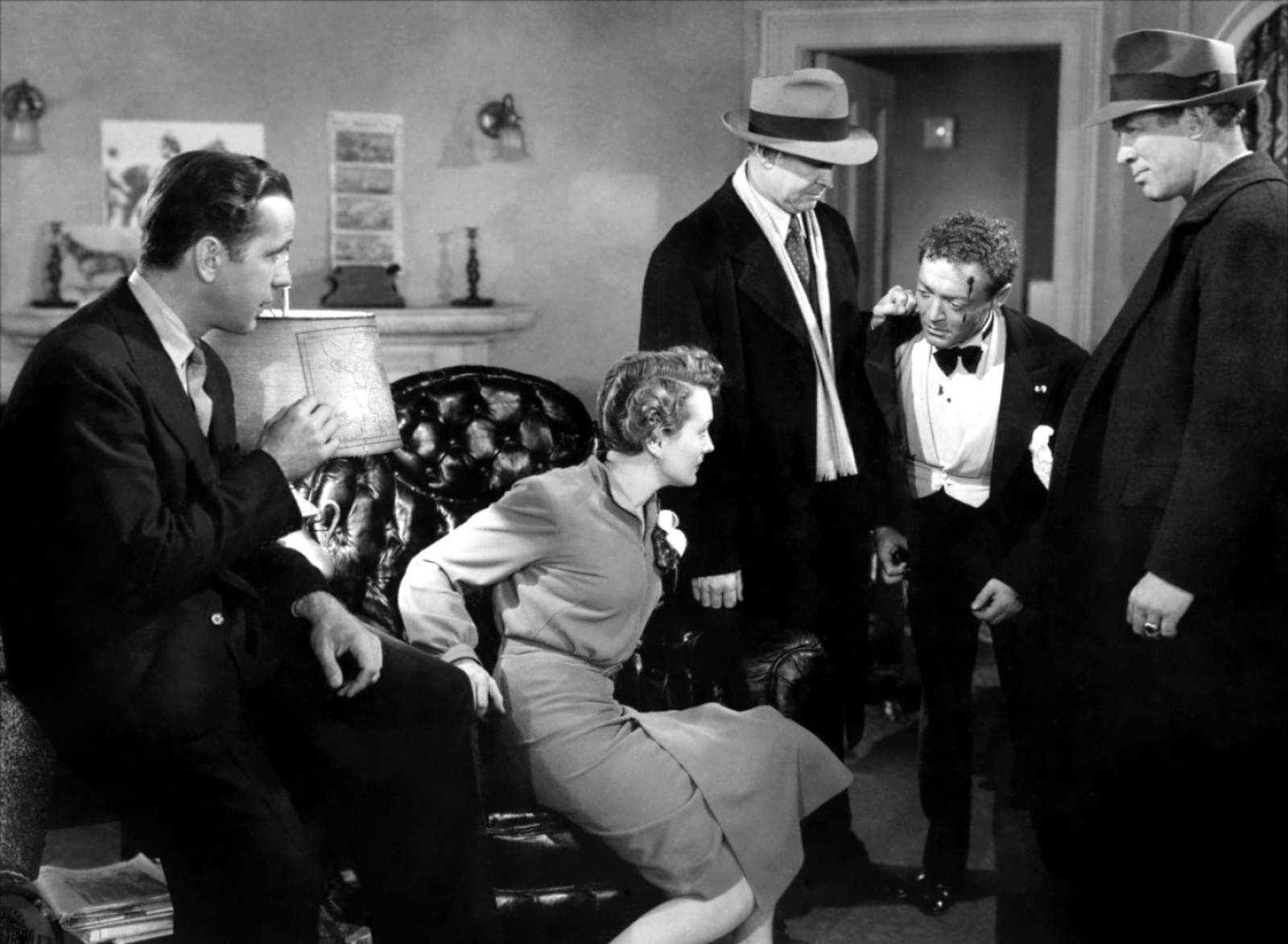
I’ve also been inundated with gifts by Dorothy Lamb, my Head of Schools Coordinator. Dorothy arranged a special treat for me this morning, in the form of a private screening (in the Attenborough Centre) of my favourite film, The Maltese Falcon. I’ve seen this film dozens of times on TV or on DVD but never in the cinema, so this was a very nice thought. Here’s a still from the movie, which reminds me for some reason of the Senior Management Group:

Maltese-Falcon-Tell-the-Truth-1941

At this afternoon’s cake and wine party, Dorothy also read out a poem what she wrote, which I reproduce here (including a preamble) in the hope that literary agents and talent-spotters might be reading this blog:

Those of you who read Peter’s blog will know that he regularly posts poems by Stevie Smith, Emily Dickinson, Wordsworth and others, plus occasionally his own work. The last time I wrote a poem was when I was about 8 years old and it was published in ‘The Brownie’ so I thought it fitting that, frighteningly, almost half a century on, I should pen another.

To Peter Coles, aged 53 and almost one sixth
Known for a passion for the cryptic,
Let’s hope his departure is not apocalyptic.
A northern gent in whom we trust,
An honest man, some say robust;
A wealth of knowledge, awesome talent
And, as a boss, sublime, transparent.
With Coltrane, Cohen and Humphrey Bogart
He is not backward in going forward.
With diphthongs, datives, gerunds and such
Though untrepanned, he’ll give the heads up.
A Newcastle lad up at Cambridge
Prosecco chilling in the fridge,
He truly does explain things clearly
Though I’m still ignorant of quantum theory.
He always seems to stay clear sighted
Except when it comes to Newcastle United.
A crossword never left unsolved,
An over never left unbowled,
The poems of the good and great,
The Miss Lemon drizzle cake he ate;
And every due respect he paid
To his trusted Midlands maid.
And so we say farewell to Peter,
Though this poem has the strangest meter,
Whilst lexicons fill every space,
An emptiness will take his place,
A smile of sadness on my face.


Examination Time Yet Again

Posted in Biographical, Education with tags , , , , , on May 12, 2016 by telescoper

Once again the return of glorious weather heralds the return of the  examination season at the University of Sussex, so here’s a lazy rehash of my previous offerings on the subject that I’ve posted around this time each year since I started blogging.

My feelings about examinations agree pretty much with those of  William Wordsworth, who studied at the same University as me, as expressed in this quotation from The Prelude:

Of College labours, of the Lecturer’s room
All studded round, as thick as chairs could stand,
With loyal students, faithful to their books,
Half-and-half idlers, hardy recusants,
And honest dunces–of important days,
Examinations, when the man was weighed
As in a balance! of excessive hopes,
Tremblings withal and commendable fears,
Small jealousies, and triumphs good or bad–
Let others that know more speak as they know.
Such glory was but little sought by me,
And little won.

It seems to me a great a pity that our system of education – both at School and University – places such a great emphasis on examination and assessment to the detriment of real learning. On previous occasions, before I moved to the University of Sussex, I’ve bemoaned the role that modularisation has played in this process, especially in my own discipline of physics.

Don’t get me wrong. I’m not opposed to modularisation in principle. I just think the way modules are used in many British universities fails to develop any understanding of the interconnection between different aspects of the subject. That’s an educational disaster because what is most exciting and compelling about physics is its essential unity. Splitting it into little boxes, taught on their own with no relationship to the other boxes, provides us with no scope to nurture the kind of lateral thinking that is key to the way physicists attempt to solve problems. The small size of many module makes the syllabus very “bitty” and fragmented. No sooner have you started to explore something at a proper level than the module is over. More advanced modules, following perhaps the following year, have to recap a large fraction of the earlier modules so there isn’t time to go as deep as one would like even over the whole curriculum.

In most UK universities (including Sussex), tudents take 120 “credits” in a year, split into two semesters. In many institutions, these are split into 10-credit modules with an examination at the end of each semester; there are two semesters per year. Laboratories, projects, and other continuously-assessed work do not involve a written examination, so the system means that a typical  student will have 5 written examination papers in January and another 5 in May. Each paper is usually of two hours’ duration.

Such an arrangement means a heavy ratio of assessment to education, one that has risen sharply over the last decades,  with the undeniable result that academic standards in physics have fallen across the sector. The system encourages students to think of modules as little bit-sized bits of education to be consumed and then forgotten. Instead of learning to rely on their brains to solve problems, students tend to approach learning by memorising chunks of their notes and regurgitating them in the exam. I find it very sad when students ask me what derivations they should memorize to prepare for examinations. A brain is so much more than a memory device. What we should be doing is giving students the confidence to think for themselves and use their intellect to its full potential rather than encouraging rote learning.

You can contrast this diet of examinations with the regime when I was an undergraduate. My entire degree result was based on six three-hour written examinations taken at the end of my final year, rather than something like 30 examinations taken over 3 years. Moreover, my finals were all in a three-day period. Morning and afternoon exams for three consecutive days is an ordeal I wouldn’t wish on anyone so I’m not saying the old days were better, but I do think we’ve gone far too far to the opposite extreme. The one good thing about the system I went through was that there was no possibility of passing examinations on memory alone. Since they were so close together there was no way of mugging up anything in between them. I only got through  by figuring things out in the exam room.

I think the system we have here at the University of Sussex is much better than I’ve experienced elsewhere. For a start the basic module size is 15 credits. This means that students are usually only doing four things in parallel, and they consequently have fewer examinations, especially since they also take laboratory classes and other modules which don’t have a set examination at the end. There’s also a sizeable continuously assessed component (30%) for most modules so it doesn’t all rest on one paper. Although in my view there’s still too much emphasis on assessment and too little on the joy of finding things out, it’s much less pronounced than elsewhere. Maybe that’s one of the reasons why the Department of Physics & Astronomy does so consistently well in the National Student Survey?

We also have modules called Skills in Physics which focus on developing the problem-solving skills I mentioned above; these are taught through a mixture of lectures and small-group tutorials. I don’t know what the students think of these sessions, but I always enjoy them because the problems set for each session are generally a bit wacky, some of them being very testing. In fact I’d say that I’m very impressed at the technical level of the modules in the Department of Physics & Astronomy generally. I’ve been teaching Green’s Functions, Conformal Transformations and the Calculus of Variations to second-year students this semester. Those topics weren’t on the syllabus at all in my previous institution!

Anyway, my Theoretical Physics paper is next week (on 19th May) so I’ll find out if the students managed to learn anything despite having such a lousy lecturer. Which reminds me, I must remember to post some worked examples online to help them with their revision.
50 Years of the Astronomy Centre at the University of Sussex

Posted in Uncategorized with tags , , on May 3, 2016 by telescoper

It is my pleasure to share here the announcement that there will be a  special celebration for the 50th Anniversary of the Astronomy Centre at the University of Sussex whose first students began their studies here in 1966.

Lord Martin Rees – Astronomer Royal, Fellow of Trinity College, Cambridge, Past President of the Royal Society and Sussex Honorary – will be joining alumni and other former faculty for the celebratory lunch and has kindly agreed to deliver a short speech as part of the event.

Organised by the Astronomy Centre and the Development and Alumni Office, and supported by the School of Mathematical and Physical Sciences , this celebration is open to all former students and their partners. Please make a note of the date and time:

Date: Saturday 15th October 2016
Venue: 3rd Floor, Bramber House, University of Sussex
Time: 12 – 3pm
Cost:  £20 per person, to include lunch and refreshments

You can book online here to secure your place(s).

We are very much looking forward to welcoming you back to campus to share in the celebrations. If you are in touch with other alumni or faculty from Sussex who have connections with the Astronomy Centre, please let them know!

R.I.P. Harry Kroto (1939-2016)

Posted in Biographical, The Universe and Stuff with tags , , , , , , on May 1, 2016 by telescoper

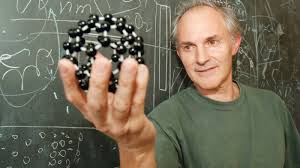
image

I heard earlier this afternoon of the death at the age of 76 of the distinguished chemist Sir Harry Kroto.

Along with Robert Curl and Richard Smalley,  Harry Kroto was awarded the Nobel Prize for Chemistry in 1996 for the discovery of the C60 structure that became known as Buckminsterfullerene (or the “Buckyball” for short).

Harry had a long association with the University of Sussex and was a regular visitor to the Falmer campus even after he moved to the USA.

I remember first meeting him in the 1988 when, as a new postdoc fresh out of my PhD, I had just taken over organising the Friday seminars for the Astronomy Centre. One speaker called off his talk just an hour before it was due to start so I asked if anyone could suggest someone on campus who might stand in. Someone suggested Harry, whose office was  nearby in the School of Molecular Sciences (now the Chichester Building). I was very nervous as I knocked on his door – Harry was already famous then – and held out very little hope that such a busy man would agree to give a talk with less than an hour’s notice. In fact he accepted immediately and with good grace gave a fine impromptu talk about the possibility that C60 might be a major component of interstellar dust. If only all distinguished people were so approachable and helpful!

I met him in campus more recently a couple of years ago when we met to talk about some work he had been doing on a range of things to do with widening participation in STEM subjects. I remember I had booked  an hour in my calendar but we talked for at least three. He was brimming with ideas and energy then. It’s hard to believe he is no more.

Harry Kroto was a man of very strong views  and he was not shy in expressing them. He cared passionately about science and was a powerful advocate for it. He will be greatly missed.

Rest in peace, Harry Kroto (1939-2016)

Happy Retirement, Sally Church!

Posted in Biographical, Brighton with tags , , on April 28, 2016 by telescoper

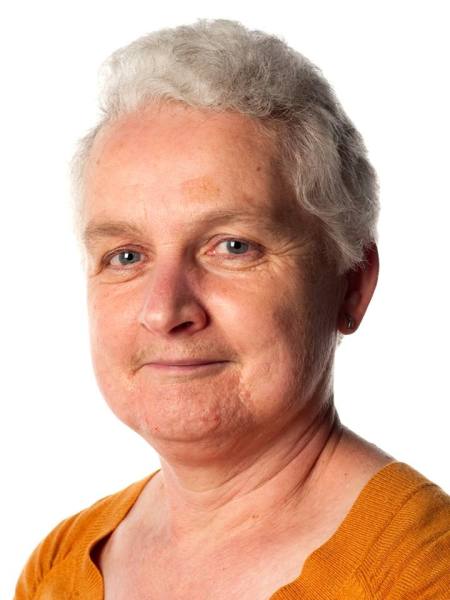
Today marks the end of an era for the Department of Physics and Astronomy at the University of Sussex. Sally Church, pictured below, is retiring today after over 27 years in the Department (and almost 29 in the University). No doubt there are many readers of this blog who have passed through Sussex at one time or another and met Sally. In fact, she arrived in the Department when I was here in a previous incarnation as a PhD student in the late Eighties and was still here when I returned in 2013 as Head of School. She recently received a long service award from the University in recognition of her loyalty and hard work.

Sally Church

Sally has been our Course Coordinator for Physics and Astronomy and, as such, has been a key member of our office team, providing administrative support for a huge range of teaching and other activities. She will be extremely hard to replace as her understanding of the University’s systems and procedures is second to none, but she’s definitely earned a rest and on behalf of everyone in the Department, the School and the University as a whole I wish her a very happy retirement!

P.S. Shortly, at 2.30pm, there’s going to be a farewell gathering, with speeches and gifts, at which I hope to take a few pictures which I’ll post here later.

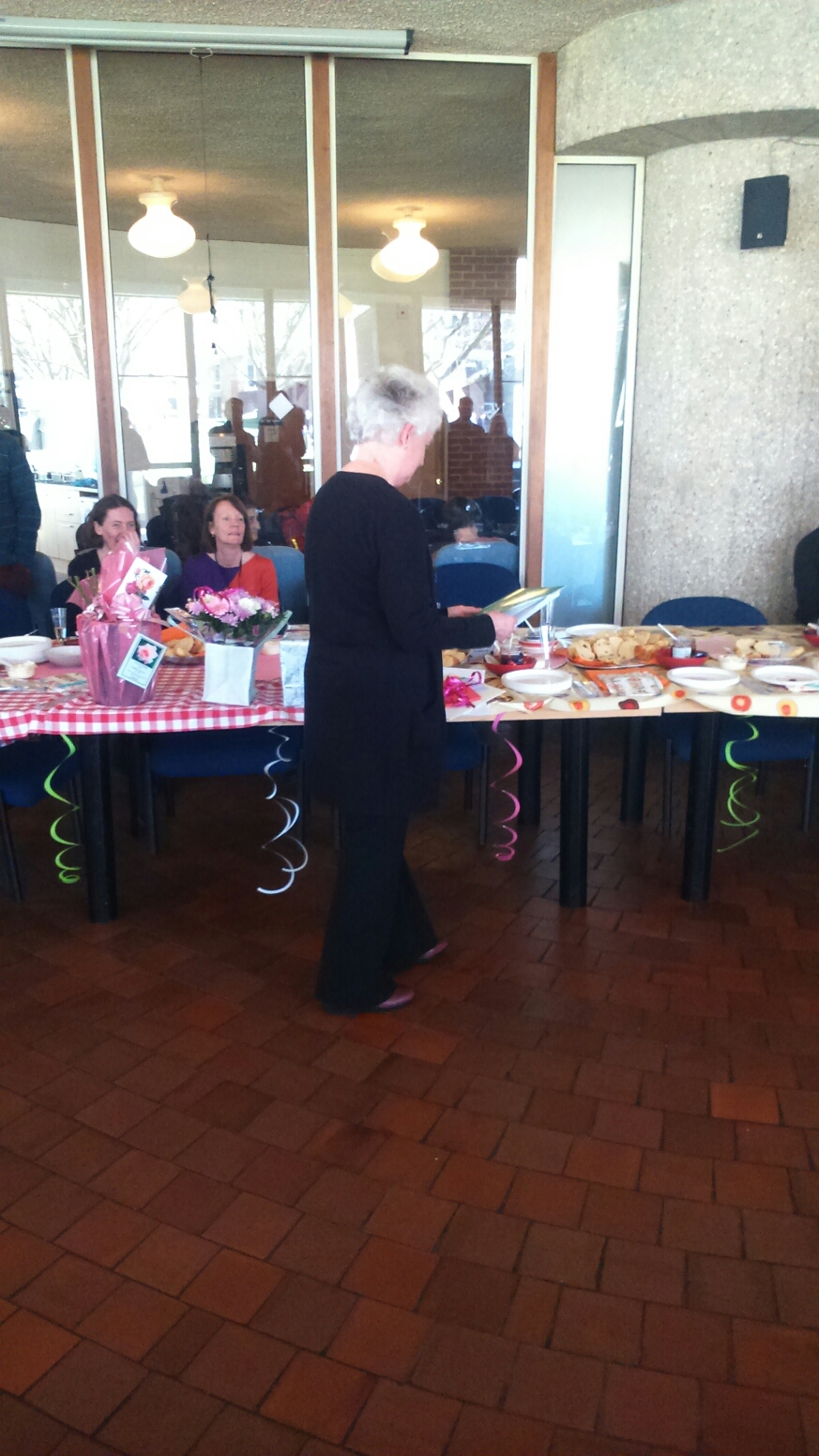
P.P.S. I only had time to take one picture, but here is Sally opening some of her gifts among the remains of the cakes and scones…

image

In Praise of Natural Sciences

Posted in Biographical, Education with tags , , , , on April 24, 2016 by telescoper

The other day I was chatting with some students in the Department of Physics & Astronomy at the University of Sussex. One thing that came up was the fact that I’m basing the material for my Second Year Theoretical Physics module on the notes I took when I was a second-year undergraduate student at Cambridge over thirty years ago. I mentioned that to counter suggestions that are often made that the physics curriculum has been excessively “dumbed down” over the years. It may have been elsewhere, of course, but not on my watch. In fact, despite the misfortune of having me as a lecturer, many of the students in my class are picking up things far faster than I did when I was their age!

Anyway, that led to a general discussion of the changing nature of university education. One point was that in my day there weren’t any four-year “Integrated Masters” degrees, just plain three-year Bachelors. Teaching was therefore a bit more compressed than it is now, especially at Cambridge with its shorter teaching terms. We teach in two 12-week blocks here at Sussex. Week 11 of the Spring Term is about to start so we’re nearing the finishing line for this academic year and soon the examinations will be upon us.

The other thing that proved an interesting point of discussion was that the degree programme that I took was the Natural Sciences Tripos That meant that I did a very general first year comprising four different elements that could be chosen flexibly. I quickly settled on Physics, Chemistry and  Mathematics for Natural Sciences to reflect my A-level results but was struggling for the fourth. In the end I picked the one that seemed most like Physics, a course called Crystalline Materials. I didn’t like that at all, and wish I’d done some Biology instead – Biology of Cells and Biology of Organisms were both options – or even Geology, but I stuck with it for the first year.

Having to do such a wide range of subjects was very challenging. The timetable was densely packed and the pace was considerable. In the second year, however, I was able to focus on Mathematics and Physics and although it was still intense it was a bit more focussed. I ended up doing Theoretical Physics in my final year, including a theory project.

My best teacher at School, Dr Geoeff Swinden,  was a chemist (he had a doctorate in organic chemistry from Oxford University) and when I went to Cambridge I fully expected to specialise in Chemistry rather tha Physics. I loved the curly arrows and all that. But two things changed. One was that I found the Physics content of the first year far more interesting – and the lecturers and tutors far more inspiring – than Chemistry, and the other was that my considerable ineptitude at practical work made me doubt that I had a future in a chemistry laboratory. And so it came to pass that I switched allegiance to Physics, a decision I am very glad I made. It was only towards the end of my degree that I started to take Astrophysics seriously as a possible specialism, but that’s another story.

As we are now approaching examination season I’ve been dealing with some matters in my role as External Examiner for Natural Sciences (Physics) at Cambridge, a position I have held since last year. It’s certaintly extremely interesting to see things from the other side of the fence, thirty years on since my finals. In particular I was struck last year by how many senior physicists there are at Cambridge who actually came as undergraduates expecting, like I did, to do Chemistry but also then switched. No doubt some moved in the opposite direction too, but the point is that the system not only allowed this but positively encouraged it.

Looking back, I think  there were great educational advantages in delaying  the choice of speciality the way a Natural Sciences degree did. New students usually have very little idea how different the subject is at university compared to A-level, so it seems unfair to lock them into a programme from Year 1. Moreover – and this struck me particularly talking to current students last week – a Natural Sciences programme might well prove a way of addressing the gender imbalance in physics by allowing female students (who might have been put off Physics at school) to gravitate towards it. Only 20% of the students who take Physics A-level are female, and that’s roughly the same mix that we find in the undergraduate population. How many more might opt for Physics after taking a general first year?

Another advantage of this kind of degree is that it gives scientists a good grounding in  a range of subjects. In the long run this could encourage greater levels of interdisciplinary thinking. This is important, since some of the most exciting areas of physics research lie at the interfaces with, e.g. chemistry and biology. Unfortunately, adminstrative structures often create barriers that deter such cross-disciplinary activities.


Opportunities in Mathematics, Statistics and Probability at Sussex University

Posted in Education with tags , , on April 16, 2016 by telescoper

It seems a good time for a quick post to point out that we have some jobs available in the Department of Mathematics at the University of Sussex. These posts have been made available following the University’s annual strategic planning process, in which it is one of my main responsibilities as Head of the School of Mathematical and Physical Sciences to put forward plans for future developments. The new positions are intended both to expand and diversify our research base in Mathematics and Statistics, but also to provide additional teaching effort given our expanding student numbers.

When I arrived at Sussex three years ago the number of academic staff in the Department of Mathematics was just 15. We made a number of appointments in 2013 and these further posts will take it up to 25, which is still quite small by UK standards. Our strategic plan is to get staff numbers in Mathematics up to around 30 by 2018. In fact, applications by potential undergraduates to do Mathematics courses at Sussex are up by a whopping  80% this year, and if this turns into a large increase in intake then we will be looking to make further appointments very soon.

Anyway, here are three jobs with links to adverts:

  1. Lecturer in Statistics and Probability
  2. Senior Lecturer or Reader in Statistics and Probability.
  3. Lecturer in Mathematics.

Please follow the links for more detailed descriptions of each job and further instructions on how to apply. The closing dates for all three jobs are 17th May 2016; we plan to interview selected candidates in June or July.

Feel free pass this on to likely applicants!


R.I.P. Asa Briggs (1921-2016)

Posted in History with tags , , on March 16, 2016 by telescoper
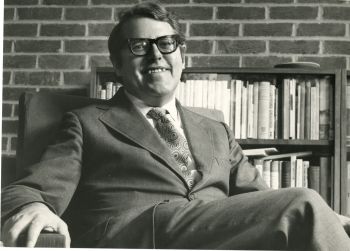
ASA

Asa Briggs (1921-2016)

The frivolity of yesterday’s post it’s time today for a piece of sad news. Eminent historian and distinguished former Vice Chancellor Asa Briggs (Lord Briggs of Lewes) has passed away at the age of 94.

There will be many others who can comment more meaningfully on his immense contribution to academic research, but it seems to me that Asa Briggs was a rare example of a historian whose work transcended the boundaries of academic research. Even an ignorant astrophysicist like me has read his marvellous Social History of England , for example. He was Vice Chancellor of Sussex University from 1967 until 1976, but when he retired from his post as Provost of Worcester College, Oxford, in 1991, he lived in Lewes which is just a few miles up the road from the Falmer campus so his association with the University remained strong.

Having twice been based at Sussex during my career I was of course familiar with Asa’s name and work but it wasn’t until two years ago that I finally got to meet him, at a Commemoration Dinner in the Royal Pavilion. For some reason I was seated next to him at this event and we talked about a wide range of subjects, including football. He was quite frail at that time, but full of good humour and very friendly. In short he was excellent company and clearly a very nice man.

Rest in Peace Asa Briggs (1921-2016).


Mathematics at Sussex – The Videos

Posted in Uncategorized with tags , on February 16, 2016 by telescoper

A while ago I posted some videos featuring students in the Department of Physics & Astronomy at the University of Sussex. Here are a few more about the other side of the School of Mathematical and Physical Sciences, i.e. the Department of Mathematics. The first is a general video about the Mathematics BSc programme generally and the other two feature current students (one undergraduate, one postgraduate) talking about their courses and the environment for students here.


Defining Sexual Harassment

Posted in Uncategorized with tags , on January 25, 2016 by telescoper

Since I spent this morning at a training session about preventing bullying and harassment in the workplace, and after the latest high-profile sexual harassment case at Caltech I thought it might be useful to share my current employer’s definition of what may constitute sexual harassment in the workplace. In my earlier post on harassment I talked mainly about the processes that take place when it is alleged, but I didn’t include a clear statement of how sexual harassment is defined.

The following is taken from the University of Sussex’s Policy to Prevent Bullying and Harassment at Work (which is in the public domain):

Sexual harassment is a form of sex discrimination and involves unwanted and unwelcome attention of a sexual nature. This may be physical or verbal or involve the denigration of an individual on sexual grounds or by sexual means. Some examples of sexual harassment are:

  • indecent assault
  • deliberate physical contact to which the individual has not consented or had the opportunity to object to
  • offensive or derogatory language alluding to a person’s private life or sexual behaviour or orientation by innuendo, jokes or remarks
  •  provocative suggestions
  • pressing an individual to accept unwelcome invitations
  • the display of suggestive or pornographic material
  • unwelcome repeated telephone calls, letters or emails
These examples should not be seen as exhaustive: any unwelcome behaviour of a sexual nature which creates an intimidating, hostile or offensive environment for the recipient may be regarded as sexual harassment.