Archive for William Shakespeare

The Tempest in Musick

Posted in Brighton, Literature, Music with tags , , , , , , , on May 17, 2014 by telescoper

I haven’t done a music review type of thing on this blog for some time, for the simple reason that I haven’t had the time to go to many live music events recently. However, this being Festival time in Brighton I felt I should make an extra-special effort to take a bit of time out to take in a bit of culture. All work and no play and all that.

Anyway, yesterday evening found me in the Concert Hall of the Brighton Dome for a performance entitled The Tempest in Musick by the New London Consort. The programme for the show featured all the music written for the 17th and early 18th century revivals of William Shakespeare’s play, The Tempest. That in itself tells an interesting story. In 1667, after the Restoration of the Monarchy, John Dryden and Willian Davenant put together an enlarged and adapted version of Shakespeare’s play with a host of new characters and numerous musical interludes and additions. This piece was later revised further  aa number of times, each including even more music, a process which culminated in a semi-operatic version compiled by Thomas Shadwell in 1674. As if Shakespeare’s original tale were not exotic enough, these new versions had extra devils, Tritons, and Nereids along with spectacular stage effects and costumes. London audiences clearly wanted to let their hair down after the severe restrictions on popular entertainment imposed by Puritans during the Protectorate. The Shadwell version was the top show in London for over fifty years: it ran from 1674 until 1728, until it was eventually replaced in popularity by The Beggar’s Opera.

In the concert we heard most if not all of the music that survives from the multiple revivals and revisions of the Tempest, written by various composers over the period 1667 to 1712, including a setting of “Dear pretty youth” by Henry Purcell dated to 1695. There were two different versions of the most famous song from the original play, Full Fathom Five, sung by Ariel:

Full fathom five thy father lies;
Of his bones are coral made;
Those are pearls that were his eyes;
Nothing of him that doth fade,
But doth suffer a sea-change
Into something rich and strange.
Sea-nymphs hourly ring his knell:
Ding-dong.
Hark! now I hear them — Ding-dong, bell

Of course the New London Consort play using period instruments, which gives me an excuse to post this again:
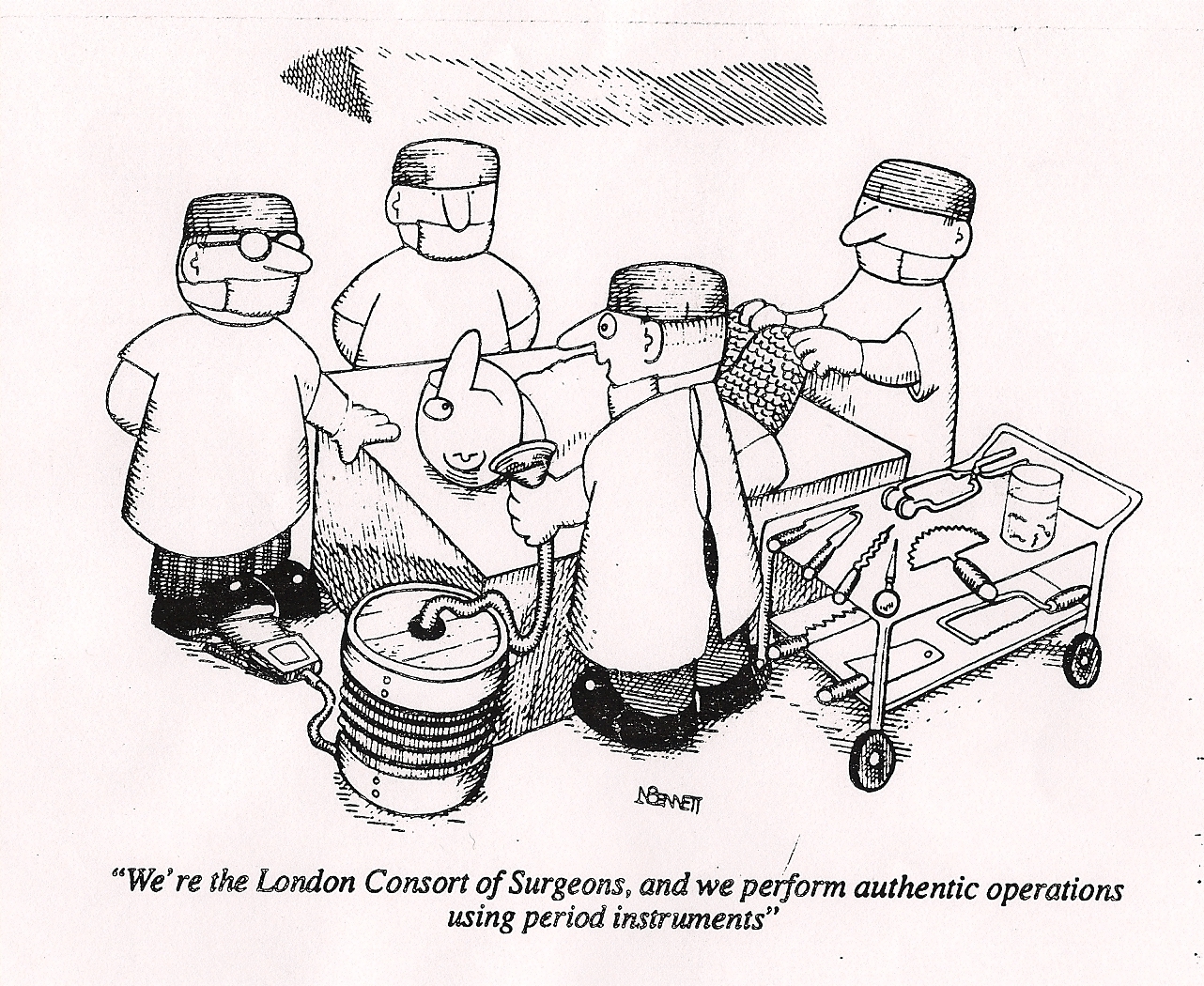
periodinstruments

I’m not a fan of period instruments generally, but because of the historical interest in the music I thought I’d give it a go. I had grave misgivings when I saw that the musicians were to be directed by David Roblou from a harpsichord, but decided to grit my teeth and perservere instead of fleeing to the nearest pub.

As it happened, although it was good in parts, the concert basically just confirmed my prejudices. To start with, much of the music is very ordinary and the musicians for the most part failed to bring it to life. The strings, played without vibrato throughout and occasionally rather ragged to boot, didn’t produce much in the way of colour or dynamics; this way of playing also exposed their uncertain pitching. The recorders, a long way from the audience right at the back of the stage, found it difficult to project. They would have been much better off in a smaller venue, I think, especially because of the large gap between audience and stage left for standing customers (of whom there were very few). The dreaded harpsichord was barely audible too. Not that I’m complaining about that.

On the other hand there was some brilliant trumpet playing by Simon Munday on a period instrument. Also I think this is the first time I’ve ever heard a Serpent played and I really enjoyed hearing it. Apart from these highlights though I found the music rather undistinguished and the performance curiously flat.

The singing was much better: the three lovely female voices (Anna Dennis, Faye Newton and Penelope Appleyard) are worth mentioning and tenor Jorge Navarro-Colorado sang well and was a striking presence on stage during the occasional semi-staged pieces. I wasn’t that keen on any of the bass-baritones though.

I realise that there will probably be early music fans out there who would have loved last night’s performance. That’s fine of course. Les gouts et les couleurs ne se discutent pas.


When’s a Sonnet not a Sonnet? When it’s No. 126..

Posted in Poetry with tags , , on September 22, 2013 by telescoper

Every now and then I like to post one of Shakespeare’s Sonnets. Of the entire collection of 154 this one, No. 126, is undoubtedly the strangest. It marks the end of the series of poems addressed to an unknown young man and is thought to have been given to the fair youth on his 27th birthday, marking the end of a relationship that lasted nine years. The following sonnets are addressed to another unknown person, but of the opposite Experts generally regard it as a kind of envoi, which is normally a short stanza at the end of a long poem, but in this case it is a poem in itself occurring at the end of a sequence. What’s strange about it is that it isn’t actually a sonnet at all. It consists of twelve lines rather than the usual fourteen, but the missing two lines are presented in most editions as two pairs of parentheses as shown below. Moreover, the rhyme scheme (consisting of six couplets) doesn’t fit with the pattern of the rest of the Sonnets, so even if he had filled in the two blanks at the end it would still have been an oddity.

So what was the reason for this curious verse? Perhaps Shakespeare deleted the final couplet because he felt the lines were somehow inappropriate? Perhaps he meant the fair youth to finish it himself, or issue an invitation to others to do likewise? Perhaps the poem is simply unfinished? Perhaps the poet wanted to demonstrate that the relationship with his beloved ended prematurely.

More likely than any of these interpretations, in my opinion, is that furnished by looking at the typical structure of a Shakespearean Sonnet. The last two lines usually express the poet’s consolation in the face of what has come before. Here there is none. It’s over. Read it in this light and I think it becomes even more moving to anyone who has experienced any kind of love and has had to face the fact that it is finally over.

O thou, my lovely boy, who in thy power
Dost hold Time’s fickle glass, his sickle, hour;
Who hast by waning grown, and therein show’st
Thy lovers withering, as thy sweet self grow’st.
If Nature, sovereign mistress over wrack,
As thou goest onwards, still will pluck thee back,
She keeps thee to this purpose, that her skill
May time disgrace and wretched minutes kill.
Yet fear her, O thou minion of her pleasure!
She may detain, but not still keep, her treasure:
Her audit (though delayed) answered must be,
And her quietus is to render thee.
(        )
(        )

Sonnet No. 6

Posted in Poetry with tags , , on January 21, 2013 by telescoper

Then let not winter’s ragged hand deface,
In thee thy summer, ere thou be distilled:
Make sweet some vial; treasure thou some place
With beauty’s treasure ere it be self-killed.
That use is not forbidden usury,
Which happies those that pay the willing loan;
That’s for thy self to breed another thee,
Or ten times happier, be it ten for one;
Ten times thy self were happier than thou art,
If ten of thine ten times refigured thee:
Then what could death do if thou shouldst depart,
Leaving thee living in posterity?
Be not self-willed, for thou art much too fair
To be death’s conquest and make worms thine heir.

Sonnet No. 6, by William Shakespeare (1564-1616)

Now is the Winter of our Discontent

Posted in Literature with tags , , on January 3, 2013 by telescoper

Sonnet No. 97

Posted in Poetry with tags , , , on December 1, 2012 by telescoper


How like a winter hath my absence been
From thee, the pleasure of the fleeting year!
What freezings have I felt, what dark days seen!
What old December’s bareness every where!
And yet this time remov’d was summer’s time;
The teeming autumn, big with rich increase,
Bearing the wanton burden of the prime,
Like widow’d wombs after their lords’ decease:
Yet this abundant issue seem’d to me
But hope of orphans and unfather’d fruit;
For summer and his pleasures wait on thee,
And, thou away, the very birds are mute:
Or, if they sing, ’tis with so dull a cheer,
That leaves look pale, dreading the winter’s near.

Sonnet No.97 , by William Shakespeare (1564-1616)

Sonnet No. 25 (for National Poetry Day)

Posted in Poetry with tags , , , on October 4, 2012 by telescoper

I’m a bit ashamed that being very busy I forgot that today, Thursday 4th October, is National Poetry Day the theme of which this year is “stars”. I wish I’d remembered and would have posted something appropriate to mark the occasion, but this will have to do…


Let those who are in favour with their stars
Of public honour and proud titles boast,
Whilst I, whom fortune of such triumph bars,
Unlook’d for joy in that I honour most.
Great princes’ favourites their fair leaves spread
But as the marigold at the sun’s eye,
And in themselves their pride lies buried,
For at a frown they in their glory die.
The painful warrior famoused for fight,
After a thousand victories once foil’d,
Is from the book of honour razed quite,
And all the rest forgot for which he toil’d:
Then happy I, that love and am beloved
Where I may not remove nor be removed.

Sonnet No.25 , by William Shakespeare (1564-1616)

Sonnet No. 20

Posted in Poetry with tags , , on September 22, 2012 by telescoper

On most occasions when I post one of Shakespeare’s sonnets I don’t comment on the content or meaning, preferring to let you all make your own interpretation. This one, however, think deserves some discussion. At first reading it appears to be describing the poet’s love for a feminine-looking young man, and that has led to the interpretation that it was written about one of the many actors that played female roles on the Elizabethan stage. That could well be the case, of course, but it’s not at all obvious to me that this is describing sexual desire for said gender-bending individual. In fact, if you study this sonnet carefully you will find numerous puns and a liberal dose of sexual innuendo so I rather think this is just a bit of fun, rather than a serious discussion of the bard’s sexuality. The reference to “prick” in the penultimate line is obvious, but there’s also “nothing” in the previous line which Shakespeare often uses as a euphemism for a vagina. An even more clever and playful element is the existence of an extra unstressed syllable in each line (making 11 instead of the usual 10 in iambic pentameter), suggesting something added, fairly obviously a penis; the suggestion is that nature made this beautiful person as a woman but then added the “one thing” referred to in the poem.

Anyway, what I love most about this particular sonnet is its humour and ambivalence. That’s probably also why I enjoyed watching the Ladyboys of Bangkok so much on my birthday. So I hereby dedicate this post to them!


A woman’s face with nature’s own hand painted,
Hast thou the master mistress of my passion,
A woman’s gentle heart but not acquainted
With shifting change as is false women’s fashion,
An eye more bright than theirs, less false in rolling:
Gilding the object whereupon it gazeth,
A man in hue all hues in his controlling,
Which steals men’s eyes and women’s souls amazeth.
And for a woman wert thou first created,
Till nature as she wrought thee fell a-doting,
And by addition me of thee defeated,
By adding one thing to my purpose nothing.
But since she pricked thee out for women’s pleasure,
Mine be thy love and thy love’s use their treasure.


Sonnet No.20 , by William Shakespeare (1564-1616)

Sonnet No. 33

Posted in Poetry with tags , , on August 18, 2012 by telescoper


Full many a glorious morning have I seen
Flatter the mountain-tops with sovereign eye,
Kissing with golden face the meadows green,
Gilding pale streams with heavenly alchemy;
Anon permit the basest clouds to ride
With ugly rack on his celestial face,
And from the forlorn world his visage hide,
Stealing unseen to west with this disgrace:
Even so my sun one early morn did shine
With all triumphant splendor on my brow;
But out, alack! he was but one hour mine;
The region cloud hath mask’d him from me now.
Yet him for this my love no whit disdaineth;
Suns of the world may stain when heaven’s sun staineth.


Sonnet No.33 , by William Shakespeare (1564-1616)

Those earthly godfathers of Heaven’s lights

Posted in Literature, Poetry, The Universe and Stuff with tags , , on May 2, 2012 by telescoper

What was it that Ernest Rutherford said about science and stamp-collecting? It seems Shakespeare had much the same idea!

Study is like the heaven’s glorious sun,
That will not be deep-search’d with saucy looks;
Small have continual plodders ever won,
Save base authority from others’ books.
These earthly godfathers of heaven’s lights
That give a name to every fixed star,
Have no more profit of their shining nights
Than those that walk and wot not what they are.

from Love’s Labour’s Lost (Act I, Scene I) by William Shakespeare.

P.S. “wot” in the last line is an archaic form of  the verb “wit”, meaning “to know”; cf “I wot not what I ought to have braught” from A Midsummer Night’s Dream.

Sonnet No. 116

Posted in Poetry with tags , , on March 11, 2012 by telescoper

Let me not to the marriage of true minds
Admit impediments. Love is not love
Which alters when it alteration finds,
Or bends with the remover to remove:
O no! it is an ever-fixed mark
That looks on tempests and is never shaken;
It is the star to every wandering bark,
Whose worth’s unknown, although his height be taken.
Love’s not Time’s fool, though rosy lips and cheeks
Within his bending sickle’s compass come:
Love alters not with his brief hours and weeks,
But bears it out even to the edge of doom.
If this be error and upon me proved,
I never writ, nor no man ever loved.

Sonnet No. 116, by William Shakespeare (1564-1616)

P.S. This is one of over a hundred love sonnets written by Shakespeare to a young man to whom he was deeply devoted. If you think we shouldn’t admit impediments to people in similar relationships nowadays then perhaps you would consider signing the petition organized by the coalition for equal marriage