Archive for September, 2012

Hubble versus Slipher

Posted in History, The Universe and Stuff with tags , , , , , on September 15, 2012 by telescoper

Since I’m here at a conference celebrating the scientific achievements of Vesto M. Slipher, I thought I’d take the opportunity to make a few remarks about Slipher’s work and legacy.

I often use this picture in popular talks to illustrate the correlation between distance (x-axis) and apparent recession velocity (y-axis) that has become universally known as Hubble’s Law. This is an early version of such a plot published by Edwin Hubble in 1929.
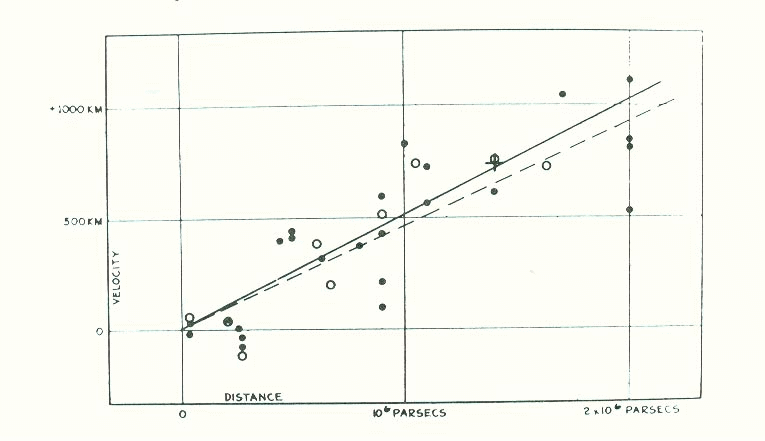
In public talks I rarely have time to go into the details of this, but it is worth saying that only the results on the x-axis were Hubble’s own measurements. Hubble only contributed half of the above plot, i.e. the distance measurements, and these turned out to be wrong by a factor of about 10 owing to an incorrect identification of the stars used as standard candles. All the recession velocities on the y-axis – obtained by looking at the displacement of lines in the target galaxy’s spectrum – were in fact obtained by Vesto Slipher at the Lowell Observatory here in Flagstaff, Arizona. Hubble used these data from Slipher with permission, but gave no credit to Slipher in the references to his 1929 work. A later, and more convincing, version of this plot published in 1931 by Hubble and Humason, was accompanied by a generous acknowledgement to Slipher’s contribution. However, by then, Hubble’s name was firmly associated with the plot and Slipher’s contribution was largely forgotten for many years subsequently.

This episode isn’t at all atypical of Hubble’s behaviour. He was an extremely ambitious man who was an expert in the art of promoting himself and the Mount Wilson Observatory where he worked. Slipher was a very different type of man: quiet, self-effacing, and very much a team player, dedicated to scientific accuracy rather than his own reputation.

It’s worth saying further that the key observation that led to the understanding that the Universe is expanding is the fact that most of the spectra obtained by Slipher, over the years subsequent to his first measurement of the spectrum of the Andromeda Nebula (M31) celebrated by this conference, showed a redshift indicating velocity away from the observer. Even without distance measurements this leads directly an interpretation in terms of cosmic expansion. Ironically, the first spectrum he obtained, M31 shows a blue shift, as do a few others plotted with negative velocities in the above diagram, but the more distant sources exclusively show a redshift.

As a scientist should be, Slipher was very careful about the interpretation of this result. The more distant objects are fainter and thus more difficult to observe. Could it arise from some systematic artifact? Or could there be an unknown physical effect that produces a redshift dependent on the size of the source? These questions could only be answered when accurate distances to the nebulae were established, so Hubble’s contribution was by no means negligible. It’s completely untrue, however, to say that Hubble discovered the expansion of the Universe, so there’s yet another example of Stigler’s Law of Eponymy whenever anyone talks about the Hubble expansion.

One of the great things about coming to this meeting was the chance to meet Alan Slipher, grandson of Vesto Slipher. He and other members of his family refer to Vesto as “VM”, by the way, which I hadn’t realised before. VM lived a long life, dying in 1969 just short of his 94th birthday, so Alan knew him well until age 17 or so. He spoke most warmly and movingly after yesterday’s conference dinner about his memories of his grandfather, who he clearly looked up to. His words confirmed the impression I’d already formed, that Slipher was an extremely cautious and serious scientist as well as a kindly and humble man.

The contrasting personalities of Slipher and Hubble are further illustrated by correspondence between the two that is archived at the Lowell Observatory. Slipher comes across as kindly and cooperative, Hubble as pompous and self-regarding. I know which of the two I admire the best, both and scientist and human being.

Travelblog

Posted in Biographical, Jazz with tags , , , , on September 14, 2012 by telescoper

I’m up bright and early this morning – well, early, at least – after my long trip yesterday. I was slightly nervous about my itinerary, especially the (for me) uncharted territory at the end. As it happens, the train from Cardiff to Heathrow, direct flight from Heathrow to Phoenix and shuttle bus from Phoenix to Flagstaff, Arizona, all went to plan. I arrived just after nine yesterday evening, tired but intact.

One thing worth mentioning is that this is the first time I’ve set foot on American soil for many years. My lamentable experience with the US Embassy in London in 2005 succeeding in putting me off visiting the States almost entirely. However, I’m told that travelling is meant to be good for me, so I decided to accept the invitation to attend and speak at the conference I posted about a while ago. One of the relics of the 2005 episode is an unused J-1 visa in my passport, and when we arrived in Phoenix I was consequently a little apprehensive about whether questions might be asked about it. That added to the usual anxiety about length of queues at Immigration. As it turned out, the staff were courteous and efficient and the uniformed officer I spoke to at the desk and who took my fingerprints etc was an enthusiastic amateur astronomer who seemed more interested in my work than in the formalities at hand. Anyway, my virgin visa attracted no comment at all.

Despite landing a bit late, I actually got through the airport in good time to catch the shuttle to Flagstaff. Phoenix, by the way, was a scorching 37 Celsius, even at 5.30 in the pip emma. I dread to think how hot it must have been at mid-day. Flagstaff is, I’m told, a bit cooler being up in the mountains although it was dark when I arrived and I didn’t really see much of the place before getting to the hotel, having a quick blog, and then crashing out.

Incidentally, the route from Phoenix to Flagstaff is north on the I-17 until it hits Route 66, subject of the famous song in which Flagstaff gets a mention:

My hotel is actually situated on Route 66, but so far there’s no sign of anything that could truthfully be described as “kicks”.

Anyway, I have to speak later today so I should probably start writing my talk.  As they don’t say around these parts, Toodle-pip!

R.I.P. Leonid Grishchuk

Posted in The Universe and Stuff with tags , , , on September 14, 2012 by telescoper

As I was travelling to Heathrow airport in order to fly to the USA (from where I am posting this message), I heard the sad news of the death of a dear and respected colleague, Professor Leonid Petrovich Grishchuk.

Leonid was a  Distinguished Research Professor here in Cardiff from  1995 until his retirement in 2009 and was frequently to be found in the department after that. You can read more of his scientific biography and wider achievements here, but it should suffice to say that he was a pioneer of many aspects of relativistic cosmology and particularly primordial gravitational waves. He was also a larger-than-life character,  held in great affection by many scientists and friends around the world.

My first experience of Leonid was many years ago at a scientific meeting at which I attempted to give a talk. Leonid was in the audience and he interrupted me,  rather aggressively. I didn’t really understand his question so he had another go at me in the questions afterwards. I don’t mind admitting that I was quite upset with his behaviour. I think a large fraction of working cosmologists have probably been “Grischchucked” at one time or another. Later on, though, people from the meeting were congregating at a bar when he arrived and headed for me. I didn’t really want to talk to him as I felt he had been quite rude. However, there wasn’t really any way of escaping so I ended up talking to him over a beer. We finally resolved the question he had been trying to ask me and his demeanour changed completely. We spent the rest of the evening having dinner and talking about all sorts of things and were good friends ever since. Over the years I’ve learned that this is very much a tradition amongst Russian scientists of the older school. They can seem very hostile – even brutal – when discussing science, but that was the way things were done in the environment where they learned their trade.  In many cases the rather severe exterior masks a kindly and generous nature, as it certainly did with Leonid. Leonid’s confrontational behaviour was partly sport – once you got used to that twinkle in his eye it was impossible to take offence – but partly a genuine desire to cut away the flannel and get to the heart of things. He detested bullshit and had no time for people who traded in it.

Here’s a picture of Leonid taken a few years ago with his longstanding friend Professor Kip Thorne.

lpg008_test

Some months ago Leonid was struck down by a brain tumour, against which he struggled bravely. On Monday this week, however, the doctors were forced to admit that the treatment had failed and Leonid could not live much longer. Fortunately his death, when it came, was peaceful. He passed away in his sleep on Wednesday night.

Farewell, Leonid. We’ll all miss you.

Nothing Gold Can Stay

Posted in Open Access, Poetry with tags , , , on September 13, 2012 by telescoper

Nature’s first green is gold,
Her hardest hue to hold.
Her early leaf’s a flower;
But only so an hour.
Then leaf subsides to leaf.
So Eden sank to grief,
So dawn goes down to day.
Nothing gold can stay.

by Robert Frost (1874-1963)

Faces and Places

Posted in Jazz with tags , , on September 12, 2012 by telescoper

Listening to this track from Ornette Coleman on my iPod on the way home today reminded me that I haven’t posted anywhere enough by the great man, so I decided to post this as a soon as I got home. Faces and Places was recorded live at the Golden Circle club in Stockholm  in 1965, and is part of a famous album that was proclaimed “Record of the Year” the following summer in Downbeat magazine. By the mid-60s Ornette Coleman had already established his reputation as leading light of avant-garde saxophonists and, in his own way, was as great an influence on jazz as Charlie Parker, Sonny Rollins and John Coltrane had been earlier.

It features a trio of Coleman on alto sax, David Izenzon on bass, and Charles Moffit on bass. It goes like the clappers right from the start, with some terrific work on the drums by Moffit, skittering along on the cymbals with interludes of powerful rapid-fire accents on the skins. Fantastic stuff.

What’s with the Wang Particle?

Posted in Astrohype, The Universe and Stuff with tags , , , , , , on September 11, 2012 by telescoper

Not long ago a colleague ran into my office all of a flutter and asked me about this new discovery called the “Wang particle” that had been in the media. I’m the one around here who’s supposed to know about particle astrophysics stuff, so I was quite embarrassed that I’d never heard of the Wang particle, although I’ll be delighted if it becomes famous as the name has a great deal of comedy potential.

Anyway, I vowed to find out a little bit about it and finally got around this lunchtime to doing so. It turns out that the story was sparked by press release from the British Science Association which, out of the goodness of my heart, I reproduce below (link added by me).

 A new particle, similar to the Higgs Boson, could provide a clue to one of the greatest mysteries of the Universe.

Dr Charles Wang from the University of Aberdeen believes that a new scalar particle is behind the intense supernova explosions that occur when a star implodes. He presented his work to the British Science Association on Tuesday.

Supernova explosions are the most powerful forces in the universe, second only to the Big Bang.

Once frequent, the energy produced in these explosions is responsible for combining particles to produce all the recognisable elements on earth, providing all the known building blocks of life on earth.

There are still many gaps in our understanding of physics and one of the major blanks is how the implosion of a star subsequently produces an intense explosion.

It is known that as elements are created at the centre of a star, a huge amount of energy is released.  However, it is believed that the conversion of known elements would never produce enough energy to result in an explosion.

Dr Wang’s theory states that “a scalar particle – one of the most elementary types of particles in the universe and similar to the Higgs Boson – is at work within these stars and responsible for the additional energy which causes the explosion to take place.”

The scalar particle would effectively enable the high transfer of energy during a supernova, allowing shockwaves from the implosion of a star to become re-energised and cause an explosion.

A new collaboration between Dr Wang and CERN could provide the equipment to make this theory a reality and demonstrate the existence of the ‘Wang particle’ – or as Dr Wang himself refers to it the ‘scalar gravitational particle’. It is hoped that using the ISOLDE facility at CERN it may be possible assimilate a nuclear reaction that would determine the process of a starburst.

If demonstrated, the existence of the ‘Wang particle’, like the Higgs Boson, would hold major implications for physics, shedding new light on the theory of everything and affecting our understanding of how different physical phenomena interact.

There’s no link to an academic paper with it, which is a bit disappointing, but an older piece in the CERN Courier does provide a reference to the paper, which is

C H-T Wang et al. 2011 Parametric instability induced scalar gravitational waves from a model pulsating neutron star, Phys. Letts. B 705 148

If you’re prepared to shake hands with the Devil that is Elsevier you can find the paper here.

I have to confess that this is a new one on me. I haven’t gone through the paper in detail yet but, at a quick skim, it seems to be based on a variation of the  Brans-Dicke scalar-tensor theory of gravity. It’s probably an interesting paper, and I look forward to reading it in detail on a long flight I’m about to take, but I am a bit mystified as to why it created such a stir in the media. Looks more a result of hype than real significance to me. It certainly isn’t the “new Higgs boson” anyway. Nor is it likely to be relevant in explaining Climate Change. Or am I missing something? Perhaps hot air generated by press releases is responsible for global warming?

Anyone out there an expert on Wang’s work? Care to comment?

Time to go it alone on Open Access

Posted in Open Access, Science Politics with tags , , , , on September 10, 2012 by telescoper

Not at all surprisingly, the government has announced  that existing research council budgets are to be raided to provide funds (to the tune of £10M) to pay for “Gold” Open Access to scientific research. This is the model of open access in which most authors will have to pay publishers a whopping fee up front in order to disseminate their work. The figures being talked about are in the region of £2000 per paper by way of an “article processing fee”.

I put “article processing fee” in quotes there because a fee of that size bears no relation to the actual cost to the publishers of processing an article: articles in most physics journals are typeset by the author, and refereed for free by other academics suggested by the editor (another academic).  What it really represents is the amount of money researchers will have to pay to maintain the humongous profit margins currently enjoyed by the academic publishing industry. Currently they rake in the cash through subscription charges after papers have been published in their journals . In future they will get the dosh in advance, which will probably make their business even more lucrative. And who will pay for maintaining their profitability? Researchers, of course. It’s clear who is going to benefit from the provisions of the Finch Report, and it’s not us.

Not surprisingly the publishing racketeers want to try to make us think they provide a worthwhile service for all the money they sting us for. For example, in this month’s Physics World, there’s a response from Steven Hall (Managing Director of IOP Publishing) to a letter from a certain Dr Garrrett. The original letter pointed the facts of the current state of affairs that I have bemoaned on many occasion on this blog:

Currently, researchers have to typeset their own work, sign away the copyright to publishers and referee the work of their peers – all for no remuneration. They then pay large sums in publication fees or library subscriptions to buy that work back in refereed and collated form.

Steven Hall’s response includes the following paragraph:

Researchers do not perform peer review alone: publishers organize and manage it, invest in people and systems to facilitate it, appoint and support editorial boards to oversee it and develop journals to meet the needs of scientific communities.

This is very far from being an accurate or fair representation of the way things work, at least not in physics. Researchers do carry out peer review alone. And unpaid. The main system that facilitates it is email (which, to my knowledge, was not developed by the academic publishing industry). And the journals that IOP develops are less to do with the “needs” of scientific communities than they are with the desires of a profit-making company to exploit said communities for even greater commercial gain.

Don’t you think it’s very strange that in a time of shrinking library budgets the number of journals seems to be growing all the time? Do we really need new ones? Do we even need the old ones? I think not.

And for those of you who think that IOP Publishing, as a part of the Institute of Physics, must be acting in the best interests of physics research, that’s simply not the case. It’s run as a private publishing company that behaves in exactly the same unscrupulous profiteering manner as, e.g. Elsevier. The IOP’s Open Access journals already charge £1700 per paper in article processing fees. They’re also in the habit of peddling meaningless “impact factor” statistics when trying to market their journals, many of which have lamentably poor citation rates despite their extortionate costs. Hence the IOP’s practice of bundling journal subscriptions in order to force institutions who want the good stuff to pay for the dross as well.

Having looked carefully into the costs of on-line digital publishing I have come to the conclusion that a properly-run, not-for-profit journal, created for and run by researchers purely for the open dissemination of the fruits of their research can be made sustainable with an article processing charge of less than £50 per paper, probably a lot less.

There’s only one response possible to those who’ve hijacked the Finch committee to serve their own ends, and that is to cut them out of the process. I think we can do it better (and cheaper)  ourselves. And very soon I hope to prove it.

La Bohème

Posted in Opera with tags , , , , , , , on September 9, 2012 by telescoper

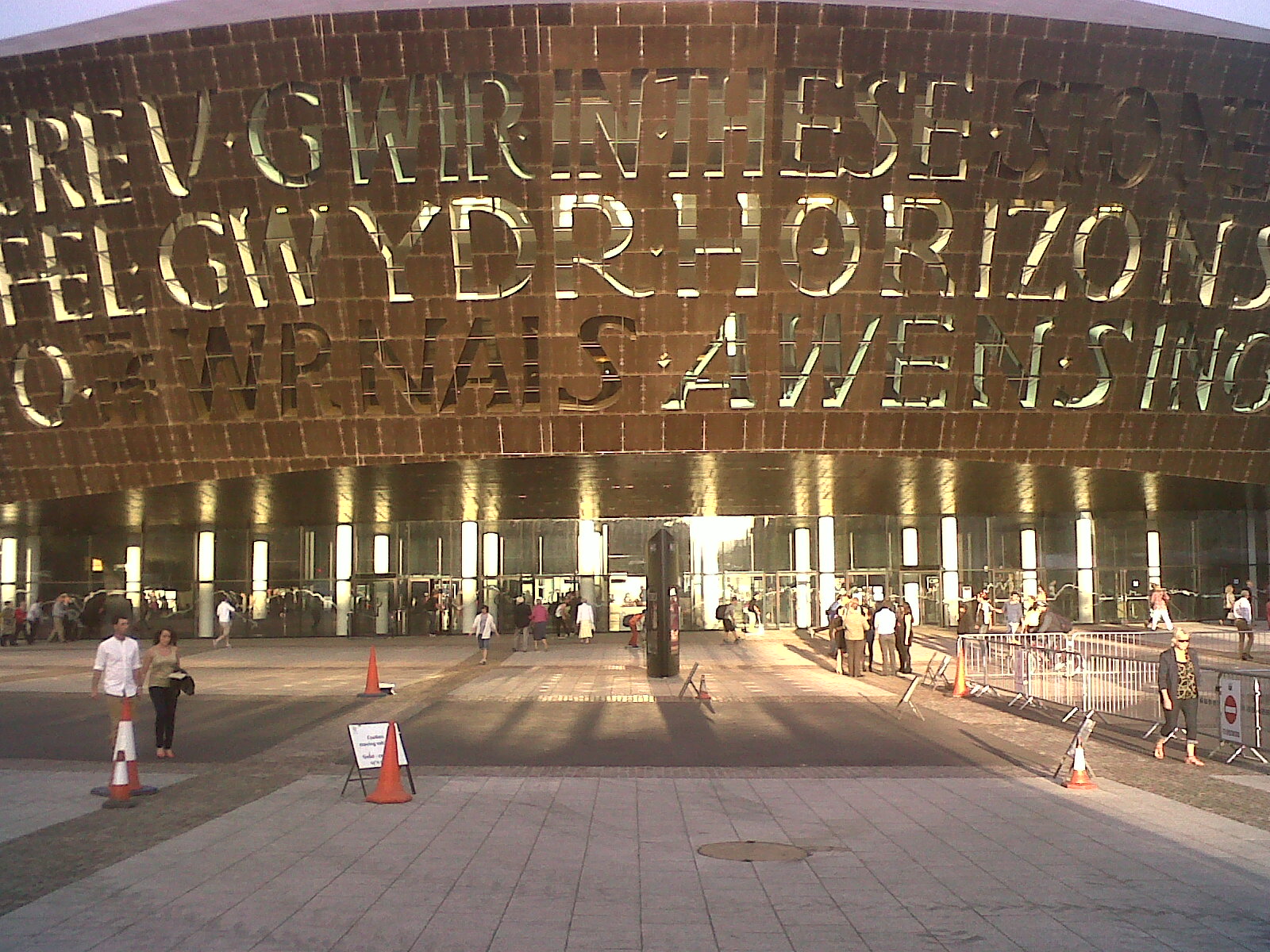
Time rolls on and the end of the summer brings the beginning of the new Opera season in Cardiff, with  La Bohème  by Giacomo Puccini at Welsh National Opera. It seems like a thousand years since I last went to the Wales Millennium Centre but it was only May. Still, a lot has happened between then and now. It felt good to see the Wales Millennium Centre again, looking resplendent in the sunshine of a September evening. Life’s getting back to normal.

I confess that I still get butterflies in my stomach as I take my seat before a night at the Opera. I guess if that thrill ever disappears I’ll just stop going, but last night reminded me why I love the Opera so much. The performance was absolutely wonderful, perhaps the best I’ve seen at Cardiff since I moved here five years ago.


I suppose the story of La Bohème will be familiar to anyone with even a passing interest in Opera, but I’ll give a quick synopsis anyway.  It’s a boy-meets-girl love story, of course. The boy in this case is the poet Rodolfo (Alex Vicens) and the girl, actually named Lucia but known  as Mimi (Giselle Allen).  The setting is Paris around 1830, and the poet and his painter friend Marcello (David Kempster) are starving and freezing, as it is winter and they have no money.  Act I is set on Christmas Eve, but the two friends have nothing to eat and nowhere to go. Fortunately, their musician friend Schaunard (Daniel Grice) turns up with money and provisions. After various comings and goings everyone but Rodolfo leaves to spend Christmas Eve out on the town; Rodolfo has to finish a piece for a journal, and promises to join them when he is done. However, he is interrupted by the arrival of Mimi, who lives nearby and whose candle has gone out. It’s love at first sight…

The later stages of Act I are built around Rodolfo’s aria Che Gelida Manina (“your tiny hand is frozen”) and Mimi’s Mi Chiamano Mimi. These beautiful songs follow one another in quick succession, and are then rounded off with a wonderful duet O Soave Fanciulla  in a manner guaranteed to melt the stoniest of hearts. And, before you ask, yes I did cry. Just a little bit. I don’t think anyone noticed.

But it’s not just the ravishing music that makes this passage so special, it’s also Puccini’s gift as a story-teller: after the two arias by Rodolfo and Mimi, the audience knows everything they need to know about these characters. It’s a great example of why I think Puccini is a far greater writer of Opera than, say, Wagner. Puccini understood much better than Wagner how to vary  pace and colour  without allowing the story to bogged down, and he knew exactly how to use his big tunes to maximum dramatic effect (i.e. without excessive repetition). In fact, La Bohème is in four acts, but its running time is just about 2 hours and 15 minutes, packed full of gorgeous music and compelling drama. It’s a supreme example of Puccini’s artistry as a composer of Opera.

Anyway, back to the plot. Act II finds Rodolfo and Mimi joining in the party started by Marcello and his buddies. There’s a huge contrast here between the dingy garret in which Act I is set, as this is set in the Latin Quarter of gay Paris (with a few drag queens in this production thrown in to make the point). Marcello gets off with the object of his desire, the coquettish Musetta (Kate Valentine), and all seems well with the world as we go into the interval.

In Act III we find things have changed. Rodolfo’s love for Mimi has soured and, overcome by jealousy and suspicion, he has left her. Clearly unwell, Mimi wanders around looking for Rodolfo and he hears her coughing. They clearly still love each other, but find it difficult to live with each other. If Opera were Facebook they would both have “It’s complicated” on their status.

The last act finds us back in the garret, Rodolfo and Mimi having separated. But Mimi has been wandering the streets in the freezing cold and turns up, clearly gravely ill. Rodolfo’s friends quickly pawn some meagre possessions and Marcello and Musetta rush out to buy medicine and summon a doctor. They return with the medicine but, before the doctor arrives, Mimi dies.

Well, what did you expect in an Opera, a happy ending?

People say that this is a romantic opera but it’s a pretty bleak story when you think about it. The lovers’ happiness is brief and it all ends in despair and death in surroundings of poverty and squalor. That’s what Opera Verismo is all about.

I don’t give star ratings when I review Opera performances, but if I did this would get the highest grade. All the principals were marvellous. It was refreshing to see Rodolfo played by a tenor who not only looked the part (i.e. youthful and dashing rather than middle-aged and portly) but could also cope with the demands of the role. I thought Alex Vicens’ voice sounded a little thin at the start and was worried that he might have to force it during the big arias, but he warmed up magnificently. Kate Valentine was a very sexy Musetta. The other person who deserves a particular mention is Welsh baritone  David Kempster, who was absolutely superb as Marcello. His compelling stage presence matched by an exceptionally  fine voice. World class, I’d say…

And a word for the production. Annabel Arden’s design managed to bring fresh elements to what is basically a straightforward interpretation of the Opera. The visual effects, such as the animated snow,  were clever but not intrusive. There was no attempt to translate the action into a different period or location nor was there an attempt to preach about disease as a metaphor for moral failings. In this respect it’s very faithful to what I think Puccini’s intentions were, i.e. to let the audience make their own mind up about what message they want to take away. The only slight departure I spotted was that in Act I Mimi actually blows her own candle out deliberately in order to get Rodolfo to light it again. Methinks she’s a bit more forward than usual in this production.

This was the first performance of this run of La Bohème. If you love Opera and can get to Cardiff, then do go and see it. It’s very special.

By way of a postscript I couldn’t resist posting this, which I found on Youtube this morning. It’s a vintage recording of O Soave Fanciulla dating back to 1956 and featuring the great Jussi Björling as Rodolfo. He may be a bit old for the part, but listen to that voice! The greatest tenor of his generation, without question. And Renata Tebaldi as Mimi too…

What is your view of the 2014 Research Excellence Framework?

Posted in Uncategorized on September 8, 2012 by telescoper

There’s a poll on this blog post about attitudes to the REF, as well as some rumours about nefarious things going on in preparation for it. Please visit and vote as it has had few responses so far.

Anyone know whether the rumours about an Astronomy Group are true, and, if so, which it is?

To the left of centre's avatarTo the left of centre

I’ve had a number of discussions recently about the Research Excellence Framework (REF2014). I’ve yet to find anyone who has a positive view of REF2014. I’m certainly against REF2014 and think it is having a negative impact on how universities behave and think it is primarily driven by a desire to measure and quantify, even if it ultimately damages what is being assessed. However, I thought I would run a quick poll to get the views of others. Given how many typically read my posts, this will almost certainly not produce a statistically significant result.

View original post

Dovrei essere così fortunato

Posted in Opera with tags , , on September 8, 2012 by telescoper

Well, summer must be nearly over. Tonight is the Last Night of the Pimms Proms. More importantly, it’s the first night of the new season at Welsh National Opera, which I’ll be attending.  Of which more anon. However, I thought I’d warm up by posting this marvellous clip which looks behind the scenes at a famous recording of the rarely performed English version of the classic aria Dovrei essere così fortunato from the Opera Una Ragazza Australiana con le Natiche Belle conducted by Carl Davis. Enjoy.