Archive for June, 2020

June Thunder, by Louis Macneice

Posted in Poetry with tags , , , on June 18, 2020 by telescoper

The Junes were free and full, driving through tiny
Roads, the mudguards brushing the cowparsley,
Through fields of mustard and under boldly embattled
Mays and chestnuts

Or between beeches verdurous and voluptuous
Or where broom and gorse beflagged the chalkland–
All the flare and gusto of the unenduring
Joys of a season

Now returned but I note as more appropriate
To the maturer mood impending thunder
With an indigo sky and the garden hushed except for
The treetops moving.

Then the curtains in my room blow suddenly inward,
The shrubbery rustles, birds fly heavily homeward,
The white flowers fade to nothing on the trees and rain comes
Down like a dropscene.

Now there comes catharsis, the cleansing downpour
Breaking the blossoms of our overdated fancies
Our old sentimentality and whimsicality
Loves of the morning.

Blackness at half-past eight, the night’s precursor,
Clouds like falling masonry and lightning’s lavish
Annunciation, the sword of the mad archangel
Flashed from the scabbard.

If only you would come and dare the crystal
Rampart of the rain and the bottomless moat of thunder,
If only now you would come I should be happy
Now if now only.

by Louis Macneice (1907-1963)


Varun Sahni on Dark Matter & Dark Energy

Posted in The Universe and Stuff with tags , , , , on June 17, 2020 by telescoper

I’m very happy to be able to share a couple of lectures by esteemed cosmologist and erstwhile co-author Varun Sahni of the Inter University Centre for Astronomy & Astrophysics (IUCAA) in Pune, India. They’re at an introductory level appropriate for a summer school so I think quite a lot of students will find them interesting and informative!

Meanwhile, in Ireland…

Posted in Covid-19, Education, Politics with tags , , , , , , , on June 17, 2020 by telescoper

It seems an eternity since we had the 2020 general election in Ireland on February 8th because of the intervention of the Covid-19 outbreak, but it’s still been over four months. Now however it seems we might have a new government fairly soon, as a deal has been agreed to form a coalition between Fine Gael, Fianna Fáil and the Green Party; between them these parties have 84 seats (not counting the Ceann Comhairle), enough to create a majority in the Dáil Éireann. It’s not quite done and dusted, though, as the Green Party has to ballot its membership and a two-thirds majority is needed to endorse the agreement. We should know next week.

In case you think this delay means that Ireland has been in political crisis since February, it hasn’t really. The constitution makes it clear that if a new government can’t be formed the old one continues until one can (or until another election can be held). Leo Varadkar has continued as Taioseach in the mean time. His popularity has increased in this period, at least partly because as a trained medical person, he is perceived to have handled the Covid-19 crisis rather well. It seems that incumbents have generally received the backing of the public when they have coped reasonably with the pandemic. Whether that continues in Ireland remains to be seen. When the truth comes out about how many patients were transferred from hospitals into nursing homes where they were left to die perhaps opinions will change.

It has taken over four months for the the parties to agree a `draft programme for government’ which you can find here. That document is 139 pages long but largely devoid of concrete commitments and indeed devoid of anything other than vague discussions, platitudes, and `reviews’. At a quick reading I’d say the Greens have been far more effective at getting their agenda into it than Fianna Fáil, perhaps because the latter don’t really have an agenda other than wanting to be in power. The Green initiatives are in my opinion the strongest parts of the programme, but the rest seems to me to be just “more of the same”.

I’d say that the one redeeming factor is the document is the emphasis on stimulus rather than austerity as a way out of the current crisis but of course that may turn out not to be what actually happens.

From the point of view of Ireland’s universities and research community there is little to rejoice. On page 114 you can find this:

Higher and Further Education have been greatly affected by the COVID-19 crisis and we will support the sector through these challenges to ensure that educational opportunities remain and are made more accessible to everyone, particularly the most vulnerable in our society. In addition, we will continue to support our research community to tackle the social and scientific problems posed by COVID-19 now and into the future.

We are committed to addressing the funding challenges in third-level education. We want a Higher and Further Education sector that sees education as a holistic and life-long pursuit. We will continue to build strong connections with other education sectors and wider society, while recognising our global and environmental responsibilities. It is vital we invest in our Higher and Further Education sectors so we can continue to tackle inequality based on race, gender, and socio-economic background. We recognise the potential for our Higher and Further Education institutions to be exemplars regionally, nationally and internationally.

At a time of great economic uncertainty, when so many people fear for their future employment, we will ensure that Higher Education plays a vital role in our recovery. We will equip students with the skills necessary to secure employment, while preparing for the opportunities and challenges posed by a changing economy, the move to a low-carbon future and disruptive technologies, as well as offering retraining and reskilling opportunities to help people into employment.

Warm words at the start and then a worryingly blinkered emphasis on universities simply as providers of skills training. We do that of course, but we do so much more that Irish governments seem not to recognize.

Later on we get a commitment to

Develop a long-term sustainable funding model for Higher Level education in collaboration with the sector and informed by recent and ongoing research and analysis.

Sigh. There’s been an OECD Report (2004), the Hunt Report (2011), the Cassells Report (2016), etc. How many times will this issue be kicked into the long grass?

The Fianna Fáil `pledge’ to introduce a Minister for Higher Education and Research has, needless to say, fallen by the wayside in the negotiations.

The plan for the new Government is that the plan is as the leader of the largest party in the coalition, Fianna Fáil, Micheál Martin will take over as Taoiseach for two years, after which Leo Varadkar will return. This is being referred to as a `Rotating Taoiseach’, which is a pretty apt given that the programme has more spin than substance.

Lucia Joyce

Posted in History, Mental Health with tags , , on June 16, 2020 by telescoper

Lucia Joyce photographed by Berenice Abbott (date c.1925-1930)

On Sunday I listened to a programme on the radio about Lucia Joyce a celebrated dancer who just happened to be James Joyce’s daughter. Lucia was born in Trieste in 1907 and subsequently moved with him to Paris where she made a big impact in the field of modern dance. W.B. Yeats was an admirer and wanted to cast her in one of his `plays for dancers’.

Lucia’s early years were filled with artistic promise but shadows gathered around her and by the the middle of the 1930s she had been diagnosed with schizophrenia and was eventually taken away in a straitjacket and forcibly detained in a psychiatric clinic. She spent the rest of her life (until her death in 1982) in various institutions. The programme provides a fascinating insight into her creative early years but the latter part is desperately sad. One can’t escape the conclusion she did not deserve to be locked away the way she was (against her will) and the men in her life (her father, brother and various lovers, including Samuel Beckett) share a large part of the responsibility for her decline. Psychiatric institutions have a long history of being used to dispose of `inconvenient’ women.

Anyway, do listen to the programme which you can find here.

Bloomsday!

Posted in Literature with tags , , on June 16, 2020 by telescoper

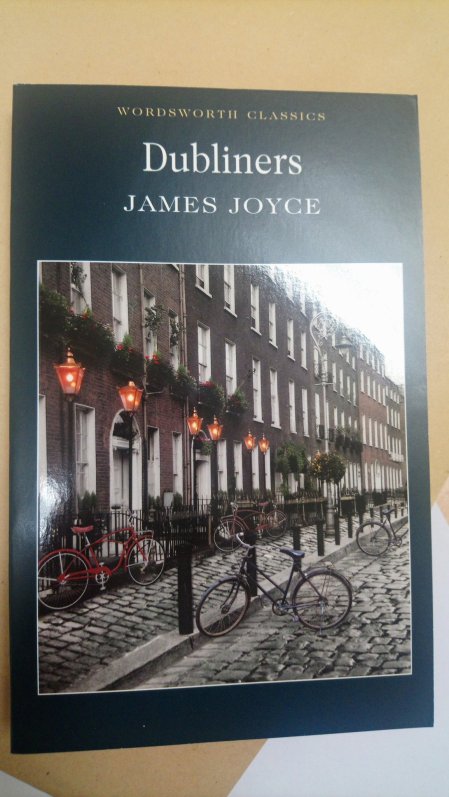
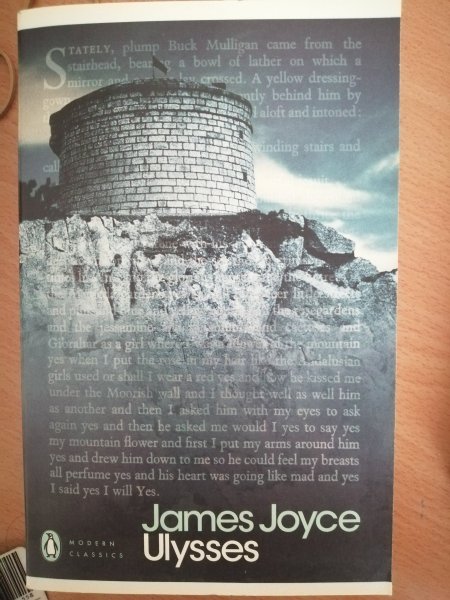
So it’s 16th June, a very special day in Ireland – and especially Dublin – because 16th June 1904 is the date on which the story takes place of Ulysses by James Joyce. Bloomsday – named after the character Leopold Bloom – is an annual celebration not only of all things Joycean but also of Ireland’s wider cultural and literary heritage.

If you haven’t read Ulysses yet then you should. It’s one of the great works of modern literature. And don’t let people put you off by telling you that it’s a difficult read. It really isn’t. It’s a long read that’s for sure -it’s over 900 pages – but the writing is full of colour and energy. It’s a wonderful book.

(There’s also quite a lot of sex in it….)

I’ve read it twice, once when I was a teenager and once when I was in my thirties. I then lent my copy to someone and never got it back. The copy shown above is a new one I bought last year with the intention of reading the novel again now that I live in Ireland but I sadly have not had the time yet. I will, though.

Incidentally if you would like to limber up before making an attempt on Ulysses I recommend this set of short stories.

But if you don’t fancy reading it you can listen to an epic 29 hour dramatisation of Ulysses on the radio via RTÉ; see here for details.

Straight from Ireland

Posted in mathematics with tags on June 15, 2020 by telescoper

I came across this the other day. I think it’s fun because it’s a bit counterintuitive and it has generated quite a lot of discussion so I thought I would share it here. Two things are worth amplifying:

  1. By “in a straight line” I assume it means “along a great circle“.
  2. As it states in the small print on the diagram all lines originate at the geographical centre of Ireland which apparently lies at a place called Carnagh East, close to the border between County Roscommon and County Westmeath.

The main bone of contention is why the USA looks so small, in the matter of which I direct you to this reddit thread. The answer is clear when you look at what a great circle from Ireland to the USA looks like: most great circles from Ireland to the Eastern seaboard pass over Canada:

Monthly Notices goes Online-only

Posted in Open Access with tags , , on June 14, 2020 by telescoper

I just heard that the journal Monthly Notices of the Royal Astronomical Society which has been publishing astronomy research since 1859, is no longer producing a print edition and instead will be publishing online.

The decision is in response to falling demand for the printed version which has made it no longer economically viable profitable to continue producing it. I choose the ‘profitable’ because the prime purpose of MNRAS is no longer the dissemination of scientific results but the generation of income to fund other activities of the Royal Astronomical Society. Despite the move to the much cheaper digital-only publishing mode, the annual cost of an institutional subscription to this journal is over $10,000. Most of that is goes as profit to Oxford University Press (the actual publisher) and to the Royal Astronomical Society.

Much of what the RAS does with this income is laudible of course, but I don’t think it is fair to inflate institutional subscription costs in order to fund it. University libraries are meant to provide access to research, not to act as cash cows to be milked by learned societies. The Royal Astronomical Society society isn’t the only learned society to use its journals this way, nor is it the most exploitative of those that do, but I believe the approach is indefensible.

My very first research paper was published in MNRAS way back in 1986 and I’ve published many others there over the years, so it’s with a certain amount of nostalgia that I look back on the old style journal. As. Fellow of the Royal Astronomical Society I used to get my own copy in the post at a discounted rate but had to stop and dispose of the old ones when I moved to Nottingham as they took up too much room.

My own belief is that it’s not only the print edition that has had its day but the whole idea of a traditional academic journal.

I’ll just take this opportunity to remind you that The Open Journal of Astrophysics publishes papers (online only) in all the areas of Astrophysics covered by MNRAS, and more, but is entirely free both for authors and readers.

And so it begins..

Posted in Film, Politics on June 13, 2020 by telescoper

Pepys Tweets the Dutch Raid on the Medway

Posted in History with tags , , , , on June 13, 2020 by telescoper

The Dutch burn the English fleet at Gillingham

I couldn’t resist doing a quick post inspired by the fact that I follow the Twitter feed of Samuel Pepys, whereon excerpts from his famous diaries are posted as if live. The year currently being tweeted is 1667 and there is great excitement because of the Raid on the Medway in which a Dutch fleet sailed up the River Medway and destroyed many ships of the Royal Navy.

Much has been written about the background to this event (and, unsurprisingly, the version taught in Dutch schools is somewhat different than from the English side) so I’ll just post here how it panned out from the point of view of Samuel Pepys.

The first inkling of what was to come is on 3rd June (note the Old Style dates were still in use in England at the time of the events in question; add 10 days to get the New Style dates the Dutch and other European countries were using then):

That was almost a week before the battle commenced and although he was clearly apprehensive, for the next few days life for Pepys carried on pretty much as normal:

It was not until 8th June that we find

Even this news did not seem to concern him unduly, however

Later that day preparations were stepped up

(The Hope is the name given to the stretch of the Thames from Tilbury to the mouth of the Medway). Pepys was sceptical of the likely efficacy of the military commanders

The following day the sense of urgency increases

Later that day it seems to have dawned that Chatham might be the target:

Pepys is annoyed at the slow preparations:

and

On 10th June the Dutch land 800 marines and attack Sheerness, destroying Garrison Point Fort. Pepys does not know this yet when he writes:

It is only the following day that he realises Sheerness has fallen and the way is open for the Dutch to attack the Royal Navy at anchor in the Medway at Gillingham and Chatham:

Every available soldier being sent to defend Chatham, Pepys is worried that London itself is now very vulnerable:

Meanwhile, on the Medway, the only thing protecting the British fleet is the huge chain blocking the river. Pepys’s optimism about this was short-lived

It gets worse:

The flagship of the Royal Navy has been taken as a prize – the humiliation! There is now panic in London:

On 13th June, fearing all is lost and that London will be attacked, Pepys makes arrangements to send his money to the country:

That’s how things stood on 13th June 1667, with a Dutch/French invasion of England seemingly imminent and widespread unhappiness at the indolence and incompetence of those in charge.

On 14th June Pepys notes that many English sailors are either refusing to fight or even fighting on the Dutch side because they have not been paid for some time (receiving tickets in lieu of cash):

In the event, the Dutch withdrew on 14th June and there was no invasion by either them or the French, but over the next days and weeks there were lingering fears of other raids. A peace treaty was rapidly negotiated on very favourable terms to the Dutch and thus the Second Anglo Dutch War came to an end.

There was in the mind of Pepys and others the possibility of a popular uprising against the King for the ineptitude of the military response to this Raid. The monarchy had only been restored in 1660. Would it be swept away again so soon?

We know the answer to this question now, but nobody knew it then, which makes a contemporary accounts like that of Pepys so very fascinating. You get a real sense of the mixture of confusion and despair circulating at the time.

Songs of Comfort and Hope

Posted in Covid-19, Music with tags , , on June 12, 2020 by telescoper

I was just looking back at a post I wrote early in the New Year and saw that top of the list of things I resolved to do more of in 2020 were (1) to go to more live concerts and (2) to see more of Ireland. Unfortunately the Covid-19 Pandemic put paid to both of those (and the other things on the list too). I haven’t listened to live music since March and haven’t set foot outside Maynooth in that time either!

Anyway, someone at the National Concert Hall in Dublin hit on the idea of putting on live concerts without an audience. I wasn’t sure it would work but based on this concert, broadcast a couple of weeks ago, and now available as a recording on Youtube I think it does. This recital features wonderful Irish mezzo-soprano Tara Erraught and pianist Dearbhla Collins in a programme of songs by Franz Liszt, Franz Schubert, Aaron Copeland and Richard Strauss followed by some Irish folk songs. I think it’s a lovely performance, and I found the setting of an empty hall unexpectedly moving.