Archive for June, 2022

Schrödinger’s Theatre

Posted in Education, History, The Universe and Stuff with tags , , on June 21, 2022 by telescoper

Although it’s relatively old news in Ireland, a colleague recently sent me a story from Physics World about Trinity College Dublin’s decision to change the name of its Schrödinger Lecture Theatre (to the Physics Lecture Theatre). The Provost, Fellows, Foundation Scholars and the other members of Board, of the College of the Holy and Undivided Trinity of Queen Elizabeth near Dublin (to give it its proper title) took this decision in the light of revelations about Erwin Schrödinger‘s predatory sexual conduct towards very young girls.

According to my careful research carried out by reading his Wikipedia page, Schrödinger never actually worked at Trinity College Dublin; the Theatre in question was named in his honour after he delivered his famous lectures on What is Life there in 1943.

Reactions to the decision to rename the Theatre have generated a wide range of reactions from physicists and non-physicists alike. For my part I think it is the right decision. As the Physics World article states:

As an educational institute, we cannot condone or glorify someone who abused the trust between teacher and student.

Jonathan Coleman, Head of School Physics TCD

To me this is quite different from attaching Schrödinger’s name to his equation or even his cat. His unsavoury conduct should not mean that his scientific achievements should be “cancelled” . These are and should continue to be recognized through terms like Schrödinger’s Equation. As far as I am aware, however, Schrödinger did not build any lecture theatres.

It’s up to Trinity to decide what to call its rooms, of course, but that doesn’t mean we’re not allowed to have opinions about the decision. I’d therefore invite you to express yours through the following poll:

Of course if you wish to expand on your opinion you may do so through the box below.

Summer Solstice 2022

Posted in History, The Universe and Stuff on June 21, 2022 by telescoper

The Summer Solstice in the Northern hemisphere takes place today, Tuesday 21st June 2022, at 10.14am Irish Time (9.14 UTC). Among other things, this means that tomorrow is the longest day of the year around these parts. According to this website, the interval between sunrise and sunset in Dublin today will be 17 hours 5 minutes and 6 seconds. which is 2 seconds longer than yesterday while tomorrow will be four whole seconds shorter than that.

It’s all downhill from now on.

Days will get shorter from tomorrow until the Winter Solstice in December, although this does not mean that sunset will necessarily happen earlier on 22nd than it does tomorrow. In fact it is a little later. Nor does it mean that sunrise will happen later tomorrow; in fact it is a little earlier.

You can find such things out by looking at a table of the local mean times of sunrise and sunset for Dublin around the 2022 summer solstice. This shows that the earliest sunrise was actually on 17th June and the latest sunset is on 25th.

This arises because there is a difference between mean solar time (measured by clocks) and apparent solar time (defined by the position of the Sun in the sky), so that a solar day does not always last exactly 24 hours. A description of apparent and mean time was given by Nevil Maskelyne in the Nautical Almanac for 1767:

Apparent Time is that deduced immediately from the Sun, whether from the Observation of his passing the Meridian, or from his observed Rising or Setting. This Time is different from that shewn by Clocks and Watches well regulated at Land, which is called equated or mean Time.

The discrepancy between mean time and apparent time arises because of the Earth’s axial tilt and the fact that it travels around the Sun in an elliptical orbit in which its orbital speed varies with time of year (being faster at perihelion than at aphelion).

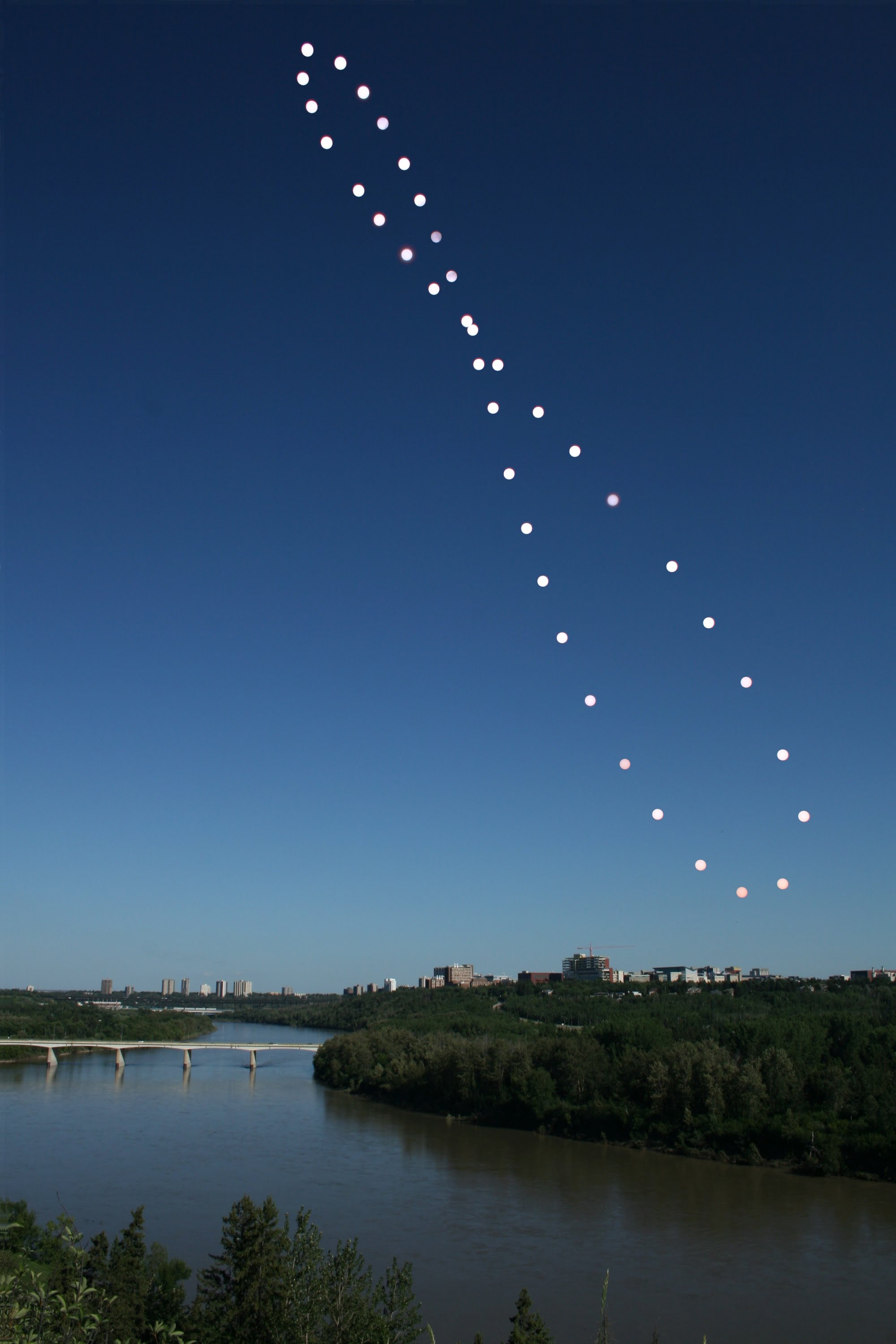
If you plot the position of the Sun in the sky at a fixed time each day from a fixed location on the Earth you get a thing called an analemma, which is a sort of figure-of-eight curve whose shape depends on the observer’s latitude. Here’s a photographic version taken in Edmonton, with photographs of the Sun’s position taken from the same position at the same time on different days over the course of a year:

maxresdefault

The summer solstice is the uppermost point on this curve and the winter solstice is at the bottom. The north–south component of the analemma is the Sun’s declination, and the east–west component is the so-called equation of time which quantifies the difference between mean solar time and apparent solar time. This curve can be used to calculate the earliest and/or latest sunrise and/or sunset.

Timeline for Admissions

Posted in Education, Maynooth with tags , , , on June 20, 2022 by telescoper

As the current academic year comes to a close – this week sees the final Exam Board at Maynooth University – thoughts turn with some apprehension to the start of the next.

The Leaving Certificate Examinations are taking place now and will finish on 28th June, more-or-less in line with pre-pandemic times, but the results will come out later. Normally these would be released in mid-August, so the university admissions process run by CAO would start then, giving a whole month before the start of teaching term at third-level institutions.

Last year, however, the results were not released until 3rd September 2021, which made it impossible for new students to start their courses at the scheduled time. At Maynooth, for example, first-years started a week later than returning students and missed the usual orientation week. More importantly for the students, there was a last-minute scramble for accommodation that made it impossible for many students to live anywhere near campus.

Until recently I was assuming that this year would be at least as bad as last. Although the examinations have returned to the traditional format this year, the Leaving Certificate results will be delayed again, for two (connected) reasons. One is that the Minister for Education decided that this year’s results would not be lower than last year so some scaling may be necessary and the other is that it is anticipated that more students will make use of the later alternative sittings provided for those unable to take the regular sitting owing to, e.g. ill health. These are connected because if a large number of students avail of the second setting then the scaling business will have to wait until their marks have been processed.

We know that the results will be late, but we don’t know how late they will be which is a major headache. Autumn Term in Maynooth is scheduled to start on 19th September, for returning students, but at the moment we don’t know when first years will start.

Today however there is an indication that results will probably be released in ‘late August’. If that turns out to be the case then the start of next academic year will probably turn out to be no less chaotic than this year was from at least from the point of view of teaching. I’d be relieved at any outcome that is not worse than last year. It’s even possible that teaching in Maynooth can start on 19th September for all students, though I don’t think I would bet on it. Things will be even be trickier at other institutions whose teaching term starts earlier in September.

That still leaves the problem of student accommodation, though. Here I don’t think the timeline for admissions will help much in averting an entirely predictable crisis. Once we know the dates we will make the best plans we can for teaching, but for accommodation there doesn’t seem to be any plan at all.

Eightsome Reels Again

Posted in Crosswords with tags , , on June 19, 2022 by telescoper

I haven’t blogged about crosswords for a while so I thought I’d mention this week’s Azed puzzle (No. 2610) which is of ‘Eightsome Reels’ type, as explained in the picture above. I mentioned a similar one years and years ago (Azed No. 1921) so I thought I’d make a few comments on this one. I won’t give the full solution though because that would spoil the competition but I will give a hint or two.

The solutions are obviously all 8 letters long and they have to be fitted in the squares surrounding the corresponding number. The trouble is that you’re not told which square to start from, or whether the letters are to be entered clockwise or anticlockwise.

The only way I know to start one of these puzzles is to solve several adjacent clues without entering them in the diagram and then see if I can find a way to fit them together on a bit of scrap paper. The structure of the diagram guarantees many checked letters (i.e. overlaps) between neighbouring answers so once you have a few then the subsequent ones get easier to fit in. These puzzles are usually difficult to start though.

In this particular case I managed to solve about half the clues before entering anything on the grid. But how to write them in so they fit together?

For me the solution was to get the three answers in the corner at the bottom right corner (35, 36 and 30). I think 35 is a nice clue:

35. Erica, breaking rule? – ‘a thing of shreds and patches’

Think American novelist following by an anagram; the reference to Gilbert & Sullivan gives you JONGLEUR (a wandering minstrel). The following clue is the easiest of the lot

36. How corpse ends in morgue’s awfully … so?

This is clearly GRUESOME (end of corpse, i.e. E in anagram of MORGUES).

Now you see that EUR and RUE are common to the two answers so they must fit in the three lights running vertically upwards between 35 and 36 and the two words must be ordered differently so that one is clockwise and the other anti-clockwise. If you write RUE upwards here (so GRUESOME is clockwise), then the three letters in the corner will be MEG. If on the other hand you write them downwards (so GRUESOME is anticlockwise) then the three letters in the corner are SOM. The rubric states that the unchecked letters in the corners can be arranged to form LESS FINE POEM which does not contain a G. Thus the first possibility is excluded. The answer to 36 must therefore be written anticlockwise and the answer to 35 clockwise to mesh with it.

To check this is right you can solve 30, the answer to which has three letters in common with GRUESOME and must be written clockwise.

The symmetry having thus been broken, all you have to do is solve the other clues and fit them in accordingly…

Picture Joke

Posted in Uncategorized on June 19, 2022 by telescoper

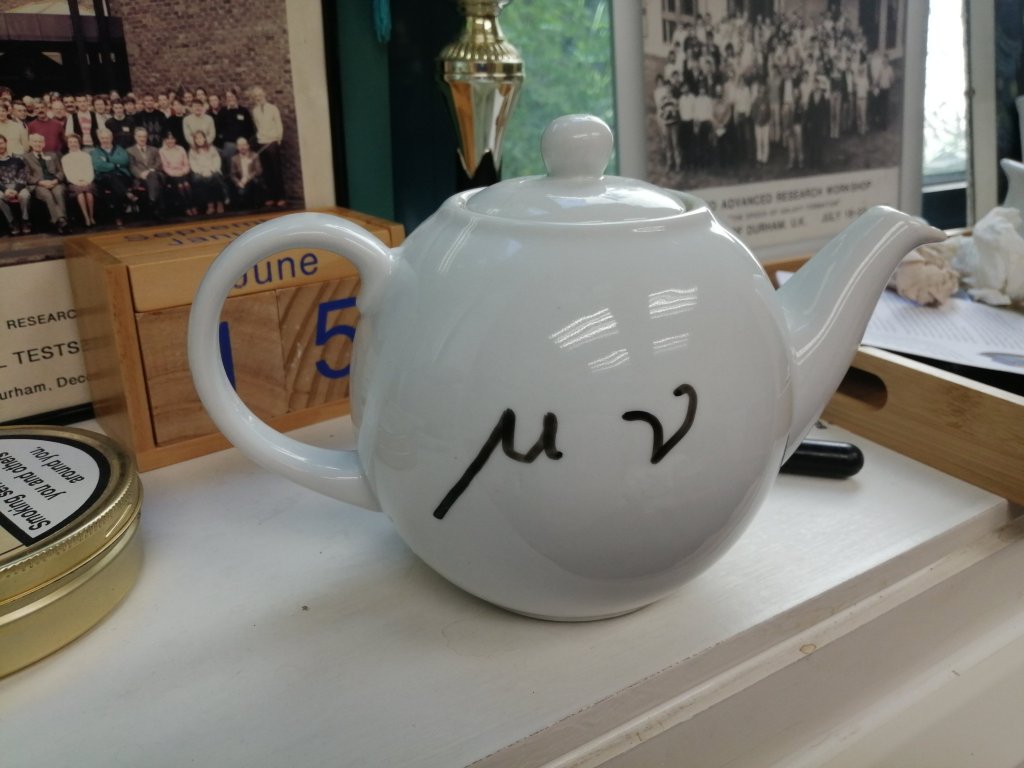
I put this picture up on Twitter last week with the caption Geddit? and it got as close to going viral as anything I’ve ever tweeted. Since I’m too lazy to post anything substantial today I thought I’d put it up here.

In the words of Roy Walker: “Say what you see..” though you will probably have to be a physicist who’s studied general relativity.

Some of those who did get the joke asked me where they could buy such an item. In fact I just wrote the Greek letters on with a whiteboard marker…

The Perfect Afters

Posted in Irish Language with tags , on June 18, 2022 by telescoper

When I first arrived in Ireland, one thing I noticed about the way Irish people use the English language is a construction using the word “after” and the present participle of a verb. I first heard it in the context of a football match on the television, actually, during which the commentator said “the ball is after going out for a corner” or words to that effect.

This construction is basically an alternative way of constructing what is called in Latin called (past) perfect tense of a verb, indicating an action which is now completed. In Latin this would be formed by a particular ending of the verb but when translated into English it would either be a simple past verb form (usually ending in -ed) or using the auxiliary verb “to have”. For instance, in the football example above you would interpret the meaning as “the ball has gone out for a corner” or the “the ball went out for a corner”.

(Now I’m regretting using the irregular verb “to go” in the football example but I hope you catch my drift…)

The “after” construction is not just an alternative way of writing the past tense, however, as it can (and usually does) specifically imply an action that has been completed in the very recent past, something you might express in English by inserting the word “just”. This is sometimes called the immediate perfective. It can also be used to form the pluperfect tense (expressing an action already completed at some time in the past) by using the past of the verb “to be”, though in modern Irish it seems to be more-or-less exclusively used for actions only recently completed.

Examples include:

  • He is after writing a letter – He has (just) written a letter
  • I’m only after getting here – I’ve just got here
  • He was after walking the dog – He had walked the dog
  • I’m after reading James Joyce’s Ulysses for the second time – I have just read James Joyce’s Ulysses for the second time…

In the book English As We Speak It In Ireland, the author P.W. Joyce writes that no such form ‘would be understood by an Englishman, although they are universal in Ireland, even among the higher and educated classes’.

It’s certainly the case that I didn’t really understand it when I first heard it, but I have heard it used on countless occasions by friends and neighbours since then. I think I was initially confused because “he is after..” can appear in English. phrases such “he is after a new job” expressing something like “looking for” (i.e. with intent) but that is not suggested in the examples above.

I think poll my readers on this, which will probably demonstrate how few Irish readers I have. If someone were to say “I’m after getting a cup of tea” would this mean:

It’s reasonable to wonder how this construction came about. The answer is that in Irish the verb “to be” is very peculiar, existing in two distinct forms, and there is no direct equivalent of the verb “to have” as it is used in the formation of verb tenses in English. There is a simple past in Irish that basically works like the English equivalent but tenses involving “have” or “had” as an auxiliary verb are impossible to render word for word. For example, translating I have just done it into Irish could give you  Tá mé tar éis é a dhéanamh or Tá mé i ndiaidh é a dhéanamh, both of which literally mean I am after doing it. (Tá mé means “I am” and the underlined phrases essentially mean after).

I suppose you can think of this interesting construction as being a relic of the Irish language surviving after the imposition of English on the population. Whatever its origins, though, I’m after concluding that this construction, although not standard in British English, is perfectly sound from a grammatical point of view.

Finally, and incidentally, the lack of an appropriate verb “to have” causes some other interesting expressions in Irish. One of my favourites is exemplified by the phrase “I have a cold” which, translated into Irish is “Tá slaghdán orm” which means, literally, “A cold is on me”…

Anyway, I’m after finishing.
Euclid Launch Delay

Posted in Euclid, Science Politics, The Universe and Stuff with tags , , on June 17, 2022 by telescoper

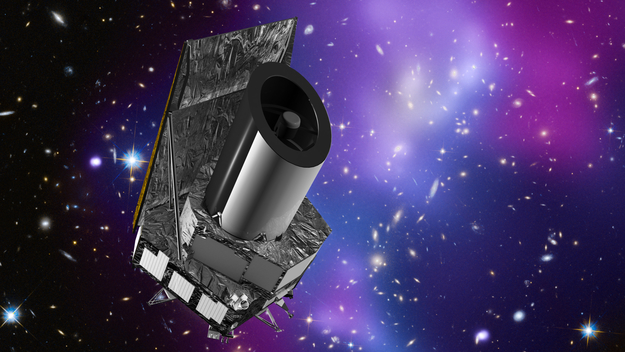
Until relatively recently we al thought the European Space Agency’s  Euclid mission would take place later this year (2022). For various reasons that date subsequently slipped to the first quarter of 2023.

Then Russia invaded Ukraine which, because Euclid was intended to be launched on a Russian Soyuz vehicle a further delay seemed likely (see here). The subsequent decision by the Russians to remove all their personnel from the launch site at Kourou (see here) made these even more likely as an alternative launch vehicle would have to be used.

There was an update about the situation at the recent Euclid Consortium meeting in Oslo which I could not attend but which I referred to here. The basic problem is that Plan B involves launching Euclid on an Ariane 6 rocket (which comes in two varieties, Ariane62 and Ariane64, with two and four boosters respectively). The problems are (a) that Ariane 6 is that it hasn’t yet had its first flight and (b) Euclid isn’t the only spacecraft now having to find an alternative launcher. The competition from commercial and military satellites may mean a lengthy delay to the Euclid Launch unless lobbying succeeds at a political level.

It has now emerged that earliest feasible date for launch on an Ariane 6 rocket is the 3rd quarter of 2024 and it may well be later than that, the uncertainty exacerbating the effects of the delay itself.

This is all very unfortunate. Euclid is now fully built and ready so a lengthy delay would be very damaging to morale. More concretely, many researchers employed to work on Euclid are on fixed-term contracts which will now expire before they can complete their work. This will have a very serious effect on younger researchers. To keep everything going while the spacecraft waits for a launch will be extremely expensive: the Euclid Consortium Board estimates a cost of about €50M for every year of delay and it is by no means clear where those funds would come from.

It seems to me that the best hope for a resolution of this problem would be for ESA to permit the launch of Euclid using something other than Ariane 6, which means using a vehicle supplied by an independent commercial operator. I sincerely hope ESA is able to come up with an imaginative solution to this very serious problem.

P.S. With this update, the odds on me retiring before Euclid is launched have just shortened considerably…

A 25th Birthday Celebration

Posted in History, Maynooth with tags , , , on June 16, 2022 by telescoper

Today saw a celebratory barbecue on campus to commemorate 25 years of the creation of the National University of Ireland Maynooth now known as Maynooth University, my current employer, as an independent university. The institution was set up as the result of the Universities Act 1997 which was signed into law in May 1997 and came into operation on 16th June 1997 – i.e. 25 years ago today – as a result of the subsequent Commencement Order.

I was unable to attend the event on campus today to celebrate this anniversary because of pressure of work. With a €13.2 million surplus to spend on it, the party was probably very good, but I know I’m not alone among my colleagues in finding little to celebrate in our present predicament of inadequate resources, staff shortages and overwork.

Bloomsday 2022

Posted in Biographical, Literature with tags , , , , on June 16, 2022 by telescoper

So it’s 16th June, a very special day in Ireland – and especially Dublin – because 16th June 1904 is the date on which the story takes place of Ulysses by James Joyce. Bloomsday – named after the character Leopold Bloom – is an annual celebration not only of all things Joycean but also of Ireland’s wider cultural and literary heritage. This year the Bloomsday Festival marks the centenary of the first publication of the complete Ulysses in Paris; it had been published in instalments before that but 2022 was when the full novel was published.

Here is a little video produced by the Irish Foreign Ministry spreading the impact of Bloomsday around the world:

This is also the first time for a few years that Bloomsday events have been held in person. I was toying with the idea of going into Dublin and wandering about some of the locations described in Ulysses, but I have too much work to do. One day I should try to write a paraody of Ulysses about a day in the life of a man who doesn’t go anywhere or do anything except spend the whole day on Microsoft Teams while real life passes him by.

If time permits, however, I will go out and buy the ingredients for a Gorgonzola and mustard sandwich, although unfortunately I shall have to forego the glass of Burgundy that Mr Bloom had with his.

Update: I tried the Gorgonzola and mustard sandwich. It’s an interesting (!) taste, but I don’t think I want to taste it again.

If you haven’t read Ulysses yet then you definitely should. It’s one of the great works of modern literature. And don’t let people put you off by telling you that it’s a difficult read. It really isn’t. It’s a long read that’s for sure -it’s over 900 pages – but the writing is full of colour and energy and it has a real sense of place. It’s a wonderful book.

(There’s also quite a lot of sex in it….)

Planning Research

Posted in Education, Maynooth on June 15, 2022 by telescoper

This summer I have two undergraduate students doing research projects with me funded under Maynooth University’s Summer Programme for Undergraduate Research (SPUR). They’re actually making Monte Carlo simulations of galaxy clustering and using them to test various statistical analysis tools. The Department of Theoretical Physics actually has five students on three different projects, which is quite a lot for a small Department. The University as a whole has 57 SPUR students so we have almost ten percent of the total!

The SPUR students are paid for the projects, which last for (usually) six weeks but can be extended. I wish we could offer these projects to every student who wanted one, actually, but we just can’t afford to do that. I don’t agree with unpaid internships as these can only be taken up by students who have access to enough income to cover living expenses over the summer, so are discriminatory. We select students based on an application and their academic performance.

Anyway, at the start of the SPUR programme students attend a briefing session (which was last Wednesday) and they have to do various tasks along the way and, at the end, construct a poster. At the beginning they have to complete an agreement and “work plan”.

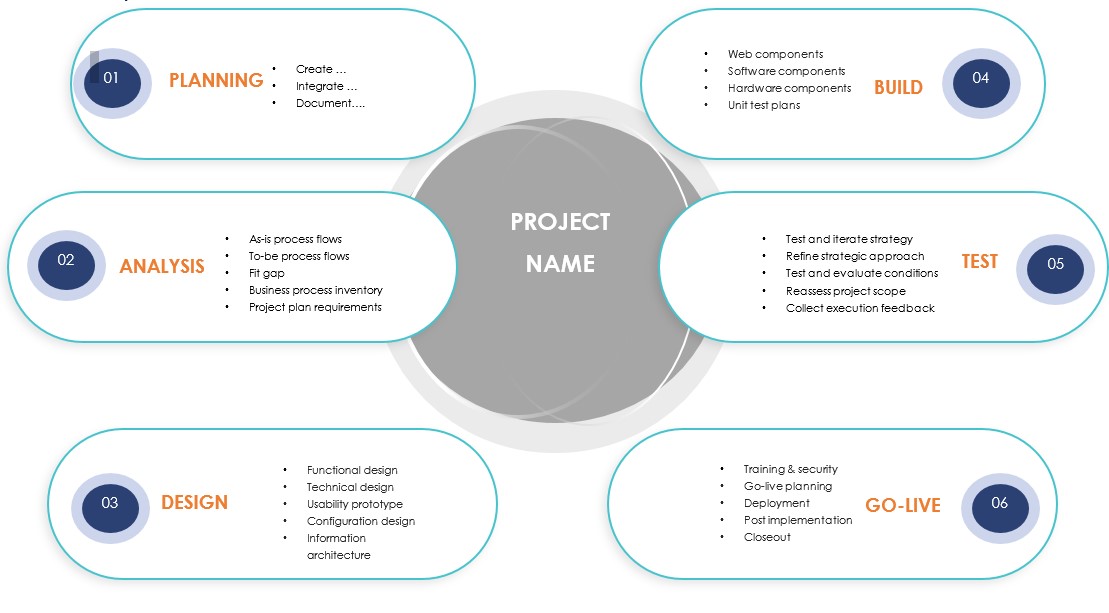
I was very amused to see the following template for a research plan in the pack given to students:

I’m at a loss to understand how any of this relates to how research is actually done in theoretical physics. The many amused reactions from colleagues when I posted this on Twitter yesterday suggest I’m not the only one. As a matter of fact, I don’t understand what many of the buzzphrases even mean. What for example are “As-is process flows”?

Obviously this template is intended for students doing business management courses in which they presumably learn to speak this language. Fortunately this is Template 3 and Template 1 just consists of a list of tasks to be done with key “deliverables” of the sort you need to complete when applying for a research grant, so my students used that.

I find it uncomfortable making detailed plans because to me the whole point of doing research is that you find things out that you didn’t expect and alter your strategy accordingly. If everything were predictable it would be a very dull project. Indeed I would say that if the outcomes were entirely predictable it wouldn’t even deserve the name “research”. Much theoretical research is accordingly rather open-ended, unlike say engineering or product design. On the other hand “give me the money and I hope to discover something interesting” is unlikely to go down well with funding panels. So you have to find a middle ground between convincing the panel that you know what you’re doing and allowing yourself space to adapt in the light of new developments. I think grant bodies in science largely understand that. Or at least I hope they do.

I had better end there as it is time for me to GO-LIVE (sic).