It’s time once more for another Saturday update of activity at the Open Journal of Astrophysics. Since the last update we have published a further seven papers, bringing the number in Volume 9 (2026) to 209 and the total so far published by OJAp up to 656. This is the second week running that we have published 7 papers.
I continue to include the posts made on our Mastodon account (on Fediscience); these announcements also contain a clickable form of the DOI for each paper. Our Mastodon account has regular updates and other announcements from OJAp too.
The first paper this week was published on Monday 14th September in the folder Cosmology and Nongalactic Astrophysics. The title is “The Power of DESI for Photometric Redshift Calibration: A Case Study with KiDS-1000” and it is by Diana Blanco (UC Santa Cruz, USA) and 66 others distributed internationally. This study explores using the Dark Energy Spectroscopic Instrument (DESI) to calibrate photometric redshift distributions for gravitational lensing, which could improve understanding of dark energy and cosmic structure. In fact this paper was ready for publication a few months ago, but the first author left for another job before putting the final version on arXiv so it took a while to finish it.
The overlay for this one is here:
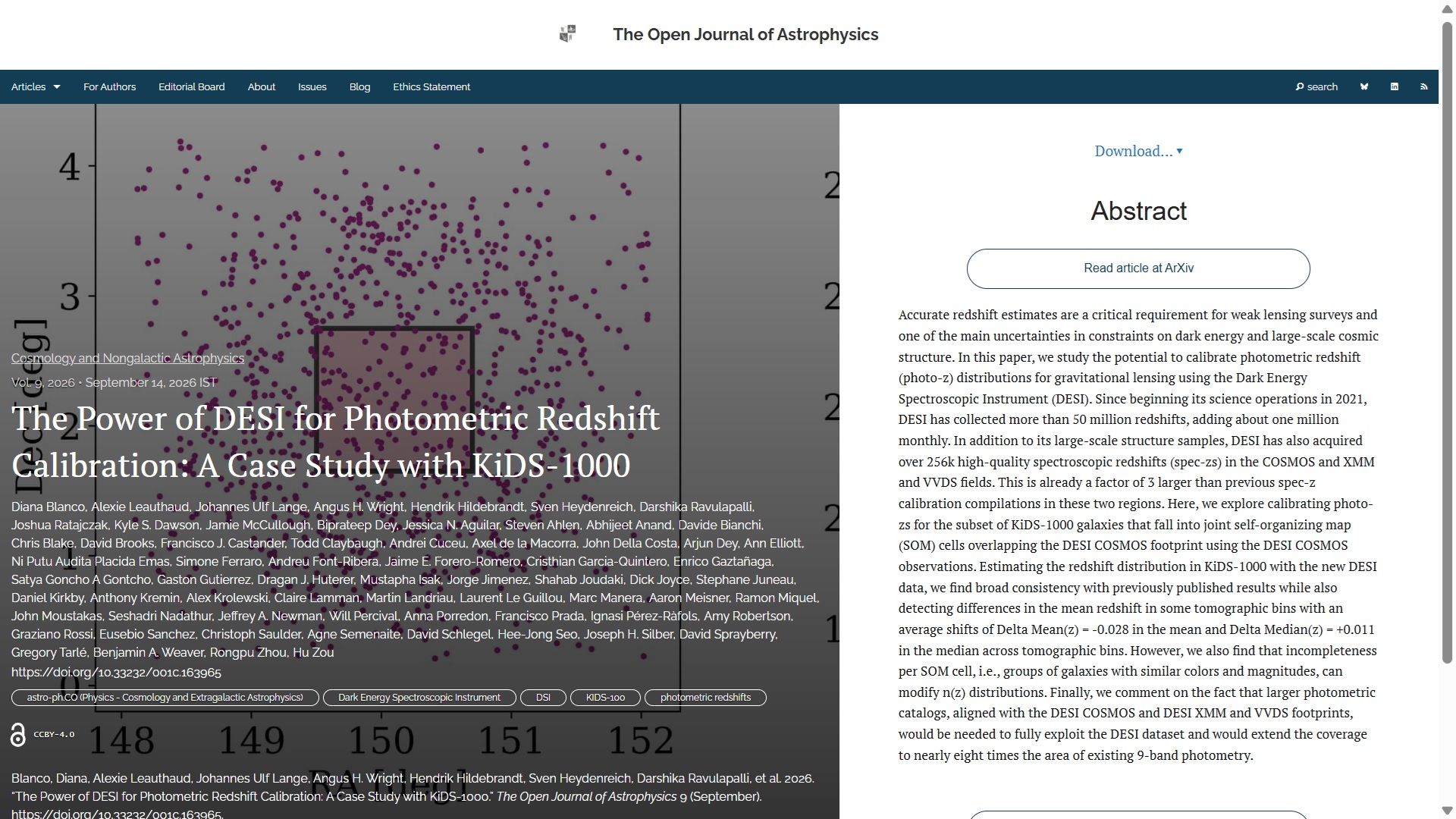
You can find the officially accepted version on arXiv here and the announcement on Fediverse here:

The second paper for this week, published on Tuesday 15th September in the folder Solar and Stellar Astrophysics, is “Exploration of groups and outliers in Gaia RVS stellar spectra with metric learning” by Yarden Eilat Bloch & Dovi Poznanski (Tel-Aviv U., Israel), Nick L. J. Cox & Emmanuel Bernhard (ACRI-ST, Grasse, France), Iain McDonald (U. Manchester, UK), Manuela Rauch (Know Center, GmbH, Graz, Austria), and Albert Zijlstra (Manchester). This article presents a new dataset and interactive portal that applies advanced techniques to analyze and visualize nearly a million spectra from the Gaia mission, potentially revealing undiscovered stellar phenomena.
The overlay looks like this:
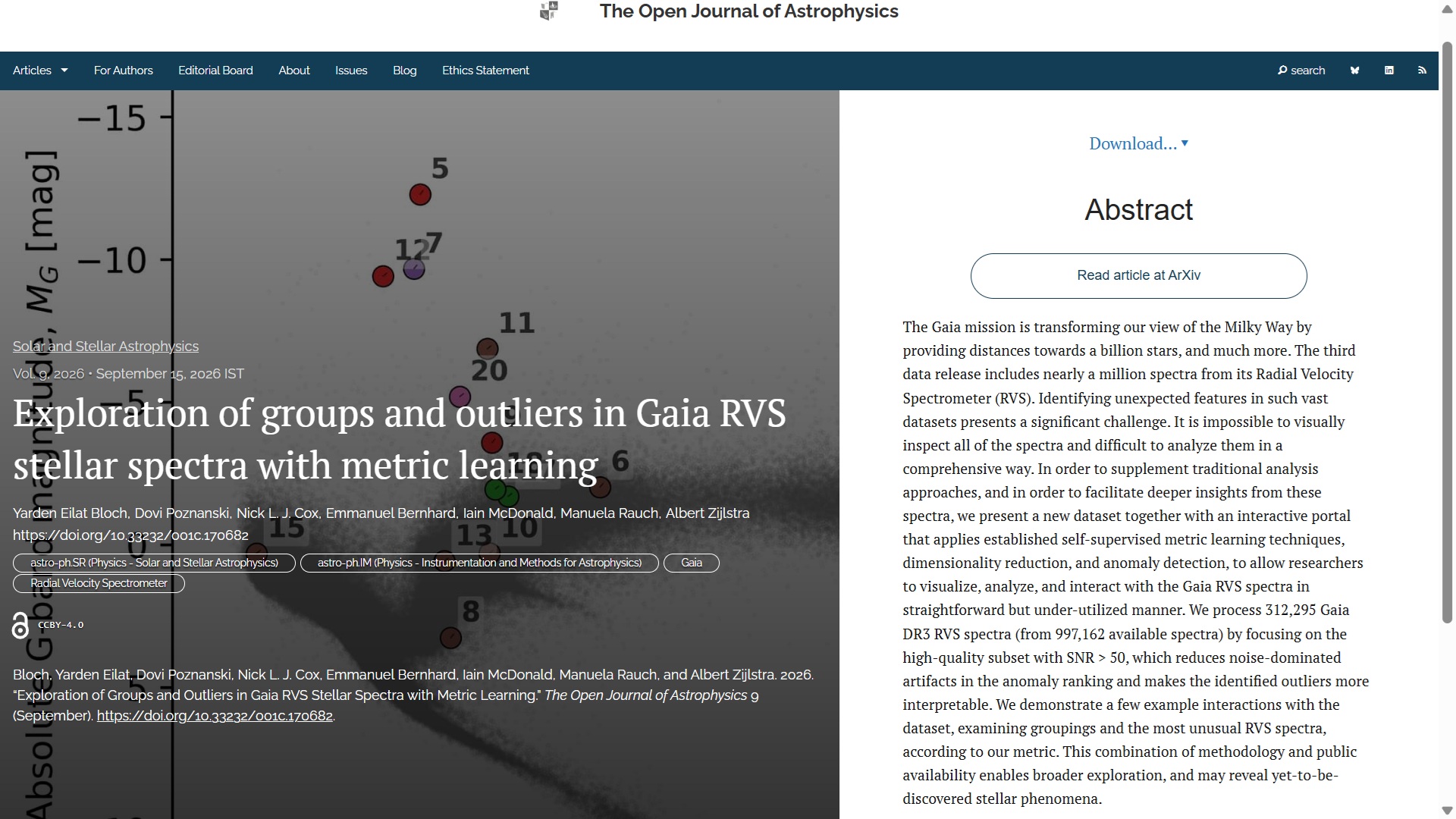
The official version of the paper can be found on arXiv here and the Fediverse announcement here:
The third paper of the week, published on Wednesday 16th September in the folder Instrumentation and Methods for Astrophysics is “XID+PRIMA, II: Stepping Through Hyperspectral Imaging to Deblend PRIMAger Beyond the Extragalactic Confusion Limit” by James M. S. Donnellan (U. Sussex, UK) and 12 others based in the UK, France, USA, and The Netherlands. This article explains how PRobe far-Infrared Mission for Astrophysics (PRIMA) uses a new Bayesian modelling approach to map large areas with unprecedented sensitivity. Overcoming confusion noise limitations, enables robust detection of IR-luminous galaxies
The overlay is here:
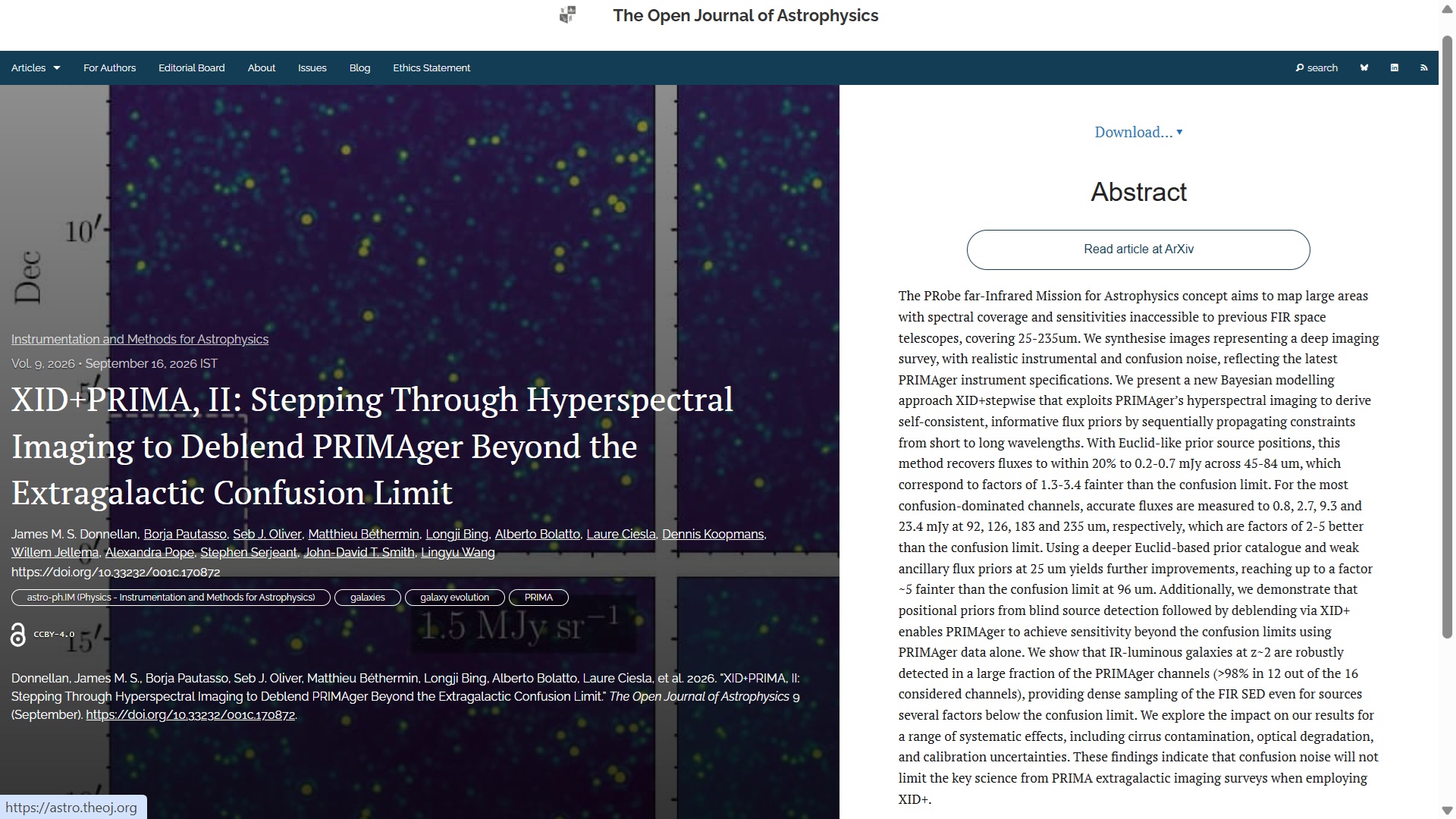
The official version of the paper can be found on arXiv here and the Fediverse announcement here:
The fourth paper of the week, also published on Wednesday 16th September but in the folder Astrophysics of Galaxies is “The Curious Case of Centaurus A: On the Subject of the Quenched satellites” by Sachi Weerasooriya (Carnegie Obs., USA) and 8 others based in the USA and Canada. This study investigates the lack of luminous satellite galaxies in Centaurus A’s inner regions, suggesting that AGN-driven thermal feedback could suppress star formation, affecting the survival and evolution of satellites
The overlay is here:
The officially-accepted version of the paper can be found on arXiv here and the Fediverse announcement here:
The fifth paper of the week is “A Unified Halo Mass Function Across Dark Matter Models from High-Resolution Multi-Scale Simulations” by Andrew Benson (Carnegie Institute for Science), Ethan O. Nadler (UC San Diego), and Xiaolong Du & Vera Gluscevic (UCLA) – all based in the USA. This was also published on Wednesday 16th September, but in the folder Cosmology and Nongalactic Astrophysics.
The overlay for this one looks like this:
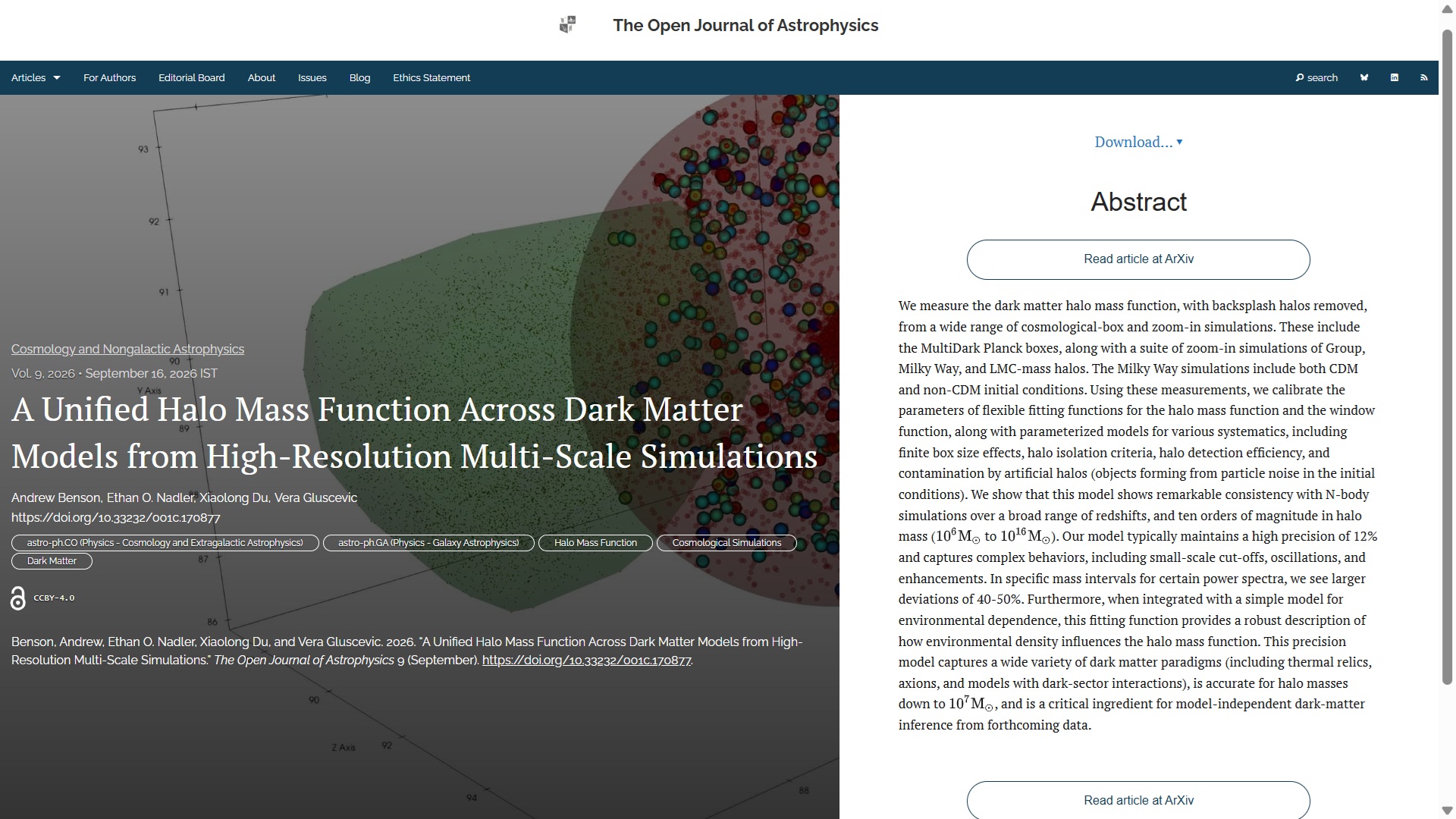
The officially-accepted version of this paper is on arXiv here and the Mastodon announcement on the fediverse here:
The penultimate, sixth, paper of the week is “Weak-lensing Shear-Selected Galaxy Clusters from the Hyper Suprime-Cam Subaru Strategic Program: III. A precision cosmological sample enabled by optical confirmation” by I-Non Chiu (National Cheng Kung U., Taiwan) and 11 others from around the world. This was published on Thursday 17th September in the folder Cosmology and Nongalactic Astrophysics. The overlay is here:
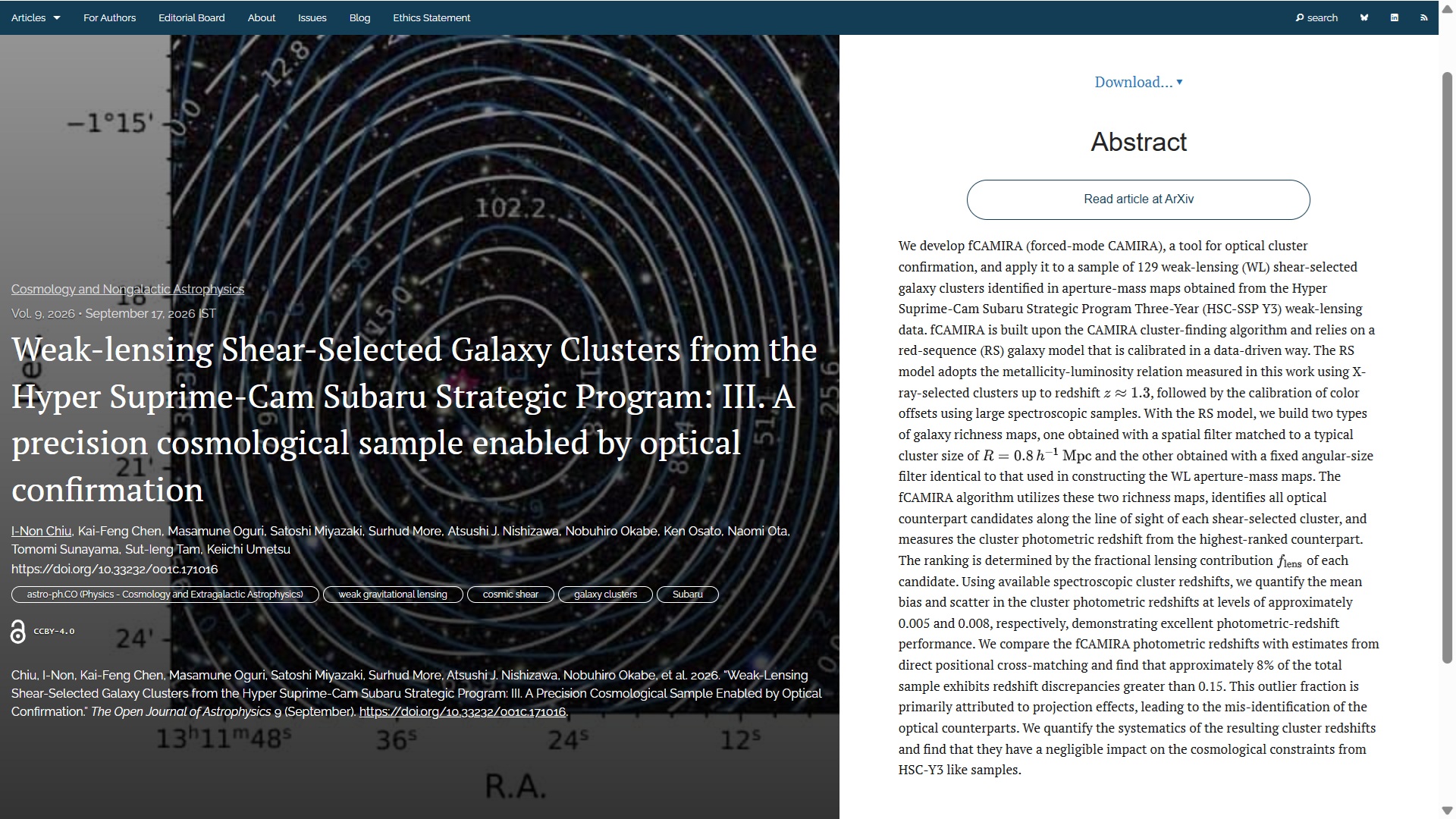
The officially accepted version is on arXiv here and the Mastodon announcement here:
Last, but by no means least, we have our seventh paper of the week: “The Cosmological Simulation Code OpenGadget3 – Implementation of Self-Interacting Dark Matter” by Moritz S. Fischer (Donastia International Physics Center, Spain) and 9 others based in Germany, Italy, USA , Sweden and Denmark. This was published on Friday 18th September (i.e. yesterday) in the folder Instrumentation and Methods for Astrophysics. This paper discusses the use of OpenGadget3, a tool for simulating self-interacting dark matter (SIDM), and highlights its capabilities, performance, and areas for improvement.
The overlay is here:
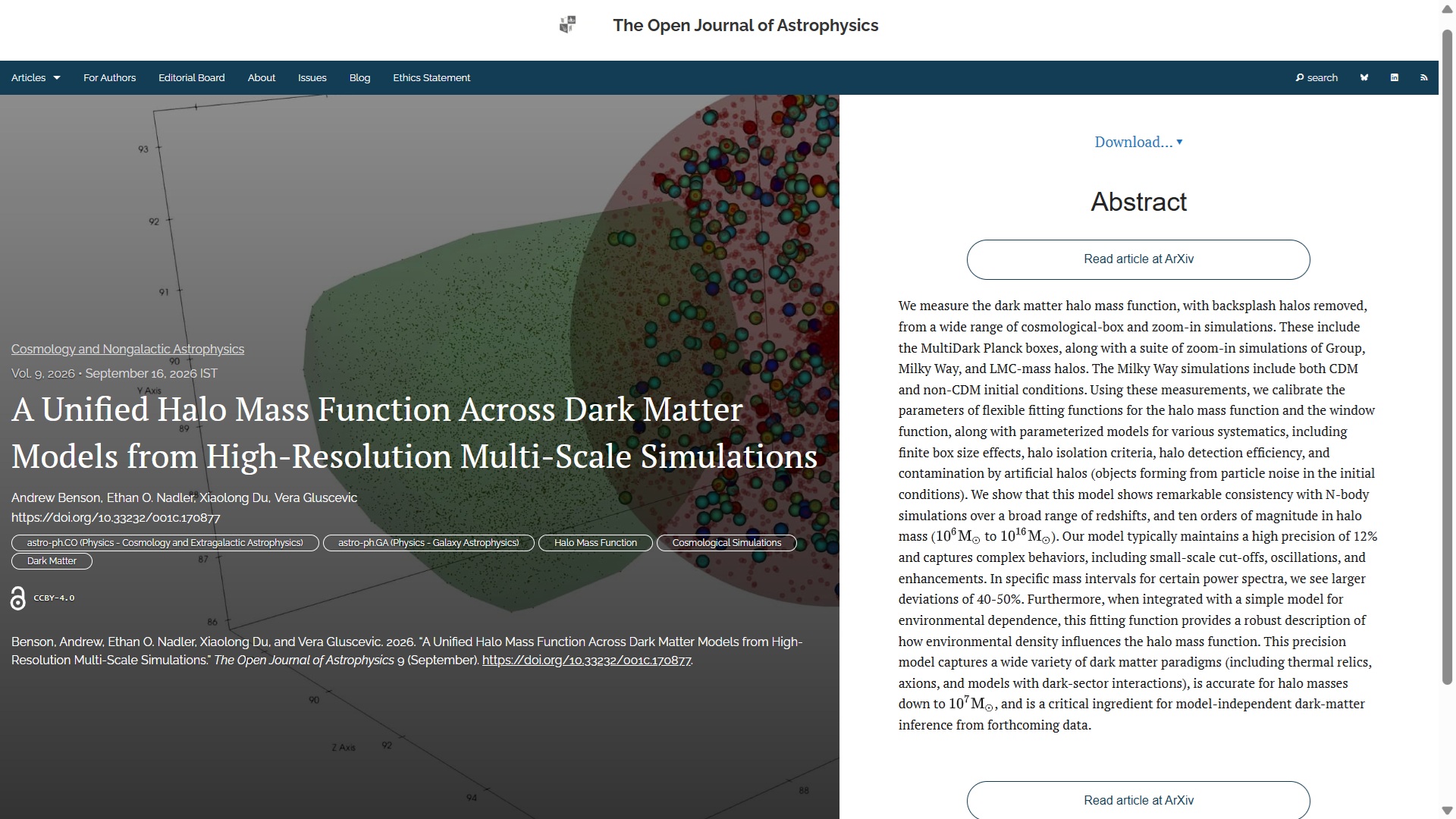
The final version of this paper is on the arXiv here and the Mastodon announcement here:
That concludes this week’s update. At the rate we’re going we could well reach 300 by the end of the year, but we’ll just have to wait and see about that. I’ll do another next weekend.

 In the Dark