R.I.P. Andrew Sachs (1930-2016)
Follow @telescoperAuthor Archive
I Know Nothing!
Posted in Television with tags Andrew Sachs, Fawlty Towers on December 2, 2016 by telescoperBelshazzar’s Feast
Posted in Music with tags BBC National Chorus of Wales, BBC National Orchestra of Wales, Double Concerto for Violin and Cello, Edward Elgar, Frederick Delius, Martyn Brabbins, Paul Watkins, Tasmin Little on December 2, 2016 by telescoperLast night I made my way through the foggy streets of Cardiff to St David’s Hall to attend a concert by the BBC National Orchestra of Wales (joined for the second half by the BBC National Chorus of Wales and Members of Bristol Choral Society) conducted by Martyn Brabbins for a programme of music by British composers, culminating in a performance of Belshazzar’s Feast by William Walton. The whole concert was broadcast live on BBC Radio 3 and you can listen to it here on iPlayer for the next month.
The concert began with the “concert overture” In the South (Alassio) by Edward Elgar. I put “concert overture” in inverted commas because, at about 25 minutes, it’s a bit long for an overture and is really more like a tone poem. Elgar wrote most of it when on holiday in Italy in 1904. He was actually planning to write a full symphony but the inspiration he’d hoped to get from fine weather didn’t transpire because it was even colder and damper in Alassio than in his native Malvern. Incidentally, Alassio is in the North of Italy not the South. The music Elgar composed when the weather improved is not a full symphony, but a bright and colourful piece which comprises a number of episodes, some pastoral and some tempestuous. It’s richly orchestrated and served as an enjoyable warm-up for the musicians (and audience). Conductor Martyn Brabbins, by the way, was sporting an impressive beard which lent him extra gravitas on the podium.
The second item on the agenda was the Double Concerto for Violin and Cello by Frederick Delius, which provided an interesting contrast, from an overture that’s too long for an overture to a concerto that’s too short – at around 20 minutes in duration – to be a concerto. The two principals here were Tasmin Little (violin) and Paul Watkins (cello), both of whom played very well but the sound balance made the cello a little hard to hear over the rest of the orchestra, despite the fact the orchestra was pared down a little for this piece, with some of the strings and the percussion that was heavily used in the Elgar being removed. This work, which is rather rhapsodic in form, certainly has its moments of beauty – especially when the violin and cello combine – but overall I found it hard to discern an overall structure and sense of development. Perhaps I’m being harsh, though, as talk in the bar during the interval that followed immediately was generally very enthusiastic about this piece. Tasmin Little also appeared in the lounge to sign CDs and talk to fans.
After the interval was the main event, William Walton‘s sumptuous Belshazzar’s Feast. This was originally commissioned by the BBC in 1929 who asked for a “small-scale choral work” which would be suitable for a radio broadcast. I’m not sure what part of “small-scale” Walton didn’t understand, but he produced a work that required orchestral and choral forces far too large to be accommodated in the original studio venue, so it wasn’t performed until 1931 at the Leeds Music Festival. To be fair to Walton it is a fairly short work – about 35 minutes long – but it packs a huge range of choral and orchestra textures. It’s of the form of a cantata based on words taken from Psalm 137 (“By the rivers of Babylon…”) and the Book of Daniel, divided into a series of episodes that run into each other. It tells the story of Babylonian king Belshazzar who defiles the holy vessels of the Jews (who are in captivity in Babylon) by using the vessels to toast the heathen gods. A ghostly apparition appears in the form of a human hand which writes on the wall `MENE, MENE, TEKEL UPHARSIN’ (which is to say ‘Thou art weighed in the balance and found wanting’). Belshazzar is killed that very night, and his kingdom falls to bits.
For this piece the Orchestra was back up to full strength, with two additional banks of brass instruments in the tiers above and to either side of the stage and the might St David’s Hall organ was also deployed. Behind the main body of the BBC National Orchestra of Wales were the massed ranks of the singers: the BBC National Chorus of Wales and members of the Bristol Choral Society and on stage was bass soloist Neal Davies. They combined to produce a truly exhilarating performance. I loved every minute and was deeply impressed by the variety and expressiveness of Walton’s score. The end of the concert was greeted with rapturous – and richly deserved – applause. I’ve never heard this piece live before, only on record, and I’m very glad to have been able to hear it done so well in such a great venue with such great singers and musicians.
And then I was out in the cold again, walking back to Pontcanna. The fog was even thicker after the concert than it was before and I found my usual path through Sophia Gardens completely enshrouded in a mist so dense I couldn’t see where I was going. I had to make a diversion onto Cathedral Road where there was at least some illumination. When I got home I realized I hadn’t had any dinner so had a cheese sandwich. Not exactly a feast, but at least I didn’t defile any sacred drinking vessels either…
P.S. The next concert I’ll be going to at St David’s Hall is the traditional seasonal performance of Handel’s Messiah..
Follow @telescoper
Crossword Update
Posted in Crosswords with tags Azed Crossword, Azed No. 2321, Everyman, Financial Times, Observer, Times Literary Supplement on December 1, 2016 by telescoperI haven’t posted anything for a while in the folder marked `Crosswords’ so here’s a quick update on the situation with respect to my adventures in the land of cruciverbalism.
This morning I received the latest issue of the Times Literary Supplement, and found this on the back page:

I like doing this crossword, as it involves an interesting mixture of literary references and more usual cryptic clues. Also, the prize is not a dictionary but a cheque for £40. I’ve actually won this weekly competition three times this year, which means I’ve netted £120 – more than enough to pay for the subscription. Since the TLS is also very interesting to read (once the crossword has been finished), this seems to be working out rather nicely!
I’ve had a couple of other wins recently. This set of dictionaries courtesy of the Everyman puzzle in the Observer:
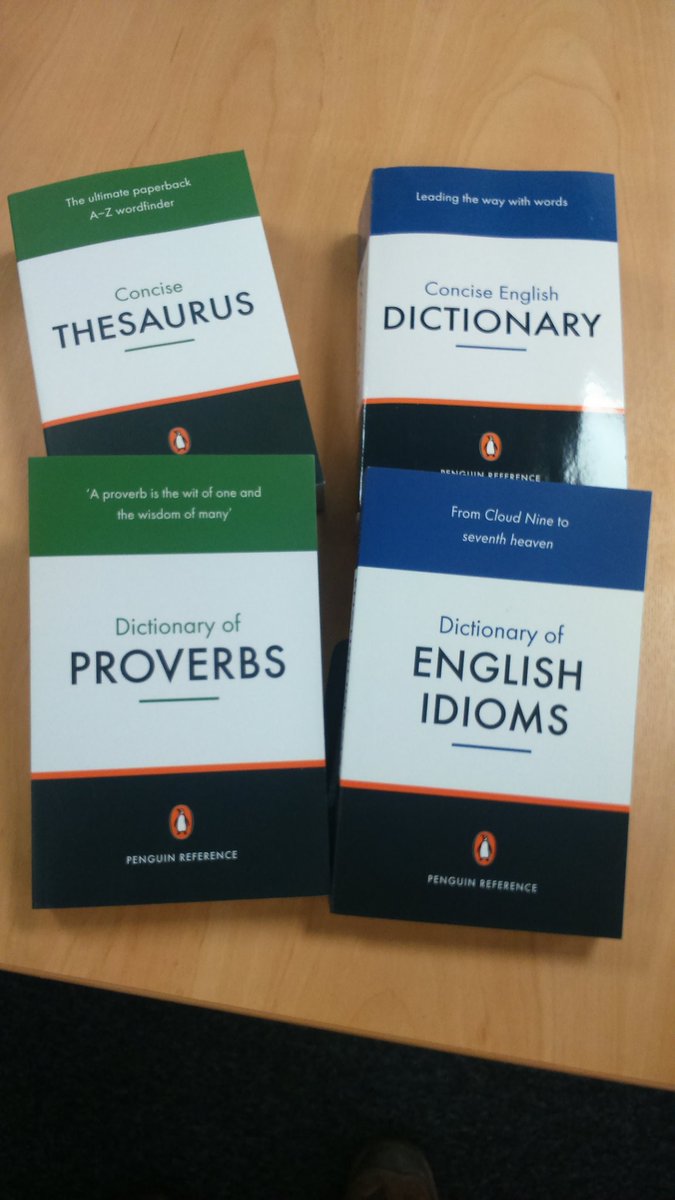
And this pair of non-dictionaries courtesy of the Financial Times:

This good news aside however I must pass on some very distressing information. It is with great dismay at the accelerating decline of Western civilisation that I have to point out that I think there was a mistake in the latest Azed crossword (No. 2321). The clue at 21 down reads:
Remains of pyre – death of Cleo – packed with African timber? (7)
The checked lights give A-HHE-P, which strongly suggests ASH-HEAP (hyphens are not clued in Azed puzzles). The first part of the clue – `Remains of pyre’ – then parses as the definition. The cryptic part then comprises two parts: ‘death of Cleo’ (suggesting ASP) fits with ASHHEAP if ASP is `packed with African timber’, i.e. if a four-letter word meaning `African timber’ is included within ASP. I can’t find any such word HH-A, but SHEA is a kind of African tree. That, however, would give ASSHEAP which (as well as sounding a bit rude) does not fit with the definition or the checked light at 26 down (HEARTH, i.e. HEART+H).
I’m pretty sure, therefore, that this is a slip by the setter.
Follow @telescoperYancey Special
Posted in Jazz with tags Blues, boogie woogie, Jimmy Yancey, Yancey Special on November 30, 2016 by telescoperTime for a bit of Boogie Woogie. This is by the great Jimmy Yancey who, despite having a strong claim to be regarded as the founding father of this style of piano playing, is nowhere near as well known as he should be. In fact he only began to make recordings relatively late in life and never earned enough money to give up his day job, which was as a groundsman for the Chicago White Sox baseball team. He was nevertheless a huge influence on people like Meade Lux Lewis and Albert Ammons who made a great commercial success out of this genre.
You may or may not know that Boogie Woogie encompasses quite a wide `library’ of left-hand bass patterns, many of which have their own names: the Rocks, the Trenches and the Fives to name but three. I’ve always felt that there was an interesting paper (or perhaps PhD thesis) to be written about the various permutations of notes involved in these figures, which mainly (but not exclusively) involve the root, third, fifth and sixth notes of the relevant chord, which are usually themselves part of a standard 12-bar blues progression. Usually the little finger of the left hand picks out the root note and since the pattern played by the other fingers doesn’t change as the chords change remembering where your pinkie has to go more-or-less guarantees that the rest of the pattern ends up in the right place.
The simplest of all these Boogie Woogie figures to play is the Barrelhouse left-hand style that just involves a pair of two-note chords (root-fifth and root-sixth). Double up each of those chords and you get the left hand for Meade Lux Lewis’s classic Honky Tonk Train Blues, and so on. I mention that because if you follow the Youtube link you’ll see a photograph of Jimmy Yancey watching Meade Lux Lewis play.
Anyway, though most Boogie-Woogie left-hand bass figures have rather abstract names such as those listed above, this one – which you’ll recognize from a number of other tunes, such as Fats Domino’s Blueberry Hill – is always called the Yancey Special left hand as a tribute to its inventor. Apart from that lovely rolling bass line, what else is great about this track is the way Jimmy Yancey generates such a sense of forward momentum at a relatively slow tempo, e.g. by using the very effective technique (called a “pick-up”) of starting a right-hand phrase just before the bar line indicate by the left hand.
Follow @telescoperAttempted Assassination of the Queen – by William McGonagall
Posted in Poetry with tags Attempted Assassination of the Queen, Poetry, William Topaz McGonagall on November 30, 2016 by telescoperGod prosper long our noble Queen,
And long may she reign!
Maclean he tried to shoot her,
But it was all in vain.
For God He turned the ball aside
Maclean aimed at her head;
And he felt very angry
Because he didn’t shoot her dead.
There’s a divinity that hedges a king,
And so it does seem,
And my opinion is, it has hedged
Our most gracious Queen.
Maclean must be a madman,
Which is obvious to be seen,
Or else he wouldn’t have tried to shoot
Our most beloved Queen.
Victoria is a good Queen,
Which all her subjects know,
And for that God has protected her
From all her deadly foes.
She is noble and generous,
Her subjects must confess;
There hasn’t been her equal
Since the days of good Queen Bess.
Long may she be spared to roam
Among the bonnie Highland floral,
And spend many a happy day
In the palace of Balmoral.
Because she is very kind
To the old women there,
And allows them bread, tea, and sugar,
And each one get a share.
And when they know of her coming,
Their hearts feel overjoy’d,
Because, in general, she finds work
For men that’s unemploy’d.
And she also gives the gipsies money
While at Balmoral, I’ve been told,
And, mind ye, seldom silver,
But very often gold.
I hope God will protect her
By night and by day,
At home and abroad,
When she’s far away.
May He be as a hedge around her,
As he’s been all along,
And let her live and die in peace
Is the end of my song.
by William Topaz McGonagall (1825-1902)
Follow @telescoper
Time for Elsexit?
Posted in Open Access on November 29, 2016 by telescoperI, for one, agree very strongly that we should ditch Elsevier completely. Tim Gowers gives the lowdown on the scandalous situation.

This post is principally addressed to academics in the UK, though some of it may apply to people in other countries too. The current deal that the universities have with Elsevier expires at the end of this year, and a new one has been negotiated between Elsevier and Jisc Collections, the body tasked with representing the UK universities. If you want, you can read a thoroughly misleading statement about it on Elsevier’s website. On Jisc’s website is a brief news item with a link to further details that tells you almost nothing and then contains a further link entitled “Read the full description here”, which appears to be broken. On the page with that link can be found the statement
The ScienceDirect agreement provides access to around 1,850 full text scientific, technical and medical (STM) journals – managed by renowned editors, written by respected authors and read by researchers from…
View original post 3,447 more words
1st Annual Robert Grosseteste Lecture in Astrophysics/Cosmology
Posted in Biographical, Books, Talks and Reviews on November 29, 2016 by telescoperA few years ago I blogged about the fact that the University of Lincoln was setting up a new School of Mathematics and Physics. Well, now they’re up and running and they’ve invited me to give the first in a new series of annual public lectures!

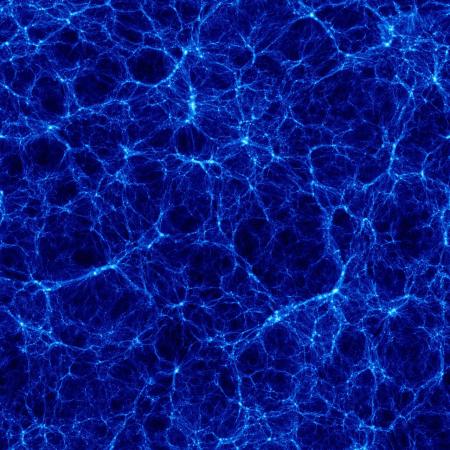
The Cosmic Web
a public lecture by
Professor Peter Coles
School of Physics and Astronomy, Cardiff University
Thursday 23 February 2017 at 6 pm
Stephen Langton Building (former EMMTEC) Lecture Theatre, Brayford Pool Campus, University of Lincoln
 The lecture will focus on the large-scale structure of the Universe and the ideas that physicists are weaving together to explain how it came to be the way it is. Over the last few decades, astronomers have revealed that our cosmos is not only vast in scale – at least 14 billion light years in radius – but also exceedingly complex, with galaxies and clusters of galaxies linked together in immense chains and sheets, surrounding giant voids of (apparently) empty space. Cosmologists have developed theoretical explanations for its origin that involve such exotic concepts as ‘dark matter’, ‘dark energy’ and ‘cosmic inflation’, producing a cosmic web of ideas that is, in some ways, as…
View original post 7 more words
Nailing Cosmological Jelly to the Wall
Posted in The Universe and Stuff with tags Inflation, Joao Magueijo, New Scientist on November 28, 2016 by telescoperWhen asked to provide comments for a recent piece about cosmology in New Scientist, all I could come up with was the quote in the following excerpt:
But no measurement will rule out inflation entirely, because it doesn’t make specific predictions. “There is a huge space of possible inflationary theories, which makes testing the basic idea very difficult,” says Peter Coles at Cardiff University, UK. “It’s like nailing jelly to the wall.”
Certain of my colleagues have cast doubt on whether I am qualified to comment on the nailing of jelly to the wall, so I feel obliged to share the results of my highly successful research into this in the form of the following photograph:

I regret that I was unable to find any Dark Jelly, so had to settle for the more familiar baryonic type. Also, for the record, I should point out that what is shown is actually jelly concentrate. A similar experiment with the more normal diluted form of jelly was somewhat less successful.
I hope this clarifies the situation.
Follow @telescoperChanging Patterns of Work
Posted in Biographical, Mental Health with tags Work-life Balance on November 28, 2016 by telescoperI read an interesting piece in yesterday’s Observer about a number of people who have decided to switch careers, or at least change the pattern of their working life, relatively late in life. Unlike the cases described in the article, I haven’t had the nerve to try an entirely new kind of job – at least not yet! – but I did feel the article in question had some relevance to my own decision, made a few months ago, to resign from my previous post as Head of the School of Mathematical and Physical Sciences at the University of Sussex and move back to Cardiff.
I’m not going to go into all the reasons for stepping down, but one of them is I wanted to establish a better work-life balance. Fortunately, I never sold my little house in Cardiff and had also paid off the mortgage on that property some years ago, so returning to live there full-time was relatively straightforward and meant reducing my outgoings considerably. I was therefore more than happy to accept the offer of a position here on a 50% salary. In other words, I am officially a part-time member of staff. I’m planning to use the other 50% to pursue some other interests, such as writing a couple of books and running the Open Journal of Astrophysics, but generally just taking more time off the treadmill of academic life.
Another thing I ought to mention is that my current position is fixed-term, for three years only. The earliest I’ll be able to retire is when I am 55, which is still a couple of years away. Whether I do go then depends on a number of things, including how difficult the University funding environment becomes as a result of loss of EU income and the proposed large reduction in numbers of overseas students. If things become really tight I think it’s important for people of my age to make way so that the younger generation have a better chance. Perhaps I won’t retire at that time anyway. Perhaps I’ll follow the example of the folk in the Observer piece and start a new career as something completely different!
Having said that I’m a part-time member of staff, I have to also admit that I’m finding it quite difficult actually working part-time. This is largely because the University’s calendar of business continues at a full-time rate. Some of the jobs I’ve been asked to do in my new role – specifically designing a couple of new postgraduate courses – had to be completed quite soon after I arrived, something I had not realized when I accepted the position here! However, now that those deadlines have been met I can hopefully settle down to a regular pattern of work, involving a bit of teaching and research in the School of Physics & Astronomy and helping get the Data Innovation Research Institute off the ground. When things have settled into a steady state I think I’ll start filling in time sheets – not for anyone else’s use, but for my own records. I can manage comfortably on a part-time salary, but I draw the line at unpaid overtime.
On the other hand, it’s always difficult to draw the line when you’re an academic. We’re basically paid to think and most of us don’t stop doing that even during our time off..
Follow @telescoper
 In the Dark