Author Archive

November 18th 1916: The End of the Somme Offensive

Posted in History with tags , , , on November 18, 2016 by telescoper

If you think a lot has happened between this summer and now, it is perhaps worth reflecting on the fact that the Battle of the Somme, which started on July 1st 1916, only came to an end on November 18th 1916, i.e. one hundred years ago today. The last phase of the Somme Offensive was the Battle of the Ancre which lasted from November 13th until November 18th. Though the key objective (of eliminating a German salient) was not met, and casualties were heavy, this battle is considered a qualified success for the British Army, who secured the key position of Beaumont Hamel, though the village itself was almost completely destroyed during the fighting:


beaumont-hamel

The battlefield at Beaumont-Hamel, taken in November 1916

Incidentally, Beaumont-Hamel had seen fighting since the very first day of the Battle of the Somme. On July 1st 1916, 700 men of the Newfoundland Regiment gave their lives there as they went “over the top” and were promptly mown down by machine guns. There is an important memorial to their sacrifice there.

The statistics of the Somme Offensive are truly horrific. In total well over a million men were killed or seriously wounded during the 141 day campaign. By the time it finished the British, French and Commonwealth armies had advanced a maximum of about 6 miles. Most historians describe the outcome as “inconclusive”, largely on the grounds equal numbers of soldiers were slaughtered on each side.  It was a stalemate, but the price paid in blood was appalling.

The carnage didn’t end with the Somme. As the “Great War” stumbled on, battle after battle degenerated into bloody fiasco. Just a year later the Third Battle of Ypres saw another 310,000 dead on the British side as another major assault on the German defences faltered in the mud of Passchendaele. By the end of the War on 11th November 1918, losses on both sides were counted in millions.


Cardiff: Centre of Gravity

Posted in The Universe and Stuff with tags , , , on November 17, 2016 by telescoper

It’s a very busy period for me as the Cardiff University Data Innovation Research Institute (DII) gears up for some exciting new activities in both teaching and research (of which more in due course) and embarks on is strategy for promoting and fostering interdisciplinary research across Cardiff University and beyond.

Yesterday, however, I attended an informal meeting in the School of Physics & Astronomy at which we had an update about other strategic developments in the Gravitational Physics Group, some of whose members work in the DII Following on from the first-ever detection of gravitational waves earlier this year the group has ambitious plans to build on its involvement in this discovery. Here’s a nice short video produced by Cardiff University that discusses this discovery:


Cardiff University has supported research on gravitational waves for a very long time, and it is important that it reaps the benefit now that its investment is starting to pay off. To rest on laurels at this stage would be to risk losing the benefits of that sustained investment. It was very exciting to hear about the group’s plans for further sustained expansion, which will make the Cardiff one of the leading centres of gravitational wave research  in the world.

I’ve already mentioned on this blog that a couple of new positions have already been advertised, one in gravitational wave astronomy (to consolidate existing activities in theory and data analysis) and the other in a completely new area of Gravitational Wave Experimentation. Those advertisements have now closed and the process of filling the vacancies is under way.

However, yesterday we heard of even more expansion of gravitational physics research, in the form of a new academic position in Time Domain Astronomy with particular emphasis on transient sources of electromagnetic radiation that could be associated with gravitational wave production (such as gamma-ray bursts). I’ll post the advertisement on this blog when it is available. And that’s just the start: further positions will be released over the next few years which will turn Cardiff into a true Centre of Gravity.

Exciting times!

Roopa Panesar – Raga Puriya Gat

Posted in Music with tags , , , , , , , on November 16, 2016 by telescoper

Last night I listened to an absolutely fascinating live concert of Indian Classical Music on BBC Radio 3. I know very little about this kind of music, but was captivated by the energy, spontaneity and sense of excitement – not to mention the extreme virtuosity – of the playing. I wish I knew more so I’ve decided to enlist the help of the blogosphere to suggest recordings suitable for the education of an ignorant person like myself. Please offer your suggestions through the comments box below.

In the meantime, though, here is a clip featuring one of the musicians from last night’s concert, Roopa Panesar on sitar (the large stringed instrument) with the amazing Sukhwinder Singh on tabla (the small drums) and Gunwant Kaur on the tanpura. There’s a lot of improvisation in a Raga such as this, which gives it a lot of the freewheeling flavour of Jazz (complete with audience applause at particularly exciting moments) but it inhabits a sound world all of its own and is underpinned by wonderfully fluid rhythmic pulse.

Does the fine structure constant vary?

Posted in The Universe and Stuff with tags , , on November 16, 2016 by telescoper

No.

Your Molecular Structure – R.I.P. Mose Allison

Posted in Jazz on November 16, 2016 by telescoper

R.I.P. Mose Allison (1927-2016)

Midnight Blues

Posted in Jazz with tags , , on November 15, 2016 by telescoper

It’s amazing what you can find on Youtube…

This extraordinary recording of a slow blues was made in 1944. It’s extraordinary for two reasons.

One is that it is far longer than most discs of the time, and was recorded at 33 1/3 rpm rather than the 78 rpm that was usual for the time. The reason why that is extraordinary is that the long-playing record wasn’t introduced until 1948 so this track had to wait about five years until it was released commercially. The sound quality is unusually good for the period and it’s great to hear the musicians stretch out in a way that wasn’t possible on a 78rpm record. Notice also that it’s not just a string of solos, there are duets and ensemble passages , all very characteristic of authentic New Orleans music.

The other extraordinary thing is the band: Bunk Johnson (tpt) Jim Robinson (tmb); George Lewis (clt); Alcide “Slow Drag” Pavegaeu (bss); Lawrence Marrero (bjo); and Warren “Baby” Dodds (dms). Most of these musicians who had grown up in New Orleans but had not joined the mass exodus of great musicians (including  Louis Armstrong) who left for Chicago when Storyville was closed down in 1917. Most of the jazzmen who stayed behind fell into obscurity compared to those who left. Bandleader on this occasion,   Bunk Johnson was a case in point. He was born way back in 1879 and played with some of the legends of early New Orleans Jazz, a connection with history which was enough to make him a sort of “patron saint” of the revivalist movement when he was rediscovered in the 1940s.

One musician who had moved to Chicago (with his brother, clarinettist Johnny Dodds) was Baby Dodds, the first really great Jazz drummer, who had played alongside his brother and Louis Armstrong in  King Oliver’s Band as well as on the glorious Hot Fives and Hot Sevens. His playing is barely audible on most of those old records, but he is heard to good effect on this track.

Anyway, I think it’s a superb performance, dripping with nostalgia for an era of music that would have been lost had it not been for these priceless recordings…


A Question of Morality

Posted in History, Politics with tags , , on November 14, 2016 by telescoper

I floated the following hypothetical question on Twitter yesterday and was quite surprised at the response, so I thought I’d repeat it here and see what the reaction is.

Please make your choice before reading my opinion below the line.

Continue reading

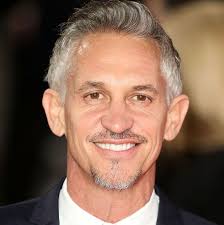
Beard of the Year 2016 poll: Gary Lineker leads longlist of contenders named

Posted in Uncategorized on November 12, 2016 by telescoper

I voted for Moeen, but there’s still time to nominate your favourite for Beard of the Year 2016!

kmflett's avatarKmflett's Blog

Beard Liberation Front

Media Release

11th November

Contact Keith Flett 07803 167266

Beard of the Year 2016 poll: Gary Lineker leads longlist of contenders named

lineker

The Beard Liberation Front the informal network of beard wearers has announced the longlist for the Beard of the Year 2016 poll.

Broadcaster Gary Lineker leads the longlist of contenders

In 2015 Weird Beard brewer Bryan Spooner won the vote.

The campaigners say that the award is specifically not about who has the best or most magnificent beard. Rather it focuses on the beard wearer who has made the most positive hirsute public impact during the year.

With the rise in hirsuteness there is now a longlist poll to prune down the contenders to 10 for the final vote which starts on 25th November. The winner is announced on 29th December.

BLF Organiser Keith Flett said, there is a greater diversity than ever on the…

View original post 64 more words

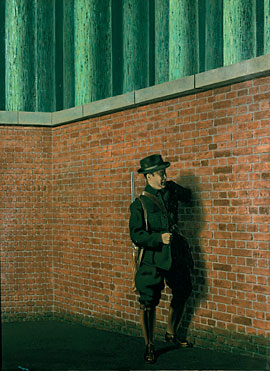
La Gravitation Universelle

Posted in Art with tags , on November 12, 2016 by telescoper

image

(René Magritte, 1943; oil on canvas)

Daphnis et Chloé at St David’s Hall

Posted in Music with tags , , , , , , , on November 11, 2016 by telescoper

Taking a short break from today’s duties – which are substantial – I’ve just got time to mention that last night I went once again to a concert at St David’s Hall in Cardiff. This time it was the BBC National Orchestra of Wales under the direction of conductor laureate Tadaaki Otaka, who were joined for the second half of the performance by the BBC National Chorus of Wales. The concert was broadcast live last night on BBC Radio 3, although I didn’t listen to it on the radio myself because I was there in person. In fact I only just got there in time because last night they switched on the Christmas lights in Cardiff city centre and I had to make my way through the crowds to get to St David’s Hall.

The programme began with an appetizer in the form Mozart’s, brief but dramatic overture to the opera Idomeneo which Mozart wrote when he was just 25. It’s interesting how much more attention one tends to pay to an overture when it’s detached from the main event it is supposed to precede. In fact you sometimes even find people talking during the overture at the Opera, which as far as I’m concerned is a crime of the most serious order. Anyway, the Idomeneo overture  is in a compact sonata form, which is something I’d never appreciated before despite having seen the Opera a number of times.

After that there was a memorable performance of  Prokofiev’s Second Violin Concerto with soloist Thomas Zehetmair. I’d never heard this piece before, and was captivated from the very opening in which the soloist enters alone without any orchestral preface or accompaniment. The piece consists of two sprightly and intense allegro movements either side of a more lyrical adagio. It’s a very virtuosic solo piece but also full of interesting melodies and innovative orchestration. I was sitting in the stalls directly in front of the cellos and basses who had to work phenomenally hard, sometimes doubling the melodic line of the much nimbler solo violin. Great stuff.

The interval was followed by a complete performance of the music to the ballet Daphnis et Chloé by Maurice Ravel. As is the case with Stravinsky’s Firebird (which I heard in St David’s Hall a few weeks ago) music from this ballet is often played in the form of a suite or, in the case of this ballet, two suites, but I have to say the whole is much greater than the sum of the suites. It’s a glorious (and very sensual) work, brilliantly orchestrated, full of vibrant colours and lush textures, and even more wonderful when accompanied by the wordless singing of the massed ranks of the BBC National Orchestra of Wales. The score lasts a full hour, but that time seemed to flash by in this performance which was extremely well received by a very appreciative audience.

Anyway, for the next month you can listen to the whole concert on the BBC iPlayer so feel free to add your comments below if you get the chance to hear it.

The only downside of the evening was that on the way out I bumped into disgraced former Conservative MP and current UKIP AM, Neil Hamilton, along with equally ghastly wife. So traumatised was I by that experience that I was forced to visit the Urban Tap House for a beer before walking home.