Author Archive

Glamorgan versus Gloucestershire

Posted in Cricket with tags , , on September 7, 2016 by telescoper

image

As this eventful summer draws to a close I thought I’d make the most of my part-time status and take a day off to sample the last game of County Cricket at the Swalec Stadium in Sophia Gardens.

This was the second day of Glamorgan’s match against Gloucestershire. Day 1 had seen Glamorgan bowled out for 220 and Gloucestershire reach 62-3 in reply at stumps.

Glamorgan’s bowlers strained for the early wickets they needed but they didn’t create enough pressure to precipitate a collapse, and Gloucestershire ended on 347 for 8. Young legspinner Carlson bowled particularly well, but didn’t have much luck.

County Cricket is very relaxing. Neither a tense as Test cricket nor as hectic as  limited-overs, it has its own kind of atmosphere and goes at its own tempo, absorbing in its own modest way.

Glamorgan look like losing this game, and run a risk of finishing at the bottom of the County Championship. Still, there’s always next year…

UPDATE: Gloucestershire were all out for 363 on the morning of Day 3. Glamorgan then predictably struggled with the bat yet again, and were bowled out for 232 leaving Gloucestershire 90 to win. Their openers rattled off the runs in fewer than 20 overs by 5pm. Gloucestershire won by 10 wickets.

250 Years of Dalton

Posted in History, The Universe and Stuff with tags , on September 6, 2016 by telescoper

Having a quick look at Twitter this morning as I drank my coffee I discovered that today is the 250th anniversary of the eminent English scientist John Dalton, who was born on 6th September 1766. Dalton is most famous in the United Kingdom for his work on chemistry and physics, and somewhat less so for his pioneering studies of colour blindness. I didn’t know until quite recently, in fact, that the birthday of John Dalton, who was himself colour blind, is also  Colour Blindness Awareness Day so I thought I’d do a quick post to mark the occasion. You might also be interested in this old guest post on the subject of colour and colour perception.

Here’s a test for some of the main types of colour blindness – can you read the numbers?

Colour_Blind

Colour blindness comes in different forms and affects a significant fraction of the population, with a much higher rate of occurence in males (up to 1 in 10 in some groups) than in females (about 1 in 200). It also varies significantly across different populations, with particularly low rates for, e.g., Fijian males (0.8 %) and much higher frequencies among, e.g. Russian males (9.2%). I am not colour-blind myself, but I know several colleagues who are. In fact at the meeting I was at last week, when one speaker decided to show two different sets of results on a graph by plotting one in red and the other in green, there were howls from several in the audience who couldn’t tell them apart. It’s very easy to make careless mistakes like this in preparing lecture materials when it takes only a small effort to make them suitable for all. I urge colleagues who teach to remember that if they are 100 men in the audience the likelihood is that there will be around 8 to 10 who are colour blind.

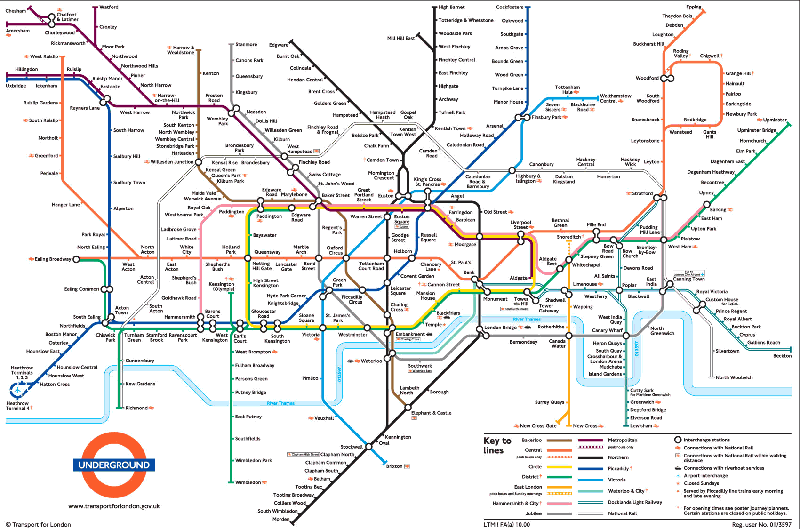
Thinking about this makes you realise how many maps and other designs rely on full colour perception for their effect. I’ve previously celebrated the London Underground map as an excellent example of graphic design, but it must be a nightmare to a person who is colour blind!

tube_map


It’s also worth mentioning that standard instructions at many institutions for marking examination papers is that the first marker should do  them in red ink and the second marker in green….

This all reminds me of the late Professor Francesco Lucchin, who first invited to Italy to work with the  astronomy group in Padova back in the early 1990s. Francesco and I ended up writing a book together and during the course of working on that he told me that he was “daltonic”. I later found out that this word does exist in English, but it is not in common usage as a word meaning “colour blind”. The standard word in Italian for “colour blind” is “daltonico” and there are many other variants in other European languages, such as the French “daltonien”. It’s very curious that Dalton’s name is so strongly associated with colour blindness across the European continent but not in the country of his birth. I wonder why this is?

By the way, if I understand correctly, the English word “daltonic” refers to a specific form of red/green colour blindness called deuteranopia, whereas the foreign variants can refer to any form of colour blindness.

P.S. You would have thought that the 25oth anniversary of Dalton’s birth would at least have warranted a Google doodle, but apparently not.

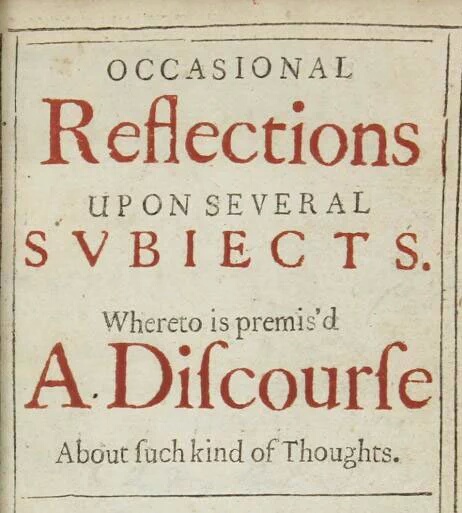
A Diſcourſe upon the “Long s”

Posted in Uncategorized on September 5, 2016 by telescoper

image


Yesterday I posted the endearingly vague book title shown above (which is actually from a book by Robert Boyle). When it appeared on Facebook I got some predictably rude comments about “fuch kind of thoughts”, etc, so I thought I’d post a little comment about the symbol “ſ'” which appears in the above. This character is sometimes called the “long s”. There’s a full Wikipedia article on this which there’s no point in repeating here, but I will just mention that the long s was used widely in manuscripts after the distinction arose better upper case and lower-case letters (which was around about the end of the 8th Century) where in the lower-case form, the “short s” (i.e. s) was used exclusively at the end of words or before an elision, and the long s everywhere else. It survived into the era of printing, not just in English but also in other languages including German. In fact “ſ” forms the left-hand element of the ligature “Eszett”, written  “ß”, of which the other part is “z”.

The long s fell increasingly out of favour in typography, partly because of the potential confusion with “f”, and partly because using the same “s” throughout a word is clearly tidier and easier to read: “sinfulness” is a lot easier on the eye than “”ſinfulneſs”. By the start of the 19th Century the long s had become a rarity; The Times phased out “ſ” in 1803.

Oh, and the long s is also the original form of the integral sign, introduced to mathematics by Leibniz to stand for “summa” (sum), which he wrote “ſumma”.

Jobs in Gravitational Waves at Cardiff University

Posted in The Universe and Stuff with tags , , , , on September 5, 2016 by telescoper

Gradually settling back in here to the School of Physics & Astronomy at Cardiff University, I thought I’d indulge  in a bit of promotional activity and point out that, following on from the recent detection of gravitational waves by the Advanced LIGO Consortium, of which  Cardiff University is a member, there are two opportunities open for jobs in gravitational physics.

One is in the area of Gravitational Wave Astronomy. Here is the blurb:

The current Cardiff Gravitational Physics group has expertise in gravitational-wave data analysis, numerical relativity and source modelling, and astrophysical interpretation, and consists of four full-time and two part-time academic staff, two research fellows, five postdoctoral researchers and nine PhD students. Our research is supported by the UK Science and Technology Facilities Council (STFC), the Royal Society, and the European Horizon 2020 programme. The group is a founding member of GEO600, a member of the Laser Interferometer Gravitational-Wave Observatory (LIGO) Scientific Collaboration and has played a leading role in these collaborations from their inception through to the recent first direct detection of gravitational waves, and is also active in planning and development of future detectors, such as LIGO-India, Einstein Telescope and Laser Interferometer Space Antenna (LISA).

This new appointment is part of a long-term expansion of the group, to broaden and strengthen our current research in gravitational-wave astronomy, and to build a world-leading group in gravitational-wave experimentation.

For the full advertisement, links to further particulars etc, see here.

The other is the area of Gravitational Wave Experimentation:

The current Cardiff Gravitational Physics group has expertise in gravitational-wave data analysis, numerical relativity and source modelling, and astrophysical interpretation, and consists of four full-time and two part-time academic staff, two research fellows, five postdoctoral researchers and nine PhD students. Our research is supported by the UK Science and Technology Facilities Council (STFC), the Royal Society, and the European Horizon 2020 programme. The group is a founding member of GEO600, a member of the Laser Interferometer Gravitational-Wave Observatory ( LIGO) Scientific Collaboration and has played a leading role in these collaborations from their inception through to the recent first direct detection of gravitational waves, and is also active in planning and development of future detectors, such as LIGO-India, Einstein Telescope and Laser Interferometer Space Antenna ( LISA).

This new appointment is part of a long-term expansion of the group, to broaden and strengthen our current research in gravitational-wave astronomy, and to build a world-leading group in gravitational-wave experimentation, with additional appointments expected in the near future.

For full details on this one see here.

The second appointment is intended to build on existing strengths by adding a more experimental dimension to Cardiff’s research in Gravitational Waves.


Alternative Blog Title

Posted in Uncategorized on September 4, 2016 by telescoper

image

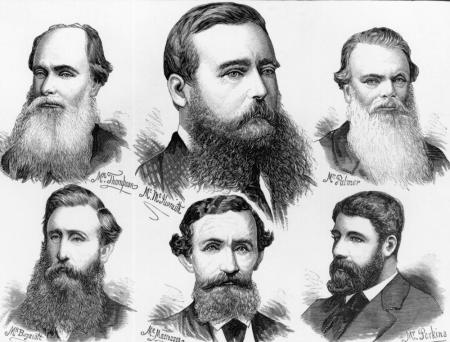
Beards…or no Beards?

Posted in Uncategorized on September 3, 2016 by telescoper

It’s World Beard Day, so here’s a reblog of a post by renowned beard historian Dr Alun Withey..

Dr Alun Withey's avatarDr Alun Withey

StateLibQld_2_174867_Sketch_entitled,_The_New_Queensland_Ministry.jpg

(Image from Wikimedia Commons)

It’s summer 2016, and beards are still pulling headlines in the news. A report on last week’s Financial Times website suggested that men are spending 20% more year on year, on niche products. One observer notes that the market for men’s grooming products is likely to top £1bn by 2018. The Guardian claim to be able to read personality through different beard styles, while other sites range from calling the end of the Hipster beard, to a report that one man wants to see the return of the beard tax.

There have been some signs of slowdown in recent months; a friend (and owner of a traditional barber shop) tells me that the numbers of men coming in for beard grooming has begun to fall, but also that the style has began to change towards shorter beards. Men who have beards are not removing them altogether…

View original post 967 more words

Gender balance, one woman at a time

Posted in Uncategorized on September 2, 2016 by telescoper

An interesting discussion of gender balance in Physics..

Debbie Hayton's avatarDebbie Hayton

What can be done to increase the number of women in physics? This question keeps committees busy and researchers funded, but the solution seems as elusive as squaring the circle. Four years ago, however, I did my bit: I transitioned from male to female. As this also meant that the number of men in physics was simultaneously reduced by one, it was, as they say in football, a “six-pointer”.

I hasten to add that I didn’t transition in order to improve the male-female ratio among physicists; that really would have been a remarkable thing to do. However, it did mean that when my wave function collapsed into the F state, I was able to conduct some controlled social observations in my work as a teacher. I’m the same person and I’m doing the same job, but in a different gender role.

After a degree, PhD and postdoctoral research I trained…

View original post 845 more words

R.I.P. Rudy van Gelder (1924-2016)

Posted in Jazz with tags , , , , on September 1, 2016 by telescoper

One of the sad items of news that appeared last week while I was indisposed was the death at the age of 91 of legendary recording engineer Rudy van Gelder. He was the man who established the sound of a huge proportion of the greatest Jazz records made in the 1950s and 60s, including classic albums on the Blue Note, Prestige and Impulse labels by musicians of the calibre of Miles Davis, John Coltrane, Sonny Rollins and Art Blakey. It’s quite unusual for sound engineers to become famous, but Van Gelder certainly did and his passing has left us with a priceless legacy of extraordinary music.

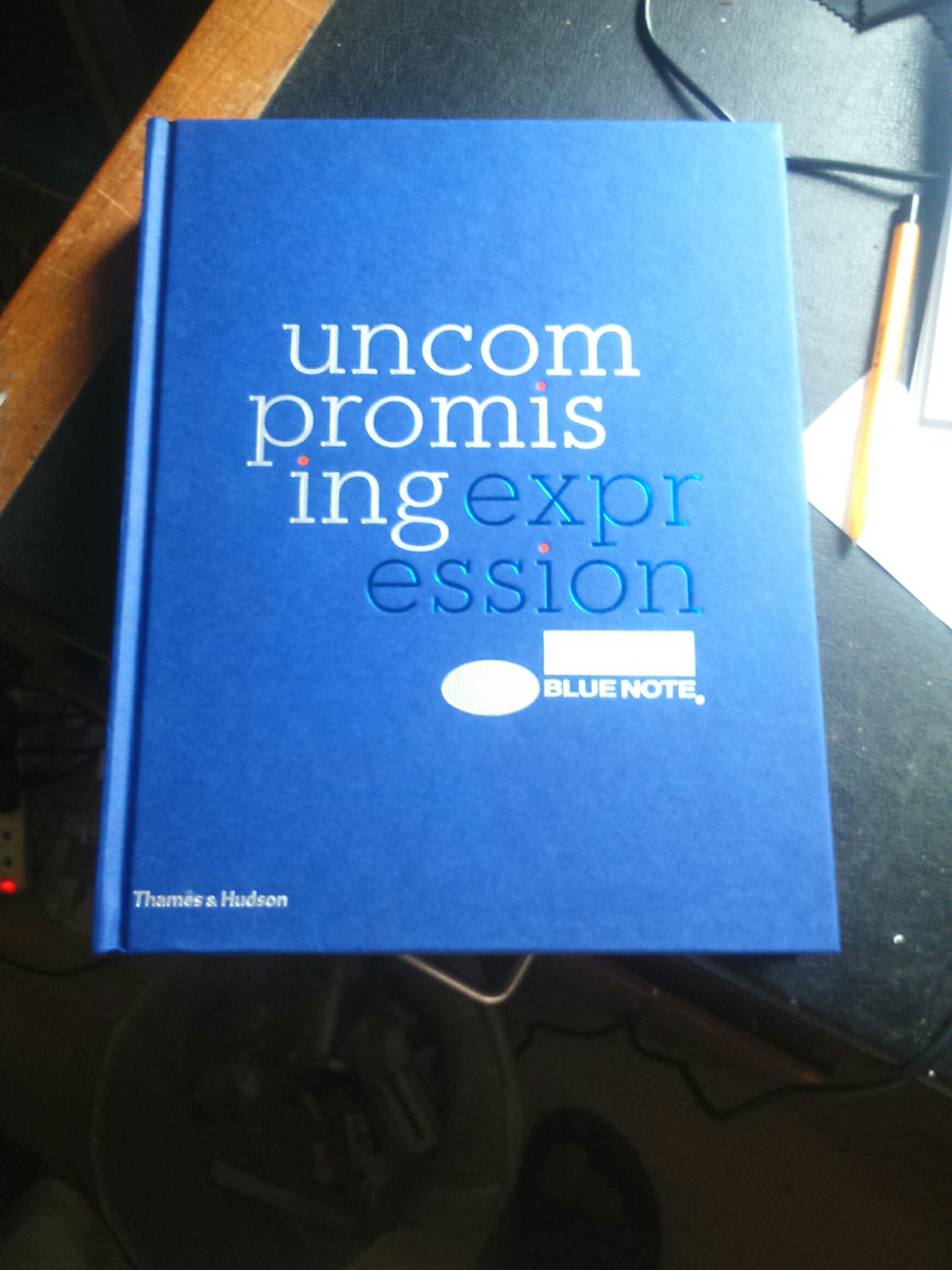
By sheer coincidence, one of the books I took with me to read in hospital was this:

image

Written by Richard Havers, this is an excellent illustrated history of the legendary record label, Blue Note. Blue Note began with a number of classic recordings from the era of Sidney Bechet, Edmond Hall and Bunk Johnson, but it was the post-bebop era that really established the label  in terms of sound and distinctive artwork:
image

Van Gelder’s  first recording studio was set up in his house in Hackensack, New Jersey, and it was probably because of the unsuitable shape of the room he used that he experimented so much with, e.g.,  the number and placing of microphones and in the way he mixed the tapes do produce a much fuller sound than was typical for jazz recordings of that era.  He moved to a bigger house – again with a built in studio – later on, but stuck by many of his earlier innovations.

One immediate result of his habit of close-miking both solo and backing instruments – he was known to use three mikes on the drums, which was unheard of at the time – and recording them as “hot” as possible, was that he guaranteed that his records would have a huge and vibrant sound when played on a gramophone or jukebox. He also captured the unique sound that Miles Davis created when he played the trumpet with a Harman mute. When Miles moved from Prestige to another label he asked their engineers to reproduce exactly what Van Gelder had done. They wouldn’t -or couldn’t – do it.

Not everyone approved of Van Gelder’s approach. You can read some severe criticisms here. Some musicians – including Charles Mingus – didn’t like the sound at all either. But there’s no question that what he did brought a new dimension to what was an extraordinarily creative time for Jazz. An astonishing fraction of the great records described in the book I mentioned above were recorded by him. As a tribute I’m including the record that for me established the Blue Note sound, Moanin’ by Art Blakey and the Jazz Messengers recorded in Van Gelder’s Hackensack Studio, New Jersey in 1958, the cover of which is shown above.

Rest in Peace, Rudy Van Gelder (1924-2016).

Back to Cosmology, Data Analysis and Cardiff

Posted in Biographical, The Universe and Stuff with tags , on September 1, 2016 by telescoper

Today is my first day back in the School of Physics and Astronomy at Cardiff University. Although my job title, Professor of Theoretical Astrophysics, is the same as it was when I was here in a previous incarnation it will be quite a different job and I’m going to be located in a different building (though not far from my old office). In fact my office is in a newly refurbished space connected with the Data Innovation Research Institute just on the other side of a car park from my old office. It looks like being an exciting time over the next few months and years as new staff across a range of disciplines join the Institute, expanding its research portfolio from astrophysics (especially gravitational wave research) into biomedical sciences and beyond.

Here’s a little video about the Data Innovation Research Institute, which is about conducting fundamental research into the aspects of managing, analysing and interpreting massive volumes of textual and numerical information:

But for the moment it’s been a day for administrative matters: taking my P45 to the Human Resources Department, getting my new Staff ID card, trying to get myself set up on the University computer network, and so on. Oh, and I’ve agreed to do some teaching in the Spring Semester, a Level 4 module on The Physics of the Early Universe. It will be nice to be teaching some cosmology again!


Back in Circulation

Posted in Uncategorized on August 31, 2016 by telescoper

Just a quick post to inform my regular readers (Sid and Doris Bonkers) that I survived my short spell in the hands of the National Health Service and am safely back home. It all took a bit longer than I had hoped but seems to have worked out all right. I came out yesterday, in fact, but because I hadn’t been sleeping well when in hospital I just crashed out when I got home.

I had originally intended for this bit of planned maintenance to take place the week after I came back to Cardiff but I was told there would have to be a short delay for logistical reasons (ie a staff shortage), which is why I only went in last week. That delay had messed up a number of things I had planned to do but at least it didn’t result in me missing my first day proper back at Cardiff University, which is tomorrow!

Anyway, I will try to post a few bits and pieces about things that have happened over the last week or so, but in the meantime I plan to enjoy my last day of “freedom” by making a curry!