Author Archive

It’s JUICE!

Posted in Science Politics, The Universe and Stuff with tags , , on May 3, 2012 by telescoper

Not unexpectedly, the European Space Agency announced yesterday that it’s next large mission will be the Jupiter Icy Moon Explorer (aka JUICE). There’s a piece in Physics World about the selection – and rejection of the other two contenders, NGO and ATHENA. Andy Lawrence has commented already on his own blog and is also quoted extensively in the Physics World article.

A lot of allegations are flying around about how the selection process was conducted, specifically relating to conflicts of interest. I don’t know any details, so I won’t comment on whether this is justified outrage or simply sour grapes.

Anyway, for what it’s worth, I think I agree with what Andy Lawrence says in the Physics World story in that the final decision was pretty inevitable after NASA’s decisions in the areas of gravitational waves and X-ray astronomy pulled the rug out from under the other contenders. I’ll also add that, although it’s far from my own specialism, I think JUICE looks like a very exciting mission. I wish it every success.

It just remains to be seen how long the recriminations will rumble on.

Those earthly godfathers of Heaven’s lights

Posted in Literature, Poetry, The Universe and Stuff with tags , , on May 2, 2012 by telescoper

What was it that Ernest Rutherford said about science and stamp-collecting? It seems Shakespeare had much the same idea!

Study is like the heaven’s glorious sun,
That will not be deep-search’d with saucy looks;
Small have continual plodders ever won,
Save base authority from others’ books.
These earthly godfathers of heaven’s lights
That give a name to every fixed star,
Have no more profit of their shining nights
Than those that walk and wot not what they are.

from Love’s Labour’s Lost (Act I, Scene I) by William Shakespeare.

P.S. “wot” in the last line is an archaic form of  the verb “wit”, meaning “to know”; cf “I wot not what I ought to have braught” from A Midsummer Night’s Dream.

Astronomy Look-alikes, No. 75

Posted in Astronomy Lookalikes with tags , , on May 1, 2012 by telescoper

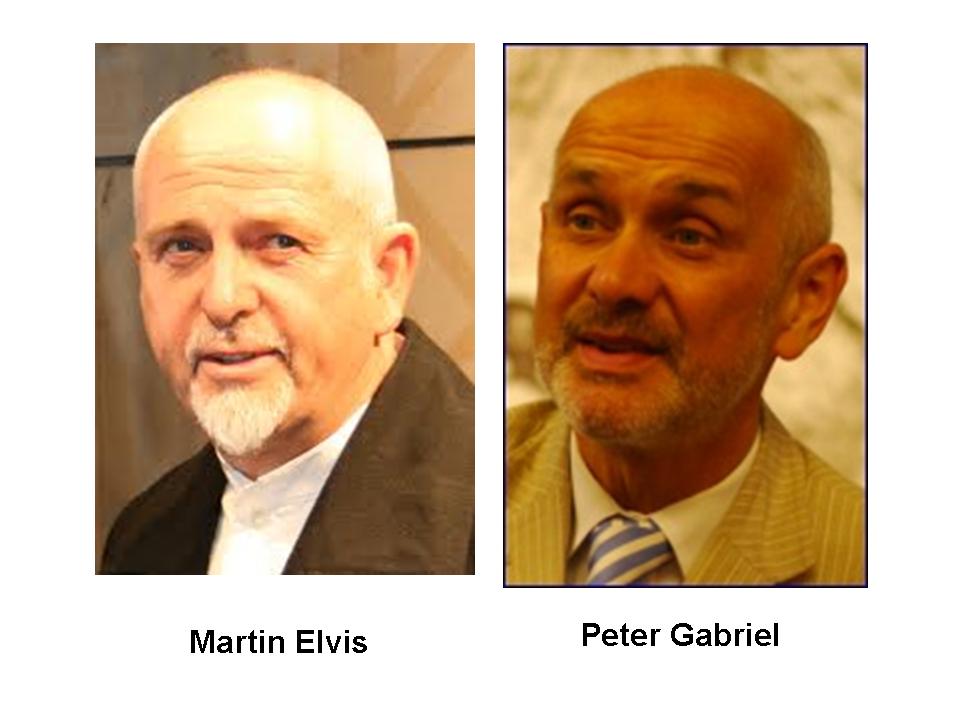
It has been brought to my attention that I haven’t done any of these for a while so I’ll attempt to re-start my series of Astronomy Look-alikes by pointing out that X-ray astronomer Martin Elvis bears a not inconsiderable likeness to former lead vocal artist of the popular beat combo Genesis, Peter Gabriel. I wonder if, by any chance, they might be related?

May Day

Posted in Poetry with tags , , on May 1, 2012 by telescoper

A delicate fabric of bird song
Floats in the air,
The smell of wet wild earth
Is everywhere.

Oh I must pass nothing by
Without loving it much,
The raindrop try with my lips,
The grass with my touch;

For how can I be sure
I shall see again
The world on the first of May
Shining after the rain?

by Sara Teasdale (1884-1933)

Godzilla versus the Olympics

Posted in Uncategorized with tags , on April 30, 2012 by telescoper

Breaking News. Alarming footage just released by MI5 reveals the true nature of the threat to the forthcoming 2012 Olympic games and explains why it is necessary to station missile batteries in London’s East End.

A New Baryon on the Block

Posted in The Universe and Stuff with tags , , , , , on April 29, 2012 by telescoper

I just chanced upon the news that a new particle has been discovered at the Large Hadron Collider. This is probably old hat for people who work at CERN, but for those of us following along in their wake it definitely belongs to the category of things marked Quite Interesting.

The new particle is a baryon, which means that it consists of three quarks. These quarks are held together by the colour force (which I refuse to spell the American way); baryonic states exist by virtue of the colours of constituent quarks being a red-green-blue mixture that is colourless.

Quarks are fermions with spin 1/2. The new particle has spin 3/2 which contrasts with the most familiar baryons, the proton and the neutron, which also consist of three quarks but which have spin 1/2. The difference can be understood from basic quantum mechanics: spins have to be added like vectors, so the three individual quark spins can be added to produce total spin 3/2 or 1/2.

The most familiar spin 3/2 baryons are made from the lightest quarks (the up, down and strange) as shown in the diagram below:

The top row contains no strange quarks, only up and down. In fact the Δ0 and Δ+ contain exactly the same quark compositions as the proton and the neutron (udd and uud respectively), but differ in spin. The next row down contains one strange quark (e.g. uds) , the one below two (e.g uss), and the particle at the bottom is a very famous one called the Ω which is entirely strange (sss). For reasons I’ve never really understood, a strange quark carries a strangeness quantum number S=-1 (why not +1?) and the electrical charge is labelled by q in the diagram.

There are six quark flavours altogether so one can construct further baryonic states by substituting various combinations of heavier quarks (c,b and t) in the basic configurations shown above. There are also excited states with greater orbital energy; all the particles shown above have quarks in the lowest state of orbital angular momentum (L=O). There is then a potential plethora of baryonic particles,  but because all are unstable you need higher and higher energies to bring them into existence. Bring on the LHC.

The new particle is called the Ξb*, and it consists of a combination of up, strange and bottom quarks that required collision energies of 7 TeV to make it. The nomenclature reflects the fact that this chap looks a bit like the particles in the third row of the figure, but with one strange quark replaced by a much more massive bottom quark; this one has zero electrical charge because the charges on the u, s and b are +2/3, -1/3 and -1/3 respectively.

Anyway, here’s the graph that represents the detection of the new baryon on the block:

Only 21 events, mind you, but still pretty convincing. For technical details, see the arXiv preprint here.

Whether you really think of this as a new particle depends on how fundamental you think a particle should be. All six quark species have been experimentally detected and in a sense those are the real particles. Things like the Ξb* are merely combinations of these states. You probably wouldn’t say that an excited state of the hydrogen atom (say with the electron in the 2s energy level) is actually a different particle from the ground state so why do different permutations of the same quarks warrant distinct names?

The answer to this I guess is the fact that the mass of an excited hydrogen atom differs from the ground state by only a tiny amount; electronic energy levels correspond to electron-volt scales compared to the 1000 MeV or so that is the rest-mass energy of the nucleus. It’s all very different when you’re talking about energy levels of quarks in baryonic particles. In such situations the binding energies of the quarks are comparable to, or even larger than, their rest masses because the colour force is very strong and the quarks are whirling around inside baryons  with correspondingly enormous energies. When two creatures have enormously different masses, it’s difficult to force yourself to think of them as different manifestations of the same beast!

Anyway, the naming of this particle isn’t really the important thing. A rose by any other name would smell as sweet. What matters is that existence of this new quark state provides another example of a test of our understanding of quark-quark interactions based on the theory of quantum chromodynamics. You might say that it passed with flying colours…
Here’s That Rainy Day ..

Posted in Jazz with tags , , on April 28, 2012 by telescoper

If yesterday’s post made you wonder how difficult it is to turn a piece of sheet music into sound using a piano keyboard, then perhaps today’s will make you wonder how a pianist like Bill Evans managed to create music as beautiful as this without any score at all! This is Here’s that Rainy Day from the 1968 album Bill Evans Alone. Miles Davis said of Bill Evans “He plays the piano the way it should be played”. I, for one, won’t argue with that.


The Piano in Question

Posted in Music with tags , , on April 27, 2012 by telescoper

Here’s a trip down memory lane for me. While I was at school I was captivated by the BBC TV series, directed and introduced by Jonathan Miller, called the Body in Question. This episode, first broadcast in 1978, shows Dr Miller at the piano with Dudley Moore, his old friend from Beyond the Fringe. They’re exploring the mysterious process by which pianists manage to put their fingers on the right keys without apparently consciously thinking about the mechanical operations involved or even looking at the keyboard. Practice seems to program the hands so that the translation from sheet music to sound becomes second nature, but to those without the ability to effect the transformation (like myself), the process still seems almost miraculous.

A Little Bit of Nuclear..

Posted in Cute Problems with tags , , on April 26, 2012 by telescoper

It’s been a while since I posted any cute physics problems, so here’s a little one to amuse you this rainy Thursday morning.

In the following the notation A(a,b)B means the reaction a+A→b+B. The atomic number of Oxygen is 8 and that of Fluorine is 9.

The Q-value (i.e. energy release) of the reaction 19O(p,n)19F is 4.036 MeV, but the minimum energy of a neutron which, incident on a carbon tetrafluoride target, can induce the reaction 19F(n,p)19O is 4.248 MeV. Account for the difference between these two values.

April Rain Song

Posted in Poetry with tags , , on April 26, 2012 by telescoper

Let the rain kiss you.
Let the rain beat upon your head with silver liquid drops.
Let the rain sing you a lullaby.

The rain makes still pools on the sidewalk.
The rain makes running pools in the gutter.
The rain plays a little sleep-song on our roof at night—

And I love the rain.

by Langston Hughes (1902-1967)