Author Archive

On “Purpose-Led Publishing”

Posted in Open Access with tags , , , , , , , , , , on March 6, 2024 by telescoper

I was flabbergasted by the cheek of an article that recently appeared in Physics World by Michael Brooks announcing that:

I can’t speak about the American Institute of Physics or the American Physical Society but in the context of the Institute of Physics – of which I am a Fellow and in whose house magazine the article appears – I draw your attention to the last sentence of the above excerpt which contains a commitment to “invest funds generated from publishing back into research” (my emphasis).

Really? The IOP invests in research? That’s news to me. How do I apply for a grant? Will they fund my next PhD student?

The IOP invests its funds in many things – many of them worthy – but it does not spend a significant part of the vast income it generates from its publishing house on research. The claim that it does is just dishonest. There’s point in mincing words.

This is an important distinction, particularly so that publishing in most IOP journals now requires the payment of a hefty Article Processing Charge (APC; Artificial Profit Charge would be more apt) which often has to be paid for out of research grants. Previously the revenue of IOP Publishing was appropriated from library budgets through subscriptions, so physicists were less aware of just how much the IOP was raking in. Now that researchers are having to find the funds themselves from research grants it has become more obvious that the IOP is actually a drain on research funds, not a source of them. The APC is a levy on research, designed to generate funds for other things. I think this model is indefensible. What gives the IOP the right to impose charges that far exceed the cost of disseminating scientific results in order to appropriate funds for its other activities?

Moreover, even if the IOP did fund research, what benefit would that be to a researcher in Spain, South Korea or Singapore or indeed anywhere outside the UK and Ireland?

The slogan for the initiative described in the article is “Purpose-led Publishing”. That reminds me of an old saying from systems theory: the Purpose Of a System Is What it Does (POSIWID). What the system does in this case is to raise funds for the IOP. That’s its purpose. Everything else is just marketing spiel.

The claim that IOP Publishing does not make a profit is disingenuous too. It does make a substantial profit. The only difference between it and the likes of Elsevier is where the profits go. A true not-for-profit publisher would charge only at the level to cover the costs of publication. The Purpose that should be leading Publishing in physics is the dissemination of scientific results, not the generation of revenue for sundry other things.

I have avoided publishing in IOP journals for many years because I think the approach of IOP Publishing is unethical. Now I have decided that I no longer wish to be associated with the IOP in any way. I have paid the subscription for 2024 but when that lapses I won’t renew it. Enough is enough.

Sydney looking back

Posted in Biographical with tags , , , , on March 5, 2024 by telescoper

I am a bit jet-lagged, and don’t have the energy for anything too strenuous, so I thought I’d post a couple of reflections of my time in Sydney. Actually I wrote this piece yesterday but was so tired I forgot to post it!

The first thing I should say is that Sydney is a very fine city. I really enjoyed my time there. Although I had four weeks there are still many things I didn’t get to do. Had I been on holiday for a month I might have seen more, but I was actually working a lot of the time. Perhaps I’ll go back when I’ve retired! It was a last-minute decision to go, actually. I only decided in January to make the trip. Had I had more time to plan things I would have been more organized.

One issue with Sydney is that it is very expensive. That goes for food and drink as well as accommodation. I might have found a cheaper place to stay had I looked earlier, of course, but everyone there told me it was always difficult to find rental properties. A while ago I read a story about how and why many young Irish people are moving to Australia. Sydney is even more expensive than Dublin to live in, and there’s just as much difficulty in finding somewhere to rent. On the other hand, in Australia there is a lot more sunshine than in Ireland!

Sydney is also very cosmopolitan and culturally diverse. The most obvious sign of this is the huge range of different cuisines. I rented an apartment with a kitchen rather than a hotel room because I was there for so long that I thought I would do a significant amount of cooking. As it turned out, though, there were many relatively inexpensive eateries nearby, some of them very good indeed, so I didn’t cook all that much.

A Cockatoo or Three

Another thing that struck me at first was the huge difference in flora and fauna, especially the birds. I’ve mentioned some of them before but I should say something about the cockatoos. These are far more numerous than I’d imagined and are rather gregarious, often swooping around in large flocks. They are cute but somewhat deranged creatures, often very noisy and sometimes downright destructive. You don’t want to let one into your house. They are naturally inquisitive and use their strong beaks and dextrous claws to dismantle things. Like all indigenous birds, cockatoos are protected by law. I rather think they are aware of this immunity as they are very cheeky. Strange as they are, I got used to their squawking and screeching. I miss them a bit already.

Anyway, I’m now pretty much recovered from the jet lag – just in time for another flight. It’s going to be a busy ten days or so before I return to Barcelona. A student of mine has their viva examination next week. Although at Maynooth University the supervisor doesn’t attend these examinations, I feel I should be on hand to buy champagne and offer congratulations. And talking of congratulations, I just found out this morning that, after a number of postdoctoral positions, a former PhD student of mine has joined the staff at a UK university. I’m very happy about that – what special delight you feel when you hear one of your former PhD students has got a permanent job!

Homeward Bound

Posted in Biographical with tags , , on March 3, 2024 by telescoper
The Blue Mountains

Here I am in Abu Dhabi airport, about 2/3 of the way home from Sydney, with just enough time for a quick post. We took off about 4pm Sydney time and I had a window seat with a good view of take-off and parts of Australia, including the famous Blue Mountains just to the West of Sydney, but it soon got dark. My flight leaves Abu Dhabi at 2.20am local time and arrives in Dublin at 6.30am local time, so most of this will be in darkness too!

Anyway, farewell Sydney! I’ve enjoyed being in you!

Update: After some minor excitement caused by my having a nosebleed on the plane, I made it back to Dublin in one piece and on time, though there was a long delay on the bus from the Airport owing to an ‘incident’ on the M1 near the airport, so I was about an hour later than expected getting home. I won’t be here for long before I jet off again, but I do need a little time to rest.

New Publication at the Open Journal of Astrophysics

Posted in OJAp Papers, Open Access, The Universe and Stuff with tags , , , , , , , on March 2, 2024 by telescoper

It’s a rainy Saturday afternoon here in Sydney, and here’s the last update from the Open Journal of Astrophysics before I change time zones. In fact there is only one paper to report this week, being  the 16th paper in Volume 7 (2024)  and the 131st altogether. It was published on February 29th 2024.

The title is “Bound circumplanetary orbits under the influence of radiation pressure: Application to dust in directly imaged exoplanet systems” and it  is in the folder marked Earth and Planetary Astrophysics. It presents an investigation into the effect of radiation pressure on bound orbits, with applications to the behaviour of dust in exoplanet systems in general and to the Fomalhaut system in particular. The authors are Bradley Hansen of UCLA and Kevin Hayakawa of California State University (both in the USA).

Here is the overlay of the paper containing the abstract:

You can click on the image of the overlay to make it larger should you wish to do so. You can also find the officially accepted version of the paper on the arXiv here.

There are quite a few papers in the pipeline which I expect to be published during the next week or soon after.

Weather Conditions

Posted in Biographical, LGBTQ+, Maynooth with tags , , , , on March 2, 2024 by telescoper

This is my last full day in Sydney and – by sheer coincidence – it happens to be Sydney Gay & Lesbian Mardi Gras! I will probably go out later to watch some of the fun, although it seems it’s very likely to rain on the Parade; it’s very overcast this morning, although the temperature is still 24°C.

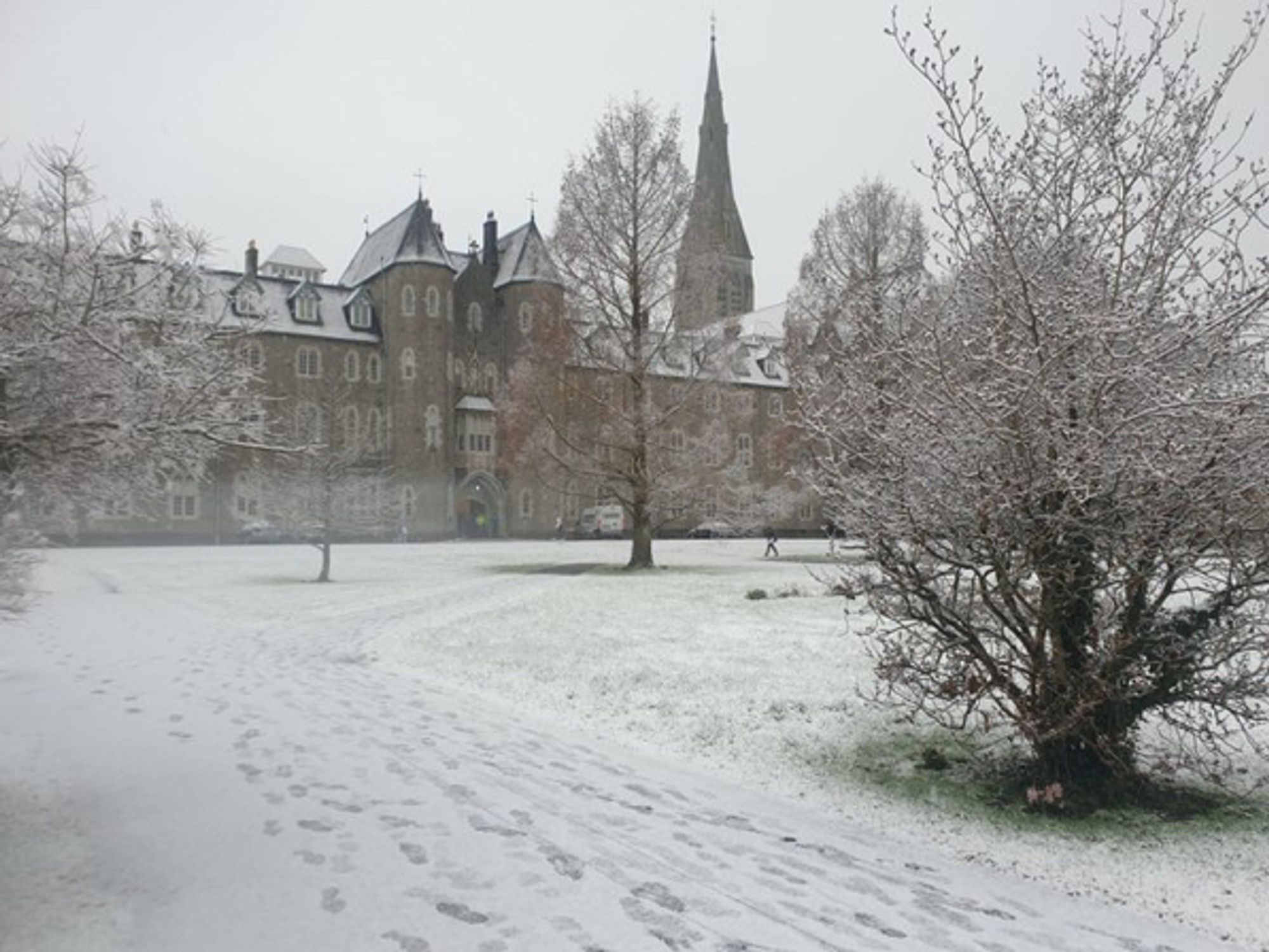
Talking of the weather, I noticed on social media that yesterday it snowed in Maynooth (and elsewhere in Ireland). The contrast with what I’ve been experiencing in Sydney will be rather extreme:

I was a bit concerned that the snow might cause problems with my return flight and/or onward transport, but I’m told that it was soon washed away by rain.

I’ll only be making a brief stop in Maynooth before travelling to (different) warmer climes, of which more in due course.

A Poem for St David’s Day

Posted in Poetry with tags , , , , on March 1, 2024 by telescoper

It’s St David’s Day today, so although I’m still Down Under and far from any daffodils, I wish you all a big

Dydd Gŵyl Dewi Hapus!


Gratuitous Picture of some Daffodils near the Maynooth University Library.

It has become a bit of a St David’s Day tradition on this this blog to post a piece of verse by the great Welsh poet R.S. Thomas. This is The Bright Field.

I have seen the sun break through
to illuminate a small field
for a while, and gone my way
and forgotten it. But that was the pearl
of great price, the one field that had
treasure in it. I realize now
that I must give all that I have
to possess it. Life is not hurrying

on to a receding future, nor hankering after
an imagined past. It is the turning
aside like Moses to the miracle
of the lit bush, to a brightness
that seemed as transitory as your youth
once, but is the eternity that awaits you.

The Magic Flute at the Sydney Opera House

Posted in Opera with tags , , , , on February 29, 2024 by telescoper

I’m just back from my second night at the Sydney Opera House, at which I saw Opera Australia’s production  of Mozart’s The Magic Flute. What has been a very warm day turned into a very sultry evening, and it was nice to take my drink outside during the interval to admire the view:

I’ve lost track of how many different productions I have seen of this strange and wonderful masterpiece, and this was a distinctly Australian version. Technically it’s not an opera, but a singspiel: the recitative – the bit in between the arias – is spoken rather than sung. It’s really more like a musical comedy in that sense, and was originally intended to be performed in a kind of burlesque style.

The Magic Flute also has many points of contact with the pantomime tradition, including the character of the villainous Monostatos who, in this performance, was reminiscent of Rolf Harris. Papageno was a working class Australian, sporting a mullet, and carrying an Esky in place of the usual array of nets and birdcages. On her first entrance, the Queen of the Night put me in mind of Gloria Swanson in Sunset Boulevard. Sarastro, with long hair and flowing robes, looked like the leader of some sort of New Age cult; his acolytes were dressed in everyday casual clothes. The three boys – referred to as “spirits” in this production – were actually two boys and a girl, but “spirit” is a gender-neutral term so that’s fine.

I won’t even attempt to explain the plot, if you can call it that, because it’s completely daft. It’s daft, though, in a way that much of life is daft, and I think that’s the secret of its enduring popularity. Mozart’s music carries you along and constantly seems to be telling you not to take it all too seriously. It seems to me that it must be hard to get the balance right between the comedy (which frequently border on the slapstick) and the serious. The worst thing to do is to make it too pompous. This production doesn’t fall into that trap, but in playing it virtually entirely for laughs I think it misses the depths that make a truly successful version. The ending – in which the rays of the Sun are supposed to dispel the darkness – involved a big reveal to a picnic with the chorus in beach wear and sunglasses. There’s a lot to be said for sunshine, and I found the idea mildly amusing, but there should be more to the end of this Opera than that. On the other hand, Pamina’s aria in Act II, when she is heartbroken because she thinks Tamino has abandoned her, was intensely moving, so it wasn’t all shallow.

The sets are simple but use clever devices to suggest the extraordinary scene changes required by the libretto, including pyramids, forests, waterfalls and flames. The ordeals by fire and water, for example, are depicted using reflective strip curtains, red for fire and blue for water. The dragon in Act I is conjured up by shadow puppets against a translucent curtain.

Papageno, played by an understudy whose name I didn’t catch, was the pick of the performers but overall the cast was not particularly strong vocally. David Parkin’s basso wasn’t nearly profundo enough for Sarastro and he struggled with the lowest notes. I’m not sure either why he also played The Speaker, who is a distinct role. Giuseppina Grech as the Queen of the Night looked fabulous and hit her high notes, but the elaborate coloratura passages were not well articulated.

This probably seems very negative than I intended. There is much to enjoy in this production. It’s very entertaining, and at times riotously funny. It was just a bit too superficial for my taste.

Kandinsky at the Art Gallery of New South Wales

Posted in Art with tags , , , , on February 28, 2024 by telescoper

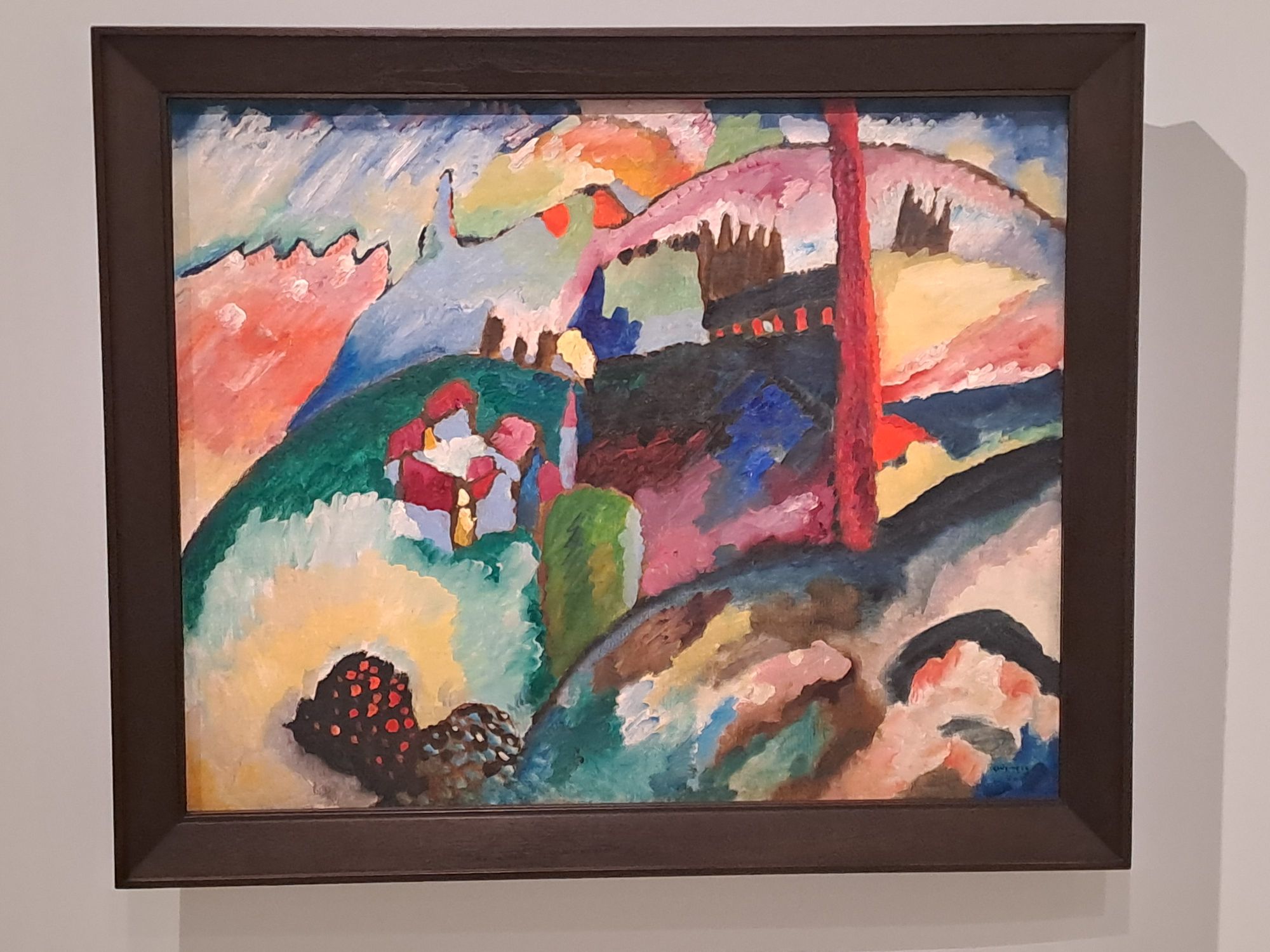
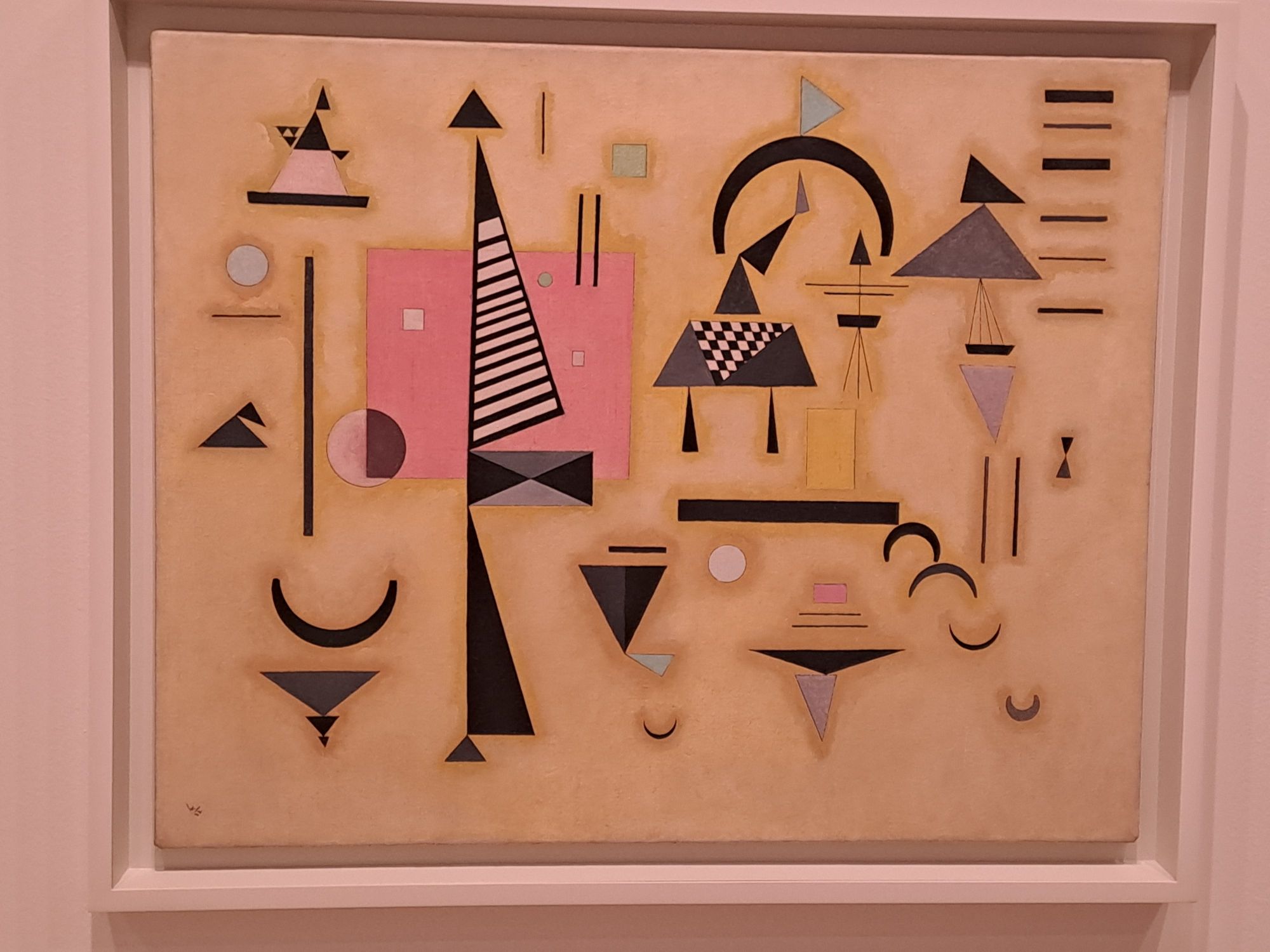
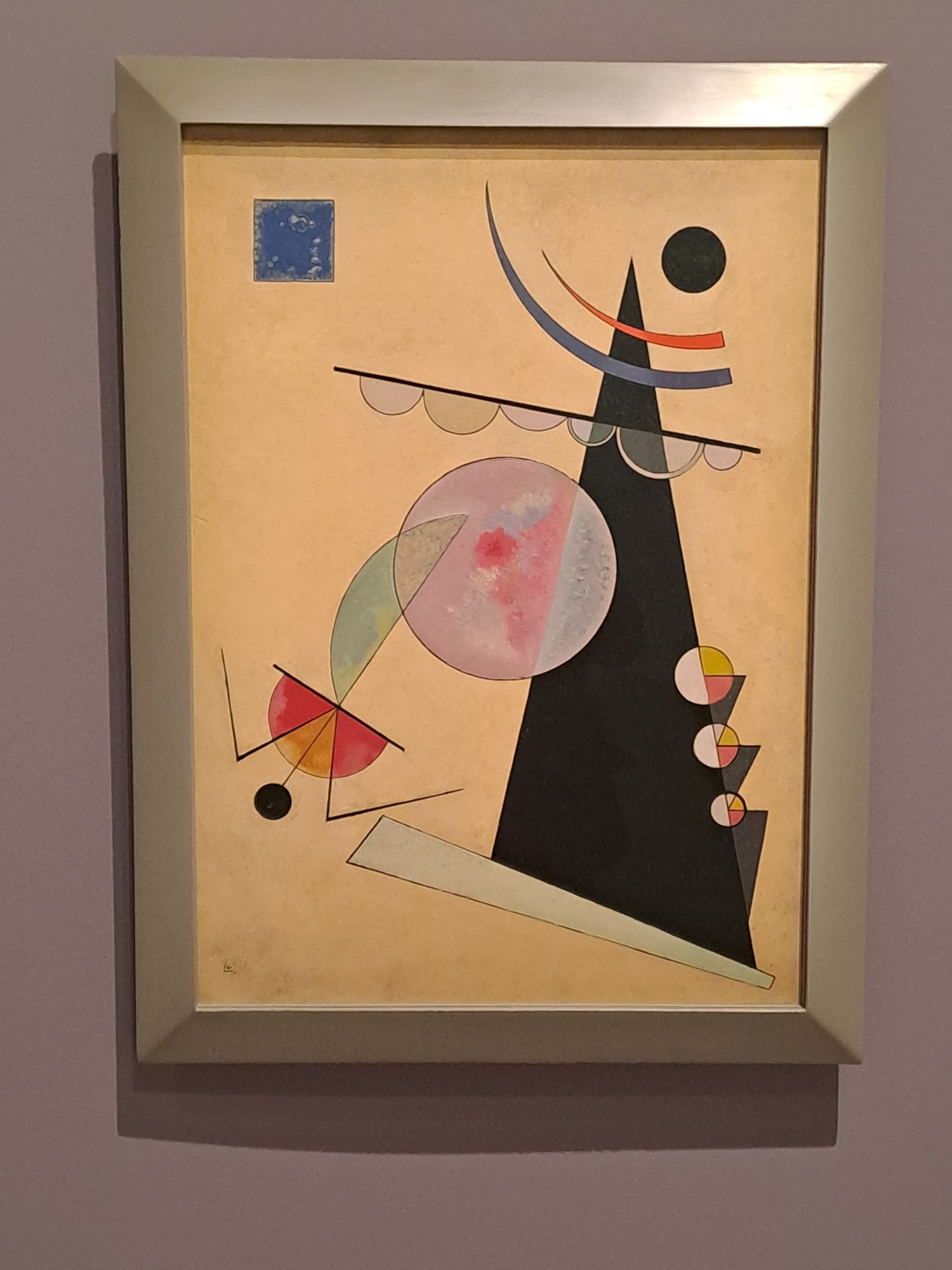
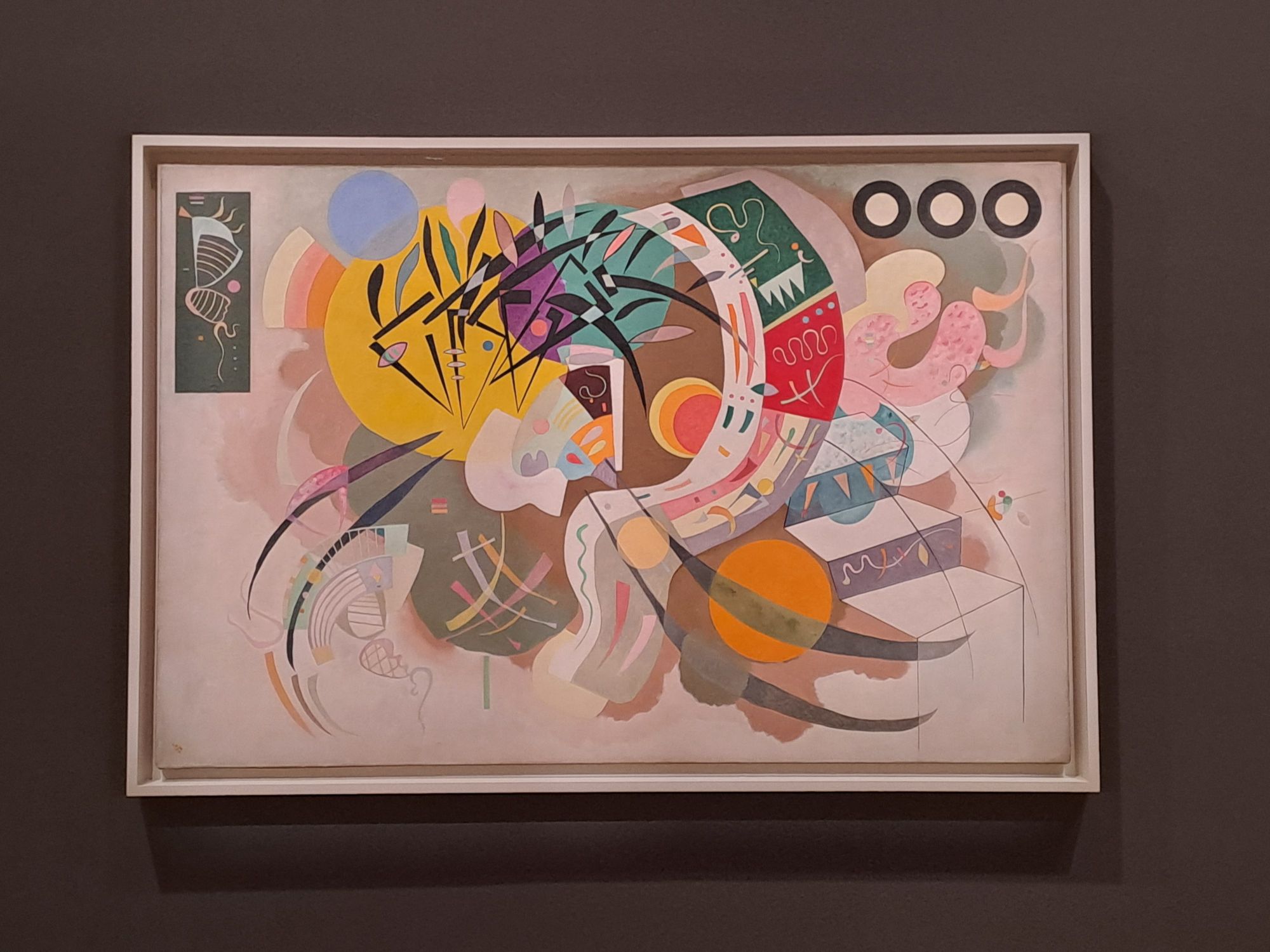
Since my time in Sydney is rapidly running out, this afternoon I paid a visit to the Art Gallery of New South Wales. The main objective of this was to see the Kandinsky Exhibition I blogged about here, but there are many other fine things to see in the permanent so I went round that too.

First here are some works by Wassily Kandinsky. You can see the evolution of his art from the expressionist landscapes of the early 20th Century to the highly influential abstracts from the Bauhaus period. I particularly love these compositions of simple geometric shapes – lines, circles, squares and arcs – with bold colours. They are fully abstract but also manage to suggest form and perspective and even movement in a way that fascinates me. After the Bauhaus period, Kandinsky seems to have used more organic shapes and softened the colour palette in a way that suggests a partial return to his artistic origins.

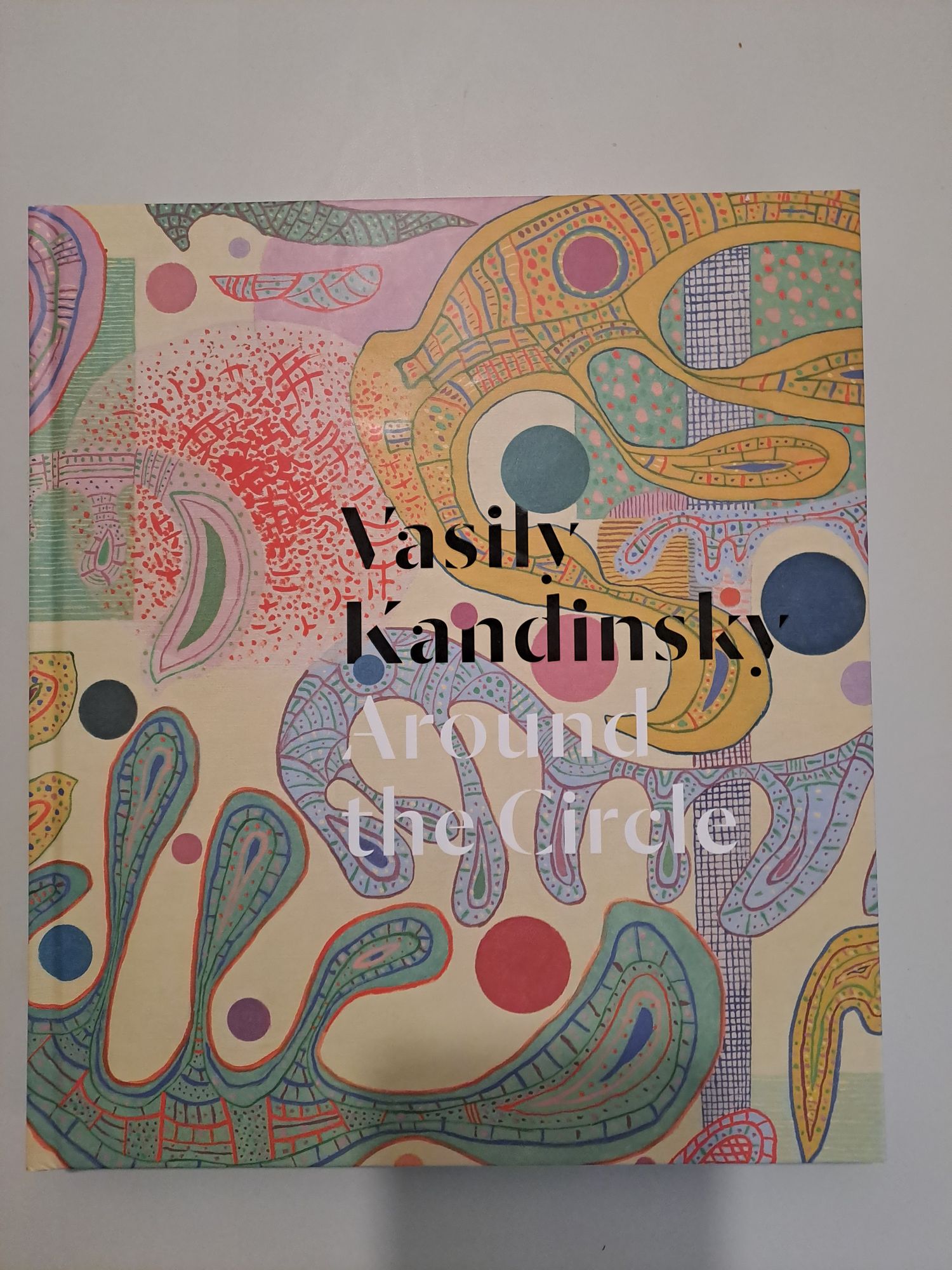
Anyway, as you can see from the last picture in the gallery, I liked the exhibition so much I bought the book!

The permanent collection is also very fine, with European art from many different periods (early Renaissance to Pre-Raphaelite and Impressionist and beyond). There are also many works by Australian artists, some of whom painted landscapes in a very conventional style reminiscent of the Royal Academy, as if they had stepped out of Burlington House into the full glare of the Australian Sun and struggled to cope with the light.

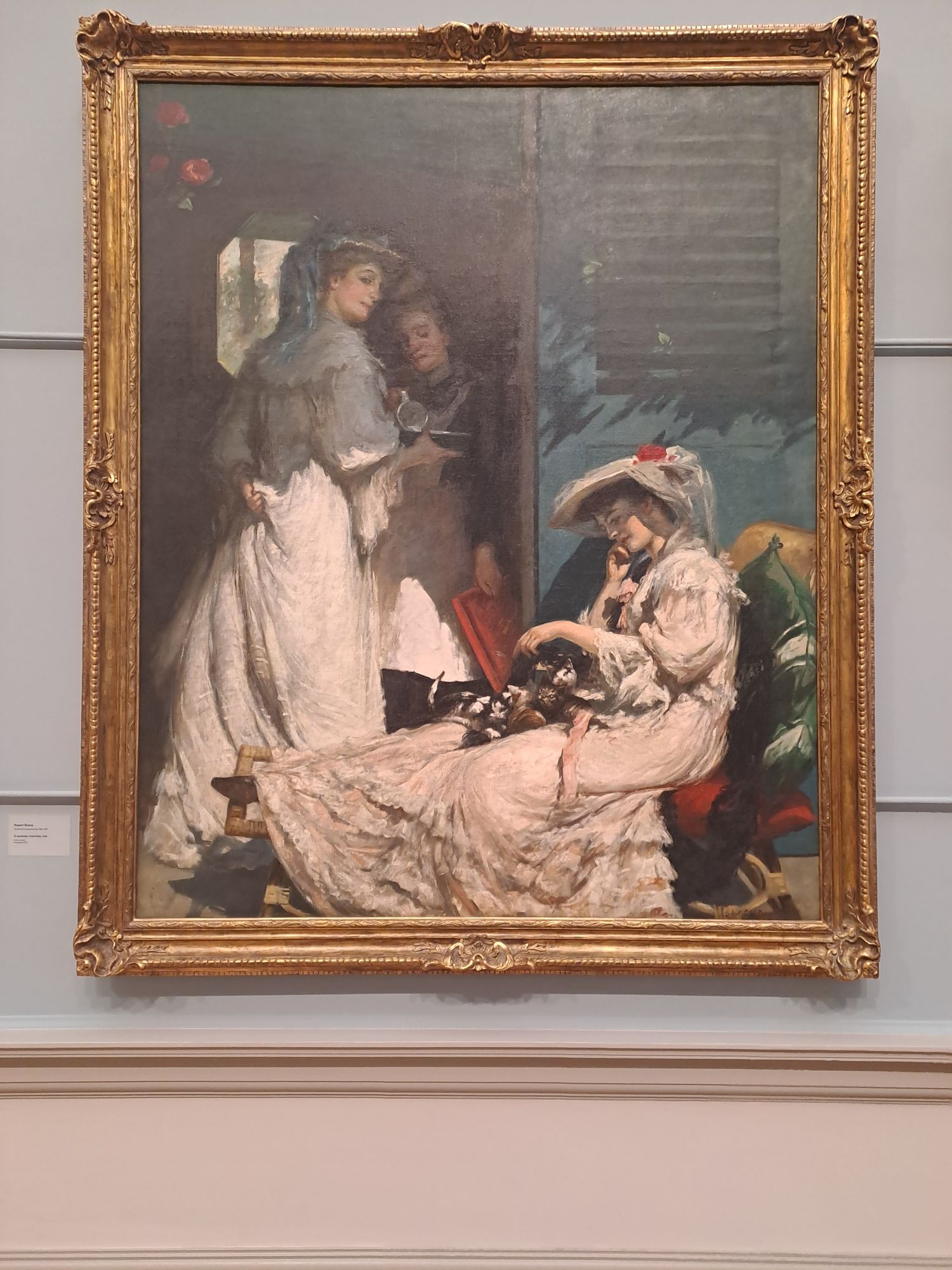
One painting that struck me is this lovely composition by a painter called Rupert Bunny:

It doesn’t really show up well in the quick snap I took but I think the depiction of light and shade in this picture – called A Summer Morning and painted in 1908, around the same time as Kandinsky’s early painting above – is very striking. Bunny was born in Melbourne but moved to Paris in the 1880s and was much celebrated there as a salon painter. Although the style of this composition is rather conservative, he seems to have been a very versatile artist.

The permanent collection is free to visit and is well worth a visit or several. In fact, I might go back once more before I leave…

Death Comes to Pemberley by P.D. James

Posted in Literature with tags , , , on February 27, 2024 by telescoper

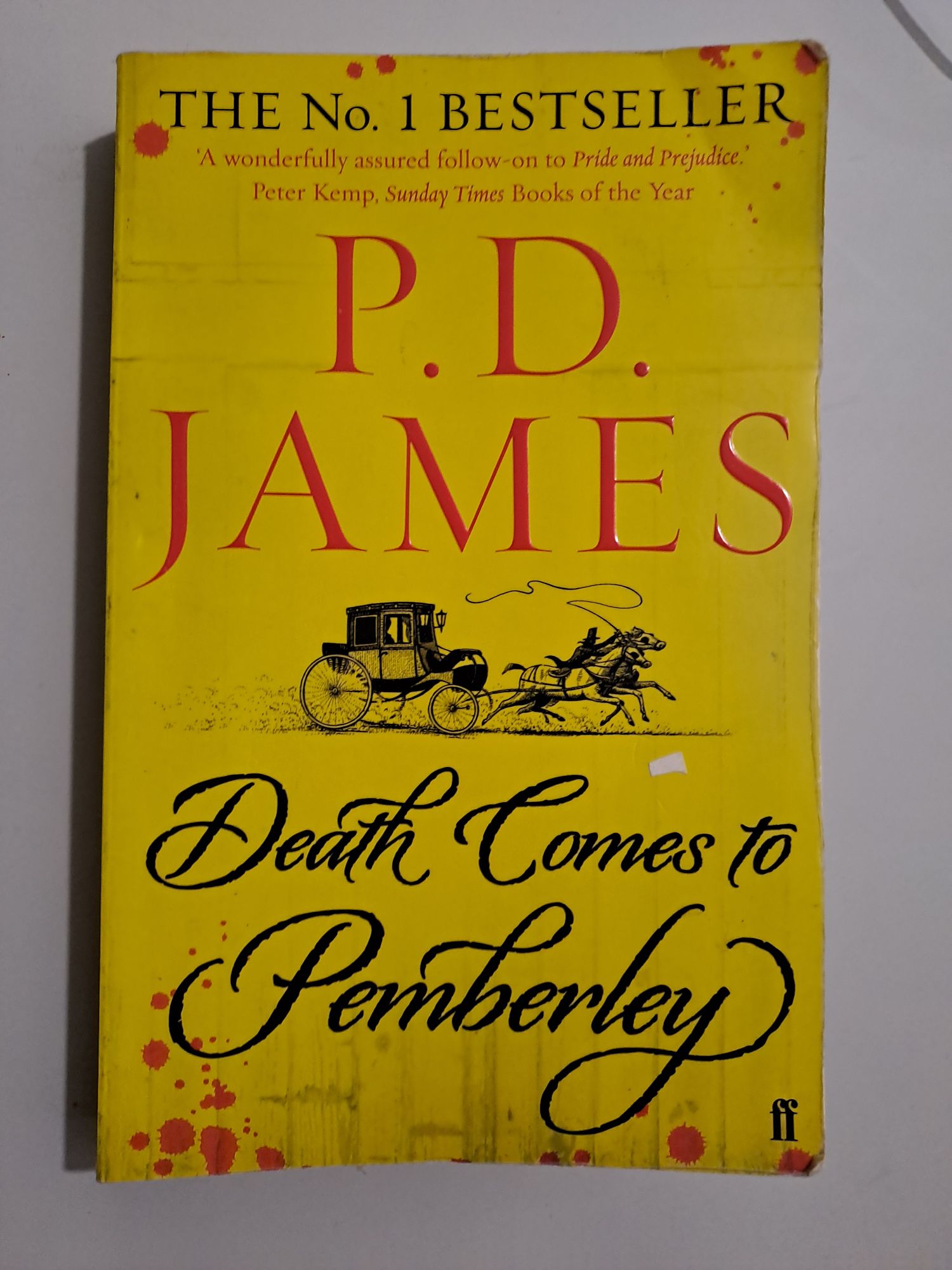
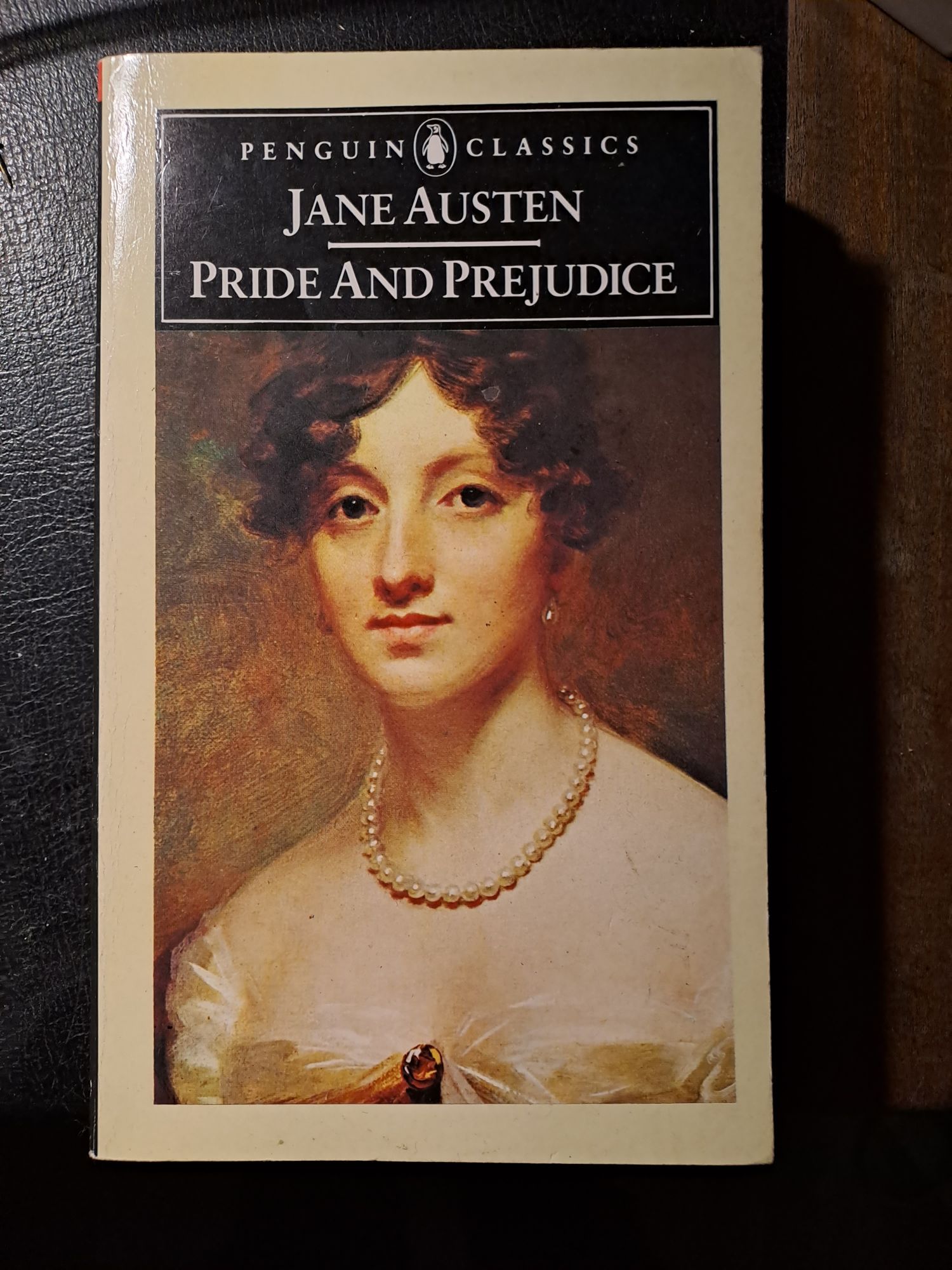
The latest book on my reading list is Death Comes to Pemberley, by P.D. James, which was published in 2011. The author was 90 years old when she began writing it and in her author’s note she admits that the book gave her a chance to indulge herself by combining her flair as a mystery writer with a love of the books of Jane Austen. This book is a skillful pastiche of the style of Jane Austen set in the world of Pride and Prejudice; this is why I re-read that book before departing for Sydney. It has however taken longer than I thought to get around to reading the P.D. James book as I have been rather busy.

It’s interesting to remark that Pride and Prejudice was actually written between 1796 and 1797, but not published until 1813 (and in a revised form). Jane Austen is a wonderful writer, with an elegant and witty style. It’s a hard act to follow, but P.D. James does a fine job. I’ll also remark that the original novel was written at the height of the Napoleonic Wars, and is set in England at a time when the threat of invasion from France was very real, but this barely registers in the plot.

I’ll let the author herself describe the setting

In Death Comes to Pemberley, I have chosen the earlier date of 1797 for the marriages of both Elizabeth and her older sister Jane, and the book begins in 1803 when Elizabeth and Darcy have been happily together for six years and are preparing for the annual autumn ball which will take place the next evening.

With their guests, which include Jane and her husband Bingley, they have been enjoying an informal family dinner followed by music and are preparing to retire for the night when Darcy sees from the window a chaise being driven at seed down the road from the wild woodlands. When the galloping horses have been pulled to a standstill, Lydia Wickham, Elizabeth’s youngest sister, almost falls from the chaise, hysterically screaming that her husband has been murdered. Darcy organises a search party and, with the discovery of a blood-smeared corpse in the woodland, the peace both of the Darcys and of Pemberley is shattered as the family becomes involved in a murder investigation.

P.D. James, Author’s Note, Death Comes to Pemberley

As this is a mystery novel, I will refrain from saying too much about the plot as that would spoil the book for readers. I will say that it is unusual for P.D. James that it isn’t a detective story as such because there isn’t actually a detective. The mystery of the murder is solved in the end by a spontaneous confession.

I get the impression that P.D. James wanted to use this book to add her own explanation of some of the events in Pride and Prejudice so there is a lengthy section at the end that functions to explain the back story. Most of the characters from Pride and Prejudice appear in the present book as bystanders, but they are well described and the overall atmosphere of the book is convincing. Darcy and Elizabeth have changed, but I imagine six years of marriage will do that. Although it’s a pastiche, this book is not at all superficial; the author seems to understand Austen’s characters and, rather than being merely imitative, the result is a genuine homage.

P.D. James passed away in 2014 at the age of 94. I bought Death Comes to Pemberley in 2014 too. The fact that it has taken me a decade to get around to reading it tells you something of how far I had got out of the reading habit. There’s also the point that I knew this was her last book and I was a bit reluctant to finish it knowing that there would be no more. Still, better late than never. I’m very glad I have read it at last as I enjoyed it greatly.

There’s something distinctively English about the novels of P.D. James, although that something is a something that clearly tends to polarize people. Some find her approach a bit too detached and genteel, some find it, “cosy”, snobbish and class-ridden, and some think that she was just an anachronism, harking back too much to the era of Agatha Christie and Dorothy L. Sayers. Yet others can’t understand the attraction of the genre at all. People are welcome to their opinions of course, but I think that the best detective fiction is not just about setting a puzzle for the reader to solve, but also posing questions about the nature of a society in which such crimes can happen. Far from being “cosy”, great crime writing actually unsettles complacent bourgeois attitudes. The solution of the mystery may offer us a form of comfort, but the questions exposed by the investigation do not go away. This is just as true for books set in the present as it is for those set two centuries ago in the world of stately homes and the threat of invasion from Napoleon.

The Euclid Survey(s)

Posted in Euclid, The Universe and Stuff with tags , , , , , , , , , on February 27, 2024 by telescoper

Since it’s been a couple of weeks since Euclid commenced its routine survey operations, I thought I would share this little video from the European Space Agency that shows how the surveying will proceed over the next six years with explanatory text adapted from here:

This animation shows the location of the fields on the sky that will be covered by Euclid’s wide (blue) and deep (yellow) surveys. The sky is shown in the Galactic coordinate system, with the bright horizontal band corresponding to the plane of our Milky Way.

The wide survey will cover more than one third of the sky as shown in blue. Other regions are avoided because they are dominated by Milky Way stars and interstellar matter, or by diffuse dust in the Solar System – the so-called zodiacal light. The wide survey is complemented by a deep survey, taking about 10% of the total observing time and repeatedly observing just three patches of the sky called the Euclid Deep Fields, highlighted in yellow.

The Euclid Deep Field North – towards the top left – has an area of 20 square degrees and is located very close to the Northern Ecliptic Pole. The proximity to the ecliptic pole ensures maximum coverage throughout the year; the exact position was chosen to obtain maximum overlap with one of the deep fields surveyed by NASA’s Spitzer Space Telescope.

The Euclid Deep Field Fornax – in the lower right of the image – spans 10 square degrees and is located in the southern constellation Fornax, the furnace. It encompasses the much smaller Chandra Deep Field South, a 0.11 square degree region of the sky that has been extensively surveyed in the past couple of decades with the Chandra and XMM-Newton X-ray observatories, as well as the Hubble Space Telescope and major ground-based telescopes.

The third and largest of the fields is the Euclid Deep Field South – between the Large Magellanic Cloud and the Euclid Deep Field Fornax. It covers 20 square degrees in the southern constellation of Horologium, the pendulum clock. This field has not been covered to date by any deep sky survey and so has a huge potential for new, exciting discoveries. It has been planned to be observed from the ground by the Vera C. Rubin Observatory.

P.S. According to my latest calculations, I shall have retired by the time the Wide survey is completed.