Today is 1st May, so it’s the Labour Day Holiday in Barcelona. Colleagues in Ireland will have to wait until Monday 6th May for their equivalent holiday. The First of May, Beltane (Bealtaine in Irish), is a festival of pagan origin that roughly marks the mid-point between the Spring Equinox and the Summer Solstice. It’s one of the so-called Cross-Quarter Days that lie halfway between the equinoxes and solstices.
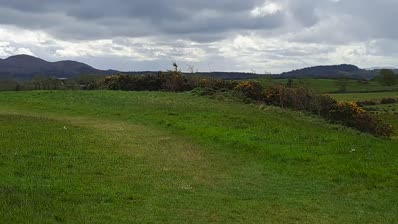
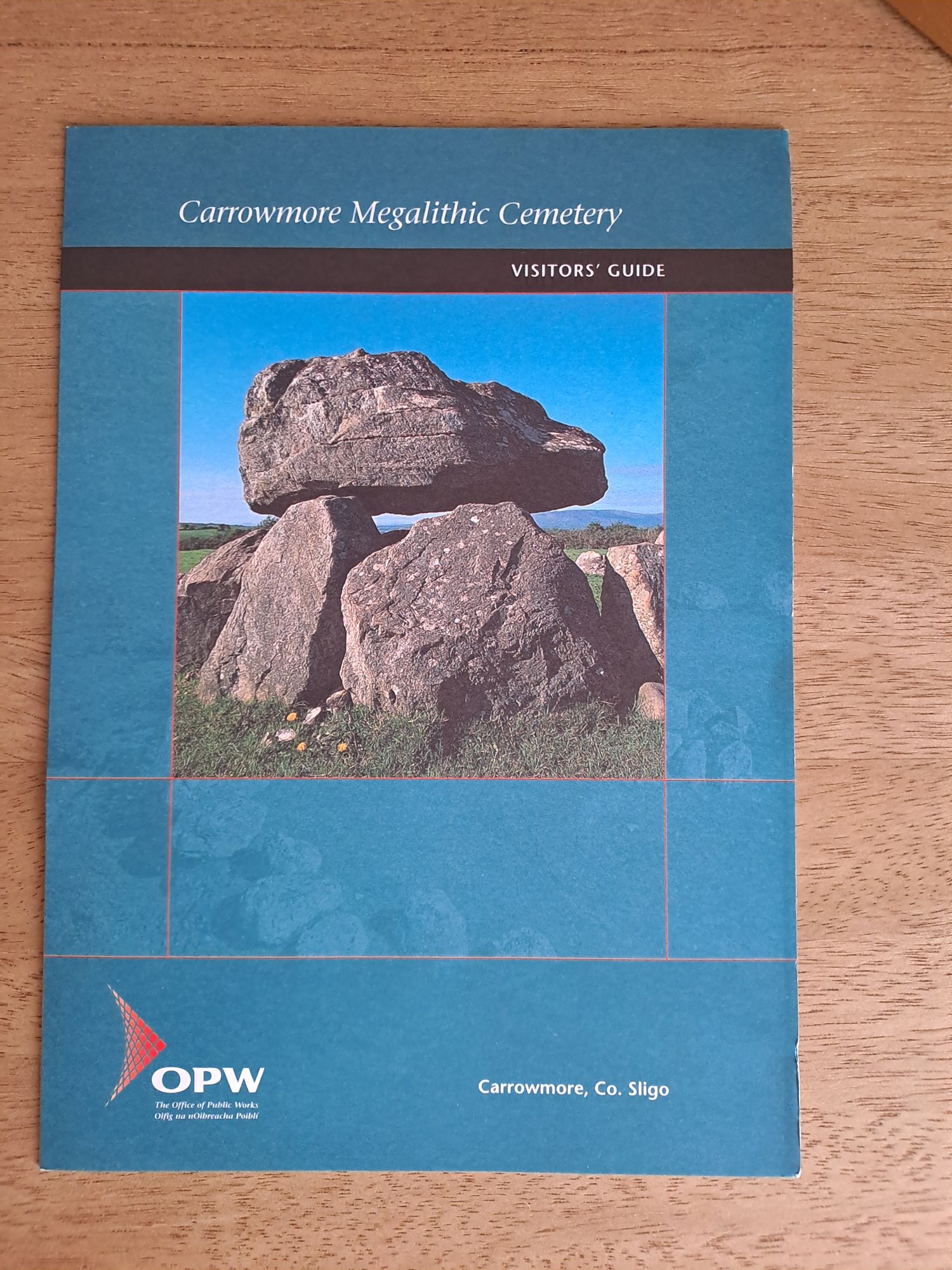
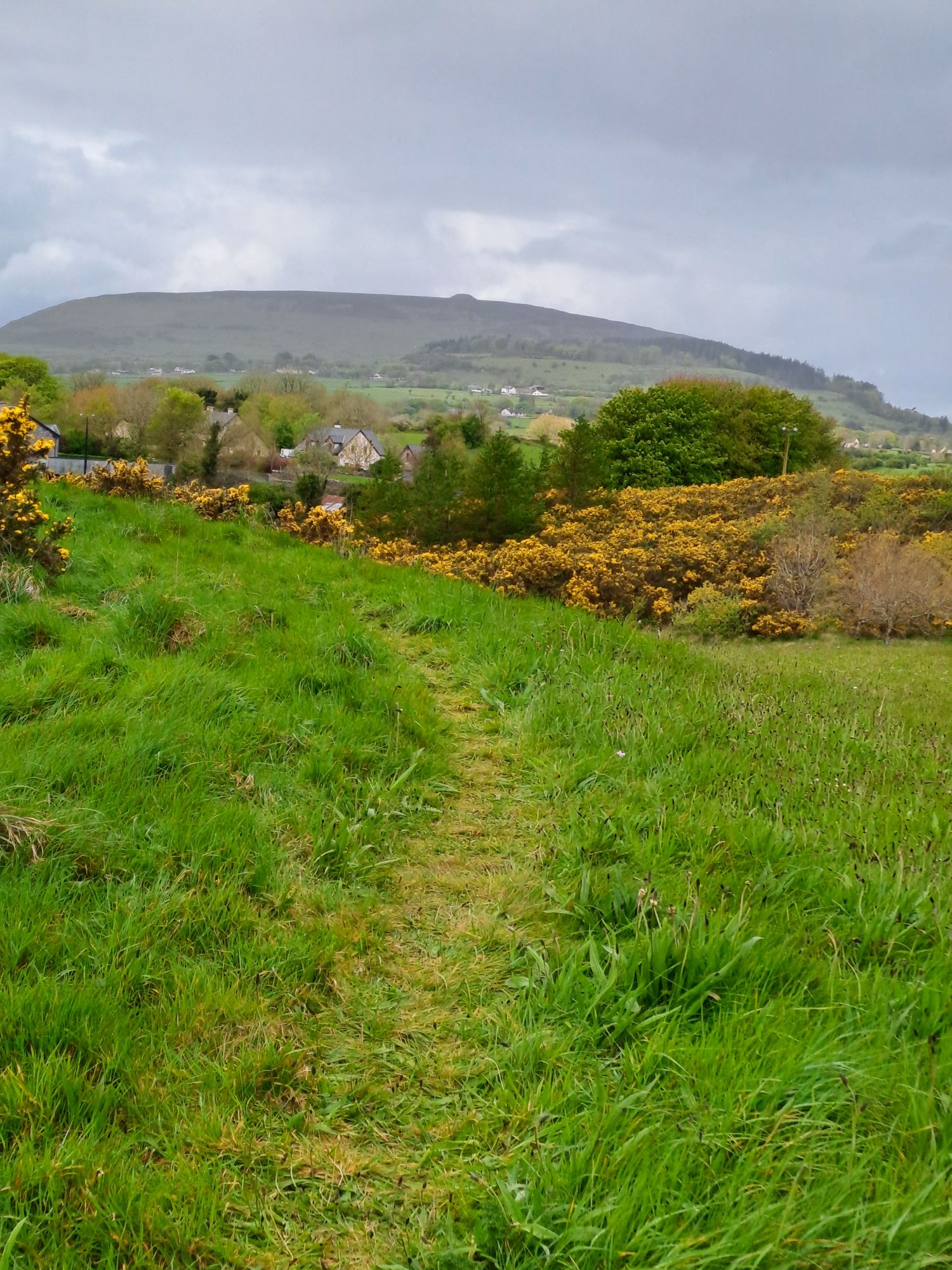
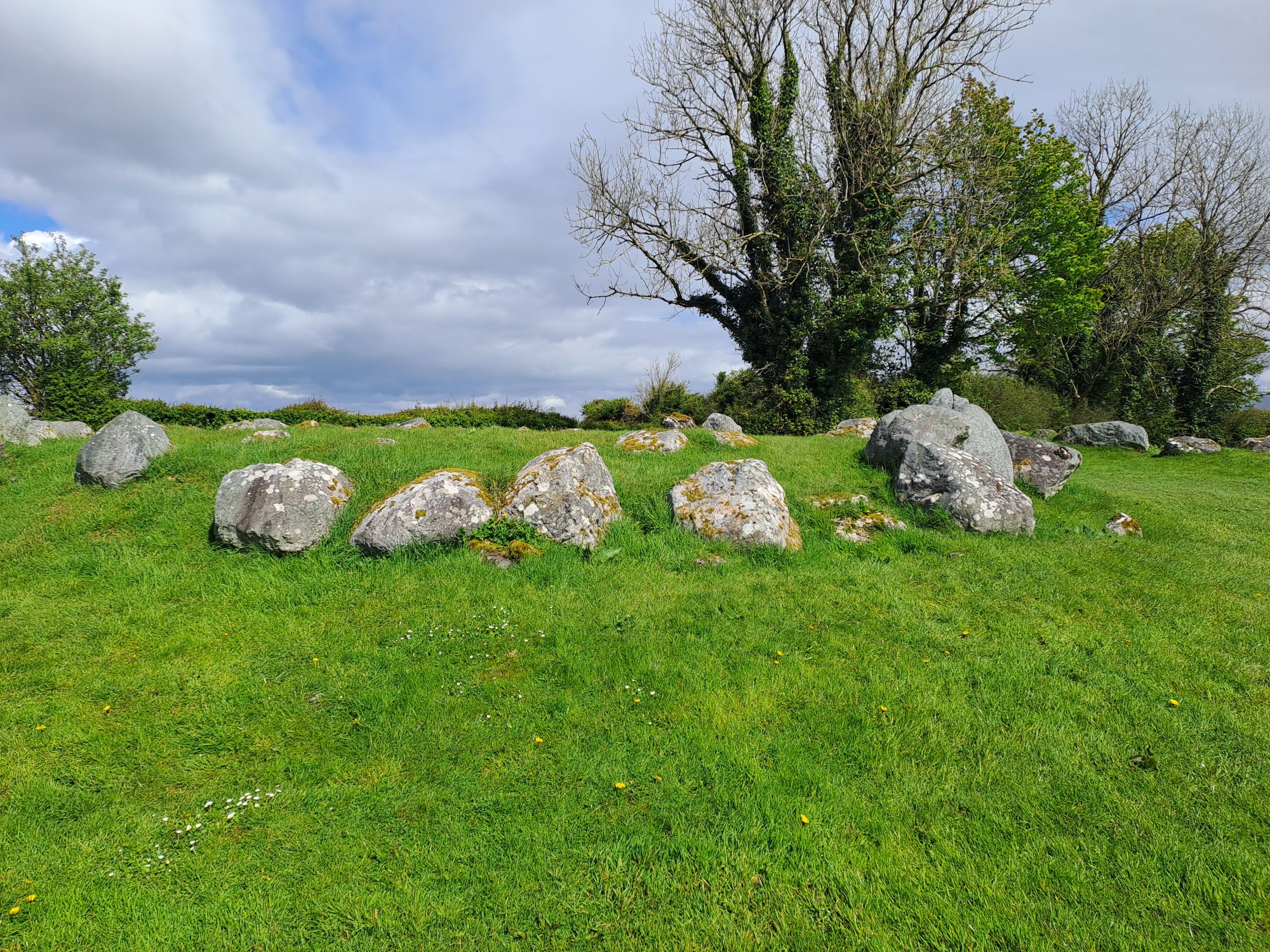
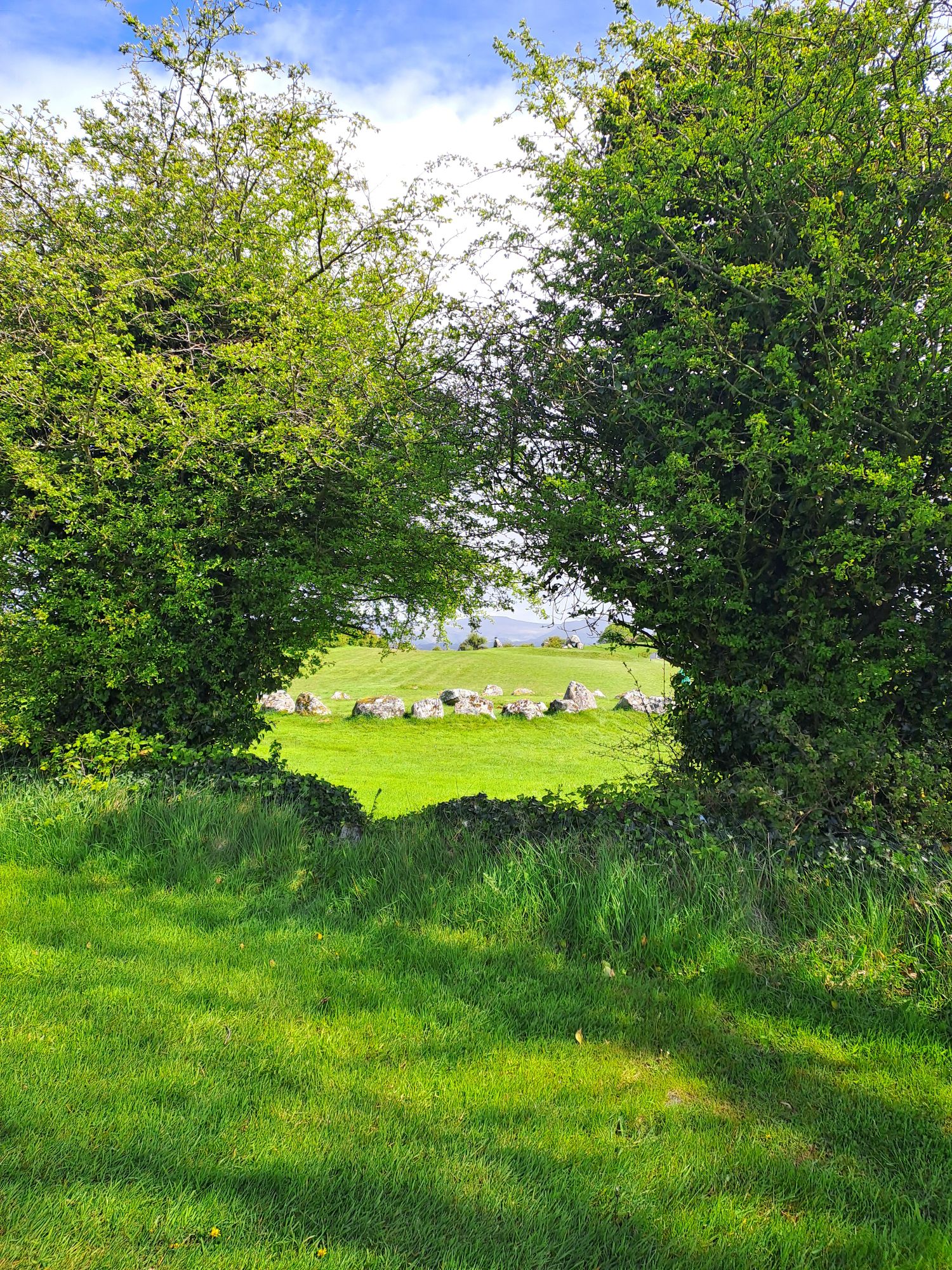
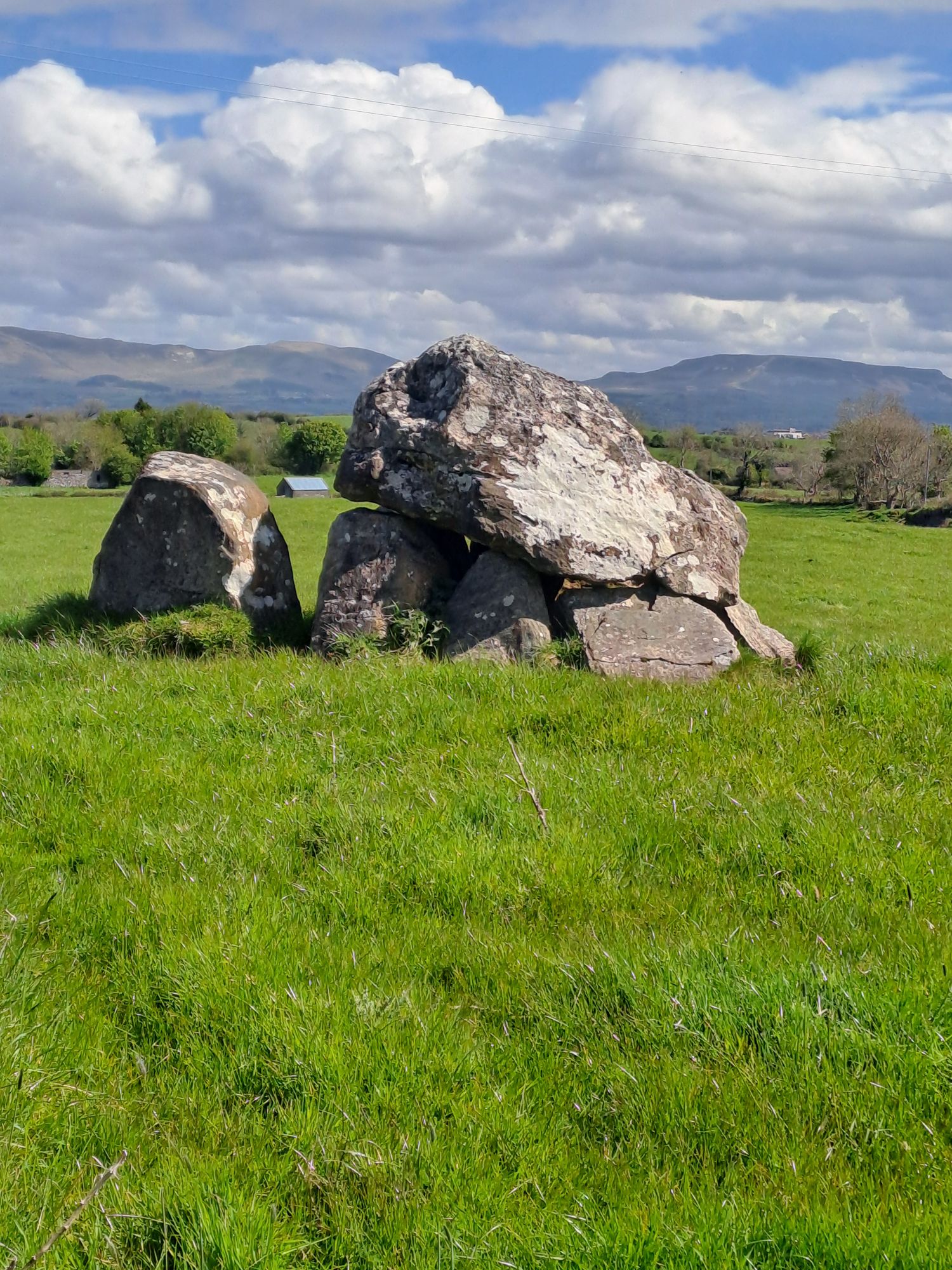
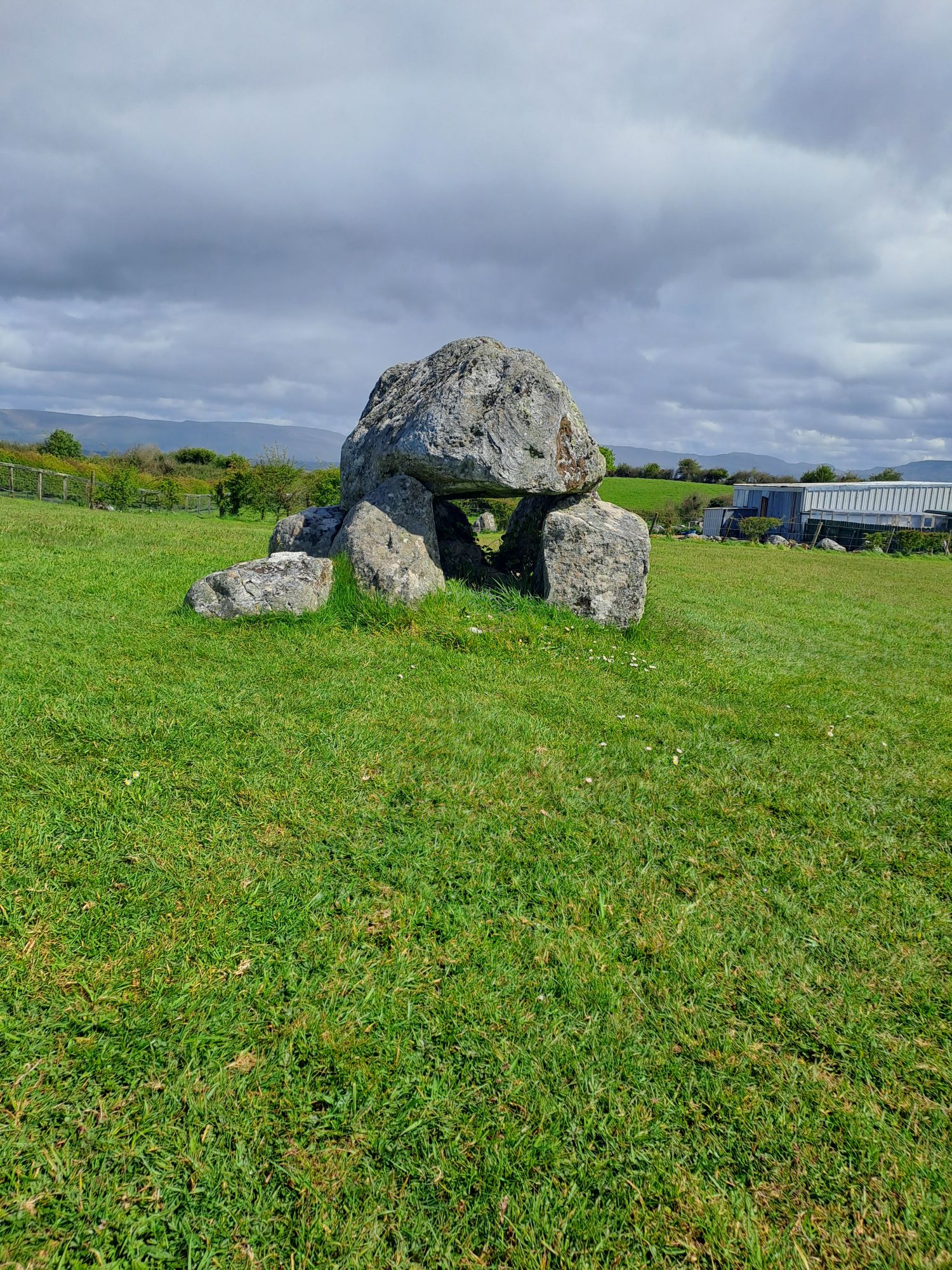
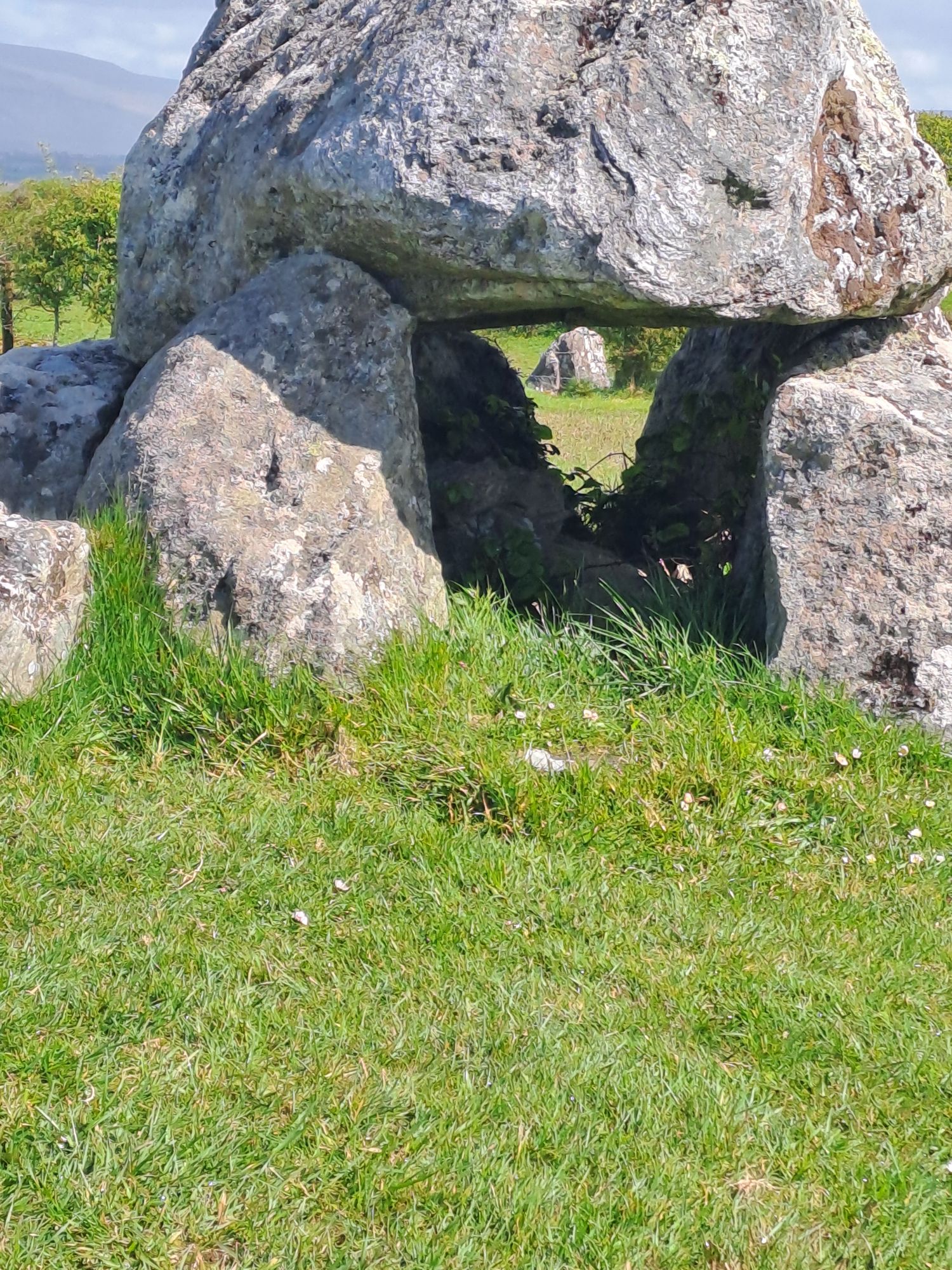
In view of the ancient origins of this holiday I thought I’d share some pictures of the amazing megalithic burial grounds at Carrowmore which is about 4km outside Sligo (where I have been on a secret mission). Carrowmore is the largest of the four megalithic cemeteries in Ireland in terms of the number of tombs, although the tombs are smaller in size and less complicated than the larger structures found at Brú na Bóinne. The structures at are also significantly older; there are signs of human habitation on the site going back at least 6000 years. The English name derives from the Irish An Cheathrú Mhór, which means ‘the great quarter’. Photographs don’t do justice to the extraordinary beauty of the landscape around the site but here is a panorama which gives some impression.
A visitor can easily understand why this was felt to be an appropriate last resting place for the Great and the Good. The surrounding topography is very interesting, as you can see from the first picture (of a model in the Visitor’s Centre); it’s on a peninsula between Sligo Harbour to the North and Ballysadare Bay to the South, and is surrounded on three sides by mountains. In particular, the site is overlooked from the west by Knocknarea, on top of which lies a large cairn, Miosgán Meadhbha, reputed to be the burial-place of the legendary Queen Maeve (Méabh in modern Irish). I was surprised to learn that this has never been excavated, so nobody really knows who or what is inside though it probably contains a passage tomb of similar form to those on the Carrowmore site. The cairn at the centre of Carrowmore, called Listoghil, the entrance to which you can see in one of the pictures, is a reconstruction.
Sadly, many other tombs were destroyed in the 19th Century, with stones being robbed to make walls when the land was enclosed, and large-scale quarrying for gravel in the area. Only some of the tombs are on publicly-owned land, but others are visible in nearby fields and indeed all around the area. There is even a stone circle in Sligo itself, on a housing estate called Abbeyquarter. Who knows what else is lurking under the unexcavated ground?
This forthcoming Bank Holiday weekend there is the Queen Maeve Festival in Sligo, but I will be in Barcelona.
The famous portrait of Thomas Cromwell by Hans Holbein the Younger shown above is in fact a copy; the original is lost. There is another copy in the National Portrait Gallery in London, but it’s not as good. The original was painted around 1533, during the period covered by the novel Wolf Hall (which I reviewed yesterday) and is mentioned in the book. Holbein is known for having sometimes painted excessively flattering portraits – most notably of Anne of Cleves – but he doesn’t seem to have done that here. Cromwell is portrayed as dour, stern-faced and more than a little scary. He probably wanted people to fear him, so wouldn’t have minded this.
As well as the nature of the likeness, the composition is interesting. The subject seems to be squashed into the frame, and hemmed in by the table that juts out towards the viewer. He is also looking out towards the viewer’s left, though not simply staring into space; his eyes are definitely focussed on something. I’m not sure what all this is intended to convey, except that the table carries an ornate prayer-book (the Book of Hours) as if to say “look, here’s a symbol of how devout this man is”.
Interesting, just last year scholars published research that argues that the copy of the Hardouyn Hours which can be found in the Library at Trinity College, Cambridge, is precisely the book depicted on the table. If so, it’s a rare and perhaps unique example of an artefact seen in a Tudor painting that survives to this day.
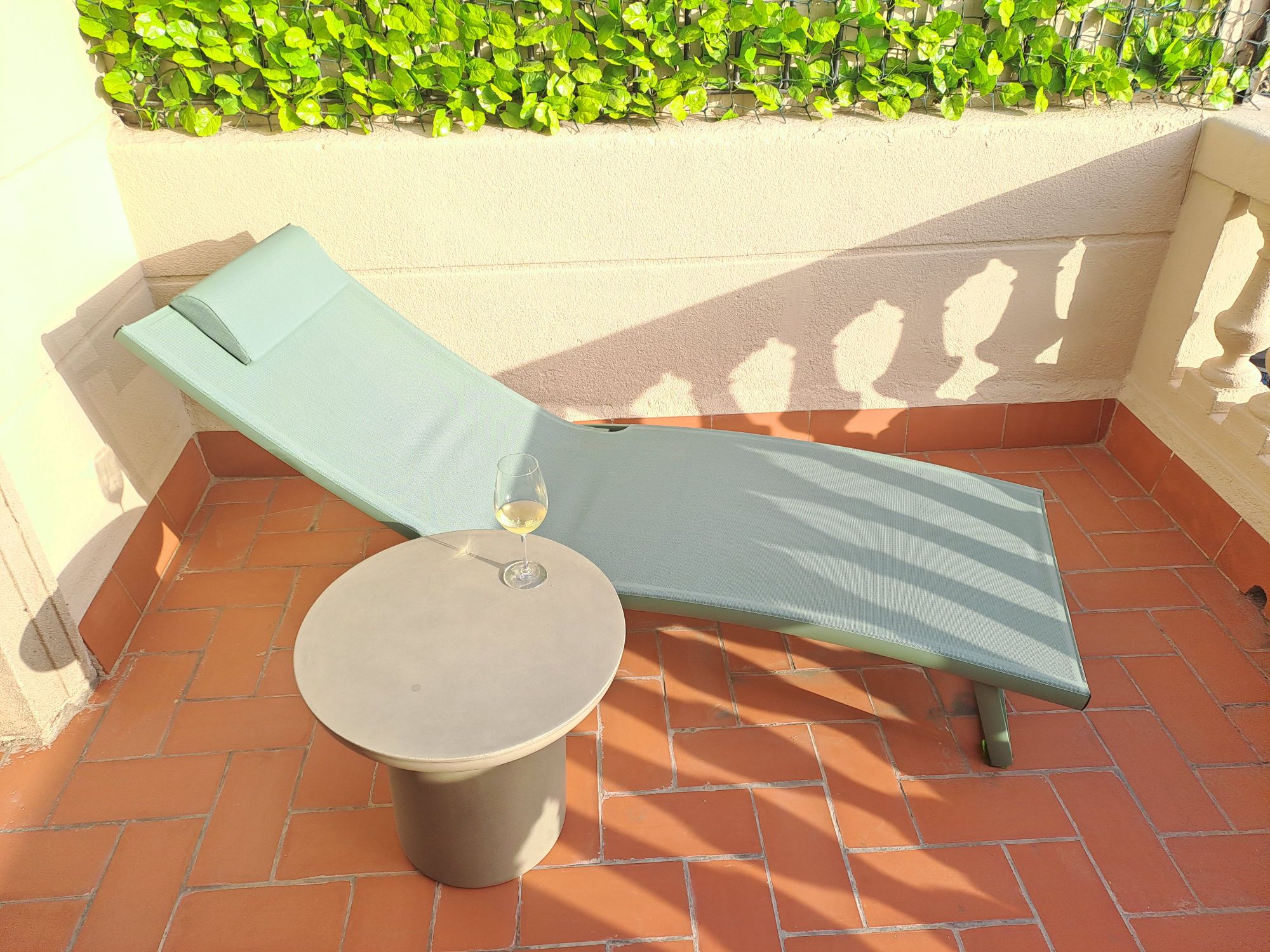
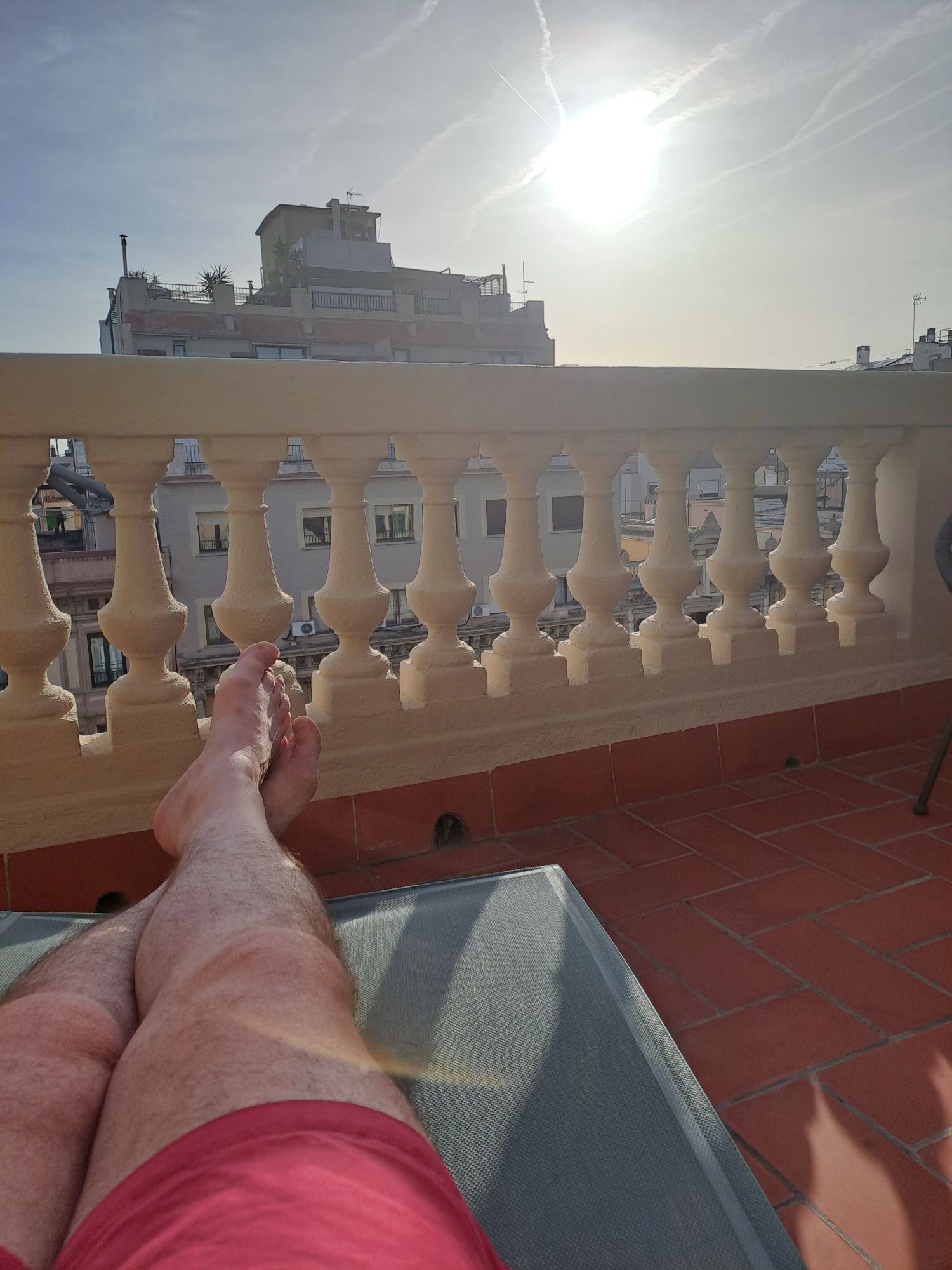
It’s Saturday morning, and this week has been very busy and stressful, mostly for reasons that I can’t blog about, but it helped yesterday to come back to my very pleasant top-floor apartment on the Rambla de Catalunya to have a glass or several of wine on the terrace and enjoy the lovely weather. It reached 22°C yesterday afternoon, and my flat gets the sun most of the day.
I chose the angle for the second pic carefully, as a lady on the side of the street had obviously done her laundry recently and hung the smalls out to dry. I thought it would be indelicate to photograph them.
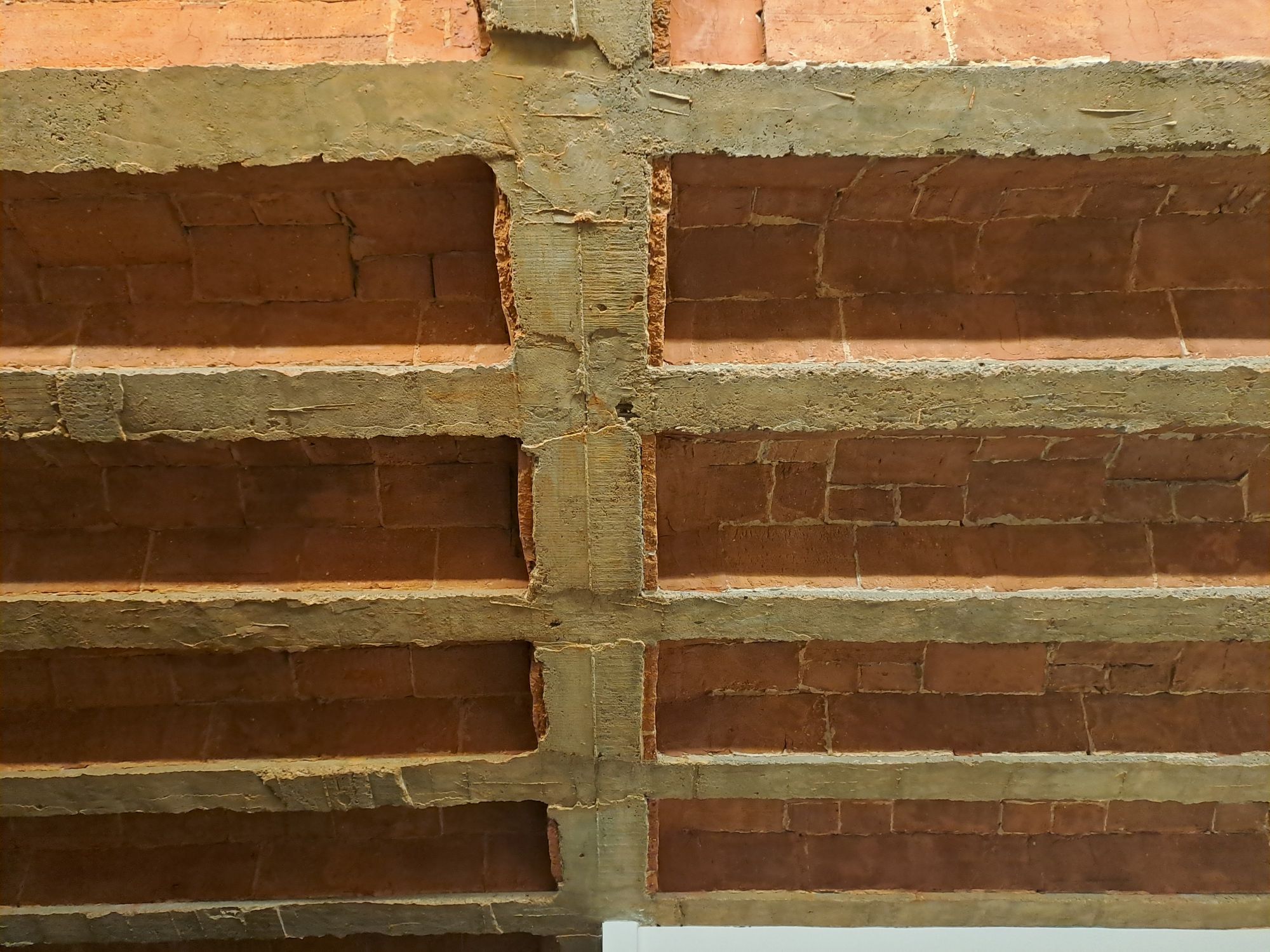
When the apartment was refurbished recently they took down the ceiling to reveal some interesting brickwork with the distinctive red clay that features in many buildings; the bricks are often covered with decorative ceramic tiles in a style called Bóveda Catalana in Spanish (Volta Catalana in Catalan), but along with the bare brickwork on the wall, this is a much plainer look.
You can see the mortar which attached the false ceiling removed during the refurbishment.
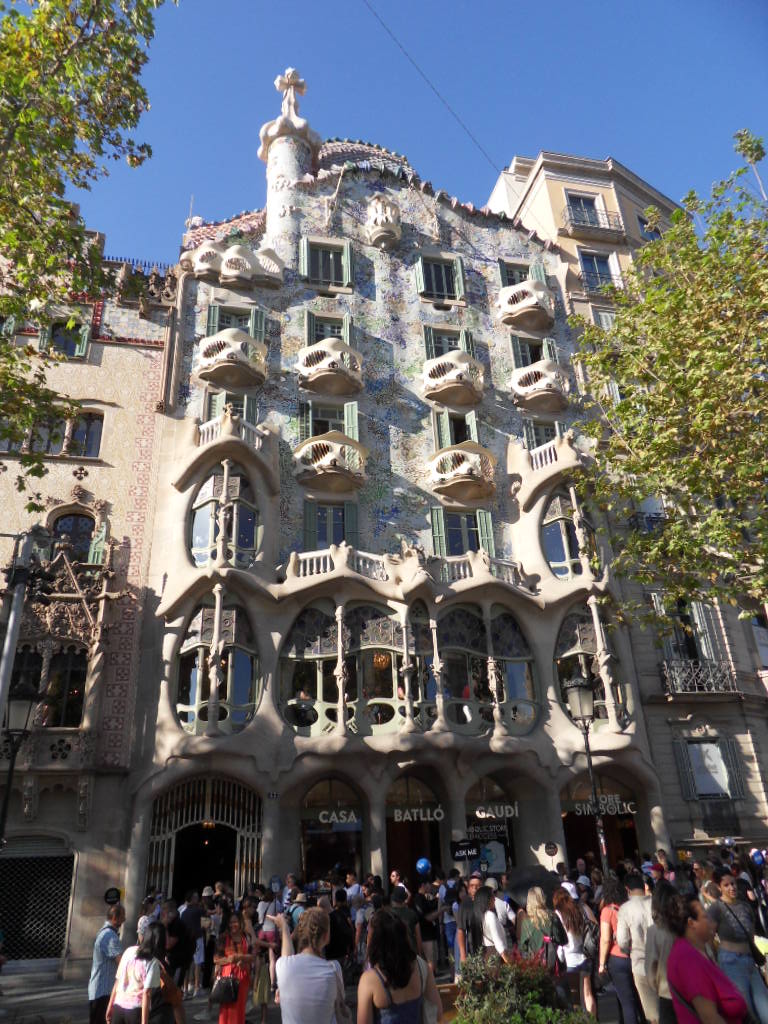
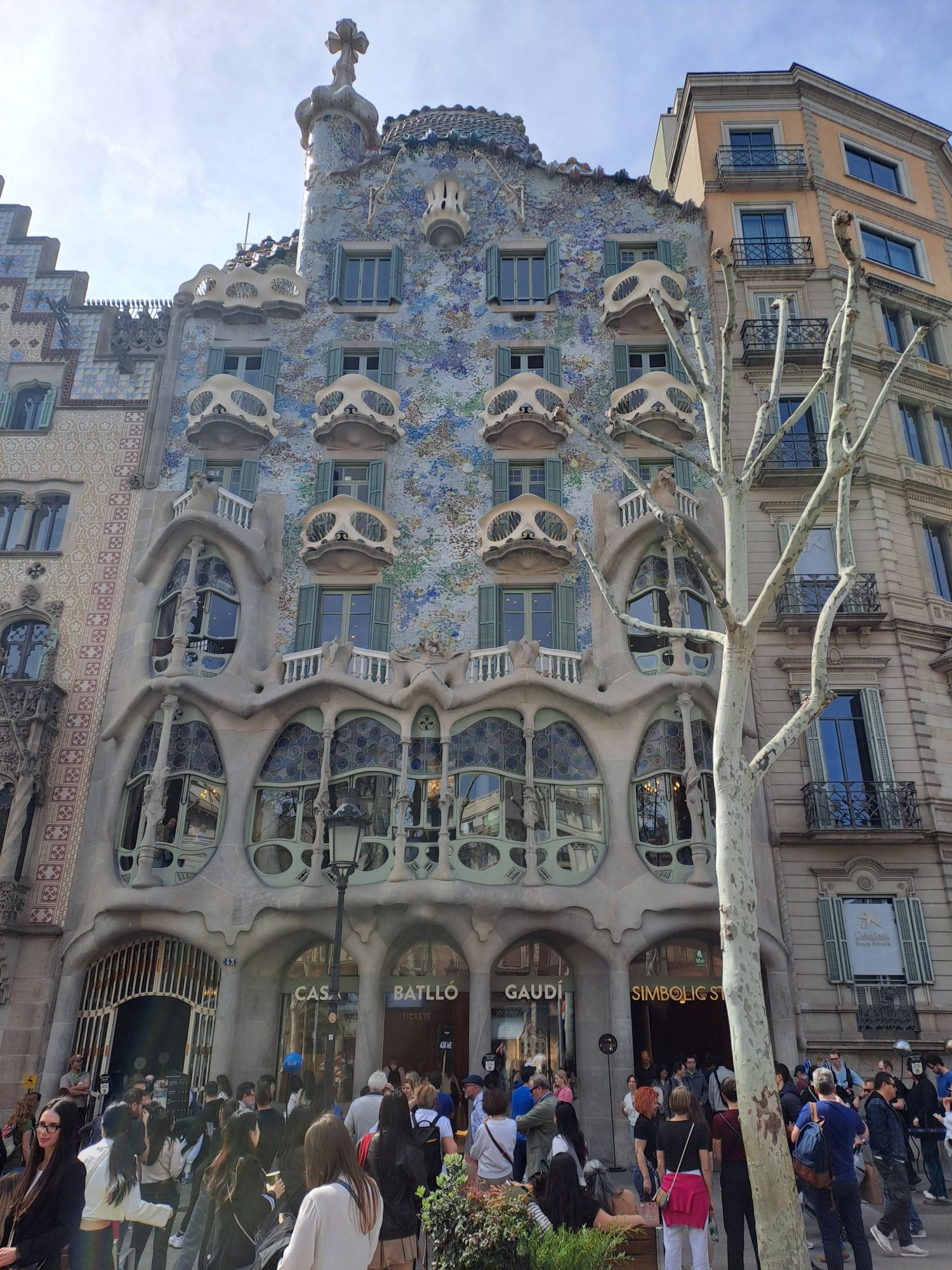
Anyway, if you want to know roughly where I am, it is just one block away from the Casa Batlló. I took the picture on the left last September but the crowds outside queuing to get in are apparently a perennial feature as you can see from the picture on the right I took today.
Casa Batlló from outside, September 30th 2023Today, March 23rd 2024
Anyway, I’m determined to relax today so will now go for a stroll, and do some shopping in preparation for cooking dinner tonight.
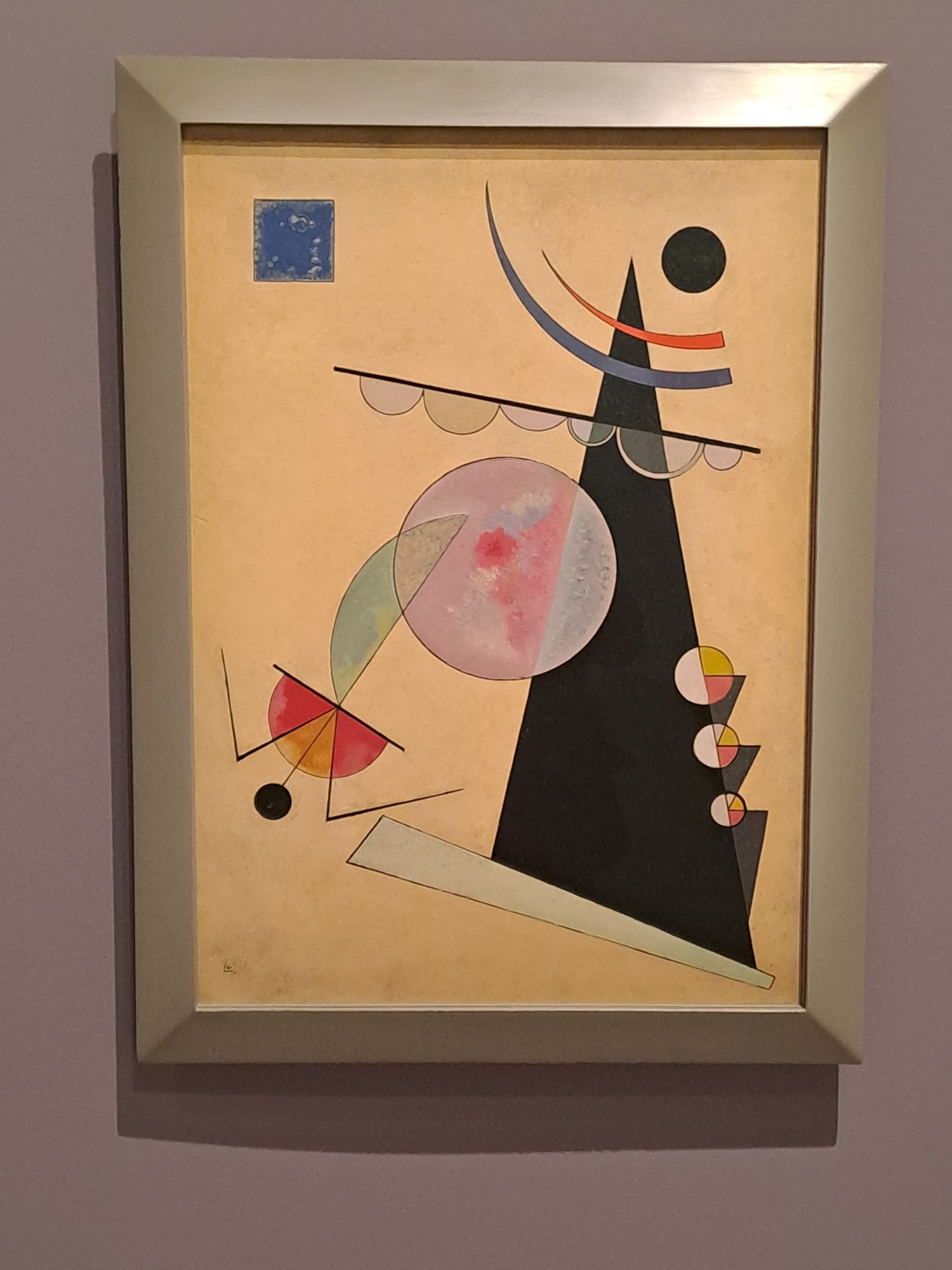
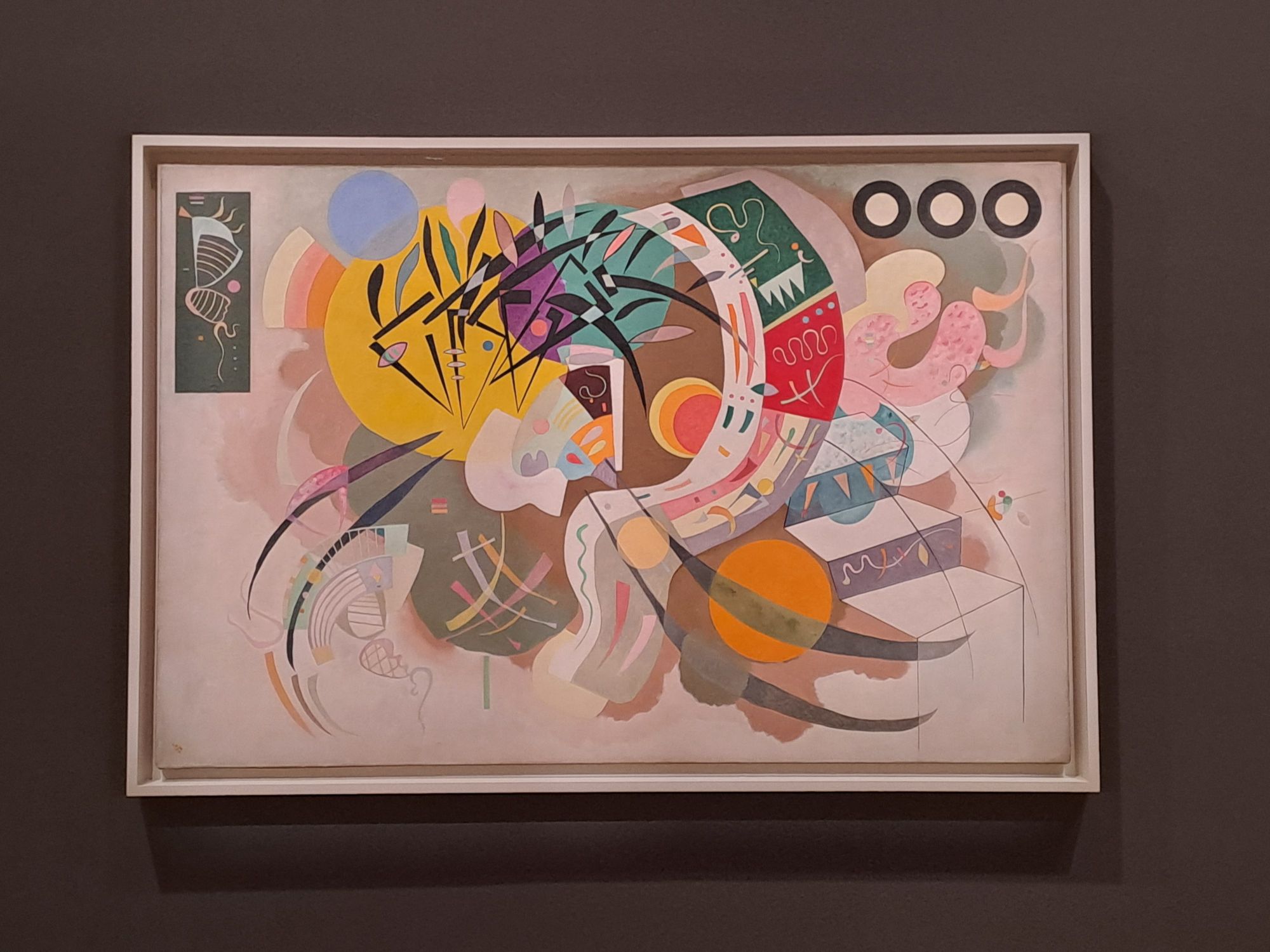
Since my time in Sydney is rapidly running out, this afternoon I paid a visit to the Art Gallery of New South Wales. The main objective of this was to see the Kandinsky Exhibition I blogged about here, but there are many other fine things to see in the permanent so I went round that too.
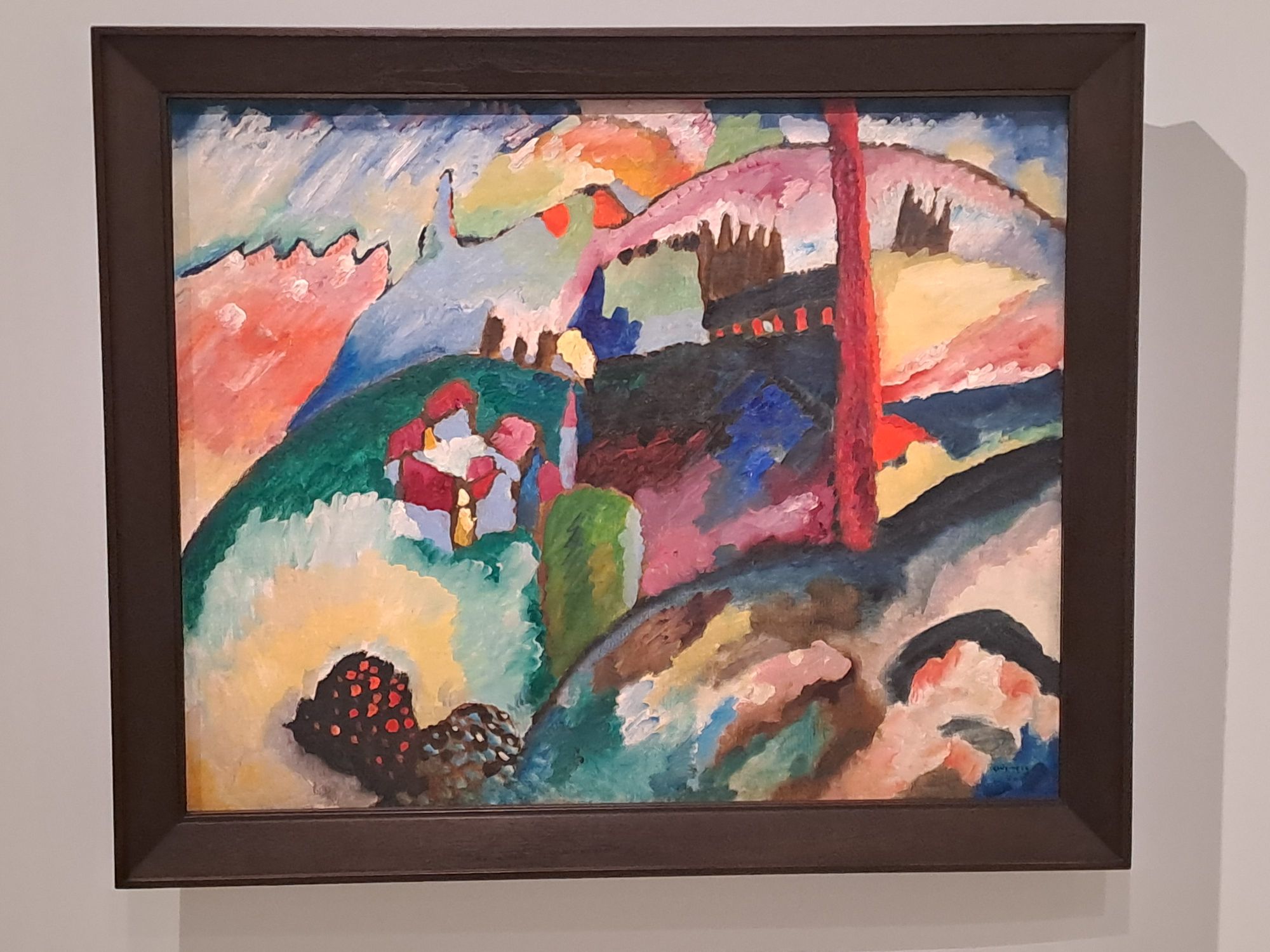
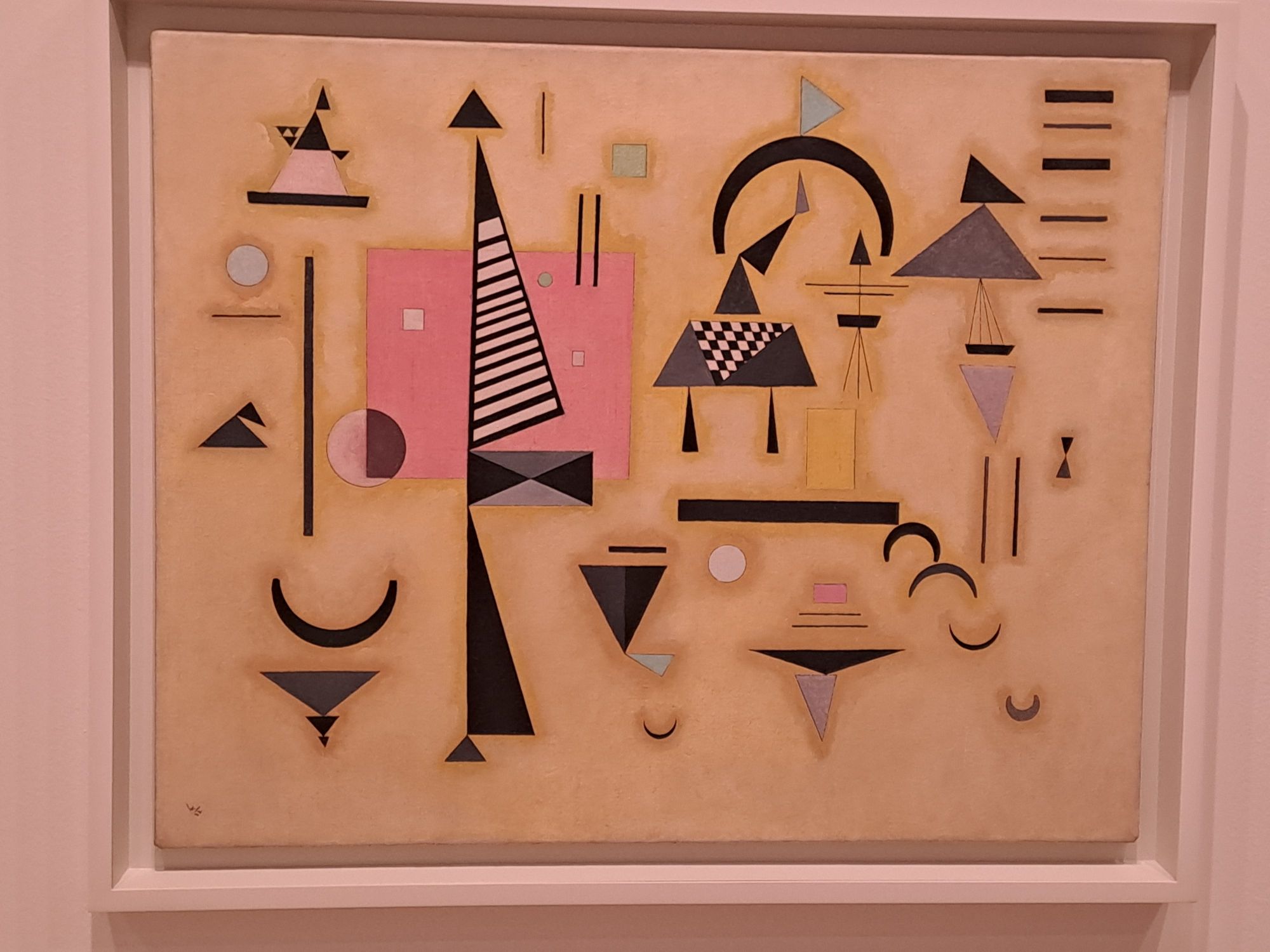
First here are some works by Wassily Kandinsky. You can see the evolution of his art from the expressionist landscapes of the early 20th Century to the highly influential abstracts from the Bauhaus period. I particularly love these compositions of simple geometric shapes – lines, circles, squares and arcs – with bold colours. They are fully abstract but also manage to suggest form and perspective and even movement in a way that fascinates me. After the Bauhaus period, Kandinsky seems to have used more organic shapes and softened the colour palette in a way that suggests a partial return to his artistic origins.
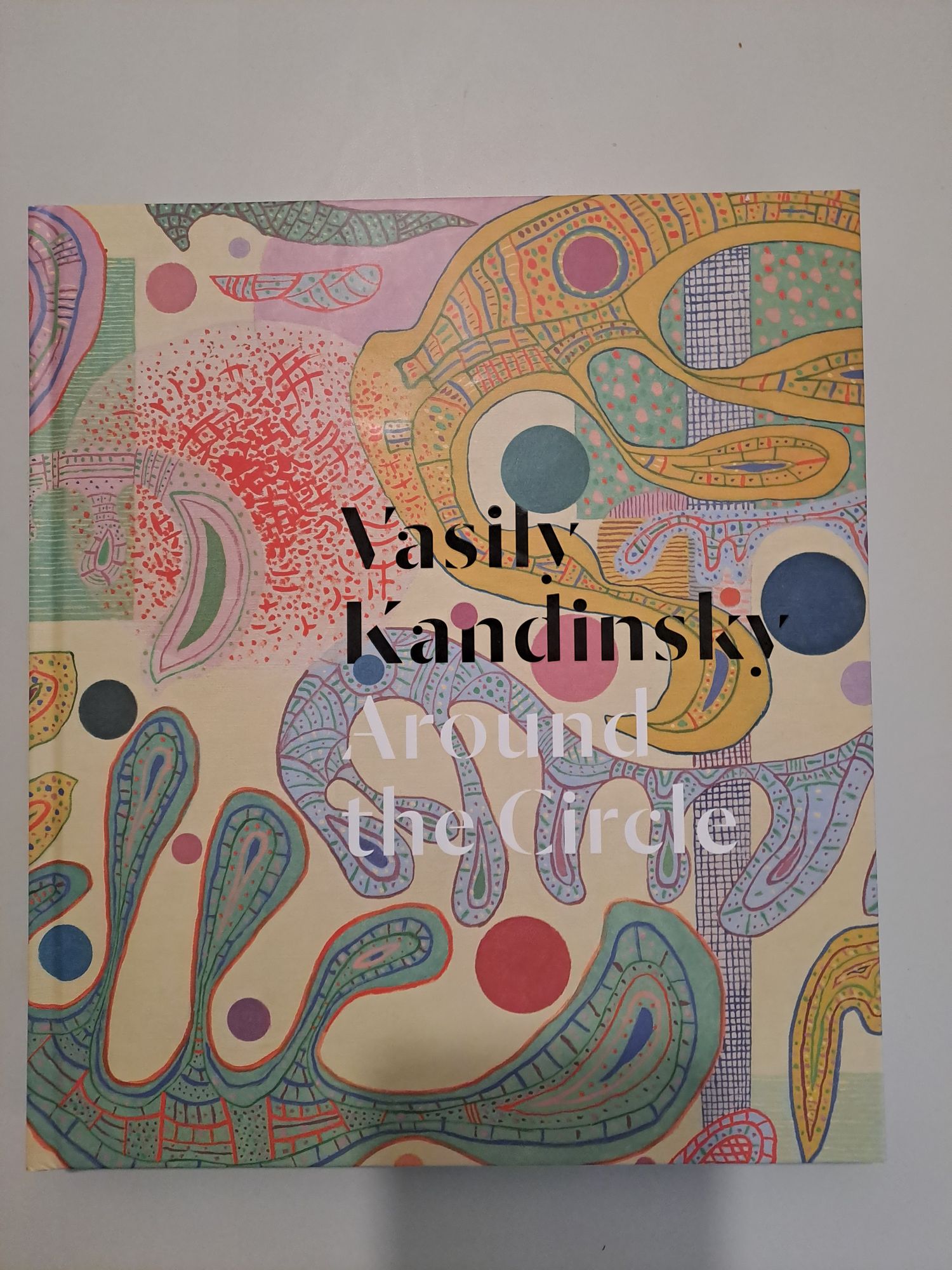
Anyway, as you can see from the last picture in the gallery, I liked the exhibition so much I bought the book!
The permanent collection is also very fine, with European art from many different periods (early Renaissance to Pre-Raphaelite and Impressionist and beyond). There are also many works by Australian artists, some of whom painted landscapes in a very conventional style reminiscent of the Royal Academy, as if they had stepped out of Burlington House into the full glare of the Australian Sun and struggled to cope with the light.
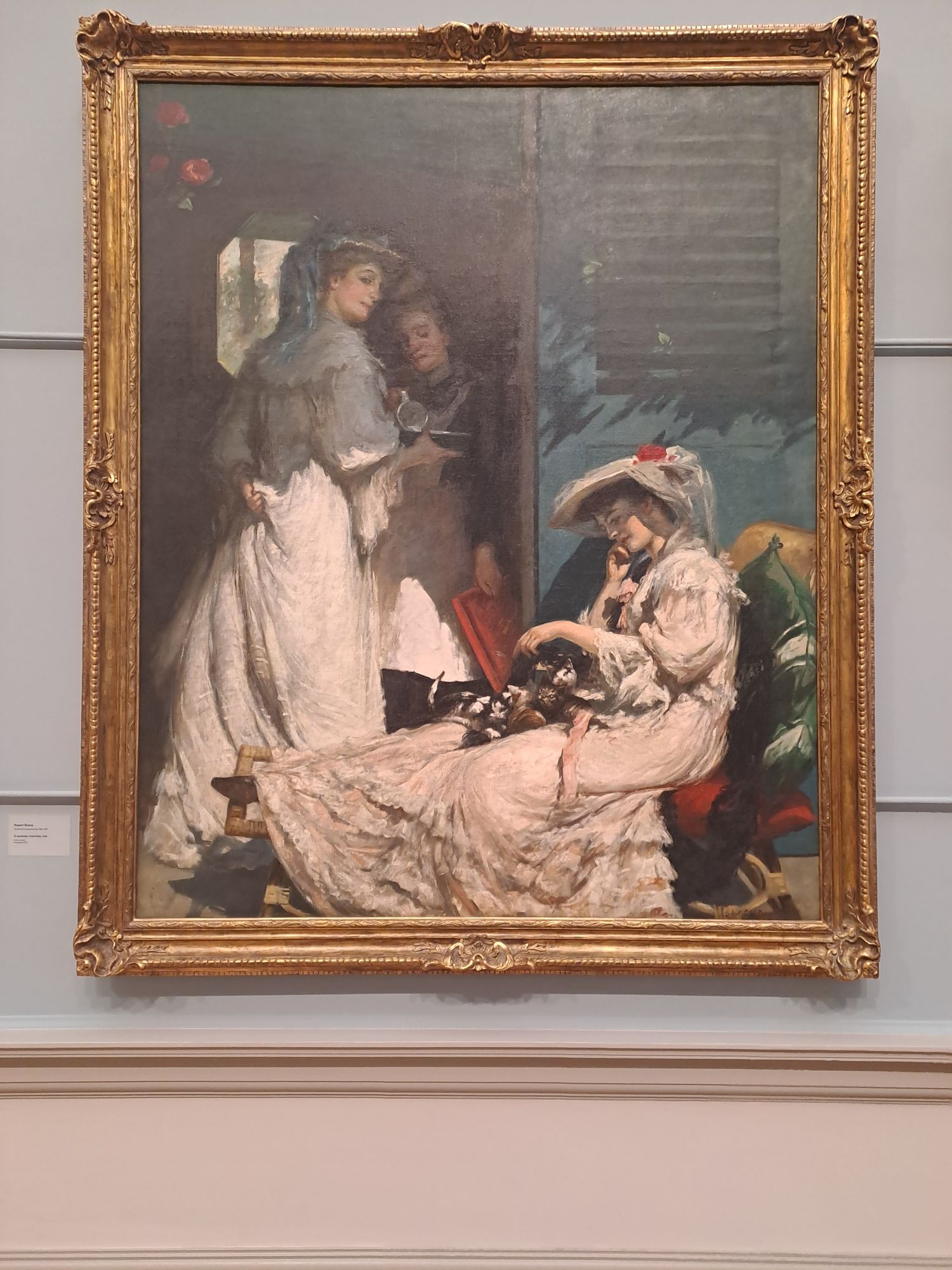
One painting that struck me is this lovely composition by a painter called Rupert Bunny:
It doesn’t really show up well in the quick snap I took but I think the depiction of light and shade in this picture – called A Summer Morning and painted in 1908, around the same time as Kandinsky’s early painting above – is very striking. Bunny was born in Melbourne but moved to Paris in the 1880s and was much celebrated there as a salon painter. Although the style of this composition is rather conservative, he seems to have been a very versatile artist.
The permanent collection is free to visit and is well worth a visit or several. In fact, I might go back once more before I leave…
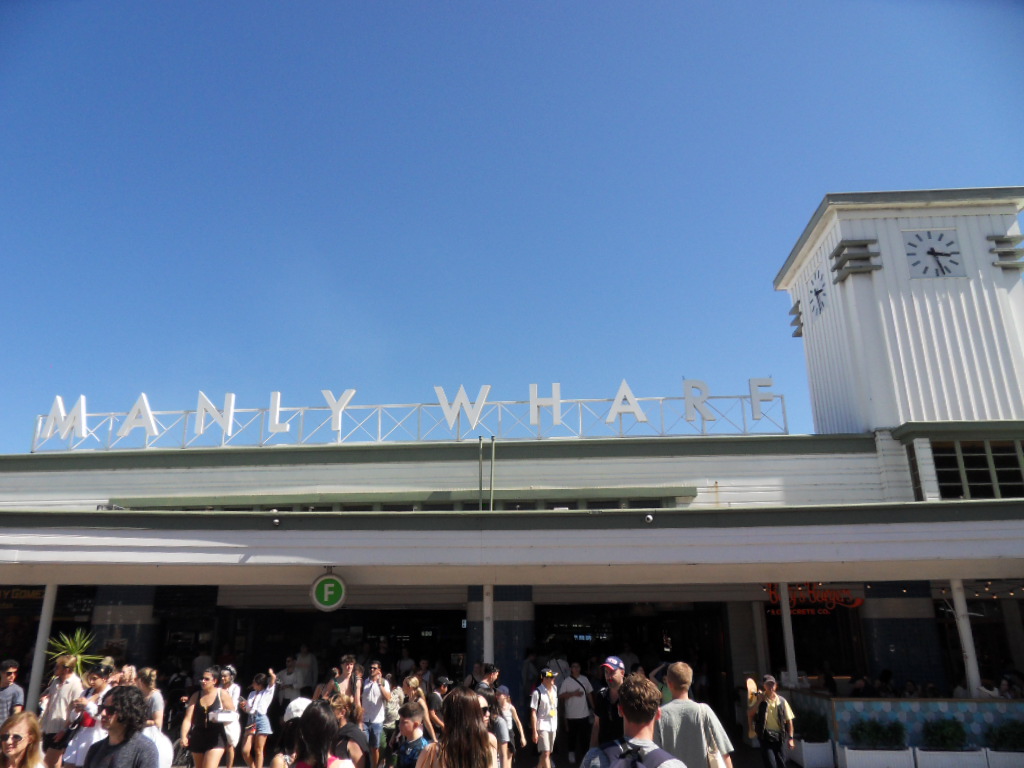
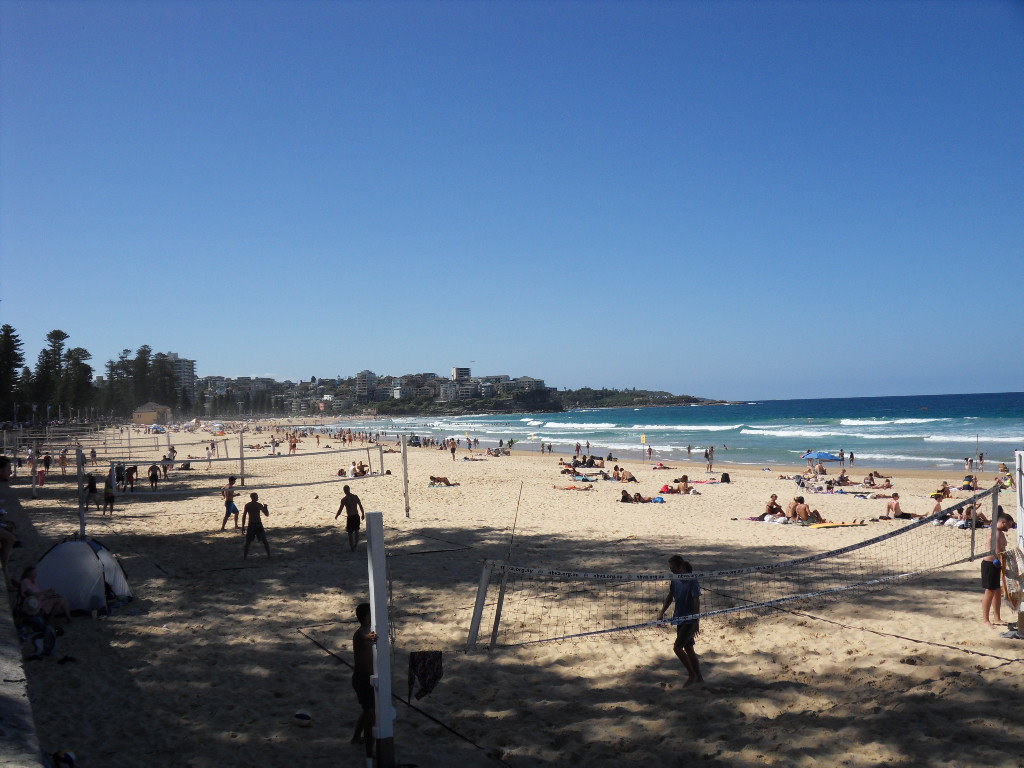
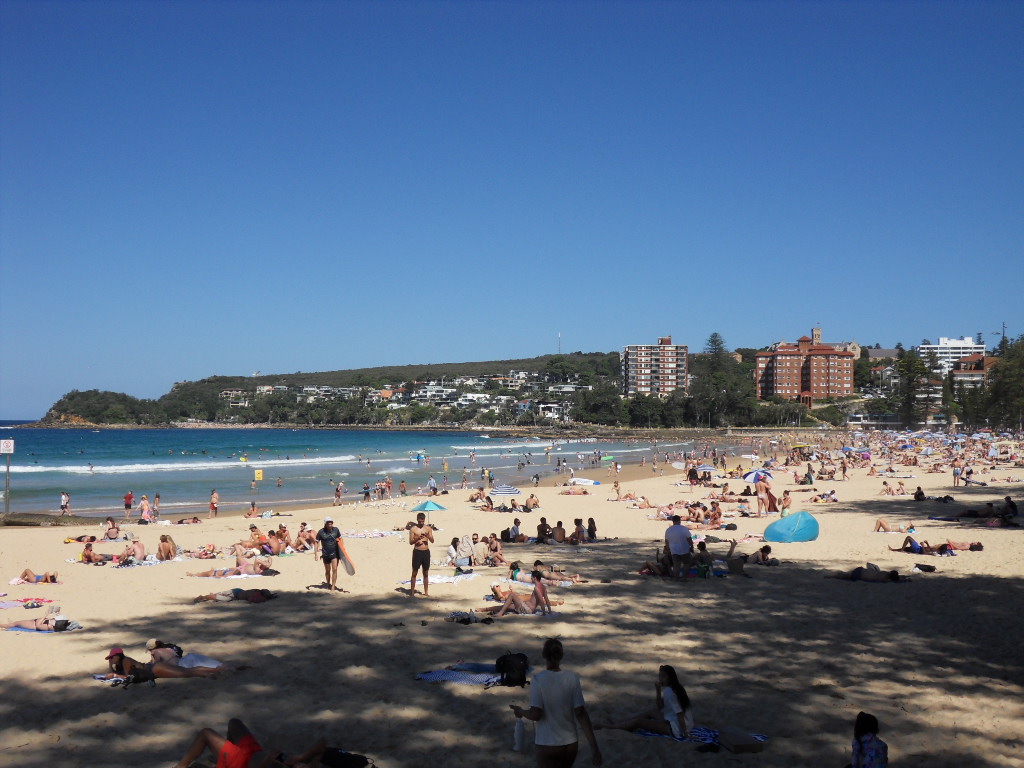
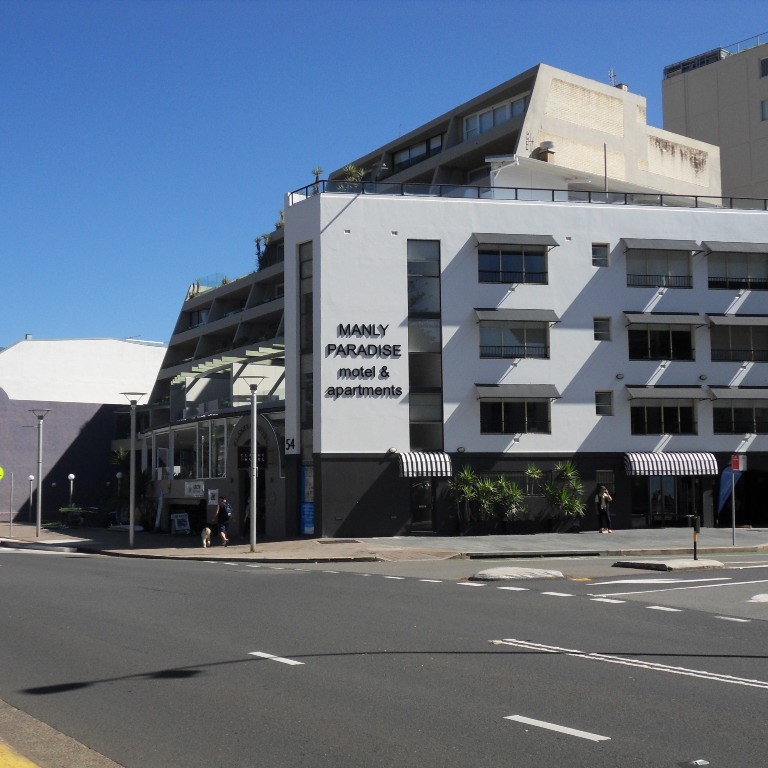
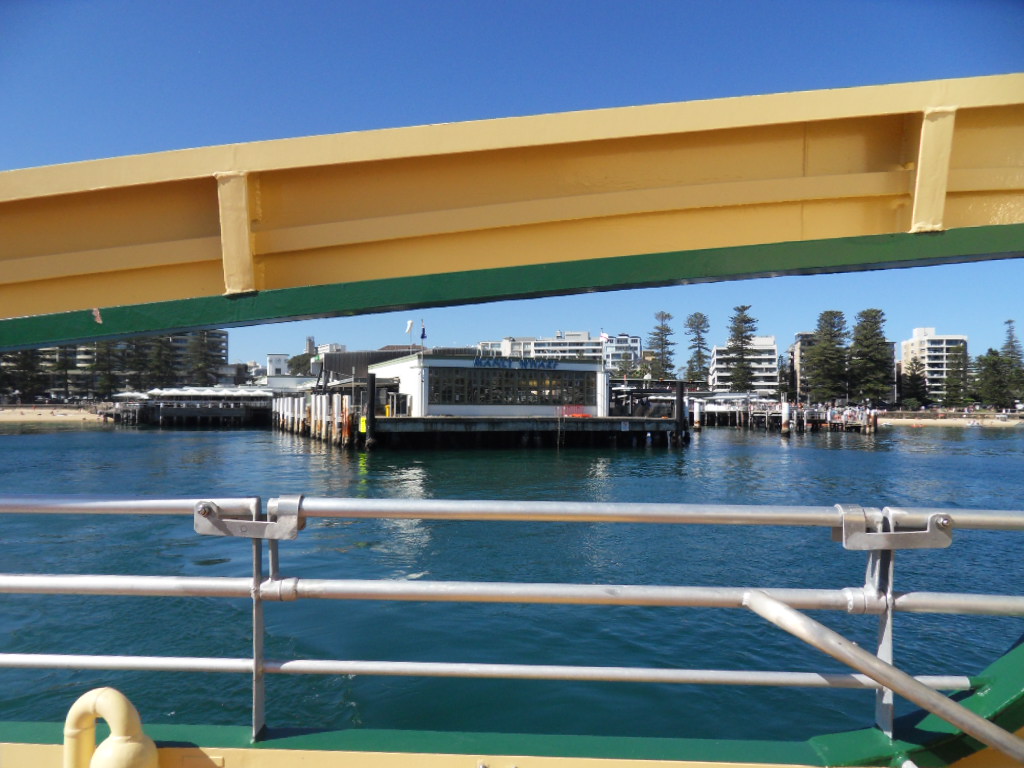
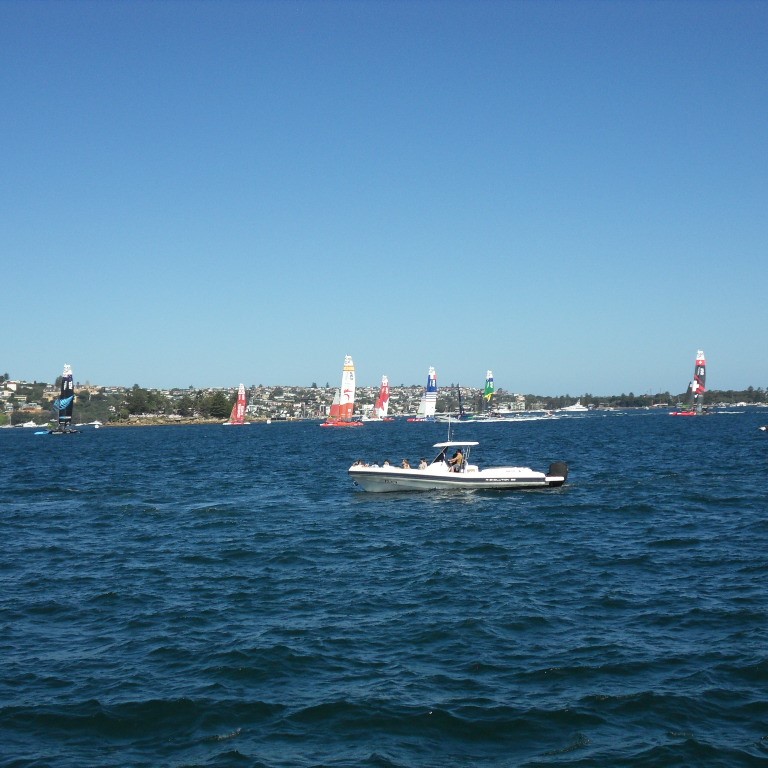
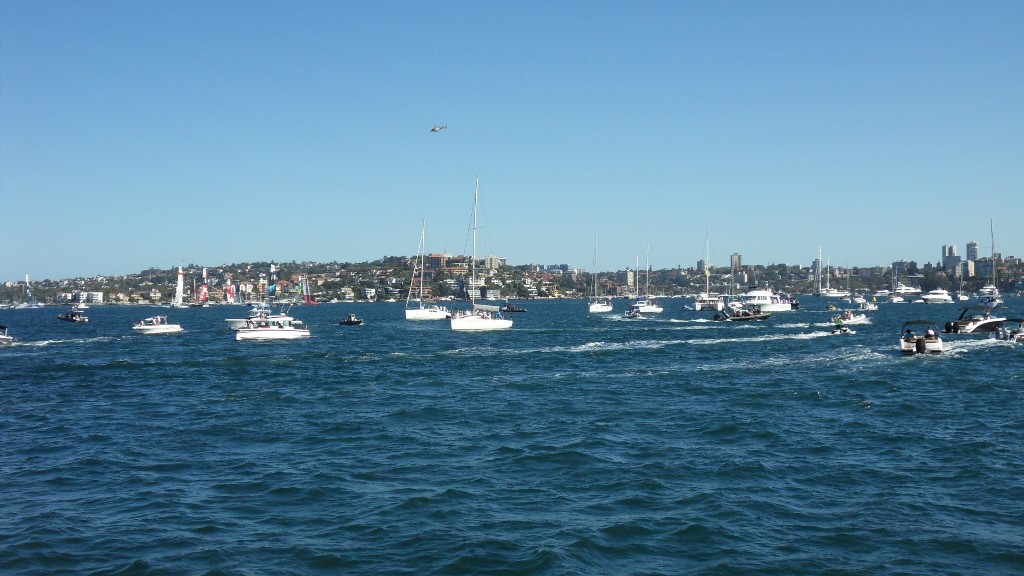
I realized this morning, with a shock, that I only have one more week in Sydney so I decided to cross off another of my things to do by taking the ferry (F1) from Circular Quay to Manly, so I could have a view of the Pacific Ocean. The most fun was on the way back, when a yacht race was under way in Sydney Harbour. Lots of small boats had come out to get a good view, many of them right in the ferry path. An officer of the Harbour Police on a jet ski was buzzing around politely inviting the offenders to get out of the way. At one point a quite large boat came right across our bow and the captain of the ferry had to sound the alarm. No harm was done, but that clown could have caused a serious accident.
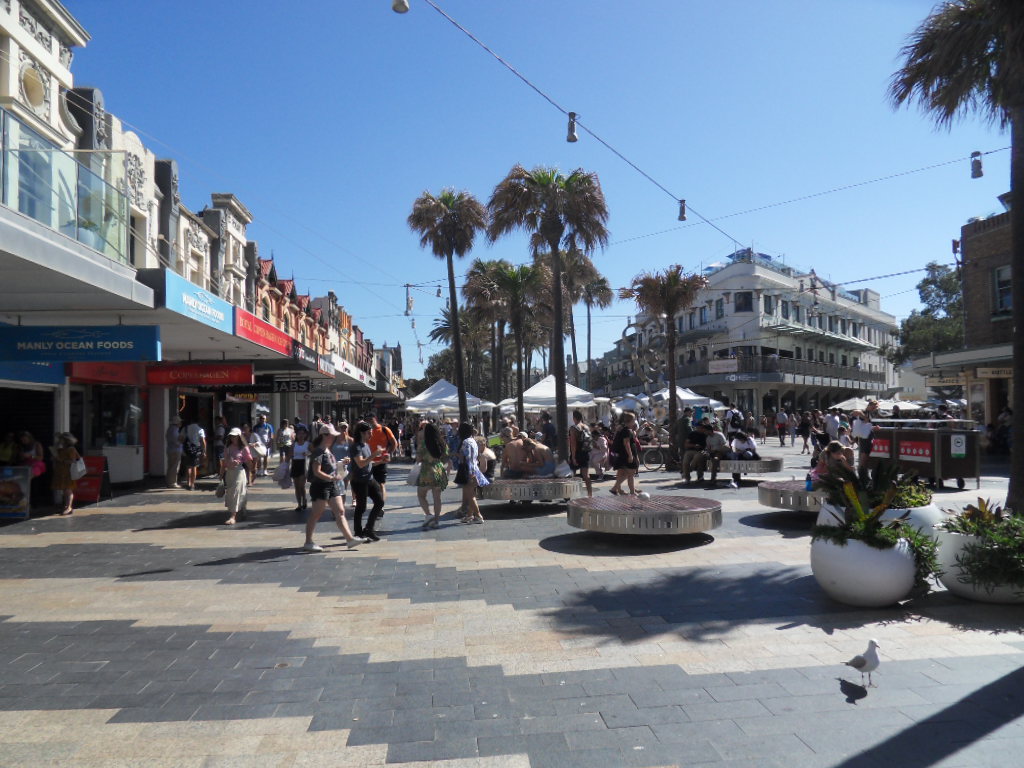
Anyway, there are lots of Manly things in Manly: a Manly Wharf, Manly Beach, a Manly Bank, Manly Pharmacy and, as you can see in one picture, Manly Paradise; there’s even, as pointed out to me by Richard Easther, Manly Astrophysics. I only stayed long enough to have a Manly beer and some Manly Fish & Chips before heading back to Circular Quay.
Here are some snaps.
Anyway, here are a few little videos from my instagram page:
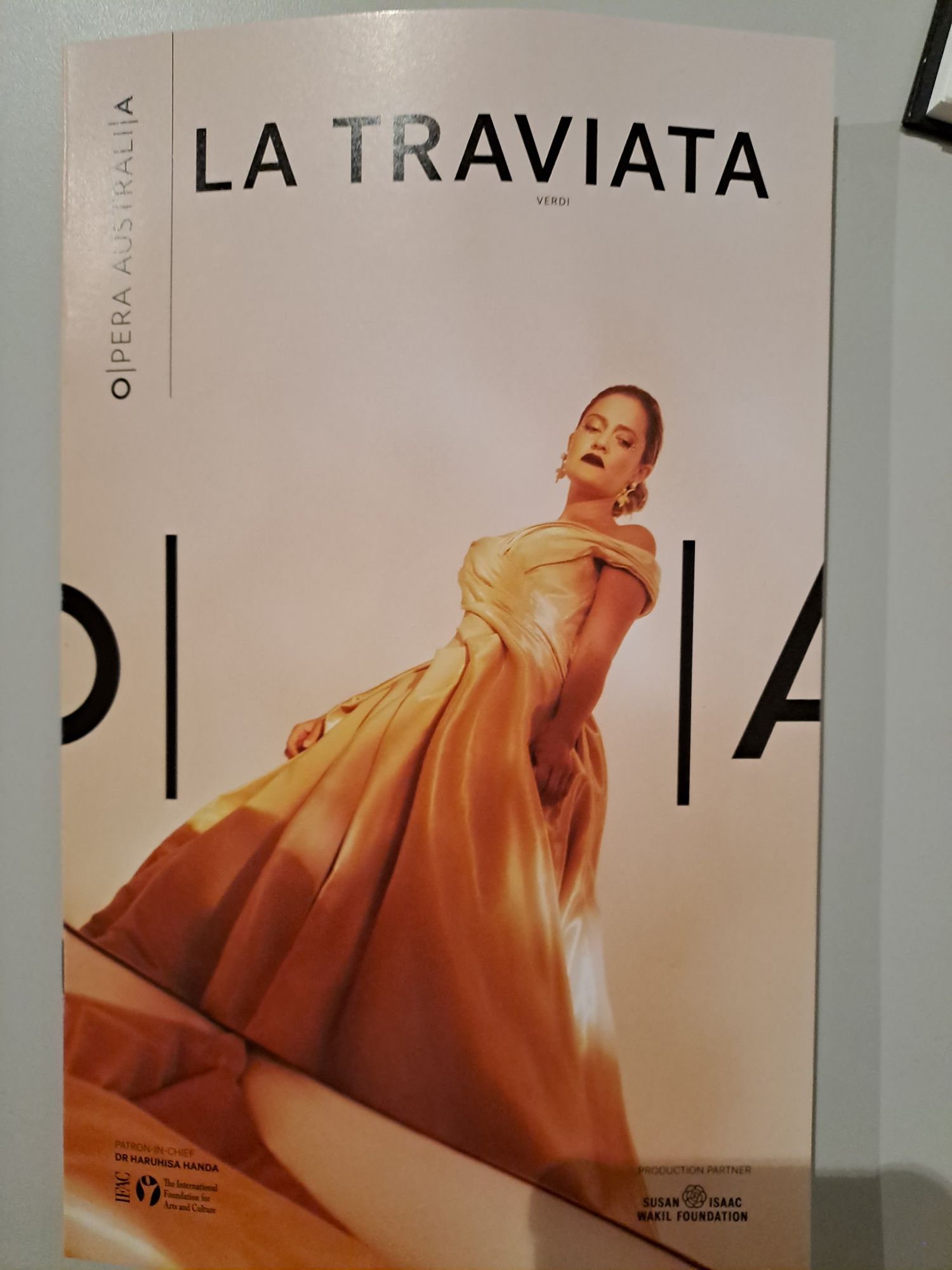
Last night I fulfilled a longstanding ambition of mine, to see an opera at the Sydney Opera House. It wasn’t that easy to get tickets, but last night I managed to see Opera Australia’s production of La Traviata by Giuseppe Verdi.
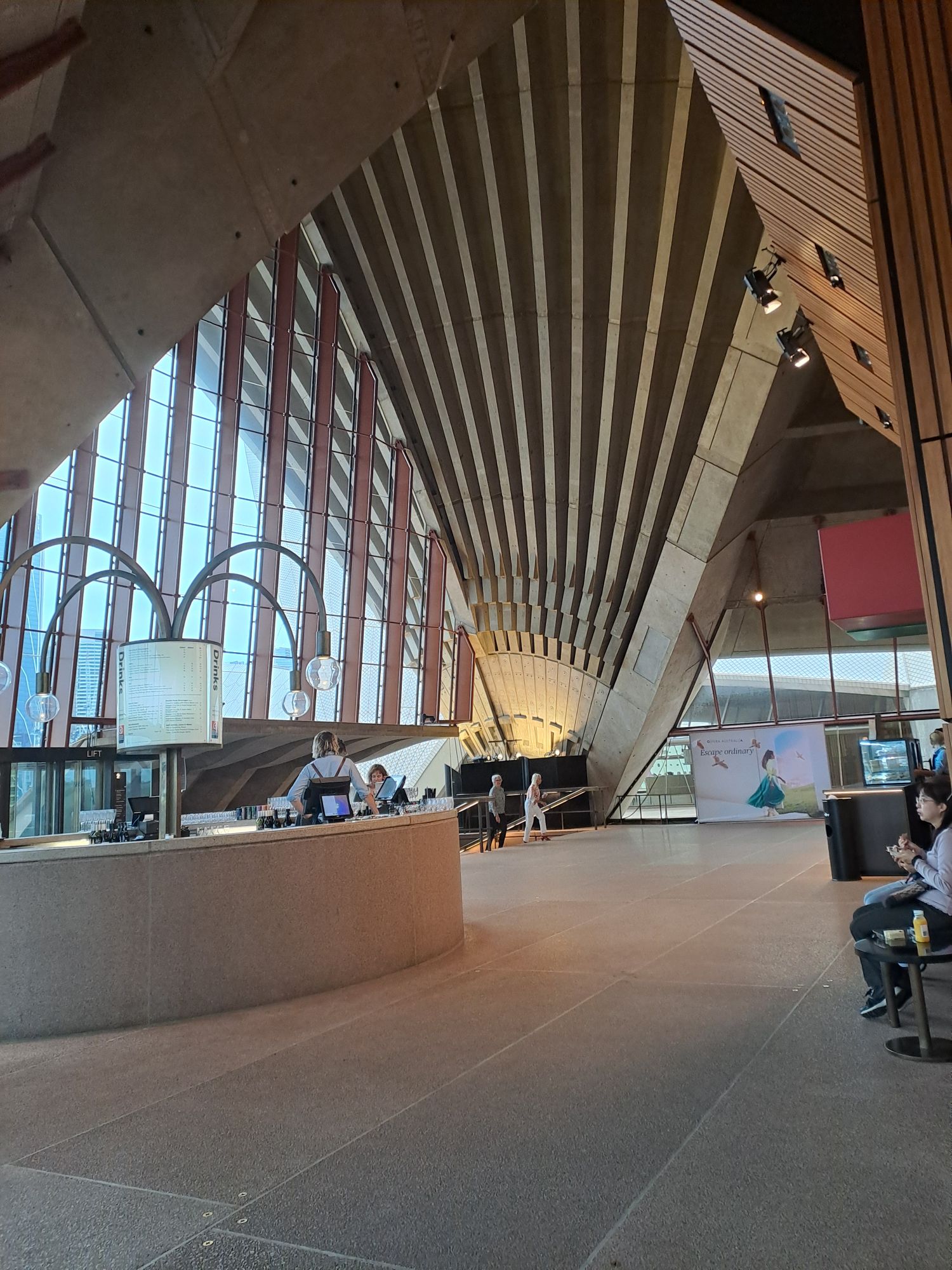
Foyer and BarJoan Sutherland Theatre
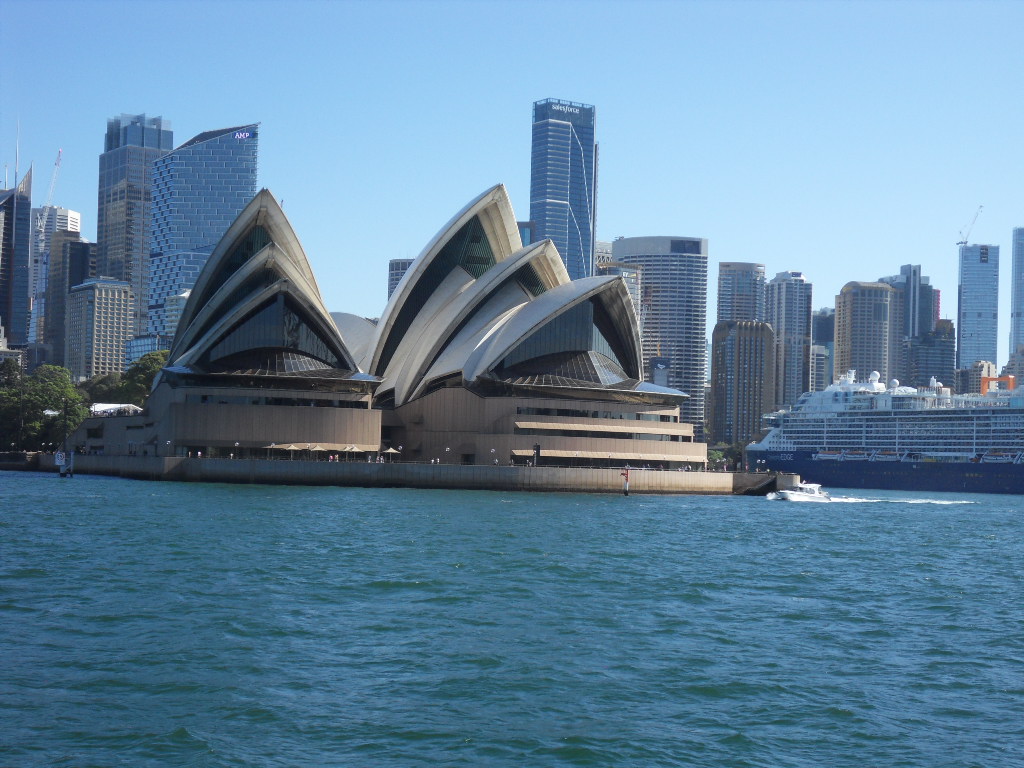
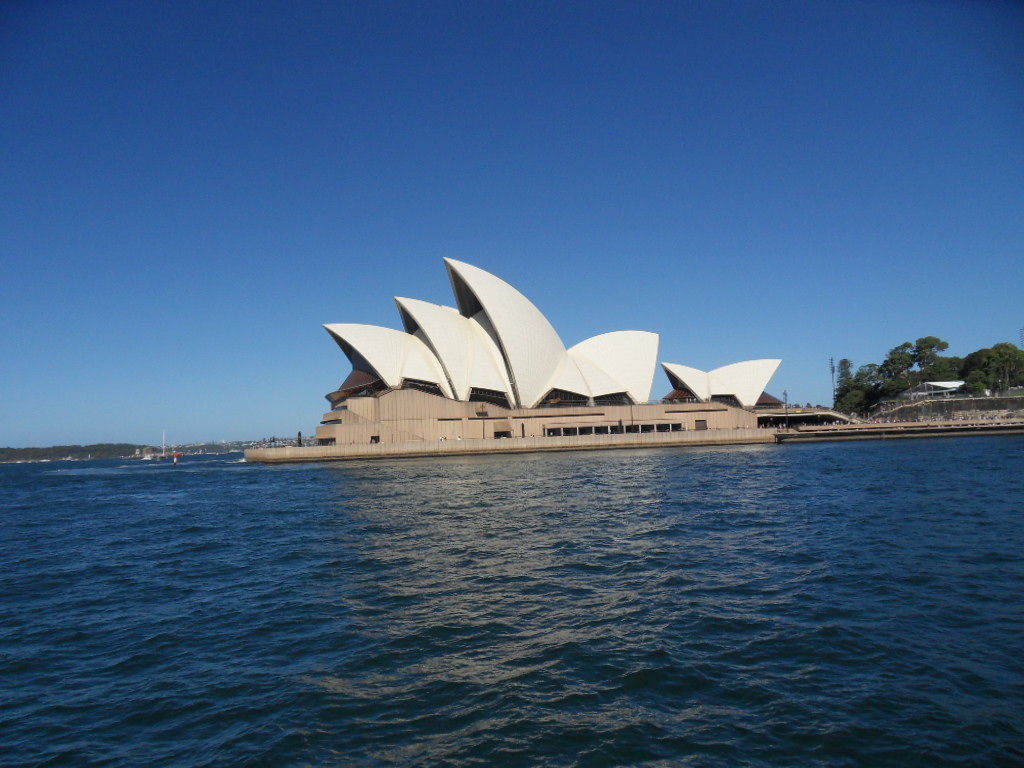
First a couple of comments about the Sydney Opera House. It is of course a splendid building but rather complicated inside, with surprising staircases and bizarre balconies. At dinner on Thursday, one of the locals here told me it is like a “1960s vision of The Future”, which is very apt. One of the nice things is that you can take your drink outside to get a breath of fresh air and a view of the harbour, which is very nice in the dark with all the lights from the boats and surrounding houses. The Joan Sutherland Theatre – where the operas are staged – is very nice. I have to say, though, that it’s a bit smaller than I’d anticipated. The seating capacity is just over 1500, while the Wales Millennium Centre – where Welsh National Opera perform – can seat 2500 people.
I took this picture from the Harbour Ferry
Sydney Opera House from the Harbour Ferry
The Joan Sutherland Theatre is actually in the slightly smaller edifice to the left; the other side is a Concert Hall. Anyway, the place has a nice ambience and very friendly staff. They even give out free programmes!
And so to the performance. The staging in this production is relatively simple, with the opulence of the Paris settings achieved by costumes and lighting rather than by scenery. In Act II Scene 1, when Violetta and Alfredo are in the country, the back of the set is opened out to give a view of gardens and a tree. This device returns to touching effect at the end; see below. Costumes and design are pretty much 19th Century, with some (deliberate) anachronisms in dress style for humorous effect.
The Opera is in three acts, lasting about 2 hours and 30 minutes with one interval. When I heard there was only one wine break interval I wondered how they would manage it without making the performance a bit lop-sided. In fact the break came between Scenes 1 and 2 of Act II, with the first scene performed as a continuation of Act 1 and Act III following directly from Scene 2. It worked well, with changes of costume and scenery achieved onstage by the cast in view of the audience.
This production has been running since December 2023 but the principals changed earlier this month (February). We saw Sophie Salvesani as Violetta, Tomas Dalton as Alfredo Germont, and Luke Gabbedy as Giorgio Germont (Alfredo’s Father); all of them Australian born and bred. The performance was sung in Italian.
La Traviata is one of the most enduringly popular of all operas – and is one of the most frequently performed. It’s quite curious that its first performance in Venice was a complete disaster and it took several revisions before it became established as part of the operatic repertoire. A production like the one we saw last night, however, makes it abundantly clear why it is such an evergreen classic. Act I in particular is just one memorable tune after another.
The opera is based on the novel La Dame Aux Caméliaswhich later became a play with the same name. It tells the story of Violetta, a glamorous courtesan and flamboyant darling of the Paris party scene. She meets a young chap called Alfredo at a spectacular do in her house in Act I and he tells her he’s completely in love with her. She laughs him off and he departs crestfallen. When the party’s over and he’s gone, though, she finds herself thinking about him. The trouble with Violetta is that she is already seriously ill with consumption (tuberculosis) at the start. She knows that she is doomed to die and is torn between her desire to be free and her growing love for Alfredo.
Cut to Act II, Scene I, a few months later. Violetta and Alfredo are shacked up in a love nest away from Paris. While Alfredo is away paying off some of Violetta’s bills, Alfredo’s father Giorgio turns up and tries to convince Violetta to abandon her relationship with his son because its scandalous nature threatens their family’s prospects, particular his daughter’s (Alfredo’s sisters) plans to get married. Violetta eventually agrees to do a runner. Alfredo returns and meets his father who tries to convince him to return to his family in Provence. Alfredo is distraught to hear of Violetta’s departure, refuses to go with his father, and vows to find Violetta again.
Scene 2 is back in Paris, at the house of a lady called Flora. There’s a lot of singing and dancing and general riotousness.Alfredo turns up, slightly the worse for drink and proceeds to gamble (winning a huge amout of money). Violetta turns up and Alfredo insults her by throwing his winnings at her. He’s then overcome by remorse but the Baron Douphol, a wealthy friend of Violetta, is outraged and challenges Alfredo to a duel.
Act III is set a few months later in Violetta’s bedroom where she’s clearly dying. Alfredo has run off after wounding the Baron in a duel. The doctor gives Violetta just a few hours to live. Alfredo returns. The lovers forgive each other and embrace. Violetta dies.
I thought Sophie Salvesani was a very convincing and sympathetic Violetta. She has a very nice, fluid voice and engaging stage presence. Violetta is a demanding role- there are several tricky coloratura passages to cope with – but her character is quite complicated too. Although we know she’s ill right from the start she’s not by any means a passive victim. She’s a courtesan who has clearly put it about a bit, but she’s also got a strong moral sense. She’s vulnerable, but also at times very strong.
All the cast sang very well, actually. I particularly liked the baritone of Luke Gabbedy (though even with his make up he looked too young to be Alfredo’s Daddy).
The look of the opera – staging, lighting and costumes – also worked very well. The Paris parties were riots of colour and movement with just as much debauchery as desired. The start of Act III finds the same set as Act I, bare apart from a Chaise Longue, bathed in a ghostly greenish light. A particularly moving touch was right at the end when Violetta is dying. Here last lines (and the last of the Opera) are:
È strano! Cessarono gli spasimi del dolore. In me rinasce – m’agita insolito vigor! Ah! ma io ritorno a viver! Oh gioia! (Ricade sul canapè.)
How strange! The spasms of pain have ceased: A strange vigour has brought me to life! Ah! I shall live – Oh, joy! (She falls down, senseless, upon the sofa.)
Most productions I have seen follow these directions but, in this one, before delivering these lines, Violetta stands up, while the other members of the cast present on stage – Alfredo, Giorgio, the maid Annina, and the Doctor – freeze as she sings the lines in full voice. The back of the set lifts up and shows the tree we saw in Act II and Violetta walks out into the sunshine while a double takes the place of the lifeless Violetta on the sofa. The implication is that she is already dead when she sings these last lines. It’s a powerful device, and puts quite a different perspective on the ending.
Anyway, congratulations to Opera Australia on an excellent production which I enjoyed greatly.
P.S. I’ll be going again to the Sydney Opera House next week, to see their Magic Flute.
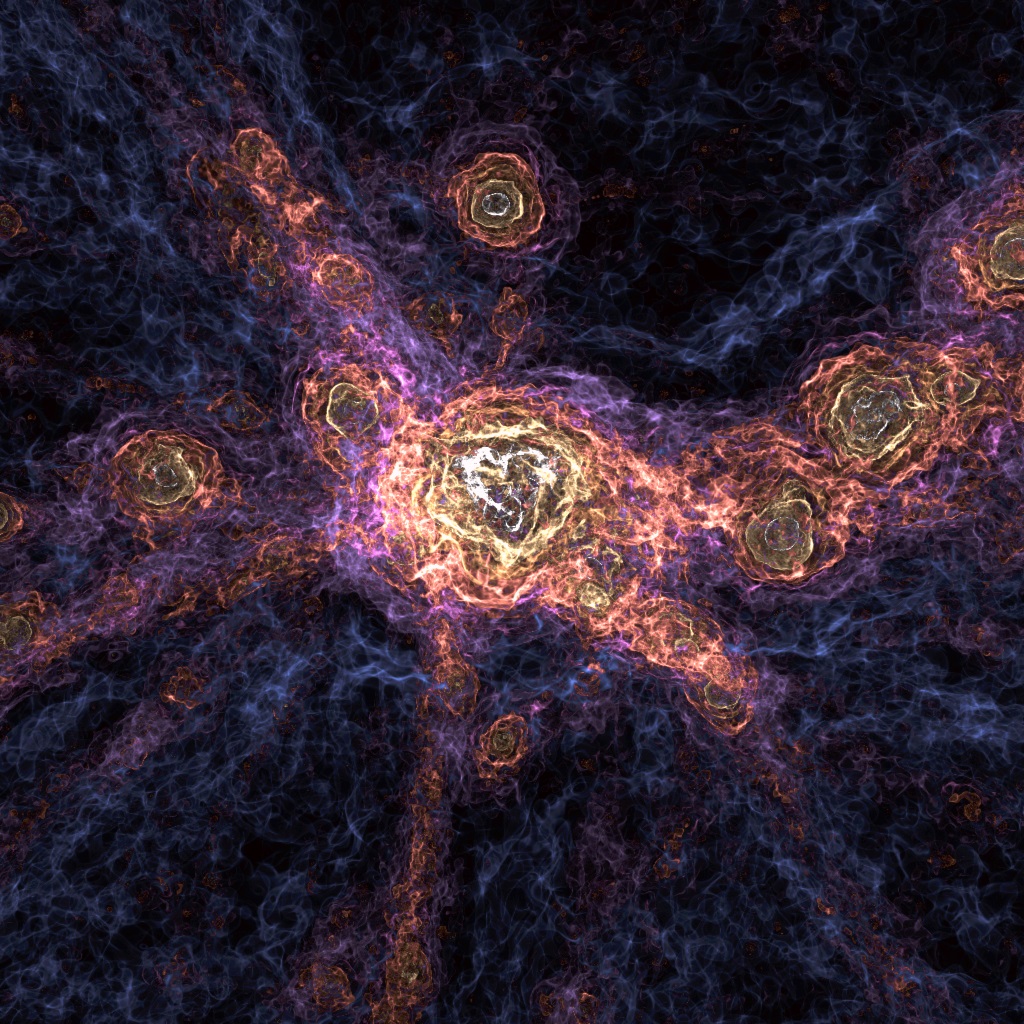
As before, entries to the Research Image Competition were divided into two Themes: Theme 1 (Particle and Nuclear Physics) and Theme 2 (Astronomy, Cosmology and Solar & Planetary Science) and scores were allocated by the judges based on visual impact and scientific interest. Once again, the standard was very high, but there were clear winners in each category. Here they are:
LUCA REALI, MAX BOLEININGER, DANIEL MASON, SERGEI DUDAREV (UKAEA)
DATA INTENSIVE CAMBRIDGE
Molecular dynamics simulations of high-dose radiation damage in tungsten to understand the evolution of the material under fusion reactor conditions. Blue spheres are vacancies (missing-atom defects), orange spheres are interstitials (extra-atom defects). Lines are dislocations (linear crystallographic defect).
Softwares: LAMMPS for simulations, Ovito for the rendering.
JOSH BORROW, FLAMINGO TEAM
MEMORY INTENSIVE DURHAM
The most massive galaxy cluster in the flagship, 2.8 Gpc, FLAMINGO volume, with each side of the image spanning 40 megaparsecs. Each colour represents a different gas density contour, highlighting the extremely complex spatial and velocity structure of the gas within the cluster. At the center, the gas serendipitously aligns to produce a love heart.
The image was created with DiRAC supported software SWIFT and swiftsimio.
For more details about these images and the other entries see here. The 2024 Dirac Calendar features a selection of the entries.
Congratulations to the winners and indeed all the entrants!
Having arrived in that London I thought I’d check out a nice little exhibition at the Royal Academy called Impressionists on Paper. As its name suggests, this is a collection of drawings, sketches, and studies done with charcoal, pencil pastels, and occasionally watercolours, all done on paper. The artists involved cover the spectrum from Degas to Toulouse-Lautrec. My favourite is the study by Seurat that became part of a very famous painting but which is wonderful in its own right.
The views presented here are personal and not necessarily those of my employer (or anyone else for that matter).
Feel free to comment on any of the posts on this blog but comments may be moderated; anonymous comments and any considered by me to be vexatious and/or abusive and/or defamatory will not be accepted. I do not necessarily endorse, support, sanction, encourage, verify or agree with the opinions or statements of any information or other content in the comments on this site and do not in any way guarantee their accuracy or reliability.











 In the Dark
