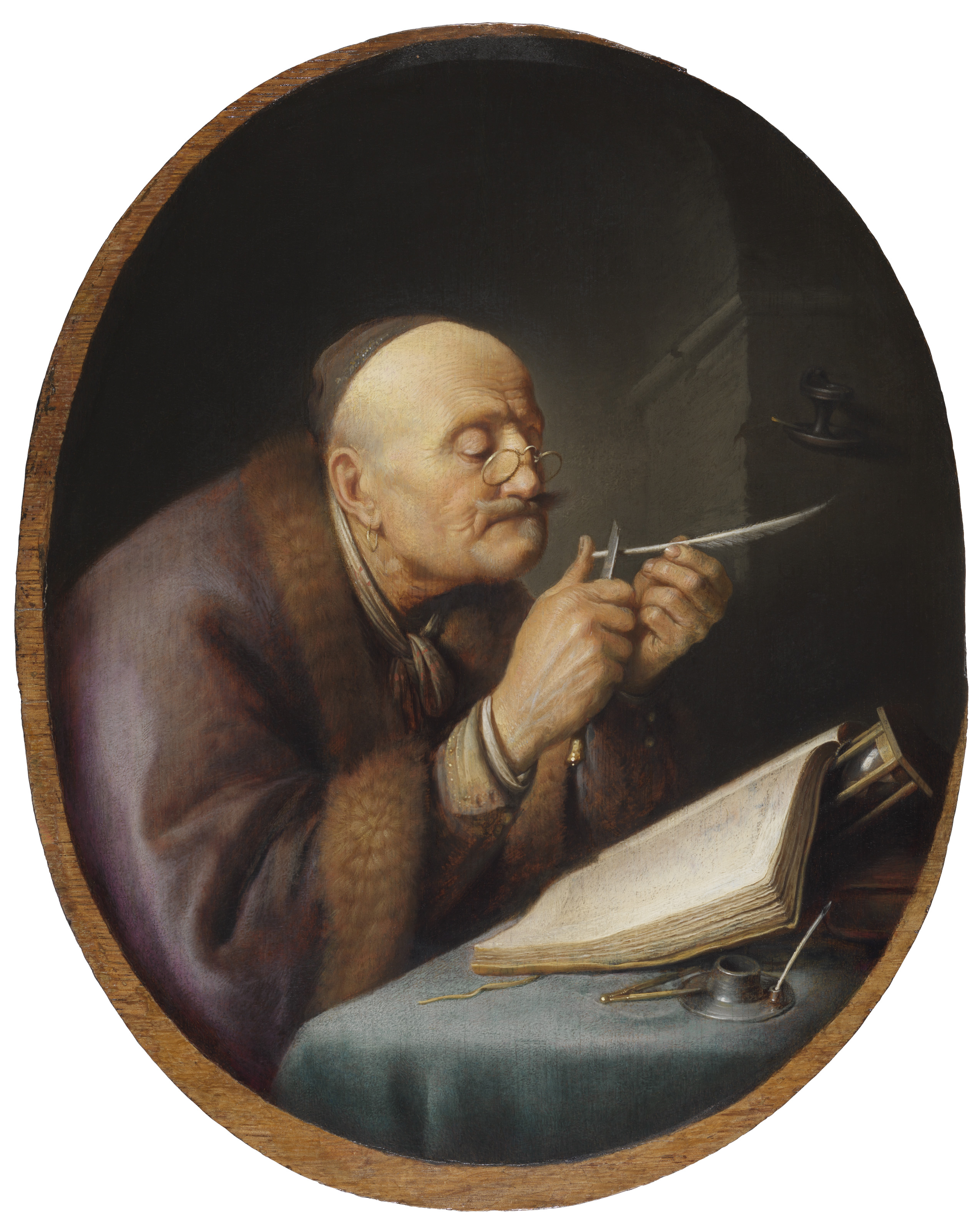
Scholar Sharpening His Quill by Gerrit Dou (c. 1632-35, oil on oval panel, 26.3 x 21.2 cm, private collection)
Scholar Sharpening His Quill by Gerrit Dou (c. 1632-35, oil on oval panel, 26.3 x 21.2 cm, private collection)
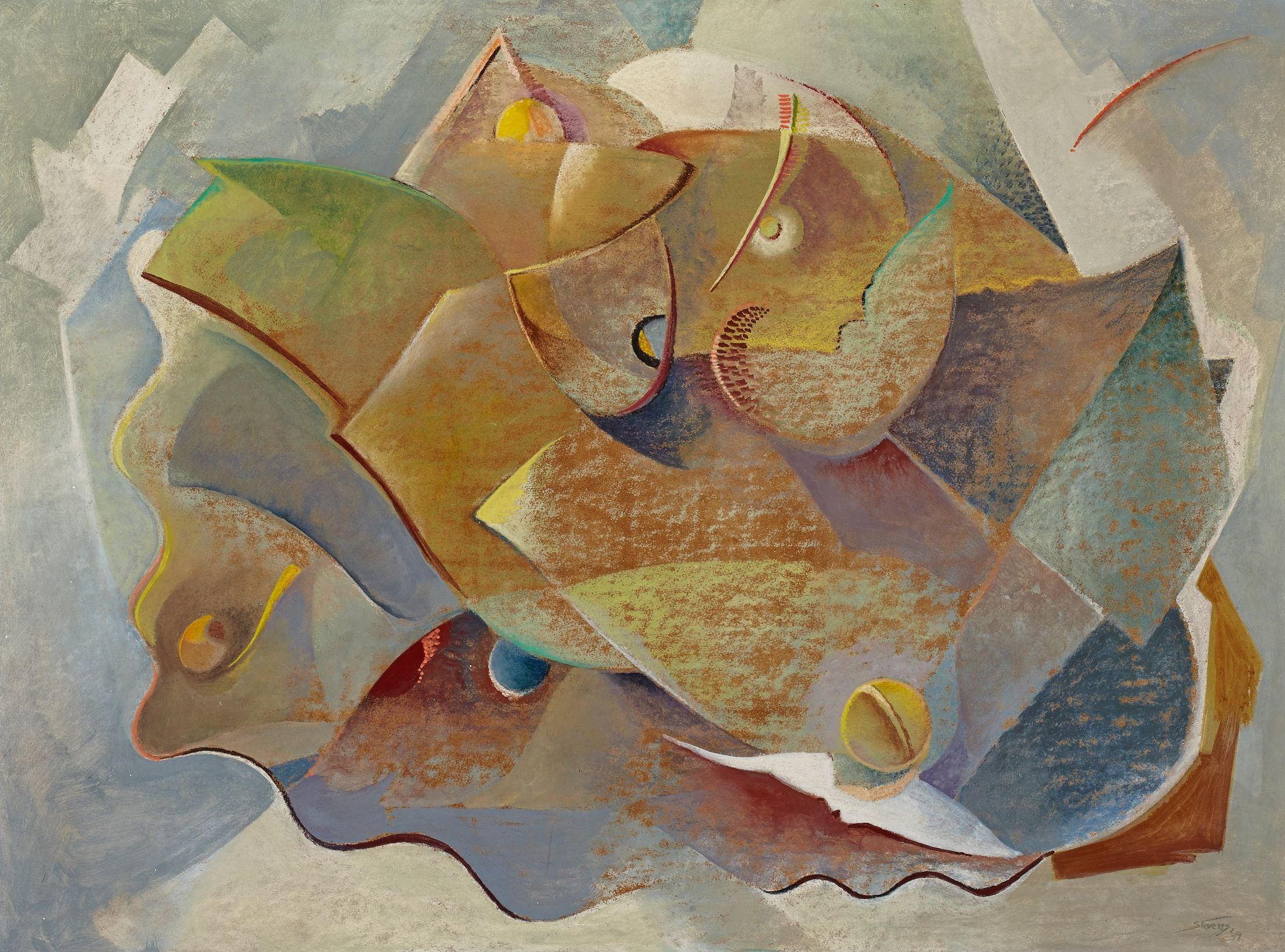
Winged Form by Will Henry Stevens (1939, tempera and oil on paper, mounted on canvas, 26 x 35 in, Indianapolis Museum of Art)
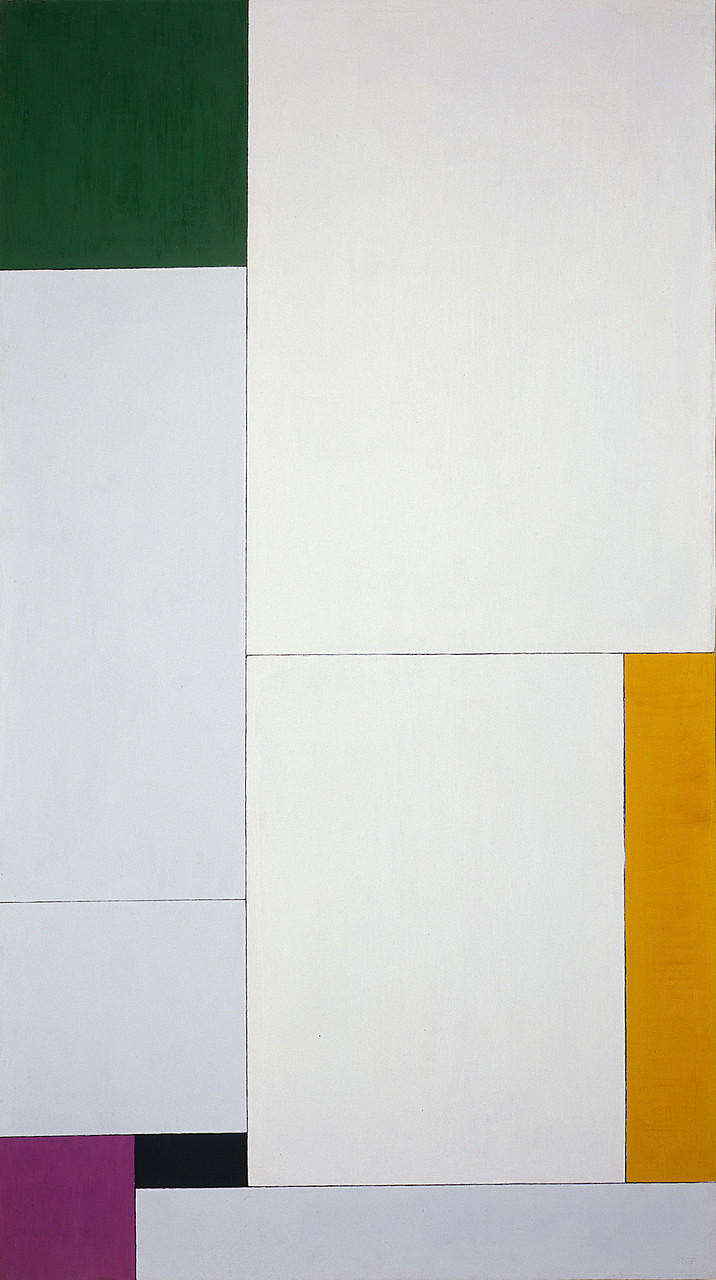
Composition Derived from the Equation with Green, Orange, Violet (Black) by Georges Vantongerloo (1930, Oil on Canvas, 119.4 x 68.2 cm, Guggenheim Museum, New York)
I leave it as an exercise to the reader to determine how this painting is derived from the stated equation.
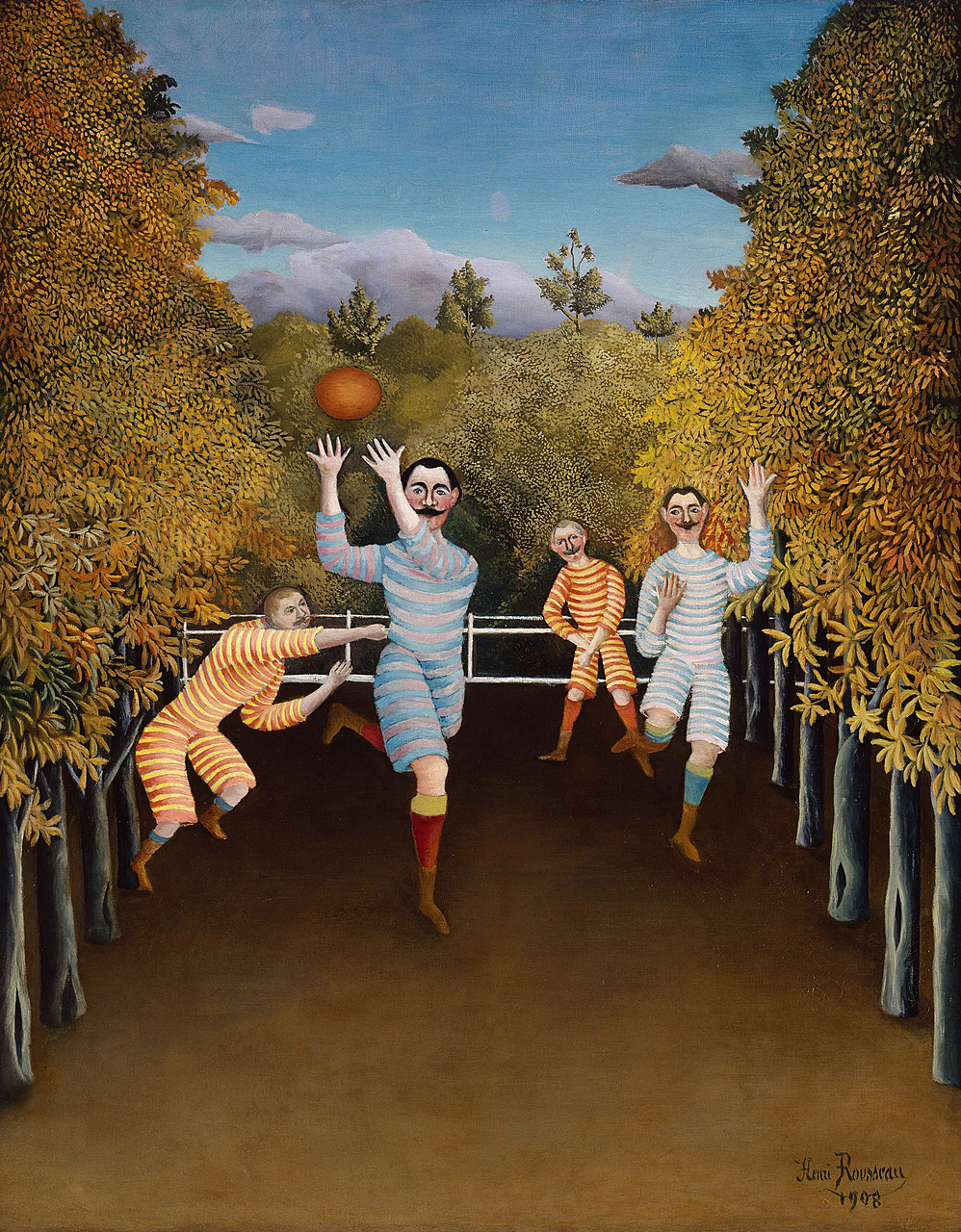
The Football* Players (Les joueurs de football) by Henri Rousseau (1908, Oil on Canvas, 100.3 x 81.1 cm, Guggenheim Museum, New York)
(Obviously it’s Rugby Football…)
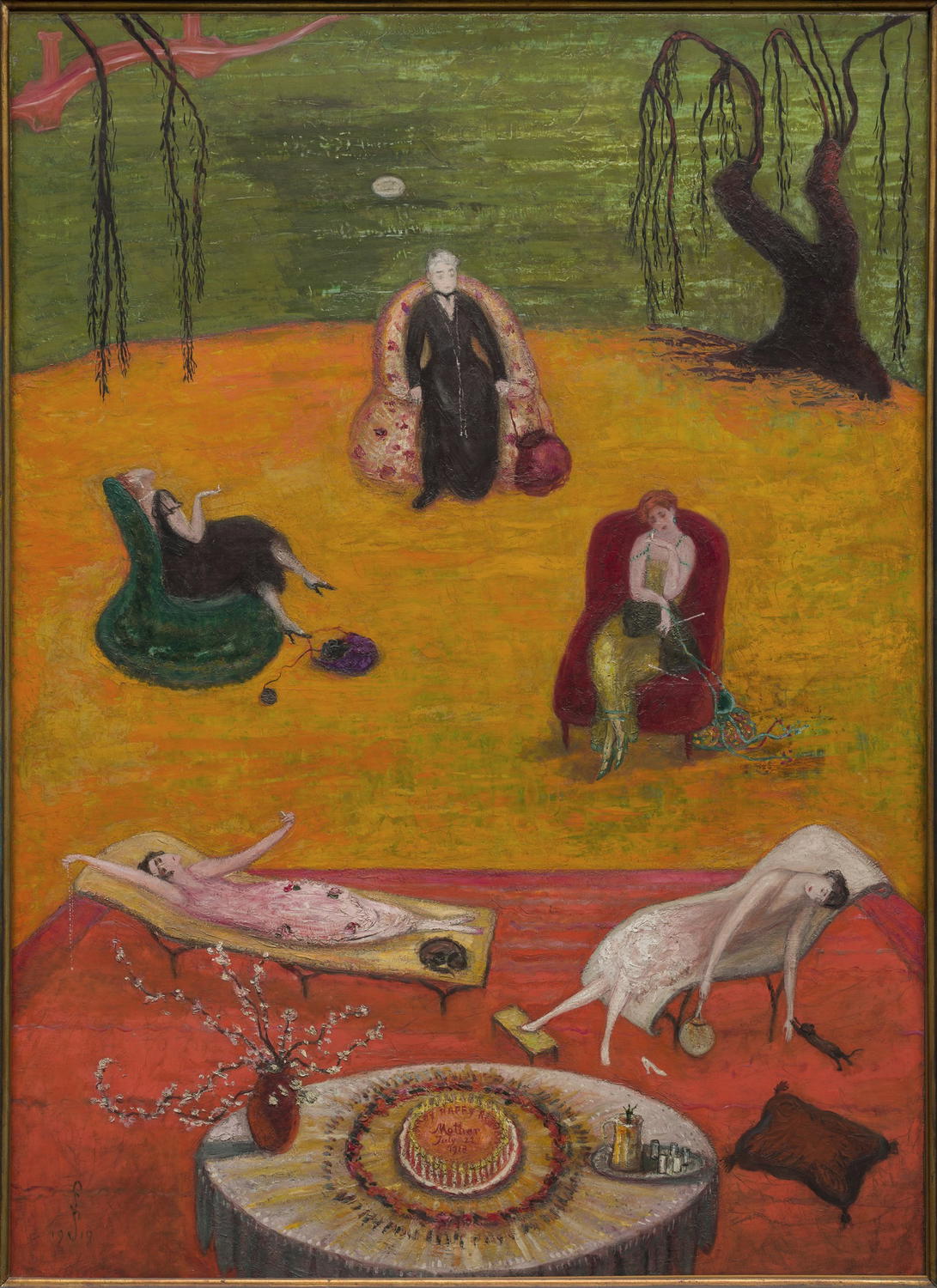
Heat by Florine Stettheimer (1919, Oil on Canvas, 127 x 92.7 cm, Brooklyn Museum, New York)
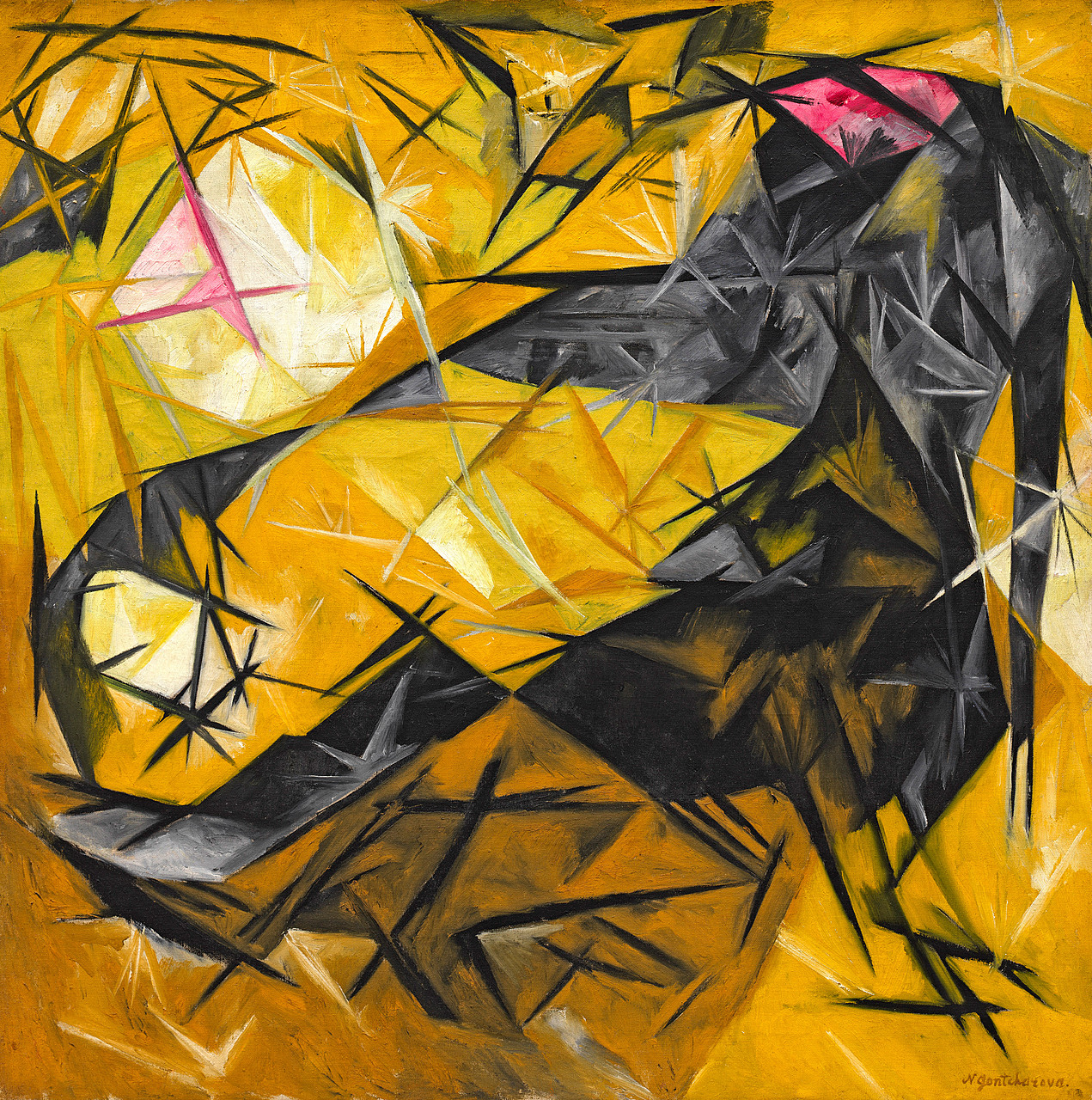
Cats (Rayist percep. in rose, black, and yellow) by Natalia Goncharova (1913, Oil on Canvas, 85.1 x 85.7 cm, Guggenheim Museum, New York).
This is a Rayist (or Rayonist) composition in which the artist tries to capture rays of light reflected off objects in the material world. Dynamic lines are added to suggest crystalline forms and the movement of light and energy. The style was influenced by scientific discoveries on the discovery of X-rays and radioactivity suggesting a reality beyond the direct perception of the naked eye.
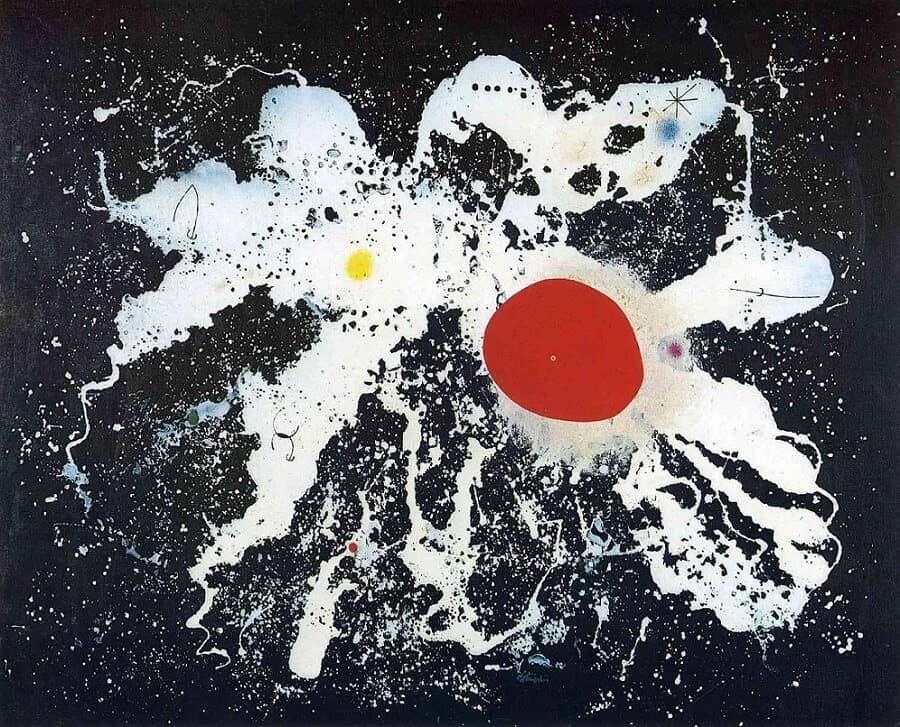
The Red Disk by Joan Miró (1960, Oil on Canvas, 45.7 × 54.9 cm, New Orleans Museum of Art).
From here:
Set against a dark blue, almost black surface, a white splotch of paint has been hurled out impulsively, and loses itself in innumerable spots and spatters, a cosmic gesture thrust against the empty void of nothingness – almost a metaphor of the artist’s creative activity. Some spots of colour flare up among this galaxy of creativity, of which the largest and most irregular is the red one which gave the painting its title. Minute symbols are scattered around the edges of the entire constellation – stars of hair and little hooks which give this action painting a new poetic dimension and connect it unmistakably with Miro’s world of symbols.
Following yesterday’s post about the 1926 Irish Census I fell down a metaphorical rabbit hole following a request from a former colleague (who happens to be Jewish) to help find a relative of his who lived in Dublin at the time of the census. I found the person, which was nice, but was then sent this article about an unrelated lady called Estella Solomons who was on the rebel side in the Easter Rising and helped the cause by hiding weapons in her garden. It turns out that there was a significant Jewish presence in Dublin back then. In the North Side, around Portobello, there was an area dubbed ‘Little Jerusalem’.
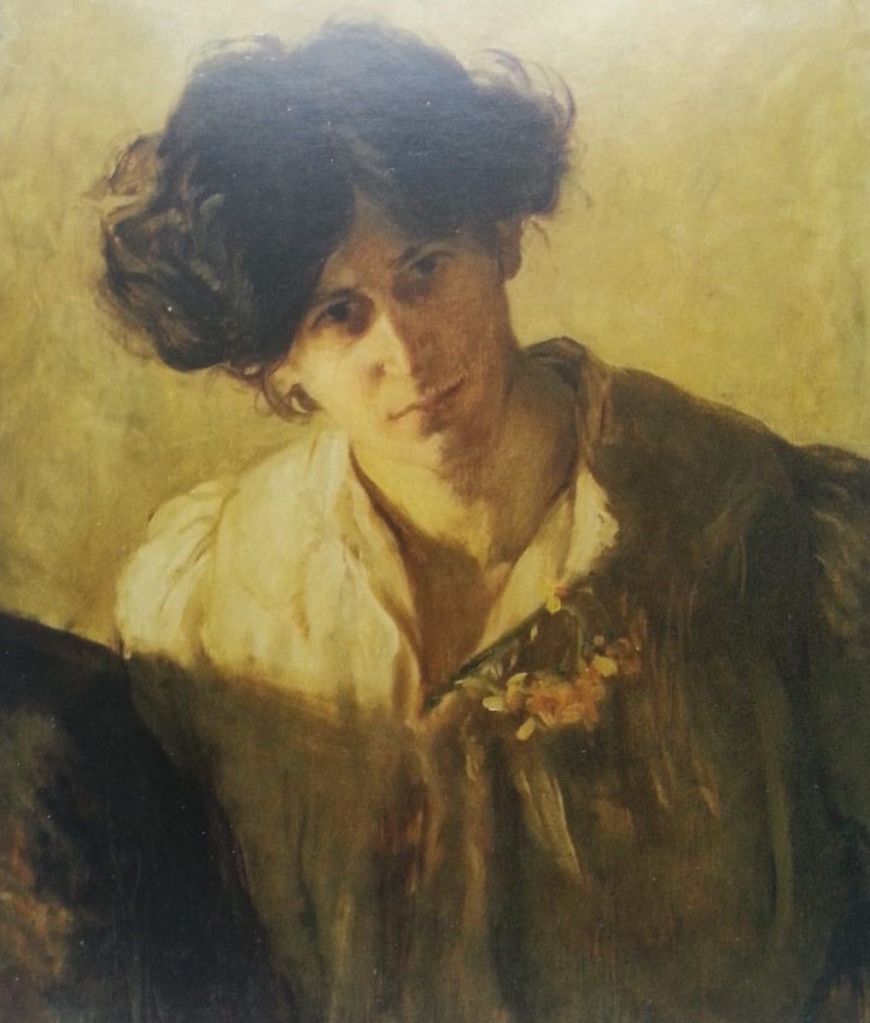
I hadn’t heard of Estella Solomons before yesterday but she was a significant artist whose work was featured in an exhibition at the National Gallery in Dublin in 2022 (which I did not see). There is also a Wikipedia page about her. I found the above self-portrait online. I find it very striking.
Estella Solomons was born in 1882 and died in 1968 at the age of 86. She was 34 at the time of the Easter Rising and would have been 44 at the time of the 1926 census. I did find her in the online census but her age is recorded as 40. She married the poet Seumas O’Sullivan in 1926 but she is listed as “single” on the census form, so presumably they married later in the year.
There are two other women at her 1926 address, both servants, so she was obviously quite well off, but no sign of her husband.
More surprisingly Estella’s sex is given in the 1926 census as Male. She is in the 1911 census too, but recorded there as Female. I did consider the possibility that she might have been living as a man, but that does not fit with other details of her life. I think it is just a mistake. Such records are not entirely free from errors.
I think this an example of the sort of confusion historians have to contend with when looking at historical documents!
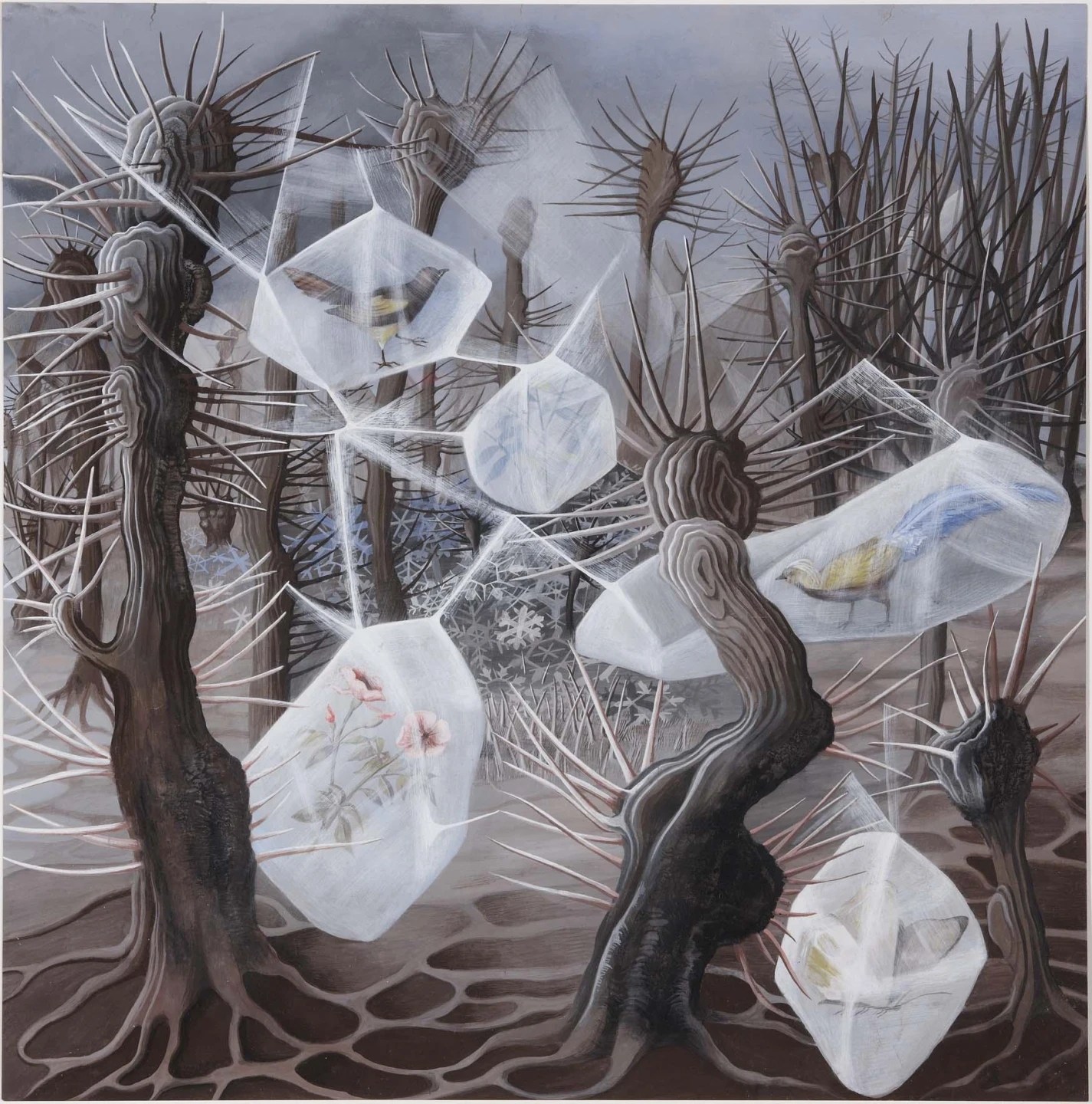
Alegoría del Invierno (Allegory of Winter) by Remedios Varo Uranga, 1948, gouache on paper, 44 ×44 cm, Museo Nacional Centro de Arte Reina Sofía, Madrid, Spain.
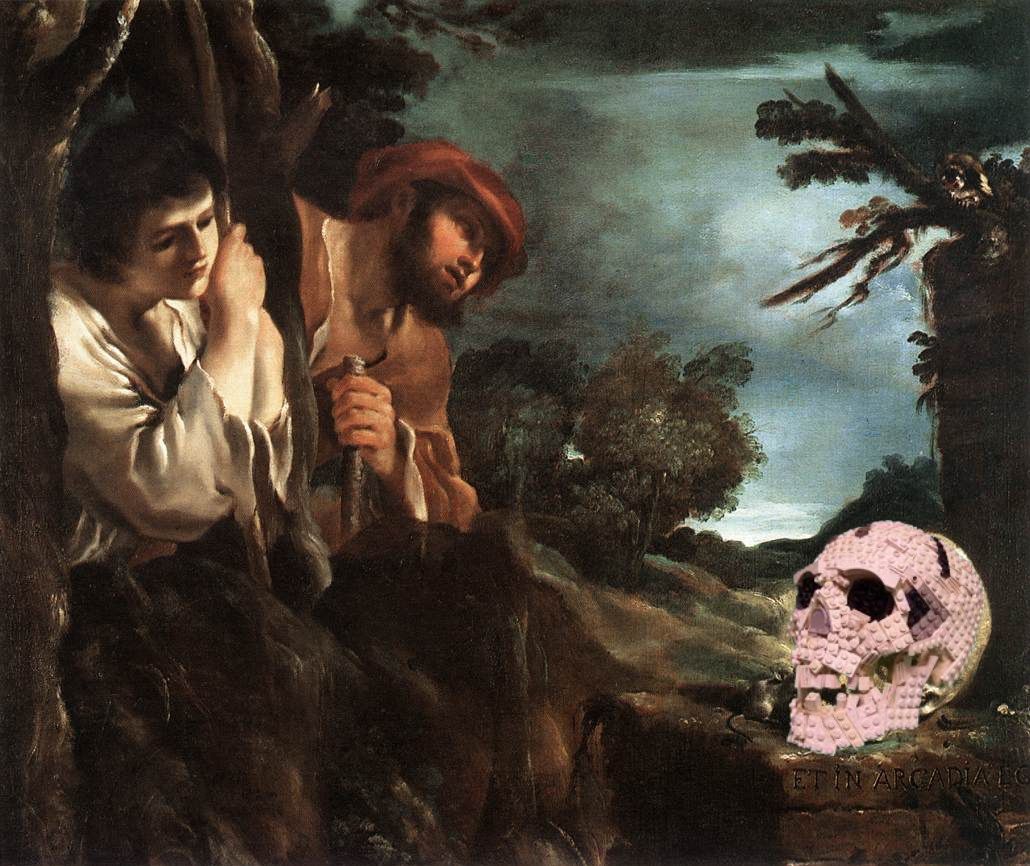
Posted with apologies to the Italian Baroque artist Giovanni Francesco Barbieri (Guercino) on whose original Et in Arcadia Ego this is based.


