Archive for the Biographical Category

You Spin Me Right Round

Posted in Biographical, Music with tags on October 25, 2016 by telescoper

News yesterday of the death, at the age of 57, of Pete Burns reminded me of this number from 1985 by Dead or Alive. This seemed to be playing every time I went to a club in those days and is thus a kind of theme song for happy times, now lost forever.

R.I.P. Pete Burns (1959-2016)

50 Years of the Astronomy Centre at the University of Sussex

Posted in Biographical, Education, The Universe and Stuff with tags , , , , , on October 18, 2016 by telescoper

On Saturday (15th October) I was back in Brighton for the first time since I left my job there at the end of July. The occasion was a very nice lunch party to celebrate 50 years of the Astronomy Centre at the University of Sussex, which started properly in 1966. It was a pleasant occasion, and great to have the chance to catch up with some people I haven’t seen for far too long. I had two stints in the Astronomy Centre: once as a student then postdoc from 1985 to 1990, and the other from 2013 to 2016 when I was Head of the School of which the Astronomy Centre is part. I had a lot more time to do research in the first incarnation than in the second!

Quite a few people present hadn’t realised I was no longer working at Sussex, which led to one or two slightly awkward conversations, but I was thankfully very far from being the centre of attention.

After the lunch itself we had short speeches from various alumni of the Astronomy Centre: esteemed science writer John Gribbbin (who was one of its first MSc students in 1966); Lord Martin Rees (who was briefly a Professor at Sussex, before he returned to Cambridge to take up the Plumian Professorship); John Barrow (who was my supervisor while I was there); Carlos Frenk (who was a postdoctoral researcher when I arrived in September 1985, but who left to take up a lectureship in Durham at the end of that year so we overlapped only for a short time); Andrew Liddle (who arrived near the end of my stay and was there for 22 years altogether, leaving at the end of 2012 to take up a post in Edinburgh); and Peter Thomas (current Director of the Astronomy Centre).

When I arrived in 1985 there were only four permanent faculty in the Astronomy Centre itself – Roger Tayler, Leon Mestel, John Barrow and Robert Smith – but research there was thriving and it was a great environment to work in. I count myself very lucky at having made such a good choice of a place to do my PhD DPhil. Leon and Robert both worked on stellar astrophysics, but after Leon’s retirement the centre increasingly focussed on cosmology and extragalactic astrophysics, which remains the case today. Roger Tayler sadly passed away in 1997, but Leon is still around: he is 89 years old and now lives in Cambridge.

Those present at the lunch were given a booklet featuring around 50 academic papers or other research “highlights”(e.g. the launch of Planck), approximately one for each year of the Astronomy Centre, chosen to be the “best” of that year. Each page was also shown as a slide during the lunch. I was thrilled to see that two of my papers (from 1987 and 1991 respectively) made it into the collection. The second one was published after I’d left Sussex, but I definitely did the work on it and submitted it while an employee of the Astronomy Centre. Andrew Liddle and John Barrow have the largest number of “greatest hits”, but the most famous paper is probably the classic “DEFW” which won Carlos Frenk and his collaborators the Gruber Prize about five years ago.

The book also contains various bits of interesting bibliometric information, such as this, which shows that the variation in the productivity of the Astronomy Centre over time.

us-astronomy-50-powerpoint

Anyway, for those who are interested, the whole collection of slides can be viewed here:

Thanks to Seb Oliver and the rest of the Astronomy Centre for organizing this very enjoyable event – and for sending me the slides! Here’s to the next 50 years of Astronomy at the University of Sussex!


Those “Light-Bulb” Moments..

Posted in Biographical, The Universe and Stuff with tags , , , , , on October 11, 2016 by telescoper

Last week I read a piece in the October edition of Physics World (which you can read here, but only if you have a subscription) about whether breakthroughs in physics occur through sudden “light-bulb moments”, or are more often the result of solid hard graft? The piece includes some interesting comments from distinguished scientists about their own “Eureka” moments, which I’m sure will resonate with many researchers, not only physicists. Incidentally, the article refers to such moments as “claritons”, a word I’ve never heard before, presumably a soliton of clarity…

I’m pretty sure that everyone who works in science – even the eminent individuals interviewed for the Physics World piece – has spent a large part of their time “stuck”. I know I have. In the long run it’s probably good to go through such periods as I think they’re essential for intellectual development, but they’re undoubtedly extremely frustrating at the time. How you get “unstuck” is a very mysterious process. I’m not a neuroscientist, but it seems to me that when you get really immersed in, say, a research problem, your subconscious brain gets drawn into what you think is a fully conscious process, to the extent that even when you’re apparently not thinking about something you really are. I’ve had ideas come to me in all kinds of weird situations: watching ducks paddling on a pond, listening to music, walking in a park, and even pushing a trolley around a supermarket. Often it seems that it’s precisely when you’re not thinking that you have your best ideas. It’s not always clear what acted as the trigger, but and when it is it is often something quite abstract. In the case I mentioned of the ducks on the pond it was just a question of thinking about reference frames. It was a nudge in the right direction, but I still had to do quite a lot of work to finish the calculation. Come to think of it, it’s usually at that conceptual level that such things happen rather than in the detailed working, at least in my case.

The Physics World piece also talks about ideas coming through dreams. That has happened to me too, but I think it’s basically the same phenomenon that I’ve just discussed. It seems to me that dreams are a product of your brain sorting through recent events or experiences and trying to make sense of them in terms of others it has filed away. This can help with a research problem by flagging up a connection with something else hidden away. I can remember at least two occasions when I’ve woken up from a dream with an exact understanding of what I’d been doing wrong and how I could fix it. It’s great to wake up in the morning with that kind of feeling!

I know it’s wrong to draw inferences about other people from one’s own particular experiences, but I do feel that there are general lessons. One is that if you are going to be successful at research you have to have a sense of determination that borders on obsession. You have to immerse yourself in it and be prepared to put long hours in. When things are going well you will be so excited that you will find it as hard to stop as it is when you’re struggling. I’m writing as a physicist, but I imagine it is the just same for other disciplines.

The other, equally important, lesson to be learned is that it is essential to do other things as well as doing science. Being “stuck” on a problem is an essential part of mathematics or physics research, but sometimes battering your head against the same thing for days on end just makes it less and less likely you will crack it. The human brain is a wonderful thing, but it can get stuck in a rut. One way to avoid this happening is to have more than one thing to think about.

I’ve lost count of the number of times I’ve been stuck on the last clue in a crossword. What I always do in that situation is put it down and do something else for a bit. It could even be something as trivial as making a cup of tea, just as long as I don’t think about the clue at all while I’m doing it. Nearly always when I come back to it and look at it afresh I can solve it. I have a large stack of prize dictionaries to prove that this works!

It can be difficult to force yourself to pause in this way. I’m sure that I’m not the only physicist who has been unable to sleep for thinking about their research. I do think however that it is essential to learn how to effect your own mental reboot. In the context of my research this involved simply turning to a different research problem, but I think the same purpose can be served in many other ways: taking a break, going for a walk, playing sport, listening to or playing music, reading poetry, doing a crossword, or even just taking time out to socialize with your friends. Time spent sitting at your desk isn’t guaranteed to be productive, and you should never feel guilty about taking a thinking break.

I’d be interested to receive examples of other “light-bulb” moments through the comments box. I’d also welcome comments from neuroscientists on my extremely naïve comments about how the brain works in such situations.

P.S. It’s interesting how the light-bulb has become so strongly associated with the sort of brainwave discussed in this piece. Here’s a short discussion.


Variations on the Theme of Vegetables

Posted in Biographical with tags , , , , , , on October 7, 2016 by telescoper

When at school I had an English teacher who encouraged us to practice writing skills through a series of exercises that required us to write a piece that successfully connected two different events or ideas. I found those exercises very useful and I sometimes try the same thing when I’m stuck for something to write about on this blog. So here’s a hamfisted attempt to shoehorn two things that happened this week into one blog post.

One of the first things I did when I moved back to Cardiff in the summer was to reinstate weekly deliveries of fresh organically-gown vegetables direct from a farm via a company called Riverford. I blogged about the the reasons for doing this some years ago, including the following:

I have a standing order for a small box of vegetables every week costing about £10. The composition varies from week to week and with the time of year. The company does email and post on its website the contents of the following week’s boxes, but I generally don’t look at it. When the box arrives, it’s usually a mixture of staples (potatoes, carrots, onions, etc) plus things that are not so familiar, and often things that I’ve often never cooked before.  If it hadn’t been for the veggie box, I would probably never have found out about how to cook chard, romanesco, jerusalem artichokes and celeriac. I look forward to these surprises. Not knowing exactly what’s coming forces me to cook new things, and if I don’t know how to cook them there’s always google.

Here’s an example here from this week’s box:

romanesco

This extraordinary fractal object is Romanesco. It’s obviously related to the cauliflower, but has a much firmer texture and has a distinctive “nutty” flavour. I am looking forward to cooking and eating this at the weekend!

Another reason for resuming the veggie box service (still only £10, by the way) is that I’ve had medical advice to increase my consumption of fresh vegetables, especially those rich in Vitamin K (which includes the various Brassica that includes Romanesco, but also cabbages, broccoli, kale, spinach, chard and a host of other things that I really enjoy eating anyway.

This brings me to another topic that has been on my mind this week. A chance conversation with a friend who happens to be a GP revealed that she’s seen a worrying upturn in the number of (male) university students presenting with symptoms of scurvy, an extremely unpleasant and potentially life-threatening condition caused by a deficiency of Vitamin C. University students are not famed for their healthy eating habits, and the prevalence of fast-food outlets combined with inadequate knowledge of even basic cooking techniques among young men is probably responsible for this regrettable phenomenon. The human body is not able to make its own Vitamin C so we have to make sure we eat enough food containing it. However, the recommended daily intake is actually rather small and is easily met by a modest intake of fruit and vegetables. Sailors on a diet of hard tack and salt pork had an excuse for developing scurvy, but there’s no reason at all for anyone – even students – to suffer the same fate by living on crisps and kebabs.

Anyway, if you work in a university I hope you’ll consider passing this advice onto your students. Indeed if you’re at a proper university that still does small-group teaching in tutorials, why not offer your students some fresh fruit or orange juice? Just a thought.

Relocation, Relocation, Relocation

Posted in Biographical, Uncategorized with tags , on September 28, 2016 by telescoper

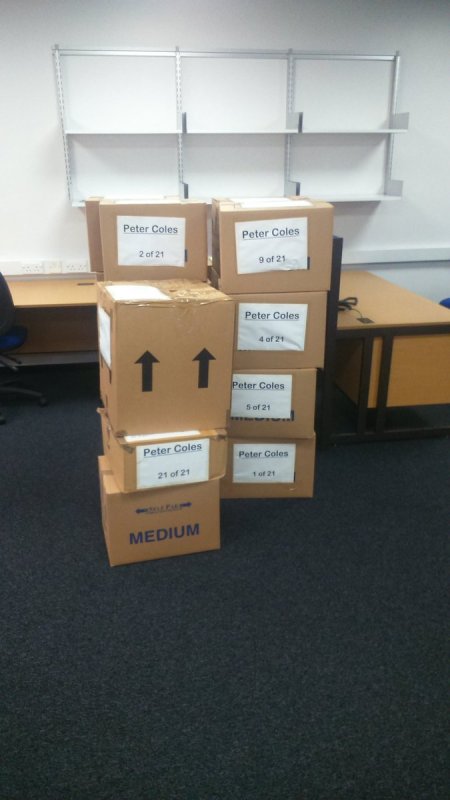
It seems my relocation to Cardiff is now more-or-less complete. The boxes of stuff from my old office at the University of Sussex arrived on Monday and I’ve been gradually stacking the books on the shelves in the rather large office to which I’ve been assigned:

relocation

In fact the removals people caught me on the hop, as they said they would phone me about an hour before they were due to arrive but didn’t do so. I was quite surprised to see all the boxes already there when I came in on Monday!

I was planning to have all this delivered a while ago to my house, because I didn’t think I was going to be given an office big enough to accommodate much of it. But then I had to delay the removal because my visit to hospital was put back so I wouldn’t have been able to receive it. Then I found out I had plenty of space at the University so I decided to have it all moved here.


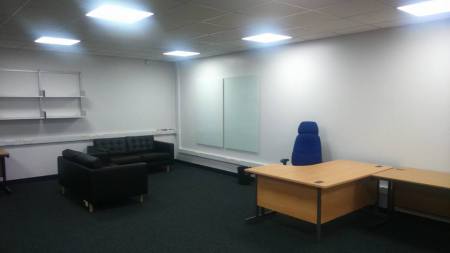
office

I’ll be sharing this space with other members of the Data Innovation Research Institute, but for the time being I’m here on my own. The books make it look a bit more “lived-in” than it did when I arrived, though the mini-bar still hasn’t arrived yet.

It’s actually about four years since I was appointed to my previous job at Sussex; I moved there from Cardiff in early 2013. It’s a bit strange being back. I didn’t imagine when I started at Sussex that I would be returning relatively soon, but then I didn’t imagine a lot of the things that would lead to my resignation. From what I’ve heard, many of those things have been getting even worse since I left. I think I’ll keep a discussion of all that to myself, though, at least until I write my memoirs!


My First Contribution to the Scientific Literature.

Posted in Biographical, The Universe and Stuff on September 26, 2016 by telescoper

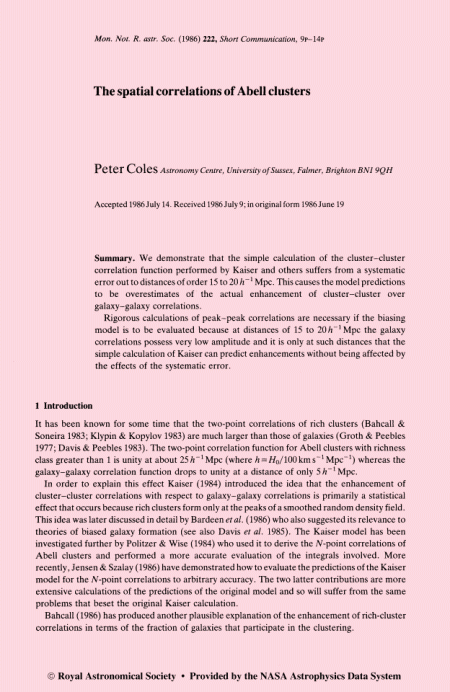
I suddenly realized yesterday that I had forgotten to mark the important anniversary of an event that had immense impact on the field of cosmology. On 15th September 1986, just over thirty years ago, my first ever scientific paper was released into the public domain.

Here is the front page:

mnras_paper

This was before the days of arXiv so there isn’t a copy on the preprint server, but you can access the whole article here on NASA/ADS.

I know it’s a shitty little paper, but you have to start somewhere! I’m particularly sad that, looking back, it reads as if I meant to be very critical of the Kaiser (1984) paper that inspired it. I still think that was a brilliant paper because it was based on a very original idea that proved to be enormously influential. The only point I was really making was that a full calculation of the size of the effect Nick Kaiser had correctly identified was actually quite hard, and his simple approximation was of limited quantitative usefulness. The idea was most definitely right, however.

I was just a year into my PhD  DPhil when this paper came out, and it wasn’t actually on what was meant to be the subject of my thesis work (which was the cosmic microwave background), although the material was related. My original version of this paper had my supervisor’s name on it, but he removed his name from the draft (as well as making a huge number of improvements to the text). At the time I naturally assumed that he took his name off because he didn’t want to be associated with such an insignificant paper, but I later realized he was just being generous. It was very good for me to have a sole-author paper very early on. I’ve taken that lesson to heart and have never insisted – like some supervisors do – in putting my name on my students’ work.

Seeing this again after such a long time brought back memories of the tedious job of making and distributing hard copies of preprints when I submitted the paper and sending them by snail mail to prominent individuals and institutions. Everyone did that in those days as email was too limited to send large papers. Nowadays we just shove our papers on the arXiv, complete with fancy graphics, and save ourselves a lot of time and effort.

I was actually surprised that quite a few recipients of my magnum opus were kind enough to respond in writing. In particular I got a nice letter from Dick Bond which began by referring to my “anti-Kaiser” preprint, which made me think he was going to have a go at me, but went on to say that he found my paper interesting and that my conclusions were correct. I was chuffed by that letter as I admired Dick Bond enormously (and still do).

Anyway, over the intervening 30 years this paper has received the princely total of 22 citations -and it hasn’t been cited at all since 2000 – so its scientific impact hardly been earth-shattering. The field has moved on quickly and left this little relic far behind. However, there is one citation I am proud of.

The great Russian scientist Yacob Borisovich Zel’dovich passed away in 1987. I was a graduate student at that time and had never had the opportunity to meet him. If I had done so I’m sure I would have found him fascinating and intimidating in equal measure, as I admired his work enormously as did everyone I knew in the field of cosmology. Anyway, a couple of years after his death a review paper written by himself and Sergei Shandarin was published, along with the note:

The Russian version of this review was finished in the summer of 1987. By the tragic death of Ya. B.Zeldovich on December 2, 1987, about four-fifths of the paper had been translated into English. Professor Zeldovich would have been 75 years old on March 8, 1989 and was vivid and creative until his last day. The theory of the structure of the universe was one of his favorite subjects, to which he made many note-worthy contributions over the last 20 years.

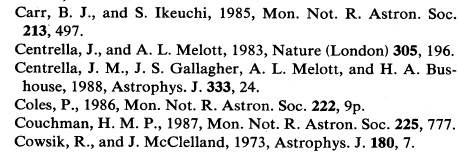
As one does if one is vain I looked down the reference list to see if any of my papers were cited. I’d only published the one paper before Zel’dovich died so my hopes weren’t high. As it happens, though, my very first paper (Coles 1986) was there in the list:

reference

End of Summer, Start of Autumn

Posted in Biographical, Cricket with tags , , , on September 22, 2016 by telescoper

It’s a lovely warm sunny day in Cardiff today, but it is nevertheless the end of summer. The autumnal equinox came and went today (22nd September) at 14.21 Universal Time (that’s 15.21 British Summer Time), so from now on it’s all downhill (in that the Subsolar point has just crossed the equator on the southward journey it began at the Summer Solstice).

Many people adopt the autumnal equinox as the official start of autumn, but I go for an alternative criterion: summer is over when the County Championship is over. It turns out that, at least for Glamorgan, that coincided very closely to the equinox. Having bowled out Leicestershire for a paltry 96 at Grace Road in the first innings of their final Division 2 match, they went on to establish a handy first-innings lead of 103. They were then set a modest second-innings target of 181 to win. Unfortunately, their batting frailties were once again cruelly exposed and they collapsed from 144 for 4 to 154 all out and lost by 26 runs. That abject batting display sums up their season really.

Meanwhile, in Division 1 of the Championship, Middlesex are playing Yorkshire at Lord’s, a match whose outcome will determine who wins the Championship. Middlesex only need to draw to be champions, but as I write they’ve just lost an early wicket in their second innings, with Yorkshire having a first-innings lead of 120, so it’s by no means out of the question that Yorkshire might win and be champions again.

Another sign that summer is over is that the new cohort of students has arrived. This being “Freshers’ Week” there have been numerous events arranged to introduce them to various aspects of university life. Lectures proper being in Monday, when the Autumn Semester begins in earnest. I don’t have any teaching until the Spring.

This time of year always reminds me when I left home to go to University, as thousands of fledgling students have just done. I went through this rite of passage 34 years ago, getting on a train at Newcastle Central station with my bags of books and clothes. I said goodbye to my parents there. There was never any question of them taking me in the car all the way to Cambridge. It wasn’t practical and I wouldn’t have wanted them to do it anyway. After changing from the Inter City at Peterborough onto a local train, me and my luggage trundled through the flatness of East Anglia until it reached Cambridge.

I don’t remember much about the actual journey, but I must have felt a mixture of fear and excitement. Nobody in my family had ever been to University before, let alone to Cambridge. Come to think of it, nobody from my family has done so since either. I was a bit worried about whether the course I would take in Natural Sciences would turn out to be very difficult, but I think my main concern was how I would fit in generally.

I had been working between leaving school and starting my undergraduate course, so I had some money in the bank and I was also to receive a full grant. I wasn’t really worried about cash. But I hadn’t come from a posh family and didn’t really know the form. I didn’t have much experience of life outside the North East either. I’d been to London only once before going to Cambridge, and had never been abroad.

I didn’t have any posh clothes, a deficiency I thought would mark me as an outsider. I had always been grateful for having to wear a school uniform (which was bought with vouchers from the Council) because it meant that I dressed the same as the other kids at School, most of whom came from much wealthier families. But this turned out not to matter at all. Regardless of their family background, students were generally a mixture of shabby and fashionable, like they are today. Physics students in particular didn’t even bother with the fashionable bit. Although I didn’t have a proper dinner jacket for the Matriculation Dinner, held for all the new undergraduates, nobody said anything about my dark suit which I was told would be acceptable as long as it was a “lounge suit”. Whatever that is.

Taking a taxi from Cambridge station, I finally arrived at Magdalene College. I waited outside, a bundle of nerves, before entering the Porter’s Lodge and starting my life as a student. My name was found and ticked off and a key issued for my room in the Lutyens building. It turned out to be a large room, with a kind of screen that could be pulled across to divide the room into two, although I never actually used this contraption. There was a single bed and a kind of cupboard containing a sink and a mirror in the bit that could be hidden by the screen. The rest of the room contained a sofa, a table, a desk, and various chairs, all of them quite old but solidly made. Outside my  room, on the landing, was the gyp room, a kind of small kitchen, where I was to make countless cups of tea over the following months, although I never actually cooked anything there.

I struggled in with my bags and sat on the bed. It wasn’t at all like I had imagined. I realised that no amount of imagining would ever really have prepared me for what was going to happen at University.

I  stared at my luggage. I suddenly felt like I had landed on a strange island, and couldn’t remember why I had gone there or what I was supposed to be doing.

After 34 years you get used to that feeling…


The Byker Grove Connection

Posted in Biographical, History, Television with tags , , , on September 21, 2016 by telescoper

One of the interesting things about having a blog that has been running for some time is that old posts continue to attract comments even after many years. Some of the posts that have been getting comments recently are about my early childhood growing up in Benwell which is to the West of Newcastle upon Tyne; you can find a couple of examples here and here. The place has changed beyond all recognition since I was a kid, which I suppose accounts for the fact that people are googling about looking for memories of what it used to be like.

Here is a Google Earth rendition of the area I grew up in..

benwell

We used to live in one of the two cottages right next to Pendower School, which was just off Fox and Hounds Lane.  You can see road that led to the front of our house, just between the text of “Benwell Village” and “Fox and Hounds Lane”.  The cottages and school are now demolished, and a housing development stands where they were. That’s all in the middle of the top of the image.

My Dad used to run a  shop which was was on the corner of Whickham View and Delaval Road, about halfway down the image to the left. The green strips to the East of Delaval Road and running parallel to it were all terraced when I lived there. Virtually everything has now gone, but it was a nice little community with old-fashioned little shops.

What drew my attention recently however, is that there is a location (to the top left of the image) marked Byker Grove., right next to where I used to live. When I was a lad that was  Benwell Towers, which we were told was haunted – presumably to scare us off trying to get in. There was a rather scary and formidable fence separating the grounds of Benwell Towers from the School, but it was not unknown for kids to climb it…

There have been buildings on the site of Benwell Towers since the 13th Century. A tower house was built there in 1221 and stood until it was demolished to make way for the current, much larger, building which was constructed in 1831. The old building was for a time owned by a branch of the Shafto family, of Bobby Shafto fame. At the time of the construction of the new building, Benwell hadn’t been engulfed by the westward sprawl of Newcastle itself and was very much a separate village. “Benwell Village” still felt like a distinct, self-contained community, when I was growing up there in the Sixties.

The “new” Benwell Towers was, for a time, the residence of the Bishop of Newcastle, but when I lived there it was being used as a base for the National Coal Board and used primarily as the Headquarters  of the Mine Rescue Service. There were some pits still open in those days.  When the Coal Board didn’t need it any more, it became a tacky nightclub called The Mitre

That’s all I knew about the place as I never really visited it again after going to University . But a chance comment on this blog followed by a Google Search revealed that when The Mitre closed the building was used to film the long-running TV series Byker GroveI knew about the programme, but had always assumed it was filmed in Byker (which is in the East End of Newcastle) rather than Benwell (which is in the West End). It certainly never occurred to me that it was made just a hundred yards from where I grew up. You live and learn.


Eight Years In The Dark

Posted in Biographical with tags on September 15, 2016 by telescoper

8th-birthday-badge-pink
When I logged onto WordPress today  I received a message that it was the 8th anniversary of my registration with them as a blogger, which is when I took my first step into the blogosphere; that was way back on 15th September 2008. I actually wrote my first post that day too. Unfortunately I didn’t really know what I was doing on my first day at blogging – no change there, then –  and I didn’t actually manage to figure out how to publish this earth-shattering piece. It was only after I’d written my second post that I realized that the first one wasn’t actually visible to the general public because I hadn’t pressed the right buttons, so the two appear in the wrong order in my archive.

I’d like to take this opportunity to send my best wishes, and to thank, everyone who reads this blog, however occasionally. According to the WordPress stats, I’ve got readers from all round the world, including one in the Vatican! If you’re interested in statistics then, as of 14.00 BST today, I have published 3,343 blog posts, and have received 2,853,105 hits altogether; I get an average of about 1200 per day, but this varies in a very erratic fashion. The greatest number of hits I have received in a day is 8,864 (at the peak of the BICEP2 controversy). There have been 24,907 comments published on here and 1,556,259  rejected. Most of the rejected comments were from automated spam bots, but a small number have been removed for various violations, usually for abuse of some kind. Yes, I do get to decide what is published. It’s my blog!

While I am on the subject of comments, I’ll just repeat here my comments policy as stated on the home page of this blog:

Feel free to comment on any of the posts on this blog but comments may be moderated; anonymous comments and any considered by me to be abusive will not be accepted. I do not necessarily endorse, support, sanction, encourage, verify or agree with the opinions or statements of any information or other content in the comments on this site and do not in any way guarantee their accuracy or reliability.

It does mean a lot to me to know that there are people who find my ramblings interesting enough to look at, and sometimes even to come back for more, so I’d like to take this opportunity to send my best wishes to all those who follow this blog and especially those who take the trouble to comment on it in such interesting and unpredictable ways!


Back On Green Dolphin Street

Posted in Biographical, Jazz with tags , , , , , on September 12, 2016 by telescoper

I was listening to this wonderful track yesterday and couldn’t resist reposting a piece I wrote I wrote about it over 7 years  ago. If I were ever to be asked on one of those programmes where you have to pick examples of your favourite music, this would probably be the first I’d write on my list.

Years ago in 1980, when the great pianist Bill Evans passed away suddenly, Humphrey Lyttelton paid tribute to him on his radio programme “The Best of Jazz” by playing a number of tracks featuring him. I didn’t really know much about Bill Evans at the time – I was only 17 then – but one track that Humph chose has been imprinted on my mind ever since, and it’s one of those pieces of music that I listen to over and over again.

The track is On Green Dolphin Street, as recorded in 1958 by the great Miles Davis sextet of the time that featured himself on trumpet, John Coltrane on tenor sax, Julian “Cannonball” Adderley on alto sax, Jimmy Cobb on drums, Paul Chambers on bass and Bill Evans on piano. This is the same band that played on the classic album Kind of Blue, one of the most popular and also most innovative jazz records of all time, which was recorded a bit after the recording of On Green Dolphin Street.  I love Kind of Blue, of course, but I think this track is even better than the many great tracks on that album (All Blues, Flamenco Sketches, Blue in Green, etc). In fact, I’d venture the opinion – despite certainty of contradiction – that this is the greatest Jazz recording ever made.

On Green Dolphin Street was suggested to Miles Davis the band’s leader by the saxophonist Cannonball Adderley. It was the theme tune from a film from the late 1940s. It’s also the title of a more recent very fine novel by Sebastian Faulks.

I think the Miles Davis version demonstrates his genius not only as a musician himself but also as a bandleader. On Green Dolphin Street definitely bears the Miles Davis hallmark, but it also manages to accommodate the very different styles of the other musicians and allows them also to impose their personality on it. This is done by having each solo introduced with a passage with the rhythm section playing a different, less propulsive, 3/4 time behind it. This allows each musician to set out their stall before the superb rhythm section kicks into a more swinging straight-ahead beat  (although it still keeps the 3/4 feel alongside the 4-4, courtesy of brilliant drumming by Jimmy Cobb) and they head off into their own territory. As the soloists hand over from one to the other there are moments of beautiful contrast and dramatic tension, especially – and this is the reason why Humph picked this one in 1980 – when Bill Evans takes over for his solo from Cannonball Adderley. He starts with hesitant single-note phrases before moving into a richly voiced two handed solo fully of lush harmonies. It’s amazing to me to hear how the mood changes completely and immediately when he starts playing, and it always sends shivers down my spine.

Not that the other soloists play badly either. After Bill Evans’s short but exquisite prelude, Miles Davis takes over on muted trumpet, more lyrical and less introspective than in Kind of Blue but still with a moody,  melancholic edge. He’s followed by John Coltrane’s passionately virtuosic solo which floods out of him in an agonized stream which contrasts with Miles’ poised simplicity. By contrast, Cannonball Adderley is jaunty and upbeat, sauntering through his solo up to that wonderful moment where he hands over to the piano. Then Miles Davis takes over again to take them to the conclusion of the piece.

I’m not into League tables for music, but this is definitely fit to put up alongside the greatest of them all…