Archive for the Biographical Category

Back to Cosmology, Data Analysis and Cardiff

Posted in Biographical, The Universe and Stuff with tags , on September 1, 2016 by telescoper

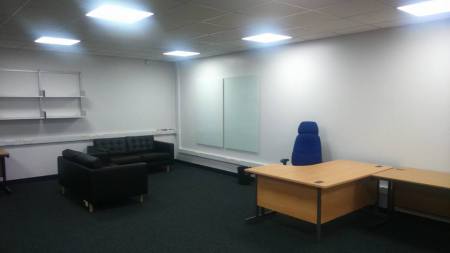
Today is my first day back in the School of Physics and Astronomy at Cardiff University. Although my job title, Professor of Theoretical Astrophysics, is the same as it was when I was here in a previous incarnation it will be quite a different job and I’m going to be located in a different building (though not far from my old office). In fact my office is in a newly refurbished space connected with the Data Innovation Research Institute just on the other side of a car park from my old office. It looks like being an exciting time over the next few months and years as new staff across a range of disciplines join the Institute, expanding its research portfolio from astrophysics (especially gravitational wave research) into biomedical sciences and beyond.

Here’s a little video about the Data Innovation Research Institute, which is about conducting fundamental research into the aspects of managing, analysing and interpreting massive volumes of textual and numerical information:

But for the moment it’s been a day for administrative matters: taking my P45 to the Human Resources Department, getting my new Staff ID card, trying to get myself set up on the University computer network, and so on. Oh, and I’ve agreed to do some teaching in the Spring Semester, a Level 4 module on The Physics of the Early Universe. It will be nice to be teaching some cosmology again!


Collector’s Item

Posted in Biographical, Politics with tags , , on August 21, 2016 by telescoper

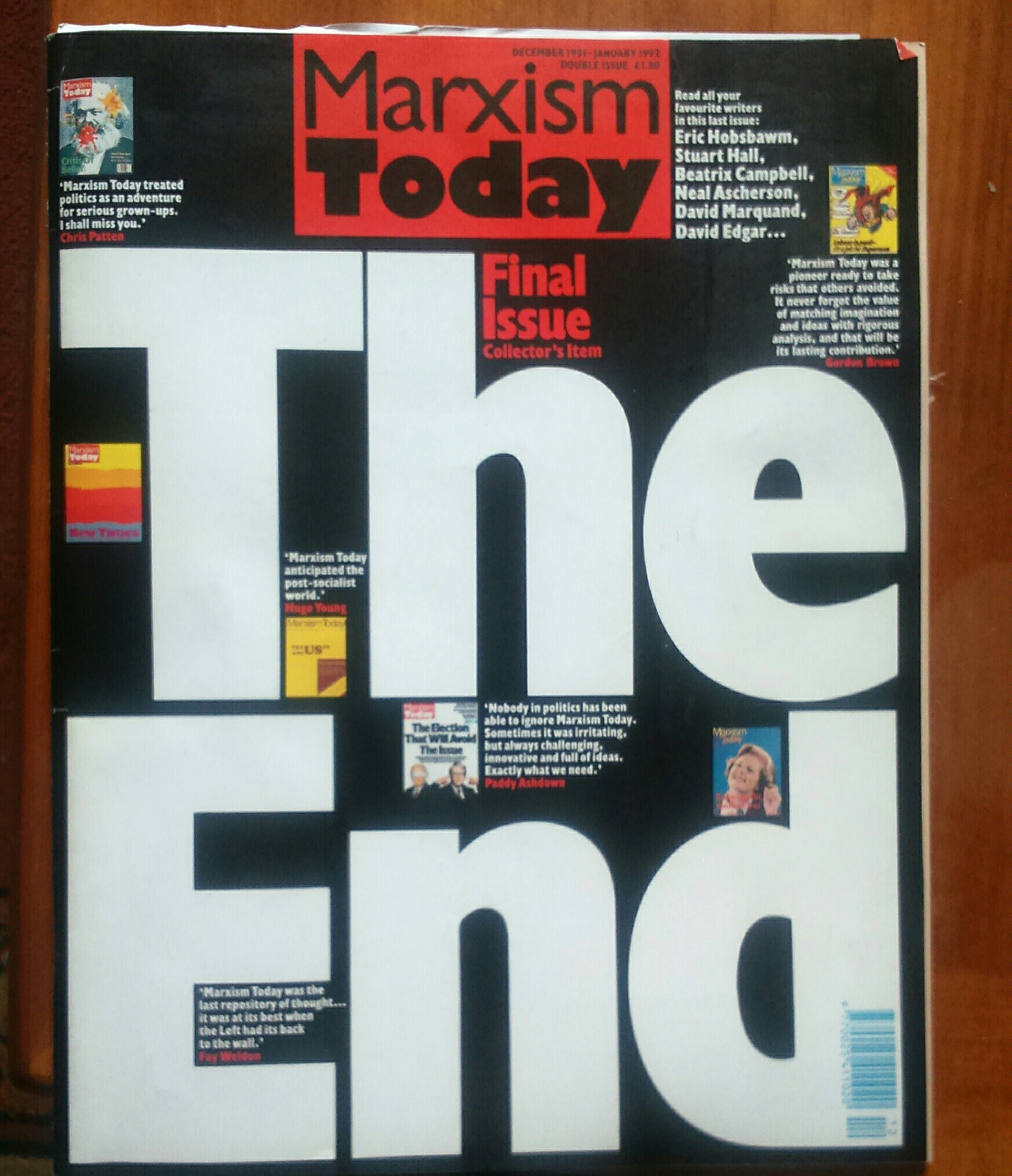
I read in today’s Observer an interesting opinion piece by Martin Jacques, who was editor of a magazine called Marxism Today until it folded at the end of 1991. I was a subscriber, in fact, and for some reason I have kept my copy of the final edition all this time. Here’s the front cover:

image

I note that it says “Collector’s Item” on the front, though I’m not at all sure it’s worth any more now than the £1.80 I paid nearly 25 years ago!

The Integrated Bispectrum and Beyond [CEA]

Posted in Biographical, The Universe and Stuff on August 17, 2016 by telescoper

I just came across this wordpress site which automatically posts about new submissions to the arXiv. This has presented me with an opportunity to try it out with a reblog of a recent submission by yours truly!

arxiver's avatararXiver

http://arxiv.org/abs/1608.04345

The position-dependent power spectrum has been recently proposed as a descriptor of gravitationally induced non-Gaussianity in galaxy clustering, as it is sensitive to the “soft limit” of the bispectrum (i.e. when one of the wave number tends to zero). We generalise this concept to higher order and clarify their relationship to other known statistics such as the skew-spectrum, the kurt-spectra and their real-space counterparts the cumulants correlators. Using the {em Hierarchical Ansatz} (HA) as a toy model for the higher order correlation hierarchy, we show how in the soft limit, polyspectra at a given order can be identified with lower order polyspectra with the same geometrical dependence but with {em renormalised} amplitudes expressed in terms of amplitudes of the original polyspectra. We extend the concept of position-dependent bispectrum to bispectrum of the divergence of the velocity field $Theta$ and mixed multispectra involving $delta$ and $Theta$ in the 3D perturbative…

View original post 103 more words

Simone Manuel and the Racism of Fred Hoyle

Posted in Biographical, Politics, Sport, The Universe and Stuff with tags , , , , , , on August 14, 2016 by telescoper

Reading just now about Simone Manuel, the first black person to win an Olympic Gold medal in swimming, I suddenly remembered a bizarre event that has been lurking in the back of my mind since 1985.

In September of that year I attended a Summer School for new PhD students in Astronomy, held in Durham. I have posted about this before actually, primarily because it is interesting how many others who attended that School are still around, in senior academic positions.

Anyway, one evening during the course of this meeting there was a public lecture by non other than Sir Fred Hoyle, many of whose books on cosmology I had borrowed from the public library when I was at school and played a big part in encouraging me to study physics at university.

But Fred Hoyle’s talk that evening (to a packed lecture theatre) was not about physics but about his pet theories about the evolution of life, most of which are now generally regarded as nonsense.

At one point in his somewhat rambling discourse he digressed into the subject of the sporting abilities of different racial groups. His first assertion was that black people (by which he meant people of African origin) do not make good swimmers because their bones are too dense and the consequent lack of buoyancy is a significant disadvantage. “Have you ever seen a black swimmer in the Olympics?” he asked. None of us had, of course, but couldn’t that be because of other reasons such as lack of access to swimming pools? No. Fred was adamant. It was down to biology. I assumed he knew what he was talking about, so kept quiet.

He went on to argue that black people were also disadvantaged at tennis – not because of social factors limiting access to tennis courts – but for reasons of “poor hand-eye coordination” which he also asserted to be an inherited characteristic. This time I knew straight away he was talking drivel. The previous summer I had watched the brilliant West Indies cricketers thrash England 5-0 in a test series; their hand-eye coordination certainly wasn’t poor. And neither was that of Arthur Ashe who had  beaten Jimmy Connors in the Men’s Singles Final at Wimbledon a decade earlier,  nor the majestic Serena Williams who is probably the greatest female tennis player the world has ever seen.

These examples left me not only deeply suspicious of Hoyle’s racist attitudes but also staggered by his completely unscientific attitude to evidence. Great theoretical physicist he was – at least early in his career – but being expert about one thing doesn’t mean can’t make an utter fool of yourself if you blunder into another field. Sadly, theoretical physicists do have a greater tendency than most scientists to forget this.

Last Day in Brighton

Posted in Biographical on August 5, 2016 by telescoper

Here I am in the flat I’ve been renting for the past three and a half years. I’m just packing the last of my belongings ready to take back to Cardiff. I’ll be handing back the keys this afternoon and then heading for the railway station.

I left my job at Sussex at the end of last week, but the tenancy of the flat doesn’t expire until tomorrow so I thought I might as well make the most of it.

Tomorrow is the annual Pride celebration in Brighton, which I’ve decided to miss for logistical reasons. I hope it goes well though, especially for the weather.

It’s a warm sunny day and I may go for a stroll along the promenade before I leave. I still think that Brighton would have been a nice place to live, if only I’d been able to find the time to enjoy it, but I have no regrets about returning to Cardiff. When you start to dread going into work every morning it’s definitely time to make a change. It was an immense relief when I removed the Sussex University email account from my mobile phone!

But this isn’t really a time for looking back. I am looking forward to the next few weeks because I’m not actually starting work at Cardiff until September. I’m going to spend most of August pottering about the house, though I do have a (hopefully short) stay in hospital scheduled for routine maintenance.

It will probably feel quite strange when I do get back to work at Cardiff, but at least there will be some familiar faces!

Update: courtesy of Southern Rail I had to stand all the way from Brighton to Victoria. They could only muster four coaches for a peak time train. I won’t miss Southern Fail that’s for sure..

Sussex versus Glamorgan

Posted in Biographical, Cricket with tags , , , on July 29, 2016 by telescoper

It was an interesting coincidence that, last night, on the eve of my last day working at the University of Sussex before moving to Cardiff University, there was a game of cricket between Sussex and Glamorgan at the County Ground in Hove. Naturally I decided to go along and was fortunate to have Dorothy Lamb along for company. To be precise this wasn’t “proper cricket”, but a Natwest T20 “Blast”. Unfortunately the weather dampened the squib considerably. Yesterday’s weather forecast predicted rain in the afternoon clearing by the time the game started (at 18.30), but when we got to the ground it was still drizzling:

Cricket_1

After a lot of faffing about play did actually get under way at about 19.50, the match to be reduced to 14 overs a side because of the late start.

Cricket_2You can see the full scorecard here. Glamorgan batted first, struggling right from the start despite some wayward bowling from Sussex.  Having been 62 for 8 at one point they were probably relieved to get into three figures, though they only just managed this: they were all out for 101 in the last over. Sussex batted and got off to a much better start, but then the rain came back so they went off. They then came back again but only one ball was beowled before the rain (which was really just drizzle) started again so they went off again. And so on. In the end only four overs and one ball were possible before the rain came back for good and the match was abandoned with no result. The upshot of this was that Glamorgan qualified for the Quarter Finals and Sussex didn’t. Glamorgan were lucky. Sussex were 30-1 when play was halted but a minimum of five overs have to be bowled for a result to be declared. A few minutes more play and Sussex would almost certainly have won. Such is life.


The Rising Stars of Sussex Physics

Posted in Bad Statistics, Biographical, Education with tags , , , , on July 28, 2016 by telescoper

This is my penultimate day in the office in the School of Mathematical and Physical Sciences at the University of Sussex, and a bit of news has arrived that seems a nice way to round off my stint as Head of School.

It seems that Physics & Astronomy research at the University of Sussex has been ranked as 13th in western Europe and 7th in the UK by leading academic publishers, Nature Research, and has been profiled as one of its top-25 “rising stars” worldwide.

I was tempted to describe this rise as ‘meteoric’ but in my experience meteors generally fall down rather than rise up.

Anyway, as regular readers of this blog will know, I’m generally very sceptical of the value of league tables and there’s no reason to treat this one as qualitatively any different. Here is an explanation of the (rather curious) methodology from the University of Sussex news item:

The Nature Index 2016 Rising Stars supplement identifies the countries and institutions showing the most significant growth in high-quality research publications, using the Nature Index, which tracks the research of more than 8,000 global institutions – described as “players to watch”.

The top 100 most improved institutions in the index between 2012 and 2015 are ranked by the increase in their contribution to 68 high-quality journals. From this top 100, the supplement profiles 25 rising stars – one of which is Sussex – that are already making their mark, and have the potential to shine in coming decades.

The institutions and countries examined have increased their contribution to a selection of top natural science journals — a metric known as weighted fractional count (WFC) — from 2012 to 2015.

Mainly thanks to a quadrupling of its physical sciences score, Sussex reached 351 in the Global 500 in 2015. That represents an 83.9% rise in its contribution to index papers since 2012 — the biggest jump of any UK research organisation in the top 100 most improved institutions.

It’s certainly a strange choice of metric, as it only involves publications in “high quality” journals, presumably selected by Journal Impact Factor or some other arbitrary statistical abominatio,  then taking the difference in this measure between 2012 and 2015  and expressing the change as a percentage. I noticed one institution in the list has improved by over 4600%, which makes Sussex’s change of 83.9% seem rather insignificant…

But at least this table provides some sort of evidence that the investment made in Physics & Astronomy over the last few years has made a significant (and positive) difference. The number of research faculty in Physics & Astronomy has increased by more than 60%  since 2012 so one would have been surprised not to have seen an increase in publication output over the same period. On the other hand, it seems likely that many of the high-impact papers published since 2012 were written by researchers who arrived well before then because Physics research is often a slow burner. The full impact of the most recent investments has probably not yet been felt. I’m therefore confident that Physics at Sussex has a very exciting future in store as its rising stars look set to rise still further! It’s nice to be going out on a high note!


Graduation and Beyond

Posted in Biographical with tags , on July 21, 2016 by telescoper

I’ve found a few pictures of this week’s  graduation ceremony for the School of Mathematical and Physical Sciences at the University of Sussex, at which I had the pleasure of presenting the graduands. These are taken without permission from facebook posts!

Graduation ceremonies are funny things. With all their costumes and weird traditions, they even seem a bit absurd. On the other hand, even in these modern times, we live with all kinds of  rituals and I don’t see why we shouldn’t celebrate academic achievement in this way. I love graduation ceremonies, actually. As the graduands go across the stage you realize that every one of them has a unique story to tell and a whole universe of possibilities in front of them. How their lives will unfold no-one can tell, but it’s a privilege to be there for one important milestone on their journey. Getting to read their names out is quite stressful – it may not seem like it, but I do spend quite a lot of time fretting about the correct pronunciation of the names.  It’s also a bit strange in some cases finally to put a name to a face that I’ve seen around the place regularly, just before they leave the University for good. I always find this a bittersweet occasion. There’s joy and celebration, of course, but tempered by the realisation that many of the young people who you’ve seen around for three or for years, and whose faces you have grown accustomed to, will disappear into the big wide world never to be seen again. On the other hand, this year a large number of MPS graduates are going on to do PhDs – including two who are moving to Cardiff! – so they won’t all vanish without trace!

Grad_1

Grad_3

That’s me in the front row just to the left of the Mayor, in case you didn’t realise. It was very hot with all that graduation clobber on – in fact it was over 30 degrees. Waiting for the official photographs outside in the gardens was a rather sweaty experience.

Grad_2

Graduation of course isn’t just about dressing up. Nor is it only about recognising academic achievement. It’s also a rite of passage on the way to adulthood and independence, so the presence of the parents at the ceremony adds another emotional dimension to the goings-on. Although everyone is rightly proud of the achievement – either their own in the case of the graduands or that of others in the case of the guests – there’s also a bit of sadness to go with the goodbyes. It always seems that as a lecturer you are only just getting to know students by the time they graduate, but that’s enough to miss them when they go.

Anyway, all this is a roundabout way of saying congratulations once more to everyone who graduated on Tuesday, and I wish you all the very best for the future!

Last Day of MaxEnt2016

Posted in Biographical, History, The Universe and Stuff with tags , , on July 15, 2016 by telescoper

This week has gone very quickly. It is already the last day of MaxEnt2016. Tomorrow I’m returning by train to the UK. Last night was a very nice conference dinner at a place called Parnassus (which is actually a deconsecrated church). That was after a very enjoyable afternoon of sightseeing through two guided tours, one on foot and the other by boat.

This morning is the last session in the conference venue Oude Vismijn. Here is a snap taken in between talks this morning:

SAMSUNG DIGITAL CAMERA

MaxEnt2016

In olden days this hall looked more like this:

vismijn3

Given the location it’s a pity I didn’t think to put a joke in my talk about the Poisson distribution. Geddit?

Over the last few days the City of Ghent has been preparing for the annual Ghent Festival (Gentse Feesten) which has involved the construction of dozens of temporary structures including stages for the bands to play on, and many tents of various sizes for beer consumption). The Festival goes on for 10 days and the first night is tonight. I’m told it’s very noisy in the city centre, which is where my hotel is, so I’m not sure I’ll get much sleep tonight as the festivities go on round the clock!


Ghent for MaxEnt

Posted in Biographical, Politics with tags , , , on July 9, 2016 by telescoper

Just a quick post to mark the fact that I’ve arrived in the fine city of Ghent for the forthcoming MaxEnt 2016 (Bayesian Inference and Maximum Entropy Methods in Science and Engineering). The trip from Brighton was pleasant and disruption-free (Thameslink from Brighton to St Pancras, Eurostar t0 Brussels, and local train to Ghent, all components of which journey were on time).  In fact I travelled from London with a British contingent of the conference: John Skilling, Steve Gull and Anton Garrett (a regular commenter on this blog). We got here in time for dinner al fresco in a square near my hotel overlooked by an interesting local landmark:

Ghent


My Flemish isn’t marvellous but I translate the words at the top of the building as Socialist Workers’ Party, although it does seem a rather grandiose building for that!

Anyway, I hope to be able to do a bit of Bayesian blogging from Belgium while I’m here, during the next week. The meeting itself starts tomorrow..