Archive for the Biographical Category

A Day Out in Oxford

Posted in Biographical, LGBTQ+ with tags , , , on June 4, 2024 by telescoper

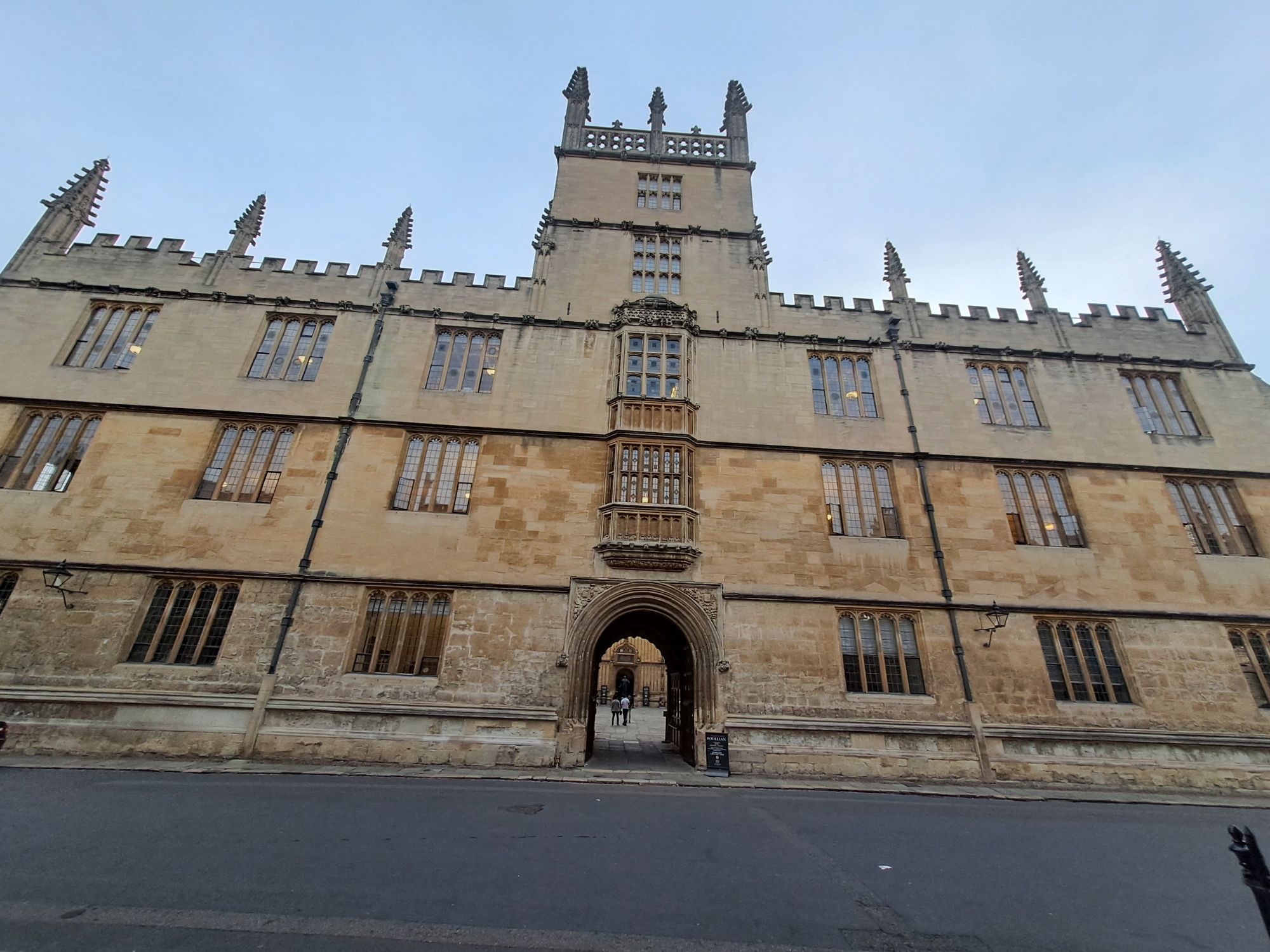
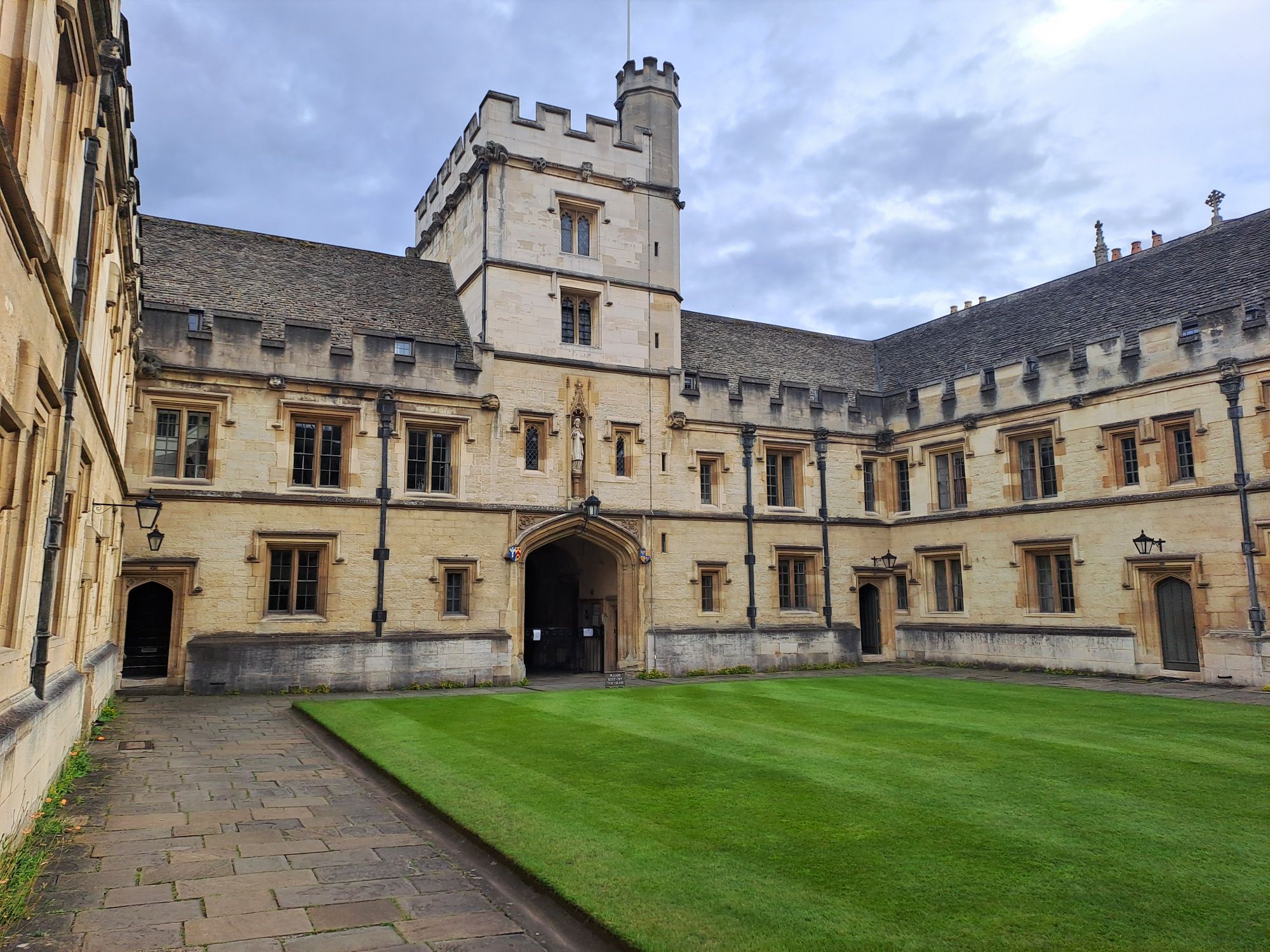
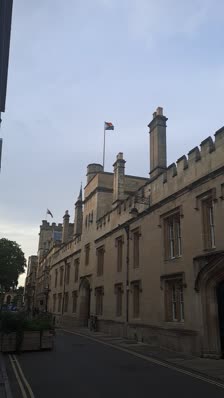
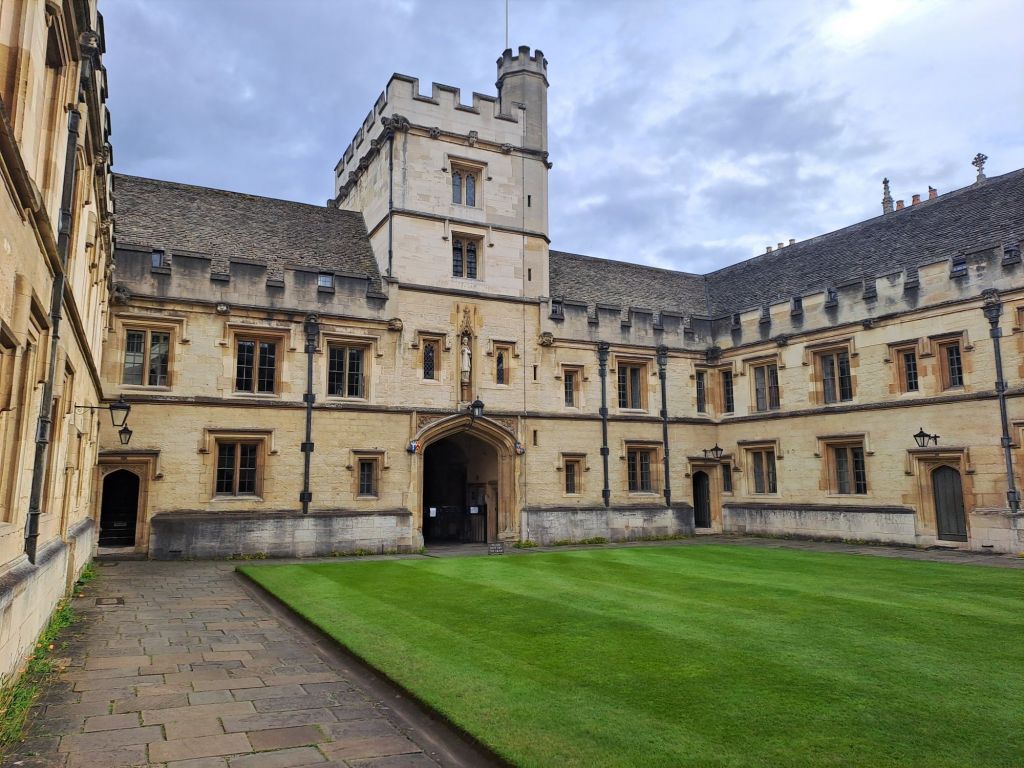
So here I am, among the dreaming spires of Oxford, although I’m not sure whether they are actually dreaming or just asleep. I had a short walk around before heading to the Physics Department this morning to put the finishing touches to my talk for this afternoon. It was nice to see the Pride Progress flags flying over Lincoln College on the way.

I haven’t had the opportunity to spend much time in Oxford so I’m looking forward to having a look around over the next day or two.

P.S. It’s my birthday today…

Pride Lecture in Oxford

Posted in Biographical, LGBTQ+ with tags , , , on June 3, 2024 by telescoper

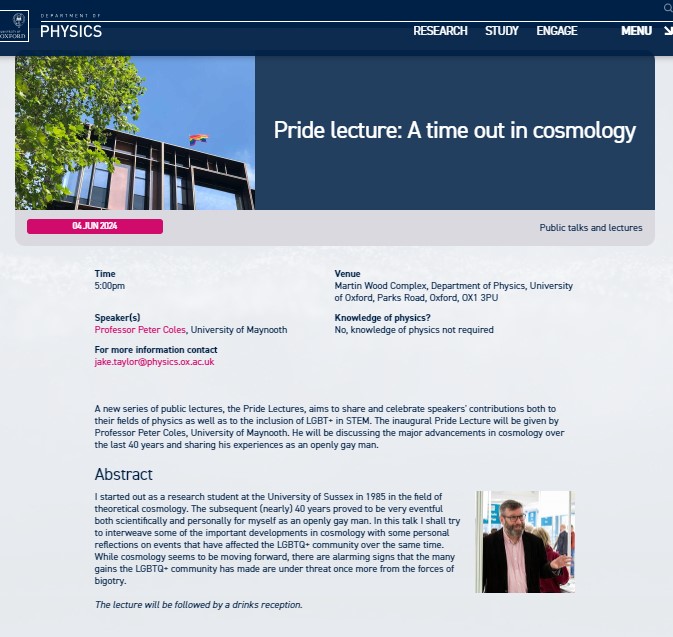
While en route to Oxford I thought I’d do a quick post about the purpose of my visit there, namely to give the inaugural Pride Lecture at the Department of Physics. I’m looking forward to it, and spending a couple of days as a guest of All Souls College. Here’s the promo for the lecture:

This is a public event. I’ve no idea how many people will be there, but I’ll find out tomorrow I suppose!

Let me take this opportunity to wish all of you a very happy Pride Month (which started on Saturday). With its origins as a commemoration of the Stonewall Riots of 1969, Pride remains both a celebration and protest. It’s more necessary than ever now, especially because of the sustained abuse being aimed at trans people from all quarters, from those in political power to those sad losers who have nothing better to do that spend all day tweeting their bigotry on social media.

Anyway, as well as a celebration and a protest, Pride is an opportunity for us all to show solidarity against those who seek to divide us.

Though many LGBTQIA+ people in many countries – even those that claim to be more liberal – still face discrimination, hostility and violence, Pride Month always reminds me of how far we’ve come in the past 50 years ago. As I get older, I find I have become more and more protective towards younger LGBTQIA+ people. I don’t want them to have to put up with the crap that I did when I was their age.

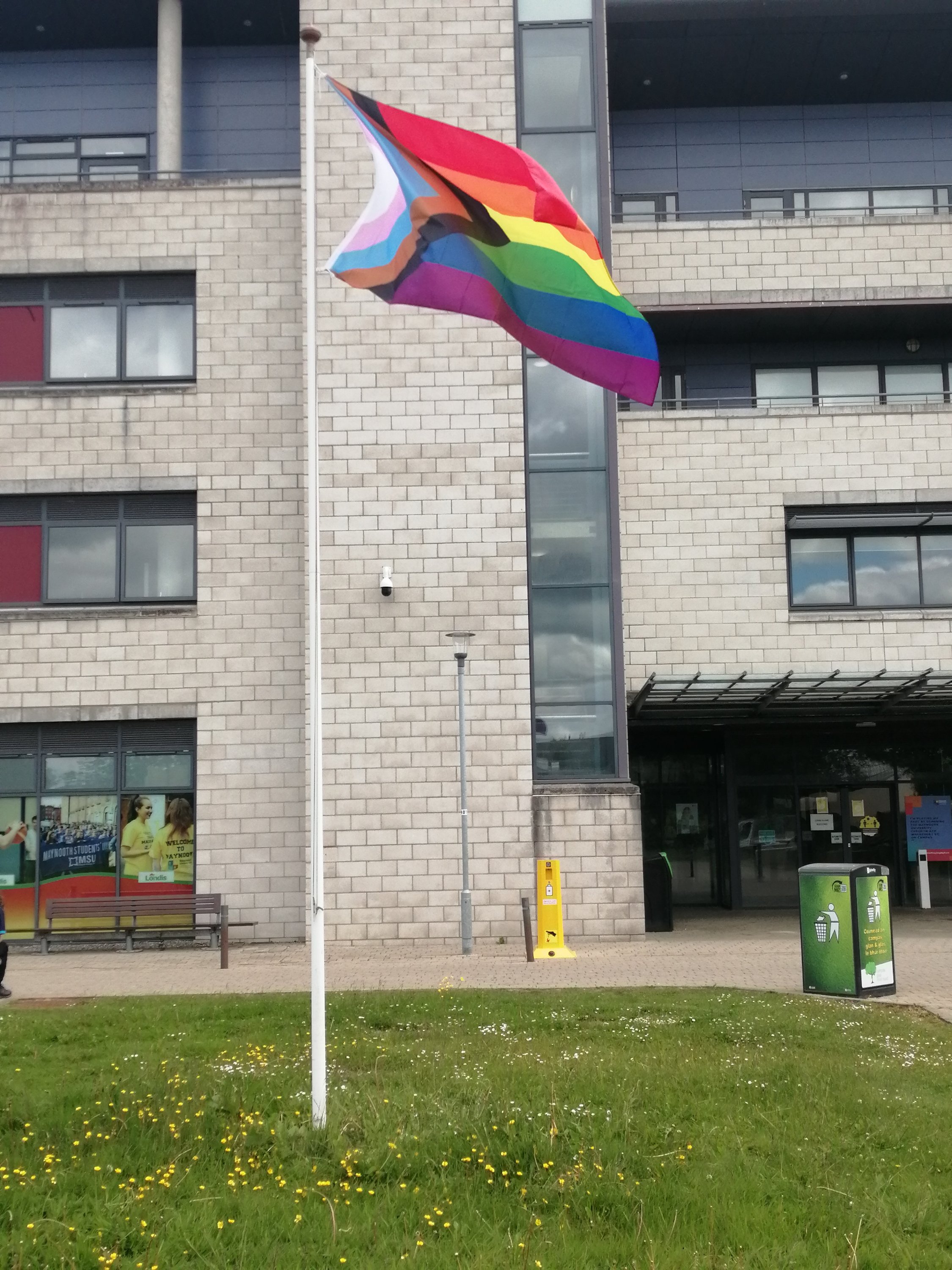
Here’s a picture of the Pride Progress flag I took outside the John Hume Building at Maynooth a couple of years ago. I hope it’s there again this year, although I won’t be in Maynooth to see it!

Update: arrived in All Souls College…

Flying Visit(s)

Posted in Biographical, Education, The Universe and Stuff with tags , , , , , , , on June 2, 2024 by telescoper

So here I am, not in Barcelona. On Thursday night I flew to the fine city of Newcastle upon Tyne to act as external examiner for a PhD candidate. Since I knew I would be arriving quite late I stayed in a hotel near Newcastle Airport. It was just as well I did so because, it being Ryanair, I arrived even later than expected. On Friday morning I took the Metro from the Airport to Haymarket and spent the morning in the School of Mathematics, Statistics and Physics at Newcastle University ahead of the viva voce examination.

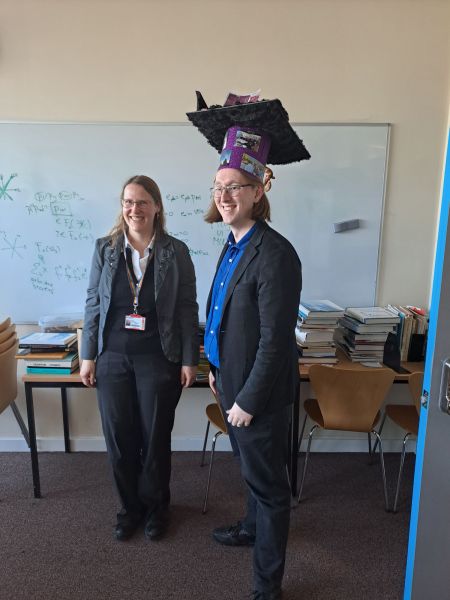
The PhD candidate was Alex Gough (pictured right, after the examination, with supervisor Cora Uhlemann). Cora being German we were treated to the tradition of successful PhD candidates having to wear a elaborate hat, after the examination (fortunately not during it). Some champagne was consumed, followed by dinner at a nice Indian restaurant on Clayton Street.

For those of you not familiar with how the PhD system works in the UK, it involves doing research into a particular topic and then writing up what you’ve done in a thesis. The thesis is a substantial piece of work, often in the region of 100,000 words (200 pages or so), which is then assessed by two examiners (one internal to the university at which the research was done, and one external). They read copies of the thesis and then the candidate has to defend it in an oral examination, which was what happened on Friday, after which they make a recommendation to the university about whether the degree should be awarded.

There aren’t many rules for how a viva voce examination should be conducted or how long it should last, but the can be as short as, say, 2 hours and can be as long as 5 hours or more. The examiners usually ask a mixture of questions, some about the details of the work presented and some about the general background. The unpredictable content of a viva voce examination makes it very difficult to prepare for, and it can be difficult and stressful for the candidate (as well as just tiring, as it can drag on for a long time). However, call me old-fashioned but I think if you’re going to get to call youself Doctor of Philosophy you should expect to have to work for it. Some might disagree.

Obviously I can’t give details of what went on in the examination except that it was quite long primarily because the thesis was very interesting and gave us lots to discuss. At the end internal examiner Danielle Leonard and I agreed to recommend the award of a PhD. In Newcastle as in other UK universities, the examiners simply make a recommendation to a higher authority (e.g. Board of Graduate Studies) to formally award the degree, but they almost always endorse the recommendation. I’ve never been sure exactly when a successful candidate is allowed to call themselves “Doctor”, actually, but congratulations to Dr Gough!

Anyway, the celebratory dinner ended just after Women’s International football match between England and France (which France won) had finished at St James’ Park and the Metro was consequently crammed full, but I got back to the hotel at a reasonable hour. Thank you to everyone in the group, especially Cora and Ian Moss, for being so friendly and making me feel so welcome during this brief visit.

Tomorrow I shall be heading to the part of not-Barcelona known as Oxford, where I believe there is a University of some sort, to give a lecture about which I’ll post more tomorrow.

Something in the Air..

Posted in Barcelona, Biographical with tags , , , on May 26, 2024 by telescoper

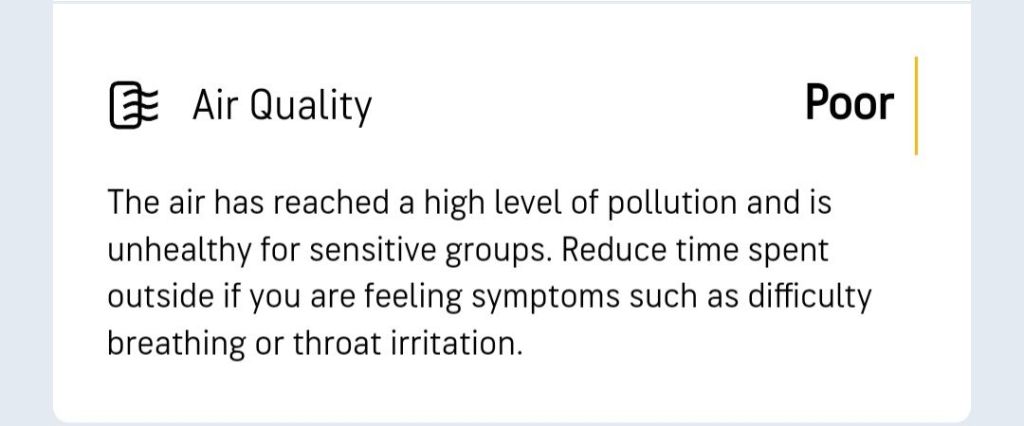
It’s been a warm and rather humid weekend in Barcelona. Yesterday was particularly stifling, with the heat and lack of breeze making things rather uncomfortable. The Air Quality indicator  reached “Poor” largely due to high levels of NO2, no doubt from vehicle exhaust fumes. It surprises me that so many people sit out at the pavement tables outside  restaurants having meals when it’s hot and the air is thick with nasty stuff. Al Fresco is supposed to mean “in the fresh air”! I much prefer to dine indoors, unless it’s very late at night.

Today was a little better except that there was resurfacing work going on  outside my flat on RambladeCatalunya. I knew it was coming, as they’ve been doing other nearby roads over the past few weekends. It was a little noisy, even on the 6th floor, but that didn’t bother me as much as the tar fumes!

Anyway, all this has made me decide not to attempt to extend my stay here beyond my current lease, which expires at the end of June. I’ll take the last two months of my sabbatical somewhere a bit cooler!

Free Atkins!

Posted in Biographical, Education, The Universe and Stuff with tags , , , , , , on May 26, 2024 by telescoper

I took my first degree in the Natural Sciences Tripos at the University of Cambridge. This involved doing a very general first year comprising four different elements that could be chosen flexibly. I quickly settled on Physics, Chemistry and  Mathematics for Natural Sciences to reflect my A-level results but was struggling for the fourth. In the end I picked the one that seemed most like Physics, a course called Crystalline Materials. I didn’t like that at all, and wish I’d done some Biology instead – Biology of Cells and Biology of Organisms were both options – or even Geology, but I stuck with it for the first year.

Having to do such a wide range of subjects was very challenging. The timetable was densely packed and the pace was considerable. In the second year, however, I was able to focus on Mathematics and Physics and although it was still intense it was a bit more focussed. I ended up doing Theoretical Physics in my final year, including a theory project.

My best teacher at School, Dr Geoeff Swinden,  was a chemist (he had a doctorate in organic chemistry from Oxford University) and when I went to Cambridge I fully expected to specialisze in Chemistry rather than Physics. I loved the curly arrows and all that. But two things changed. One was that I found the Physics content of the first year far more interesting – and the lecturers and tutors far more inspiring – than Chemistry, and the other was that my considerable ineptitude at practical work made me doubt that I had a future in a chemistry laboratory. And so it came to pass that I switched allegiance to Physics, a decision I am very glad I made.

(It was only towards the end of my degree that I started to take Astrophysics seriously as a possible specialism, but that’s another story…)

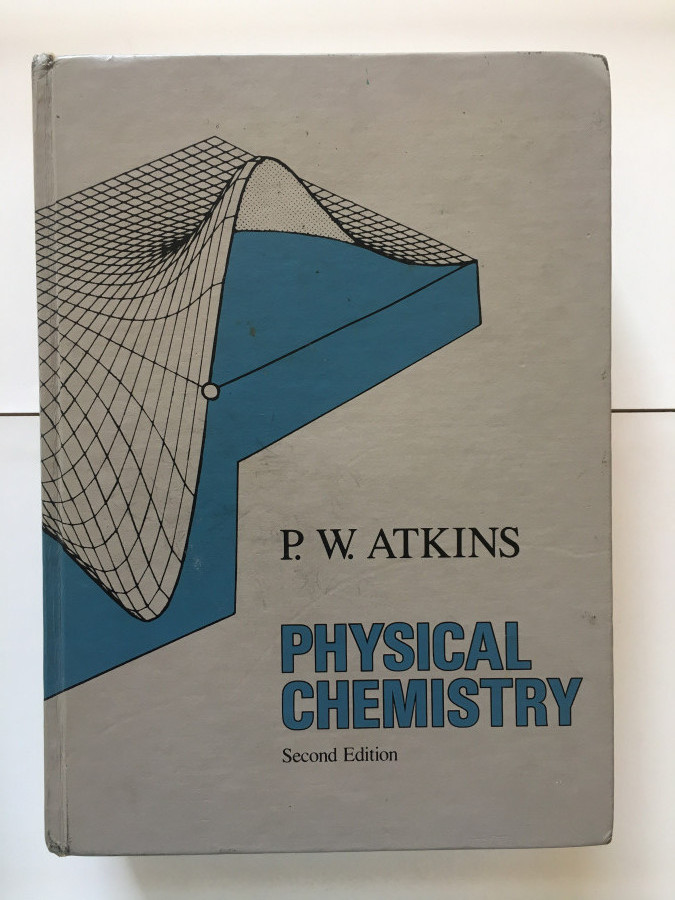
Anyway, when I turned up at Cambridge over 40 years ago to begin my course, and having Chemistry as a probable end point, I bought all the recommended text books, one of which was Physical Chemistry by P.W. Atkins. I found a picture (above) of the 1982 edition which may well be the one I bought (although I vaguely remember the one I had being in paperback). I thought it was a very good book, and it has gone into many subsequent editions. I also found the Physical part of Chemistry quite straightforward because it is basically Physics. I even got higher marks in Chemistry in the first year than I did in Physics but that didn’t alter my decision to drop Chemistry after the first year. When I did so, I followed tradition and sold my copy to a new undergraduate along with the other books relating to courses that I dropped.

Yesterday I found out that Peter Atkins has decided to make one of his books available to download. The book concerned is however not the compendious tome I bought, but a shorter summary called Concepts in Physical Chemistry, which was published in 1995. This is no doubt a very useful text for beginning Chemistry students so I thought I’d pass on this information. You can download it here, although you have to do it chapter by chapter in PDF files.

P.S. Chemistry in Spanish is ‘Química’. Since Physics and Chemistry share the same building in the University of Barcelona, where I am currently working, I frequently walk past rooms with doors marked ‘Quim’ (but I have never taken the opportunity to enter one).

The Week(s) Ahead

Posted in Barcelona, Biographical, Euclid, Maynooth with tags , , , , on May 20, 2024 by telescoper

Today is a public holiday in Spain, as it is in much of Europe (including France, Germany, The Netherlands and Denmark). The occasion for the day off is Pentecost (or Whitsuntide as it is known in the UK) which, if I understand correctly, is when the Holy Spirit went down on the Apostles. Actually Pentecost (Whit Sunday) was yesterday, exactly 7 weeks after Easter Sunday, which was quite early this year which is why Pentecost Monday (20th May) is earlier than the fixed Bank Holidays used to mark it in the UK (the last Monday in May, 27th, next Monday) and Ireland (the first Monday of June, 3rd, in two weeks’ time). Could I perhaps take all three off?

Today’s holiday notwithstanding, this is going to be a busy week. On Wednesday and Thursday there is to be an event at the European Space Agency coincident with which, on Thursday 23rd May, there will be a significant press event relating to Euclid. I’m not at liberty to say any more at this point, as everything is strictly embargoed until 12 noon CEST on that day, but I have been writing a piece for RTÉ Brainstorm to come out as soon as the embargo is lifted. Hopefully the Communications team at Maynooth University will get involved in the press activity. Watch this space.

Remarkably for me, I filed the RTÉ Brainstorm piece ahead of the deadline but it’s no time to rest on my laurels because I have another paper to finish this week by a different deadline.

And next week will be busy too. I have to make a short trip to not-Barcelona to do a PhD examination in Newcastle upon Tyne and give a lecture in Oxford, where (so I’m told) there is a University of some sort. Then I have to pass through Maynooth to vote in the Local and European Elections before returning to Barcelona. Having another two Whit Monday holidays is looking like a good plan…

R.I.P. Roger Corman (1926-2024)

Posted in Biographical, Film with tags , , , on May 14, 2024 by telescoper

I was saddened to hear of the death at the age of 98 of prolific film  producer and director Roger Corman. He is best known, at least to me, as the director of a string of cult low-budget B-movies. They were of variable quality in terms of acting – Corman couldn’t often afford to pay for top-quality actors – but some of the films were outstanding. Roger Corman’s death gives me an excuse to rehash an old post about one of his films.

The first film I remember seeing that really terrified me was House of Usher starring the great Vincent Price, a regular in a series of films by Roger Corman inspired by Edgar Allan Poe, who gives most of his performance in a creepy stage whisper, a film based Poe’s short story The Fall of the House of Usher. When I was around 8 or 9 I was once left home alone on a Friday night by my parents. In those days the BBC used to show horror films late at night on Fridays and, against parental guidance, I decided to watch this one. It scared me witless and when my parents got home they found me a gibbering wreck. I don’t really know why I found it so scary – younger people reared on a diet of slasher movies probably find it very tame, as you don’t actually see anything particularly shocking – but the whole atmosphere of it really got to me. Here’s an example clip.

The Meaning of Everything by Simon Winchester

Posted in Biographical, History, Literature with tags , , , , , , , , , , on May 12, 2024 by telescoper

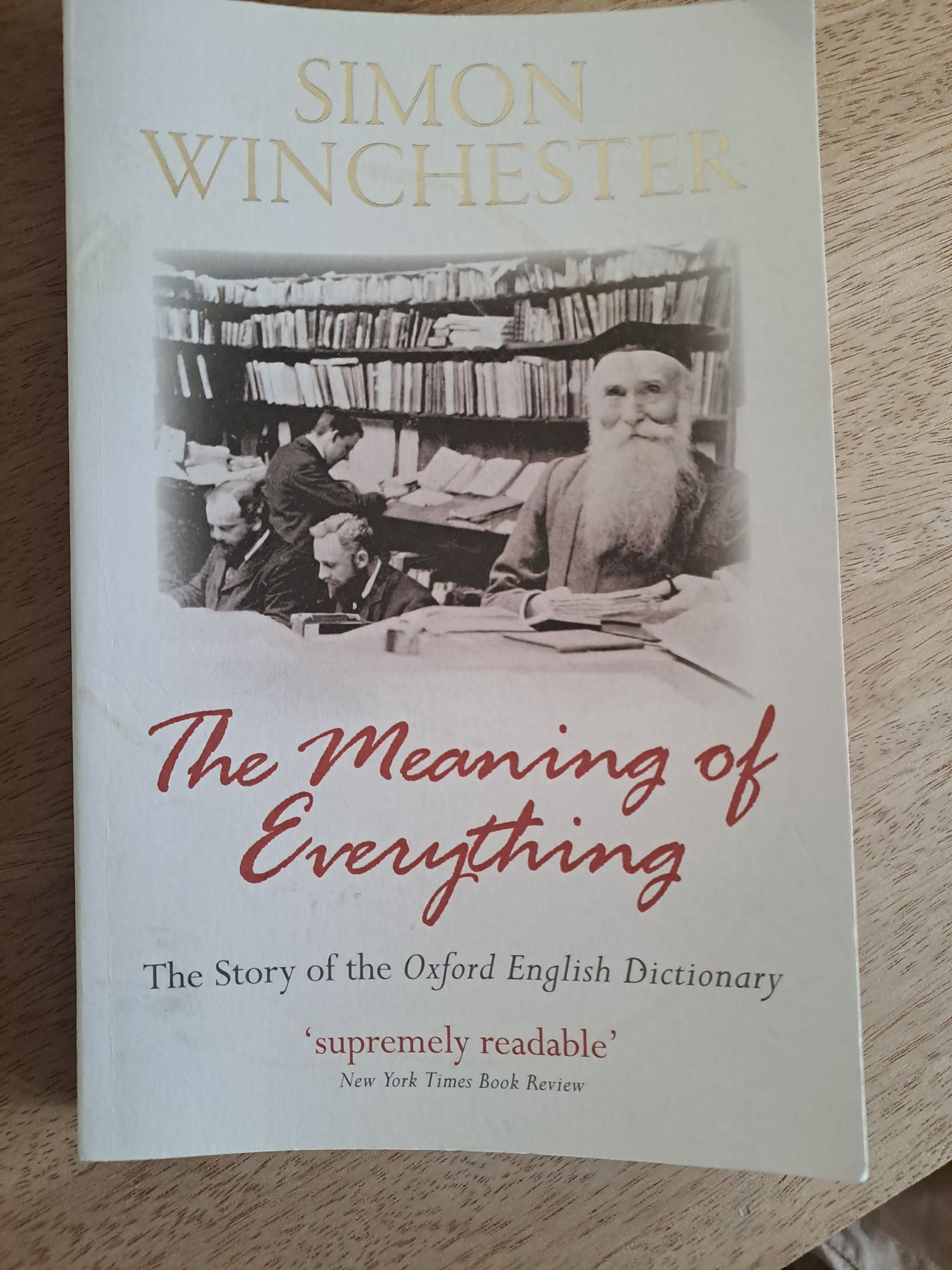
The most recent item on my (non-research-related) sabbatical reading list to be completed is The Meaning of Everything by Simon Winchester, subtitled “The Story of the Oxford English Dictionary”. I didn’t actually buy this book, but won it in a crossword competition back in February 2019. It didn’t arrive in Ireland until the end of May 2019, so it has taken me a bit less than 5 years to read it. I wish I’d read it earlier as it is fascinating and very well-written.

There’s quite a lot of information about the Oxford English Dictionary on the wikipedia page so I will keep it brief here. In short, the idea of a definitive dictionary of the English language emanated from the Philological Society and dates back to 1857, but real work didn’t start on it until a decade later. The whole project was many times on the brink of cancellation because the task of compiling the dictionary turned out to be much greater than was imagined at the outset. It was thought that the dictionary would be finished in a few years, but the First Edition was not completed until 1928. I think most people imagine that the OED has been around much longer than that!

Almost immediately work began on a supplement to include words that had entered usage during the decades needed to compile the original. A complete Second Edition was published in 1989.

The OED was actually first published in fascicles, softbound publications of about 300 pages that could be later sewn into a hard binding. These were quite expensive – 12/6 each. The first, A-Ant, was published in 1884. A complete list of these can be found here.

One might imagine that the laborious nature of the work involved in compiling a dictionary of this sort would make the story rather dull but it’s actually fascinating, both to see how the task was approached and to learn about some of the characters involved. As well as the Editors – who were paid a salary – the work relied heavily on hundreds of volunteer readers who would scour the literature looking for useful quotations that revealed the meaning of a word. By “the literature” I mean anything written – novels, non-fiction, newspapers, magazines, technical papers, anything. These volunteers would send in apposite quotations from which the compilers would construct definitions of the words. Some “headwords” have many meanings – set is an extreme example, with over 430 senses – and others – such as back – appear in a large number of compound words, all of which it had been decided needed to be illustrated with a quotation. The First Edition contained over 400,000 words and nearly two million quotations, all written and indexed laboriously by hand.

Among the volunteer readers were some extraordinary characters. One such was William Chester Minor, an American former surgeon who worked tirelessly for the Dictionary, sending his contributions in the post from an address in Crowthorne, Berkshire, which happened to be Broadmoor Psychiatric Hospital. The Chief Editor of the OED, James Murray, apparently assumed that W.C. Minor worked at Broadmoor but in fact he had been committed there in 1878 because, overcome by some form of psychosis, he had murdered a stranger and deemed insane. Minor carried on his work – using the prison guards as assistants – until he became seriously ill in 1902 after another psychotic episode during which he cut off his own penis.

The real star of the show however is English itself and this book offers some fascinating insights into the origin and evolution of the language. Almost nothing of the Celtic languages spoken throughout England before the Roman conquest survives into Old English (which used to be called Anglo-Saxon). This had a lexicon of around 50,000 words but only a few thousand of these survived in any form into Middle English and Modern English. Many common words in Old English were replaced and the language otherwise altered dramatically due to an influx of words, first from Scandinavia, via the Vikings, then from Norman French, and later on from diverse languages around the world. English has steadily absorbed and incorporated words from other languages for centuries, and is still doing so, though these words sometimes have a meaning in English that differs from their original.

In the light of this dramatic evolution in the language the Oxford English Dictionary was never intended to legislate on usage, but to register it; this is why its lexicographers relied so much on quotations in forming their definitions. This is also why the OED will never really be finished. The task of updating it nowadays is, on the one hand, made easier by the availability of computers and searchable databases but, on the other, made more difficult by the sheer amount of literature being produced.

I’ll send with one of the (apparently inadvertent) funny bits in the OED, from the second definition of the rarely used noun abbreviator:

An officer of the court of Rome, appointed… to draw up the Pope’s briefs…

I say it is inadvertent because the OED gives the earliest usage of the word briefs meaning underwear as 1930, after the publication of the First Edition (in which this appears).
Night of the Aurora

Posted in Biographical, Maynooth, The Universe and Stuff with tags , , , , , on May 11, 2024 by telescoper

My social media feeds have been buzzing all day with images of last night’s display of the Aurora Borealis (and Australis) resulting from a large solar storm. I saw some great pictures from Ireland, including many from Maynooth and environs. I really liked this one taken from one of the ships of the Irish Naval Service:

I also saw pictures of the Aurora Borealis from the UK (even as far South as the Midlands), USA and as far South in Europe as Marseilles, not to mention New Zealand (Aurora Australis).

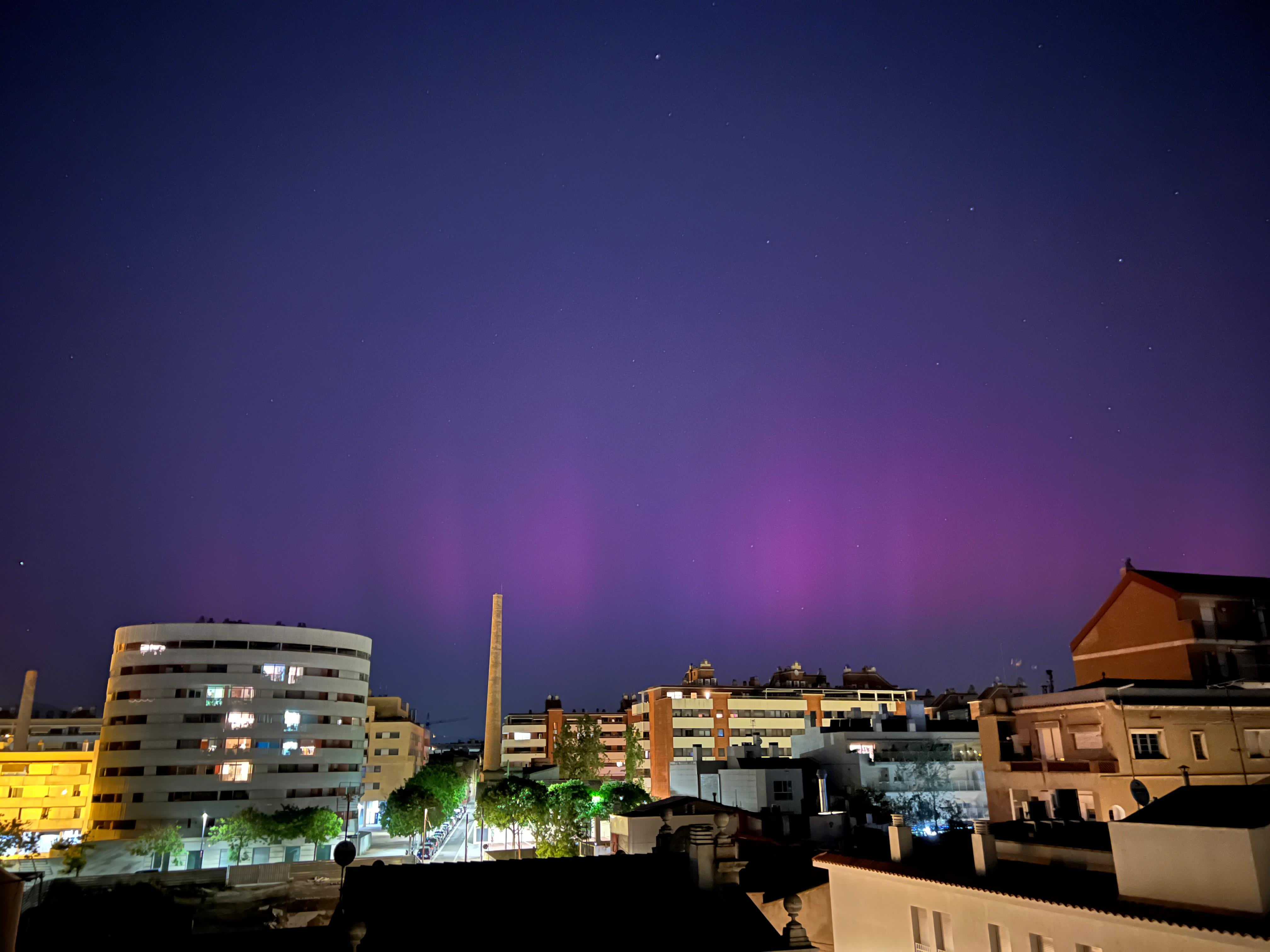
It’s not that unusual for the Northern Lights to be visible from Ireland, but it is extremely rare to see them from Catalonia. They were visible last night from Sabadell, just a few km North of Barcelona, though not as far as I know in Barcelona itself. I didn’t see anything, but I was otherwise engaged. The Observatory at Montsec Astronomical Park recorded the strongest level of Auroral activity for 150 years.

Auroral activity seen from Sabadell, picture credit Albert Segura Lorrio

All this reminds me that many moons ago, I once stood directly under an auroral display, in Tromsø (Norway), and I can tell you ever the word “awesome” applied to anything, this was it. The curious thing is that I had the definite feeling that there was a booming and whooshing sound to go with the light show. I wasn’t the only one there who thought they could hear it as well as see it. And I wasn’t drunk either. Well, not very.

Whenever I asked anyone about the sound my questions were dismissed on the grounds that there is no physical mechanism that could produce sound waves at audible frequencies of sufficient power to reach ground level from the altitude at which the light is generated. It must have been psychological, as if the brain wants to add a backing track when it sees something as spectacular as this. However, read at least one researcher is not so sure…

Comments are welcome through the usual box.

Maynooth University Library Cat Video Update

Posted in Biographical, Maynooth with tags , on May 10, 2024 by telescoper

For those of you who can’t get enough Maynooth University Library Cat action, I thought I’d share this instagram post that features a short documentary film made by some students about said feline:

The video is also available on Youtube:

Incidentally, Fiona Morley (who you see interviewed in the video) is Head of Digital Programmes and Information Systems at Maynooth University and, with her team, has given huge support to the Open Journal of Astrophysics.

This reminds me that today is the last day of teaching at Maynooth. There will be a short break until examinations begin a week today. This means that, although my sabbatical continues until the end of August, I won’t be missing any more lectures from today. I won’t be marking examinations either, but it is a reminder that it’s not that long until I have to resume such duties.