Archive for the Biographical Category

A Dress Code for Physics?

Posted in Biographical, Education with tags , , , , , , on May 2, 2022 by telescoper

This image has been doing the rounds on Physics Twitter recently, accompanied by a mixture of incredulous, amused and angry comments. It’s from the instructions from the 13th International Particle Accelerator Conference (IPAC2022) which takes place in Thailand next month.

To be fair I think this dress code is only for delegates wishing to attend a special event at which the Thai Royal Family will be present, but that it is strange that it should be so “Westernized”. It seems nobody wearing more traditional formal clothing from African or Asian countries, or even Thailand itself would be allowed.

Aside from that, the highly gendered instructions would make many attendees uncomfortable. Women must wear skirts, not trousers for example. Why? I wonder if they’d allow a Scotsman wearing a kilt? It’s all very silly and not at all inclusive. I suspect this nonsense has put off a number of potential attendees.

Speaking for myself, I don’t mind dressing up a bit for special social occasions that have a dress code. At the RAS Club Dinners at the Athenaeum the dress code for men is, amusingly, “jacket and tie”. Trousers are apparently not allowed and there’s no restriction that I know of on female dress. As a matter of fact I find it a relief when the dress code for a function is formal (e.g. “black tie”) because a male person such as me then doesn’t have to think about what to put on. IG wouldn’t like to have a dress code imposed on me at work, though.

The instruction that clothing must be “crisp, neat, pressed and never wrinkled” would represent an impossible standard for most of my colleagues in physics who for the most part dress in a manner that’s more “scruffy academic” than “business professional”. I have however worked with physicists who dress at work in a wide variety of ways. One I remember always wore a three-piece suit (even at the height of summer) and another was full Goth, neither style made any difference to their ability to do research.

I have sometimes been asked by junior researchers about how to dress for things like interviews or conference talks. I wrote about this before, here.

In brief the idea of of dressing up for job interviews in academia has always seemed rather odd to me. The default style of dress for academics is “scruffy”, so it’s a bit odd that we all seem to pretend that it’s otherwise for interviews. I suppose it’s just to emphasize that it’s a formal occasion from the point of view of the interview panel, and to show that the candidates are taking it seriously. I don’t really pay much attention to what interviewees wear, other than that if they look like they’ve just been dragged through a hedge one might infer that they’re  a bit too disorganized even to be a member of the academic staff at a University or that they’re not really putting enough effort into the whole thing.

On the other hand, some people feel so uncomfortable in anything other than jeans and a T-shirt that putting on a suit would either be an unbearable ordeal for them or conflict with their self-image in some fundamental way. Neither of these are intended, so if that’s going to be the case for you, just dress as you normally do (but preferably with something reasonably clean).

I sometimes get asked whether a (male) candidate for a PhD place should wear a suit and tie forsuch an interview. Having conducted interview days for many years at a number of different institutions, my experience is that a smaller proportion do dress formally for PhD interviews than for job interviews. My advice to students asking about this is just to say that they should try to look reasonably presentable, but suit–and-tie are definitely not compulsory. I would say “smart casual” is a good guide, though I have to say I don’t really know what that is. In any case it’s unlikely the staff interviewing you will be dressed formally…

Anyway, in writing this I started to think that the world would be a better place if “business professionals” were made to dress like academics, rather than the other way round.

Lá Bealtaine

Posted in Biographical, Covid-19, Education on May 1, 2022 by telescoper

Today, 1st May, Beltane (Bealtaine in Irish) is an old Celtic festival that marks the mid-point between the Spring Equinox and the Summer Solstice. The month of May is called Bealtaine in Irish and May Day is called Lá Bealtaine. It’s one of the so-called Cross-Quarter Days that lie halfway between the equinoxes and solstices. These ancient festivals take place earlier in the modern calendar than the astronomical events that represent their origin: for example, the halfway point between the Spring Equinox and Summer Solstice is actually next week.

A consequence of all this is that Monday is a Bank Holiday and, in keeping with tradition, the weather has taken a turn for the worse and it is pouring with rain. Nevertheless  Lá Bealtaine shona daoibh go leir!

On the corresponding days last year and the year before I was wondering about how the pandemic would pan out. Back on May 1st 2020 I didn’t think it would last until May 2021 and back in 2021 I did not forecast that we would still have over a thousand new infections every day in May 2022.  The vaccination programme seems to have done its job though and although case numbers remain high, the number of hospitalizations, ICU admissions and fatalities have not increased as in previous waves.

The Department of Health no longer gives Covid-19 updates at weekends (or on holidays) so here is the chart up to Friday 29th April:

May 1st 2021 was around 410 on the time-axis, with cases and deaths falling:

I hadn’t expected the subsequent increase to much higher levels of infection, but the ratio of deaths to cases is much lower now than it was a year ago despite the lower level of testing now.

It was announced on Friday that the Department of Health is to stop giving daily updates. I don’t know if they’re still going to put daily figures on the data hub (which is where I get them from) but if they don’t I’ll discontinue putting data on my Covid-19 page.

Anyway, yesterday’s open day went ahead without physical distancing though some staff and visitors were wearing masks. It was so busy in the Iontas Building that the hubbub made it difficult to be heard while talking with a mask on so I just dispensed with mine for the duration. Some visitors were wearing theirs though.

After tomorrow’s holiday we have four days left of teaching term then there’s a study week for the students – duyring which I’ll be marking computational projects and other assessments – and then the exams begin. For many students this will be their first on-campus examinations and we’re all a bit nervous about how they will go, but we’ll find out soon enough…

Open Day on Campus

Posted in Biographical, Education, Maynooth on April 30, 2022 by telescoper

Today was an Undergraduate Open Day at Maynooth University and contrary to my pessimistic expectations it was extremely busy, probably the busiest I have ever attended in Maynooth. I was told that there were 4,500 people on campus for this event which compares to a more normal figure of 3,000ish. I gather one of the reasons it was so busy was that few (if any) other Irish universities are having open days on campus this year.

Busy foyer stands in the Iontas Building

The stand in Iontas was quite busy all morning and my subject talk on Theoretical and Mathematical Physics was so well attended that the room was full and people were standing at the back. I was in the last slot of the day (as usual) so nobody else was in the lecture room after my group so I invited people to stay and ask questions if they wanted to. It ended up with 45 minutes of very interesting discussion.

This is the first of these sessions we’ve done since November 2019. Since then the entire admissions process has been disrupted by the Covid-19 pandemic. There is more than a little uncertainty about entrance requirement for September 2022, but I gave the best advice I could. Talking face-to-face with real people made a very pleasant change from the webinars and pre-recorded videos we’ve been doing recently.

Anyway, I think today has been a success, though a very tiring one. It’s very exhausting trying to be nice to people. I think I’ll need the rest of the holiday weekend to recover!

Project Time

Posted in Biographical, Education, Maynooth on April 26, 2022 by telescoper

For the next and final two weeks of my Computational Physics module the students are now working in groups of two or three on their mini-projects, so our twice-weekly lab sessions are much less structured and the students work in their groups with myself and a demonstrator to help out if they have problems. Somewhat to my surprise the lab was full this afternoon. I expected the students might prefer to work outside the scheduled times, but it was nice to see them working away together and managing to get some results. They hand in their projects at the end of next week, so they finish this part of their assessment before the exam session starts, a week after that.

The projects cover quite a wide range of material and the students have plenty of choice but some of the projects I offered didn’t have any takers. Anyway, I thought you might like to see the titles of the projects that are being done:

  • Electronic Energy Levels in Aluminium
  • Brownian Motion
  • El Niño
  • Action Potentials in Neurons
  • Wave Functions in the Hydrogen Atom
  • The Chaotic Inflationary Universe,
  • Polytropes and the Lane-Emden Equation
  • A Semiconductor Laser
  • The Dimension of a Strange Attractor
  • The Earth-Jupiter-Sun Interaction and Milankovitch Cycles
  • Fluid Flow through a Pipe
  • Random Polymers
  • Modelling Infectious Diseases
  • Modelling the Refraction of Light

Not all of these are to do with physics of course, but I make no apology for this as not all of our graduates will become physicists. The main point is that the projects require application of the skills taught during the module, as well as a bit of teamwork and report-writing; the latter two activities are things that theoretical physics students don’t get much practice at. I usually try to think of 4-5 new projects each year: the others are recycled.

Anyway, I look forward to reading and assessing the 14 project reports in due course!

Post Easter Post

Posted in Biographical, Maynooth with tags , , on April 25, 2022 by telescoper

So here I am, then, back in the office after the Easter break for the remaining two weeks of Semester Two. I was supposed to be on leave last week but there’s so much to do that I ended up working most days apart from the Easter weekend itself, but at least I do so from the comfort of my own home and, occasionally, garden.

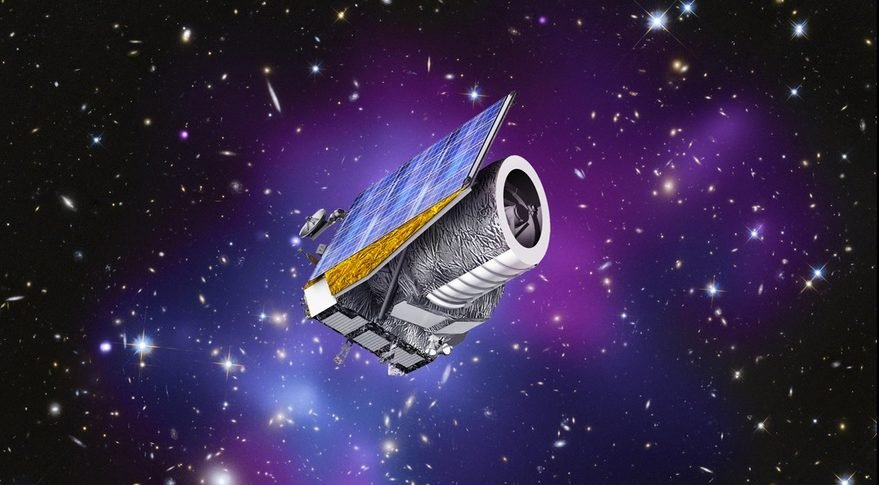
I had hoped to be able to spend the latter part of this week at the annual Euclid Consortium meeting which is being held this year in Oslo. Unfortunately because this year it falls within teaching term I’ve just got too much to do so I can’t go. I hope my colleagues and friends in Euclid have an enjoyable and successful time in Oslo. I hope to make it next year, wherever it is held.

Next Monday is the May Day Holiday so we have only 9 days of teaching left before the study break and examinations. Although next weekend is a Bank Holiday weekend, the powers that be in Maynooth have decreed that Saturday will be an Open Day:

It remains to be seen how many prospective students and their families will choose to interrupt their long weekend to visit campus on Saturday April 30th but I’ll be there. I know no bounds, you see…

The most exciting thing that happened last week was that a bloke from the Gas Board came to install a new gas meter. My colleagues were skeptical that he would actually turn up at the appointed time but he did. He completed the job in about half an hour, including time for a short lecture on why I should have a carbon monoxide meter put in my kitchen. The gas meter is actually on the front of the house and the gas man was kept under close surveillance as he worked by the local robin who has clearly decided that both front and back gardens are its own private property.

Last week the same robin made further visits to the inside of my house, even tapping on the window with its beak to be let in. I am increasingly concerned that it will decide that the inside of the house also belongs to it and I’ll end up being forcibly evicted.

It is an annual tradition at Eastertide to worry about whether Newcastle United will be relegated from the Premiership but after a string of good results they look reasonably safe. The players will be relieved to have avoided a public flogging by the clubs new owners, the Saudi Royal Family.

A Question of the Past

Posted in Biographical, Cute Problems, Education, Maynooth, The Universe and Stuff with tags , , , , , on April 20, 2022 by telescoper

I was tidying up some old files earlier today and came across some old examination papers, including those I took for my final examinations in Part II of the Natural Sciences Tripos in 1985. There were six of these, in the space of three consecutive days…

I picked one of the questions to share here because it covers similar ground to my current (!) Advanced Electromagnetism module for final-year students in Maynooth. Sorry it’s a bit grubby!

It’s been a long time since I took my finals and I’d largely forgotten what the format was. The question above was taken from Paper II which consisted of nine questions altogether in three Sections, A (Solid State Physics), B (Statistical Physics) and C (Electromagnetism, from which Q9 above was taken; I think the course was actually called Electrodynamics & Relativity). The examination was 3 hours in duration and students were asked to answer four questions, including one from each Section. That means each question would be expected to take about 45 minutes.

Looking at the paper in general and the above question in particular, a number of things sprang to mind about differences between then in Cambridge and now in Maynooth:

  1. Our theoretical physics papers in Maynooth are 2 hours in duration in which time students are to answer four questions, so that the questions are a bit shorter – 30 minutes each rather than 45.
  2. Our papers are also on a single subject rather than a composite of several; we typically don’t offer the students choice; my Advanced Electromagnetism paper has four questions and students have to answer all four for full marks.
  3. The questions on the old Tripos papers are less structured. There is no indication of the marks allocated to each part of the question in the question above.
  4. As far as I can recall there was no formula booklet back in 1985, though there was a sheet of physical constants. My Advanced Electromagnetism examination this year comes with a couple of pages of useful formulae from vector calculus and key equations in EM theory. One might argue that the old Cambridge papers relied rather more on memory (especially when you take into account that everything was in the space of three days).
  5. Back to Question 9, it is true that this along with the other Electromagnetism questions is at a similar level to what I have been teaching this Semester. If I recall correctly the relevant course in Cambridge was of 24 lectures, the same length as the course I’m teaching this year.
  6. Students taking my course should know how to do both parts of Question 9 without too much difficulty.

On the final point, the easiest way to tackle this sort of problem is to do what the question says: determine the electric and magnetic potentials, derive the electric and magnetic fields from them, then work out the Poynting vector quantifying the energy flux. The part of this that survives in the far-field limit gives you the radiated power then – Bob’s your Uncle – the answer is basically the Larmor Formula which is ubiquitous in problems of this type. The case of an oscillating dipole is a standard derivation but this method works for any time-varying source, as long as you remember to include the retarded potentials if it’s not periodic.

Had I been writing this question for a modern exam I think I would at very least have ended the first part with “Show that the radiated power is…” and then given the formula, so that it could be used for the second part even if a student could not derive it.

How to enjoy doing your PhD

Posted in Biographical, The Universe and Stuff on April 18, 2022 by telescoper

I’ve seen quite a number of posts on Twitter recently about how difficult it is doing a PhD, so I thought I’d just add a bit of a counter based on my own experiences in case the amount of doom and gloom circulating is in danger of putting anyone off. I have to say that although at times it was tough going, I had the best time of my life doing my PhD – well, DPhil actually – and I know many others who feel the same.

The point is that a postgraduate research degree is very different from a programme of undergraduate study. For one thing, as a research student you are expected to work on your own a great deal of the time. That’s because nobody else will be doing precisely the same project so, although other students will help you out with some things, you’re not trying to solve the same problems as your peers as is the case with an undergraduate. Your supervisor will help you of course and make suggestions (of varying degrees of helpfulness), but a PhD is still a challenge that you have to meet on your own.

(Incidentally, I don’t think it is good supervisory practice to look over a research student’s shoulder all the time. It’s part of the purpose of a PhD that the student learns to go it alone. There is a balance of course, but my own supervisor was rather “hands off” and I regard that as the right way to supervise. I’ve always encouraged my own students to do things their own way rather than try to direct them too much.)

That loneliness is tough in itself, but there’s also the scary fact that you do not usually know whether your problem even has a solution, let alone whether you yourself can find it. There is no answer at the back of the book; if there were you would not be doing research. A good supervisor will suggest a project that he or she thinks is both interesting and feasible, but the expectation is that you will very quickly be in a position where you know more about that topic than your supervisor.

I think almost every research student goes through a phase in which they feel out of their depth. There are times when you get thoroughly stuck and you begin to think you will never crack it. Self-doubt, crisis of confidence, call it what you will, I think everyone who has done a postgraduate degree has experienced it. I certainly did. A year into my PhD I felt I was getting nowhere with the first problem I had been given to solve. All the other research students seemed much cleverer and more confident than me. Had I made a big mistake thinking I could this? I started to panic and began to think about what kind of job I should go into if I abandoned the idea of pursuing a career in research.

So why didn’t I quit? There were a number of factors, including the support and encouragement of my supervisor, staff and fellow students in the Astronomy Centre at Sussex, and the fact that I loved living in Brighton, but above all it was because I knew that I would feel frustrated for the rest of my life if I didn’t see it through. I’m a bit obsessive about things like that. I can never leave a crossword unfinished either…

What happened was that after some discussion with my supervisor I shelved that first troublesome problem and tried another, much easier one. I cracked that fairly quickly and it became my first proper publication. Moreover, thinking about that other problem revealed that there was a way to finesse the difficulty I had failed to overcome in the first project. I returned to the first project and this time saw it through to completion. With my supervisor’s help that became my second paper, published in 1987.

I know it’s wrong to draw inferences about other people from one’s own particular experiences, but I do feel that there are some general lessons. One is that if you are going to complete a research degree you have to have a sense of determination that borders on obsession. I was talking to a well-known physicist at a meeting not long ago and he told me that when he interviews prospective physics students he asks them “Can you live without physics?”. If the answer is “yes” then he tells them not to do a PhD. It’s not just a take-it-or-leave-it kind of job being a scientist. You have to immerse yourself in it and be prepared to put long hours in. When things are going well you will be so excited that you will find it as hard to stop as it is when you’re struggling. I’d imagine it is the just same for other disciplines.

The other, equally important, lesson to be learned is that it is essential to do other things as well as your research. Being “stuck” on a problem is part-and-parcel of mathematics or physics research, but sometimes battering your head against the same thing for days on end just makes it less and less likely you will crack it., ’m sure that I’m not the only physicist who has been unable to sleep for thinking about their research or who has spent hours sitting at their desk achieving nothing at all. The human brain is a wonderful thing, but it can get stuck in a rut. One way to avoid this happening is to have more than one thing to think about.

I’ve lost count of the number of times I’ve been stuck on the last clue in a crossword. What I always do in that situation is put it down and do something else for a bit. It could even be something as trivial as making a cup of tea, just as long as I don’t think about the clue at all while I’m doing it. Nearly always when I come back to it and look at it afresh I can solve it.

It can be difficult to force yourself to pause in this way, but I think it is essential to learn how to effect your own mental reboot. In the context of my actual research this involved simply turning to a different research problem, but I think the same purpose can be served in many other ways: taking a break, going for a walk, playing sport, listening to or playing music, reading poetry, doing a crossword, or even just taking time out to socialize with your friends. Back in Brighton in the 1980s I spent most evenings in bars and nightclubs. I never felt the slightest bit of guilt for having so much fun. Without the nightlife and all that I’m not sure I would have finished my PhD.

So, for what it’s worth, here is my advice to new or prospective postgraduate students: work hard but enjoy the challenges. Listen to advice from your supervisor, but remember that the PhD is your opportunity to establish your own identity as a researcher so take ownership of it. Never feel guilty about establishing a proper work-life balance. Having more than one dimension to your life will not only improve your well-being but may also make you a better researcher.

The Wellness of Being

Posted in Biographical, Maynooth, Mental Health with tags , , on April 14, 2022 by telescoper

So we’ve arrived at the Easter weekend. No work tomorrow, Good Friday, or on Easter Monday. I’ve put my out-of-office autoreply on and I’m taking a break from work for four days in an attempt to recharge the batteries before the examination and marking season. I only have two papers to correct this year, but because my Computational Physics class larger than it has been for a few years so I have quite a lot of projects to assess too. The deadline for those is in May, as are the examinations.

Today while finishing off a few things before the break – including the last Computational Physics lab test – I noticed an email from Human Resources, announcing that May 2022 is “Employee Wellbeing Month”. Among other delights we are promised a “wide range of wellbeing workshops that will run throughout May” which most of us teaching staff will be far too busy to attend.

And don’t get me started on making us come in for an Open Day on the May Bank Holiday weekend…

I wonder if there’s any empirical evidence at all that wellbeing workshops and whatnot do anything at all to alleviate work-related stress? I suspect not. It seems to me that they’re just a way of telling academic staff that they’d better get used to it because no attempt will ever be made to deal with the real causes of burnout: lack of resources, staff shortages, ever-increasing workloads, and the suffocating influence of remote and unsympathetic management.

This week though I learnt a far better way to experience feelings of wellbeing. Yesterday evening, for the first time in ages, I went to a pub for drinks with some current and former postgrads and colleagues (and partners thereof) from the Department of Theoretical Physics. Unlike, for example, Cardiff (where visits to the pubs with colleagues were a regular occurrence for me) I hadn’t really socialised with folks from Maynooth University even before the lockdown put paid to the possibility entirely. Last night was actually an initiative by some of our PhD students, and I’m very grateful to them for organizing it!

I’d been to the pub – McMahon‘s on Main Street – a few times before so when invited to go along it seemed like having a couple of pints there might be a good way of trying to shake off the agoraphobia. The evening turned out to be ideal for that purpose – the pub had enough people in it to have atmosphere but not so many that it was heaving. I went with the intention of staying an hour or two, but ending up leaving at midnight.

I hope this sort of thing becomes a regular feature from now on. Going to the pub with some friends now and then is far more likely to improve my state of mind than any number of wellness seminars. Although slightly hungover this morning I was in a very good mood, at least until my computer decided to embark on a Windows Update that took over an hour to complete…

A Term for Exhaustion

Posted in Biographical, Maynooth on April 13, 2022 by telescoper

Today I gave Lecture 20 in my final-year module on Advanced Electromagnetism which was about dipole radiation. That means I have four lectures remaining. All I have left to cover is the interaction between electromagnetic fields and waves and various types of medium, which means I’m more-or-less on track. Next week is the Easter vacation for the students so my next lecture won’t be for about a fortnight.

I’m looking forward to the Easter break, which actually starts on Friday. Surprisingly Good Friday isn’t actually a Bank Holiday in Ireland, though Easter Monday is, but the University is closed on that day. I don’t have any lectures on Fridays this term anyway so it doesn’t make any difference to me. My last teaching session before the break is tomorrow after, a two-hour Computational Physics Lab session.

This term has been both exhausting and dispiriting. Student attendance at lectures and tutorials has fallen to very low levels: I’m getting only about 30-40%. I discussed some of the possible reasons for low engagement here. We’ll just have to wait and see what happens in the May Examinations as a result of this lack of participation, but at least we get a break before we have to confront that.

There are other issues weighing me down too, but it’s probably best I don’t write about them here. Suffice to say that I’m very tired and frustrated and I don’t think a week off will do much to change that. On the bright side my term as Head of Department is due to end on August 31st 2022, just 140 days from now…

Accommodation Not Wanted

Posted in Biographical, Maynooth with tags , , on April 6, 2022 by telescoper

A month ago I posted an item about the fact that I had offered the spare room in my house as accommodation for a refugee from the War in Ukraine. Over 20,000 refugees have now arrived in Ireland but I have just been told that the accommodation I offered is not suitable. That’s mainly because the greatest need is for homes suitable for families with children rather than single persons; I only have one room and it doesn’t have en suite facilities. Also most of the refugees are female and the assessors would probably be nervous about placing a woman in a house with a strange man like me.

I feel slightly less bad about this than I might have done before reading that only about 40-50% of the accommodation pledged to the Irish Red Cross has been assessed as suitable.

I also note that a number of host families are finding the job of providing accommodation to often traumatized people very difficult and many refugees have been returned to processing centres because the hosts are unable to cope. I might well have ended up feeling the same.

Anyway, at least I offered. I would have felt bad if I hadn’t. Now I’ll just have to try to find some other way to help…