Archive for the Biographical Category

A Breakthrough for a Bigot

Posted in Biographical, LGBTQ+, The Universe and Stuff with tags , , , on October 18, 2018 by telescoper

You may recall that a few months ago I wrote a post about Dr Aron Wall, whose research speciality is Black Hole Thermodynamics, and who is moving to Cambridge next year to take up a Lectureship. Yesterday I heard the news that Dr Wall (who is currently at Stanford) has been awarded a New Horizons Breakthrough Prize of $100,000. Three such prizes are awarded each year for outstanding early career researchers.

This is just a reminder that, when he isn’t doing theoretical physics, Dr Wall also runs a blog in which he expresses outspokenly homophobic views. For example, one piece included bigoted generalizations such as:

…the notoriously promiscuous, reckless, and obscene lifestyle characteristic of the cultural venues of the gay community.

It sounds like he knows a lot about these places. Does he visit them often? The press release from Stanford does not say.

You can read his whole piece for yourself* and decide what you think. As a gay man I found it thoroughly offensive, but what I think is not as important as what effect this person’s presence in the teaching staff will mean for any LGBT+ students at DAMTP. I hope Dr Wall enjoys the compulsory Equality and Diversity Training he will be required to undergo as a new member of staff and that he does not let his extremist beliefs interfere with his responsibility as a lecturer to treat all staff and students with the respect they deserve.

(*He’s deleted it, so I linked to an archived version…)

Some people have said that Dr Wall’s private beliefs are his own business, as long as he is good at his job. I agree with that. However his beliefs are no longer private. He has himself chosen to make them public. I think that makes a big difference. His views are known publicly, and that does not help to provide a welcoming environment for LGBT+ students (which I would have thought was part of his job). You might say that `It’s OK. Just keep him away from LGBT+ students’. That seems to me a pathetic response, no different from saying that it’s acceptable to employ a serial sexual harasser as long as you keep him away from female students. The duty of a member of academic staff is to the entire academic community (staff and students), not just the fraction of it that the staff member isn’t bigoted against.

I just wonder whether the Breakthrough Prize would have been awarded to a person with outspoken racist or sexist views? And should prizes be awarded to people who are good at science regardless of attitudes that cast severe doubt on their ability or willingness to foster a spirit of inclusivity within which other scientists can flourish?

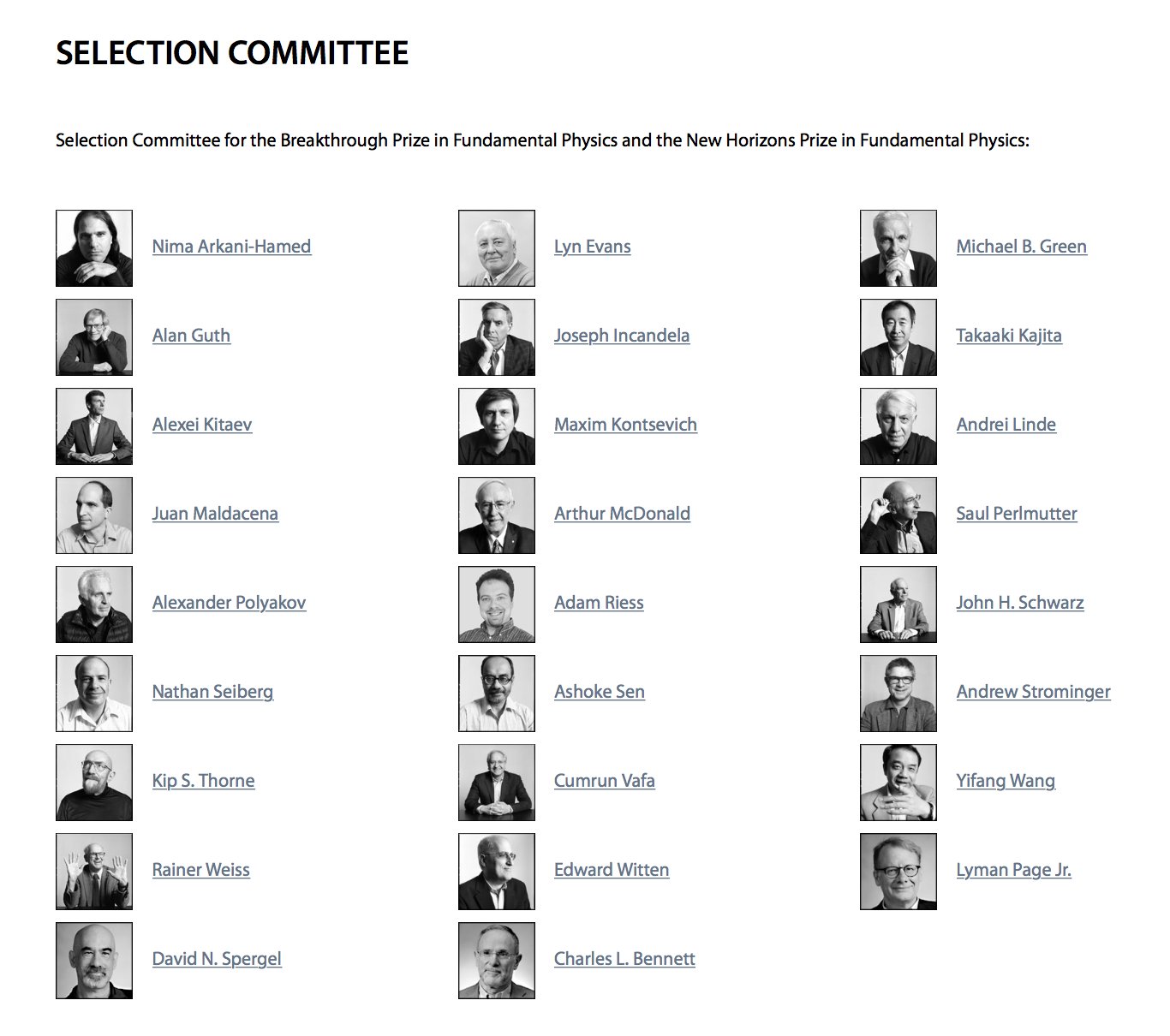
P.S. Note the diversity of the panel that made this award!

R.I.P. Prof. Michael J Thompson

Posted in Biographical, The Universe and Stuff with tags , , , on October 17, 2018 by telescoper

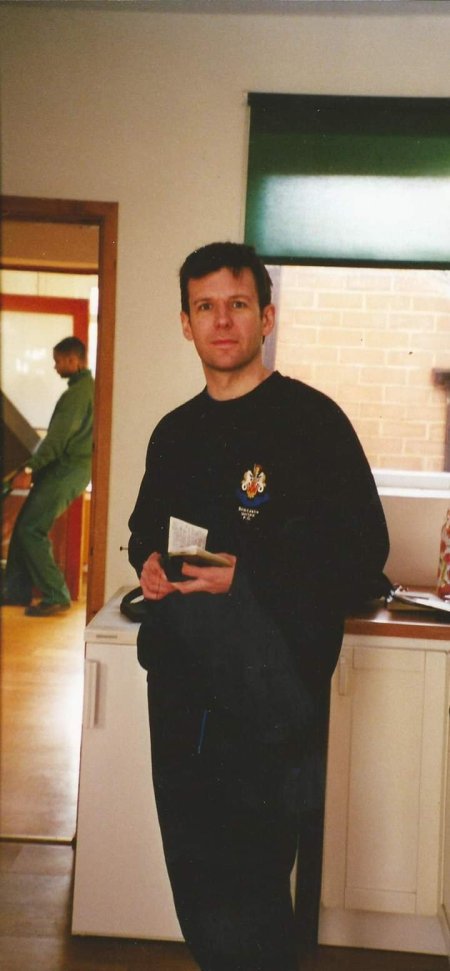
I just returned from giving a lecture to find an email in my inbox delivering the awful news that Professor Michael J. Thompson (pictured above) passed away unexpectedly on 15th October 2018, while at a scientific meeting in Tokyo.

Thompson’s scientific research activity was primarily in the field of helioseismology, astroseismology, solar physics, and inverse problems. He worked extensively in developing and applying inverse techniques in helioseismology and, in particular, measuring the stratification, rotation, and large-scale flows in the solar interior.

Along with being the Deputy Director and Chief Operating Officer of the National Centre for Atmospheric Research (NCAR) in Boulder, Colorado, Michael Thompson was also an NCAR senior scientist. From 2010 to 2014 he directed the High Altitude Observatory and was an associate director of NCAR. Prior to joining NCAR, Mike Thompson was Head of the School of Mathematics and Statistics in the University of Sheffield, and was formerly a Professor of Physics at Imperial College London. I knew him very well personally from the time before that, as we worked together for many years in the Astronomy Unit in the School of Mathematical Sciences at Queen Mary, University of London. Although we didn’t work in the same topics we had many interesting discussions about inverse problems in our respective fields, as well as many other topics (especially cricket). I recall that he taught an MSc course on cosmology, which he volunteered to do as he was interested in learning more about the subject.

More recently we kept in touch regularly via dinners at the RAS Club, of which he was a member, until he moved to the USA. It is through the Club mailing list that I learnt the sad news of his death.

I know I can speak for everyone who knew him in saying that he was not only a first-rate scientist but also a greatly valued colleague and an extremely nice man. Mike will be greatly missed by everyone who knew him, and I extend my deepest condolences to his family at what must be a very difficult time.


UPDATE: Here’s a news item about Mike’s death from the local paper in Boulder Colorado.

The Big Bang Exploded?

Posted in Biographical, The Universe and Stuff with tags , , , on October 15, 2018 by telescoper

I suspect that I’m not the only physicist who receives unsolicited correspondence from people with wacky views on Life, the Universe and Everything. Being a cosmologist, I probably get more of this stuff than those working in less speculative branches of physics. Because I’ve written a few things that appeared in the public domain, I probably even get more than most cosmologists (except the really famous ones of course).

Many “alternative” cosmologists have now discovered email, and indeed the comments box on this blog, but there are still a lot who send their ideas through regular post. Whenever I get a envelope with an address on it that has been typed by an old-fashioned typewriter it’s a dead giveaway that it’s going to be one of those. Sometimes they are just letters (typed or handwritten), but sometimes they are complete manuscripts often with wonderfully batty illustrations. I remember one called Dark Matter, The Great Pyramid and the Theory of Crystal Healing. I used to have an entire filing cabinet filled with things like his, but I took the opportunity of moving from Cardiff some time ago to throw most of them out.

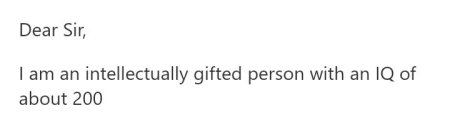
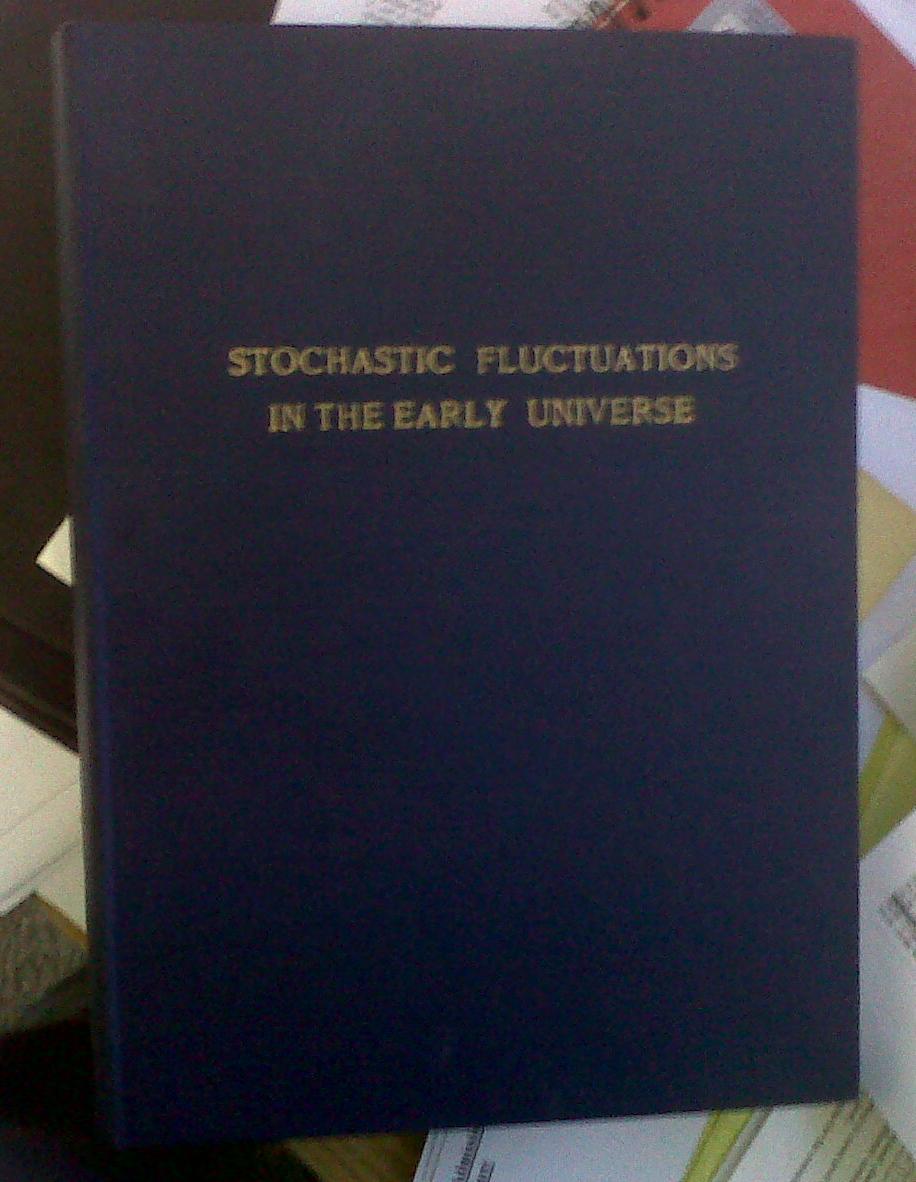
One particular correspondent started writing to me after the publication of my little book, Cosmology: A Very Short Introduction. This chap sent a terse letter to me pointing out that the Big Bang theory was obviously completely wrong. The reason was obvious to anyone who understood thermodynamics. He had spent a lifetime designing high-quality refrigeration equipment and therefore knew what he was talking about (or so he said). He even sent me this booklet about his ideas, which for some reason I have neglected to send for recycling:

His point was that, according to the Big Bang theory, the Universe cools as it expands. Its current temperature is about 3 Kelvin (-270 Celsius or thereabouts) but it is now expanding and cooling. Turning the clock back gives a Universe that was hotter when it was younger. He thought this was all wrong.

The argument is false, my correspondent asserted, because the Universe – by definition – hasn’t got any surroundings and therefore isn’t expanding into anything. Since it isn’t pushing against anything it can’t do any work. The internal energy of the gas must therefore remain constant and since the internal energy of an ideal gas is only a function of its temperature, the expansion of the Universe must therefore be at a constant temperature (i.e. isothermal, rather than adiabatic). He backed up his argument with bona fide experimental results on the free expansion of gases.

I didn’t reply and filed the letter away. Another came, and I did likewise. Increasingly overcome by some form of apoplexy his letters got ruder and ruder, eventually blaming me for the decline of the British education system and demanding that I be fired from my job. Finally, he wrote to the President of the Royal Society demanding that I be “struck off” and forbidden (on grounds of incompetence) ever to teach thermodynamics in a University. The copies of the letters he sent me are still will the pamphlet.

I don’t agree with him that the Big Bang is wrong, but I’ve never had the energy to reply to his rather belligerent letters. However, I think it might be fun to turn this into a little competition, so here’s a challenge for you: provide the clearest and most succint explanation of why the temperature of the expanding Universe does fall with time, despite what my correspondent thought.

Answers via the comment box please!

Nobel Prize for Physics Matters

Posted in Biographical, The Universe and Stuff with tags , , , , on October 1, 2018 by telescoper

I’ve been a bit tied up writing lecture notes and participating in telecons today, so I’ve just got time for a little post to mention that tomorrow morning (October 2nd 2018) will see the announcement of this year’s Nobel Prize for Physics.

I do, of course, already have a Nobel Prize of my own, dating from 2006, when I was lucky enough to attend the prize-giving ceremony and banquet.

I was, however, a guest of the Nobel Foundation rather than a prizewinner, so my medal is made of chocolate rather than gold. Still, it was a very nice weekend!

I have no idea who will win the Physics Nobel Prize tomorrow. If you have any suggestions please put then forward through the comments box.

I’d say there’s an outside chance that there might be an award for the discovery of exoplanets, as that has certainly altered humanity’s perception of its place in the Universe. It’s by no means obvious to me who should win it, however. Possibilities are Possible winners include Didier Queloz, Aleksander Wolszczan, Dale Frail, and Michel Mayor, but which? It may also be too soon after the gravitational waves prize last year. Perhaps it’s time for something less exotic this year? To find out you’ll have to wait for the announcement, around about 10.45 (UK/Irish time) tomorrow morning.

Anyway, for the record, I’ll reiterate my opinion that while the Nobel Prize is flawed in many ways, particularly because it no longer really reflects how physics research is done, it does at least have the effect of getting people talking about physics. Surely that at least is a good thing?

UPDATE: And the winner is…

One half to Arthur Askey Ashkin, and the other half jointly to Gérard Mourou and Donna Strickland, for “groundbreaking inventions in the field of laser physics.”

So there are you are. The rumours were, as usual, completely wrong.

Oh, and Donna Strickland is the first woman to win the physics Nobel since Maria Goeppert-Mayer in 1963. Congratulations to her, and indeed to all this year’s winners!

The Importance of Taking Notes

Posted in Biographical, Education with tags , , , on September 24, 2018 by telescoper

Well, term has officially started and the campus of Maynooth University is looking very busy. Taking a short break from the task of preparing notes and problem sets for the modules  I’m teaching this term.  I’ve just remembered an old post I did some time ago about  lecture notes. I won’t repeat the entire content of my earlier discussion, but one of the main points I made in that was that many students are simply not used to taking notes and find it difficult to do so effectively during lectures, so much so that the effort of copying things onto paper must surely prevent them absorbing the intellectual content of the lecture (assuming that there is any). Since it’s the first week of teaching here, I thought I’d share some thoughts, for the benefit of those starting a new term.

I dealt with the problem  of taking notes when I was an undergraduate by learning to write very quickly without looking at the paper as I did so. That way I didn’t waste time moving my head to and fro between paper and screen or blackboard. Of course, the notes I produced using this method weren’t exactly aesthetically pleasing, but my handwriting is awful at the best of times so that didn’t make much difference to me. I always wrote my notes up more neatly after the lecture anyway. But the great advantage was that I could write down everything in real time without this interfering with my ability to listen to what the lecturer was saying.

An alternative to this approach is to learn shorthand, or invent your own form of abbreviated language. This approach is, however, unlikely to help you take down mathematical equations quickly.

My experience nowadays is that many students simply aren’t used to taking notes like this – I suppose because they get given so many powerpoint presentations or other kinds of handout –  so they struggle to cope with the old-fashioned chalk-and-talk style of teaching that some lecturers still prefer (and which actually works very well in mathematically-based disciplines). That’s probably because they get much less practice at school than my generation did. Most of my school education was done via the blackboard..

Nowadays,  many lecturers  give copies of their powerpoint slides to students and others even give out complete sets of printed notes before, during, or after lectures. That’s all very well, I think, but what are the students supposed to be doing during the lecture if you do that? Listen, of course, but if there is to be a long-term benefit they should take notes too. In other words, entirely passive learning is unlikely to be effective.

Even if I hand out copies of slides or other notes, I always encourage my students to make their own independent set of notes, as completely as possible. I don’t mean by copying down what they see on the screen and what they may have on paper already, but by trying to write down what I say as I say it. I don’t think many take that advice, which means much of the spoken illustrations and explanations I give don’t find their way into any long term record of the lecture.

And if the lecturer just reads out the printed notes, adding nothing by way of illustration or explanation, then the audience is bound to get bored very quickly.

My argument, then, is that regardless of what technology the lecturer uses, whether he/she gives out printed notes or not, then if the students can’t take notes accurately and efficiently then lecturing is a complete waste of time. In fact for the modules I’m doing this term I don’t intend to hand out lecture notes at all during the lectures, although I do post lecture summaries and answers to the exercises online after they’ve been done.

As a further study aid, most lectures at my previous institutions (Sussex University and Cardiff University) are recorded and made available to students to view shortly after the event. Contrary to popular myth there’s no evidence that availability of recorded lectures lowers the attendance at lectures. It appears that students use the recordings for revision and/or to clarify points raised in the notes they have taken, and if anything the recordings allow the students to get greater value from lectures rather than persuading them that there’s no need to attend them. Unfortunately we don’t have lecture capture at Maynooth, but I hope it can be introduced  here at some point.

I do like lecturing, because I like talking about physics and astronomy, but as I’ve got older I’ve become less convinced that lectures play a useful role in actually teaching anything. I think we should use lectures more sparingly, relying more on problem-based learning to instil proper understanding. When we do give lectures, they should focus much more on stimulating interest by being entertaining and thought-provoking. They should not be for the routine transmission of information, which is far too often the default.

I’m not saying we should scrap lectures altogether. At the very least they have the advantage of giving the students a shared experience, which is good for networking and building a group identity. Some students probably get a lot out of lectures anyway, perhaps more than I did when I was their age. But different people benefit from different styles of teaching, so we need to move away from lecturing as the only  option and ensure that a range of teaching methods is available.

I don’t think I ever learned very much about physics from lectures – I found problem-based learning far more effective – but I’m nevertheless glad I learned out how to take notes the way I did because I find it useful in all kinds of situations. Effective note-taking is definitely a transferable skill, but it’s also in danger of becoming a dying art. If we’re going to carry on using lectures, we old fogeys need to stop assuming that students learnt it the way we did and start teaching it as a skill.

Perhaps the biggest problem with the way we* teach physics these days, however,  is not really about the mode of delivery but the compartmentalization that has crept in via the school system which encourages students to think of each `module’ as a bite-sized piece that can be retained until the examinations, regurgitated, and then forgotten. I’ve no doubt that a great many students pass the examinations we set by simply memorizing notes with little genuine understanding  needed or problem-solving ability demonstrated. We promote physics as a subject that nurtures these skills, but I don’t think many physics graduates – even those with good degrees – actually possess them at the end. We should be making much more of an effort in teaching students how to use their brains in other ways than as memory devices, and getting them engaged in more active teaching activities seems to me to be a very high priority. That said, I think we probably do much more of this in physics than in most other subjects!

*by `we’ I mean physicists generally, rather than my current Department (where we do actually make a lot of effort to develop these skills through small group sessions that complement other teaching activities.

The Autumnal Equinox

Posted in Biographical, Maynooth with tags , , , on September 23, 2018 by telescoper

So here we are then. The Autumnal Equinox (in the Northern hemisphere) took place in the early hours of this morning, at 01.54 UT (which is 02.54 Irish Time) on Sunday 23rd September. I was, of course, sound asleep during this momentous event.

People sometimes ask me how one can define the `equinox’ so precisely when surely it just refers to a day on which day and night are of equal length implying that it’s a day not a specific time? The answer is that the equinox is defined by a specific event, the event in question being when the plane defined by Earth’s equator passes through the centre of the Sun’s disk (or, if you prefer, when the centre of the Sun passes through the plane defined by Earth’s equator passes through the centre of the Sun’s disk). Day and night are not necessarily exactly equal on the equinox, but they’re the closest they get. From now on days in the Northern hemisphere will be shorter than nights and they’ll get shorter until the Winter Solstice.

For many people the autumnal equinox is taken to be the end of summer, though there is a saying around tyhese parts that `Summer is Summer to Michaelmas Day’ (which does not happen until September 29th). It has actually been a nice morning in Maynooth, though the winds are roughly Northerly and it is consequently a tad on the blustery side. Looking back over the posts I’ve written at this time of year since I started blogging in 2008, it’s noticeable how many times we’ve had a window of good weather around the autumnal equinox, although this year there have been storms and heavy rainfall over the last few days. Here’s am excerpt from the post I wrote in 2008 on this:

The weather is unsettling. It’s warm, but somehow the warmth doesn’t quite fill the air; somewhere inside it there’s a chill that reminds you that autumn is not far away.

I find this kind of weather a bit spooky because it always takes me back to the time when I left home to go to University, as thousands of fledgling students are about to do this year in their turn.

Indeed tomorrow, Monday 24th September, is the first day of lectures for the new term in Maynooth. The new students have been going through various induction and orientation processes for a week or so already, but their first encounter with actual teaching will be to morrow. I don’t actually take the stage until Tuesday, on which day both my new modules start. The second years will get Vector Calculus and Fourier Series while the fourth years get Astrology and Cosmetics Astrophysics and Cosmology. That is assuming that I take the right notes to the right lectures.

Looking back to the corresponding equinoctial piece I posted last year brought it home to me just what a strange year has passed. On 22nd September 2017 I visited the Office of the Consulate of India in Cardiff to lodge an application for a visa for a trip to attend a conference in Pune, watched a bit of cricket, then some work preparing for the launch event of the Centre for Doctoral Training (CDT) in Data-Intensive Science that was about to take place. I was only working part-time in Cardiff then.

Although I no longer work at Cardiff University, I still hold it in great affection and wish it all the best. I heard on the grapevine that it has been a good year for undergraduate recruitment in the School of Physics & Astronomy, which is excellent news, and the Data Innovation Research Institute also seems to be thriving. No doubt I’ll bump into various members of staff on occasional visits to Cardiff, at least until such time as I sell my house in Pontcanna.

At the time of last year’s autumnal equinox I hadn’t even been interviewed for the job I now hold in Maynooth, and had no inkling that within a year I would have relocated to Ireland. I actually took an hour out of the CDT event to be interviewed via Skype over a crappy Hotel internet connection. I thought it went terribly badly – I hate Skype! – but I ended up being offered the job. I was able to put in a quick visit to Maynooth to confirm the details before going to India as planned. I’ve been so busy flitting back and forth betweeing Ireland and Wales during the last 12 months that I haven’t really had time to reflect properly on how extraordinary life is that it can change so much as a result of lucky coincidences!

Anyway, I think that’s enough rambling for now. I’ve got a couple of problem sets to put together. Let me end by wishing the new and returning students at Maynooth and at Cardiff all the best for the new academic year. Work hard, and enjoy your studies, but don’t forget to enjoy life on the way!

Seven Years From Swindon

Posted in Biographical with tags , on September 20, 2018 by telescoper

I took the above snap this morning walking back to the Science Building. It shows the view from the other side of St Joseph’s Square compared to the picture I posted on Tuesday, i.e. towards St Patrick’s House rather than away from it. The weather has taken a turn for the worse since Tuesday, and it’s decidedly autumnal today but it’s still not a bad view to be greeted with on the way to the office.

Contrast this with a photograph I took precisely seven years ago today, on September 20th 2011, when I had just arrived in Swindon for a stint on the STFC Astronomy Grants Panel:

I’m no longer part of the UK research system so I guess I’ll never have to visit Swindon again…

A Decade In The Dark!

Posted in Biographical, The Universe and Stuff with tags on September 16, 2018 by telescoper

When I logged onto WordPress yesterday I received a message that it was the 10th anniversary of my registration with them as a blogger, which is when I took my first step into the blogosphere; that was way back on 15th September 2008.

I actually wrote my first post on the day I registered but unfortunately I didn’t really know what I was doing on my first day at blogging – no change there, then –  and I didn’t actually manage to figure out how to publish this earth-shattering piece. It was only after I’d written my second post that I realized that the first one wasn’t actually visible to the general public because I hadn’t pressed the right buttons, so the two appear in the wrong order in my archive. Anyway, that confusion is the reason why I usually take 16th September as this blog’s real anniversary.

I’d like to take this opportunity to send my best wishes, and to thank, everyone who reads this blog, however occasionally. According to the WordPress stats, I’ve got readers from all round the world, including  the Vatican!

If you’re interested in statistics then, as of 14.00 Irish Summer Time Today today, I have published 4,225 blog posts, not counting about 20 that I wrote but have not yet published; I’ll probably save these for my memoirs.. These posts have received 3,688,023 hits altogether; I get an average of about 1200 per day.  This varies in a very erratic fashion from day to day, but the annual average has been fairly constant over the last several years. The greatest number of hits I have received in a single day is 8,864 (at the peak of the BICEP2 controversy). Some of the most popular posts have not been about science at all, including  my rant about Virgin Media and a post about the last episode of Inspector Morse.

There have been 30,372 comments published on here and  2,213,145 rejected by my filters. The vast majority of the rejected comments were from automated spam bots, but a small number have been removed for various violations, usually for abuse of some kind. And, yes, I do get to decide what is published. It is my blog!

While I am on the subject of comments, I’ll just repeat here the policy stated on the home page of this blog:

Feel free to comment on any of the posts on this blog but comments may be moderated; anonymous comments and any considered by me to be abusive will not be accepted. I do not necessarily endorse, support, sanction, encourage, verify or agree with the opinions or statements of any information or other content in the comments on this site and do not in any way guarantee their accuracy or reliability.

It does mean a lot to me to know that there are people who find my ramblings on this `shitty wordpress blog’ interesting enough to look at, or even read, and sometimes even to come back for more, so I’d like to take this opportunity to send my best wishes to all those who follow this blog and especially those who take the trouble to comment on it in such interesting and unpredictable ways!

The last decade has been eventful, to say the least, both personally and professionally. I started blogging not long after I’d moved into my house in Pontcanna, Cardiff. Since then I moved to Sussex, and then back to Cardiff, and now to Ireland. More importantly we’ve seen the discovery of the Higgs Boson and gravitational waves, both of which resulted in Nobel Prizes, as did the studies of high-redshift supernovae. The Planck mission mission was launched, did its stuff, and came to a conclusion in this decade too. Science has moved forward, even if there are many things in this world that seem to be going backwards.

I don’t know how long I’ll keep blogging – vitae summa brevis spem nos vetat incohare longam – but I’ve got no immediate plans to stop.

End of Summer in Wales

Posted in Biographical, Cricket on September 11, 2018 by telescoper

Well, with the Last Night of the Proms over and done with on Saturday, and the last day of the Fifth Test between England and India just finished at the Oval, that’s the end of the summer as far as I’m concerned.

I thought for a while earlier today that India might just pull off a remarkable victory. Needing 464 to win they were going well as Rahul and Pant put on a 200 partnership. I saw that BetFair were offering 16/1 on an India victory so put a tenner on. That had the desired effect and India were all out for 345. Good effort though by India. Especially well, played by Pant, on his maiden century!

Oh, and Jimmy Anderson took the last wicket, his 564th in Test cricket, and thereby beat Glenn McGrath’s record as leading pace bowling wicket-taker of all time in Test matches.

The 4-1 margin of victory in this series rather flatters England and is correspondingly harsh on India. The big worry for England is that with Cook now in retirement they now have to find two reliable opening batsmen when so far they’ve failed to find one.

Anyway, tomorrow morning I’m back to Maynooth. I have a paper and a book manuscript to submit before getting my lectures ready for the new term.

After receiving some very good news today, there is also a big event to prepare for on October 9th of which more anon..

Cricket Comments

Posted in Biographical, Cricket on September 9, 2018 by telescoper

As the Test cricket season in England draws to a close I thought I might do a post summarising my extensive contributions to the comments section of the BBC Test Match Special website.

Here they both are:

The first was posted just before the start of play on the first day of the 4th Test between England and India. It turned out to be rather prescient. The second appeared earlier today, during the third day of the Fifth Test.

I think it was Andy Warhol who said that one day everyone will have a comment on the TMS web page. At any rate, that’s probably the closest I’ll ever get to 15 minutes of fame..