Archive for the Education Category

The Cuts in UK Higher Education

Posted in Biographical, Cardiff, Education, Maynooth, Politics with tags , , , , on November 28, 2024 by telescoper

Today friend of mine send me a message pointing out that in order to save money the University of Sussex is planning to make about 300 staff redundant; you can see an article about it in the Times Higher here. For the time being it seems the plan to make these savings via a voluntary severance scheme. I don’t know whether academic and administrative staff will be treated equally, either.

This is grim news. I worked at Sussex from 2013 until 2016 when I resigned my post as Head of School of Mathematical and Physical Sciences. I took that decision largely for personal reasons but there were professional reasons too. From 2013 the University had embarked on an ambitious growth plan based on buoyant student numbers and the fee income generated thereby. Staff numbers grew too, to cope with the increased demand for teaching. Unfortunately the management was unable to match this with real improvements in infrastructure, largely due to the disastrous outsourcing of campus estates and services. Many promises made to me as Head of School by Senior Management were broken. I wasn’t the only Head of School to compain of this, either. Although things were still going relatively well when I left in 2016, and I was optimistic for the future of the School then, there were severe risks to its financial stability if student recruitment dived. Sadly, that’s exactly what happened. Falling student numbers – especially from overseas – left the institution very vulnerable, especially since the fee per student did not change. That problem was exacerbated by a burst of inflation. AlthoughIt has clearly been a very difficult time for the University of Sussex, largely due to national and international forces beyond its control, but exacerbated by ineffective, and at times incompetent, institutional management. It should be said also that many University leaders enthusiastically embraced the fees-based system that has led their institutions where they are now, though most of them have now departed and left others to carry the can.

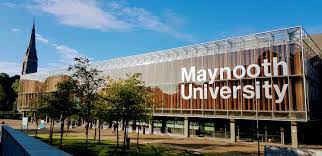
It worries me that Maynooth University is also trying to grow very quickly, without adequate investment in infrastructure especially teaching. It isn’t increasing the number of academic staff much either, preferring to hire more and more managers; yet another such position was advertised this week. I don’t know whether Maynooth’s financial trajectory will follow that of Sussex. The funding environment is very different in Ireland compared to the UK, so it may not. It is clear that the enviroment for education and research here is being steadily degraded by the current leadership.

Anyway, when I saw the announcement about Sussex, I checked other Universities I’ve worked in over the years. There’s a list here. It seems that while there are particular factors at play at Sussex, there are similar difficulties across the Board. Cardiff University has a deficit of £35 million and the VC has refused to rule out compulsory redundancies there. I’m not sure how this is all affecting the School of Physics & Astronomy. Nottingham University, where I worked from 1999 to 2007, has deficit of £30 million, in response to which it has opened a voluntary severance scheme, introduced hiring freezes, cut non-pay budgets, and refused to renew 500 fixed-term contracts.

There certainly are cold winds blowing across the University landscape in the United Kingdom, and there is no sign of any respite. This is just the start.

Approaching Examinations

Posted in Education, Maynooth with tags , , , , , , , , on November 27, 2024 by telescoper

We’re in Week 9 of teaching in the Autumn Semester at Maynooth University, which means we’ve got one eye on the forthcoming Examination Period, which starts on 10th January 2025. Examination papers have already been prepared in draft form, and are now being checked ahead of printing. A draft examination timetable has also been released to staff, but not yet to students in case it has to be revised because of clashes.

I’m still on schedule with both my modules to finish the actual content in time to do use the last week for revision classes, going through past examination papers and generally helping the students prepare for the ordeals of January. There is a continuously-assessed component of both my modules, which counts 20% of the overall grade. One purpose of these assignments is to give the students some practice at the sort of problems they might encounter in the examinations: if they can do the assignments, they shouldn’t be too fazed by the examination questions. The purpose of the coursework is not just about passing examinations, however. I think the only way really to learn about mathematical physics is by doing it; the coursework is at least as important as the lectures and tutorials in terms of actually learning the subject. I think that modern higher education involves drastic over-assessment. Too much emphasis on grades and scores can be detrimental to real learning, but assessment that is formative can be extremely beneficial. Continuous assessment provides a way to give feedback to students on how they are doing, and to lecturers on how well the message is getting across; giving grades to such coursework is really just an incentive to the students to do it. It’s not primarily intended to be summative.

Anyway, back to examinations. One big difference between our examinations in Theoretical Physics in Maynooth and those at other institutions at which I’ve taught (in the UK) is that most of the papers here offer no choice of questions to be answered. Elsewhere it is quite common to find a choice of two or three questions from four or five on the paper. In my module on Differential Equations and Complex Analysis, for example, there are four questions on the examination paper and students have to do all of them for full marks.

One  advantage of our system is that it makes it much harder for students to question-spot in the hope that they can get a good grade by only revising a fraction of the syllabus. If they’re well designed, a few longish questions can cover most of the syllabus for a module, which they have to in order to test all the learning outcomes. To accomplish this, questions can be split into parts that may be linked to each other to a greater or lesser extent in order to explore the connections between different ideas, but also sufficiently separate that a student who can’t do one part can still have a go at others. With such a paper, however, it is a  dangerous strategy for a student to focus only on selected parts of the material in order to pass.

As an examiner, the Maynooth style of examination also has the advantage that you don’t have to worry too much if one question turns out to be harder than the others. That can matter if different students attempt different questions, as students might be penalized if they chose a particularly hard one, but not if everyone has to do everything.

But it’s not just the number of questions that’s important, it’s the duration. I’ve never felt that it was even remotely sensible for undergraduate physics examinations to be speed tests, which was often the case when I was a student. Why the need for time pressure? It’s better to be correct than to be fast, I think. I always try to set examination questions that could be done inside two hours by a student who knew the material, including plenty of time for checking so that even a student who made a mistake would have time to correct it and get the right answer. If a student does poorly in this style of examination it will be because they haven’t prepared well enough rather than because they weren’t fast enough.

Teaching Transforms

Posted in Education, History, Maynooth, The Universe and Stuff with tags , , , , , on November 21, 2024 by telescoper

We’re about two-thirds of the way into the Autumn Semester here at Maynooth and, by a miracle, I’m just about on schedule with both the modules I’m teaching. It’s always difficult to work out how long things are going to need for explanation when you’re teaching them for the first time.

One of the modules I’m doing is Differential Equations and Transform Methods for Engineering Students. I’ve been on the bit following the “and” for a couple of weeks already. The first transform method covered was the Laplace transform, which I remember doing as a physics undergraduate but have used only rarely. Now I’m doing Fourier Series, as a prelude to Fourier transforms.

As I have observed periodically, the differential equations and transform methods are not at all disconnected, but are linked via the heat equation, the solution of which led Joseph Fourier to devise his series in Mémoire sur la propagation de la chaleur dans les corps solides (1807), a truly remarkable work for its time that inspired so many subsequent developments.

In the module I’m teaching, the applications are rather different from when I taught Fourier series to Physics students. Engineering students at Maynooth primarily study electronic engineering and robotics, so there’s a much greater emphasis on using integral transforms for signal processing. The mathematics is the same, of course, but some of the terminology is different from that used by physicists.

Anyway I was looking for nice demonstrations of Fourier series to help my class get to grips with them when I remembered this little video recommended to me some time ago by esteemed Professor George Ellis. It’s a nice illustration of the principles of Fourier series, by which any periodic function can be decomposed into a series of sine and cosine functions.

This reminds me of a point I’ve made a few times in popular talks about astronomy. It’s a common view that Kepler’s laws of planetary motion according to which which the planets move in elliptical motion around the Sun, is a completely different formulation from the previous Ptolemaic system which involved epicycles and deferents and which is generally held to have been much more complicated.

The video demonstrates however that epicycles and deferents can be viewed as the elements used in the construction of a Fourier series. Since elliptical orbits are periodic, it is perfectly valid to present them in the form of a Fourier series. Therefore, in a sense, there’s nothing so very wrong with epicycles. I admit, however, that a closed-form expression for such an orbit is considerably more compact and elegant than a Fourier representation, and also encapsulates a deeper level of physical understanding. What makes for a good physical theory is, in my view, largely a matter of economy: if two theories have equal predictive power, the one that takes less chalk to write it on a blackboard is the better one!

Anyway, soon I’ll be moving onto the complex Fourier series and thence to Fourier transforms which is familiar territory, but I have to end the module with the Z-transform, which I have never studied and never used. That should be fun!

Midpoint at Maynooth

Posted in Biographical, Education, mathematics, Maynooth with tags , , , , on November 11, 2024 by telescoper

Amid all the excitement last week I forgot that it was the sixth teaching week of the Semester. That means that we’re now past the halfway point. Among other things that meant that examination papers were due in on Friday (8th November). That means two papers for each module I’m teaching, one to be sat in January and another for the repeat opportunity in August, so that’s four altogether.

I always find setting examination questions very difficult. In theoretical physics we want to stretch the stronger candidates at the same time as allowing the weaker ones to show what they can do. It’s a perennial problem how to make the questions neither too easy nor too difficult, but it is compounded this time by the fact that I’m teaching two modules for the very first time so judging the right level is tricky.

Another issue is that I’m once again in a situation in which I have to set examination papers without having taught all the material. At least I’ve covered the first half of the content so I have some idea of what the students found difficult, but that’s not the case for the second half. It should be a bit easier next year once I’ve experience of covering the whole syllabus. Assuming, of course, that I’m teaching the same modules again next year, which is by no means guaranteed…

I’m teaching a module on Differential Equations and Complex Analysis for 4th year students and just about ready to switch to the part that comes after the and. I taught a bit of Complex Analysis when I was at Sussex and I’m quite looking forward to it, although it does pose a particular challenge. Some of the class are doing a Double Major in Theoretical Physics and Mathematics, and have done quite a lot of Complex Analysis before, while others are doing a Single Major in Theoretical Physics and haven’t really done any. I have to somehow find a way to satisfy these two different groups. The only way I can think of to do that is to teach the subject as a physicist rather than a pure mathematician, with an emphasis on examples and real-world applications rather than in the abstract. We’ll see how this works out over the next few weeks.

P.S. On the subject of Complex Analysis, I just remembered this post from a few years ago.

Management Memes

Posted in Education, Maynooth with tags , , on October 28, 2024 by telescoper

I’m too old to be making memes, but it’s a Bank Holiday so,in the light of recent developments at Maynooth University, I thought I’d give it a go. If this one proves popular there are many more I could post…

The Mark Brake Scandal, 15 years on…

Posted in Cardiff, Education with tags , , , , on October 20, 2024 by telescoper

This blog has been going for over 16 years now. Those readers who have been following it all that time will remember that in October 2009, 15 years ago, I posted an item about Mark Brake, a Professor at the University of Glamorgan who falsely claimed on a funding application that he had a PhD from Cardiff University. I thought for old times’ sake I would post the article again…

P.S. This story was responsible for me being threatened with a libel action. My response was to pass on the name and address of my solicitor with the message “Go ahead. Make my day” (or words to that effect). I never heard back.

P.P.S. The University of Glamorgan no longer exists as such, as in April 2013 it merged with University of Wales, Newport, to form the University of South Wales

Steps to Improve

Posted in Education, Maynooth with tags , , , , , on October 18, 2024 by telescoper

Along with all academic staff at Maynooth University I received an email this afternoon from the Vice-President for Research and Innovation, which contained the following request:

Well, I certainly won’t be providing any such lists at any time for this or any similar purpose, let alone by next Wednesday! I will be boycotting the QS World University Rankings and I urge any of my “peers” who are contacted about it to do likewise.

I assume that request this is a panicky reaction to the fact that Maynooth is so low in the current current QS league tables and falling in most others. This decline is a direct result of policies implemented by the Management Team at Maynooth, pushing up a student-staff ratio that is already the highest in Ireland, and starving core activities of resources while squandering millions on management salaries and perks – latest example of which is  €500,000 on a luxury taxi service for “priority staff members”; you can guess who that means. ..

I would prefer that the people in charge of Maynooth University made some attempt to improve teaching and research – you know, the things that a university is suppose to do – rather than try to game these ridiculous league tables. Such an approach, however, seems to be out of the question. Maynooth’s race to the bottom is bound to continue unless and until attitudes change at the top.

Alarums and Excursions

Posted in Biographical, Education, Maynooth on October 13, 2024 by telescoper

Last week was the third week of the semester at Maynooth University and teaching activity has ramped up to its full level: tutorials have begun; assignments handed in, corrected and returned; projects allocated; and so on. With a quarter of the term now over, and two new modules to teach, I’m relieved that apart from a batch of assignments to correct (which I’ll do this afternoon), I haven’t fallen behind schedule.

The addition of our Space Week event made this an extra busy week, as did a few personal matters that have been dragging on for ages and weighing on my mind, but which are now at last resolved; the last stage completed on Friday.

To add to all this I had to interrupt work to make two extra trips from my office and back. On Wednesday I went early to my office on campus planning to write my Space Week talk in the afternoon, after a lunchtime tutorial. Unfortunately when I got there I realized I had left the power supply for my laptop at home. A sensible person would have bought two adapters, one for work and one for home, but I didn’t do that so had to go home to retrieve it. It’s only about a 20-minute walk home from my office but I was annoyed at having to waste 40 minutes there and back, not to mention a bit tired.

In the pub after the evening event, one of our technicians told me that he keeps a collection of spare power supplies in his office, so I needn’t have bothered. Sigh.

The following morning I was in the office again when I got a phone call from one of my neighbours who told me the burglar alarm in my house was ringing. I could hear it over the phone actually. It’s very loud. I had time to get there and back before my lecture so I set off home once again. By the time I got back to the house, the alarm had switched off but when I checked the control panel it explained “REAR WINDOW. GROSS EVENT.” I did wonder what “GROSS” meant in this context, however. Had something particular disgusting happened? Or had 144 people tried to break in?

There was no sign of any break-in and all windows including those at the rear were intact so all was well. I then checked the instructions for the alarm to see what “GROSS” was meant to indicate. It turns out to mean one large thump on the window, as opposed to “PULSE” which refers to a series of short impacts. There was no certainly no sign of anything gross. Although there was no supporting evidence, my best guess is that a bird flew into the window.

Anyway, I reset the alarm and waited for 15 minutes to see if it went off again in case there was a fault and when it didn’t I went back to work. It hasn’t happened again.

Sturm und Liouville

Posted in Biographical, Education, mathematics with tags , , , , , on October 4, 2024 by telescoper

It’s Friday afternoon at the end of Week 2 here at Maynooth so I’ve now completed the 4th lecture of my 4th-year module Differential Equations and Complex Analysis. We’ve now in the section of Sturm-Liouville Theory. I’ve never taught this module before and, as always, teaching a new thing reminds me of all the things I had forgotten since I was a student. In this particular case, I still have the notes I took when I was studying this topic as an undergraduate. It’s scary to think the notes shown above were written by me 40 years ago!

Anyway, as I like to know something about the people behind the names, Sturm-Liouville Theory is named after Jacques Charles François Sturm (1803–1855)* and Joseph Liouville (1809–1882). Contrary to what I’d always assumed, Sturm was not German but was born in Geneva, which is now in Switzerland but which had been annexed by revolutionary France in 1798 so technically speaking he was born in France. Liouville was born in Saint-Omer, near Calais, which to my knowledge has never been part of Switzerland but has been part of the Spanish Netherlands.

*Given the dates, Sturm must have collaborated with Liouville after his earlier work with Drang

The Return of the Hume Doctoral Scholarships?

Posted in Education, Maynooth with tags , , , on October 2, 2024 by telescoper

This morning it was drawn to my attention that the TSI Building on Maynooth University campus was surrounded by fences and barricades. A colleague then explained that they were there because the President was delivering her latest Presidential Address in one of the lecture theatres there. I was sadly prevented from attending this inspirational event by having better things to do, but naturally assumed the obstacles were in place to prevent people from leaving before the end. It seems however that campus security were worried there might be “protests”. I’m told that there was a kind of protest, with people displaying placards but it was quite a low-key affair.

So what was the subject of the protest?

You may recall that a few weeks ago, while this blog was still banned from campus, I posted an item bemoaning the sudden decision by University Management to scrap the John and Pat Hume Doctoral Scholarships for PhD students at Maynooth University. Well, this decision created an angry response at Faculty and Departmental meetings across campus, as did the President’s obvious intention to keep any discussion off the agenda as much as possible.

It seems that today the President announced a retreat and the Hume Fellowships will continue this year after all. After exhausting all the alternatives, they have at least decided to do the right thing. At least that’s what I’m told. I wasn’t at the speech and there has been no official communication about it to all staff.

There are many reasons to be glad if this programme continues. On the other hand, reversing the decision does not mean that we should pretend it was never made. Every time the Management does something dumb, and is forced to retreat, more of its credibility is eroded. In due course I plan to post the results of a Staff Culture and Climate Survey that was carried out in 2022. I mentioned this here. These results were obtained recently via a Freedom of Information request as they are so bad – especially concerning the performance of the University Executive – that they were buried for two years. The sad thing is that, two years on, the Culture and Climate at Maynooth have deteriorated still further thanks to episodes like the Hume Scholarship fiasco.