Archive for the Education Category

Days of Invigilation

Posted in Biographical, Education, Maynooth with tags , on May 22, 2023 by telescoper

I’ve now collected the scripts from my second examination – held on Saturday – and will spend the next day or two marking them and combining the exam grades with grades from class tests and projects to produce a final score.

When I went to collect the scripts for my first examination on Thursday at the end of the examination, I had to wait a little bit for them to be collated and sealed in their official packet. While that was going on I chatted to a member of staff who was putting out papers for the next examination. She was giving out about how students often move the desks when they leave, requiring them to be put back in position before the next examination.

The invigilator also expressed irritation about the system of ID cards. Each desk in the examination room has a card with a unique number on it placed in the right front corner (as seen by the student). During the examination, students are supposed to place their ID card on the desk so an invigilator can check the identity of the candidate. The student ID cards at Maynooth are about the same size as a credit card, as are the cards with the numbers. Apparently many students place their ID card directly over the number card, obscuring the number and requiring the invigilator to lift it up in order to do the crosscheck. As things go, it seems a mild transgression, but I suppose it makes an already boring job even longer for the invigilators.

Years ago, academic staff had to invigilate their own examinations. I had to do this in my first teaching job at Queen Mary and, later, at Nottingham but more recently the job has generally been done by support staff rather than academics. I moved from Nottingham to Cardiff in 2007 and don’t think I ever had to invigilate examinations there., so I haven’t done it for 16 years or so. Nowadays we are just expected to be “on call” to deal with any queries that arise in the Exam Hall by phone.

I’m not sorry that I no longer have to perform this task, as it was always one of my least favourite jobs, and not only because I don’t enjoy seeing people under stress. Initially I thought supervising an examination might allow me time to do something useful, but there always seemed to be some interruption, such as students wanting an extra answer book, or asking about some issue with the examination paper, or wanting to leave to go to the toilet, etc.

The most dramatic interruption I can remember was when a student who suffered from epilepsy had a seizure in the examination hall. Fortunately we invigilators had been briefed as to what to do in such an eventuality, namely to move the furniture so the student didn’t hurt themselves but otherwise not to intervene until they went to sleep – which usually happens after a minute or two. We were told that such an episode was unlikely as the student was taking medicine to prevent them occurring. It was quite when it actually happened, but happily the student recovered quickly but was perfectly OK afterwards. Apparently he had been so busy preparing for the examination that day he had forgotten to take his medication in the morning.

Having given up on the idea of doing some other work during an examination, I used to take a few crosswords to do. These are good for passing the time because you can solve a few clues at a time. Other things I used to do included walking around counting the number of right-handed and left-handed students, for example, though I never did any detailed statistical analysis of the results.

The primary purpose of invigilation is to prevent cheating or other misbehaviour, and I only ever saw a few examples of that – most of them involving calculators with, e.g., graph-plotting facilities which are not allowed.

Anyway, I’m glad I no longer have to invigilate examinations, and that makes me all the more grateful for the people who do. Here in Maynooth there are three examinations per day during the Examination Period, with a brief period between to put out the next set of papers, which means a long day for those who do this job. Hats off to the dedicated staff of the Exams Office at Maynooth who carry out this thankless task three times a year!

Between Papers

Posted in Biographical, Education, Maynooth with tags , , , on May 19, 2023 by telescoper
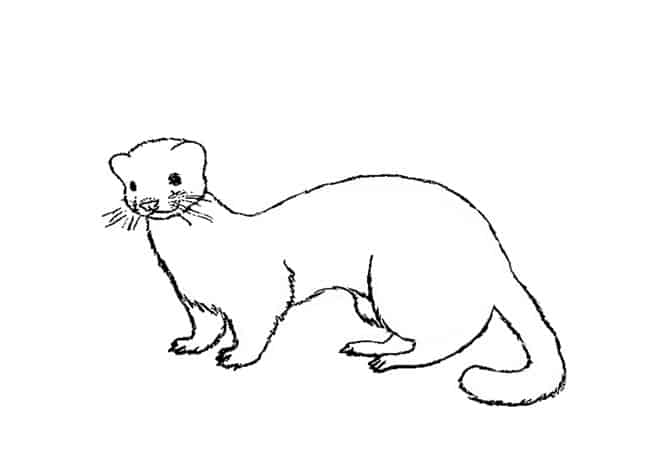
Maynooth University Library Cat, photographed yesterday by Joost Slingerland.

Yesterday morning final-year students theoretical physics students sat my first examination of the session, on Advanced Electromagnetism, and tomorrow another group will take my second, on Computational Physics 1. I collected the first scripts from the Exam Hall at the end of the examination at 11.30 and have actually finished correcting them. I don’t think I’ll come in tomorrow morning though. Correcting the second batch can wait until Monday. That doesn’t mean I get a break though because I still have to complete grading the Computational Physics Projects. It does mean, however, that I’ll probably be finished with examination marking for this session by the end of next week, in good time for the Exam Boards in June.

That won’t mean that I’m finished with examination matters for the year; I’ll have four repeat examinations to grade in August. When those are done, however, I won’t have to do any further marking of examinations or anything else to do with teaching for a whole year. My sabbatical starts on 1st September.

Meanwhile, Maynooth University Library Cat, has been patrolling the area in front of the Library, which is quite busy these days with students doing last-minute revision in the study spaces there. By the end of next week the examinations will be over, most students will have departed for the summer, many staff will be at home marking scripts, and campus will be much quieter.

After the Lectures, before the Examinations

Posted in Education, Maynooth, The Universe and Stuff with tags , , on May 11, 2023 by telescoper

This morning I did my last teaching session of the Academic Year 2022-3, a revision lecture/tutorial on Computational Physics. It was optional, as this is officially a study break, and was at 9am, but I had about 40% attendance which wasn’t bad in the circumstances. As is often the case with optional sessions, I think the students who came were the keenest and probably therefore those who least needed last-minute tips for the examination, but that’s always the way.

The Examination Period starts tomorrow, but most of the students who turned up this morning have their first examination on Monday. My paper is on Saturday next, 20th May.

Anyway, now that my teaching is over I thought I’d take the opportunity to wish all students the best for their examinations:

You shouldn’t really be relying on luck of course, so here are some tips (especially for physics students, but applicable elsewhere).

  1. Try to get a good night’s sleep before the examination and arrive in plenty of time before the start. Spending all night cramming is unlikely to help you do well.
  2. Prepare well in advance so you’re relaxed when the time comes.
  3. Read the entire paper before starting to answer any questions. In particular, make sure you are aware of any supplementary information, formulae, etc, given in the rubric or at the end.
  4. Start off by tackling the question you are most confident about answering, even if it’s not Question 1. This will help settle any nerves. You’re under no obligation to answer the questions in the order they are asked.
  5. Don’t rush! Students often lose marks by making careless errors. In particular, check all your numerical results on your calculator at least twice
  6. Please remember the units!
  7. Don’t panic! You’re not expected to answer everything perfectly. A first-class mark is anything over 70%, so don’t worry if there are bits you can’t do. If you get stuck on a part of a question, don’t waste too much time on it (especially if it’s just a few marks). Just leave it and move on. You can always come back to it later.

Announcing the Maynooth MSc in Theoretical Physics & Mathematics!

Posted in Education, Maynooth on May 9, 2023 by telescoper

About a month ago I used the medium of this blog to give a sneak preview of our new MSc course in Theoretical Physics & Mathematics which had just been approved. Well, the course details are now public and now it is open for applications. For further details see here.

The new postgraduate course will be run jointly between the Departments of Theoretical Physics and Mathematics & Statistics, with each contributing about half the material. The duration is one calendar year (full-time) or two years (part-time) and consists of 90 credits in the European Credit Transfer System (ECTS). This will be split into 60 credits of taught material (split roughly 50-50 between Theoretical Physics and Mathematics) and a research project of 30 credits, supervised by a member of staff in a relevant area from either Department.

This new course is a kind of follow-up to the existing undergraduate BSc Theoretical Physics & Mathematics at Maynooth, also run jointly. We think the postgraduate course will appeal to many of the students on that programme who wish to continue their education to postgraduate level, though applications are very welcome from suitably qualified candidates who did their first degree elsewhere.

Postgraduate admissions in Ireland operate differently from the UK, in that there is a central system in Ireland (called PAC) that is similar to the undergraduate admissions system; in the UK PG courses are dealt with by individual institutions. You will need to apply online via PAC after the following the instructions here. The requisite PAC code for the full-time version of the course is MHQ56.

Please note also that Maynooth University offers Taught Masters Scholarships for high-flying applicants. If you apply by 30th June you may be eligible for one of these!

Changes in the Calendar

Posted in Biographical, Cardiff, Education, Maynooth on May 7, 2023 by telescoper

As I often do on a Sunday morning, I just sat down to look at my timetable for the forthcoming week. Until Friday 12th this is “Study Week” and my Outlook calendar is noticeably less cluttered than recently because teaching ended on Friday 5th May. Although I had a lecture and a tutorial on Friday morning I did find Campus was already much quieter than usual. Many students at Maynooth University rent rooms here for only part of the week and Fridays are generally quiet because some students leave on Thursday evening if they don’t have classes on Fridays, and I suppose some that do usually have Friday classes will have had them cancelled as the lecturer had finished the syllabus. My two classes on Friday were actually for revision, actually.

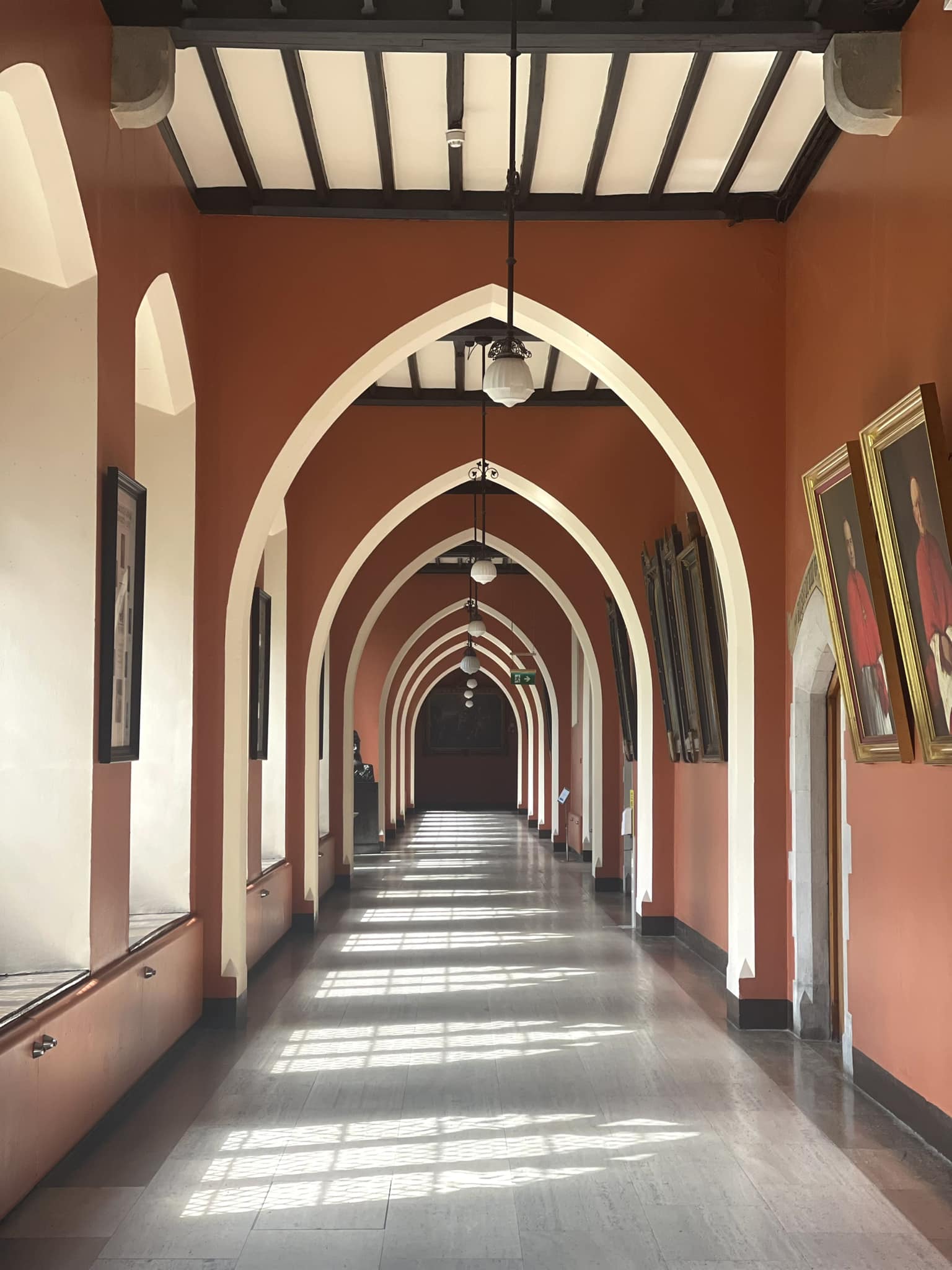
At any rate the cloisters of St Patrick’s House looked rather empty on Friday as I headed for a quick lunch in Pugin Hall before the final-year project presentations in the afternoon.

Incidentally, colleagues in other departments have reported a drastic decline in lecture attendance over the last few weeks. I can’t say I’ve noticed that myself but my classes are by no means statistically representative.

I will be doing two more revision classes next week, one for Advanced Electromagnetism and one for Computational Physics. don’t know how many will attend these but it’s the students’ last chance to ask me questions before the examinations, which are on Thursday 18th May and Saturday 20th May respectively. Friday 12th May marks the start of the Examination Period – for some reason this always starts on a Friday – during which many teaching rooms are unavailable so we don’t usually do revision classes beyond Study Week.

I won’t be teaching either of these modules next academic year. In fact I won’t be teaching anything next year, as I’ll be off on sabbatical. I’ll miss the teaching and am particularly sad that I won’t see the class in my 3rd year module again, unless some of them remain for Masters or PhD studies, as they will complete their studies next year while I am away. Since I am officially on leave from 1st September 2023, my final teaching-related responsibility for this year will be marking the repeat examinations in August.

In case anyone asks, I don’t know who’ll be delivering the modules I did this year, but the handover shouldn’t be too hard as there are complete sets of notes for all of them (and plenty of problem sets).

I don’t know which modules I’ll be giving when I return either, but I hope there’s an opportunity for a bit of a reshuffle. In particular, I’ve been doing Computational Physics for six years now and maybe it’s time for a fresh pair of hands on that one. It’s not that I dislike it at all – in fact I like it – but I think there are good arguments for a refresh every now and again. I’ve always taken the view that anyone employed in a physics department should be able to teach any subject up to the 3rd year so I don’t particularly mind what happens next. At any rate it would be nice to have a go at a few different things before I retire. Who knows, I might even get to teach some astrophysics or cosmology at some point?

It’s not just about undergraduate teaching, of course. Study Week or not I still have the regular meetings with my research students, a cosmology discussion group and a Euclid telecon. But my main objective between now and the arrival of my examination scripts to mark is to finish two manuscripts that are very late. I’ve no excuse for that other than poor time management by myself.

Looking further ahead, the launch of Euclid is scheduled for the first half of July and I hope to find time to organize some sort of public event related to this. I’m also attending the Euclid Consortium annual meeting in Copenhagen at the end of June. I’ve also been invited to contribute to the UK National Astronomy Meeting, which is in early July this year, in Cardiff…

Assessment in the Age of AI

Posted in Education, Maynooth with tags , , , , on May 5, 2023 by telescoper

The arrival of AI bots such as ChatGPT continues to cast a shadow over student assessment in the third-level institutions, as academics are realizing that these algorithms are getting better and better at the tasks asked of students, especially straightforward writing tasks (perhaps including simple calculations) as well as the traditional student essay.

Before going further I have to admit that I’ve never really understood the obsession in some parts of academia with “the Essay” as a form of assessment. I agree that writing skills are extremely important but they’re not the only skills it is important for students to acquire during the course of a degree. Learning how to do things seems to me to be more important than writing about things other people have done. While forms of assessment in science subjects have evolved considerably over the last 50 years, some other domains still seem to concentrate almost exclusively on “The Essay”.

Systems such as ChatGPT can produce text on demand (with a variable degree of success) using sources on the internet. This is not great at dealing with technically complex specialist topics but can produce plausible if somewhat superficial offerings in many circumstances where something less demanding is required. I know that staff in some science departments find that these systems can score essentially 100% on their first-year coursework assignments. Urgent meetings are being called and working groups being set up about this. Panic is in the air.

My immediate response to the situation is very twofold:

  1. Don’t panic!
  2. If an assessment can be aced by a bot then it should not contribute towards credit unless the students do it in a supervised environment, e.g. as an in-class test rather than a take-home assignment.
  3. More importantly, if a student with only a superficial knowledge can score a high mark on an assessment, what is the value of the assessment anyway?

It seems to me that the intervention of ChatGPT should cause academics to reflect much more deeply on what it is that they are trying to assess, and that should lead to new forms of assessment that can’t be performed by AI bots as well as the scrapping of many existing assessment activities, many of which (in my opinion) are pointless. There is so much inertia in academia, however, that such a radical rethink will be forthcoming on the timescale required.

All of which waffly nonsense reminded me of a joke I heard many years ago.

Q: How many academics does it take to change a lightbulb?

A: What do you mean, change?

A Midweek Lecture

Posted in Biographical, Education with tags , , , , on May 3, 2023 by telescoper

It’s halfway through the last week of teaching term, and it’s been a busy day. Earlier on, I gave my final “proper” lecture of the Semester in Advanced Electromagnetism, about the reflection and transmission of electromagnetic waves at interfaces. That’s basically optics, but done in terms of the electric and magnetic fields. I have two more classes this week, on Friday, but these will be revision tutorials devoted to going through past examination questions etc. I’ve had special requests for problems involving conformal transformations and the method of images, so that should be fun!

Meanwhile, my Computational Physics class are working hard on their projects, due in on Friday. My office is opposite the lab so I’ve had a few students coming to ask for help, but mostly they are just beavering away. I hope most of them are writing up by now. I just did a quick check and nobody has submitted anything yet. I suppose that, as usual, they will all wait until the last minute!

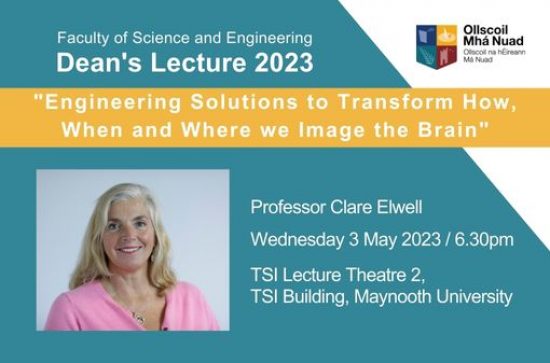
I have a telecon coming up in a few minutes, but after that I’ll be attending this public lecture:

The speaker, Professor Clare Elwell is a physicist at University College London, where she is the Director of the Near Infrared Spectroscopy (NIRS) Group. Specifically, Prof Elwell develops non-invasive techniques to study brain function, paving the way for defining early markers of autism, developing more targeted care following brain injury, and for better understanding brain development in global health settings. Prof Elwell described her pioneering work in using invisible near infrared light to probe the human brain. Near Infrared Spectroscopy (NIRS) is a portable, wearable, low-cost brain imaging technology which can be used to study the brain in newborn babies, toddlers and adults in a range of different scenarios.

I’ll post an update when I get home after the lecture. Actually, there’s no need because the lecture was streamed and a recording is now available. The lecture starts a fairly long way in and the sound didn’t start until part-way through the introductions so I’ve cued the link to the start of the lecture itself.

It was a very interesting lecture by a very engaging speaker. The audience was smaller than I’d expected, though, with less than a hundred in the theatre. This might be because it was scheduled in the middle of the last week of teaching term, which is a very busy time of year for academic staff.

Lá Bealtaine shona daoibh go leir!

Posted in Biographical, Education, Maynooth on May 1, 2023 by telescoper

Spring on Campus

As well as being International Workers Day, today, 1st May, is Beltane (Bealtaine in Irish) is an old Celtic festival. The month of May is called Bealtaine in Irish and May Day is called Lá Bealtaine, which is one of the so-called Cross-Quarter Days that lie (roughly) halfway between the equinoxes and solstices, in this case the Spring Equinox and the Summer Solstice. The upshot of all this is that today is a Bank Holiday, so I have the day off.

If the weather holds I shall spend a bit of time in the garden. Yesterday was quite warm but very showery. I tried three times to hang out my washing to dry in broad sunshine only to have to bring it in again when a torrential downpour arrived. Eventually I gave up.

On the corresponding days last year, the year before and the year before that I was wondering about how the pandemic would pan out. Back on May 1st 2020 I didn’t think it would last until May 2021 and back in 2021 I did not forecast that we would still have over a thousand new infections every day in May 2022.  Fortunately the pandemic seems to be dying down, though the consequences will be with us for some time.

After toady’s holiday we have four days left of teaching term at Maynooth University, then there’s a study week for the students and then the exams begin. I’ve more-or-less managed to keep on track so my remaining classes will be mainly revision. It will be quite a busy week though. Friday 5th May is the deadline for this year’s Computational Physics projects, so I’m anticipating last-minute queries all week. As well as this, and revision lectures and tutorials, I will be attending the annual Dean’s Lecture on Wednesday and attending a concert performance by members of Irish National Opera in the Aula Maxima on campus on Thursday as part of the Arts and Minds Festival.

A Draft Strategic Plan for Maynooth (via ChatGPT)

Posted in Education, Maynooth with tags , , on April 23, 2023 by telescoper

Senior managers at Maynooth University are currently engaged in the expensive and time-consuming process of compiling a new “Strategic Plan“. All universities seem to feel the need to have one of these, although I’ve never understood what purpose is served by such a document. They are all remarkably similar to one another in any case. Anyway, this is what ChatGPT produced for free in a matter of seconds in response to the query “please write a first draft strategic plan for Maynooth University”:

Introduction:

Maynooth University is a leading university in Ireland founded in 1795. The University aims to provide high-quality education to its students and prepare them for successful careers and to contribute positively to society as a whole. As a forward-thinking institution, Maynooth University recognizes the need for strategic planning to continue its legacy of excellence and ensure that it remains at the forefront of education and research.to conduct innovative research that address the challenges of the 21st century. In order to achieve its goals, the university needs to develop a strategic plan that outlines its priorities and the steps it needs to take to achieve them.

Vision:

The vision for Maynooth University is to become a world-class institution of higher education that promotes excellence in teaching, research and community engagement. The university will strive to provide a stimulating and inclusive environment that inspires its students, faculty and staff to achieve their full potential.

Mission:

The mission of Maynooth University is to provide a transformative student experience that prepares graduates to be leaders in their fields. The university will contribute to the creation and dissemination of new knowledge through its research and scholarship. It will engage with local, national and international communities to promote social and economic development.

Goals:

The following are the key goals of Maynooth University:

1. To enhance the quality of teaching and learning:

Maynooth University will provide its students with a challenging and engaging learning experience that equips them with the knowledge and skills required to succeed in their chosen fields. The university will invest in innovative teaching methods, modern teaching equipment, and professional development opportunities for its faculty to enhance their teaching skills and delivery.

2. To advance research and scholarship:

Maynooth University aims to become a leading research institution known for its excellence in research, innovation, and scholarship. The university will prioritize research funding and support for its faculty, students, and research teams. It will also invest in research infrastructure, facilities and equipment to support cutting-edge research across a range of disciplines.

3. To foster community engagement:

Maynooth University will strive to promote social and economic development through community engagement, public service, and outreach. The university will work with communities, government, and other stakeholders to address societal challenges and create positive social impact. Maynooth University will also prioritize outreach and engagement with schools, businesses, and cultural organizations in the region.

Strategies:

The following are the strategies that Maynooth University will use to achieve its goals:

  1. Develop innovative and relevant degree programs that meet the needs of employers and society.
  2. Support faculty development, recruitment, and retention to ensure that Maynooth University maintains its position as a leading research institution.
  3. Expand research partnerships, collaborations and funding through strategic alliances with other universities, government and industry.
  4. Foster a culture of interdisciplinary research, linking research with teaching and learning, and research with community engagement.
  5. Promote a sense of community and belonging among the Maynooth University community through effective communication and engagement strategies.

Conclusion:

Maynooth University is committed to providing a world-class education, conducting innovative research, and contributing to the social and economic development of communities. The strategic plan outlines the goals and strategies that the university will undertake to achieve its vision and mission. The university will continually review and update its strategies to ensure they are aligned with changes in the higher education landscape to maintain its standing as a leading institution of higher learning.

Meanwhile, in an Arts & Humanities Faculty near you…

Posted in Education with tags on April 22, 2023 by telescoper
From Private Eye Magazine

P.S. I can’t wait to see what ChatGPT produces for Maynooth University’s new Strategic Plan…