Archive for the Euclid Category

The Mystery Object

Posted in Euclid with tags , , , , on June 18, 2024 by telescoper

Among the various items of Euclid Merch in the goody bag given to attendees at the annual Euclid Consortium Meeting in Rome are a nice bag, a cap, a notebook, and a mystery object:

Can anyone suggest what this item does?

(Wrong answers preferred.)

Sono arrivato a Roma

Posted in Biographical, Euclid with tags , , , , on June 17, 2024 by telescoper
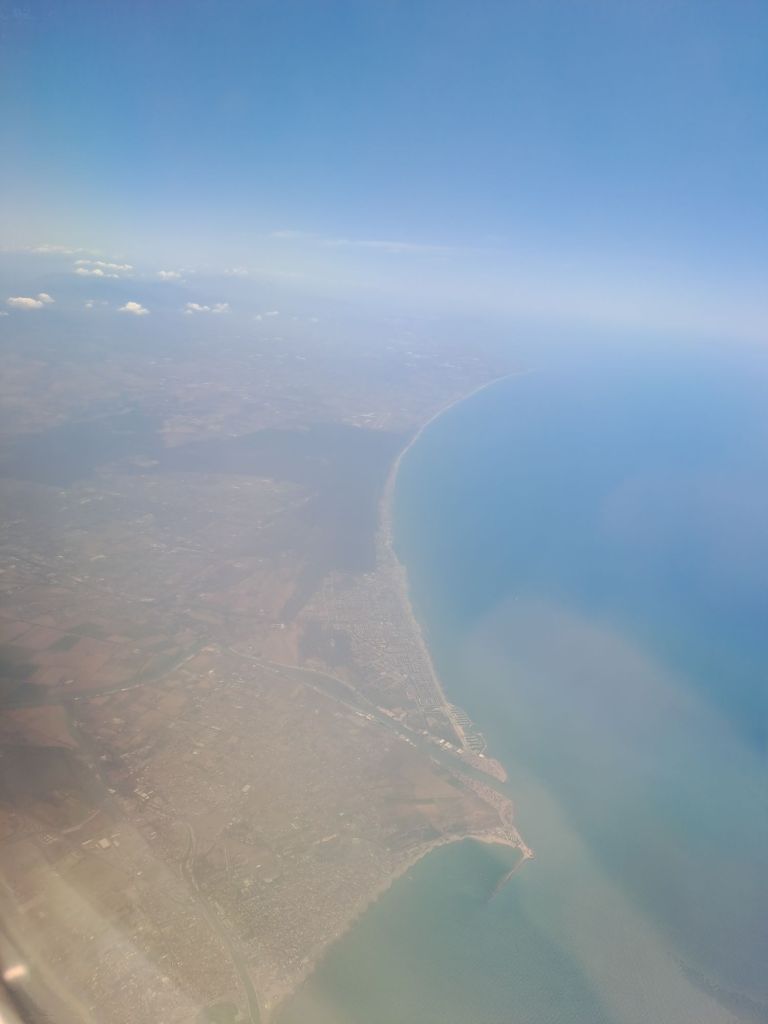
Crossing the Italian Coast

This morning, I took a short (~ 90 minute) flight from the pleasantly warm (23°C) Barcelona to the swelteringly hot (31°C) city of Rome. It’s actually forecast to be 39°C on Thursday and 40°C on Friday. Fortunately, I’m not staying that long!

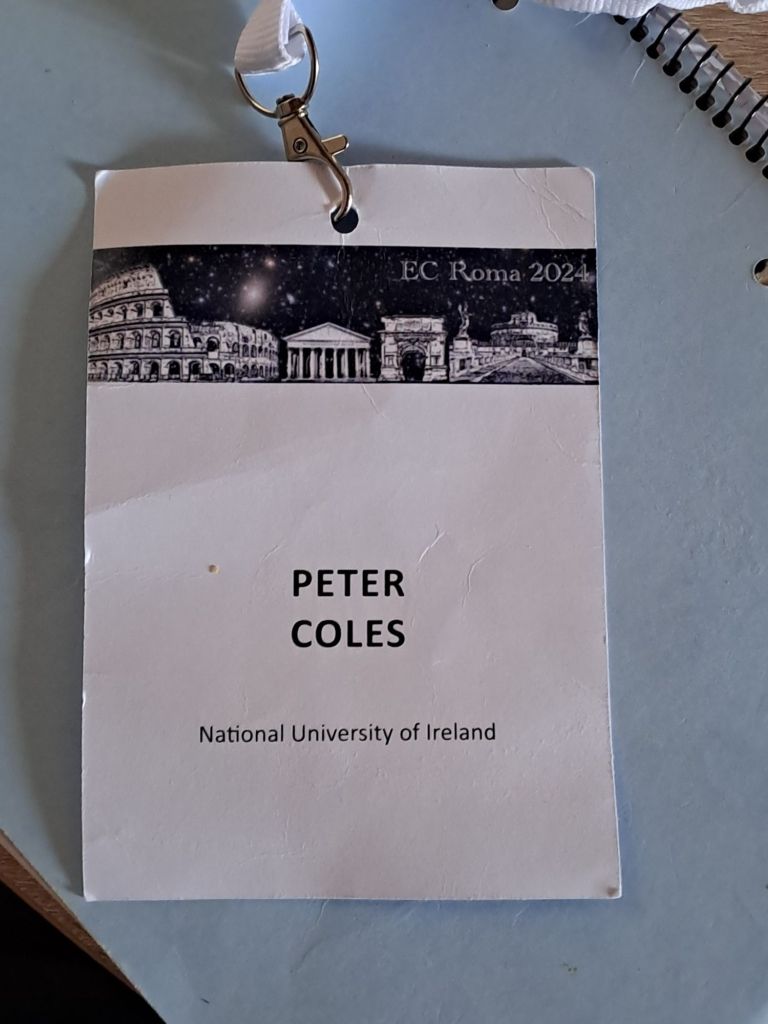
The occasion for this trip is the annual Euclid Consortium Meeting, which is being held at the Università degli Studi di Roma “La Sapienza“. The main sessions are in the splendid Aula Maxima thereof, with its imposing mural:

I’m giving a talk there in the first plenary session  tomorrow…

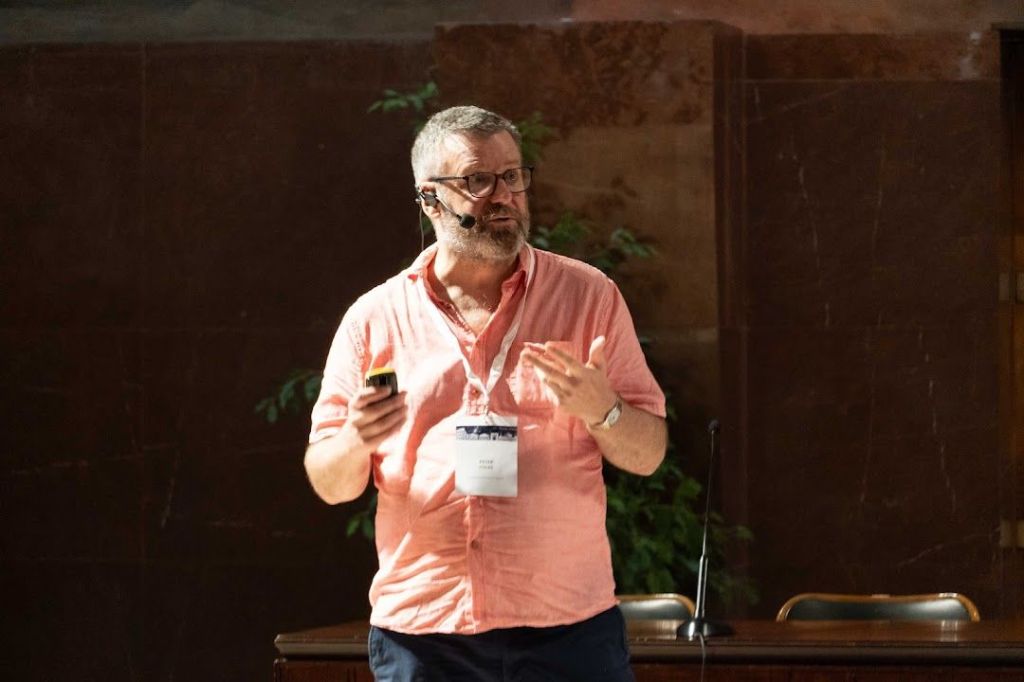
Update: here’s me giving my plenary talk:

Euclid Updates

Posted in Euclid, The Universe and Stuff with tags , , , , , on June 11, 2024 by telescoper

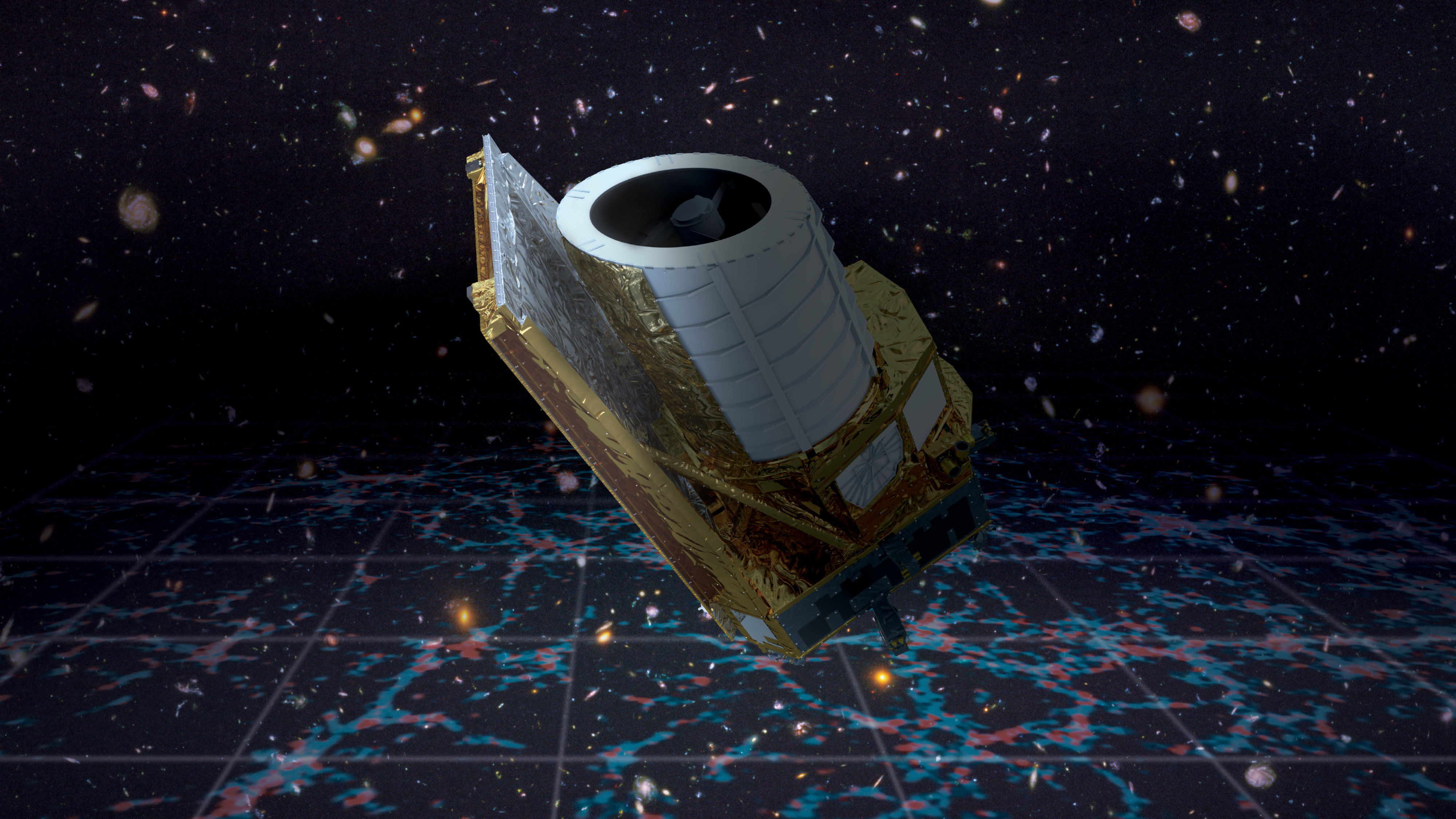
I’m travelling back to Barcelona today, later than planned because I’ve had a heavy cold that I struggled to shake off and didn’t want to infect fellow passengers on the flight. While I’m in transit I thought I’d share some updates about the European Space Agency’s Euclid mission.

The first thing to share is a piece by Knud Jahnke with news about Euclid’s issue with ice in the optical system. The latest intervention has led to an improvement, but since it is a closed system ice will probably form again – though perhaps not in the same place – and further procedures will probably be necessary in future. In the meantime, though, the survey resumes.

Now for some short videos -three, to be precise – about the Early Release Observations mentioned here. I posted another one in this series here. I think the titles are self-explanatory:

And if that isn’t enough, for those of you who like simulations here is another video about the Euclid Flagship simulation described in this paper.

Sub-Stellar Objects in the Euclid Early Release Observations

Posted in Euclid, The Universe and Stuff with tags , , , on May 31, 2024 by telescoper

I have a busy day in front of me here in Not-Barcelona so I thought I’d do a quick post sharing a video about the Euclid Early Release Observations (EROs) that came out last week. The press materials accompanying the release of the EROs and the science paper relating to this work, mention “freely floating planets”, but that doesn’t make sense in terms of the modern definition of a planet so here they are described as sub-stellar objects. The paper describing this work can be found on the arXiv here.

Searching for Luminous High-Redshift Galaxies with Euclid’s Early Release Observations

Posted in Euclid, The Universe and Stuff on May 24, 2024 by telescoper

As it’s Friday afternoon I thought I would share one of the little videos I mentioned in the previous post. It’s only just over a minute long but it is worth listening to, not least for the dulcet tones of Henry Joy McCracken as he explains the science.

The Euclid preprint related to this work can be found here.

Euclid Paper Day!

Posted in Barcelona, Euclid, Maynooth, The Universe and Stuff with tags , , , , , , , , on May 24, 2024 by telescoper

This morning’s arXiv update brought the expected deluge of preprints from Euclid. You can find details of all fifteen of the new articles here. Ten of them relate to the Early Release Observations of which five were announced yesterday and five last November. These are essentially byproducts of the testing and calibration phase of the Euclid mission rather than the main cosmological survey. ESA is making a series of short videos about these results which I will share on here from time to time.

Of more direct relevance to cosmologists such as myself are the following five reference papers:

The overview paper, led by Yannick Mellier (Euclid Consortium Lead), giving a general description of the mission capabilities and science goals, will be the main reference paper and just about every active member of the Euclid Consortium is on the author list (including myself). That’s over a thousand people, not quite at the level of the Large Hadron Collider but getting there. I do think we need to find a better way of giving credit to work in large collaborations than through authorship, but until someone comes up with a workable scheme, and people responsible for hiring researchers adopt it, we’re stuck with what we’ve got. At least I can say that I’ve read that paper (which is 94 pages long, including the author list)

Papers II-IV are technical articles relating to Euclid’s instruments and their calibration, which will also be important references for the survey part of the Euclid mission. Paper V is about the Flagship simulations and the mock catalogues produced therefrom; I discussed these a while ago here. It is led by Francisco Castander of Institut de Ciencies de l’Espai, who organized the meeting I attended recently here in Barcelona.

These papers now now be peer-reviewed and, assuming they are accepted, published in a special issue of Astronomy & Astrophysics (A&A).

New Results from Euclid

Posted in Euclid, Maynooth, The Universe and Stuff with tags , , , , on May 23, 2024 by telescoper


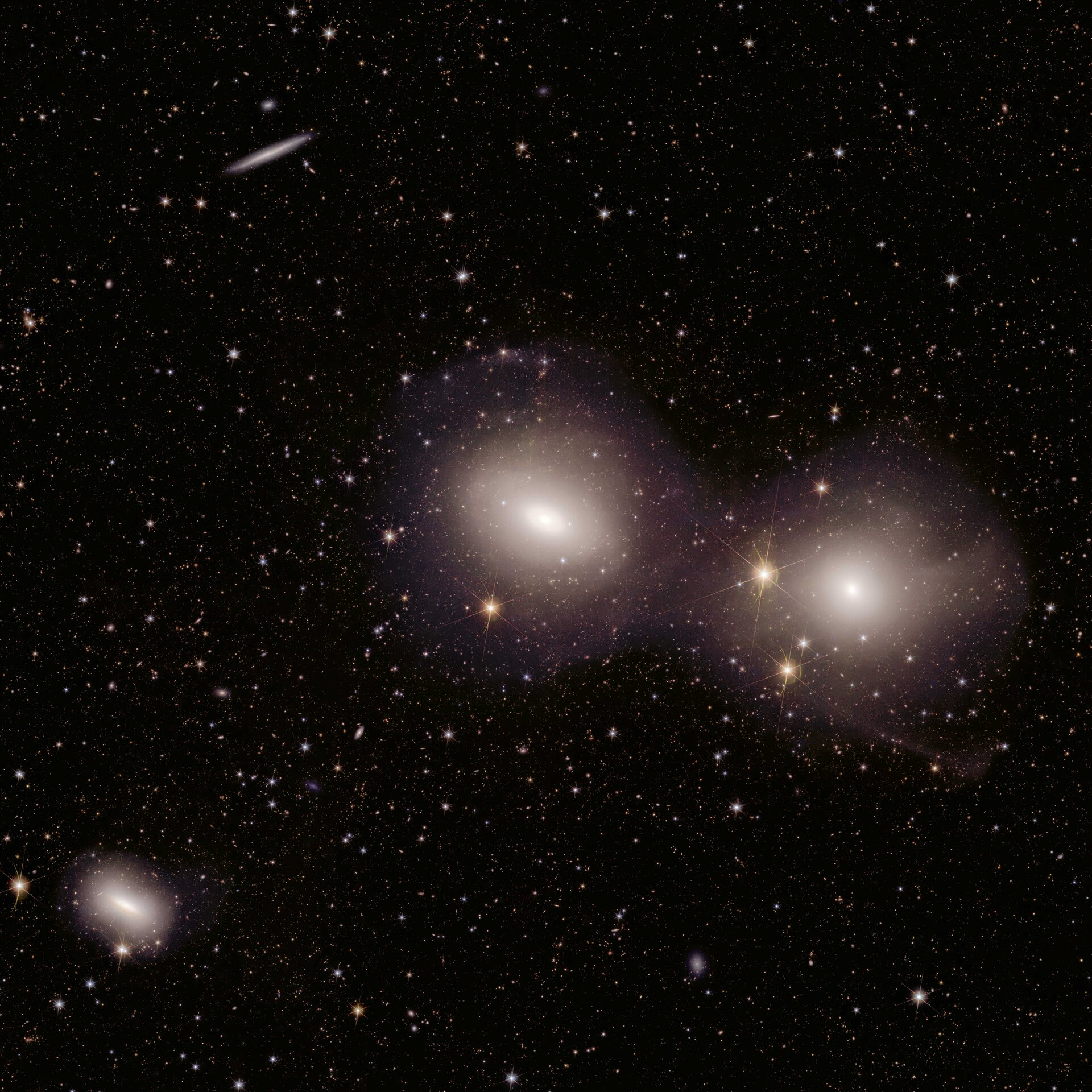

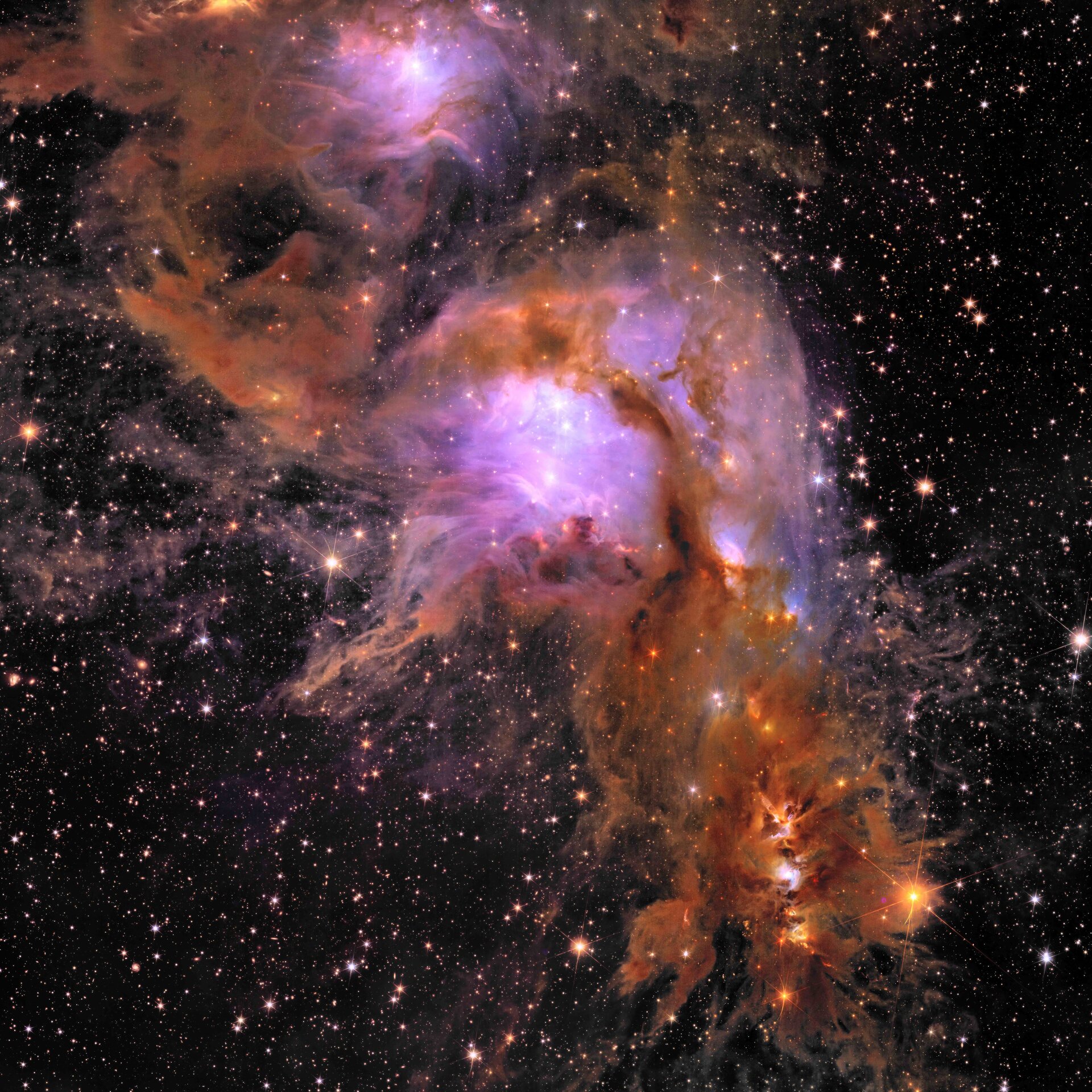

As it was foretold, exciting new results from the European Space Agency’s Euclid mission have now been released.

You can read more about these images here.

Together with the five images released last November that makes a total of ten Early Release Observations from the pre-survey phase of Euclid. It’s not all about the pictures, however. Today also saw the release of ten scientific papers to go with these images, as well as five reference papers for the main survey. You can find them all, with accompanying information here. They will be announced on arXiv tomorrow.

You might also be interested to read my Euclid piece on RTÉ Brainstorm which has just appeared. This is not just about the new images, but gives an update on what Euclid has been up to since launch, and what we can expect in the future. There’s also a version adapted for Maynooth University PR purposes here. It includes this quote:

Today’s release of new data and technical papers from Euclid is exciting in itself but also marks the start, after months of painstaking calibration and testing of the instruments, of Euclid’s main cosmological survey. We are on the threshold of a new era in cosmology. Maynooth is the only University in Ireland to be involved in this mission and it is very exciting to be at the forefront of such an important scientific development.

I’m also quoted in a piece in the Irish Times. You’ll probably find the article blocked by a paywall but my bit is:

Gearing up for Thursday’s Euclid News

Posted in Euclid, Maynooth, The Universe and Stuff with tags , , , , , , , on May 21, 2024 by telescoper

It’s a hectic time ahead of a Big Event on Thursday 23rd May, which will include the publication of five new Early Release Observations (EROs). I’m not at liberty to say what they are until after 12 noon (CEST) on Thursday except that they’re very pretty. You can watch the live stream here:

Including the five released on November 7th 2023 that will bring the total to ten. All the ERO pictures will be available on the ESA archive here.

Thursday will also see the release of ten scientific papers related to the EROs; they will appear on arXiv on Friday 24th May. These will be the first science results from the Euclid mission.

But that’s not all! Thursday will also see the publication of five papers from the Euclid Consortium (of which I am the sole member based in Ireland). These will be the principal technical reference papers aimed at the astronomical community about the Euclid mission, covering the instruments, cosmology and other astronomy science possibilities, as well as the cosmological simulations used to assist the analysis of the mission. One of these, the main overview paper for the mission, has over a thousand authors (one of whom is your truly).

Thursday’s announcements are likely to significant level of press interest. That’s not only due to the European Space Agency’s own social media feeds and the like, but also local activities in Ireland. For example, there’s this from Science Foundation Ireland using this, from the Little Book of Irish Research:

I have also written a piece for RTÉ Brainstorm, as a kind of update on the one I wrote last year on the occasion of the launch; this will go live after the embargo is lifted on Thursday.

The Week(s) Ahead

Posted in Barcelona, Biographical, Euclid, Maynooth with tags , , , , on May 20, 2024 by telescoper

Today is a public holiday in Spain, as it is in much of Europe (including France, Germany, The Netherlands and Denmark). The occasion for the day off is Pentecost (or Whitsuntide as it is known in the UK) which, if I understand correctly, is when the Holy Spirit went down on the Apostles. Actually Pentecost (Whit Sunday) was yesterday, exactly 7 weeks after Easter Sunday, which was quite early this year which is why Pentecost Monday (20th May) is earlier than the fixed Bank Holidays used to mark it in the UK (the last Monday in May, 27th, next Monday) and Ireland (the first Monday of June, 3rd, in two weeks’ time). Could I perhaps take all three off?

Today’s holiday notwithstanding, this is going to be a busy week. On Wednesday and Thursday there is to be an event at the European Space Agency coincident with which, on Thursday 23rd May, there will be a significant press event relating to Euclid. I’m not at liberty to say any more at this point, as everything is strictly embargoed until 12 noon CEST on that day, but I have been writing a piece for RTÉ Brainstorm to come out as soon as the embargo is lifted. Hopefully the Communications team at Maynooth University will get involved in the press activity. Watch this space.

Remarkably for me, I filed the RTÉ Brainstorm piece ahead of the deadline but it’s no time to rest on my laurels because I have another paper to finish this week by a different deadline.

And next week will be busy too. I have to make a short trip to not-Barcelona to do a PhD examination in Newcastle upon Tyne and give a lecture in Oxford, where (so I’m told) there is a University of some sort. Then I have to pass through Maynooth to vote in the Local and European Elections before returning to Barcelona. Having another two Whit Monday holidays is looking like a good plan…

Who Publishes A&A?

Posted in Euclid, Open Access with tags , , , , , , , on May 8, 2024 by telescoper

The journal Astronomy & Astrophysics, generally known as A&A, which featured in yesterday’s post, is and has been for some time the journal of choice for many astrophysics researchers, especially those based in Europe. It is the journal in which the bulk of publications from Euclid will be published, including a batch due to come out in a couple of weeks.

The journal, which has existed since 1969, is published on behalf of the European Southern Observatory by EDP Sciences (Édition Diffusion Presse Sciences) which began life as a joint venture of four French learned societies in science, mathematics, and medicine. The company was acquired in 2019 by  China Science Publishing & Media (which has headquarters in Beijing). Judging by its social media activity, EDP Sciences sees A&A as a flagship journal; for a list of other journals it runs see here.

A&A publishes papers through a curious hybrid model called “S2O” (Subscribe to Open; not to be confused with “420”). This is not fully Open Access because it requires libraries to pay a subscription to access the journal, but unlike some journals A&A does allow authors to place their papers on arXiv without restriction, so they can be read there for free. On the other hand, A&A also requires authors to pay “Page Charges” – essentially an Article Processing Charge (APC) – if they are not from a “member country”. Authors from a member country do not have to pay APCs to publish but their institutional libraries still have to pay a subscription if they are to access the paper.

You might ask why you should publish in A&A if you can put your papers on arXiv. The answer given on the website is:

Preprint servers such as arXiv play a vital role in bringing research into the astronomy and astrophysics communities as quickly as possible. However, content uploaded to this service has not undergone rigorous peer review and the editorial oversight offered by a professional publisher such as EDP Sciences. In addition, preprints don’t offer the content selection and curation processes that make a scholarly journal a reliable and trusted addition to library collections.

In summary, publishing your article in A&A increases the value and impact of your work by making your article more trustworthy, easier to find, read, and cite, whilst ensuring that the version of record is preserved in perpetuity.

In other words, A&A does nothing that the Open Journal of Astrophysics doesn’t do for free…

Incidentally, I am struck by the frequent assertion that publishers preserve or curate content. Actually they don’t. Libraries do that. If a publisher such as EDP Science decides a journal is no longer commercially viable it will simply ditch it. Fortunately nowadays institutions maintain their own repositories of published papers as insurance against this.

Here is some more information about how S20 works, taken from the A&A website:

A&A is a community journal sponsored by a board of member countries. While subscriptions fund the publishing costs of the journal, the editorial costs are funded both by the contributions from member countries, and the page charges for authors of non-member countries. This division of costs between authors and readers makes it possible to offer low subscription prices, while at the same time removing barriers to publishing for authors from A&A sponsoring countries, and allowing authors from non-sponsoring countries to publish for a modest charge.

If the S2O model is successful, editorial costs will continue to be funded by A&A member contributions and page charges, while subscriptions will be used to cover the open access publication of the journal. Authors from sponsoring countries can therefore publish in open access free of charge, while authors from other countries remain liable for page charges to fund the editorial process of their article (note: page charges are paid to A&A directly and not to the publisher).

This arrangement is being kept under annual review so whether it will persist is open to question.