Archive for the History Category

A New Bank Holiday in Ireland

Posted in Covid-19, History, Maynooth on January 20, 2022 by telescoper

Yesterday the Irish Government announced that there would be an additional Bank Holiday this year, on 18th March (which is the day after the existing St Patrick’s Day holiday on March 17th) to recognize the efforts of the great many people (including volunteers) who have worked so hard to counter the Covid-19 pandemic and to commemorate those who lost their lives to the coronavirus. It’s a good idea and hopefully it will occur at a time when there are many fewer restrictions than currently, which should make it a memorable occasion.

Interestingly, though, the new Bank Holiday is not a one-off but will become a permanent addition to the calendar, though on a different date: it will happen on or around 1st February from 2023 onwards. This is interesting because it corrects an anomaly in the distribution of public holidays, which I will explain here.

In the Northern hemisphere, from an astronomical point of view, the solar year is defined by the two solstices (summer, around June 21st, and winter, around December 21st) and the equinoxes (spring, around March 21st, and Autumn, around September 21st). These four events divide the year into four roughly equal parts of about 13 weeks each.

If you divide each of these intervals in two you divide the year into eight pieces of six and a bit weeks each. The dates midway between the astronomical events mentioned above are (roughly) :

  • 1st February: Imbolc (Candlemas)
  • 1st May: Beltane (Mayday)
  • 1st August: Lughnasadh (Lammas)
  • 1st November: Samhain (All Saints Day)

The names I’ve added in italics are taken from the Celtic/neo-Pagan and, in parenthesis the Christian terms),for these cross-quarter days. These timings are rough because the dates of the equinoxes and solstices vary from year to year. Imbolc is often taken to be the 2nd of February (Groundhog Day) and Samhain is sometimes taken to be October 31st, Halloween. But hopefully you get the point.

The last three of these also coincide closely with Bank Holidays in Ireland, though these are always on Mondays so may happen a few days away. I find it intriguing that the academic year for universities here in Ireland is largely defined by the above dates dates.

The first semester of the academic year 2021/22 started on September 20th 2021 (the Autumnal Equinox was on September 22nd) and finishes on 17th December (the Winter Solstice is on December 21st ).  Halloween (31st October) was actually a Sunday this year so the related bank holiday was on Monday 25th October; half term (study week) always includes the Halloween Bank Holiday. The term was pushed forward a bit because it finished on a Friday and it would not be acceptable to end it on Christmas Eve!

After the break for Christmas, and a three-week mid-year exam period, Semester Two starts 31st January 2022. Half-term is then from 14th to 18th March (the Vernal Equinox; is on March 20th) and teaching ends on May 6th.  More exams and end of year business take us to the Summer Solstice and the (hypothetical) vacation.

The new bank holiday will correct the anomaly that there has not been such a holiday to mark the first cross-quarter day (Imbolc). In Ireland this often referred to as St Brigid’s Day (after St Brigid of Kildare) rather than Candlemas.

The slight issue is that, in Maynooth, Semester Two of teaching usually begins around 1st February so there will be a holiday within a week or so of the start of teaching but I don’t imagine many students or staff will complain about that!

P.S. Imbolc is also sometimes called “The Quickening of the Year”. It looks like this year it will correspond to the quickening of relaxation of Covid-19 restrictions, though we still wait full details of what precisely all this means for our teaching plans…

Michael Collins and the Handover of Dublin Castle

Posted in Film, History with tags , , on January 16, 2022 by telescoper

Today is the centenary of the formal handing over of Dublin Castle, on 16th January 1922, by British authorities to the Provisional Irish Government formed after the ratification of the Anglo-Irish Treaty. It was a significant event, but was not what many people (including until recently myself) thought it was.

I went to the Cinema to see the Neil Jordan film Michael Collins when it came out. I enjoyed the film but only subsequently discovered how many glaring historical inaccuracies there are in it, right from the scenes at the beginning of the film, of the Easter Rising in 1916, that show Michael Collins alongside Eamonn De Valera at the surrender of the GPO. In fact the GPO was evacuated long before the surrender and De Valera was never there anyway: his battalion was in the East of the City at Boland’s Mill. I suppose the Director thought it was more dramatic the way it was depicted in the film, but I just find it irritating.

Now to the handover at Dublin Castle. This is how it is portrayed in the film, with Liam Neeson as Michael Collins:

Almost nothing in this entire scene is historically accurate. Collins arrived 90 minutes late owing to a transport strike, so the famous line about “you can have your seven minutes” is a concoction (as is the rest of the dialogue). Moreover, Collins arrived in civilian dress not in military uniform. The handover happened in a private meeting inside the buildings, not outside in a grand ceremony. There was no lowering the Union flag either.

I suppose the cinematic version is more dramatic than what happened in reality, which was much more mundane, but I think this kind of deliberate manipulation is more than a little sinister. If you want to know history then you shouldn’t try to learn it from a movie but instead do a bit of reading of properly researched literature. That’s one of the reasons why we have historians.

A Memoir of Thomas Bewick

Posted in Art, Education, History, Politics with tags , , , on January 11, 2022 by telescoper

Thomas Bewick (1753-1828) was a superb illustrator and natural historian who lived in the North East of England. He is celebrated primarily for his fine engravings and woodcuts of wild animals and birds, and humorous vignettes, some of which are quite cheeky, such as this one called “Man Pissing”…

Man Pissing (c.1797, wood engraving on laid paper, 8.9 x 12.5 cm)

You can find many other examples of his fine work here.

Bewick also held radical political views in a time of great social unrest across the continent of Europe. His views were heavily influenced by the terrible conditions of the rural poor in his native Northumberland and the corruption of the Government. In 1822 he began to write his Memoir, which is absolutely fascinating, not least because part of it is devoted to his views about the British Government and the media of the time. Two hundred years later, many of his words still ring true.

Here’s an excerpt from a section covering the period from about 1818 to 1823, a period of domestic instability in Britain that led to acts of protest and brutal suppression, including the Peterloo Massacre of 1819:

The pen of literature was prostituted to overshade the actions of good men, and to gloss-over the enormities of the base. The energies of many members of both Houses of Parliament were unavailing against this compact confederacy of undeserving placemen and pensioners, who were bound together by fellow feelings of self-interest, in which all ideas of public trust were lost in private considerations. They had sinned themselves out of all shame. This phalanx have kept their ground, and will do so till, it is to be feared, violence from an enraged people breaks them up, or, perhaps, till the growing opinions against such a crooked order of conducting the affairs of this great nation becomes quite apparent to an immense majority, whose frowns may have the power of bringing the agents of government to pause upon the brink of the precipice on which they stand, and to provide in time, by wise and honest measures, to avert the coming storm.

A Memoir of Thomas Bewick, Written by himself, CHAPTER XVII.

Plus ça change

P.S. Not far from where I grew up in Newcastle upon Tyne there is a school for children and young adults with autism called the Thomas Bewick School. His name is well known in the Newcastle area for that reason and his artistic legacy, but I’m not sure his memory is as widely celebrated as it should be. He was a fascinating character.

After The Treaty

Posted in Biographical, History, Television with tags , , , , , on January 9, 2022 by telescoper

On Friday I saw a bit of a programme on RTÉ One called Treaty Live which covered the events of January 7th 1922 in the form of a modern live news broadcast. It was on that date that the Dáil Éireann voted on whether to ratify the Anglo-Irish Treaty (usually called “The Treaty”) negotiated between the British Government (led by Prime Minister David Lloyd George) and representatives of the Irish Government (led by Arthur Griffith) and signed on 6th December 1921. The Treaty was intended to end the Irish War of Independence and bring about the removal of Crown forces from Ireland, but it fell short of establishing a fully independent Irish Republic, instead creating an Irish Free State with the status of a British dominion rather like New Zealand or Australia (i.e. with its own government but with the British Monarch as Head of State). It also led to the partition of Ireland with six of the nine counties in the province of Ulster remaining under British rule.

Three days of debate preceded the momentous vote in the Dáil which, incidentally, took place in a room in a building in University College Dublin that is now the National Concert Hall. Here is some footage of TDs leaving the building after the debate:

It’s strange to think of the number of times I’ve walked up those steps to attend a concert without realizing this historic event took place there.

Anyway, in the end the vote was to ratify The Treaty by 64 votes to 57. It seems popular opinion at the time was in favour of ratification, and what was surprising was not the fact that the vote was carried but that the margin was so narrow: had just four TDs voted the other way it would have failed.

Éamonn de Valera, then President of the Irish Republic, was the most prominent opponent of ratification. Michael Collins, who was a member of the delegation of plenipotentiaries who negotiated The Treaty, was prominently in favour. Many questions can be asked about the conduct of the negotiations, including why de Valera did not conduct the negotiations himself. During the negotiations Lloyd George insisted that the Irish plenipotentiaries sign the agreement on the spot otherwise there would be “war within three days”. The Irish delegation clearly assumed he wasn’t bluffing so signed it. De Valera was unhappy that they did not consult more widely (especially with him) but then if that’s what he wanted he shouldn’t have sent “plenipotentiaries” – that word means “delegates having the full power to sign agreements” – but participated directly. Valera resigned as President on 9th January 1922 and was replaced by Arthur Griffith.

The anti-Treaty side considered it to be a betrayal of the sacrifices made during the War of Independence; the pro-Treaty side thought it was a stepping-stone towards the goal of independence. As it turned out a fully-independent Irish Republic was eventually established in 1949, though the partition of Ireland is still in place.

In retrospect the narrowness of the Dáil was an indication of what was to come. In June 1922 The Irish Civil War erupted between the two factions that lasted almost a year. All wars are dreadful, but there’s something about a Civil War that is particularly dreadful: people who had fought on the same side against British rule would now fight each other.

And that brings me to the point of this rather rambling post. I moved to Ireland at the end of 2017. Like most people born and educated in England I knew very little of Irish history before coming here; topics such as the Irish Famine are simply not taught in British schools, though they certainly are in Irish schools. I missed being here through the centennial commemorations of the 1916 Easter Rising, for example, but have followed subsequent events in the “decade of centenaries” and done the best I can to read about Irish history to gain some knowledge.

What’s interesting about this is that the events of the Easter Rising and the War of Independence, although commemorated with appropriate solemnity, do form a righteous narrative relating to the heroic birth of a new nation. As we approach the centenary of the outbreak of Civil War the issues are much more complex. An Irish friend told me that when he was taught history at school, it basically stopped at the Civil War. People generally are much less willing to talk about it than the events preceding. The Civil War left deep wounds, some of which have still not healed. Perhaps the centenary will provide an opportunity to confront some of the very difficult issues arising from this period of this nation’s history.

Il Mio Tesoro – John McCormack

Posted in History, Opera with tags , , , on December 19, 2021 by telescoper

The aria Il Mio Tesoro Intanto from Act II of Mozart’s great Opera Don Giovanni is widely regarded as a test piece for Operatic tenors because of its demanding mix of long flowing lines, big leaps and florid coloratura ornamentation. The other day I heard a performance by the great Irish tenor John McCormack which, despite being recorded over a hundred years ago (in 1916) completely blew me away. I thought I’d share it here.

John McCormack made over 800 records in his lifetime, the vast majority of them Irish songs and ballads that found a huge audience not only in Ireland but also in the Irish diaspora in the United States of America; this part of his career was extremely lucrative making him a millionaire. His first love was the Opera: a lyric tenor of the highest quality, his career overlapped with that of the great Enrico Caruso and the two became great friends after McCormack moved to the United States and became a regular at the Metropolitan Opera. It was Caruso who made the first ever million-selling record (Vesti La Giubba from I Pagliacci in 1902) and perhaps that’s what persuaded McCormack to embark on a recording career.

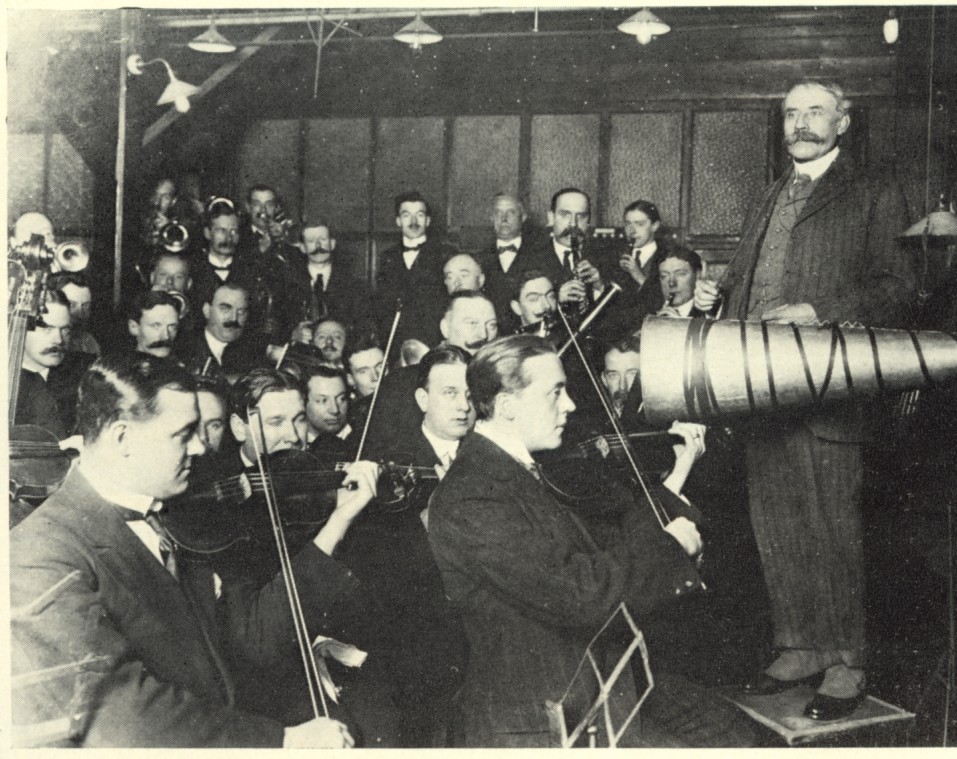
Before the 1920s gramophone recordings were entirely acoustic, made by a process exactly the reverse of a gramophone player. Musicians and singers would play into a horn at the sharp end of which was a needle that could leave an impression on the recording medium. In the early days the recording would be made on a wax cylinder, but this was soon replaced by plastic or acetate discs. It wasn’t possible to make recordings longer than a few minutes using this method.

Here’s an example of an early recording session showing what it was like. The chap with the moustache is Sir Edward Elgar:

Given this sort of arrangement it is no surprise that the sound of the Orchestra of the Met is muffled and distorted on the following recording. Almost certainly McCormack would have been standing right in front of the horn so his sizeable form would have acted as a kind of baffle. When I think of these old records it always seems a wonder that you can hear anything at all.

Despite the limitations of the recording technology the crystal clarity of McCormack’s voice and his superb control shine through. I listen to quite a lot of old jazz records made in a similar way so my ears are perhaps unusually forgiving but I think this is one of the greatest versions of this aria that I’ve ever heard – and I’ve heard quite a few. I hope you enjoy it too.

P.S. John McCormack was born in Athlone, which is about 100km due west of Maynooth.

On the Repeal of Section 28..

Posted in History, LGBTQ+, Politics with tags , , , on November 18, 2021 by telescoper

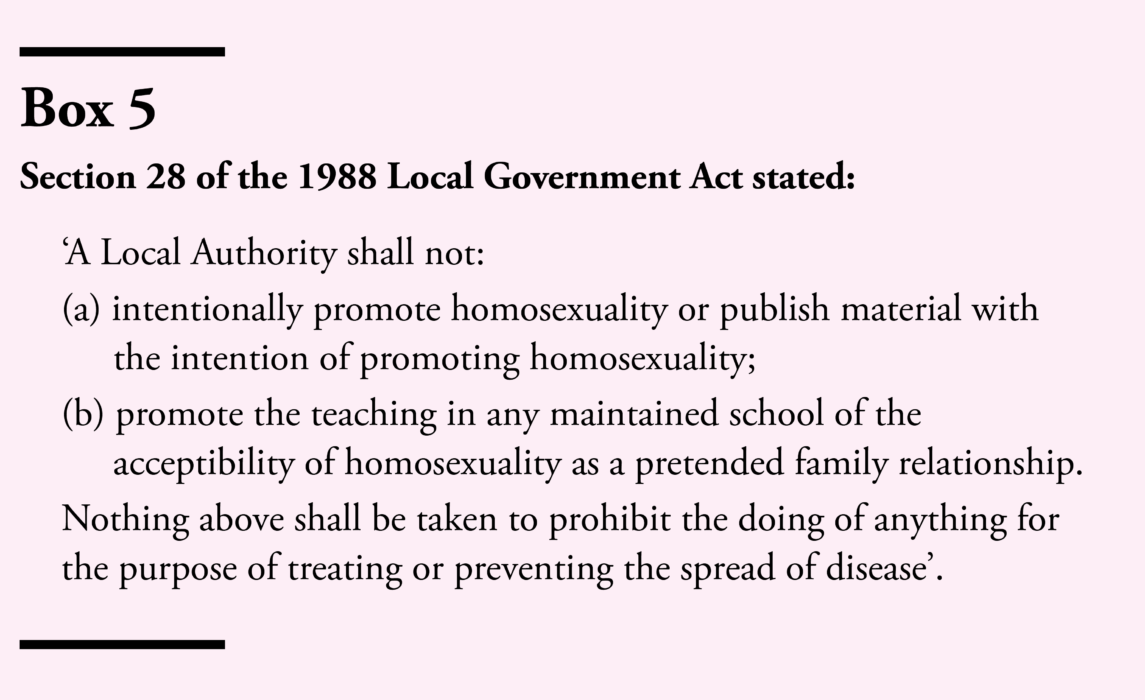
I was reminded today is the 18th anniversary of the Repeal in England & Wales (on 18th November 2003) of Section 28 of the Local Government Act 1988, which contained the following:

I remember very well the numerous demonstrations and other protests I went on as part of the campaign against the clause that became Section 28 way back in 1988. Indeed, these were the first large political demonstrations in which I ever took part. But that repugnant and obviously discriminatory piece of legislation passed into law anyway. Students and younger colleagues  probably don’t have any idea how much pain and anger the introduction of this piece of legislation caused at the time, but at least it also had the effect of galvanising  many groups and individuals into action. The fightback eventually succeeded; Section 28 was repealed in Scotland in 2000 and in England & Wales in 2003.

I know the 33 years that have elapsed since the introduction of Section 28  is a long time, but it’s still amazing to me that attitudes have changed so much that now we have same-sex marriage. I would never have predicted that if someone had asked me thirty years ago!

I think there’s an important lesson in the story of Section 28, which is that rights won can easily be lost again. There are plenty of people who would not hesitate to bring back similar laws if they thought they could get away with them.  They are trying to do so now with a sustained assault on the rights of transgender people. That’s why it is important for LGBTQ+ people not only to stand up for their rights, but to campaign for a more open, inclusive and discrimination-free environment for everyone, everywhere, including in the workplace. That’s one of the reasons why today’s LGBTQ+ STEM Day is so important.

Unsolved, by John McCrae

Posted in History, Poetry with tags , , , , on November 11, 2021 by telescoper

The poet John McCrae served with distinction in the Canadian Field Artillery during the First World War, rising to the rank of Lieutenant Colonel. He died in 1918, of pneumonia, shortly before the end of the conflict.
McCrae is best known for writing the poem In Flanders Fields, the imagery of which led to the adoption of the poppy as the emblem of Remembrance Day (11th November i.e. today). He wrote many other interesting poems, however, so I thought I’d share one here to celebrate his life.

Amid my books I lived the hurrying years,
Disdaining kinship with my fellow man;
Alike to me were human smiles and tears,
I cared not whither Earth’s great life-stream ran,
Till as I knelt before my mouldered shrine,
God made me look into a woman’s eyes;
And I, who thought all earthly wisdom mine,
Knew in a moment that the eternal skies
Were measured but in inches, to the quest
That lay before me in that mystic gaze.
“Surely I have been errant; it is best
That I should tread, with men their human ways.”
God took the teacher, ere the task was learned,
And to my lonely books again I turned.

by John McCrae (1872-1918)


The Irish Svarabhakti

Posted in Biographical, History with tags , , , , on October 21, 2021 by telescoper

One of the things I’ve picked up about Hiberno-English pronunciation is that Irish people tend to pronounce the English word “film” as something like “fillum”. I always thought this was just a sort of mannerism, but it turns out to be quite a bit more interesting than that.

The general term for the addition of an extra sound to the pronunciation of a word is epenthesis and it is a fairly common feature of many languages. The extra sound can be added at the beginning, at the end or in the middle. The latter case is specifically called anaptyxis or sometimes svarabhakti, which is a Sanskrit word specifically for the insertion of a vowel after the letter l or r before another consonant.

In most cases these extra vowel sounds are inserted to aid pronunciation, If you think about it the mouth and tongue have to do something quite complicated to get from l to m and a nice easy “uh” sound makes the transition simpler.

The Celtic group of languages was the first wave of Indo-European languages, to sweep across Europe. I blogged about this here. It seems the idiosyncratic pronunciation of “film” as “fillum” (which, I’m told, is also in widespread use in India) is a relic of the Irish language’s distant origins in Sanskrit, having no doubt crossed into Hiberno-English at a time when Irish was more widely spoken than it is now.

Another topical example is the name Colm (as in Colm Tóibín), which is pronounced “Collum” (or, depending on dialect, something more like “Cullum”).

Anaptyxis isn’t restricted to Irish, of course. There are examples in English. Who could forget the form favoured by football supporters? Engerland! Engerland! Engerland! (I don’t remember the rest of the lyrics to that song…)

A Return of the Three-day Week in Britain?

Posted in Covid-19, History, Politics with tags , , on September 25, 2021 by telescoper

Back in 2014, on the 40th anniversary of the start of the Three-Day Week in Britain, I wrote this:

I wonder how many of you are old enough to remember the “Three Day Week”? I am. In fact I remember sitting my 11+ examination right in the middle of the period (from January to March 1974) in which electricity supplies across the UK were restricted to three days per week. Although it meant reading books by candlelight, it wasn’t as bad as it may sound to younger readers because we didn’t have that many electrical gadgets in those days and at least our house was heated by coal, not electricity. I dread to think what would happen nowadays if we should experience  problems with fuel supplied similar to those caused by the Oil Crisis of 1974. But such an event is not altogether impossible…

In the Dark, 4th January 2014

Not impossible at all given recent news. It seems even the Daily Torygraph agrees. Moreover, a senior Conservative politician has described such talk as “alarmist and misguided“, which convinces me that it is indeed likely to happen. My social media feeds are filled with pictures of queues of cars caused by people panic-buying petrol. Makes a change from toilet roll I suppose…

There is a concern here in the civilized world that problems with supply chains caused by Brexit may impact Ireland. Though there is no sign of this yet, it is of course possible, but only if people here continue to disrespect UK sovereignty by insisting on buying British products. The message must get through that the UK simply does not want the trade surplus it has enjoyed with Ireland for many years so it would be impolite to let it persist. Fortunately the shops are now displaying a much wider range of European products so this should not be a problem. I find it easy to manage using predominantly local Irish suppliers, apart from wine and some speciality products which are mainly imported from EU countries.

P.S. There’s an article in the Newcastle Evening Chronicle about the original Three-Day Week, which brought back a lot of memories. I remember the newspapers had lists of which areas would lose electricity at what time : candles and paraffin lamps suddenly became fashionable; and of course we had quite a few days off school!

R.I.P. Clive Sinclair (1940-2021)

Posted in Biographical, History with tags , , , , , on September 17, 2021 by telescoper
Clive Sinclair, with the Sinclair C5

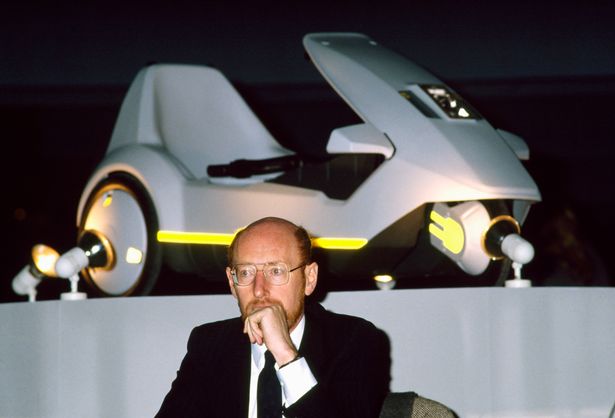
I heard last night of the death at the age of 81 of (Sir) Clive Sinclair. The news brought back a flood of memories.

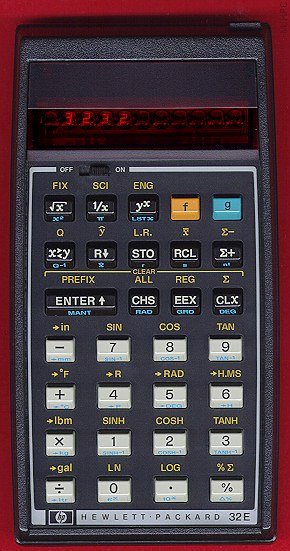
I am of a generation that began secondary school (a grammar school in my case) before pocket calculators were generally available, so my first two years of secondary mathematics education including learning how to logarithms for multiplying and dividing numbers. After that, from the third year onwards, slide rules were in use but by the time I got I got into the 3rd form these had been phased out and replaced with electronic calculators. The first commercially available such device was produced by Sinclair. I didn’t like the Sinclair calculator, however, which had a reputation for unreliability so my first simple calculator was a Casio machine which, if I recall correctly was also cheaper. Later on when I wanted a more advanced calculator I went for the wonderful Hewlett Packard HP32E, complete with Reverse Polish Notation.

I got interested in computing at school too. The machines we had available were Commodore PET machines running BASIC. The first computer I ever had at home was the very simple Acorn System 1 which had just 1K of RAM, a hexadecimal keypad and LED display and was programmed in 6502 Assembly language. Curiously, although I have great difficulty remembering my own phone number, I can still remember quite a lot of the hexadecimal opcodes in the 6502 instruction set!

The Acorn System 1 went into production in 1979 but just a year later Sinclair introduced the ZX80. Although very limited by today’s standards, it was really much more advanced than the machine I had. It did, however, have a reputation for unreliability and it was actually quite difficult to get hold of one due to supply issues. A friend at school bought one, but it seemed to me flimsy and awkward to use, so I never bought one. Nor did I buy the successor the ZX81.

Because I had experience using machines based on the 6502 processor I thought I would buy a BBC micro when they came out as I used to enjoy bypassing the BASIC interpreter on the Commodore PET and running my own machine code. In 1982, however, Sinclair released the ZX Spectrum. This again was very limited by today’s standards but was a significant improvement on its predecessors, so I bought one. I took it with me to Cambridge when I began as a student there in 1982.

I remember also buying various peripherals for it, including a dreadful printer that required rolls of special paper.

The ZX Spectrum was a great success but soon other companies took over the market. It seemed to be in Sinclair’s character to invent things and then lose interest and he subsequently switched his attention to other inventions, many of which flopped, such as the ridiculously impractical Sinclair C5 which launched in 1985 and sank shortly afterwards. He never seemed to let such failures bother him too much, though, which is to his credit, and he didn’t seem to mind being ribbed about them either. Here he is on Clive Anderson Talks Back:

Despite his failures it seems very clear to me that Clive Sinclair was a pioneer in the technological revolution who played a major role in shaping the digital landscape in which we find ourselves today, forty years after the first home computers. My washing machine has much more CPU power than any of the 1980s home computers, but you have to start somewhere.

Rest in Peace, Clive Sinclair (1940-2021).