Archive for the History Category

Captain James Doohan

Posted in History, Television with tags , , , , , on June 6, 2018 by telescoper

The pictures above are photographs of a young Captain James Doohan of the Royal Canadian Artillery.

Doohan was in action on D-Day where he served with exceptional courage and distinction during the assault on Juno beach. He killed two enemy snipers and successfully led his men on foot through a minefield. Doohan was then hit six times by machine gun fire, 4 times in the leg, once in the finger, and once in the chest. The latter round would probably have killed him but for the cigarette case he had in his tunic pocket which deflected the bullet.

In case you haven’t yet realised, after the war was over, James Doohan became an actor, best known for the role of ‘Scotty’ in the TV series Star Trek…

Captain James Doohan was just one of around 160,000 officers and men who took part in the invasion of Normandy that began on 6th June 1944.

Another, not now famous, whose name along with many others, I came across this morning while waiting for my plane, was a George Jones of No 4 Commando who landed at Ouistreham (Sword beach) with the 1st Special Service Brigade around 7.30am on D-Day. Between the beach and Pegasus Bridge, four miles inland, his unit was constantly under fire and all but 80 of his 500 comrades were killed or wounded.

George Jones, James Doohan and countless other brave men like them were fighting to liberate a continent from Nazi tyranny. It is to our shame that so many today who owe their freedom to the sacrifices of an earlier generation are once again marching to the fascist drum.

Lá Saoire i mí Mheitheamh

Posted in Biographical, History, Maynooth, Uncategorized with tags , , , on June 4, 2018 by telescoper

So here I am, in Maynooth, on my birthday. I’ve made such an impression here in Ireland since I arrived that they’ve declared this day a national holiday so I’ve got the day off.

The June Bank Holiday (Lá Saoire i mí Mheitheamh) in Ireland is actually the equivalent of last week’s late May Bank Holiday in the UK, in that both have their origin in the old festival of Whitsuntide (or Pentecost) which falls on the 7th Sunday after Easter. Because the date of Easter moves around in the calendar so does Whit Sunday, but it is usually in late May or early June. When the authorities decided to fix a statutory holiday at this time of year, presumably to reduce administrative difficulties, the UK went for late May and Ireland for early June. Whit Sunday was actually on 20th May this year.

Incidentally, when I was a lad, ‘Whit Week’ was always referred to as ‘Race Week’. Geordie Ridley’s famous music hall song The Blaydon Races begins “I went to Blaydon Races, ’twas on the 9th of June, Eighteen Hundred and Sixty Two on a summer’s afternoon…”. Easter Sunday fell on 20th April in 1862, so Whit Sunday was on 8th June. After raucous scenes at the Blaydon Races, they were scrapped and replaced with a Temperance Festival on the Town Moor in Newcastle which evolved into one of the largest open-air funfairs in Europe, The Hoppings.

Anyway, with this birthday, I have now reached the minimum retirement age in the UK university pension scheme, so I could start drawing my pension when I leave Cardiff University next month. For a time I was planning to do that, but Ireland has given me a new lease of life, so to speak, so thoughts of retirement have receded.

Today also represents a short hiatus before our formal Exam Board meeting tomorrow, then I’ll be back in Cardiff for exam business there. And next week I’ll be in neither Cardiff nor Maynooth…

The Maynooth Pound

Posted in History, Maynooth with tags , , on June 2, 2018 by telescoper

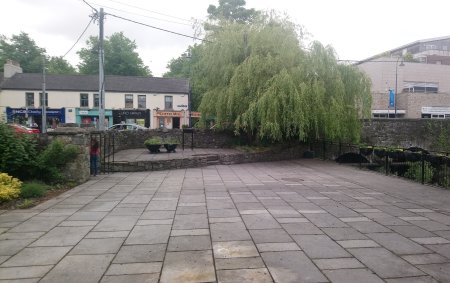
Taking a stroll around Maynooth this afternoon I came across a little bit of local history that I thought I would share. On the appropriately name Pound Lane, right next to the stream that used to run past an ancient mill where there is now a shopping centre, there is a small enclosure called the Maynooth Pound, marked with this sign:

If you can’t read the sign it explains that this is the only surviving example of a type of pound which used to be common all over Ireland. Stray animals were brought here to be fed and watered before being reunited with their owners (for a small fee).

The walls are of interesting dry stone construction and have survived the passage of time rather well; they were built in 1822, although the Pound itself is a bit older.

The interior of the Pound was virtually derelict until quite recently but has been tidied up and is now a pleasant place to sit down and perhaps feed the birds. The old mill was famous for its crows, of which there are still a great many in Maynooth although they tend now to congregate on the playing fields near the Royal Canal.

In the picture, the mill stream is to the right of the shot and you can see the roof of the Manor Mill shopping centre to the upper right.

Thirty Years since Section 28..

Posted in History, Politics with tags , , on May 24, 2018 by telescoper

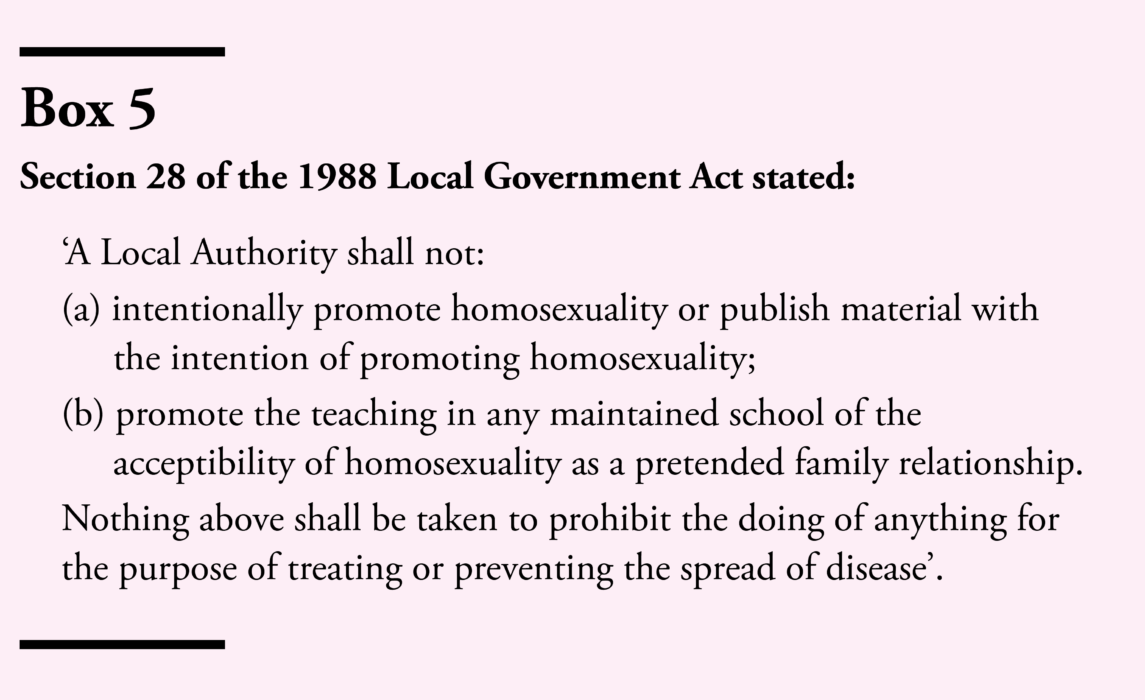
I was reminded by twitter that today is the 30th anniversary of the enactment of the Local Government Act 1988, which included the now notorious Section 28, which contained the following:

I remember very well the numerous demonstrations and other protests I went on as part of the campaign against the clause that became Section 28. Indeed, these were the first large political demonstrations in which I ever took part. But that repugnant and obviously discriminatory piece of legislation passed into law anyway. Students and younger colleagues of mine born after 1988 probably don’t have any idea how much pain and anger the introduction of this piece of legislation caused at the time, but at least it also had the effect of galvanising  many groups and individuals into action. The fightback eventually succeeded; Section 28 was repealed in 2003. I know 30 years is a long time, but it’s still amazing to me that attitudes have changed so much that now we have same-sex marriage. I would never have predicted that if someone had asked me thirty years ago!

I think there’s an important lesson in the story of Section 28, which is that rights won can easily be lost again. There are plenty of people who would not hesitate to bring back similar laws if they thought they could get away with them.  That’s why it is important for LGBT+ people not only to stand up for their rights, but to campaign for a more open, inclusive and discrimination-free environment for everyone.

International Day Against Homophobia, Transphobia & Biphobia

Posted in History, LGBTQ+ with tags , , , , on May 17, 2018 by telescoper

Today is May 17th, which means that it is International Day Against Homophobia, Transphobia and Biphobia. If you’re wondering why May 17th was chosen, it’s to commemorate May 17th 1990, which is when the World Health Organisation removed homosexuality from its list of “mental illnesses”.


Please remember at although attitudes in the UK are much more enlightened than they were only a few years ago, homophobic violence still happens with distressing frequency and in over 70 countries around the world being gay is still a criminal offence. Moreover, the rights we have won over the past 50 years could so easily be lost.


The theme for this year is “Alliances for Solidarity” so, even if you don’t identify yourself as LGBT+, then this should still be an important day for you. Here, for example, is a handy guide produced by Pride in STEM on how to be an ally:

The Parnell Connection

Posted in Beards, Biographical, History with tags , , , , on April 19, 2018 by telescoper

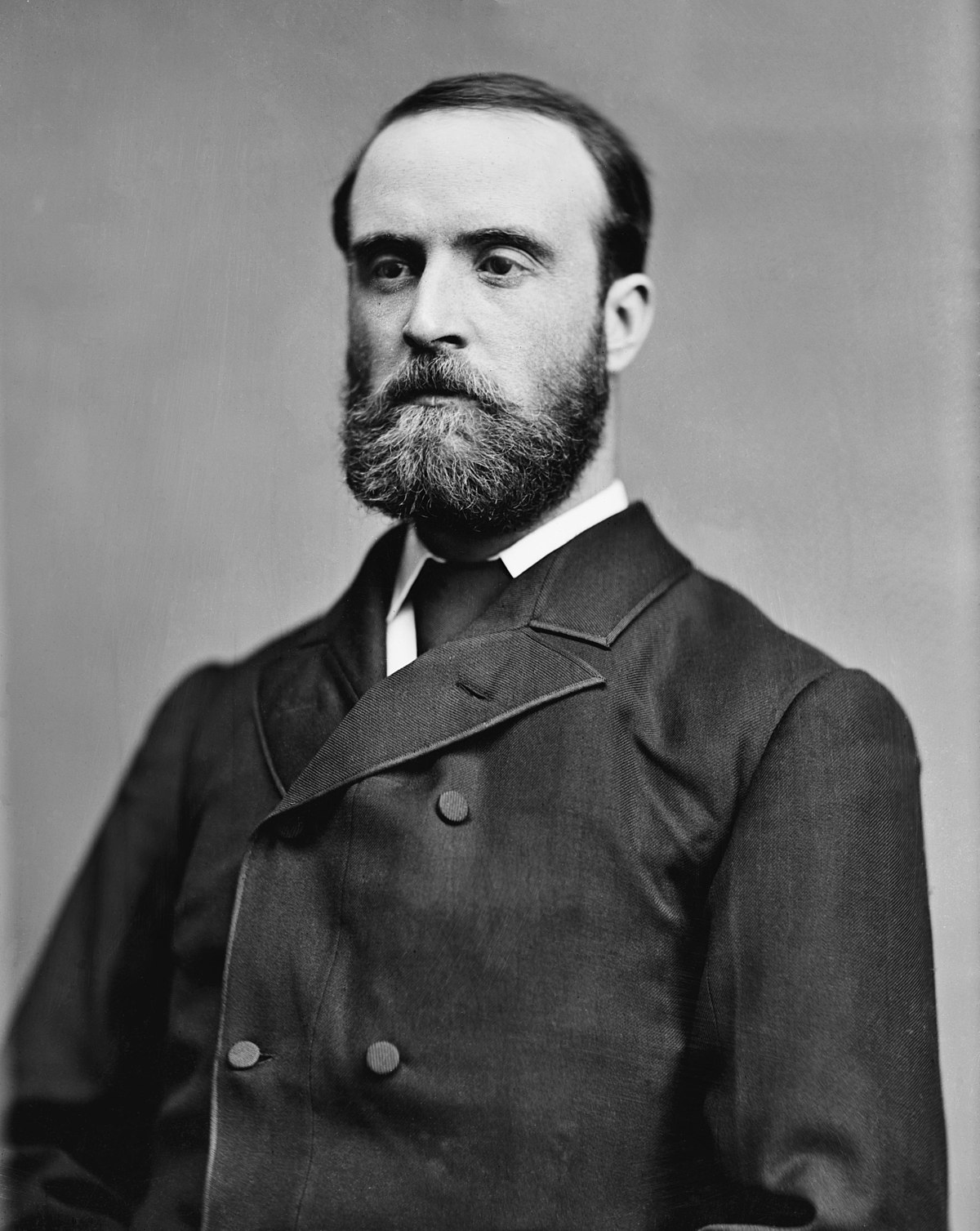
Charles Stewart Parnell (1846-1891)

Taking a short breather and a cup of coffee in between this morning’s lecture and a forthcoming computer lab session I thought I’d do a quick post following on from a comment on yesterday’s post about an O-level History paper.

I was an undergraduate student at Magdalene College, Cambridge, which just happens to be where 19th century Irish nationalist politician Charles Stewart Parnell (above) studied, although I hasten to add that we weren’t contemporaries. There is an annual Parnell Lecture at Magdalene in his honour; an annual Coles lecture is yet to be established. Parnell is widely remembered here in Ireland too, not least in place names: there is , for example, a handsome Georgian square in Dublin named after him.

Parnell was one of the most charismatic, capable and influential Parliamentarians of his era, and led the Irish Parliamentary Party at the forefront of moves for Home Rule for Ireland. He also had a splendid beard. His career was cut short by scandal in the form of an adulterous relationship with Kitty (Katherine) O’Shea, whom her husband divorced in 1889 naming Parnell in the case, and whom he married after the divorce. (Kitty, that is, not her husband.) They were not to enjoy life together for long, however, as Parnell died in 1891 of pneumonia in the arms of his wife in 1891 at their home in Brighton (Hove, actually).


An O-Level History Examination from 1979

Posted in Biographical, Education, History with tags , , , , on April 18, 2018 by telescoper

I have in the past posted a few examples of the O- and A-level examinations I took when I was at school. These have been mainly science and mathematics papers as those are relevant to the area of higher education in which I work, and I thought they might be of interest to students past and present.

A few people have emailed me recently to ask if I could share any other examinations, so here are the two History papers I took for O-level in June/July 1979. Can that really have been almost 40 years ago?

These were Papers 5 and 12 out of an unknown number of possible papers chosen by schools. My school taught us exclusively about British and European history from the mid-19th to early 20th centuries; you will observe that in both cases `history’ was deemed to have ended in 1914. It’s possible that some of the other papers paid more attention to the wider world.

I have no idea what modern GCSE history examinations look like, but I’d be interested in any comments from people who do about the style and content!

Peter Tatchell: Equality is not Enough

Posted in Cardiff, History, LGBTQ+, Politics with tags , on March 23, 2018 by telescoper

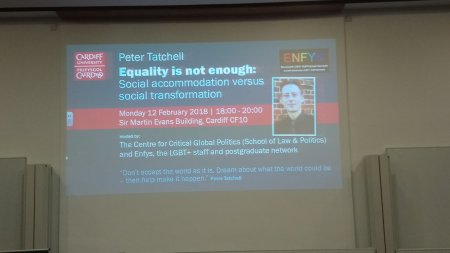
On the evening of Monday 12th February, during LGBT History Month, I went to a lecture by Peter Tatchell which was held in the Sir Martin Evans lecture theatre at Cardiff University. I was going to do a post about it but never found the time. Here’s a snap of the title slide I took at the time:

Today I noticed that a video of the lecture had been posted on Cardiff University’s youtube channel which reminded me to say something about it. I admire and respect Peter Tatchell’s integrity and determination, and the way he has stood up against homophobia for more than 50 years is inspirational. I don’t agree with everything he says, but I found myself agreeing with most of the content of this lecture, the main idea of which was that it is not enough for LGBT people to seek equality within a system that is so manifestly discriminatory against whole sectors of the population. The aim of of LGBT campaigners should be to transform society, not to be accommodate within it.

Anyway, here’s his lecture. Form your own opinions!

A photograph of Sir John Herschel

Posted in Art, History on March 22, 2018 by telescoper

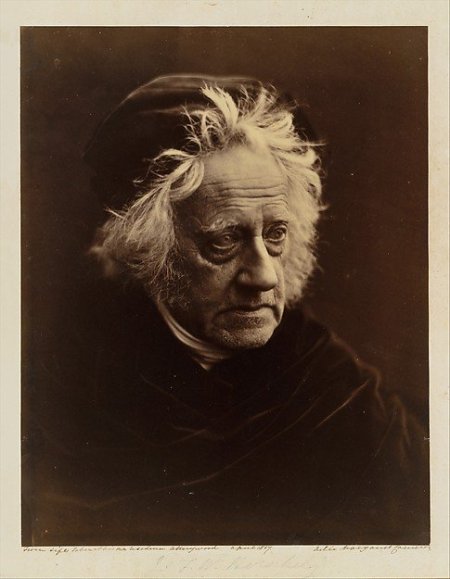
I didn’t have time to write a post today before it became necessary for me to go to the pub, so I thought I’d just share this marvellous photograph of astronomer Sir John Herschel taken in 1867 by pioneering portrait photographer Julia Margaret Cameron.

Manchester Hill – “Here we fight, and here we die”

Posted in History with tags , , , , on March 21, 2018 by telescoper

Today is the centenary of the start of a major offensive of the Western Front by the German forces against the British and French armies during the First World War. One particular action that took place on the first day of that offensive took place at a location now known as Manchester Hill, a region of high ground forming a salient overlooking the town of St Quentin, on this day 100 years ago i.e. on 21st March 1918. I read about this some time ago, but thought I would do a brief post about it to mark this grim anniversary.
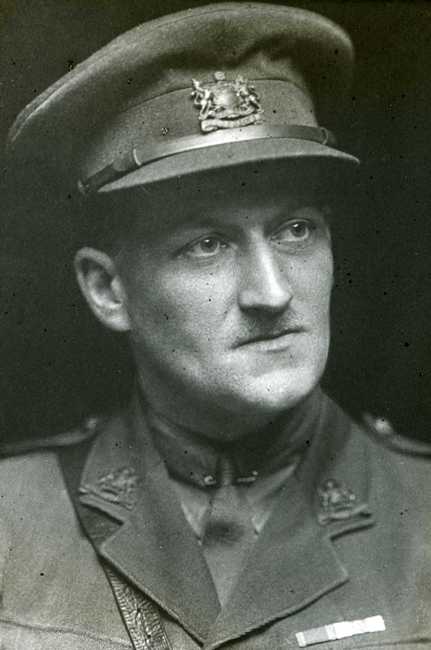
Lieutenant-Colonel Wilfrith Elstob, Commanding Officer, 16th Battalion Manchester Rifles.

Manchester Hill had been captured by the 2nd Battalion of the Manchester Regiment in April 1917 and in March 2018 it was held by the 16th Battalion of the same Regiment under the command of Lieutenant-Colonel Wilfrith Elstob, a schoolteacher before the War who had joined the army in 1914 as a private soldier and was promoted through the ranks. His gallantry on that day earned him a posthumous Victoria Cross with the citation:

For most conspicuous bravery, devotion to duty and self-sacrifice during operations at Manchester Redoubt, near St. Quentin, on the 21st March, 1918. During the preliminary bombardment he encouraged his men in the posts in the Redoubt by frequent visits, and when repeated attacks developed controlled the defence at the points threatened, giving personal support with revolver, rifle and bombs. Single-handed he repulsed one bombing assault driving back the enemy and inflicting severe casualties. Later, when ammunition was required, he made several journeys under severe fire in order to replenish the supply. Throughout the day Lieutenant-Colonel Elstob, although twice wounded, showed the most fearless disregard of his own safety, and by his encouragement and noble example inspired his command to the fullest degree. The Manchester Redoubt was surrounded in the first wave of the enemy attack, but by means of the buried cable Lieutenant-Colonel Elstob was able to assure his Brigade Commander that “The Manchester Regiment will defend Manchester Hill to the last.” Sometime after this post was overcome by vastly superior forces, and this very gallant officer was killed in the final assault, having maintained to the end the duty which he had impressed on his men – namely, “Here we fight, and here we die.” He set throughout the highest example of valour, determination, endurance and fine soldierly bearing.

His last action, after the Germans had broken through the last line of defences, was to use the field telephone to call down an artillery barrage onto his own position. His body was never found and he has no known grave.

You can read the stories of other soldiers who fought and died that day here.

Manchester Hill jutted out into the German lines so, although it was heavily fortified, it was very vulnerable and difficult to defend. Enemy troops were in position on three sides of the hill, and in the event of an attack was difficult to prevent it being surrounded, isolated and destroyed. In the days and hours preceding March 21st the troops on Manchester Hill could see the Germans moving into position and knew a major offensive was imminent. Elstob repeatedly asked his superior offices for permission to withdraw, but it was repeatedly refused. When specific intelligence was received that the attack would take place in the morning of 21st March he once more contacted his HQ to request position to withdraw. After having his request refused once more, he returned to his men and made the famous statement “This is our position. He we fight and here we die.”

There was thick fog the following morning, hiding the inevitable German advance which began at 6.30am with an artillery bombardment until it was too late to prevent them encircling the British garrison. By 11.30 the British were completely encircled. Nevertheless the defenders of Manchester Hill fought off repeated attacks and managed to hold their position until late afternoon against an overwhelmingly larger force. Elstob was in the thick of the action throughout, once holding a position alone using his service revolver and hand grenades. By 4pm however, the battle was lost and virtually all the defenders were dead. Of the 168 men (8 officers and 160 other ranks) who participated in the defence of the Manchester Hill redoubt, just 17 survived (two officers and 15 other ranks).

The German advance broke through Allied lines and stormed on, even at one point threatening Paris, but the pace of the advance led to supply difficulties and it eventually stuttered, was stopped and then flung back into a full retreat. Although German forces had been reinforced by troops no longer needed in the East after the Russian Revolution of 1917, American forces had been arriving in huge numbers – 300,000 a month – at the time of the Spring offensive and it this influx of troops across the Atlantic that proved decisive in the end.

We should celebrate the bravery of the defenders of Manchester Hill, especially Lieutenant-Colonel Elstob, but one can’t help asking why he was not given permission to withdraw. It is true that they delayed and disrupted the German advance, but at a terrible cost. It does seem to me that for all the courage and gallantry displayed by Elstob and his men, their sacrifice was unnecessary.