Archive for the History Category

The Leningrad Symphony

Posted in History, Music with tags , , , , , , , on November 24, 2017 by telescoper

Last night I went with a group of friends and colleagues to St David’s Hall in Cardiff for concert that I had been looking forward to for some time, featuring the Orchestra of Welsh National Opera under the baton of WNO’s Music Director Tomáš Hanus in a programme of music by Mahler and Shostakovich. It turned out to be no disappointment!

Before the interval the Orchestra was joined by young mezzo-soprano Tara Erraught for the song-cycle Lieder eines fahrenden Gesellen by Gustav Mahler, featuring settings of four poems written by the composer (though clearly influenced by other sources). The four pieces are of contrasting mood, with the second being the most upbeat and the third the most despairing (as well as the most operatic in style) and they were written in response to an unrequited passion. I thought Tara Erraught sang very beautifully indeed, bring out the emotional depths of this piece. Unusually for Mahler, the orchestra for this work was not excessively large, and a good balance with the solo voice was achieved that allowed the subtleties of both vocal and orchestral parts to be enjoyed to full effect.

After the interval the stage was much fuller as the orchestral forces required for the second work were much larger. Symphony No. 7 by Dmitri Shostakovich (“Leningrad”) is a piece that evokes particular memories for me as I first heard it about thirty years ago on the radio while sitting in a car that was driving through a torrential downpour in the middle of the night from Kansas City to Lawrence. The repeating theme and snare drum figures in the 1st Movement that represent the remorseless advance of the invading army had even more powerful affect when accompanied by the incessant driving rain. I’ve heard this piece on recordings and live broadcasts on many occasions since then, but have never heard it performed live until last night.

Shostakovich in a fireman’s uniform in Leningrad, 1941

What can I say about this work? Well, not much that hasn’t been said before. It was dedicated to the city of Leningrad where the composer lived, until he was evacuated during the siege,  and where he wrote most of the 7th Symphony. He served as a volunteer fireman in Leningrad during the early part of the Second World War (see above), having been turned down for military service owing to his poor eyesight. Leningrad was besieged by German forces for almost 900 days, from September 1941 until January 1944, and it’s impossible not to see the work in this historical context.


Though the four movements have themes – `War’, `Memories’, `My Native Field’ and `Victory’ – this is not really a programmatic piece. It does, however, succeed in invoking the terror and brutality of armed conflict in a manner that is so compelling that it’s almost overpowering. Many symphonies have as a theme some kind of struggle between light and dark, or between good and evil, but it always seemed to me that this work is not so much like that as it is a representation of a struggle simply for survival against annihilation. Even the end of the intense fourth movement, when the music finally resolves into the key of C Major, suggesting a kind of `victory’, echoes of the previous conflict persist, suggesting (to me) that this particular battle does not intend in any kind of triumph but in a sense of grim endurance that is more resignation than resolution.

Musicologists tend not to like this Symphony and its reputation dwindled in the West in the post-War period. Maybe it is true that it has defects when thought of as an exercise in composition, but fortunately I am not a professional critic so I am quite content to say that for me, personally, this work has an emotional impact like few others and it is one of my favourites in the whole symphonic repertoire. Last night the Orchestra of Welsh National Opera delivered an impassioned performance that confirmed everything I felt about this work but with the added dimensions that you can only get from a live performance.

From the immaculately controlled crescendo representing the advancing invaders that erupts into a nightmarish depiction of the ensuing battle right through to the last movement with its ending in resolution tempered in bitterness and regret, this performance had me gripped. The Orchestra of Welsh National Opera played as if their lives depended on it, and the climactic moments were authentically terrifying and, it goes without saying, wonderfully loud. Many congratulations to Tomáš Hanus for inspiring his musicians to such heights. He looked absolutely drained at the end, as he acknowledged the applause of a very appreciative audience in St David’s Hall.

It’s a shame that there were so many empty seats. That often seems to be the case when the music is relatively `modern’. The Cardiff audience does seem to have rather conservative tastes in that way. On the way out of the Hall after the performance all the comments I heard – and those afterwards on Twitter – were overwhelmingly enthusiastic. I feel privileged to have been among those present at this thrilling event.

UPDATE: I didn’t realise it was being broadcast live on BBC Radio 3 and is now available on iPlayer here for you to share the experience!

Simplified Presentation 

Posted in History, The Universe and Stuff, Uncategorized on November 24, 2017 by telescoper

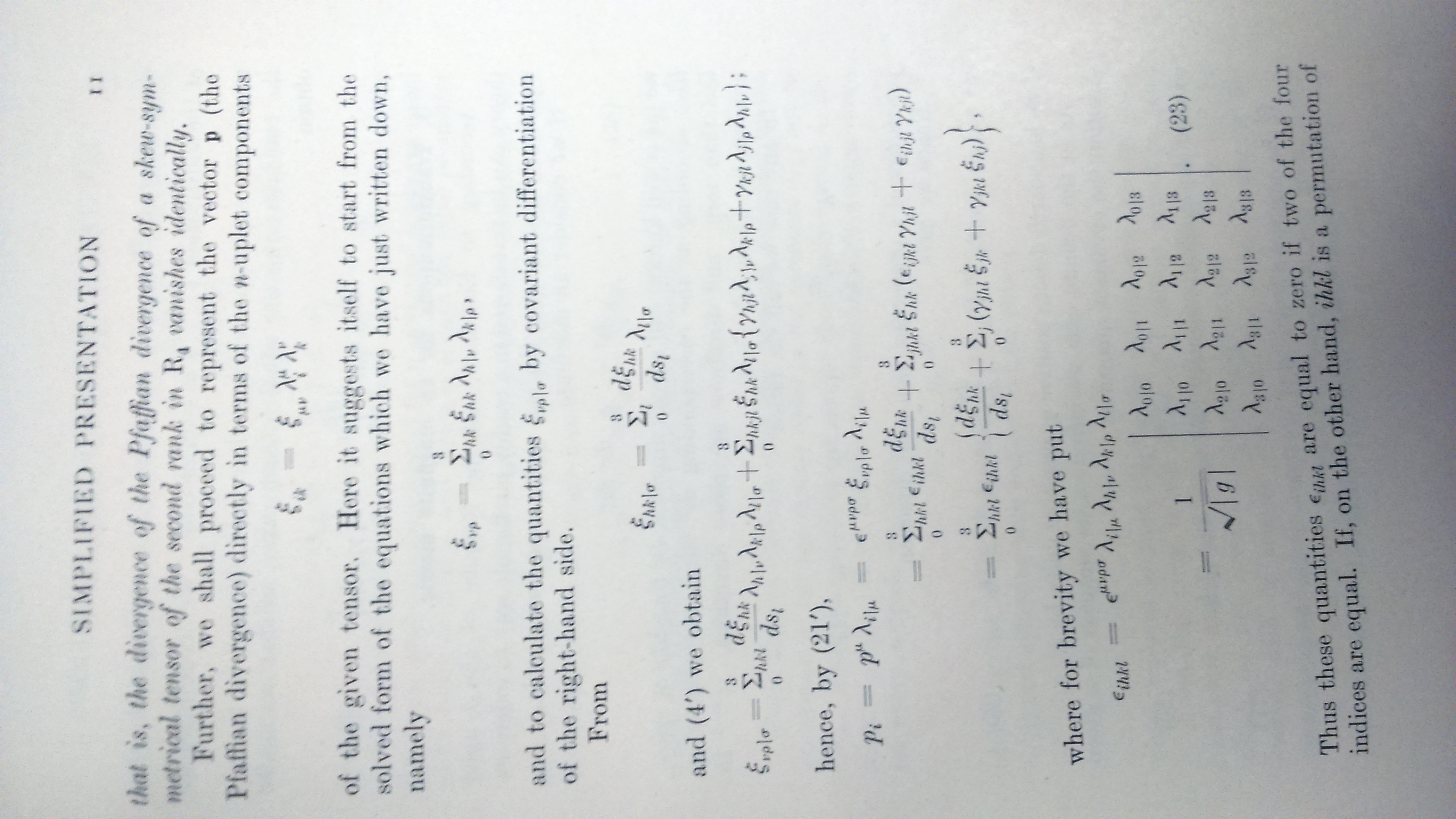
This morning I was looking through my collection of old books about general relativity and related things, and found this page as part of a `simplified presentation’:

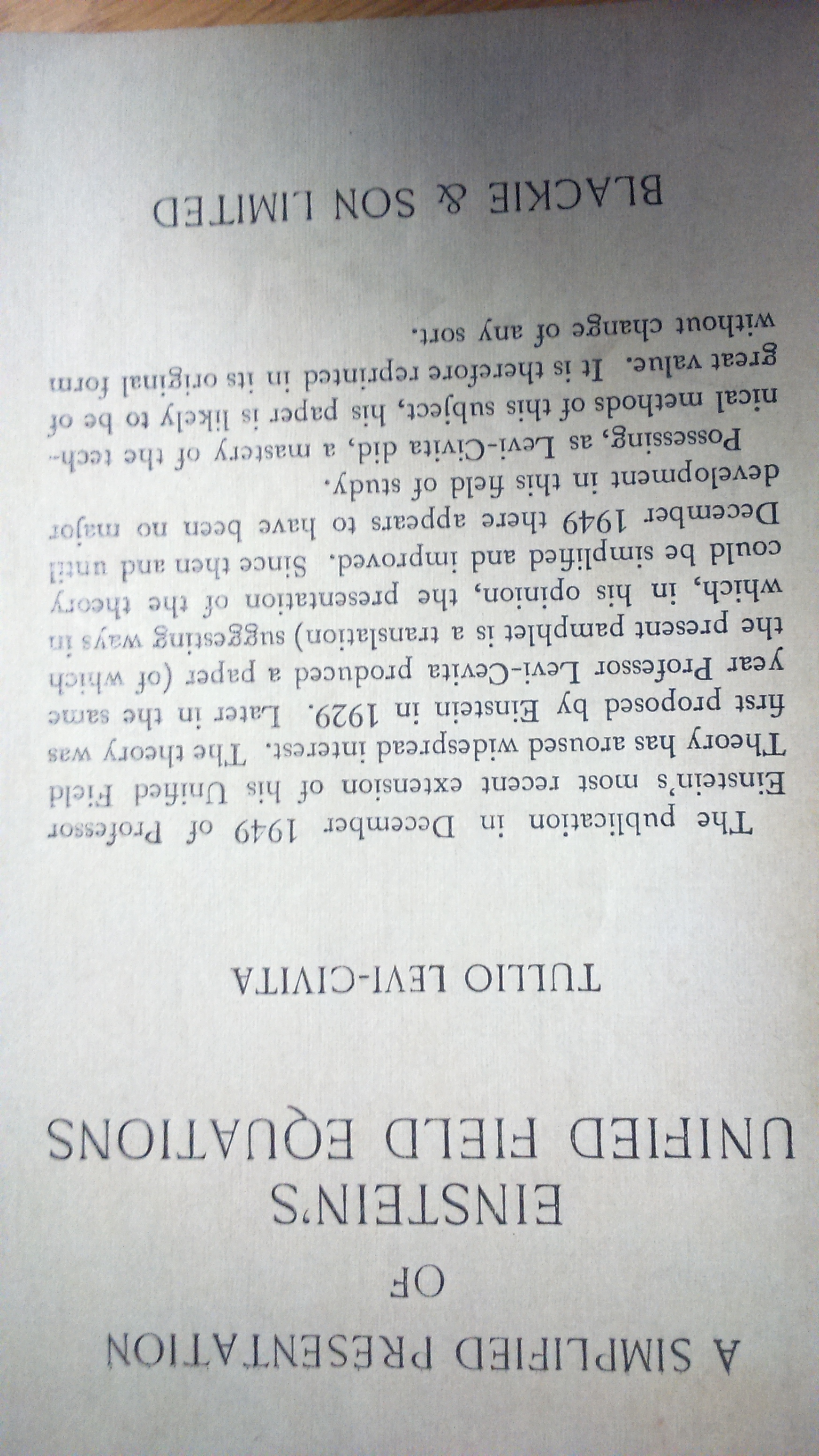
I wonder if you can guess the name of author of the little book in which I found this page, and what it is a `simplified presentation’ of?

The answer is on the front cover:

One Hundred Years of the Cosmological Constant: from ‘Superfluous Stunt’ to Dark Energy

Posted in History, The Universe and Stuff with tags , , , on November 21, 2017 by telescoper

Some months ago I did a little post on the occasion of the 100th anniversary of the introduction of the cosmological constant which included a link to the original paper on this subject by Albert Einstein. A nice thread of well-informed comments followed that post and one of the contributors to that thread, Cormac O’Raifeartaigh, is lead author of a paper that has just appeared on the arXiv. It’s quite a lengthy paper (62 pages) that gives an account of the cosmological constant in the context of modern observational cosmology. You can get a PDF of the paper here. It’s well worth reading!

The abstract reads:

We present a centennial review of the history of the term known as the cosmological constant. First introduced to the general theory of relativity by Einstein in 1917 in order to describe a universe that was assumed to be static, the term fell from favour in the wake of the discovery of cosmic the expanding universe, only to make a dramatic return in recent times. We consider historical and philosophical aspects of the cosmological constant over four main epochs: (i) the use of the term in static cosmologies (both Newtonian and relativistic; (ii) the marginalization of the term following the discovery of cosmic expansion; (iii) the use of the term to address specific cosmic puzzles such as the timespan of expansion, the formation of galaxies and the redshifts of the quasars; (iv) the re-emergence of the term in today’s Lamda-CDM cosmology. We find that the cosmological constant was never truly banished from theoretical models of the universe, but was sidelined by astronomers for reasons of convenience. We also find that the return of the term to the forefront of modern cosmology did not occur as an abrupt paradigm shift due to one particular set of observations, but as the result of a number of empirical advances such as the measurement of present cosmic expansion using the Hubble Space Telescope, the measurement of past expansion using type SN 1a supernovae as standard candles, and the measurement of perturbations in the cosmic microwave background by balloon and satellite. We give a brief overview of contemporary interpretations of the physics underlying the cosmic constant and conclude with a synopsis of the famous cosmological constant problem.

Antikythera, the Green Island of Science

Posted in History, The Universe and Stuff with tags , , , on November 20, 2017 by telescoper

You’ve probably all heard of the Antikythera Mechanism, a sophisticated device that was used about 2000 years ago by the Greeks to predict astronomical positions and eclipses for calendar and astrological purposes and found in 1902 at the site of a shipwreck near the island of Antikythera. You may not know that there is a strong connection between the study of this amazing piece of machinery and my current employer, Cardiff University, especially through our own Emeritus Professor Mike Edmunds.

Well, it seems that another episode in the story of Antikythera is about to open up as a result of a new initiative of the National Observatory of Athens, in collaboration with the Prefecture of Attica and the Municipality of the island of Kythira. This will lead to the creation of an Observatory of Climate Change and Centre of Geosciences at the island of AntiKythera, where the famous ancient mechanism was found and which is currently almost deserted.

Here is a little video about this project. The dialogue is in Greek, but with subtitles. I should also point out that the first person you see and hear is Manolis Plionis, who is Director of the National Observatory of Athens, a very old friend of mine who I first met at Sussex when I started my graduate studies in the Astronomy Centre there in 1985.

Dark Matter Day

Posted in History, The Universe and Stuff with tags , , , , , on October 31, 2017 by telescoper

As a welcome alternative to the tedium of Hallowe’en (which I usually post about in this fashion), I notice that today (31st October 2017) has been officially designated Dark Matter Day. I would have sent some appropriate greetings cards but I couldn’t find any in the shops…

All of which gives me the excuse to post this nice video which shows (among other things) how dark matter plays a role in the formation of galaxies:

P.S. Lest we forget, today is also the 500th anniversary of the day that Martin Luther knocked on the door of All Saints’ Church in Wittenberg and said `Trick or Theses?’ (Is this right? Ed.)

Homes from Home in Pune

Posted in Biographical, History, The Universe and Stuff with tags , , , on October 16, 2017 by telescoper

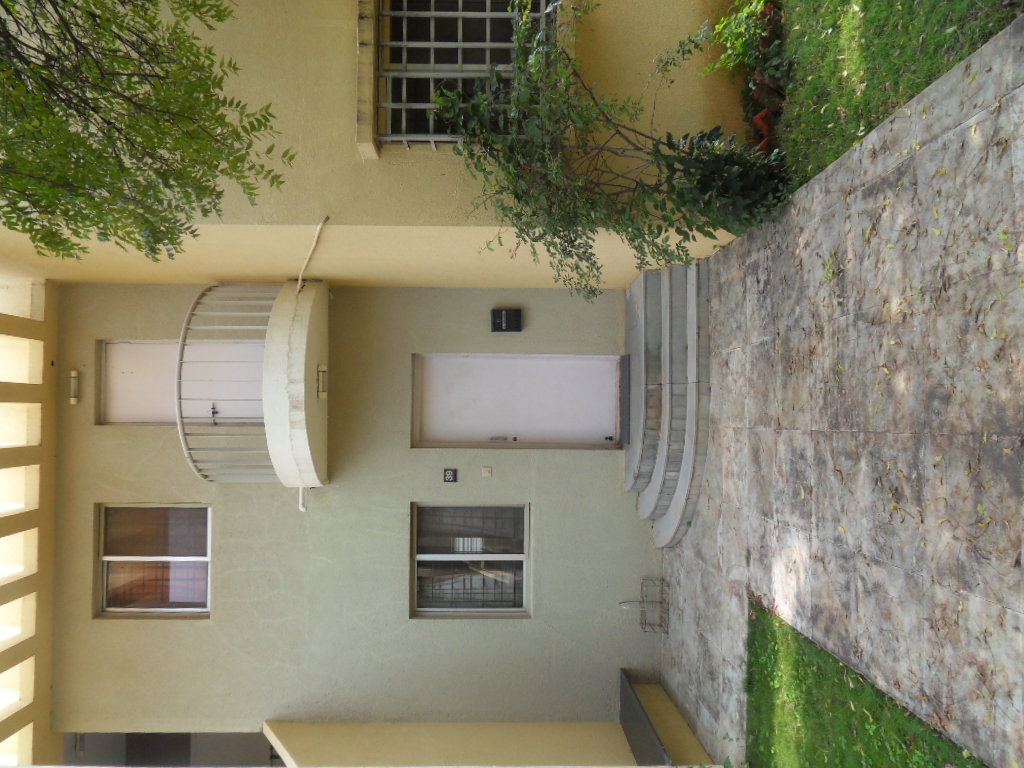
Since I’m coming back tomorrow I thought I’d wander around this morning and take a few pictures of where I’ve been staying most of the last 10 days or so. First, this is a snap of the housing complex which contains my guest apartment.

I’m actually in the first building on the right. Here is the front door.

The faculty at both IUCAA (Pune) and TFIR (Mumbai) live in housing areas provided by their respective institutions, so they form quite a close-knit community. Some of the senior staff in IUCAA are housed just round the corner from my place.

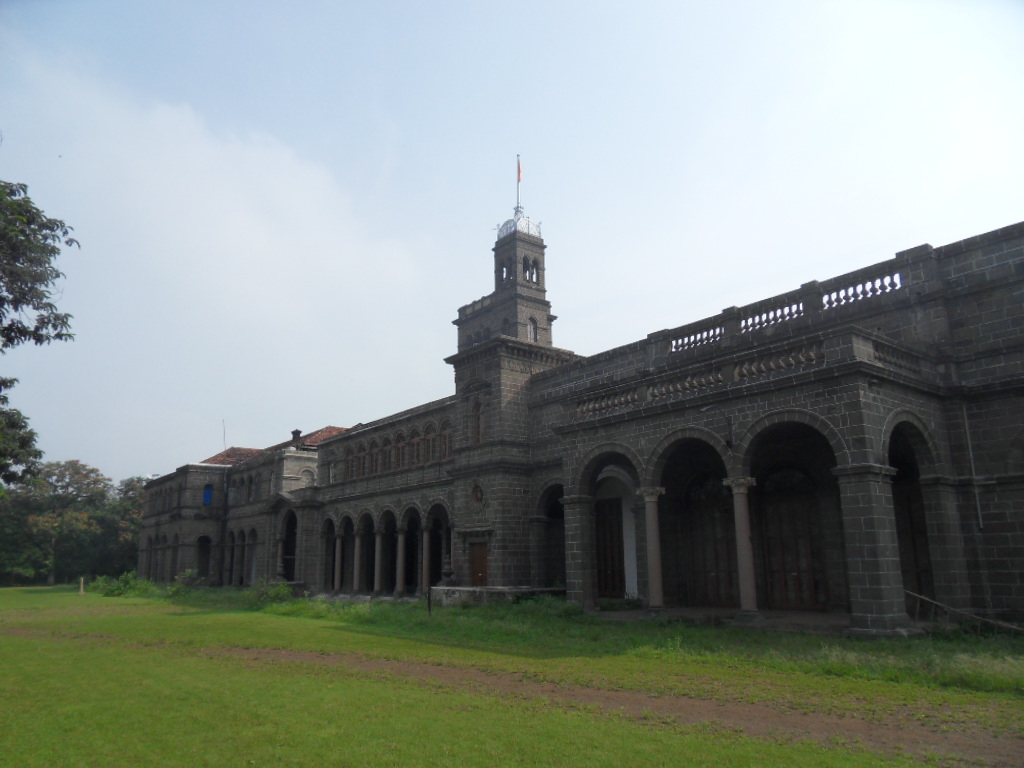
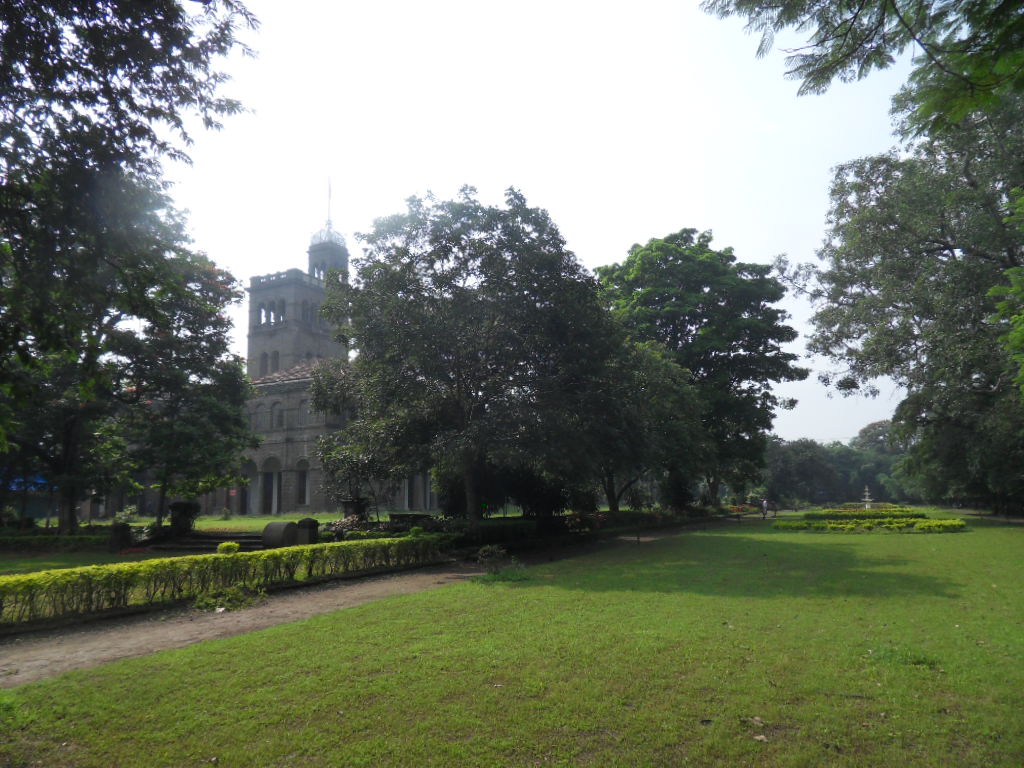
IUCAA is on the Pune University Campus (except that it has its own entrance from the main road that runs along the Northern edge of the campus, where there is a security post. There are a few of these around the IUCAA site itself, so it is very secure and quite private. The campus is large with many tree-lined roads. At its heart, on a small hill, you can find this building:

This is (or was) the Raj Bhavan (`Government House’) and it was essentially the Governor of Maharashtra’s residence during the Monsoon season. Built in 1866, it was a sort of home-from-home when Bombay (the state capital) became too unbearable.

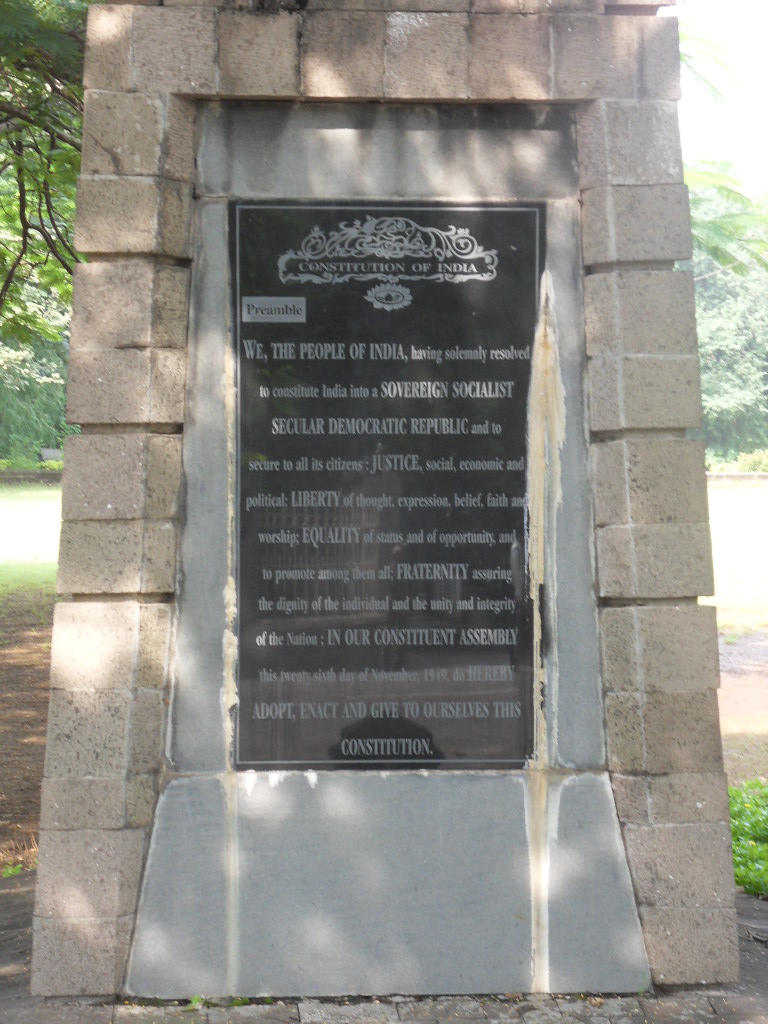
When I was last here in 1994, this was the Main Building of the University and was quite busy. Now, however, it seems to be disused and is in a state of some disrepair, the gardens also need a bit of love and attention. There are many new buildings around the University of Pune campus (including a modern administration block nearby). Since this building is a relic of the old colonial days it may be that it will be demolished to make way for something that better suits modern India. By the way, there’s a stone slab just next to the site of this building that displays the preamble to the Constitution of India, as adopted in 1949.

Anyway, this afternoon and evening promise to be quite busy. There is a press conference at IUCAA at 6.30pm about the gravitational waves discovery I mentioned a few days ago. There will be presentations before a viewing of the live feed from Washington DC then there’ll be a panel answering questions from the press. They’ve asked me to be on the panel, so I might appear in the India media, but as I’m leaving first thing tomorrow morning I probably won’t see any of the coverage!

Before the Storm…

Posted in Biographical, History with tags , , , , on October 16, 2017 by telescoper

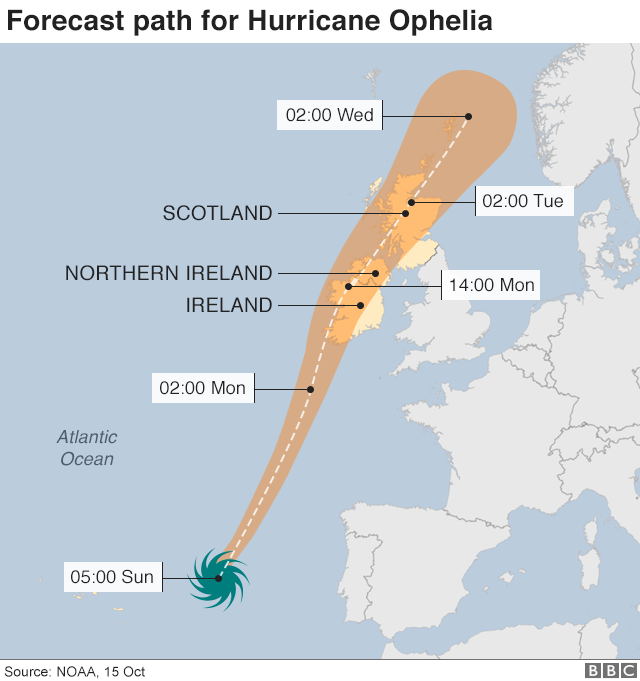
Nearly at the end of my short visit to India I find myself checking on the UK news. Home thoughts from abroad and all that. Anyway, it’s quite a coincidence that Hurricane Ophelia is arriving,  exactly on the thirtieth anniversary of the famous `Great Storm‘ that wrought destruction across the South-East of England in 1987. The path of Ophelia is rather different from that of the 1987 `Hurricane’, and it looks like Ireland will bear the brunt over the next day or two, as the storm will weaken as it encounters land, though there will be strong winds far outside the path denoted in this map:


I hope the damage from this storm  isn’t too bad and that people in its path stay safely out of harm’s way, especially in Ireland. It’s possible the winds may affect my current home in Wales too. I hope I don’t get back tomorrow evening to find the roof has blown off!

Thirty years ago today I was living in Brighton as a graduate student at the University of Sussex. On October 16th 1987 (a Friday) I woke up to find the electricity had been cut off. Without breakfast I struggled out to find the street lined with fallen trees, smashed cars and houses with broken windows. I got to the railway station to get the train to Falmer (where the University of Sussex is located) only to find that no trains were running. I walked home and went back to bed. It took several days for normal service to resume. When I did get up to campus the following week, I found that almost all the trees in Stanmer Park had come down and were combed flat on the top of the hill.

The Great Storm of 1987 , according to weather forecaster Michael Fish, was “not a hurricane” had nevertheless caused enormours destruction. And I had slept through the whole thing…

Here’s the infamous weather forecast broadcast on the Thursday evening:

and here is the BBC News from the following day:


Going Doolally

Posted in Biographical, History with tags , , on October 14, 2017 by telescoper

Yesterday evening, after my seminar and discussions I went with members of the cosmology group at the Tata Institute for Fundamental Research to a place called the Doolally Tap Room which is not far from TIFR. Thundery clouds had gathered and rain was in the air so we took a taxi there and back.

It’s a nice, modern-looking bar with a range of craft beers and food. The Belgian Witbier and Abbey Tripel went down well, but I wasn’t tempted to try Mango Cider. It was a very pleasant evening, but I was dog tired after it and crashed out as soon as I got back to the TIFR guesthouse.

The name Doolally Tap Room is a very clever name for a bar. The word Doolally (or sometimes Dolally), as it is used in English especially in `going Doolally’ etc, generally means `deranged’ or `crazy’ (often as a result of being confined somewhere involuntarily, rather like cabin fever), is thought to derive from Deolali a place in Maharashtra (the state which contains both Mumbai and Pune). Deolali was used as a transit camp for British Army soldiers waiting to be deployed, many of whom became extremely bored stuck there in the heat.

Interestingly though the original phrase describing the madness induced by such boredom was `Deolali Tap’ (the latter word from a Hindhi word meaning `fever’). Doolally Tap Room therefore works rather well as a play on words.

There are of course many words in contemporary English that have their origins in Indian languages: here are 50 of them, which may or may not surprise you: atoll, avatar, bandana, bangle, bazaar, Blighty, bungalow, cashmere, catamaran, char, cheroot, cheetah, chintz, chit, chokey, chutney, cot, cummerbund, curry, dinghy, doolally, dungarees, guru, gymkhana, hullabaloo, jodhpur, jungle, juggernaut, jute, khaki, kedgeree, loot, nirvana, pariah, pashmina, polo, pukka, pundit, purdah, pyjamas, sari, shampoo, shawl, swastika, teak, thug, toddy, typhoon, verandah, and yoga.

Reminded by the above old British Army connection with doolally I can’t resist mentioning the phrase `When I was in Poona…‘. One doesn’t hear it much these days but aficianados of older humorous novels and radio comedy will recognize it as a kind of catchphrase introducing a boring old ex-soldier. It appears thus in Eric Patridge’s Dictionary of Catch Phrases (2003):

The legacy of Pune’s past as a large British Army base is still apparent: a large area in the centre is still called `Camp’ and there is still a tendency among some to refer to non-vegetarian restaurants as `Military’ (though I’m told this is more the case in Southern India, where the traditional local food is entirely vegetarian). In Maharashtra the diet is very mixed, but I’ve eaten relatively little meat since I came here.

All of which rambling might suggest that I’ve gone Doolally, or indeed that I’m turning into an old bore, but I’m actually enjoying this trip very much indeed. It’s fascinating not only to see what has changed in India in the 23 years since I was last here, but also what has remained the same. Moreover, everyone I have met here has been so friendly and hospitable that it’s been an absolute pleasure all round.

Joseph Bertrand and the Monty Hall Problem

Posted in Bad Statistics, History, mathematics with tags , , , , on October 4, 2017 by telescoper

The death a few days ago of Monty Hall reminded me of something I was going to write about the Monty Hall Problem, as it did with another blogger I follow, namely that (unsrurprisingly) Stigler’s Law of Eponymy applies to this problem.

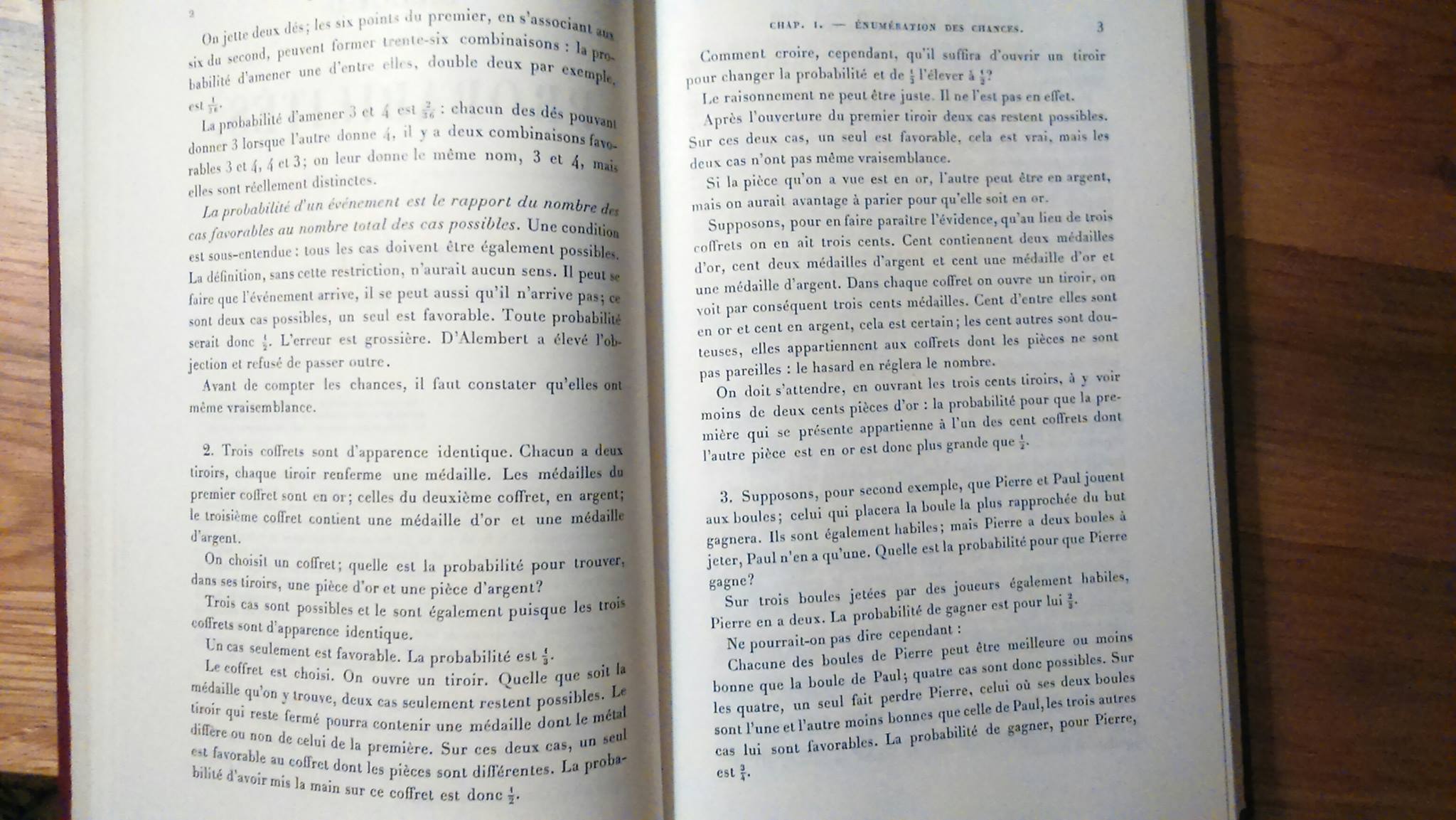
The earliest version of the problem now called the Monty Hall Problem dates from a book, first published in 1889, called Calcul des probabilités written by Joseph Bertrand. It’s a very interesting book, containing much of specific interest to astronomers as well as general things for other scientists. Ypu can read it all online here, if you can read French.

As it happens, I have a copy of the book and here is the relevant problem. If you click on the image it should be legible.

It’s actually Problem 2 of Chapter 1, suggesting that it’s one of the easier, introductory questions. Interesting that it has endured so long, even if it has evolved slightly!

I won’t attempt a full translation into English, but the problem is worth describing as it is actually more interesting than the Monty Hall Problem (with the three doors). In the Bertrand version there are three apparently identical boxes (coffrets) each of which has two drawers (tiroirs). In each drawer of each box there is a medal. In the first box there are two gold medals. The second box contains two silver medals. The third box contains one gold and one silver.

The boxes are shuffled, and you pick a box `at random’ and open one drawer `randomly chosen’ from the two. What is the probability that the other drawer of the same box contains a medal that differs from the first?

Now the probability that you select a box with two different medals in the first place is just 1/3, as it has to be the third box: the other two contain identical medals.

However, once you open one drawer and find (say) a silver medal then the probability of the other one being different (i.e. gold) changes because the knowledge gained by opening the drawer eliminates (in this case) the possibility that you selected the first box (which has only gold medals in it). The probability of the two medals being different is therefore 1/2.

That’s a very rough translation of the part of Bertrand’s discussion on the first page. I leave it as an exercise for the reader to translate the second part!

I just remembered that this is actually the same as the three-card problem I posted about here.

Death and Shingles

Posted in Biographical, History, Mental Health with tags , , , , , on August 31, 2017 by telescoper

So it is now twenty years to the day since news broke of the death of Diana Spencer, formerly the Princess of Wales, along with Dodi Fayed and driver Henri Paul, after a car accident in Paris. I’ve noticed many people posting their memories on social media of where they were when they heard that Diana had died so I thought I’d do the same as I remember it very well.

In the weeks leading up to 31st August 1997 I had been suffering from shingles, a very unpleasant condition that results from the reactivation of the virus responsible for chicken pox, which I’d suffered from as a kid. Shingles causes nasty skin rashes, but on this occasion I was also treated to a spell of almost total deafness. This is a fairly unusual side-effect of the disease but is well known to occur in some cases. Hearing loss caused in this way can be permanent, but thankfully mine wasn’t.  I responded rather well to the anti-viral drugs I was given and it took only a matter of weeks for my hearing to be fully restored.

Suddenly becoming deaf was an unsettling enough experience, but it was even stranger to have been unable to hear anything during the period just after Diana’s death, which turned out to be one of the weirdest times of my life.

On the morning of 31st August 1997, which was a Sunday, I got up rather late and went to the local newsagent to buy a Sunday paper. They were sold out of everything. I thought that was a bit strange but walked out unaware of the reason everyone was buying papers that morning. I went back to my flat – I was living in London at the time – made breakfast, and did some reading. I was looking forward to the football match that was going to be live on TV that afternoon – Liverpool versus Newcastle Utd – but didn’t switch on the TV until it was just about the start. All I saw was a shot of an empty Anfield and some football pundits talking. I assumed there had been a bomb score or something, but I couldn’t hear so had no idea. I decided to have a look at Ceefax (remember that?) and then found out the story.

I was shocked, of course. She was still young when she died and I was fully aware of the reputation she had earned through numerous acts of kindness, e.g. towards people living with AIDS. That said, I was completely unprepared for the events of the following week which seemed to me to amount to an outbreak of national hysteria. I don’t know if it was more extreme in London than elsewhere in the UK, but I felt the whole country had lost its grip. Together with the sense of isolation caused by my deafness, it was a most uncomfortable time. I was saddened by her death, but I just couldn’t feel the extreme grief that others seemed to be displaying about someone that I didn’t know personally. Worse, there was a palpable sense of pressure being exerted on people to fall into line with the deification of Diana. Anyone who expressed anything even slightly short of devout praise was treated as some kind of blasphemer. It is probably the only time in my life I’ve felt that I was the only one to have remained sane while everyone around me had gone mad.

As my hearing slowly recovered I decided to go out with some friends for a drink in a pub in Bethnal Green. I mentioned in a conversation that I never knew her personally and therefore found it hard to understand how the feelings of grief people professed to having could be genuine and that the whole atmosphere that had been created seemed to me to be profoundly unhealthy. A bloke from another table came across and threatened me with violence unless I stopped `insulting Diana’. Insulting Diana was not at all my intention, though I think what the bloke was angry about was the (probably correct) interpretation that I was criticising those who had bought into the Diana cult.

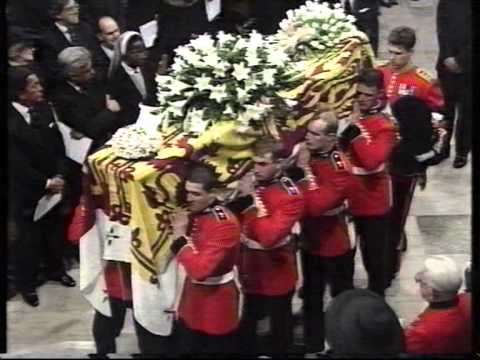
Anyway, over the week following her death my hearing had improved a little bit, so I decided to watch the memorial service on TV. I couldn’t hear the music or speeches very well, but I remember watching the soldiers carrying Diana’s coffin into Westminster Abbey. It must have been a very heavy coffin as it was a very wobbly process and I thought at one moment the pall-bearers might drop it. They slowly approached stone structure on which the coffin was to be laid. Then I heard the commentator on TV solemnly announce that it was “placed on the catapult”.

This is novel, I thought. She’s going to be launched into the hereafter on a ballistic trajectory through the stained glass windows.  However, that didn’t happen and the service continued without an aerial display.

I found out much later that the word used was not catapult, but catafalque….