Archive for the History Category

An O-Level History Examination from 1979

Posted in Biographical, Education, History with tags , , , , on April 18, 2018 by telescoper

I have in the past posted a few examples of the O- and A-level examinations I took when I was at school. These have been mainly science and mathematics papers as those are relevant to the area of higher education in which I work, and I thought they might be of interest to students past and present.

A few people have emailed me recently to ask if I could share any other examinations, so here are the two History papers I took for O-level in June/July 1979. Can that really have been almost 40 years ago?

These were Papers 5 and 12 out of an unknown number of possible papers chosen by schools. My school taught us exclusively about British and European history from the mid-19th to early 20th centuries; you will observe that in both cases `history’ was deemed to have ended in 1914. It’s possible that some of the other papers paid more attention to the wider world.

I have no idea what modern GCSE history examinations look like, but I’d be interested in any comments from people who do about the style and content!

Peter Tatchell: Equality is not Enough

Posted in Cardiff, History, LGBTQ+, Politics with tags , on March 23, 2018 by telescoper

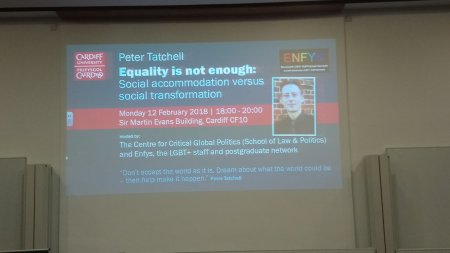
On the evening of Monday 12th February, during LGBT History Month, I went to a lecture by Peter Tatchell which was held in the Sir Martin Evans lecture theatre at Cardiff University. I was going to do a post about it but never found the time. Here’s a snap of the title slide I took at the time:

Today I noticed that a video of the lecture had been posted on Cardiff University’s youtube channel which reminded me to say something about it. I admire and respect Peter Tatchell’s integrity and determination, and the way he has stood up against homophobia for more than 50 years is inspirational. I don’t agree with everything he says, but I found myself agreeing with most of the content of this lecture, the main idea of which was that it is not enough for LGBT people to seek equality within a system that is so manifestly discriminatory against whole sectors of the population. The aim of of LGBT campaigners should be to transform society, not to be accommodate within it.

Anyway, here’s his lecture. Form your own opinions!

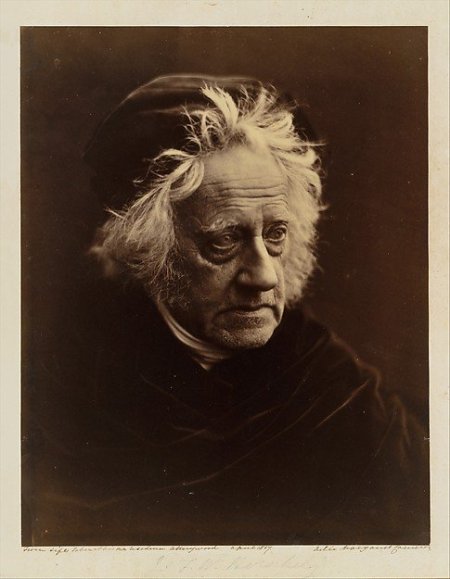
A photograph of Sir John Herschel

Posted in Art, History on March 22, 2018 by telescoper

I didn’t have time to write a post today before it became necessary for me to go to the pub, so I thought I’d just share this marvellous photograph of astronomer Sir John Herschel taken in 1867 by pioneering portrait photographer Julia Margaret Cameron.

Manchester Hill – “Here we fight, and here we die”

Posted in History with tags , , , , on March 21, 2018 by telescoper

Today is the centenary of the start of a major offensive of the Western Front by the German forces against the British and French armies during the First World War. One particular action that took place on the first day of that offensive took place at a location now known as Manchester Hill, a region of high ground forming a salient overlooking the town of St Quentin, on this day 100 years ago i.e. on 21st March 1918. I read about this some time ago, but thought I would do a brief post about it to mark this grim anniversary.
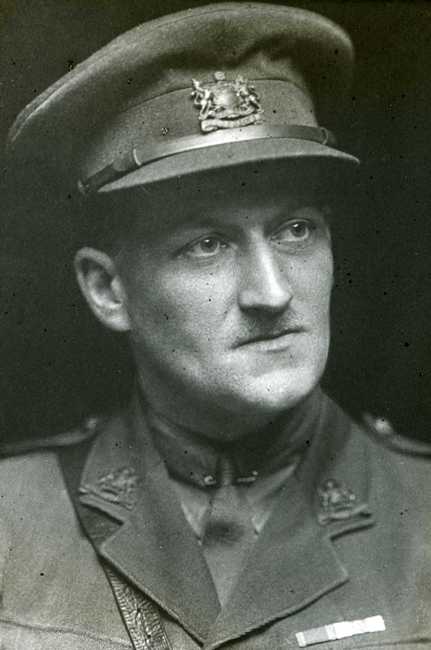
Lieutenant-Colonel Wilfrith Elstob, Commanding Officer, 16th Battalion Manchester Rifles.

Manchester Hill had been captured by the 2nd Battalion of the Manchester Regiment in April 1917 and in March 2018 it was held by the 16th Battalion of the same Regiment under the command of Lieutenant-Colonel Wilfrith Elstob, a schoolteacher before the War who had joined the army in 1914 as a private soldier and was promoted through the ranks. His gallantry on that day earned him a posthumous Victoria Cross with the citation:

For most conspicuous bravery, devotion to duty and self-sacrifice during operations at Manchester Redoubt, near St. Quentin, on the 21st March, 1918. During the preliminary bombardment he encouraged his men in the posts in the Redoubt by frequent visits, and when repeated attacks developed controlled the defence at the points threatened, giving personal support with revolver, rifle and bombs. Single-handed he repulsed one bombing assault driving back the enemy and inflicting severe casualties. Later, when ammunition was required, he made several journeys under severe fire in order to replenish the supply. Throughout the day Lieutenant-Colonel Elstob, although twice wounded, showed the most fearless disregard of his own safety, and by his encouragement and noble example inspired his command to the fullest degree. The Manchester Redoubt was surrounded in the first wave of the enemy attack, but by means of the buried cable Lieutenant-Colonel Elstob was able to assure his Brigade Commander that “The Manchester Regiment will defend Manchester Hill to the last.” Sometime after this post was overcome by vastly superior forces, and this very gallant officer was killed in the final assault, having maintained to the end the duty which he had impressed on his men – namely, “Here we fight, and here we die.” He set throughout the highest example of valour, determination, endurance and fine soldierly bearing.

His last action, after the Germans had broken through the last line of defences, was to use the field telephone to call down an artillery barrage onto his own position. His body was never found and he has no known grave.

You can read the stories of other soldiers who fought and died that day here.

Manchester Hill jutted out into the German lines so, although it was heavily fortified, it was very vulnerable and difficult to defend. Enemy troops were in position on three sides of the hill, and in the event of an attack was difficult to prevent it being surrounded, isolated and destroyed. In the days and hours preceding March 21st the troops on Manchester Hill could see the Germans moving into position and knew a major offensive was imminent. Elstob repeatedly asked his superior offices for permission to withdraw, but it was repeatedly refused. When specific intelligence was received that the attack would take place in the morning of 21st March he once more contacted his HQ to request position to withdraw. After having his request refused once more, he returned to his men and made the famous statement “This is our position. He we fight and here we die.”

There was thick fog the following morning, hiding the inevitable German advance which began at 6.30am with an artillery bombardment until it was too late to prevent them encircling the British garrison. By 11.30 the British were completely encircled. Nevertheless the defenders of Manchester Hill fought off repeated attacks and managed to hold their position until late afternoon against an overwhelmingly larger force. Elstob was in the thick of the action throughout, once holding a position alone using his service revolver and hand grenades. By 4pm however, the battle was lost and virtually all the defenders were dead. Of the 168 men (8 officers and 160 other ranks) who participated in the defence of the Manchester Hill redoubt, just 17 survived (two officers and 15 other ranks).

The German advance broke through Allied lines and stormed on, even at one point threatening Paris, but the pace of the advance led to supply difficulties and it eventually stuttered, was stopped and then flung back into a full retreat. Although German forces had been reinforced by troops no longer needed in the East after the Russian Revolution of 1917, American forces had been arriving in huge numbers – 300,000 a month – at the time of the Spring offensive and it this influx of troops across the Atlantic that proved decisive in the end.

We should celebrate the bravery of the defenders of Manchester Hill, especially Lieutenant-Colonel Elstob, but one can’t help asking why he was not given permission to withdraw. It is true that they delayed and disrupted the German advance, but at a terrible cost. It does seem to me that for all the courage and gallantry displayed by Elstob and his men, their sacrifice was unnecessary.
De Valera’s ‘Last Letter’, Kilmainham, May 1916

Posted in History with tags , , on March 11, 2018 by telescoper

I’ve just been reading Charles Townshend’s book ‘Easter 1916: The Irish Rebellion’ and was searching for the photograph it includes of Eamon de Valera surrendering with his men at the end of the uprising. I found it at this excellent blog post, which includes a great deal of other interesting information, so I thought I’d reblog the whole thing!

Brenda Malone's avatarThe Cricket Bat that Died for Ireland

View original post 1,054 more words

LGBT+ History Month and the Royal Society

Posted in Biographical, History, LGBTQ+ with tags , , , , , on February 23, 2018 by telescoper

You may or may not know that this month is LGBT+ History Month for 2018, and, to mark it, the Royal Society has been marking it on Twitter by celebrating LGBT+ scientists.

I am very proud to be included among those featured on Twitter, although slightly disappointed that no mention was made of my greatest achievement, namely the Beard of Winter 2018 award.

I can’t show all the people in the Twitter thread produced by the Royal Society because there are too many of us, but I will mention two people that I know personally.

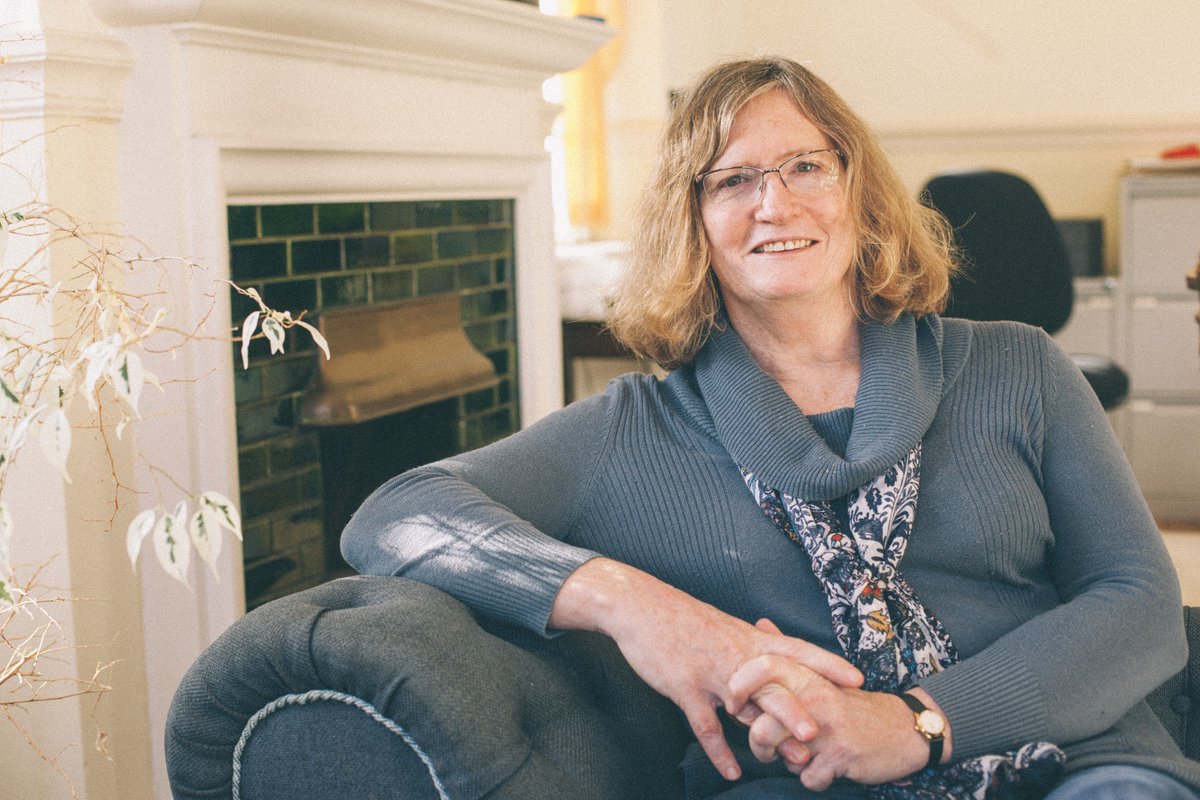
The first is radio astronomer Rachael Padman from the University of Cambridge:

Among other things, Rachael recently won an award from Gay Times magazine. I worked quite a bit with Rachael when I was External Examiner for Natural Sciences (Physics), a job I did from 2014-2016, as she was heavily involved in the administration of the examinations process at Cambridge during this time.

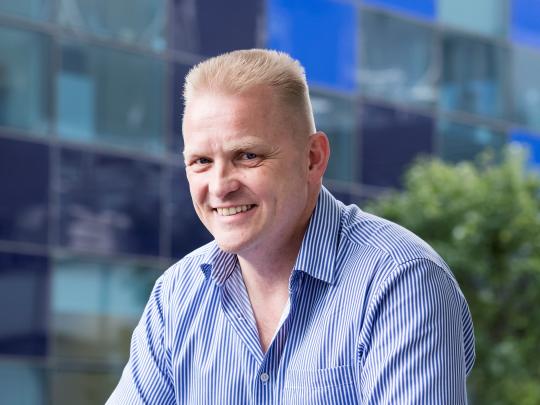
The other person I’d like to mention is Tom Welton, who is Professor of Sustainable Chemistry and Dean of the Faculty of Natural Sciences at Imperial College in London.

I especially wanted to mention Tom because he and I were contemporaries at the University of Sussex way back in the 1980s when I was a research student. I hadn’t seen him since I moved from Sussex in 1990 until two years ago when we were both panellists at an `Out in STEM’ event run by the Royal Society.

I know some of you will be asking whether the Royal Society should be getting involved in LGBT History Month. Some people commenting on the Twitter thread certainly think it shouldn’t.  I think it should, in order to demonstrate that a person can be openly LGBT+ and have a successful career in STEM.  If being visible in this way helps just one career feel more comfortable in themselves and in their career it would be well worth it.


The de Valera connection

Posted in History, mathematics, Maynooth with tags , , on February 14, 2018 by telescoper

This morning I took the early flight to Dublin, which was on time, and thence via the Airport Hopper to Maynooth. There were only two passengers on the bus, both going to the terminus, so it made good time, travelling all the way along the motorway.

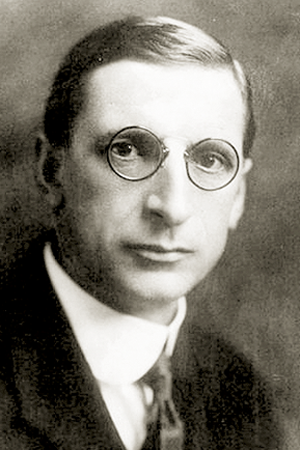
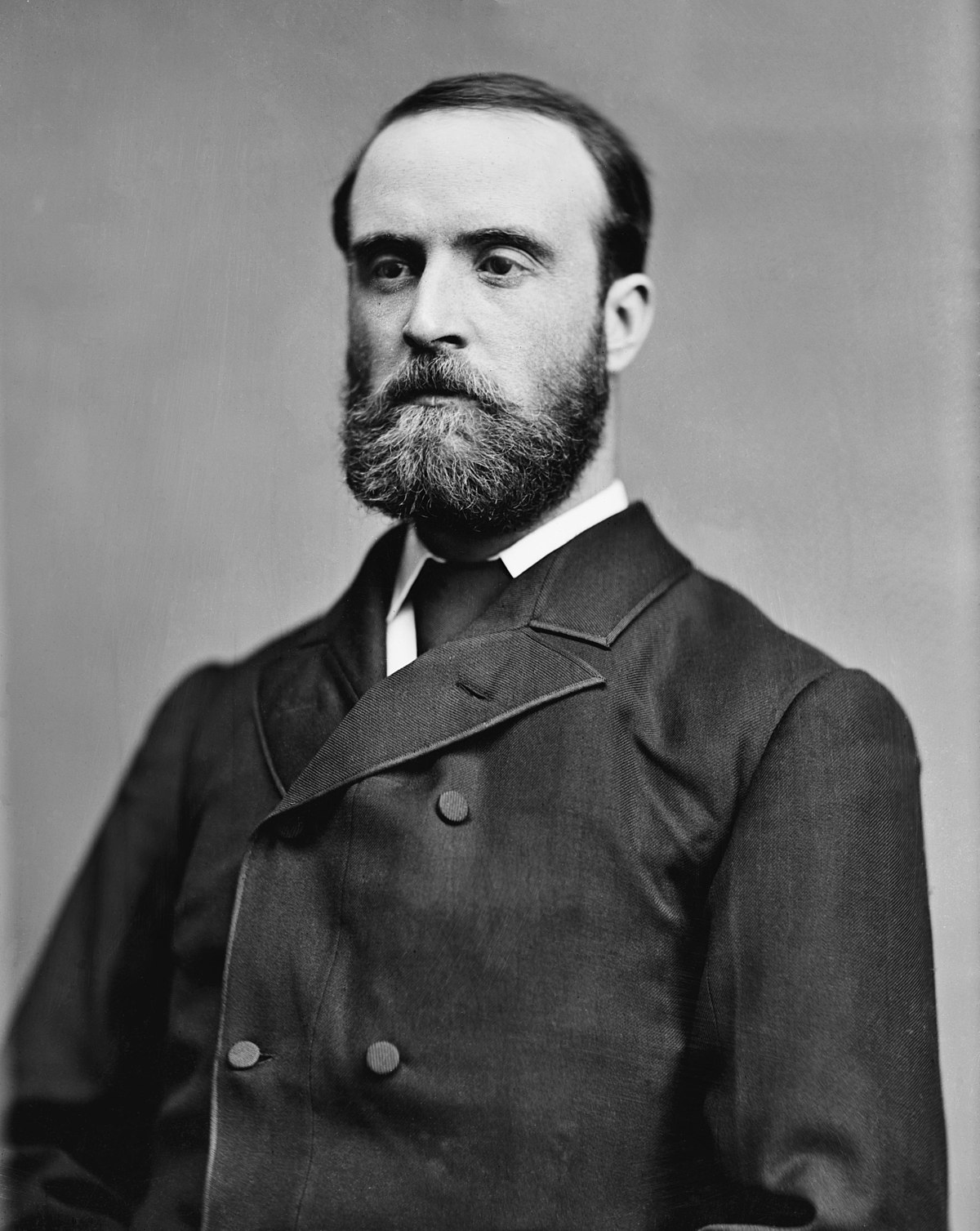
Walking into the Maynooth campus I remembered an interesting little historical fact that I stumbled across last week, concerning Éamon de Valera, founder of Fianna Fáil (one of the two largest political parties in Ireland) and architect of the Irish constitution. De Valera (nickname `Dev’) is an enigmatic figure, who was a Commandant in the Irish Republican Army during the 1916 Easter Rising, but despite being captured he somehow evaded execution by the British. He subsequently became Taoiseach (Prime Minister) and then President (Head of State) of the Irish Republic.

Eamon de Valera, photographed sometime during the 1920s.

The point of connection with Maynooth, however, is less about Dev’s political career than his educational background: he was a mathematics graduate, and for a short time (1912-13) he was Head of the Department of Mathematics and Mathematical Physics at St Patrick’s College, Maynooth, which was then a recognised college of the National University of Ireland. The Department became incorporated in Maynooth University, when it was created in 1997. It is said that one of the spare gowns available to be borrowed by staff for graduation ceremonies belonged to de Valera. Mathematical Physics is no longer a part of the Mathematics Department at Maynooth, having become a Department in its own right and it recently changed its name to the Department of Theoretical Physics.

De Valera missed out on a Professorship in Mathematical Physics at University College Cork in 1913. He joined the the Irish Volunteers, when it was established the same year. And the rest is history. I wonder how differently things would have turned out had he got the job in Cork?

That’s one connection, but when I arrived in the office this morning I found another. An email had arrived announcing a conference later this year in honour of Erwin Schrödinger.  It was de Valera – a notable advocate for science – who in 1940 set up the Dublin Institute for Advanced Studies (DIAS); Schrödinger became the first Director of the School of Theoretical Physics, one of the three Schools in DIAS.

Hair from Bayeux

Posted in Beards, History with tags , , , , on January 18, 2018 by telescoper

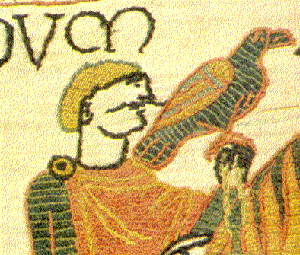
Since the Bayeux Tapestry (which, being stitched rather than woven, is an embroidery rather than a tapestry) is in the news I thought I’d share some important information about the insight this article gives us into 11th century hairstyles.

As you know the Bayeux Tapestry Embroidery concerns the events leading up to the Battle of Hastings between the Saxons (who originated in what is now a part of Germany) led by Harold Godwinson (who had relatives from Denmark and Sweden) and the Normans (who lived at the time in what is now France, but who came originally from Scandinavia).

Most chronicles of this episode leave out the important matter of the hair of the protagonists, and I feel that it is important to correct this imbalance here.

Throughout the Bayeux Untapestry, the Saxons are shown with splendid handlebar moustaches, exemplified by Harold Godwinson himself:

This style of facial hair was obviously de rigueur among Saxons. The Normans on the other hand appeared to be clean-shaven, not only on their front of their heads but also on the back:

This style of coiffure looks like it must have been somewhat difficult to maintain, but during the Battle of Hastings would mostly have been hidden under helmets.

With a decisive advantage in facial hair one wonders how the Saxons managed to lose the battle, but I can’t help thinking the outcome would have been different had they had proper beards.

Planes, Trains and Quaternions

Posted in Biographical, History, mathematics, Maynooth with tags , , , , , , , , on January 4, 2018 by telescoper

Well, here I am in Maynooth for the first time in 2018. I flew over from Cardiff yesterday. The flight was rather bumpy owing to the strong winds following Storm Eleanor, and it was rather chilly waiting for the bus to Maynooth from Dublin Airport; nevertheless I got to my flat safely and on time and found everything in order after the Christmas break.

This morning I had to make a trip by train to Dublin city  to keep an appointment at the Intreo Centre in Parnell Street, which is about 15 minutes walk from Dublin Connolly train station. I bought an Adult Day Return which costs the princely sum of €8.80. Trains, stations and track in Ireland are maintained and operated by Irish Rail (Iarnród Éireann), which is publicly owned. Just saying.

The distance between Maynooth and Dublin about 25 km, which takes about 40 minutes on the local stopping train or about 25 minutes on the longer distance trains which run nonstop from Maynooth to Dublin. As it happens I took one of the fast trains this morning, which arrived on schedule, as did the return journey on a commuter train. My first experience of the Irish railway system was therefore rather positive.

I had thought of having a bit of a wander around the city on my way to Parnell Street but it was raining and very cold so I headed straight there. I arrived about 20 minutes ahead of my scheduled appointment, but was seen straight away.

The reason for the interview was to acquire a Personal Public Services Number (PPSN), which is the equivalent of the National Insurance Number we have in the United Kingdom. This number is needed to be registered properly on the tax and benefit system in Ireland and is the key to access a host of public services, the electoral roll, and so on. You have to present yourself in person to get a PPSN, presumably to reduce the opportunity for fraud, and I was told the interview would take 15 minutes. In fact, it only took about 5 minutes and at the end a photograph was taken to go on the ID card that is issued with the number on it.

So there I was, all finished before I was even due to start. The staff were very friendly and it all seems rather easy. Fingers crossed that the letter informing me of my number will arrive soon. It should take a week or so, so I’m told. After that I should be able to access as many personal services as I want whenever I want them. (Are you sure you have the right idea? Ed.)

For  the return trip  to Maynooth I got one of the slower commuter trains, stopping at intermediate stations and running right next to the Royal Canal, which runs from Dublin for 90 miles through  Counties Dublin, Kildare, Meath and Westmeath before entering County Longford, where it joins the River Shannon. One of the intermediate stations along the route next to the canal is Broombridge, the name of which stirred a distant memory.

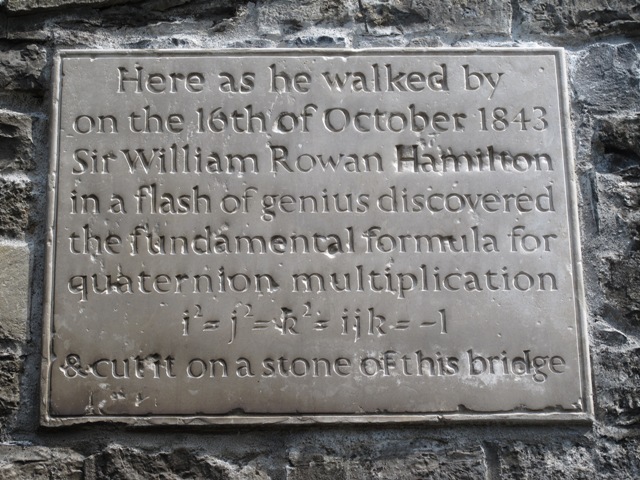
A quick application of Google reminded me that the town of Broombridge is the site of the bridge (Broom Bridge) beside which William Rowan Hamilton first wrote down the fundamental result of quaternions (on 16th October 1843). Apparently he was walking from Dunsink Observatory into town when he had a sudden flash of inspiration  and wrote the result down on the spot, now marked by a plaque:

Picture Credit: Brian Dolan


This episode  is commemorated on 16th October each year by an annual Hamilton Walk. I look forward to reporting from the 2018 walk in due course!

P.S. Maynooth is home to the Hamilton Institute which promotes and facilitates research links between mathematics and other fields.


Finlandia!

Posted in History, Music with tags , , , , on December 6, 2017 by telescoper

Today marks the 100th anniversary of Finland’s Declaration of Independence from Russia, which took place on 6th December 1917.

To celebrate the occasion here is  Finlandia by Jean Sibelius from this year’s Proms, performed by the BBC Singers, BBC Symphony Chorus and the BBC Symphony Orchestra, under the direction of Finnish conductor Sakari Oramo.

Happy Independence Day to Finns everywhere, and especially to my friends and colleagues in the world of physics and astronomy!