Archive for the History Category

Remembering the Aberfan Disaster

Posted in History with tags , on October 20, 2016 by telescoper

Tomorrow marks the 50th anniversary of a truly appalling tragedy:the disaster at Aberfan which took place on 21st October 1966. A colliery spoil heap in the Welsh village of Aberfan, near Merthyr Tydfil, underwent a catastrophic collapse caused by a build-up of water, and more than 40,000 cubic metres of debris slid downhill into the village. The classrooms at Pantglas Junior School were immediately inundated; young children and teachers died from impact or suffocation. In all, 144 people lost their lives that day, including 116 children at the school. The collapse occurred at 9.15am. Had the disaster struck a few minutes earlier, the children would not have been in their classrooms, and if it had struck a few hours later, they would have left for the half-term holiday. As it happened, it was a tragedy of unbearable dimensions, that shattered many lives and devastated the community. It was caused largely by negligence on behalf of the National Coal Board

The First Minister of Wales, Carwyn Jones, has called upon the people of Wales to pause and remember the Aberfan disaster with a minute’s silence at 9.15am tomorrow (i.e. on Friday 21 October). Cardiff University will be observing this silence, and so will I. I hope readers of this blog will pause to reflect at that time too.

Here is a short video featuring the voice of Jeff Edwards, a survivor of the Aberfan disaster, recalling his harrowing experiences of that day in a conversation with Dr Robert Parker of the School of Earth and Ocean Sciences at Cardiff University. Rob’s research looks at landslide processes, landscape evolution, catastrophe modelling and post-disaster assessment.

Cable St 4th Oct 1936: why taking sides in history & now is important

Posted in History with tags on October 4, 2016 by telescoper

Eighty years on from the Battle of Cable Street, I hope this generation will be brave enough when the time comes to say “They Shall Not Pass”..

kmflett's avatarKmflett's Blog

Cable St & why it is important to remember history

cable

The Battle of Cable St took place 80 years ago on 4th October 1936 and there will be events to mark the anniversary this coming weekend.

Why remember it?

After all the media in particular is full of pieces remembering anniversaries of events and occasions. Not all of what is printed or posted is that historically accurate and a good deal of it is not particularly enlightening. We might call it an anniversary culture.

Of course as an historian I contribute to it myself though I do try and look at events that are less well remembered either because they are genuinely obscure (but hopefully of interest) or because they present awkward questions for the present.

The 80th anniversary of Cable St probably falls into the latter category. You won’t find too many today who will argue that…

View original post 200 more words

Friday Music Quiz: The Yardbird Suite

Posted in History, Jazz with tags , , on September 30, 2016 by telescoper

Not much time to write today so I thought I’d put up a bit of music to end the week. This is a classic from 1946, featuring Charlie Parker leading a band that included a very young Miles Davis. The Yardbird Suite an original composition by Parker, and has become a jazz standard, but he never copyrighted the tune so never earned any royalties from it.

Now, here’s a little question to tease you with. Can anyone spot the connection between this tune and a notable event that occurred today, 30th September 2016?

Answers through the comments box please!


The Arctic Convoys

Posted in History with tags , on September 29, 2016 by telescoper

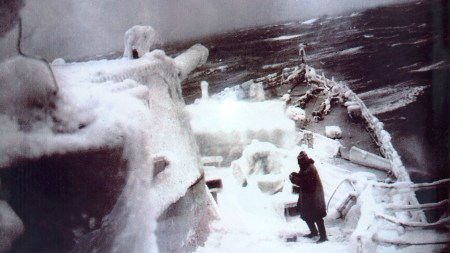
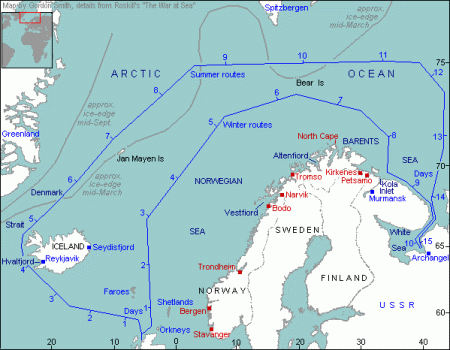
Today also marks a far less happy anniversary. On this day 75 years ago, on 29th September 1941, the Allied Convoy PQ 1 set sail from Hvalfjörður in Iceland; it arrived in Arkhangelsk in Northern Russia on October 11. This wasn’t the first of the Arctic convoys – that was Operation Dervish,  which set out in August 1941 , but it was the first of the most famous sequence, numbered from PQ 1 to PQ 18. The PQ sequence was terminated in September 1942, but convoys resumed in 1943 with a different numbering system (JW) for the duration of the Second World War. For every PQ convoy there was also a QP convoy making the return journey; the counterpart of the JW sequence was RA.

The Arctic convoys carried military supplies (including tanks and aircraft) to the Soviet Union after Germany invaded in the summer of 1941. Their purpose was largely political – to demonstrate the willingness of the Allies to support the Soviet Union, especially before before a second front could be opened.

Arctic Convoy

The reality of the Arctic convoys was unimaginably grim. Slow-moving merchant ships had to run the gauntlet of German U-Boats and aircraft. During the summer, when the Arctic ice retreated, the convoys took a longer route but the long daylight hours of an Arctic summer made for an exhausting journey with the constant threat of air attack. In the winter the route was shorter, but made in terrible weather conditions of biting cold and ferocious storms.

ww2mr110arctic

The map is taken from this site, which also gives detailed information about each convoy.

As it happens, one of my teachers at school (Mr Luke, who taught Latin), who was also an officer in the Royal Navy Reserve, served on Royal Navy escort vessel in some of the Arctic convoys in 1941.  I was interested in naval history when I was a teenager and when he told me he had first-hand experience of the Arctic convoys I asked him to tell me more. He talked about the bitter cold but about everything else he refused to speak, his eyes filling with tears. I didn’t such things understand then, I was too young, but later I saw that it was less that he wouldn’t talk about it, more that he couldn’t. Terrible experiences leave very deep scars on the survivors.

The most infamous convoy in the PQ series was PQ 17 which sailed on June 27 1942 from Reykjavik. Rumours that the German battleship Tirpitz had left its berth in Northern Norway to intercept the convoy led to the Admiralty issuing an order for the escort to withdraw and for the convoy to disperse, each vessel to make its way on its own to its destination. The unprotected merchant ships were set upon by planes and submarines, and of the 35 that had left Reykjavik, 24 were sunk. It was a catastrophe. Just a year earlier, Convoy PQ 1 had arrived at its destination unscathed.

There is a project under way to set up a museum as a lasting memorial to the brave men who served during the Arctic convoys. I think it’s well worth supporting. Although the 75th anniversary of the arrival of Dervish was commemorated earlier this year, the courage and sacrifice of those who served in this theatre is not sufficiently recognised .


The Byker Grove Connection

Posted in Biographical, History, Television with tags , , , on September 21, 2016 by telescoper

One of the interesting things about having a blog that has been running for some time is that old posts continue to attract comments even after many years. Some of the posts that have been getting comments recently are about my early childhood growing up in Benwell which is to the West of Newcastle upon Tyne; you can find a couple of examples here and here. The place has changed beyond all recognition since I was a kid, which I suppose accounts for the fact that people are googling about looking for memories of what it used to be like.

Here is a Google Earth rendition of the area I grew up in..

benwell

We used to live in one of the two cottages right next to Pendower School, which was just off Fox and Hounds Lane.  You can see road that led to the front of our house, just between the text of “Benwell Village” and “Fox and Hounds Lane”.  The cottages and school are now demolished, and a housing development stands where they were. That’s all in the middle of the top of the image.

My Dad used to run a  shop which was was on the corner of Whickham View and Delaval Road, about halfway down the image to the left. The green strips to the East of Delaval Road and running parallel to it were all terraced when I lived there. Virtually everything has now gone, but it was a nice little community with old-fashioned little shops.

What drew my attention recently however, is that there is a location (to the top left of the image) marked Byker Grove., right next to where I used to live. When I was a lad that was  Benwell Towers, which we were told was haunted – presumably to scare us off trying to get in. There was a rather scary and formidable fence separating the grounds of Benwell Towers from the School, but it was not unknown for kids to climb it…

There have been buildings on the site of Benwell Towers since the 13th Century. A tower house was built there in 1221 and stood until it was demolished to make way for the current, much larger, building which was constructed in 1831. The old building was for a time owned by a branch of the Shafto family, of Bobby Shafto fame. At the time of the construction of the new building, Benwell hadn’t been engulfed by the westward sprawl of Newcastle itself and was very much a separate village. “Benwell Village” still felt like a distinct, self-contained community, when I was growing up there in the Sixties.

The “new” Benwell Towers was, for a time, the residence of the Bishop of Newcastle, but when I lived there it was being used as a base for the National Coal Board and used primarily as the Headquarters  of the Mine Rescue Service. There were some pits still open in those days.  When the Coal Board didn’t need it any more, it became a tacky nightclub called The Mitre

That’s all I knew about the place as I never really visited it again after going to University . But a chance comment on this blog followed by a Google Search revealed that when The Mitre closed the building was used to film the long-running TV series Byker GroveI knew about the programme, but had always assumed it was filmed in Byker (which is in the East End of Newcastle) rather than Benwell (which is in the West End). It certainly never occurred to me that it was made just a hundred yards from where I grew up. You live and learn.


Did Jesus have a Beard?

Posted in Art, Beards, History, Uncategorized with tags , , , on September 20, 2016 by telescoper

I don’t often venture into matters religious via the medium of this blog, but I think I’ll make an exception in this case to address a question that must surely be of prime concern to theological scholars.

The question Did Jesus have a Beard? was provoked by this image which I saw on Twitter this morning:

jesus

This is the oldest known depiction of Jesus found in England, a Roman mosaic found at Hinton St Mary, which dates from around AD 350.

All the very old depictions of Jesus that I’m aware of show him clean-shaven. The oldest I have seen in person (in the Basilica San Vitale in Ravenna, Italy) shows him likewise beardless (he’s in the middle):

ravenna_005-627x364


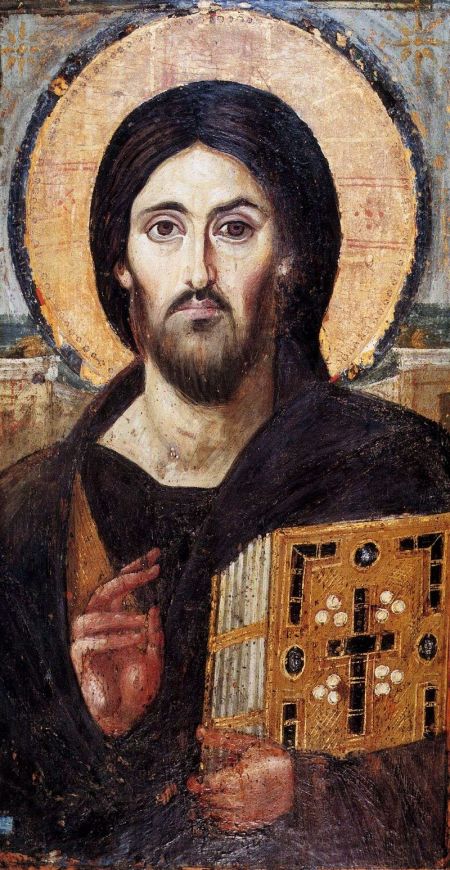
Another famous depiction, in the Basillica of Sant’Apollinare Nuovo also in Ravenna, which is dated 520 AD) shows him in a series of scenes in which he appears beardless, but the final scene (of the Passion) shows him with the full beard that became the norm for later portraits and remains so up to the present day. This image is from the 6th Century AD and is very much in line with the we have come to assume Jesus looked like.

800px-spas_vsederzhitel_sinay

As far as I am aware, it doesn’t say anywhere in the Bible whether Jesus had a beard or not, so does the fact that the oldest known depictions show him clean-shaven mean that the real historical figure of Jesus didn’t have a beard?

Not necessarily. You have to remember that these early depictions were Roman, so it’s natural that they would have reflected the conventions of the culture at that time, not those of a different country (Judea) more than three centuries earlier. Being clean-shaven would have been regarded as a mark of nobility in Roman society, which probably explains why he was represented in that way.

I will probably get a deluge of corrections and clarifications from people who know a lot more than me about the early Christian church, so I’ll now step back and let the Comments Box do its work!


George’s Marvellous Medicine

Posted in History, Literature with tags , , , on September 13, 2016 by telescoper

Today is the 100th anniversary of the birth of author Roald Dahl, who was born in Llandaff, Cardiff, on 13th September 1916.  To celebrate this occasion, Cardiff University’s School of Chemistry has tried to recreate some of the phenomena described in one of Dahl’s children’s books, George’s Marvellous Medicine. Enjoy!


250 Years of Dalton

Posted in History, The Universe and Stuff with tags , on September 6, 2016 by telescoper

Having a quick look at Twitter this morning as I drank my coffee I discovered that today is the 250th anniversary of the eminent English scientist John Dalton, who was born on 6th September 1766. Dalton is most famous in the United Kingdom for his work on chemistry and physics, and somewhat less so for his pioneering studies of colour blindness. I didn’t know until quite recently, in fact, that the birthday of John Dalton, who was himself colour blind, is also  Colour Blindness Awareness Day so I thought I’d do a quick post to mark the occasion. You might also be interested in this old guest post on the subject of colour and colour perception.

Here’s a test for some of the main types of colour blindness – can you read the numbers?

Colour_Blind

Colour blindness comes in different forms and affects a significant fraction of the population, with a much higher rate of occurence in males (up to 1 in 10 in some groups) than in females (about 1 in 200). It also varies significantly across different populations, with particularly low rates for, e.g., Fijian males (0.8 %) and much higher frequencies among, e.g. Russian males (9.2%). I am not colour-blind myself, but I know several colleagues who are. In fact at the meeting I was at last week, when one speaker decided to show two different sets of results on a graph by plotting one in red and the other in green, there were howls from several in the audience who couldn’t tell them apart. It’s very easy to make careless mistakes like this in preparing lecture materials when it takes only a small effort to make them suitable for all. I urge colleagues who teach to remember that if they are 100 men in the audience the likelihood is that there will be around 8 to 10 who are colour blind.

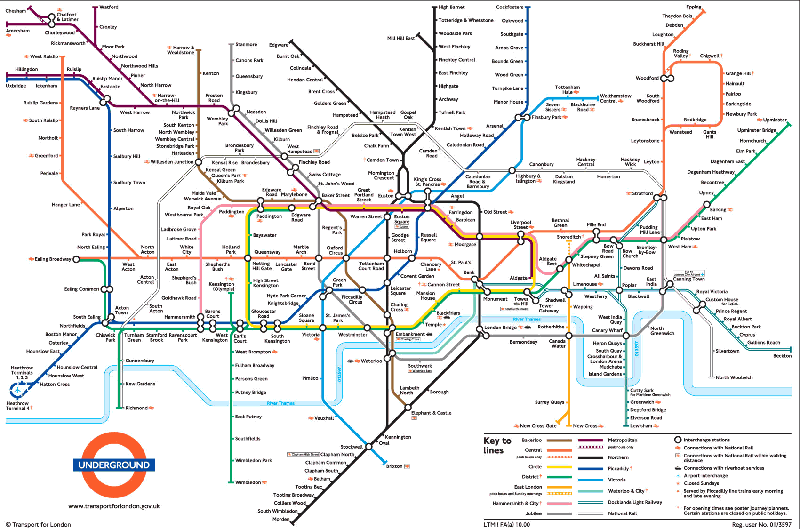
Thinking about this makes you realise how many maps and other designs rely on full colour perception for their effect. I’ve previously celebrated the London Underground map as an excellent example of graphic design, but it must be a nightmare to a person who is colour blind!

tube_map


It’s also worth mentioning that standard instructions at many institutions for marking examination papers is that the first marker should do  them in red ink and the second marker in green….

This all reminds me of the late Professor Francesco Lucchin, who first invited to Italy to work with the  astronomy group in Padova back in the early 1990s. Francesco and I ended up writing a book together and during the course of working on that he told me that he was “daltonic”. I later found out that this word does exist in English, but it is not in common usage as a word meaning “colour blind”. The standard word in Italian for “colour blind” is “daltonico” and there are many other variants in other European languages, such as the French “daltonien”. It’s very curious that Dalton’s name is so strongly associated with colour blindness across the European continent but not in the country of his birth. I wonder why this is?

By the way, if I understand correctly, the English word “daltonic” refers to a specific form of red/green colour blindness called deuteranopia, whereas the foreign variants can refer to any form of colour blindness.

P.S. You would have thought that the 25oth anniversary of Dalton’s birth would at least have warranted a Google doodle, but apparently not.

Henry Draper’s Photograph of M42

Posted in History, The Universe and Stuff with tags , , , , on July 29, 2016 by telescoper

I just remembered that last night I happened across an interesting episode of The Essay on Radio 3. It was about the first ever photograph of an astronomical nebula, which happened to be of the Orion Nebula (M42). The programme features Omar Nasim, a lecturer in History at Kent University, and is available on iPlayer or as a download here. It’s only 15 minutes long, but absolutely fascinating.

Here is the photograph concerned, taken by Henry Draper in 1880:

Henry_Drape_Orion_nebula_1880_inverted

The stars of the constellation Orion are clearly over-exposed in order to reveal the much fainter light from the nebula, and the resolution is poor compared to, e.g., this glorious Hubble Space Telescope image:

Hubble's sharpest view of the Orion Nebula

The Orion Nebula seen by Hubble. Credit: ESA/NASA/Hubble Space Telscope

Nevertheless the Draper photograph is of great historical importance, as it changed the way astronomers made images of such objects (by photography rather than by drawing) and ushered in a new era of scientific research.

Hat’s off to Henry Draper!

Vesti La Giubba

Posted in History, Opera with tags , on July 19, 2016 by telescoper

On what looks set to be the hottest day of the year I’m getting ready to head off to the Brighton Dome for this afternoon’s graduation ceremony for the School of Mathematical and Physical Sciences. This requires the wearing of ridiculously heavy robes on top of a suit which means that I’ll probably melt even before I start reading the names out. Anyway, the need to wear silly clothes for this performance reminded me of the famous aria Vesti La Giubba, which I translate roughtly as “Put on the costume”, from the  Opera Pagliacci. Here is a collection of recordings of this by the great Enrico Caruso, whose 1907 version of Vesti La Giubba was the world’s first million-selling record.